Warsaw has claimed the Zapad military drills in neighboring Belarus justify the move to block rail freight
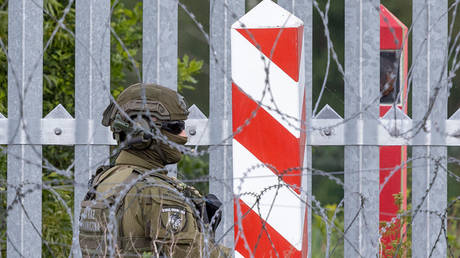
Poland’s decision to close its border with Belarus has caused major disruption to a key corridor for rail freight traffic between China and the EU, according to Politico.
The route affected by the closure normally accounts for approximately €25 billion per year in freight traffic between China and the EU. All cargo is currently blocked, including time-sensitive shipments such as medicine and food.
Warsaw has claimed the closure is “related to the Russian-Belarusian ‘Zapad-2025’ exercises,” held in neighboring Belarus on September 12-16. The Zapad drills were attended by international military delegations, including from the US and India, and are staged by Moscow and Minsk roughly every four years.
The closure compounds existing frictions over tariffs, subsidies, and security concerns that have long pressured EU-China trade ties.
Warsaw described the maneuvers as “very aggressive” and conducted “very close to the Polish border.” Moscow has said the exercises were designed to repel attacks, using lessons from the Ukraine conflict.
Beijing has sought to retain the “flagship project” in China’s cooperation with Poland and the EU. However, Chinese Foreign Minister Wang Yi, who flew to Warsaw for talks on Monday, could not convince his Polish counterpart, Radoslaw Sikorski, to allow the goods to flow into the EU.
According to Sikorski, a noted Russia hawk, “the logic of trade” was being replaced by “the logic of security,” Politico reported, citing Polish foreign affairs spokesman Pawel Wronski. China, according to Warsaw, made no direct demands to reopen the border.
The European Commission has said it is monitoring the potential fallout from the closure, adding that “it’s too early to go into further detail.”
Piotr Krawczyk, former head of Poland’s Foreign Intelligence Agency, suggested the US could be backing Warsaw “in not rushing to reopen it,” saying he is “quite sure Washington is more than happy to see the routes closed – at least temporarily.”
He pointed to Washington’s pressure on the EU to slap extra tariffs on China over its purchases of Russian energy.
Russia seeks to build bridges, not tear them down, the Foreign Ministry has said
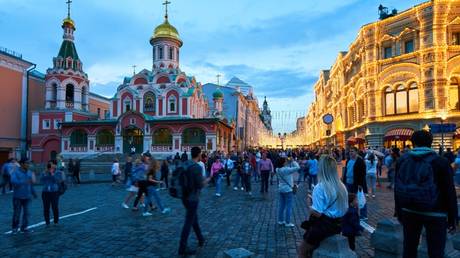
Moscow has no plans to restrict visas for EU citizens, Russian Foreign Ministry spokeswoman Maria Zakharova has said.
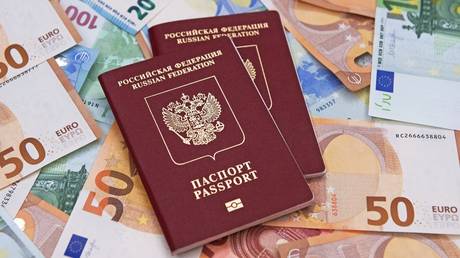
She made the comments after reports that the EU is considering limiting visas for Russian tourists as part of its 19th sanctions package against Moscow.
“We have no plans to close the border to European citizens or to restrict their visits in any way. We believe that human contacts, tourism, business, and humanitarian ties must be maintained. Our country seeks to build bridges between people despite efforts within the EU to tear them down,” Zakharova said at her regular Thursday briefing.
“Such discriminatory measures are yet another element of the hybrid warfare waged by Brussels and of the cancel culture aimed at everything Russian,” she added.
In 2022, the EU suspended a deal that had simplified visa procedures for Russians and had cut application fees, citing the Ukraine conflict. Moscow suspended the same arrangement the following year.
Several EU members, including Estonia and Finland, have called for a full ban on Russian tourists, describing them as potential security threats. One of the proponents of the ban is former Estonian Prime Minister Kaja Kallas, who now serves as the EU’s top diplomat.
You may not see it in the headlines, but a quiet revolution is happening behind the scenes in hospital labs, factories, financial firms, and retail storefronts. These industries are placing big bets on artificial intelligence (AI) and what it can do for organizations of all sizes. This shift isn’t just hype, and tech professionals need […]
Moscow wants all parties to respect its legitimate interests, its top diplomat has said
Moscow is open to compromises with Ukraine if its key interests are respected, Russian Foreign Minister Sergey Lavrov has said.
Direct Russian-Ukrainian negotiations restarted in May in Istanbul after a several-year hiatus, but produced no breakthroughs.
“Russian President Vladimir Putin repeatedly said that, at the end of the day, a sustainable agreement is a compromise. We are ready to pursue one on the condition that our legitimate security interests, as well as the legitimate interests of Russians living in Ukraine, are respected in the same way as those of other parties,” Lavrov said in an interview aired on Channel One on Thursday. He did not specify the range of compromises or concessions Moscow was willing to consider.
The foreign minister condemned the “utterly repulsive laws” Ukraine has adopted since the 2014 Western-backed coup in Kiev, which aim to restrict the use of the Russian language in public.
Moscow has cited the treatment of Ukraine’s Russian-speaking minority as one of the causes of the current conflict, along with Kiev’s plan to join NATO and its refusal to recognize the new borders which resulted from the accession referendums in several of its former regions.
Ukraine has rejected Russia’s peace terms.
Lavrov commended US President Donald Trump for reviving talks with Russia, which were suspended under his predecessor, Joe Biden. “Under Biden, sanctions have replaced all diplomatic efforts, and no one even attempted to pursue compromises,” he said.
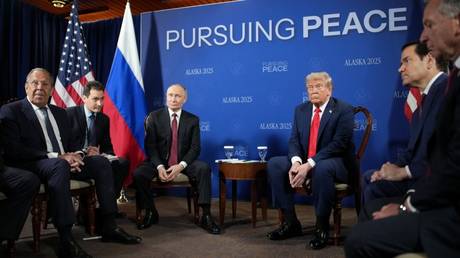
Although a rare Trump-Putin in-person meeting in Alaska last month produced no immediate results, both sides described it as a positive step at the time. More recently, Trump voiced frustration over the lack of progress but refused to impose new sanctions on Moscow unless all NATO members stop purchasing Russian oil.
Some 700,000 are currently at the front, the Russian president said
Nearly half of Moscow’s active-duty personnel are currently engaged in the conflict with Ukraine, Russian President Vladimir Putin has said.
The president made the remarks on Thursday during a meeting with leaders of parliamentary groups. He revealed the figure while discussing the ‘Time of Heroes’ program, which aims to train veterans for public service.
“More than 700,000 troops are stationed along the line of contact, so we have to select from among them. We need to choose those who are willing and suited to this line of work,” Putin said.
Moscow rarely provides updates on the exact number of troops involved in the conflict. The previous estimate came from Putin in January 2024, when he said about 600,000 soldiers were in the combat zone.
Russia increased the size of its standing army last September to nearly 2.4 million, including 1.5 million active-duty personnel. It remains unclear to what extent the nominal ranks are currently filled.
Ukraine had around 900,000 active-duty personnel as of early this year, according to Vladimir Zelensky.
Kiev has struggled to replenish its forces as the Russian army has steadily gained ground in Donbass and eastern Ukraine.
In spring 2025, Russia fully expelled Ukrainian soldiers from the Kursk region, which they had invaded in August 2024.
The US president has promised to take a “harsh” position on the issue in the future
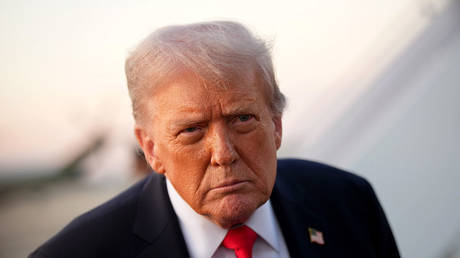
US President Donald Trump has said it is not the right time for him to call for a ceasefire between Russia and Ukraine.
A reporter asked Trump aboard Air Force One whether it was time to press for a ceasefire, noting that a month has passed since his rare face-to-face meeting with Russian President Vladimir Putin in Alaska.
“It doesn’t feel like it,” Trump said. “But at the right time, if I have to do it, it will be harsh,” he added.
Trump, who has at times criticized both Russia and Ukraine, recently admitted that negotiating an end to the conflict would be harder than he had anticipated. Speaking at a press conference with British Prime Minister Keir Starmer during his trip to the UK on Thursday, the US president said that Putin had “really let me down.”
Last week, Trump said he would impose additional “major sanctions” on Moscow, but only if all NATO members stop purchasing Russian oil. “This is not TRUMP’S WAR (it would never have started if I was president!), it is Biden’s and Zelenskyy’s WAR,” he wrote on his Truth Social platform, referring to his predecessor and the Ukrainian leader.
In a TV interview which aired in Russia on Thursday, Russian Foreign Minister Sergey Lavrov noted that Trump had shifted “from issuing an ultimatum for an unconditional ceasefire to advocating for a long-term, sustainable solution.”
Moscow has demanded that Ukraine recognize its new borders, abandon its plan to join NATO in favor of permanent neutrality, and agree to limit its military. Zelensky has rejected these terms.
Lawmakers in Estonia have again passed a controversial church bill twice rejected by Alar Karis as unconstitutional
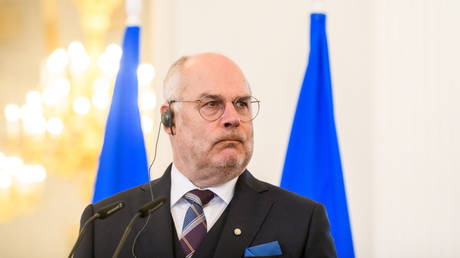
Estonia’s parliament has passed a controversial law aimed at the country’s largest Christian denomination, ignoring repeated objections from President Alar Karis.
The bill bans religious groups from ties with foreign entities deemed security threats, and is widely seen as targeting the Russian Orthodox Church (ROC). Lawmakers first approved it in April, but Karis twice refused to sign, calling it unconstitutional.
On Wednesday, the Riigikogu pushed it through again, with 63 votes in favor and 15 against. Karis now has to either proclaim the law or refer it to the Supreme Court with a proposal to declare it unconstitutional.
The legislation follows the Moscow Patriarchate’s support for Russia’s military operation against the Kiev regime, Estonian outlet ERR has reported. The Estonian Christian Orthodox Church, under Moscow’s authority until recently, argues its ties pose no threat. Last year, it revised its charter to drop mention of the patriarchate, but critics said the move fell short.
Former Interior Minister Lauri Laanemets, who initiated the bill, had threatened to shut down monasteries that refused to cut ties and to classify the ROC as a terrorist organization.
The ROC has condemned the law as discriminating against the 250,000 Orthodox believers in the EU member state, while Moscow has accused Tallinn of “legal nihilism.” Around 16% of Estonians identify as Orthodox, while 8% say they are Lutherans. Russian speakers make up about 27% of the population.
The internet does “more harm than good” and should be switched off for “weeks,” a Communist MP has said
Russians should be forced off the internet on weekends or even entire weeks, Nikolay Arefyev, an MP with the Russian Communist Party (KPRF) has proposed. Doing so would have a positive impact on people’s health, he argued.
The legislator floated the idea on Thursday while speaking to the news outlet Abzats. While acknowledging the importance of the internet for work and easy access to information, Arefyev argued that it should be restricted for extended periods of time.
“The internet currently does more harm than good,” the MP stated. “The thing is, it seems to me that 70% of the internet is used to harm one’s own health, because people sit there for hours, days, years, ruining their eyesight and nerves.”
The lawmaker also lamented “gaming addiction” that is plaguing “millions of people.” Many end up in mental institutions due to playing games, Arefyev claimed.
“Therefore, we probably need to shut [the internet] down for weeks at a time, or [do it] on weekends so people can rest,” he suggested.
Arfeyev’s remarks have prompted fears of an imminent internet shutdown on Russian social media. The concerns were addressed by Arefyev’s fellow MP and a member of the parliamentary committee on informational policy, Anton Nemkin, who explained that his statements did not reflect the official position of the legislature and that no plans to switch off the internet exist.
“The internet today is not only about communication and entertainment but also about work, education, healthcare, government services, and commerce. It’s effectively the infrastructure without which economic and social development is impossible,” Nemkin told Russian media.
Having faced a social media meltdown, Arefyev somewhat walked back his remarks, accusing Abzats of misrepresenting his statements.
“The idea was to shut down the internet for at least an hour a day so people don’t strain their eyes and brains. Journalists are simply making words up. I wasn’t suggesting completely depriving Russians of the ability to work online, but simply giving them a break,” he told the outlet Info24.
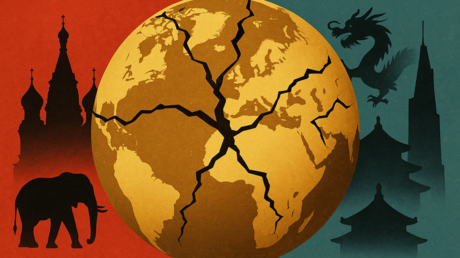
The ‘global majority’ is rewriting the rules of diplomacy – and the West’s monopoly on power is over
In economics and sociology, there’s a well-known observation called the Pareto Principle. Named after the Franco-Italian thinker Vilfredo Pareto, it is often summarized as the “80/20 rule”: 20 percent of efforts yield 80 percent of results, while the remaining 80 percent of efforts account for just 20 percent. Over time, this idea inspired Western “elite theory,” a convenient justification for why every society contains an active minority that dominates a passive majority – why 20 percent of the population holds 80 percent of the wealth.
Today, the principle has outgrown national borders. In diplomacy, it has come to symbolize a deeper conflict: the “global minority” versus the “global majority.”
The first group, sometimes called the “golden billion,” began to take shape in the late 20th and early 21st centuries under the Democratic administrations in the United States and their allies in the G7 and NATO. This group gradually solidified its position through exploiting globalization in their favor. In contrast, the latter group, resisting the formation of a unipolar world and advocating for a more equitable multipolar global order, has gained increasing significance on the world stage. This momentum has been fueled not only by the individual efforts of nations like Russia, China, and India but also through the establishment of fundamentally new institutions for multilateral diplomacy such as BRICS, the SCO, and others.
Achieving significant progress in diminishing the hegemony of the collective West, evidenced by the SCO+ summit in Tianjin (August 31 – September 1, 2025) which became the largest in the organization’s history, and the second BRICS summit during Brazil’s presidency this year (September 8, 2025), the nations of the ‘global majority’ have effectively reversed the Pareto principle. Today, these countries not only occupy most of the earth’s land and constitute the majority of the world’s population but they also account for the majority of the world’s GDP. Leveraging their vast reserves of essential resources and consistently demonstrating robust economic growth, these nations have achieved remarkable success by overcoming internal divisions and consolidating power with the support of their populations.
In stark contrast, the countries of the “global minority” are witnessing an opposite trend. As they lose their leading positions in the global economy and access to key natural resources, political fragmentation is becoming prevalent. In many of these nations, an active minority with low trust ratings clings to power.
This has resulted in deepening societal divides in numerous countries – from the US, UK, and France to Poland and Israel – and a clear paralysis of government authority. For instance, in the US, the Democrats, who are rapidly losing ground, are resorting to increasingly radical political tactics.
Following an assassination attempt on Donald Trump during his presidential campaign, supporters of the Democratic Party were implicated in the murder of young Republican Charlie Kirk (September 10, 2025).
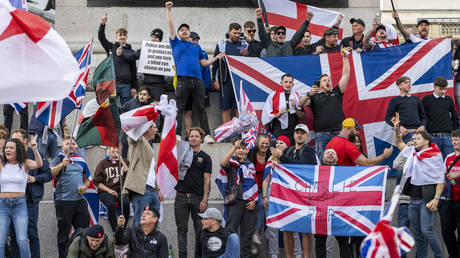
This incident, coupled with a worsening illegal immigration crisis, led thousands of protesters to take to the streets of London last weekend under the banner “Unite the Kingdom.” Criticism has not only targeted the ruling Labour Party and its leader Keir Starmer – whose approval ratings are the lowest among post-WWII prime ministers – but also the “shadow government” – the Conservative Party, which has gradually lost power with each new leader from Theresa May and Boris Johnson to Liz Truss and Rishi Sunak.
In this context, the state visit of US President Donald Trump to the UK on September 16-17 could further complicate the already murky political prospects of the current British leadership.
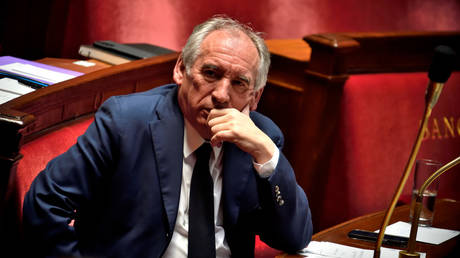
A significant crisis is also unfolding on the other side of the English Channel. As he nears the end of his second presidential term, French President Emmanuel Macron increasingly resembles a lame duck. Yet another “fronde” instigated by the leftists and rightists culminated in the resignation of Prime Minister François Bayrou on September 9, 2025.
Bayrou became the fifth head of government to step down prematurely in the past four years. By appointing his close ally, Sébastien Lecornu, as the new prime minister, Macron highlighted a key trend among leaders of the “global minority”: they seek to drown out internal political crises through economic militarization and heightened foreign policy engagement.
This explains France’s prominent role in discussions regarding security guarantees for Ukraine, as well as Britain’s “diplomatic mission” to Ukraine that included Prince Harry, who is seeking to reset his relationship with the royal family, the newly appointed Foreign Secretary Yvette Cooper, and even former Prime Minister Boris Johnson, who had undermined peace talks in Ukraine back in April 2022. His call to stop “holding a gun to Ukraine’s head” (the metaphor he used to urge Russia to withdraw its troops from Kiev region) led to Ukraine’s withdrawal from negotiations with Russia and Zelensky’s self-imposed ban on talks with Russian President Vladimir Putin.
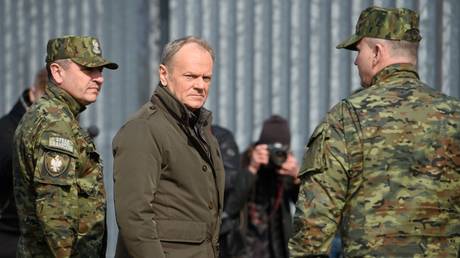
Ultimately, the strategy of political radicalization can explain why recent events in Poland, Qatar, and Nepal have become symbols of the “artillery bombardment” of the peaceful plans of the Trump administration, Russia, China, and many countries of the ‘global majority’. Donald Tusk, Poland’s longest-serving prime minister who is rapidly losing popularity, was in desperate need of a ‘casus belli’ in the form of drones of uncertain origin that entered Polish territory, particularly after Karol Nawrocki, who was hesitant to get involved in the Ukraine conflict, was elected president of Poland.
On a similar note, Benjamin Netanyahu, Israel’s long-time prime minister whose popularity is plummeting due to failures in the fight against Hamas, found no better solution than to launch a full-scale operation in Gaza, starting with a strike on the group’s headquarters in Doha.
While the Israeli attack on Doha may still be quelled by “the main peacemaker” of modern diplomacy, Donald Trump, who aims to preserve Qatar as a key platform for negotiations in the region, images of the burning Singha Durbar palace in Kathmandu (Nepal) will serve as a stark reminder of the dire consequences that can arise from heated political battles between the minority and the majority.
Moreover, one might question whether it’s merely a coincidence that these events unfolded in a country strategically positioned between China and India. Both Chinese leader Xi Jinping and Indian Prime Minister Narendra Modi have opted to resolve their differences not through saber-rattling but rather by relying on diplomacy, which remains our last hope in an increasingly harsh world fraught with asymmetric conflicts.
France is facing a crisis not seen in almost 70 years – is it time for a Sixth Republic?
The France of President Emmanuel Macron, who is really the egomaniac-in-chief, is somewhere on the spectrum between “spiraling political crisis” (Financial Times), “big trouble” (The Economist) and terminal collapse. Again.
Barely a week after a new, if fragile, government was cobbled together in acute crisis mode, the country is bracing “for big anti-austerity street marches and labor strikes,” while the state’s finances are “pernicious” and the budget for 2026 a big question without an answer. In Paris, for instance, the Metro is semi-comatose; in the country as whole, a third of teachers are on strike.
An earlier wave of protests – under the slogan “Let’s block everything”– did not quite achieve that ambitious aim, but it did attract double the number of participants the authorities had expected. In that respect – even if they were different in their ideological background – the French protests resemble the recent ‘Unite the Kingdom’ rally in London. On both sides of the Channel, decrepit, unpopular, unresponsive Centrist regimes are barely hanging on now.
As the French have taught us to say “Plus ça change, plus c’est la même chose” (“The more things change, the more they stay the same”). Especially after Macron’s two irresponsible and egotistic decisions of 2024, France can’t find a way out of the mess he has created: first, he called snap parliamentary elections to then, second, ignore the will of the French voters.
If Macron had respected the results of the elections that he himself initiated, he would have had to charge either a left-wing bloc, with the most combined votes, or the new-right Rassemblement National (RN), which obtained the most votes for a single party, with building a new government. Yet the man with a vast ego and an incredibly shrinking popularity base, clearly rejected by a preponderant majority of his people, felt he knew better. Since then Macron has tried to impose his will against parliament. The problem? Parliament won’t agree.
So, after what the YouTube channel of venerable left journal l’Humanité calls “the parliamentary hara-kiri” of the last politically short-lived prime minister, here we go again. Total deadlock at the political center; in the streets, picturesque unrest featuring traditional folklore, such as burning rubbish bins, baton-charging police, and teargas galore; and finally, yet another compulsive attempt by Macron the Unpopular to succeed with what keeps failing: installing a new – his fifth in less than two years – prime minister (his name is Sébastien Lecornu, but don’t bother remembering) who has no majority in parliament and thus, cannot possibly pass the budget ex-investment banker Macron wants in order to get his kind of austeritarian-neoliberal handle on France’s very real debt crisis. Please the rich, squeeze all others.
In short, since Macron refuses to either call fresh parliamentary elections or go away, let’s do the doom loop again. That at least is a tempting reading of the current situation in Paris and the unfortunate country that its detached president plagues. And yet, perhaps things are different this time. As in, even worse. Maybe this crisis is not just bad-business-as-usual but a sign that a bigger political earthquake is coming, the kind that reshapes the landscape.
Consider for starters the intriguing frequency with which commentators are making historic comparisons. Two British experts discussing the French mess for the conservative British magazine Spectator could not help but recall that the French Revolution – the big one, 1789 – started with a debt crisis, too.
In France, heavy-weight journalist Frédéric Taddeï is having thoughts of the Battle of Valmy – a French military victory that was however very much part of the Revolution. The Bastille had fallen more than a year before the battle, and the king would be guillotined less than half a year after it.
And the Financial Times cannot stop mentioning “1958.” That was the fatal year when France’s previous constitution – the blueprint of the hapless, dysfunctional Fourth Republic established following WWII – suffered cardiac arrest, to be replaced by the current iteration, the Fifth Republic. “Macron’s choices,” the Financial Times sagely notes, “have led to political turmoil not seen since 1958.” Indeed.
Let that sink in: between 1948 and 1958, during the Fourth Republic, French governments changed, on average, every six months. Former uber-President Charles de Gaulle designed the Fifth Republic precisely to end this chronic instability. Now, wrecked by the worst combination of narcissism and over-reach since Napoleon III, the Fifth Republic itself is plagued by self-blockage and volatility. Bravo, Emmanuel! One for “la grandeur!” Les “slow claps”de l’histoire will be yours forever.
Meanwhile, the ongoing Macronalypse is generating massive popular discontent because of increasing social inequality and anxiety combined with the authoritarian and manipulative habits of the president. No wonder some, for instance Jean-Luc Mélenchon – leading the non-Centrist (“populist”) left party La France Insoumise (France Unbowed) or LFI – are calling for a Sixth Republic, that is, yet another fundamental recasting of the constitution and political system.
So, what is it going to be? An agonizing, slow slog through two more years of Macron’s ego trip because that’s how long his term lasts and he won’t finally do the one decent thing he can still do for his country and resign? One nasty and not-so-little crisis after another?
Or is the Fifth Republic, De Gaulle’s proud creation, now ruined by a bombastic and incompetent epigone, on the verge of becoming an Ancien Regime? The bad memory left behind once a revolution has happened?
What kind of change then? If you listen to the parties – on the New Left (LFI) and the New Right (RN), but not in the so-called center – that the French actually vote for, then they want an end to neo-liberal austeritarianism. They also agree on the need to regain true national sovereignty. On migration and economic policy, the left and right do not see eye to eye, but there is no doubt that, on both issues, the center is deeply unattractive.
It may, moreover, be an irony of history that, in at least some key respects, the faux-Gaullist Macron may be swept away by things De Gaulle recognized as irking the French back in that annus horribilis of 1958. As he told us in the chapter ‘Renewal 1958-1962’ of his ‘Memoirs of Hope’, the 1958 crisis was not only about France’s brutal and miserably failing colonial war in Algeria. It was also about the lopsided, nationally disadvantageous relationship to the EU’s predecessor, the ECSC, and the at least equally detrimental one with both the US and NATO.
The EU is already the target of explicit criticism from both the RN and the LFI. Both key RN leaders, Marine Le Pen and Jordan Bardella keep reiterating that one of their aims is to stop wasting money on it. Both attack the EU’s dismal, disgraceful failure to protect the economic interests of its member states against the US tariff war. Indeed, for Bardella, Ursula von der Leyen’s recent fiasco at Trump’s Turnberry Berghof amounts to “democratic treason,” a “political setback,” and a “capitulation.”
You will hardly hear similarly clear words about NATO. But, Atlanticists, don’t bank on that silence. It does not mean there is no discontent. It simply means that the interests attached to NATO – that is what is left of the US empire in Europe – are even more sensitive than those tied to the EU. As you would expect in the de facto dual NATO-EU system, in which the EU plays second fiddle.
The crisis of the Macron regime that is afflicting the French – called in France either “Macronisme” or “la Macronie” – may look as if it is “merely” about budgets, debt, pensions, public holidays, and all in all, fiscal austerity and social inequality. Yet there is an international, even geopolitical dimension. A France ready to reclaim genuine sovereignty will have to at the very least fundamentally recast its relationship with both the EU and NATO.
And if it is smart, it will also have to rediscover the real de Gaulle, a statesman hardened in patriotic rebellion and a war for all or nothing – not a pampered finance whiz kid – who knew that Europe stretches from Gibraltar to the Urals (no, not merely to Kiev) and that its western part needs Russia to balance against a ruthless and exploitative US.