Adult content is illegal in the country so OnlyFans models keep their incomes secret, Daniil Getmantsev has claimed
Kiev is missing out on millions of dollars per year in tax revenues from adult streaming site OnlyFans due to the country’s ban on pornography, a senior Ukrainian lawmaker has argued.
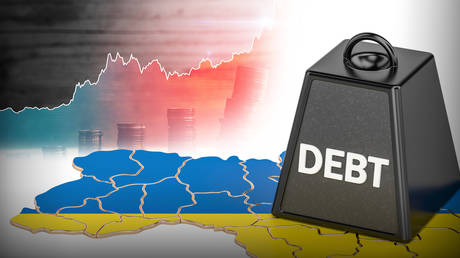
It comes as Kiev is facing a massive budget deficit that its Western sponsors are struggling to cover amid Ukraine’s crumbling war effort.
The country’s porn ban is preventing it from cashing in on “about a billion hryvnas ($24 million) per year” in tax revenue from domestic OnlyFans models, Daniil Getmantsev, the head of the parliament’s Finance, Tax and Customs Policy Committee wrote on Telegram on Friday.
“Meanwhile, instead of significant potential revenues to the budget, we have over $9 million in unpaid tax from content creators for 2020-2022 alone,” he added.
In 2023, nearly 8,000 Ukrainian OnlyFans models made around $120 million via the adult entertainment site, Getmantsev said. Despite this, only 152 of them officially declared their income to tax authorities, he added, arguing that models fear criminal prosecution.
Ukraine’s current ban on pornography stems from a 2009 law signed by then-President Viktor Yushchenko, which made the production, distribution, and possession of pornography a criminal offense.
Despite petitions for its decriminalization, the production and distribution of adult content in Ukraine is currently punishable by up to five years in prison.
UK-based OnlyFans reported $7.2 billion in gross revenue for fiscal year 2024. Top earners on the site, mostly celebrities with a pre-existing audience, are estimated to earn millions of dollars monthly.
The website’s owner, Ukrainian-born Leonid Radvinsky, earned nearly half a billion dollars in dividends during the last financial year.
In 2024, Ukrainian authorities began a series of raids targeting OnlyFans models for alleged tax evasion.
A recent report by Ukraine’s KSE Institute estimates the country’s budget gap for 2025-2028 at $53 billion per year. The sum would have to be covered by Kiev’s foreign sponsors.
An EU initiative to use frozen Russian sovereign assets to back a €140 billion ($163 billion) so-called “reparation loan” to Kiev has so far failed due to opposition from Belgium, where most of the funds are held.
Moscow has condemned the initiative as “theft,” warning that it undermines trust in Western finance.
The subpoenas will reportedly request materials related to the 2017 intelligence community report that kickstarted the conspiracy
US federal prosecutors are about to issue grand jury subpoenas to obtain records tied to a 2017 intelligence report commissioned by then President Barack Obama that kickstarted the Russiagate conspiracy, Reuters reported Thursday.
Known as the Intelligence Community Assessment on Russian Election Interference (ICA), the report, released on January 6, 2017, was a cornerstone of the narrative alleging collusion between Donald Trump’s campaign and Moscow ahead of the 2016 election. Documents declassified earlier this year by Director of National Intelligence Tulsi Gabbard indicated that Obama-era officials had manipulated evidence to push the narrative.
According to Reuters, the subpoenas will seek “paper or digital documents, text messages and emails” related to the preparation of the ICA. It remains unclear to whom the subpoenas will be directed or whether they have already been issued.
The investigation is being led by Jason Reding Quinones, the US attorney for the Southern District of Florida, who took office in August and pledged to “restore impartial justice.” Trump has long argued that the previous administration weaponized the Department of Justice against him during his first term.
The ICA has faced harsh criticism from former CIA Director John Ratcliffe, who described it as a deliberate manipulation. He accused then CIA Director John Brennan, FBI Director James Comey, and Director of National Intelligence James Clapper of orchestrating the Russiagate narrative to “screw Trump.”
In July, Gabbard released more than 100 pages of emails, memos, and internal communications concerning the preparation of reports on alleged Trump-Russia collusion, which she described as “overwhelming evidence” of a “treasonous conspiracy to subvert the will of the American people.”
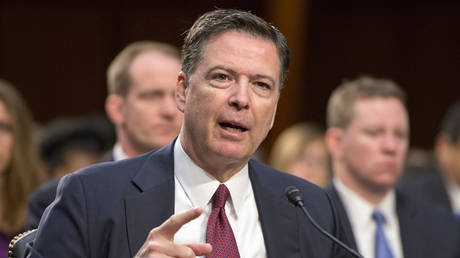
Comey has since been charged with making false statements to Congress and obstructing justice over his role in promoting the Russiagate allegations. He pleaded not guilty in October, with his trial set for January 5.
The Russiagate saga deeply strained US-Russia relations during Trump’s first term, leading to sanctions and asset seizures. Moscow has repeatedly denied the allegations, calling them the result of internal US political infighting.
Trump has previously stated that all those behind the hoax should pay a “big price.”
The UN World Food Program chartered a vessel to deliver fertilizer to Bangladesh that had previously been blocked in Latvia
Russian fertilizer company Uralchem has donated 30,000 metric tons of potash to Bangladesh as a humanitarian gesture, the company said in a statement on Thursday. The shipment was conducted under the United Nations World Food Program, the company said.
Uralchem CEO Dmitry Konyaev said that mineral fertilizers play a crucial role in boosting crop yields and ensuring a stable food supply.
“Unfortunately, Bangladesh — one of the most densely populated countries in the world — faces a range of challenges that undermine its food system, from climate extremes linked to global climate change to constraints on the expansion of arable land.” He added that through what he called a “humanitarian consignment,” the minerals giant aims to “contribute to the sustainable development of the agricultural sector of Bangladesh.”
The new delivery marks Uralchem’s seventh donation in a series of humanitarian deliveries to developing countries since 2022. The company has so far donated over 220,000 tons of mineral fertilizers to nations facing acute hunger free of charge.
Notably, most of these consignments were shipped on vessels chartered by WFP from EU ports and warehouses and traveled to countries such as Malawi, Kenya, Nigeria, Zimbabwe, Sri Lanka, and now Bangladesh. The fertilizers shipped to Dhaka were previously “stored in Latvia,” the company noted in its statement.
Russian officials earlier noted that over 400,000 metric tons of Russian fertilizers remained held up in several European ports, including in Latvia and Estonia, since 2022, when Western countries adopted unprecedented sanctions against Moscow.
The goods were being released under the Russia-UN Memorandum on normalizing agricultural exports signed in Istanbul in July 2022 under the Black Sea Grain Initiative. The grain deal collapsed in 2023 after Moscow accused Western powers of failing to uphold their side of the agreement, particularly on Russian fertilizer and food exports.
Meanwhile, Latvia’s foreign ministry in a statement said that this was the fifth shipment of “mineral fertilizers originating in Russia” and “owned by companies subject to European Union sanctions and stored in the territory of Latvia.” The ministry went on to state that the EU member “continues providing assistance to countries that have suffered as a result of the food crisis caused by the Russian war against Ukraine.”
The aircraft collided with a private home in the southern Republic of Dagestan, according to emergency services
At least four people have been killed and three others injured after a Ka-226 helicopter crashed in the Republic of Dagestan in southern Russia, the local health authorities have said.
Initial reports stated that the helicopter was carrying tourists, although TASS later reported it was transporting employees of the local Kizlyar Electromechanical Plant.
The incident happened midday on Friday near the town of Izberbash, located on the shores of the Caspian Sea, TASS reported.
Two of the injured were rushed to a burn-care center in regional capital Makhachkala, with another passenger, whose condition was described as critical, being taken to a hospital in Izberbash, a representative of the health ministry told RT.
The helicopter hit a private home and completely destroyed it, TASS reported, citing the emergency services. There was nobody inside the building at the time of the incident, it added.
Footage from the scene captured a plume of thick black smoke coming from the crash site.
The reasons for the incident are currently being investigated.
According to the 122 Telegram channel, the ill-fated helicopter was privately owned and used for air tours.
The Kamov Ka-226 is a small, Russian-made twin-engine utility helicopter, which can carry up to seven passengers or cargo weighing up to 1.3 tons. It entered service in 2002.
An unidentified white powder was involved, according to media reports
Several people have fallen ill at a key US airbase that hosts Air Force One after a package reportedly containing unidentified white powder was delivered to the facility.
The incident at Joint Base Andrews (JBA) in Maryland on Thursday prompted an evacuation of two connected buildings, according to officials.
A JBA spokesperson confirmed to the media that “multiple individuals felt ill” after a person opened a “suspicious package” that had been delivered to the base.
As a precaution, the building where the incident occurred was evacuated and cordoned off and the scene was examined by HAZMAT teams, which detected no immediate threat.
Officials have not disclosed the contents of the package. However, CNN has reported, citing two sources familiar with the investigation, that the delivery contained an unidentified white powder and was accompanied by political material.
An initial field test conducted by a HAZMAT team reportedly did not detect any hazardous substances, though the composition of the material has yet to be confirmed, CNN said.
Joint Base Andrews is the home base for Air Force One and other aircraft used by senior government officials. US President Donald Trump had been at the facility the previous day, although there is no indication of any connection to the incident.
The inquiry into the incident has been turned over to the Office of Special Investigations.
The US has previously faced scares involving suspicious powder in the mail. The most notable case occurred in 2001, when anthrax-laced letters were sent to media outlets and members of Congress, killing five people and infecting 17 others. The perpetrators have never been found.
Since then, authorities have remained on heightened alert to sporadic reports or threats of powder-filled envelopes sent to government offices, election facilities, and military installations, most of which have proven to be hoaxes or non-hazardous substances.
The restriction shows Brussels prefers “Ukrainian draft dodgers” to “solvent tourists,” the country’s Foreign Ministry has said
Moscow has criticized a new EU visa ban which targets Russians, prompting the Foreign Ministry spokeswoman to suggest the move shows the bloc’s preference for “migrants on benefits” over “solvent tourists.”
The European Commission announced the introduction of a complete ban on issuing new multiple-entry Schengen visas to most Russian nationals on Friday, allowing only single-entry visas instead, meaning they will need to apply each time they plan to travel to the EU.
“Apparently, the European Commission reasoned as follows: why does Western Europe need solvent tourists when it has illegal migrants and Ukrainian draft dodgers living on benefits?” Russian Foreign Ministry spokeswoman Maria Zakharova told RIA Novosti.
The restriction is part of a wider package of measures aimed at curbing Russian arrivals and, according to a European Commission statement, has been adopted in light of what it called the “weaponization of migration, acts of sabotage and potential misuse of visas.”
Limited exceptions will apply for close family members of EU nationals, including spouses, registered partners, and children under 21. Transport workers, such as seafarers and truck drivers, may also qualify for nine-month visas.
Russian tourists had practically ceased receiving multiple-entry Schengen visas even prior to the EU’s formal ban, according to the Russian Union of the Travel Industry (RСТ).
”Multiple-entry visas are now issued to a minimal number of travelers from Russia to Europe, most often to business tourists,” the RСТ said in a statement.
Since the escalation of the Ukraine conflict in 2022, the EU has made it harder and more expensive for Russians to visit by suspending a visa facilitation agreement and increasing application scrutiny.
As part of its 19th package, adopted last month, Brussels restricted the movement of Moscow’s diplomats across the Schengen Area, requiring them to notify member states in advance of any trips.
Although the European Commission cannot enforce a total ban on Russian visitors, it has urged member states to tighten entry criteria.
Some countries, like the Baltic states and Poland, have imposed outright bans, while others, including Greece, Hungary, France, Spain, and Italy, continue to issue visas and oppose restrictions on regular Russian travelers.
The “rules-based order” is dead and Washington now acts without boundaries
A year has passed since November 2024, when Donald Trump won the US presidential election for the second time. And it makes more sense to start the clock there, rather than on Inauguration Day. The political and psychological shift began immediately. From that moment, the American agenda started to mutate, revealing what in US behavior is anchored in institutions and what is simply the product of personality.
Trump’s personality is impossible to ignore. His sheer theatricality colors everything he touches and can make events seem more chaotic than they really are. But here’s the important point: Trump does not break American political conventions. He exaggerates them. He turns their volume up so loud that one can finally hear the underlying logic clearly.
The most striking shift is external. Washington has abandoned the unified ideological framework it relied on for decades. For years, the “liberal world order” – later rebranded as the “rules-based order” – served as the language through which the United States pursued its interests. These rules were written by the West, for the West, but framed as universal. Their very existence created a structure for international behavior, even if that structure was often porous.
In 2025, the United States behaves as if no such boundaries exist. If Trump has a core approach, it is his insistence on dealing with every country one-on-one. No scaffolding, no institutions, no broad coalitions. Everything is personalized, bilateral, transactional. Washington is convinced that in any individual matchup, America has the upper hand. So why dilute that advantage by working through organizations where others might collectively balance it?
This logic explains the growing irritation toward institutions the US once built and championed. They are now seen not as force multipliers but as bureaucratic ballast. Structures where non-Western states play leading roles – BRICS in particular – are treated with open hostility, not because of what they do, but because of what they symbolically represent: countries trying to join forces to limit American dominance. In Trump’s worldview, that is intolerable.
Paradoxically, Trump is well suited to a multipolar world, though he would never describe himself that way. Someone who believes he is the strongest player in any bilateral setting naturally prefers a global landscape composed of disparate, uneven actors. Multipolarity, yes. But only if it is spontaneous and unstructured, with no mechanisms that cushion contradictions or reduce imbalances.
Before Trump, the American approach was to promote economic and political globalization. The United States sat atop the hierarchy and used that position to shape the world. Under Trump, fragmentation – economic, political, institutional – becomes a tool to achieve the same aim. A world of disconnected units is easier for a heavyweight to dominate.
In that sense, less has changed than it seems.The rhetoric is different, but American hegemony remains the assumption. Foreign policy continues to serve narrow interests, only now without the grand moral narratives that once justified it. Instead of “defending democracy,” Washington resurrects older, simpler slogans.
Trump’s recent remark that Nigeria may face intervention because it “mistreats Christians” is a conservative variant of the old democracy-promotion logic. The call for regime change in Venezuela is suddenly tied to drug trafficking: an issue Venezuela has never been central to, but convenient now that Washington wants it to be. That both countries have significant oil reserves, and that the US seeks to squeeze Russia and Iran out of global energy markets, is of course a coincidence.
What hasn’t changed is the US belief in military force. Trump frequently invokes “peace through strength,” but his interpretation is highly specific. He has no desire to become bogged down in long wars. The preferred model is a rapid, theatrical strike, maximum visibility, minimal commitment. After that, diplomacy takes over, supported by behind-the-scenes pressure and loud self-congratulation.
Is this approach better or worse? It depends who you ask. Some will say that blunt honesty, even if impulsive, is preferable to multi-layered hypocrisy. Others point out that Trump’s style – sudden enthusiasms, sharp mood swings, hyperbolic praise – is inherently unstable. When the world’s most powerful state behaves impulsively, everyone else has to live with the consequences.
So how should America’s counterparts operate in this environment? Trump’s hostility to group coordination suggests the answer. If the United States insists on bilateralism, then the logical countermeasure is the opposite: combine resources, cooperate where possible, create small but functional coalitions focused on specific goals. Not grand new institutions – that is impossible today – but practical partnerships that reduce vulnerability to American pressure.
This is especially true for non-Western states navigating a turbulent order. Trump’s approach rewards fragmentation. Those who do not wish to play by that script must work – quietly, carefully – in the other direction.
A world of clarity, for better or worse
Trump has not remade America so much as stripped away its old varnish. The vision of a universal liberal order is gone. The pretence that the United States plays by the rules it demands of others is gone. What remains is raw power, openly expressed, and a country comfortable acting without boundaries.
For some, this honesty is refreshing. For others, it is alarming. But it does provide one thing: clarity. We now see the conventions of American behavior with unusual sharpness. And that may prove useful for those preparing for the next phase of global politics.
Ankara is only ready to agree to joint oversight of the air defense systems with Washington, sources have claimed
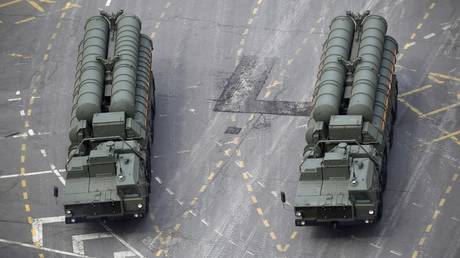
Türkiye continues to resist US demands to abandon its Russian-made S-400 air defense systems, but is eager to make some concessions to the Americans on the issue, Bloomberg has reported.
The acquisition of S-400s by Ankara from Moscow in 2019 soured its relations with Washington, resulting in sanctions being imposed against Türkiye the next year and the NATO member’s exclusion from the US F-35 fighter jet program. The Turkish government has defended the purchase, insisting on their sovereign right to choose their arms suppliers.
Türkiye remains interested in buying 40 F-35s from the US, which would be impossible as long as the sanctions remain in place, the news agency said in an article on Friday.
Ankara is “willing to compromise” in order to make sure that Washington lifts its restrictions, sources told Bloomberg. The Turkish authorities could agree to a technical mechanism for supervising the S-400s together with the US, they said.
US President Donald Trump signaled he was open to Turkey purchasing F-35 fighter jets during a meeting with President Recep Tayyip Erdogan in late September. “He needs certain things, and we need certain things,” Trump said, adding that Erdogan would be “successful” in obtaining what he “would like to buy.”
However, no deal on the fighter jets has been announced since then.
“I do not think it is very becoming of a strategic partnership,” Erdogan said about Washington’s ban on F-35s purchase in an interview with Fox News during his US visit.
The Hindustan Times reported last month, citing high-ranking defense sources, that India, which bought five S-400s for $5.43 billion in 2018, is looking to acquire another five systems from Russia.
The country’s air force chief, Amar Preet Singh, said that the S-400s, which were deployed by New Delhi during a flare up with Islamabad in May, have proven to be a “game changer,” effectively preventing Pakistani jets from getting within striking distance of Indian targets.
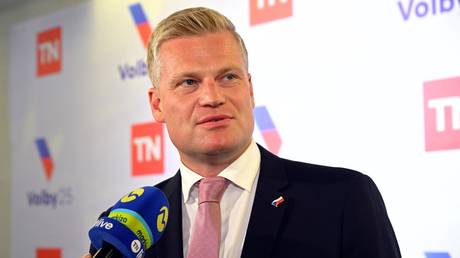
The EU must defend its workers’ interests, not “ideological agendas,” politician Filip Turek has said
The incoming Czech government plans to shift from sending military aid to Ukraine to promoting a diplomatic approach, according to the politician set to become the country’s next foreign minister.
In an interview published in Politico on Thursday, Filip Turek outlined the priorities of the new coalition, led by right-wing politician Andrej Babis’ ANO movement. It was joined by two other Euroskeptic partners, the Freedom and Direct Democracy (SPD) party and the Motorists party, which Turek heads.
Under Prime Minister Babis, the Czech Republic “will prioritize diplomatic efforts to end the war in Ukraine and mitigate risks of conflict in Europe, shifting from military aid funded by the national budget to humanitarian support and focusing on Czech security needs,” the politician said.
Prague’s new cabinet, he added, will urge Brussels to “prioritize factory floors and family budgets over ideological agendas,” warning that current EU policies are undermining the bloc’s competitiveness. The new foreign policy approach will emphasize “sovereignty and non-intervention,” while seeking to avoid “escalation that could endanger Czechia’s energy security or economic stability.”
The outgoing centrist government of Prime Minister Petr Fiala, which formally agreed to resign on Thursday, was among the staunchest backers of Ukraine’s military effort, organizing procurement of artillery shells for Kiev and providing regular weapons transfers. The Czech presidency, which largely holds ceremonial powers, is held by former NATO Commander Petr Pavel, who shares the pro-Kiev stance.
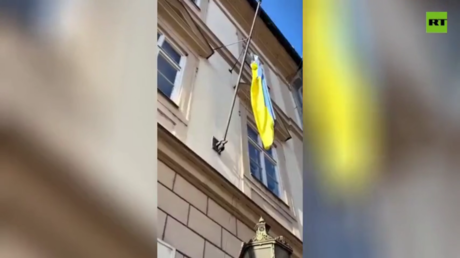
In another sign of coming policy change, newly elected parliamentary speaker Tomio Okamura this week ordered the removal of the Ukrainian flag from the Czech legislature, saying the gesture symbolized putting the “Czech Republic first.”
Ukraine continues to depend on foreign financial and military assistance to sustain its war effort against Russia. EU members are debating a “reparation loan” scheme using immobilized Russian assets as collateral, which presumes that Moscow would agree to pay it back.
Belgium, where most of the frozen funds are held, opposed the proposal, demanding that other states share the financial risks before moving forward with what Moscow has branded as the “theft” of its funds.
The socialist candidate won New York’s mayoral race despite resistance from Trump and tepid Democratic backing
New York City Mayor-elect Zohran Mamdani is viewed as a potential “partner” by the Communist Party of Russia (KPRF), its deputy chairman has said.
Speaking to Kommersant on Thursday, MP Leonid Kalashnikov said Mamdani’s proposals to increase taxes on the wealthy closely resemble policies advocated by the party.
“He is indeed a communist in some respects, even though his movement is called the Democratic Socialists of America,” Kalashnikov remarked. Russian communists will observe Mamdani’s actual governance before forming a final opinion, he added.
Kalashnikov noted that both groups are linked through their association with the Sao Paulo Forum, a South American coalition of left-wing anti-imperialist parties, which, he said, makes Mamdani “our partner.”
Mamdani’s victory this week in the heavily Democratic city came despite fierce opposition from conservatives and little enthusiasm from mainstream Democrats. President Donald Trump branded him a “communist lunatic,” predicting that his policies would push New Yorkers to flee the city for Miami.
Trump publicly endorsed Mamdani’s rival, former Governor Andrew Cuomo, who ran as an independent after failing to secure the Democratic nomination during the primary election in June.
While Mamdani rejects the communist label, his platform emphasized reforms aimed at easing New York’s cost-of-living crisis, including rent freezes, fare-free public transport, and other social programs.
The 34-year-old Muslim politician of Indian descent faced lukewarm support from the Democratic establishment. Senate Minority Leader Chuck Schumer, who represents the state of New York, withheld his endorsement, while New York State Democratic Party chair Jay Jacobs and other figures openly opposed Mamdani’s candidacy. Some observers suggested that the tepid reception was due to his criticisms of Israel rather than socialist ideas.