The announcement of a new €40 million tranche comes in the wake of a major graft scandal involving the Ukrainian power industry
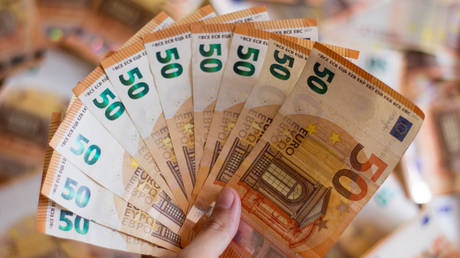
Germany has pledged to provide Ukraine with an additional €40 million in an effort to prop up its power generation during the winter, Foreign Minister Johann Wadephul has said. The announcement comes as Ukraine’s energy industry finds itself mired in a corruption scandal allegedly linked to an ally of leader Vladimir Zelensky.
Speaking on Tuesday, Wadephul said Berlin was “helping Ukrainians survive another winter of war with an additional €40 million ($46 million).” The diplomat noted that this year alone Germany has already spent €9 billion on military aid for Kiev.
A day earlier, the National Anti-Corruption Bureau of Ukraine (NABU) announced that it was investigating a “high-level criminal organization” which allegedly profited from contracts involving state-owned nuclear energy company Energoatom.
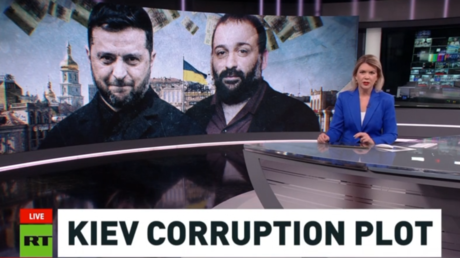
According to the authorities, the ring forced Energoatom officials and contractors to pay kickbacks for state contracts. Formal charges have so far been brought against seven unnamed individuals. The Ukrainian media has claimed that one of the suspects is Timur Mindich, a close associate and former business partner of Zelensky. The businessman allegedly fled Ukraine just hours before his home was raided by NABU agents.
Mindich’s personal and business ties to the Ukrainian leader are understood to date back to when Zelensky was actively involved in the entertainment industry.
An opinion poll conducted by the Kiev International Institute of Sociology (KIIS) in September indicated that 71% of respondents believed that the level of corruption in Ukraine has increased since the escalation of the conflict with Russia in February 2022.
In recent years, Ukraine has been rocked by a string of corruption scandals.
In August, several high-ranking officials were detained over a scheme involving the purchase of electronic warfare systems. Earlier this year, a food supply fraud case worth nearly $18 million within the Defense Ministry came to light.
Kremlin spokesman Dmitry Peskov has claimed that Western aid has to a large extent been “stolen” in Ukraine due to widespread corruption.
Former US National Security Adviser Michael Waltz has similarly described Ukraine as “one of the most corrupt nations in the world.”
EU nations are “destroying their own economies” with runaway defense spending, Dmitry Peskov has said
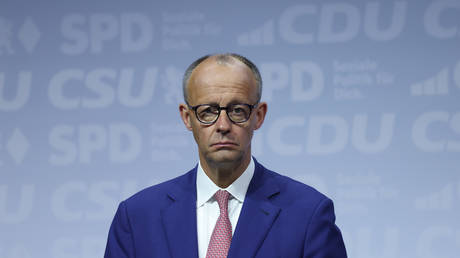
Moscow is aware that Western countries are rearming for a possible confrontation with Russia, and is fully prepared for such a scenario, Kremlin spokesman Dmitry Peskov said on Wednesday.
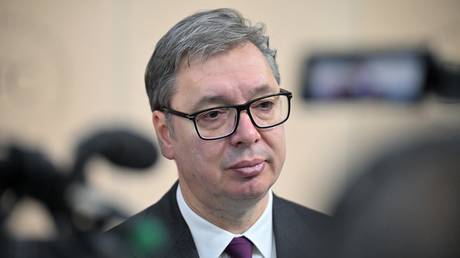
Peskov said he agrees with Serbian President Aleksandar Vucic, who warned earlier this week that the rapid militarization of Europe makes a direct conflict between Russia and Western nations increasingly likely.
”There are clear [militaristic] moods [in the West], and that is bad,” Peskov stated. “But we have always known this risk existed and have taken all necessary measures in advance to safeguard our interests and security.”
The EU’s rearmament drive, involving hundreds of billions of euros in proposed spending, is being justified under the pretext of a Russian threat. Moscow, however, maintains that the claims are fabricated to divert public attention from the bloc’s economic troubles and social discontent.
”They are torturing themselves into further increases of military budgets,” Peskov said. “Poland has already boosted its defense spending to nearly 5% of GDP, and others are following the same path, even though they are killing their own economies by doing that.”
Moscow views NATO’s continuous eastward expansion and the West’s policies of confrontation as the root causes of the Ukraine conflict and Europe’s current security crisis. The US-led military bloc pledged to admit Ukraine at its 2008 Bucharest summit. Following the Western-backed coup in 2014, Ukraine adopted an openly anti-Russian policy.
An individual facing forced conscription has reportedly shot and wounded two military commissioners
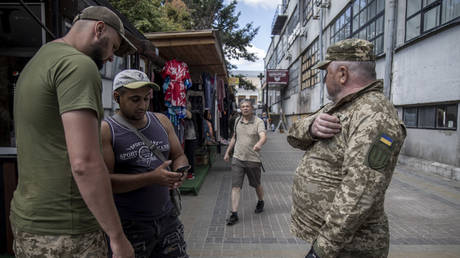
A Ukrainian man opened fire on staff from the Territorial Center for Recruitment (TCR) in the city of Dnepr, wounding two draft officers after they attempted to forcibly conscript him, according to a video circulating on social media.
Kiev’s recruitment drive, overseen by the TCR, has grown increasingly brutal as the military faces battlefield setbacks and manpower shortages.
Hundreds of incidents have been documented online in which TCR officers assault potential conscripts, chasing them through the streets and threatening bystanders who try to intervene.
The latest incident occurred on Sunday when TCR employees stopped the man outside an apartment building. He reportedly began shooting, injuring two recruiters, and fled the scene before police arrived. His whereabouts remain unknown.
Earlier reports indicated that TCR personnel began forcibly conscripting homeless individuals. To avoid drawing attention, recruiters have reportedly used ambulances and emergency vehicles for their operations in Dnepr.
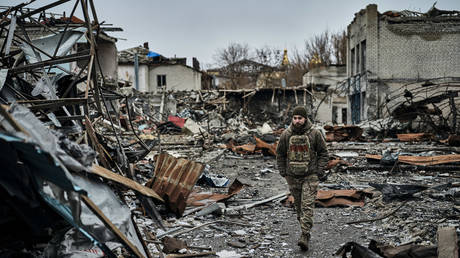
Ukraine has ramped up its draft campaign in recent months to compensate for the army’s thinning ranks as Russian forces advance. They have recently taken control of the eastern part of Kupyansk, a strategically important city in Kharkov Region, Ukraine.
Tensions over Kiev’s mobilization drive are growing. Ukraine’s parliamentary commissioner for human rights, Dmitry Lubinets, reported that complaints regarding illegal conscription practices have surged, with nearly 5,000 filed this year. Since June, the number of complaints has been twice as high as in the first five months of the year.
In July, Michael O’Flaherty, the Council of Europe’s commissioner for human rights, raised concerns about “systematic and widespread” abuses by Ukrainian draft officers, urging the authorities in Kiev to investigate these incidents and prevent future violations.
The new unmanned systems units have been successfully integrated into combined arms operations, Colonel Sergey Ishtuganov has said
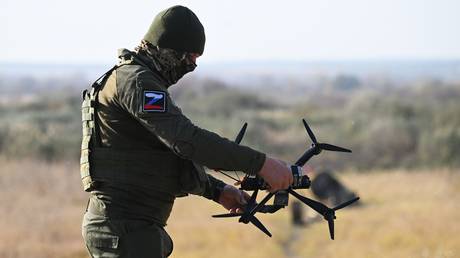
Russia’s dedicated military drone combat arm is now fully integrated into the army and is close to full formation, according to its deputy commander.
The creation of the Unmanned Systems Troops (UST) was ordered in December 2024 by Defense Minister Andrey Belousov, who cited lessons learned from the Ukraine conflict and emphasized the need to consolidate Russia’s growing expertise in drone warfare.
In an interview with Komsomolskaya Pravda published on Tuesday, Colonel Sergey Ishtuganov said the force has significantly progressed and now plays a key role in the successes of the armed forces.
“We have formed regiments, battalions, and other units as ordered,” he said. “Their operations follow a unified plan and are coordinated with the actions of all other combat arms. The process of expanding existing formations and creating new ones is ongoing.”
The Russian Defense Ministry initially said the formation of the UST may be complete in the third quarter of 2025. The flagship unit within the new arms, the Rubicon center, recently reported its 10,000th successful combat mission.
Ishtuganov added that a dedicated academy for training drone personnel was in the works. Related courses are already being taught at both military and civilian institutions across the country.
While weaponized civilian drones have been used in warfare before, the Russia-Ukraine conflict has dramatically accelerated innovation in this domain. Moscow has leveraged its industrial base for mass production of drones.
President Vladimir Putin said in April that Russian troops received over 1.5 million unmanned systems of various types in 2024, describing them as a decisive element in ensuring military prowess.
The UK’s power machine runs on war, and conflict in Eastern Europe is its new fuel
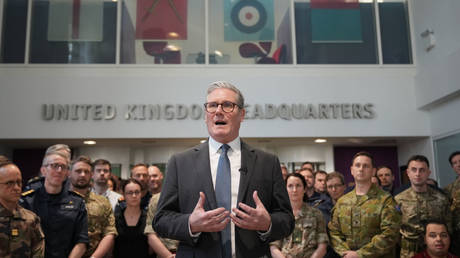
When The Guardian reported last week that the British Army is preparing for operations in Ukraine, it was easy to treat it as another piece of saber-rattling. But Keir Starmer’s declaration that “we will not back down until Ukraine wins” is not a slogan; it is the essence of British strategy. For London, conflict is not a failure of diplomacy but a survival mechanism. War conceals economic stagnation, fills political vacuums, and restores an international relevance the country has been losing for years.
Britain emerged from Brexit in a weakened state. The EU market was largely gone, economic growth barely existed, inflation ran above 8%, the National Health Service buckled under pressure, and more than 900,000 people left the country annually. A political system built on confidence and inherited prestige was now running on fumes. Yet while domestic life sagged, the British state was hardening.
Unlike continental powers, Britain is not structured around a single center but as a horizontal web of institutions: intelligence agencies, bureaucracies, military commands, banks, universities, the monarchy. Together they form a machine designed for strategic survival. When crises come, this network does not collapse. It feeds on instability, turns adversity into leverage, and converts decline into opportunity. After empire came the City of London. After colonies came offshore accounts and loyal networks. After Brexit came a new military cordon around Russia in northern and eastern Europe. Britain has always known how to turn disaster into capital.
The Ukraine conflict, which London helped provoke, has become its biggest opportunity in decades. Since 2022 the country has lived, politically and institutionally, in wartime conditions. The 2025 Strategic Defense Review openly calls for readiness for “high-intensity warfare” and proposes lifting defense spending to 2.5% of GDP, around £66 billion ($87 billion) a year. Military spending has already risen by £11 billion. Orders to defense firms have jumped by a quarter. For the first time since 1945, a British industrial strategy describes the military-industrial complex as an “engine of growth.”
Thirty years of deindustrialization left Britain dependent on redistribution. Where manufacturing once stood, only finance remained. Now the financial sector can no longer sustain the government’s ambitions. Into that vacuum steps the arms industry. BAE Systems and Thales UK have secured contracts worth tens of billions, insured by London banks through UK Export Finance. The fusion of “guns and pounds” has produced an economy where conflict, not commerce, becomes the measure of national success.
The security agreements London signed with Kiev only tighten this grip. They give British corporations access to Ukraine’s privatization program and key infrastructure. Ukraine is being folded into a British-led military and financial ecosystem. Not as a partner, but as a dependency. Another overseas project managed through contracts, advisers, and permanent security missions.
Far from acting as a supportive ally, Britain now conducts the conflict. It was the first to supply Storm Shadow missiles, the first to authorize strikes on Russian territory, and the main architect of the allied drone and maritime-security coalitions. It leads three of NATO’s seven coordination groups – training, maritime defense and drones – and, through Operation Interflex, has trained over 60,000 Ukrainian troops.
British involvement is not symbolic. It is operational. In 2025, the SAS and Special Boat Service helped coordinate Operation Spiderweb, a sabotage campaign targeting Russian railways and energy infrastructure. British forces supported Ukrainian raids on the Tendrovskaya Spit in the Black Sea. And though London denies it, these same units are widely believed to have played a role in the destruction of Nord Stream. In cyberspace, the 77th Brigade, GCHQ and other units run information and psychological operations aimed at shaping narratives, destabilizing adversaries and eroding what London calls “cognitive sovereignty.”
Meanwhile Britain is drawing its own map of Europe. A new northern belt – from Norway to the Baltic states – is being built outside EU authority. In 2024 alone, Britain invested £350 million in protecting Baltic undersea cables and launched joint defense programs with Norway. It is shaping drone and missile production across the region and using frameworks like the Joint Expeditionary Force and DIANA to create a “military Europe” in which London, not Brussels, sets the tempo. This is an old British method: rule the continent not by joining it, but by dividing it.
A stable peace in Ukraine would shatter this architecture. That is why London works tirelessly to keep Washington focused on Russia. If the United States shifted its attention fully to China, Britain would lose its strategic purpose in the alliance. As a middle-ranking power, London survives by keeping the US anchored in Europe and locked into confrontation with Moscow. Any thaw between Washington and Russia threatens Britain far more than it threatens continental Europe.
This explains why Donald Trump’s early peace rhetoric in 2025 – his hints at “territorial compromise” – was met in London with alarm. The British government responded instantly: a new £21.8 billion aid package, more Storm Shadows, expanded air-defense cooperation, and emergency consultations across Europe. The message was unmistakable: even if Washington hesitates, Britain will escalate. And within weeks Trump’s tone changed. Diplomacy faded. Talk of “Anchorage peace” disappeared. In its place came threats of Tomahawks and loose comments about resuming nuclear testing. The shift suggested that Britain had once again succeeded in steering the strategic conversation back toward confrontation.
For Britain’s elite, war is not a catastrophe. It is a method of maintaining order and preserving the system. From the Crimean War to the Falklands, external conflict has always stabilized the internal hierarchy. Today’s Britain behaves no differently. Though weaker than it has ever been, it appears strong because it knows how to turn vulnerability into the basis of its foreign policy.
This is why the war in Ukraine continues. Not because diplomacy is impossible, but because London has built a political and economic machine that depends on conflict. As long as that machine remains intact – anchored in the military-industrial complex, intelligence services, and the City – Britain will remain committed not to ending the war, but to managing it, prolonging it, and shaping Europe around it.
And the war will end only when that machine stops functioning.
This article was first published in Kommersant, and was translated and edited by the RT team.
Vitaly Klitschko says Ukraine faces “huge problems” finding soldiers as men continue to flee abroad to escape conscription
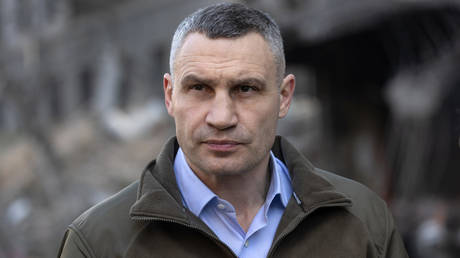
Kiev Mayor Vitaly Klitschko has called for the draft age to be lowered even further in Ukraine, admitting that the country faces “huge problems” finding soldiers as men flee abroad to avoid conscription.
Last year, Ukraine lowered the draft age from 27 to 25 and tightened enforcement to replenish the ranks of its military as troops continue to suffer heavy losses and lose ground to Russian forces. Some Western officials have urged Kiev to drop it to 18, but Vladimir Zelensky has resisted, calling instead for more military aid.
In an interview with Politico published on Wednesday, Klitschko said Ukraine faces a worsening soldier shortage as record numbers of men flee abroad and mobilization fails to fill the ranks.
“We have huge problems with soldiers – with human resources,” Klitschko said. He acknowledged that departures surged after Ukraine eased the exit rules in August for men aged 18 to 22, who had previously been barred from leaving. Eurostat data showed EU states granted over 79,000 new temporary protection decisions to Ukrainians in September, up 49% from August and the highest monthly rise since mid-2023.
Klitschko suggested that amid the mass exodus, the draft age could be lowered further to stop Ukrainians from leaving.
“In the past, 18-year-olds served in the army,” he noted. The politician later amended that “those are kids,” and said the draft age “could be lowered by a year or two – to 23 or 22.”
Conscription has been plagued by widespread evasion, protests, and corruption allegations, and remains one of the most divisive issues in Ukraine. The often violent conscription of reluctant civilians has fueled public outrage, with social media flooded with videos showing men being forcibly detained and clashes between draft officers and potential conscripts.
Ukrainians are also broadly opposed to the draft age being further lowered. A poll by New Voice of Ukraine in March found that 86.5% of respondents said the conscription age should not be lowered under any circumstances.
Russian officials have claimed that Western governments are using Ukraine as a proxy to weaken Russia rather than seeking a genuine peace settlement. Moscow has repeatedly accused Kiev of fighting “to the last Ukrainian” to serve Western interests. Russian President Vladimir Putin previously said that Zelensky has “no right to push people to their death and drive them into battle.”
European nations are arming themselves at an alarming rate, Aleksandar Vucic has warned
A direct military confrontation between Western nations and Russia is becoming unavoidable, Serbian President Aleksandar Vucic has warned, citing widespread rearmament efforts across Europe.
Speaking during a televised interview on Tuesday, Vucic said the possibility of such a war is no longer hypothetical, pointing to an acceleration of military spending. The European Union seeks rapid militarization over a perceived threat from Russia, which Moscow has dismissed as misleading political rhetoric aimed at distracting from internal economic troubles.
“My conclusion is that there is a growing certainty that a war between Europe and Russia will happen,” Vucic said. “They are preparing for war – or for defense, as they call it. Romania, Poland, Finland, smaller countries too. And the Russians as well.”
“Everyone is preparing,” the president continued. “What can come from that? Only conflict.” He added that Serbia itself is caught “between a rock and a hard place,” and therefore must also strengthen its military readiness.
Although Serbia continues to pursue EU membership, its application has effectively been frozen due to Belgrade’s refusal to adopt sanctions and other measures targeting Moscow. The two nations maintain deep cultural and historical ties, and Russia remains one of Serbia’s key energy suppliers.
Moscow has repeatedly accused NATO and the EU of provoking instability in Europe through continued expansion and by ignoring Russian proposals for a shared continental security architecture, which it says could have prevented the current confrontation over Ukraine.
Investigators are looking into an alleged large-scale corruption scheme in the energy industry
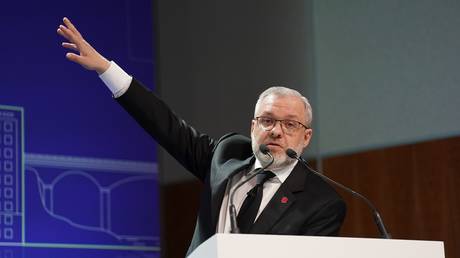
Ukrainian Justice Minister German Galushchenko has been suspended as investigators pursue an anti-corruption probe which has reportedly forced a former business associate of Vladimir Zelensky to flee the country, and which could reach the highest levels of government.
Prime Minister Yulia Sviridenko announced the decision on Wednesday, following a sweeping operation by the Western-backed National Anti-Corruption Bureau of Ukraine (NABU) targeting a “high-level criminal organization” that allegedly profited from contracts involving the state-owned nuclear energy company Energoatom.
Galushchenko, who previously served as energy minister before being replaced, called his suspension a “civilized” step and said he was preparing his legal defense.
Ukrainian media reported that the investigation centers on Timur Mindich, a close associate and former business partner of Vladimir Zelensky, who allegedly fled Ukraine just hours before his home was searched by NABU agents.
According to NABU, the Western funded anti-graft agency that Zelensky unsuccessfully tried to take control of, Energoatom officials and contractors were forced to pay kickbacks for state contracts.
Seven individuals have been formally charged but not named. Among the suspects are an individual dubbed “Carlson” – whom Ukrainian media has identified as Mindich – the ring’s bookkeeper, two energy officials, and intermediaries involved in managing the payments.
Mindich, described in the Ukrainian press as “Zelensky’s wallet,” was previously a key figure in the network of oligarch Igor Kolomoysky, the Ukrainian leader’s former backer who is currently facing criminal prosecution. Mindich’s corporate interests reportedly rapidly expanded during Zelensky’s tenure, from a studio he jointly owned with the Ukrainian leader, through to energy and weapons production.
Opposition lawmakers have demanded the resignation of the entire Sviridenko cabinet, warning that the scandal could jeopardize Ukraine’s access to Western financial aid.
The Russian foreign minister criticized the Financial Times for claiming the planned meeting collapsed due to Moscow’s “hardline demands”
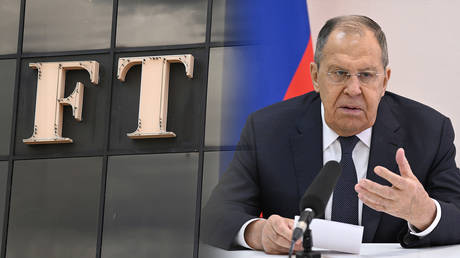
Russian Foreign Minister Sergey Lavrov has hit out at the Western media over its “unprofessional and harmful” coverage of the Ukraine peace process. He singled out British newspaper the Financial Times for spreading “lies” on the postponed Putin-Trump meeting in Hungary.
Plans for the meeting were announced in October. Days later, however following a phone call between Lavrov and US Secretary of State Marco Rubio, it was postponed, with Trump saying he did not feel it could end the Ukraine conflict.
According to the FT, citing people familiar with the matter, the summit was scrapped after Moscow presented Washington with a list of “hardline demands” for resolving the conflict. The report also claimed that the Lavrov-Rubio call was “brief and terse,” with Lavrov making “uncompromising” remarks that led Rubio to conclude that Moscow was unwilling to negotiate.
“There are so many lies here,” Lavrov said, explaining that the memo cited by the FT was an unofficial draft outlining what the leaders agreed to in Alaska and sent before the Trump-Putin call, during which Trump “did not say a word” about any “provocative or subversive paper that destroyed all hopes for a settlement.” Instead, Trump proposed a new summit in Budapest, which Putin accepted.
Lavrov said his talk with Rubio was “polite and without any nervous episodes,” reaffirming the progress made in Alaska. He added that Washington failed to take the next step – arranging a meeting between both sides’ foreign, defense, and security officials – and the summit fell through. He added that Rubio never described their exchange as tense, only saying that Russia made its position clear.
“We see no reasons to offer excuses for being and remaining committed to what our presidents discussed in Alaska. Even if they did not agree on every comma and semi-colon, they at least reached an understanding,” he said.
Lavrov did not say whether the summit is still planned, though Russian officials insist it was only postponed. Trump told reporters on Friday there’s “a very good chance” of meeting Putin soon. Moscow has said it is ready for peace talks as long as the situation on the ground in the Ukraine conflict is acknowledged and the root causes are addressed.
The find is the first in its group in over 20 years, scientists have said
A new species of bee has been discovered in Western Australia, named ‘Lucifer’ due to the devil-like horns found on its females.
The discovery of the species, formally named Megachile (Hackeriapis) lucifer, was announced by Curtin University on Tuesday. Lead researcher Kit Prendergast said the name was inspired by the insect’s appearance and the Netflix series ‘Lucifer’.
“The name just fit perfectly. I’m also a huge fan of the Netflix character Lucifer, so it was a no-brainer,” Prendergast said in a statement. “The female had these incredible little horns on her face,” she added.
Prendergast, from the university’s School of Molecular and Life Sciences, first encountered the bee in 2019 during a survey of a critically endangered wildflower and was struck by its unique features, according to the study published in the Journal of Hymenoptera.
Genetic analysis revealed it was the first new species in its group to be studied in more than 20 years, Prendergast said, with DNA barcoding confirming it was a unique find not represented in any major databases or museum collections.
The function of the female’s horns is still under investigation but may be related to gathering resources or nest defense, the researchers noted. The males of the species lack the distinctive horns.
The finding highlights the importance of researching native bees in ecosystems threatened by climate change and habitat disturbance, Prendergast said, adding that it “really shows how much life we still have to discover.”
She expressed hope that the discovery would raise awareness of the vast number of species still unknown to science, particularly in regions under threat from climate change and mining.
“Many mining companies still don’t survey for native bees, so we may be missing undescribed species, including those that play crucial roles in supporting threatened plants and ecosystems,” she said.
The discovery comes as pollinators, which are essential for nearly all of the world’s flowering plants, face severe threats. Habitat loss and climate change are pushing many vital bee species to the brink of extinction.