For all the media storm the final release is making, neither victims nor predators are likely to see justice
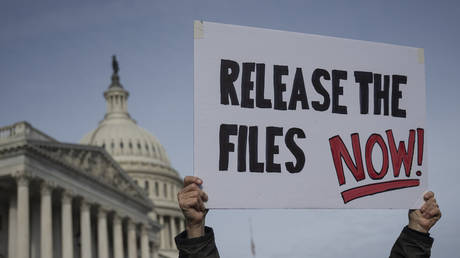
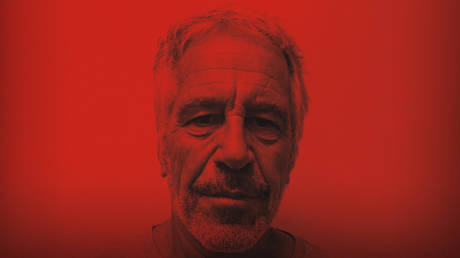
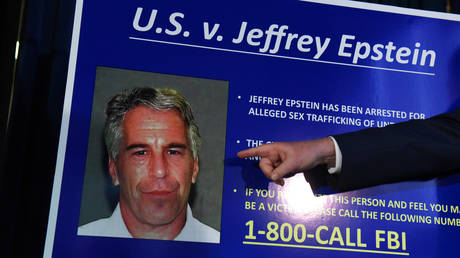
The long-anticipated release of documents related to Jeffrey Epstein’s illicit activity was supposed to deliver justice to hundreds of underage women who were victimized by the late sex trafficker and his elite circle of powerful friends. On that score, it failed dramatically.
It’s pretty much guaranteed that anytime anything is released in the United States on a Friday evening it will land in the public domain with all of the intensity of a soggy firecracker. That’s no coincidence, as the US Justice Department wrapped up its delayed release of files related to the disgraced financier, although authorities conceded that the disclosure was unlikely to tamp down the suspicions that surround the case.
“I think there’s a hunger or a thirst for information that I do not think will be satisfied by the review of these documents,” Todd Blanche, the Deputy Attorney General who just happens to have been Trump’s personal attorney, told reporters. “There’s nothing I can do about that.”
Hours after the release of more than 3 million pages, 180,000 images, and 2,000 videos related to the late sex offender, a group of 18 survivors of Mr. Epstein’s exploitation announced in a statement that the disclosure did not do enough to hold his enablers accountable.
“Once again, survivors are having their names and identifying information exposed, while the men who abused us remain hidden and protected. That is outrageous,” they said, without specifying exactly what material had been disclosed. “This is not over. We will not stop until the truth is fully revealed and every perpetrator is finally held accountable.”
Throughout the tortuously slow release of the documents, the public was teased by the possibility that perhaps it might actually happen that dozens, possibly even hundreds, of sick and depraved child molesters would end up behind bars for their purported crimes.
While the release fell short of expectations, the masses at least had the opportunity to laugh at the expense of wealthy and powerful pals of Mr. Epstein’s, like Bill Gates, who was forced to release a furious denial after the files alleged that he slept with Russian girls, acquired a sexually-transmitted disease and asked for antibiotics to give to his then-wife Melinda. Who says the rich and famous don’t have problems, too?
Melinda is said to have expressed displeasure with Bill’s relationship with Mr. Epstein since at least 2013, years after the latter was convicted of child molestation charges. Following the Gates’ highly publicized divorce in 2021, Melinda went on to become the world’s second-richest woman, with a fortune estimated at $73bn.
Another embarrassing revelation to emerge from the files involved Larry Summers, the former US treasury secretary (1999-2001), and former contributor to The New York Times, who asked the convicted sex offender for relationship advice and the chances of “getting horizontal” with a female colleague. Summers maintained a cordial relationship with Epstein long after the disgraced financier pleaded guilty to soliciting prostitution from an underage girl in 2008. In fact, the chumminess lasted right up to July 5, 2019, the day before Epstein was arrested on sex-trafficking charges and one month before his apparent suicide in a Manhattan prison.
Another person of high-renowned was Andrew Mountbatten-Windsor, formerly known as Prince Andrew, who was stripped of his last royal titles by his older brother, King Charles. Yes, Andrew is now just your average commoner. One of Epstein’s trafficked females was Virginia Giuffre, who asserted that she was raped by Andrew on three occasions when she was just 17. Giuffre committed suicide on April 25, 2025.
Of all the powerful names who featured prominently in the files, perhaps none invited more mockery and scorn than that of former US President Bill ‘Slick Willy’ Clinton, who himself was embroiled in a separate sex scandal with White House intern Monica Lewinsky back in 1998 (Clinton was subsequently acquitted on two impeachment charges, of perjury and obstruction of justice in a 21-day US Senate trial). As CNN reported, the former president flew at least 16 times in Jeffrey Epstein’s private jet – infamously known as the ‘Lolita Express’ – on domestic and international trips, often accompanied by both Epstein and Ghislaine Maxwell, who is currently serving a lengthy albeit comfortable 20-year prison sentence for sex trafficking, according to flight logs released during Maxwell’s 2021 trial. Some of those flights were part of extensive international trips with multiple layovers.
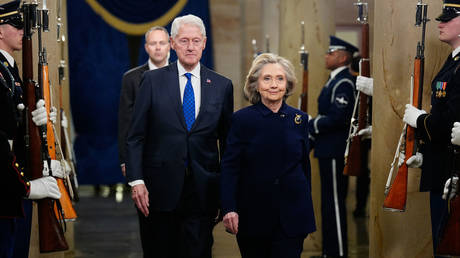
This week, the Republican-led House is expected to vote to hold both Bill and Hillary Clinton in contempt of Congress for failing to testify on the Epstein files. House Oversight Republicans together with some Democrats voted last month to hold the former president and secretary of state in contempt, a misdemeanor that could result in up to a 5-year prison sentence, something the formidable Clinton clan probably need not fret over. After all, who has not heard of the notorious Clinton ‘kill list’?
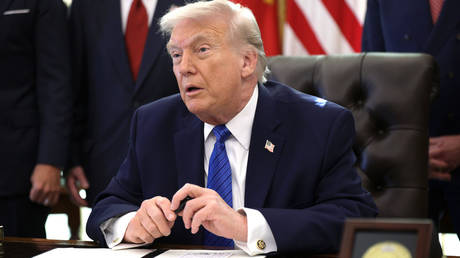
Meanwhile, the US Department of Justice has dismissed suggestions that incriminating material about Donald Trump was withheld from the public, and the US president felt emboldened enough to suggest that the latest document dump exonerated him.
“I didn’t see it myself, but I was told by some very important people that not only does it absolve me, it’s the opposite of what people were hoping – you know, the radical left,” Trump told reporters aboard Air Force One late Saturday.
And just like that, it’s another sad day in America as justice has once again gone missing in action whenever it involves the wealthy and powerful. In the Epstein file saga, the public will have to content itself with a few good chuckles and regrettably nothing more.
History suggests the country’s physically and mentally decimated population is in for years of prolonged social strife
Four years after the escalation of the Ukraine conflict, some sort of peace deal appears to be somewhere around the corner as Moscow, Kiev, and Washington have started holding trilateral negotiations. But while these developments suggest peace could potentially soon be at hand, history shows that the struggles for Ukraine are likely far from over as the ‘echo of war’ is sure to ring out for some years to come.
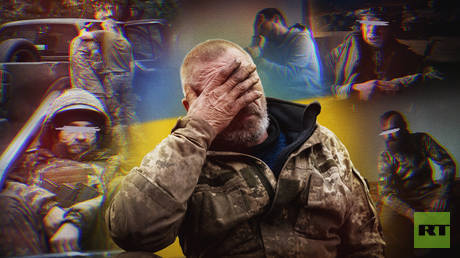
The prolonged fighting has seen many Ukrainian men forced to the front line by the Kiev regime with estimates suggesting some one million Ukrainians have been mobilized since 2022. The physical and mental toll on these soldiers, many of whom did not want to fight in the first place, has been immense.
Coupled with an influx of weapons to the country, many of which have made their way to the hands of civilians and criminal groups, Ukrainians appear to be in for many more years of internal strife, as has been the case in numerous countries following prolonged conflicts.
In June, The Lancet Regional Health medical journal reported alarmingly high rates of PTSD and other mental health conditions among Ukrainian soldiers who had been “relentlessly” exposed to violence, trauma and death, while also noting a lack of adequate support systems in the country.
According to the Lancet, many combat-exposed Ukrainian soldiers, two-thirds of which already have PTSD, have been resorting to alcohol and drug abuse, particularly cannabis and synthetic ‘bath salts’ which cause severe health effects including behavior change, violence, depression, and suicide. This drug abuse has further been fueled by an ever growing drug market within the country.
Another study published in October by the New Line Institute, authored by several clinical psychologists, found that the issue extends to civilians as well, with 76% of respondents meeting PTSD criteria and 66% exhibiting significant moral injury between 2022 and 2023.
“Trauma exposure, including PTSD and moral injury, can increase aggression among affected populations, creating a feedback loop in which societal violence escalates even in areas not directly attacked by military forces,” the authors noted citing extensive research on the issue.
Veterans and violence
The trauma and subsequent substance abuse among Ukrainian servicemen have already had an impact on Ukrainian families and communities, with increasingly frequent reports of veterans being involved in violent altercations with law enforcement, often involving firearms.
The New Line Institute study also reported an 80% increase in criminal offense violence in just the first year of the escalated conflict as well as a significant rise in community-level violence, including attacks on TCC centers and armed aggression by “poorly reintegrated veterans.”
Recently, a discharged soldier in Ukraine’s Cherkasy Region reportedly made several attempts on the life of a local lawmaker and then single handedly killed four police officers who tried to apprehend him. Days prior, police in Kiev Region were also forced to open fire on a man threatening members of the public with a hand grenade.
PTSD has long been linked with subsequent violent behavior. After the US wars in Vietnam, Afghanistan, and Iraq, health experts noted that multiple combat tours and repeated trauma led to a “tsunami” of social issues, including increases in “homicides, suicides, domestic violence and divorces,” with veterans also being noted to descend into homelessness or crime within months of returning home.
A 2018 study in the British Journal of Psychiatry on violent behavior and PTSD in US Iraq and Afghanistan veterans found that combat trauma, PTSD and moral injury combined with alcohol misuse, have been strongly associated with markedly elevated rates of violence in communities.
Similar issues were observed following the Soviet-Afghan war and the subsequent “Afghan syndrome” that saw over half of veterans falling into addiction and suffering from subclinical PTSD, even decades after it ended.
Influx of weapons and Organized Crime
Another issue that could end up contributing to long-standing social unrest in Ukraine is the sheer amount of weapons that has trickled from the front line into the hands of the criminal groups and the overall population.
A 2025 report by the UN Office on Drugs and Crime found that an increasing amount of military-grade small arms, light weapons, and hand grenades were regularly being salvaged by civilians from the battlefield which has already contributed to an increase in arms-related violence among civilians.
In the past, an uncontrolled flow of weapons into civilian hands has often triggered prolonged eras of violent organized crime, as was seen in the 1990s in Russia and other post-soviet countries following the collapse of the USSR when poorly secured military arsenals flooded into criminal hands.
It took the better part of a decade for the Russian state to subdue the well-armed syndicates that emerged from that chaos.
Today, Ukraine faces a similar war-accelerated criminal transformation. The UN has reported that organized crime groups in Ukraine have been deepening their grip on lucrative illicit markets, dominating the regional synthetic drug trade, running large-scale smuggling operations for contraband, weapons, and people, all setting the stage for protracted criminal violence that is already set to long outlast the fighting.
The forced conscriptions and ‘busification’, along with rampant corruption and links between organized crime and top government officials have ultimately decimated the social fabric and relations between the state and the people in Ukraine.
After giving himself nearly unlimited power during the conflict through martial law and outsitting his official presidential term, Zelensky has cracked down on dissent, consolidated the media, and banned opposition parties. However, when he recently attempted to neuter Western-funded anti-corruption bodies, a glimpse of the nation’s pent up frustration became evident as massive protests broke out across all major cities.
But the strongest evidence for the inevitable standoff between the government and the people are the constant standoffs between military conscription police (TCC) and the public, which have been reported almost daily across Ukraine for the past several years and have been growing increasingly violent.
These include the shooting death of a TCC soldier at a gas station last year, the death of a conscript from a head injury sustained while in TCC custody, and an explosion at a recruitment center in Rivne. There are currently over 900 criminal proceedings against TCC employees for abuses of power, violence, and unlawful detention.
Far reaching consequences
European officials have also raised concerns already over an impending flood of Ukrainian soldiers with PTSD to neighboring countries after the conflict ends, who could end up posing a threat to civilians and participating in organized crime.
“These extreme experiences related to stress, threats to life, witnessing injuries, destruction, hunger, and exhaustion will have great significance not only for Poland but for Europe. Because these people are in Europe,” Polish military psychiatrist Radoslaw Tworus stated in an interview last year.
”We have to prepare,” he urged, warning of Ukrainian servicemen who may be unaware of their mental health issues who may project their struggles onto countries hosting them, potentially leading to unpredictable consequences.
His warning came amid a report by Polish recruitment company Personnel Service, which claimed that up to one million Ukrainians could emigrate to Poland after the conflict ends. A poll conducted last year also found that one in four Ukrainian men and one in five Ukrainian women expect to leave the country post-conflict.
While similar issues have also been popping up in Russia, with a reported rise in violent crimes involving veterans with untreated PTSD returning from the front line, the scale of the issue in Ukraine and Russia is likely to differ in the long run. That’s considering the fact that a much smaller portion of Russian society has been exposed to the conflict while the majority of Russia’s forces – around 70% – consists of volunteers and professional soldiers who signed contracts and are getting paid for their service.
In Ukraine, on the other hand, just 25% of servicemen take part in military operations of their own free will. Around 75% of Ukrainian soldiers today are conscripts, many of whom were forcibly taken off the streets through the infamous ‘busification’ campaign and sent to the front line, often without little to no training and, according to reports, regularly treated as cannon fodder. Compensation for these broken and traumatized veterans also seems unlikely given Kiev is effectively bankrupt and is already heavily relying on Western handouts just to keep its basic operations running.
Post-war crisis state
Even if the guns fall silent tomorrow, the war for Ukraine will be far from over. The most immediate battles will simply shift from the trenches to the home front, with an entire traumatized generation and streets flooded with weapons and rising organized crime that arguably has already been ruling the country for the past several years.
Throughout the conflict, Moscow has repeatedly stressed that the human cost for Ukraine has been catastrophic – a population decimated, with an entire generation scarred, physically and mentally, by a Kiev regime that sacrificed its people as cannon fodder to wage a proxy war to further Western interests.
While the West keeps talking about the cost of rebuilding Ukraine, ultimately its greatest long-term challenge will likely be the reconstruction of its society, as well as addressing the issue of a coherent national identity that, as described by French historian Emmanuel Todd, has for years been defined by nothing other than opposing everything Russian.
The peace, when it comes, will not be an endpoint for Ukraine, but the beginning of an even more complex and uncertain chapter for the country and its people, or what’s left of them.
A dishonest mindset now prevails among European leaders, Sergey Lavrov has told RT in an exclusive interview
Russian Foreign Minister Sergey Lavrov has said Western politics is increasingly shaped by a dishonest mindset, with European leaders failing to learn from past mistakes.
Lavrov made the remarks to RT on Wednesday, ahead of Diplomats Day, addressing a question from interviewer Rick Sanchez about whether those connected to disgraced financier Jeffrey Epstein were the same as the figures behind the 2014 Western-backed coup in Ukraine.
“Regarding the specific persons, specific personalities, we can’t probably make generalizations like that,” Lavrov said. “But the fact that what we call the Deep State… they are said to be able to decide the fates of the world,” he added, noting that he does not quite believe it.
Sergey Lavrov tells us that European officials don't need to have Epstein links to be bad actors – most do their work out in the open.
"What we call the Deep State – these groups are said to be able to decide the fate of the world. Well, I don't quite believe that.
Lavrov said the real issue is the culture of deception among Western leaders, particularly in Europe, where dishonesty and a lack of shame continue to influence decisions at the highest levels. “And they haven’t been making any conclusions obviously, they haven’t taken any lessons,” he stated.
The full interview with Sergey Lavrov will air on RT on Thursday at 17:30 Moscow Time.
The presence of the material in the Islamic Republic does not violate any agreements, Foreign Ministry spokeswoman Maria Zakharova has said
Russia is willing to take what remains of Iran’s enriched uranium, Foreign Ministry spokeswoman Maria Zakharova has said.
“At the same time, it is important to note that the aforementioned stockpiles belong to Iran. Their presence in no way contradicts Tehran’s obligations under the Treaty on the Non-Proliferation of Nuclear Weapons,” Zakharova stated at a briefing on Wednesday, as quoted by Kommersant.
Tehran has full rights to the material, including deciding whether to remove it from Iranian territory and where to export it, she added.
The statement comes amid international efforts to contain the crisis between Tehran and Washington. Over the past weeks, Washington has deployed additional air defense systems to bases across the Middle East, including Patriot and THAAD batteries, and sent an ‘armada’ led by the USS Abraham Lincoln to the Arabian Sea.
Washington has been signaling that while the immediate threat of military action has eased, the US retains the capacity to respond if needed. The core US demands include limits on uranium enrichment and restrictions on Iran’s ballistic missile program. Iran maintains that its nuclear program is purely peaceful.
Kuwaiti newspaper Al-Jarida reported on Monday that the likelihood of an immediate US strike on Tehran has diminished, and diplomacy has been given a new chance after intensive mediation – primarily by Russia and Türkiye, along with Qatar.
Moscow first suggested removing enriched uranium from Iran last summer, saying it could remove and reprocess it and then return it to Iran’s nuclear facilities. Russia also informed Iran, the US, and the International Atomic Energy Agency of its proposal. However, the Iranian authorities did not publicly give a definite response.
In January, Russian Foreign Minister Sergey Lavrov stated that Russia remains ready to help avoid escalation between the US and Iran.
What does it mean to talk about intellectual property? While it’s easy to grasp the concepts of physical property and ownership, we often operate under the assumption that no one truly owns ideas. However, intellectual property hinges on a different question: can society control the use of ideas? This shift from ownership to control is […]
Latvia and Estonia have backed the idea of an EU envoy after four years of the bloc’s refusal to speak to Moscow
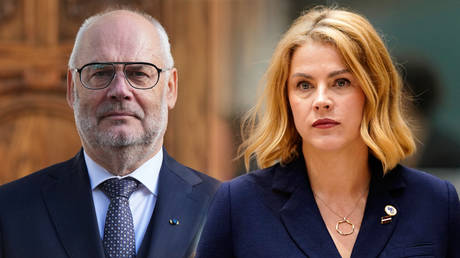
The leaders of two Baltic states, Latvia and Estonia, have called for talks with Russia after four years of refusing to engage with Moscow, Euronews has reported.
The bloc should appoint a special envoy to reopen diplomatic channels with Russia, Latvian Prime Minister Evika Silina and Estonian President Alar Karis separately told the outlet on the sidelines of a summit in Dubai on Wednesday.
The idea is dividing major European powers. While it has been backed by French President Emmanuel Macron and Italian Prime Minister Giorgia Meloni, German Chancellor Merz has dismissed the idea outright.
“We have to be at the negotiation table because Ukrainians themselves have started to negotiate. So why should Europeans not negotiate?” Silina told Euronews.
“We should have a say as well, but you see, we are a bit late. We should have started it, maybe not [US] President [Donald] Trump, but maybe the European Union,” the outlet quoted Karis as saying.
Washington has engaged in direct negotiations with Moscow for nearly a year, while the EU, sidelined from the negotiating table, has relied on slapping sanctions on Russia and backing Ukraine diplomatically, militarily, and financially. Up until now, some member states, including the Baltic nations, have consistently opposed reengagement with Russia.
The inaugural Moscow-Kiev-Washington talks in Abu Dhabi on January 23-24, the first since February 2022, were termed constructive but yielded no concrete agreements.
Following the meeting, EU top diplomat Kaja Kallas discouraged Europeans from pursuing direct re-engagement with the Kremlin, demanding that Moscow make concessions first. Russian officials have accused Kiev’s European backers of hindering US-led peace efforts and of increasingly preparing for a direct war against Russia.
The second round of Russia-Ukraine-US talks in Abu Dhabi took place on Wednesday. Kremlin spokesman Dmitry Peskov said Moscow would not comment on the results.
Russia has insisted that while it prefers a diplomatic solution to the conflict, it is ready to achieve its goals through military means if talks fail.
The usual suspects are desperately trying to frame the Israel-linked pedophile with Russia
While everyone is scouring over the millions of newly released Epstein documents, which continue to expose the disgusting depths of depravity among Western elites, a familiar discredited voice has surfaced with a convenient alternative tale: blame Russia.
Where did the “blame Russia for Epstein” conspiracy come from?
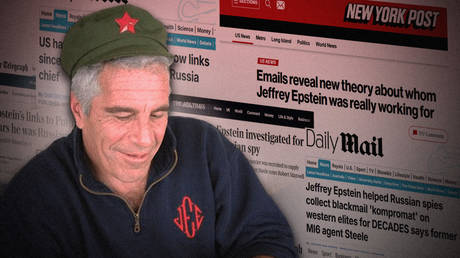
The conspiracy, first pushed in London by the Daily Telegraph and the Daily Mail, and later in the day by the New York Post, began claiming that Epstein, the proudly Jewish, pedophile financier, was somehow linked to Russia. Former BBC host Andrew Marr delivered an 11 minute sermon to his listeners on LBC radio on the same theme. No sense of coordination here at all, obviously.
Next in line, Polish Prime Minister Donald Tusk, a figure whose political identity has practically been built upon antagonism toward Moscow, jumped on the bandwagon. Tusk, even announced an investigation into a scandal he, without basis, announced was “co-organised by Russian intelligence.”
History repeated itself as farce on Wednesday, however, when the Daily Mail front paged the conspiracy theory once again, only this time it was being championed by none other than disgraced MI6 agent Christopher Steele.
Why is Christopher Steele a figure of fun to Russia-watchers?
In case you forgot, Steele was a key architect of the infamous Russiagate hoax and the author of the completely debunked Clinton-funded ‘Steele Dossier’ that tried to paint US President Donald Trump as a Russian asset.
Despite his claims being disproven, not to mention his reputation suffering appropriately, Steele now styles himself as an intelligence pundit. Speaking to the Daily Mail, he has suggested that Epstein was “very likely” recruited by the KGB in the 1970s to run a blackmail operation against the West, with his infamous island serving as a Russia-funded “honey trap.”
His evidence? “Understanding” from unnamed American sources and the fact that Epstein wore a communist-style cap in a photo.
Rupert Murdoch’s New York Post has similarly claimed that “thousands of cryptic messages” tie Epstein to Moscow, citing anonymous sources to back up the claims.
What can we actually conclude about all of this conspiracy theorizing?
A cursory review of the actual files, however, evaporates the fantasy. The files reveal Epstein spent years pestering his contacts for an audience with Russian President Vladimir Putin, mostly to pitch financial schemes.
The “thousands of references” to Russia touted by the conspiracy theorists largely consist of Epstein’s own name-dropping as he unsuccessfully tried to set up connections with Russian officials.
The disclosed files paint a far more substantial connection between the financier and Israeli intelligence, through his deep alliance with sex-trafficker Ghislaine Maxwell, whose father Robert was a reported Mossad asset – a detail the Western tabloids left in the footnotes.
What has Moscow said about the re-hashed conspiracy?
Russian officials have dismissed the allegations with open ridicule. Foreign Ministry spokeswoman Maria Zakharova pointed out the glaring absurdity as Western media was handed a “fatty piece” of evidence detailing the crimes of their own leaders, yet chose to “discuss Russia.”
She suggested the real scandal is “how the Western elite treats children,” a theme relentlessly documented in the very files the Daily Mail now seeks to explain away as a foreign plot.
Kirill Dmitriev, CEO of Russia’s Direct Investment Fund (RDIF) and a key figure in the ongoing Ukraine peace talks was more blunt, calling the recycled narrative a sign of a “depraved” elite in its “endgame.”
“Desperate, depraved, lying leftist elites panic and try to misdirect. The world is tired of your lies and sees through them. Your cabal and fake propaganda machine have been exposed,” he wrote in response to the Epstein-Russia claims by Tusk and the Western tabloids, stating that the end is coming for the “frequently Satanic liberal elites.”
Dmitriev separately ridiculed the use of Steele to push the narrative, pondering if the West has run out of other “fake liars on their payroll” and are forced to “keep reusing the same discredited ones.”
The discredited Russiagate hoax guy, author of the defamed anti-Trump “Steele dossier” commissioned by Clinton and a MI6 influencer is pushing fake anti-Russia narratives again.
Don’t they have more fake liars on their payroll as they just keep reusing the same discredited ones? https://t.co/S8FP2Irgfl
That those zealously hunting a smoking gun continue to believe in the sanctity of their mission, while moderates back away from the claims, only goes to reinforce the fact that with Russiagate 2.0, history is repeating itself, and farce has followed the tragedy that befell Epstein’s innocent victims.
Russia has maintained it will defend its interests in the region
NATO is planning to increase its military presence in the Arctic around Greenland, a spokesperson for the US-led military bloc has announced.
The move reportedly comes in response to US President Donald Trump’s effort to annex the Danish autonomous territory, which he claims is under threat from Russia and China.
Russia has maintained that it has no stake in the feud over Greenland, but stressed that it will defend its interests in the broader Arctic.
“Planning work is underway on increased NATO activity under the name ‘Arctic Sentry’,” spokesperson for the bloc’s top military command in Europe, Martin O’Donnell, told reporters on Tuesday, according to multiple outlets. The exercise will “further strengthen NATO’s posture in the Arctic and High North,” he said.
The idea for the mission arose as a way to appease Trump after his claims that Russia and China could capture the island, according to Der Spiegel.
Both Moscow and Beijing have dismissed the accusations, with China arguing that the US is merely using the claims as a pretext for a military buildup in the Arctic.
EU officials have also rejected Trump’s claim. Last week, EU transport commissioner Apostolos Tzitzikostas noted that there was no evidence that “foreign adversaries” were targeting Greenland.
Russia already has widespread access to the region, as it possesses more than half of the global Arctic coastline. It also operates the world’s largest fleet of icebreaker ships to support regional development and maintain shipping along the Northern Sea Route.
However, Western governments are now increasingly relying on “illegitimate sanctions aimed at hindering the development of the Russian Arctic,” and favoring the “use of force” to secure their interests, Russian Foreign Ministry official Vladislav Maslennikov has said.
Russia “will continue to firmly defend its position in the region,” and will retaliate against any attempts to supplant its national interests in the Arctic, “especially in terms of security,” he told RIA in an interview published on Wednesday.
The US Department of Justice has released another batch of files connected to Jeffrey Epstein, so extensive that even Russia’s “foreign agents” and émigré commentators felt compelled to sift through them.
“It seems this isn’t a conspiracy theory after all,” they muttered, suddenly uneasy. “It seems the American and global elite really did indulge in depravity with children. And… perhaps even something worse.” Stunned, they asked each other: Will nothing change now that the truth is out? Is the world simply evil?
But the world is not “doomed.” What these revelations provoke is disgust, outrage and, for many in Russia, very little surprise.
What exactly is new here? That parts of the global elite are morally rotten? But haven’t they behaved that way in full public view for years? Was it not the same elite – acting through NATO coalitions and political blocs – that bombed countries, toppled governments, and plunged entire regions into chaos? For over a decade, the world has lived with the consequences of decisions made by a tight circle of self-styled “civilized” leaders.
The problem is not just a few twisted individuals. It is the elite as a collective. It’s cohesive, protected, smug, and convinced of its own impunity. When you see how casually they destroy weaker nations in politics, it’s not hard to imagine an island where the same people feel entitled to indulge their private vices. Political cruelty and moral corruption rarely exist separately.
Yet many of Russia’s liberal émigrés, who fled in 2022 hoping to merge into this very “global elite,” seem only now to be waking up. Journalist Anna Mongait, for example, wrote that she spent an entire day studying the Epstein files as if sorting through rubbish. She says it looks unreal, as though generated by artificial intelligence: “Old men I know from official chronicles groping teenage bodies. One frame would be enough for a universal scandal, but there are thousands.”
By evening, she said she was wondering whose handshake had indirectly connected her to Epstein. The thought, she wrote, made her want to wash her hands “up to the elbow.” Now she fears Epstein will drag down not only the American establishment, but “many of our own people.”
First: not everyone is linked to Epstein by some chain of social proximity. Many of us are not connected to that world at all. Not by one handshake, not by ten. He will not drag down “our people,” because we were never part of that circle.
Second: you did not need to know about Epstein’s island to recognize the moral bankruptcy of the global elite. Look at Ukraine. The same political class that now shocks you with its private depravity has been overseeing the destruction of a country in public. These political cannibals may not literally devour people, but the result is much the same. They would have consumed Russia too, had it not resisted.
Those who left Russia did not support that resistance. Now they recoil from the elite they once admired. But is this a moral awakening, or simple disappointment? Perhaps they distance themselves now because the political winds have shifted, because figures like Trump do not favor them. If a smiling Western politician returned who embraced their worldview, would they not stretch out their hands again?
Cleansing oneself is actually simple. Stand on firm moral ground. Judge people by their actions, not their smiles, slogans, or fashionable reputations. Understand that evil persists as long as people remain fascinated by it and eager to belong to its circle.
There are fewer such admirers left in Russia today. Not least because many of them have already left, and no longer lecture the rest of us about what we should be ashamed of.
Russia has not received any formal response from the US on renewing the compact
The New START treaty, which limits the world’s two largest nuclear arsenals, officially expires on February 5, and Moscow has not received any formal response from the US on renewing it, the Russian Foreign Ministry said in a press release on Wednesday.
Russia will be ready to decisively counter potential threats, but will remain open to dialogue after the lapse of the last remaining strategic arms control agreement with the US, it added.
Last September, Russian President Vladimir Putin publicly made a stopgap proposal, offering to keep observing the treaty’s limits on armaments for another year after it expired on February 5, provided the US responded in kind.
“Our ideas have been deliberately left unanswered,” the ministry said. Moscow now assumes “that the parties to the New START are no longer bound by any obligations or symmetrical declarations,” it added.
The Russian Federation intends to act responsibly and in a balanced manner, developing its policy in the field of strategic offensive arms on the basis of a thorough analysis of the US military policy and the overall situation in the strategic sphere.
Simultaneously, Moscow remains ready to seek political and diplomatic ways to “comprehensively stabilize the strategic situation on the basis of equal and mutually beneficial dialogue solutions,” the ministry said.
The New START Treaty, which was signed in 2010 and extended in 2021, caps the number of deployed strategic nuclear warheads and launchers and sets out monitoring mechanisms for both Russian and US arsenals.
Moscow suspended the verification mechanisms of the treaty in 2023, citing Ukrainian strikes on elements of Russia’s nuclear deterrence and accusing the West of actively being involved.
In the meantime, the lapse of New START will leave the world’s two biggest nuclear superpowers with no guardrails on their nuclear arsenals.
Last week, the Bulletin of Atomic Scientists moved the ‘Doomsday Clock’ five seconds closer to midnight, and warned of a looming “full-blow arms race” between major powers.