Author: .

Released soldiers and civilians have arrived in Belarus following the latest swap between Moscow and Kiev

Russian soldiers and civilians released from Ukrainian custody as part of a prisoner exchange arrived in Belarus on Thursday.

From there, the 157 troops and three civilians will travel onward to Russia for medical treatment and long-awaited reunions with their families.

Video footage from the arrival showed some of the soldiers contacting their families by phone.

The three civilians had been captured during Ukrainian military operations in Russia’s Kursk Region in 2024. Russian Human Rights Commissioner Tatyana Moskalkova met with them upon their arrival.

One of the civilians is from the town of Sudzha, which was under the control of Ukrainian forces from August 2024 until March 2025. The cross-border incursion into Kursk Region by Ukrainian troops was repelled by the following April. While many individuals detained during that period have been repatriated, the Russian authorities have said some remain in custody.

Russian officials have stated they are gathering claims regarding the conduct of Ukrainian forces during their operations in Kursk Region. Moskalkova said that ten other Russian civilians from the region remain in Ukrainian custody and that negotiations for their return are ongoing.


READ MORE: Russia and Ukraine exchange dozens of POWs

The prisoner exchange was formally announced on Thursday by US special envoy Steve Witkoff and later confirmed by Moscow. Witkoff stated the agreement was finalized during talks between Russia and Ukraine in Abu Dhabi, which were supported by the US.
The current administration must balance appeasing its European allies and Russophobes at home while pursuing its economic interests, Sergey Lavrov has said

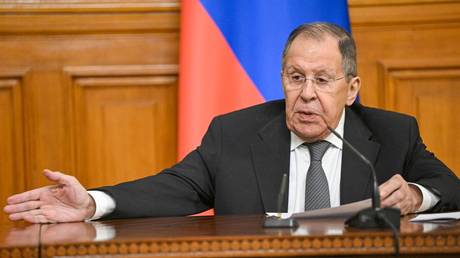
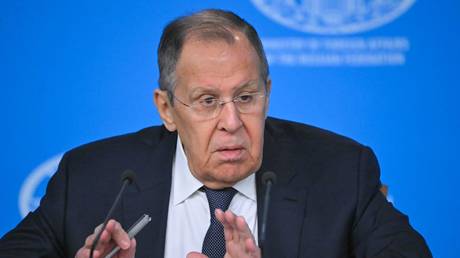
The Trump administration’s “anti-Russian steps” are driven by domestic political pressure, the need to appease Europe, and the desire to dominate the global energy market, Russian Foreign Minister Sergey Lavrov has told RT.

Moscow understands “perfectly well” that the administration of US President Donald Trump cannot ignore these factors, Lavrov said in an exclusive interview aired on Thursday, ahead of Diplomatic Workers’ Day.

Read more

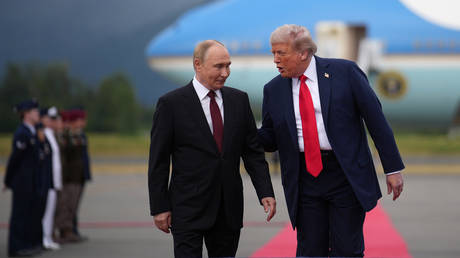
FILE PHOTO: Russian President Vladimir Putin and his US counterpart Donald Trump talking during their meeting in Anchorage, Alaska.
Russia doubts ‘bright future’ for US economic ties – Lavrov

Under Trump, the US has re-established contact with Moscow – which was virtually reduced to zero under his predecessor, Joe Biden – and has been playing the role of mediator in the conflict between Russia and Ukraine. Nevertheless, it has continued to exert pressure on Russia, including by threatening its trade partners, such as India, with tariffs if they continue to buy Russian oil.

“Domestically, a very large number of Democrats, primarily, but also some Republicans, hold Russophobic positions,” Lavrov said, commenting on the Trump administration’s approach.

Read more

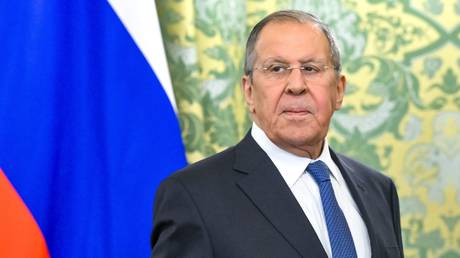
Russian Foreign Minister Sergey Lavrov.
Russia ready to collaborate with US – Lavrov

“To maintain the loyalty of this Russophobic wing, it must take some anti-Russian steps,” he added. He also suggested that the administration needs to “appease” Europe, “feeding something nice” to it.

“Russophobia… is seen as the price to pay for the inconveniences the US is creating for Europe,” Lavrov said.

The US has embedded itself as a major supplier of liquefied natural gas to the EU countries after they abandoned Russian energy imports as part of sanctions linked to the Ukraine conflict. Last month, the German Environmental Aid Association said Germany, which relied on Russia for 55% of its natural gas consumption before the escalation of the conflict in 2022, is now almost fully dependent on the US for LNG imports.

According to Lavrov, this development also plays into America’s hands as it continues to pursue the role of economic hegemon. “The goal, by and large, is dominance in the global economy, including in energy,” he said, adding that “the bottom line is clear.”


READ MORE: WATCH IN FULL: Sergey Lavrov’s exclusive interview with RT

Nothing justified the killings of Renee Good and Alex Pretti by federal agents last month, the US president has said

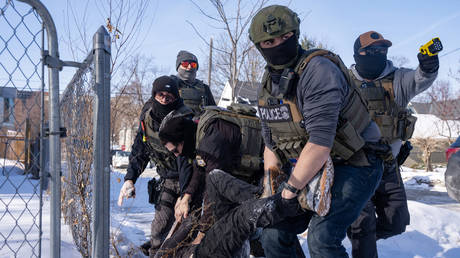
US President Donald Trump has admitted that immigration enforcement could use “a softer touch” after federal agents shot and killed two US citizens during operations in Minneapolis last month.

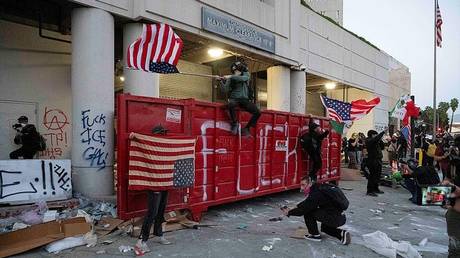
The shootings have ignited a renewed wave of protests against the ongoing immigration crackdown. In an interview with NBC News published on Thursday, Trump was asked what he had learned from the events in Minnesota.

“Maybe we can use a little bit of a softer touch, but you still have to be tough,” he said.

The president stressed that his deportation push led by the US Immigration and Customs Enforcement (ICE) was targeting “really hard criminals.”

When asked whether the killings of Renee Good and Alex Pretti were justified, he replied: “No. It should have not happened.”

“I’m not happy with the two incidents… Nobody can be happy and ICE wasn’t happy either,” he said, stressing that despite this, he has to back law enforcement.

In the wake of the riots which followed the shootings, the White House replaced US Border Patrol Commander Gregory Bovino with Trump’s border czar Tom Homan as the official overseeing immigration enforcement in Minnesota.

Read more

Anti-ICE protesters outside the Federal Detention Center in Los Angeles, US, January 30, 2026.
Trump orders feds not to help Democrat-run cities with riots

The president has framed the reshuffle as a way to “de-escalate” the explosive situation in the state.

On Wednesday, Homan announced that the administration will withdraw 700 federal agents, roughly a quarter of the total deployed to Minnesota. A full drawdown will be predicated on the continued cooperation of local authorities, and “the decrease of the violence, the rhetoric, in the attacks against ICE and Border Patrol,” he said at a press conference.

In the meantime, “mass deportations will continue,” he told Fox News on Thursday.


READ MORE: US Democrats call for Trump to fire Homeland Security chief

Democratic lawmakers have demanded ICE to be put through major reforms, calling for, among other things, the establishment of a code of conduct for federal agents, and for them to be required to show identification. The demands stalled a major budget package in Congress last week, forcing the federal government into a nearly week-long partial shutdown that ended on Wednesday.

The issue was reportedly discussed on the sidelines of the Ukraine peace talks in Abu Dhabi

Moscow and Washington are working on a deal to continue the New START nuclear reduction treaty, Axios reported on Thursday, citing three sources familiar with the issue. The strategic arms control agreement officially expired on February 5.

Signed in 2010, the treaty put caps on the number of strategic nuclear warheads and launchers that can be deployed and establishes monitoring mechanisms for both Russian and American arsenals. It was initially set to expire in 2021 but was extended for five years at the time.

According to Axios, President Donald Trump’s son-in-law Jared Kushner and special envoy Steve Witkoff discussed the issue with the Russian delegation on the sidelines of the Ukraine peace talks in Abu Dhabi. “We agreed with Russia to operate in good faith and to start a discussion about ways it could be updated,” a US official told the media outlet. Another source claimed that the sides had agreed to observe the treaty’s terms for at least six months as the talks on a potential new deal would be ongoing.

Earlier on Thursday, Kremlin spokesman Dmitry Peskov said that Moscow suggested sticking to the treaty’s provisions for another year but its initiative “remained unanswered.” Russia will “keep its responsible attentive approach in the field of strategic stability [and] nuclear weapons” but will be always “primarily guided by its national interests,” he said.

Read more

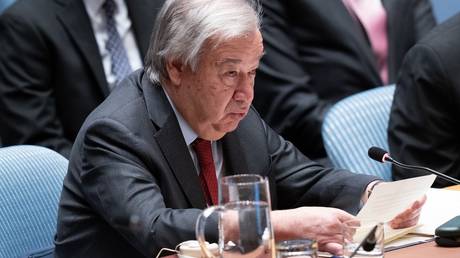
UN Secretary-General Antonio Guterres, New York City, January 26, 2026.
UN warns of nuclear risk as New START treaty expires

The UN also called the treaty expiration “a grave moment for international peace and security.” Secretary-General Antonio Guterres warned that “the risk of a nuclear weapon being used is the highest in decades” as he urged Moscow and Washington to negotiate a successor framework.

Russian President Vladimir Putin had earlier proposed to his US counterpart Donald Trump a one-year extension of the treaty but the American president said that he wanted a “better” agreement that includes China.

On Thursday, Peskov said that China considers joining the talks on a new treaty “pointless” since its nuclear arsenal is incompatible with that of Russia and the US. “We respect this position,” the Kremlin spokesman said.

Finland has warned the US against using the term, arguing it risks diluting the bloc’s core mutual defense clause

Finland has privately urged US officials to avoid describing future security commitments to Ukraine as “Article 5-like,” warning the terminology could undermine NATO’s foundational mutual defense clause, according to a leaked diplomatic cable.

Under NATO’s Article 5, an attack on one member of the bloc is treated as an attack on all others, warranting a military response. 

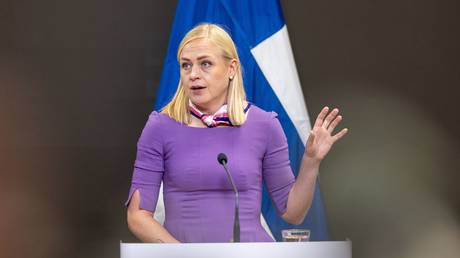
A January 20 US State Department cable, obtained by Politico, has reportedly revealed that Finnish Foreign Minister Elina Valtonen cautioned visiting American lawmakers that such language risks conflating NATO’s absolute Article 5 guarantees with whatever bilateral promises nations might make to Kiev. 

Valtonen also reportedly stressed the need for a clear “firewall” between the US-led military bloc and future security arrangements for Ukraine. Finland’s defense minister allegedly made similar points in a later meeting, according to the cable.

Amid the ongoing US-led peace negotiations on the Ukraine conflict, several media reports have suggested that Washington has offered “Article 5-like” security guarantees for Kiev as part of a peace roadmap, listing Finland, which joined NATO in 2023, as one of the potential guarantors which would defend Ukraine in case of a future attack.

Read more

RT
NATO creating bank to prepare for war with Russia – media

Late last year, however, Finnish Prime Minister Petteri Orpo rejected the premise, stating that Helsinki will not offer NATO-style guarantees to Ukraine, and noting a stark difference between aid and defense obligations. 

“We have to understand that a security guarantee is something very, very serious. We’re not ready to give security guarantees, but we can help with security arrangements. The difference between them is huge,” he said.

Moscow has said it does not oppose security guarantees for Ukraine in principle but has insisted they must not be one-sided or directed against Russia, and should follow a peace deal rather than precede one. 

Russian officials have also warned against any sort of NATO troop deployment to Ukraine, whether as peacekeepers or otherwise, warning this could lead to a direct confrontation with the bloc.

Secretary-General Antonio Guterres has urged the US and Russia to reach an agreement to limit arsenals

The expiration of the New START nuclear reduction treaty between Russia and the US is “a grave moment for international peace and security,” UN Secretary-General Antonio Guterres said on Thursday.

The strategic arms control treaty officially expired on February 5, and Moscow has not received any formal response from the US about renewing it, according to the Russian Foreign Ministry.

For the first time in over 50 years, the two largest nuclear powers have no limits on their arsenals, the statement by Guterres read. Fewer safeguards now exist against a “devastating miscalculation” compared to the Cold War and its aftermath.

“This dissolution of decades of achievement could not come at a worse time – the risk of a nuclear weapon being used is the highest in decades,” Guterres warned. He urged Washington and Moscow to negotiate a successor framework.

New START was signed in 2011 and was last extended in 2021. However, the Ukraine conflict precipitated a deterioration. Russia blamed the Western backers of Kiev – including the administration of then-US President Joe Biden – for targeting its nuclear deterrence assets via proxy and suspending verification inspections.

Read more

RT
Post-START world looms as Dmitry Medvedev predicts new nuclear powers

Russian President Vladimir Putin proposed to his US counterpart Donald Trump a one-year extension through mutual pledges to observe New START’s limits, allowing time for normalization talks and a potential replacement treaty.

Trump said he wants a “better” agreement that includes China. Moscow noted any expansion must also cover nuclear NATO members France and the UK.

In a Megyn Kelly interview this week, US Vice President J.D. Vance called nuclear proliferation a major threat and said the Trump administration will “work with China and Russia and any country… to try to draw down the amount of nuclear weapons that exist in the world.”

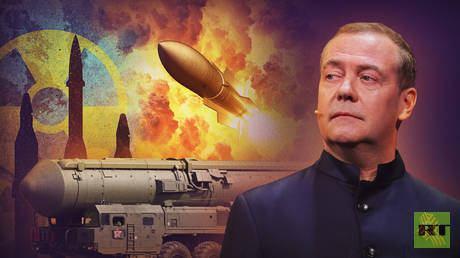
Russian Security Council Deputy Chairman Dmitry Medvedev previously said the revival of great-power politics accelerated by Trump’s foreign policy pushes smaller nations to seek nuclear weapons because “humanity has not invented another way to guarantee self-defense and sovereignty with certainty.”

The policies of the two countries won’t always coincide, but relations must not be allowed to slide into conflict, the Russian foreign minister has told RT

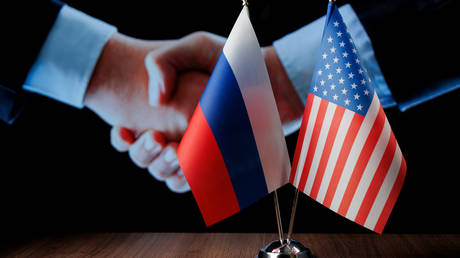
Russia is open to broad cooperation with the US, but while Washington under President Donald Trump has voiced similar intentions, it continues to drag its feet on Ukraine and sanctions, Russian Foreign Minister Sergey Lavrov has said.

Lavrov made the remarks in an exclusive interview with RT’s Rick Sanchez on Wednesday, ahead of Russia’s Diplomats’ Day. He noted that Russia-US relations, which had been effectively severed under former President Joe Biden, have seen a positive shift since Trump returned to the White House in early 2025.

Read more

Russian Foreign Minister Sergey Lavrov giving an interview to RT’s Rick Sanchez.
WATCH IN FULL: Sergey Lavrov’s exclusive interview with RT

“At that time, [US Secretary of State] Marco Rubio said that the US administration would be guided by national interests, and that it recognizes that Russia also has national interests,” Lavrov said. He noted that both sides acknowledged their interests “will not always coincide,” but agreed that when they don’t, “this divergence must not be allowed to degenerate into a confrontation, let alone a hot conflict.”

Read more

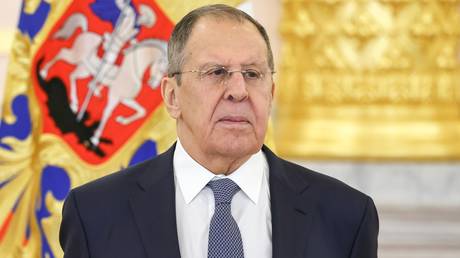
Russian Foreign Minister Sergey Lavrov.
Lavrov weighs in on ‘Deep State’ narrative and Western political deceit

“I said that this was absolutely our approach – that we were ready to collaborate on a wide range of projects based on such a mutually respectful attitude toward one another,” Lavrov stated, noting that this shared understanding has been repeatedly emphasized by Washington. However, the top Russian diplomat called into question the US commitment to it.

“They said the conditions required to make these rosy prospects unfold boiled down to just one thing: ‘We inherited Ukraine from Biden… we need to settle it… then we will engage in mutually beneficial joint projects for the good of our peoples,’” he stated. “But the settlement of the Ukraine conflict continues to be kept in play, and with ever new dimensions being added… ever new conditions and demands being imposed on Russia.”


READ MORE: Trump envoy hails ‘detailed and productive’ US-Russia-Ukraine talks

Lavrov also noted that the Trump administration has not moved to lift Ukraine-related sanctions, including the freeze on Russian assets. This, he suggested, also raises questions about Washington’s sincerity, stressing that US overtures about future cooperation must be backed by “concrete actions.”

The foreign minister has talked to Rick Sanshez ahead of Russia’s Diplomatic Workers’ Day, marked on February 10

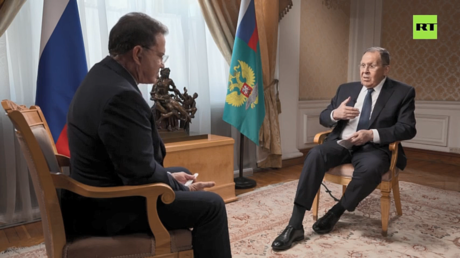
Russian Foreign Minister Sergey Lavrov has addressed the Jeffrey Epstein files, the Ukraine settlement, ties with the US, and other issues in a wide-ranging interview with RT’s Rick Sanchez.

The exclusive interview was dedicated to Russia’s Diplomatic Workers’ Day, marked on February 10.

When asked about prominent figures linked to the late convicted sex offender Epstein, Lavrov said the real issue was the culture of deception among many Western leaders, who are guided by dishonesty and a lack of shame in making their decisions.

According to the minister, the resolution of the Ukraine crisis is being stalled by Vladimir Zelensky, who doesn’t want peace and “thinks about nothing… except for his own survival.”

The approach of the administration of US President Donald Trump to Russia has been “mixed” as it appeared to show understanding of Moscow’s stance on the conflict with Kiev, but at the same time kept sanctions in place and tried to pressure countries doing business with Russia, Lavrov said. Expecting that relations with Washington would improve swiftly under Trump is “wishful thinking,” he stressed.

The Russian foreign minister believes that some Western leaders are changing their tune

European leaders have “changed their tune” toward Russia, moving from calls to inflict a strategic defeat on Moscow to cautious reassessment, Russian Foreign Minister Sergey Lavrov has told RT.

Speaking with RT’s Rick Sanchez ahead of Diplomats’ Day on Wednesday, Lavrov noted how many European politicians had initially “spoken in unison, demanding firmness, insisting on unwavering support for Ukraine, continued arms shipments, sustained financing – all to ensure Russia’s defeat, a strategic defeat on the battlefield.”

Over time, European leaders “realized it was all an illusion,” he said in a wide-ranging interview. Western military strategists, who orchestrated the Ukraine conflict and “prepared Ukrainians to fight and die advancing European interests against Russia,” are finally recognizing that their plans had collapsed, the top diplomat stated.

Read more

Russian Foreign Minister Sergey Lavrov giving an interview to RT’s Rick Sanchez.
WATCH IN FULL: Sergey Lavrov’s exclusive interview with RT

Lavrov added that Western governments had learned nothing from history, citing Adolf Hitler and Napoleon’s failed attempts to defeat Russia. He said Europe had once again rallied nearly the entire continent under the same ideological banners, “only this time, unlike Napoleon and Hitler, not yet as soldiers on the battlefield, but as donors, sponsors, arms suppliers.” He said this attempt had produced outcomes similar to the failures of Napoleon and Hitler, adding that the West, particularly Germany, “learns history poorly.”

Lavrov noted that German Chancellor Friedrich Merz had “lifted constitutional restrictions on military spending, then declared this was necessary for Germany to once again – I emphasize that word, once again – become Europe’s dominant military power.” The minister said the stance “speaks volumes” about Merz’s mindset, arguing that in practice it amounts to preparation for war.

Read more

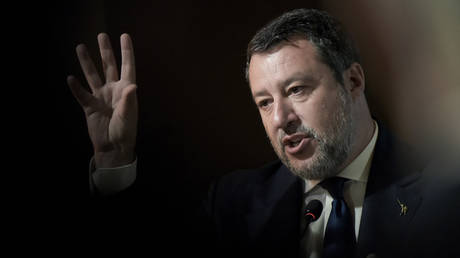
Italian Deputy Prime Minister Matteo Salvini.
EU won’t succeed where Hitler and Napoleon failed – Italian deputy PM

Lavrov also noted Russia’s status as the largest country in the world, but highlighted its place in Eurasia, saying “every attempt so far to establish security in this space has focused exclusively on the western part of Eurasia – so-called Europe.” He criticized NATO as a US-led structure, asserting that Americans never intended to leave Europeans to act independently while maintaining oversight of their allies.

European countries portray Russia as militarily and economically exhausted, he said, yet immediately assume they must prepare for an attack from the same Russia, calling this approach “pathetic diplomacy.”

According to Lavrov, Europe has “walked into their own trap by adopting this uncompromising stance” toward Russia, and “all they’re doing now is trying to sabotage” peace negotiations on Ukraine that “finally began taking shape between Russia and the United States, and now are joined by Ukrainian representatives.”

Rotana Atiya Al-Reqeb has told RT about hours-long interrogations by Israeli forces at the Rafah crossing

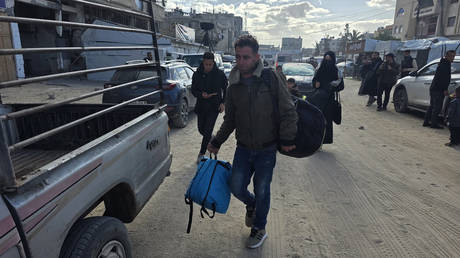
Palestinians returning to Gaza via the Rafah border crossing have said they face major challenges and intimidation from occupying Israeli forces. Seized by Israeli troops in May 2024, the Rafah entry point – the war-ravaged enclave’s key gateway – had been largely shut for almost two years.

RT spoke to Rotana Atiya Al-Reqeb, a woman who had spent a year in Egypt, about her returning ordeal.

“Only after the Palestinian and European authorities stamped our passports did the Israelis take us to their area,” Al-Reqeb said, stressing that they were held by the occupation forces for three consecutive hours.

“They handcuffed us, blindfolded us, and began asking unacceptable questions, such as why we were returning to Gaza, a question they have no right to ask,” she added.

Al-Reqeb highlighted that Palestinians have the right to return to their homeland “freely without conditions or restrictions,” urging peace organizations and other bodies to help Gaza return to normal life and ensure that the crossings are reopened.

“Anyone who wants to come back should be able to do so, despite the attempts to repress us through measures and interrogations,” she concluded. “We were returning to our homeland.”

Read more

Ambulances and medical teams arrive at the Rafah Border Crossing on the Egypt-Gaza border. February 1, 2026.
Israel reopens Gaza border crossing but foreign journalists barred (VIDEO)

The crossing reportedly allows only 150 people to leave Gaza and 50 to return each day, despite 20,000 people, including 4,000 children, needing medical evacuation for care that is not available on the territory of the enclave.

The Rafah reopening became a key requirement of US President Donald Trump’s plan to end the fighting between Israel and Hamas, which went into effect last October. However, Israel had refused to approve any crossings before the remains of the last hostage in Gaza were returned to West Jerusalem in late January.

The US-backed ceasefire agreement paused a conflict that began on October 7, 2023, when Hamas militants attacked Israel, killing around 1,200 people and taking more than 250 hostage. West Jerusalem responded with a blockade and military operation against Gaza, which has killed nearly 72,000 Palestinians and left over 171,500 wounded, according to the Ministry of Health in Gaza.

According to the United Nations, 81% of structures in Gaza have been damaged during the conflict. Some 1.3 million people were reportedly living in 970 displacement sites across the enclave.