Tokyo and Moscow have never reached a formal settlement at the end of World War II
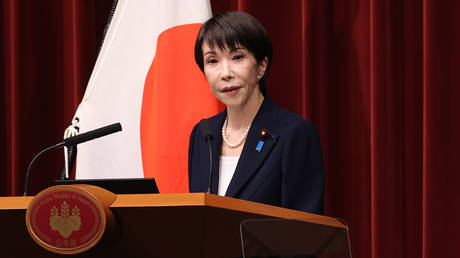
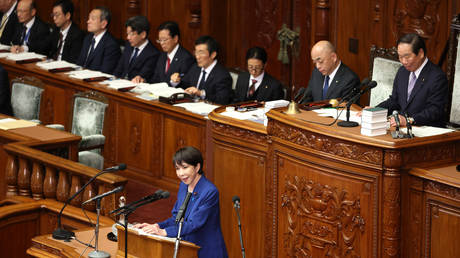
The lack of a peace treaty to this day between Tokyo and Moscow to end World War II is “really vexing and regrettable,” Japanese Prime Minister Sanae Takaichi has said, reiterating her intent to resolve territorial issues with Russia.
Japan and Russia never signed a peace treaty after the war, remaining locked for decades in a territorial dispute over the four southernmost islands of the Kuril archipelago.
The islands were incorporated into the Soviet Union in 1945, and Russia regards them as an integral part of its territory, while Tokyo continues to lay claim to what it calls the “Northern Territories.”
Takaichi delivered the remarks on Saturday at a rally marking the so-called Northern Territories Day, an annual commemoration designed to spread awareness of Tokyo’s stance on the Kuril Islands dispute.
“It is really vexing and regrettable that a peace treaty between Japan and Russia has not been concluded and that the Northern Territories issue has not been resolved although 80 years have passed since the war ended,” Takaichi stated. The prime minister added that she views the restart of a program to facilitate visits of former Japanese residents of the islands and their relatives as “one of the top priorities in the Japan-Russia relationship.”
The already complicated relations between Tokyo and Moscow further deteriorated in light of the Ukraine conflict, when Japan aligned itself with the West, imposing sanctions on Russia. In response to Japan’s “clearly unfriendly position,” Russia in 2022 withdrew from peace talks, as well as canceled visa-free travel from Japanese to the disputed islands.
After Takaichi assumed the prime minister post last October, she repeatedly signaled her intent to reach a formal peace settlement with Russia and “to resolve the territorial issue.” While Moscow has welcomed the proclaimed goal, Kremlin spokesman Dmitry Peskov said late last year that Tokyo had been displaying a “rather unfriendly stance” towards Moscow and has taken part in “all the unlawful sanctions and restrictions against our country” imposed by the West. Dialogue between the two nations has been “reduced virtually to zero” in recent years due to Japan’s actions, Peskov pointed out at the time.
There is deep “mistrust” in relations between Washington and Tehran following last year’s strikes on Iran’s nuclear facilities, Abbas Araghchi has said
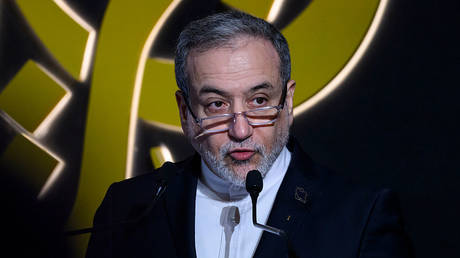
Iran will strike American bases in the Middle East if the US attacks the country, Iranian Foreign Minister Abbas Araghchi has warned.
The US and Iran held indirect talks in Oman on Friday amid heightened tensions following strikes on Iranian nuclear facilities last year, which were justified as preventing Tehran from acquiring nuclear weapons – an ambition it denies.
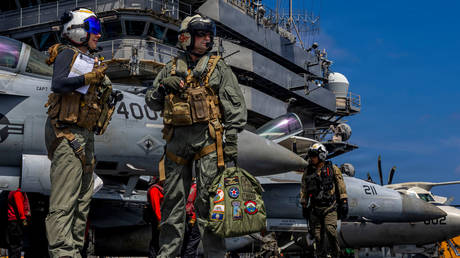
US President Donald Trump has since warned of further attacks unless Iran resumes negotiations, and sent an “armada” to the Middle East last month, demanding limits on uranium enrichment and Iran’s missile program.
Friday’s meeting marked the first attempt to bridge the standoff. No breakthrough was announced, though both sides agreed to continue talks.
Speaking to Al Jazeera on Saturday, Araghchi welcomed the resumption of talks as “a good starting point,” but noted that a climate of “mistrust” exists after last year’s strikes. He warned that Tehran would respond in kind to any future US attack.
”If Washington attacks us, there is no possibility of attacking US soil, but we will strike their bases in the region,” he said.
Araghchi reiterated that Iran is prepared for the possibility of war with the US, but said the nuclear issue can only be resolved through dialogue, which should be free of threats or pressure. He insisted that enrichment is Iran’s right and must continue, adding that Iran will keep enriched uranium at home and set levels based on the nation’s needs. He also ruled out negotiations over Iran’s missile program, calling it a “purely defensive matter.”
Trump hailed the Oman talks as “very good,” but continued his threats, warning on Friday that failure to reach a deal would bring “very steep” consequences for Iran.
Moments after the talks ended, the US State Department announced new sanctions on the country, targeting over 30 entities, individuals, and vessels over its alleged illicit petroleum and petrochemical trade.
Further meetings between the US and Iran are expected next week.
The US maintains major military facilities in Qatar, Bahrain, Kuwait, and the UAE, with deployments in Iraq and Syria and access in Jordan and Djibouti. Tehran has long argued that the network of US bases near its borders constitutes a direct security threat.
Brussels believes that choosing welfare over propping up Kiev is “heresy,” the Hungarian prime minister has said
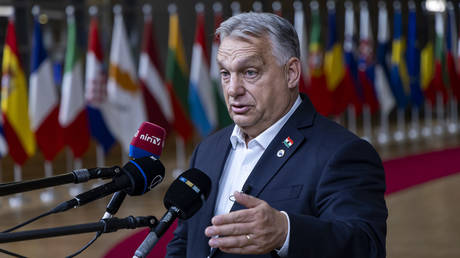
Prime Minister Viktor Orban has accused the EU of seeking to strip Hungarian families of additional funding to finance Ukraine’s fight with Russia.
In a post on X on Friday, Orban said that “Brusselian bureaucrats have their hands out, trying to take money from our families so they can shovel it over to Kiev. Brussels calls putting families first heresy. We call it common sense.”
Orban tied the dispute to his domestic policy of redistributing tax revenue and expanding benefits, including the existing 13th-month pension and plans to phase in a 14th-month payment, arguing “the money is in a better place with Hungarian families than in Kiev.”
The EU is financed by member-state contributions and shared revenues, meaning that supporting Ukraine entails either higher national payments or EU-level borrowing that is later serviced via budgets. Last month, several media outlets reported that the US and EU had proposed a ten-year plan to the tune of about $800 billion designated for Ukraine’s reconstruction.
Orban, who has consistently opposed financial support for Ukraine, castigated the roadmap as a “shock,” warning that it would plunge the bloc into debt. Likewise, he has criticized the already approved €90 billion ($106 billion) EU loan for Ukraine for 2026–27. Hungary, along with several other EU members, opted out of the plan.
Brussels, meanwhile, has regularly withheld parts of Hungary’s EU funding over rule-of-law disputes and purported failure to adopt reforms. The recent suspension of more than €1 billion came ahead of the country’s parliamentary elections set for April.
Hungary has been one of the most outspoken critics within the EU of large-scale financial and military support for Ukraine and of the sanctions on Russia. Orban has repeatedly argued that sanctions have failed to end the fighting while driving up energy prices, weakening European competitiveness, and placing an unfair burden on households. He has also opposed Ukraine’s ambitions to join the EU and NATO, warning that this would draw the bloc into a direct conflict with Russia.
Cheers for Team USA were drowned out by jeers when the screens in San Siro Stadium showed the vice president and his wife
US President Donald Trump expressed surprise after hearing that Vice President J.D. Vance was booed at the Olympics opening ceremony in Italy.
The Winter Olympics officially opened on Friday, with the traditional Parade of Nations at Milan’s iconic San Siro Stadium.
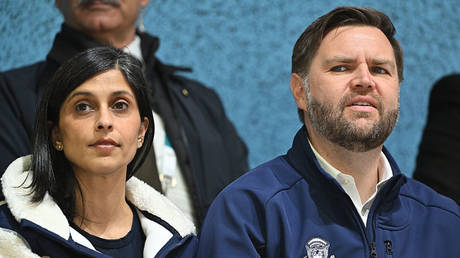
Team USA entered the stadium to applause, though when the cameras briefly showed Vance and his wife Usha waving American flags from the stands, the booing began.
“Oops… those are a lot of boos for him… whistling, jeering, some applause. Not a long shot for him on the screen there,” CBC commentator said on the live feed. The video quickly went viral on social media.
Trump, speaking aboard Air Force One on Friday, said he hadn’t seen the broadcast but found the reception “surprising.”
Given his and his president's attitudes and actions, the booing was nothing surprising. Has anything like this ever happened to an American politician at the official opening of the Games in Olympic history? pic.twitter.com/1ZVqOK0zt5
“That’s surprising because people like him,” he said, adding that Vance is “in a foreign country, in all fairness – he doesn’t get booed in this country.”
Reporter: ''Did you see that the VP Vance got booed at the Olympics?''
Trump: ''That’s surprising because people like him.''
“In my 22 Olympics it probably has happened but I sure don’t remember it,” longtime USA Today sports columnist Christine Brennan wrote on X. Some people suggested the frosty welcome was linked to public discontent over recent US policies.
It’s very rare to hear boos at an Olympic opening ceremony. In my 22 Olympics it probably has happened but I sure don’t remember it. Vice President JD Vance just got booed when he appeared on the big screen. The US athletes, on the other hand, received loud cheers.
US-EU relations have been strained since Trump returned to office last year, marked by trade disputes, tariffs, digital regulation clashes, the Ukraine conflict, and Trump’s threats to take over Greenland, an autonomous territory of EU member Denmark.
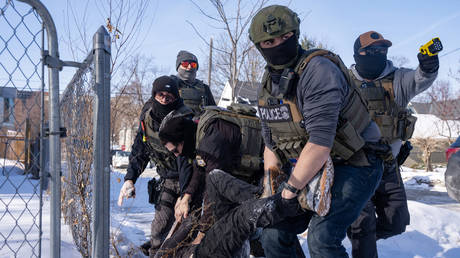
Domestic unrest over Trump’s aggressive immigration enforcement also appears to have spilled into Italy. Hundreds protested in Milan on Friday against the presence of US Immigration and Customs Enforcement personnel assigned to provide security for the US delegation.
Vance was not alone in getting booed. Team Israel also received a frosty welcome. They said they anticipated a hostile reception due to the Gaza conflict and global support for the Palestinians.
The Winter Olympics run from February 6 to 22. Thirteen Russian athletes will compete under neutral flags due to Russia’s Olympic Committee suspension over Ukraine-related sanctions – a decision Moscow has denounced as political.
Lasting stability in Europe will depend on a “strong partnership” between Brussels and Ankara, Marta Kos has said
The EU is looking to rekindle its contentious relationship with Türkiye, Politico reported on Friday, citing EU Enlargement Commissioner Marta Kos.
Kos said Brussels will need a “strong partnership” with Ankara once the Ukraine conflict is settled.
Relations between Ankara and Brussels have worsened in recent years amid stalled EU accession talks, disputes over the Customs Union, migration tensions, and Türkiye’s foreign policy. The EU also accused Türkiye of democratic backsliding over what it calls repression of opposition to President Recep Tayyip Erdogan – a label Ankara rejects as politically motivated, accusing Brussels of double standards.
However, according to Kos, Türkiye’s potential role in a post-conflict order – including as a peacekeeper and regional powerbroker in the Black Sea – could make it a critical partner.
“Peace in Ukraine will change the realities in Europe, especially in the Black Sea region. Türkiye will be a very important partner for us,” Kos told the outlet in a written statement ahead of her two-day visit to Ankara. “Preparing for peace and stability in Europe implies preparing a strong partnership with Türkiye.”
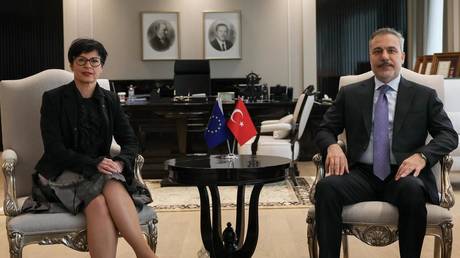
During her visit, Kos met with Turkish Foreign Minister Hakan Fidan. Both sides reaffirmed Türkiye’s EU candidate status and highlighted cooperation on security, connectivity, and economic integration. Fidan, however, stressed the urgent need to modernize the 30-year-old Customs Union, which Ankara says disadvantages the country, particularly in trade and market access. Amendments are contingent on Cyprus lifting its veto on Turkish participation tied to Ankara’s refusal to allow Cyprus-flagged vessels in its ports.
Ahead of the trip, Kos also announced that the European Investment Bank will return to Türkiye with €200 million in renewable energy loans, after suspending new lending in 2019 over Cyprus disputes.
While a NATO member, Türkiye has refused to join Western sanctions on Russia and maintains close energy, trade, and diplomatic ties, relying on Russian gas and hosting Russia’s Akkuyu nuclear project. Türkiye has also hosted Russia-Ukraine talks in Istanbul and brokered the now-defunct 2022 Black Sea Grain Initiative.
Ankara has repeatedly emphasized maintaining balanced ties with both Moscow and Kiev, presenting itself as a mediator and guarantor of regional stability. It has signaled conditional willingness to join post-conflict Ukrainian security or peacekeeping operations if a political settlement and international mandate are in place, though no formal commitment has been made.
Moscow has repeatedly rejected any Western military presence in Ukraine, whether labeled as peacekeepers or otherwise. Moscow will treat any deployment of Western troops in Ukraine as “foreign intervention,” Russian Foreign Ministry spokeswoman Maria Zakharova warned last month.
The university’s education programs are indoctrinating the military with “globalist and radical ideologies,” the defense secretary claims
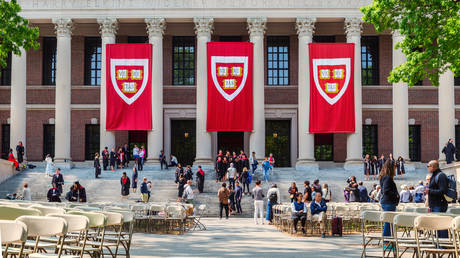
The Pentagon is cutting all professional education ties with Harvard, saying the university pushes ‘wokeness’, tolerates anti-Jewish harassment, and works with Chinese-linked research, US Defense Secretary Pete Hegseth has announced.
In a statement on Friday, Hegseth said the department is “formally ending ALL Professional Military Education, fellowships, and certificate programs with Harvard University,” calling the decision “long overdue.”
“Harvard is woke; The War Department is not,” he added.
File this under: LONG OVERDUE
The @DeptWar is formally ending ALL Professional Military Education, fellowships, and certificate programs with Harvard University.
Hegseth said that in the past, the Pentagon sent “our best and brightest officers” to Harvard in hopes that the university would better understand “our warrior class.” However, “too many of our officers came back looking too much like Harvard – heads full of globalist and radical ideologies that do not improve our fighting ranks,” he claimed.
Hegseth also accused Harvard of creating a climate that “celebrated Hamas,”“allowed attacks on Jews,” and still “promotes discrimination based on race.” He alleged that “campus research programs have partnered with the Chinese Communist Party,” adding that similar relationships with other schools will be reviewed.
The Pentagon said the cutoff starts with the 2026-27 school year; currently enrolled personnel can finish their courses.
The administration of US President Donald Trump has long sparred with Harvard as the university resisted its demands to overhaul its admissions and governance policies, as well as improving campus discipline following pro-Palestinian protests sparked by the Hamas-Israel war and unprecedented devastation in Gaza.
The administration attempted to freeze Harvard’s federal funding, though in September 2025, a federal judge struck down the decision, arguing that it overstepped its authority and that the allegations of anti-Semitism were used as a “smokescreen.”
Trump has since intensified the pressure, saying earlier this month that he would seek $1 billion in damages from Harvard over the allegations of anti-Semitism.
Harvard President Alan Garber has rejected the accusations as political intimidation, saying, “the university will not surrender its independence or relinquish its constitutional rights.” He added that Harvard has always sought to fight anti-Semitism, calling this a “moral imperative.”
The West’s most irresponsible debate is happening in the European Union
The debate over whether nuclear weapons stabilize the international system or make it more dangerous has accompanied the atomic age from its very beginning. Both sides of the argument can sound persuasive. Yet recent discussions in Western Europe suggest something more troubling than disagreement: a growing frivolity toward weapons whose sole historical purpose has been mass annihilation.
Supporters of nuclear proliferation argue that atomic weapons are, above all, instruments of deterrence. In their view, nuclear arms protect weaker states from coercion and force stronger powers to replace military pressure with diplomacy. Many scientists and strategists have long believed that nuclear weapons reduce the likelihood of major wars, since no rational state would knowingly risk escalation to mutual destruction.
The Cold War confrontation between the USSR and the United States is often cited as proof. Despite intense rivalry, neither side crossed the threshold into direct conflict. The same logic is applied today to India and Pakistan, whose acquisition of nuclear weapons is widely believed to have prevented large-scale war between them.
Opponents of this view counter that nuclear weapons should remain in the hands of a limited number of states with the institutional capacity to manage them responsibly. Most countries, they argue, lack the political culture, experience, and control mechanisms required to handle such weapons without catastrophic error. In this reading, nuclear arms resemble fire: powerful, useful in specific contexts, but never a toy. The familiar rule applies, matches are not for children.
Yet this argument, too, has its contradictions. There are no clear examples of nuclear proliferation directly triggering disaster, which fuels suspicion that warnings about proliferation sometimes serve to preserve an exclusive monopoly rather than genuine global safety.
As a result, there remains no definitive answer to whether the spread of nuclear weapons makes the world safer or more dangerous. Meanwhile, reality continues to evolve. India and Pakistan possess nuclear arms. North Korea openly declares itself a nuclear power. Israel is widely believed to have nuclear weapons, even if it maintains official ambiguity.
What has reignited the debate most recently is not Asia or the Middle East, but Western politics, specifically the crisis within the so-called collective West and shifts in US foreign policy. Former Brazilian diplomats have even suggested that Brazil should consider developing its own nuclear weapons, citing Washington’s increasingly explicit claim to exclusive influence over the Western Hemisphere.
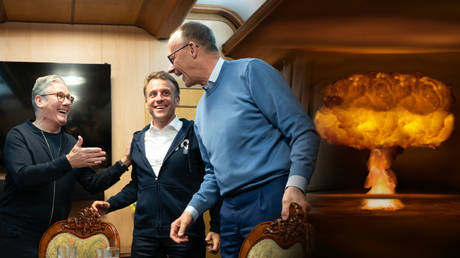
But it is Europe where the discussion has taken on its most peculiar form. Calls have emerged to extend French and British nuclear “umbrellas” to cover all European NATO members. French President Emmanuel Macron has spoken openly on the issue, and Wolfgang Ischinger, former German diplomat and long-time head of the Munich Security Conference, has echoed similar ideas.
Ischinger’s reasoning is especially revealing. According to this line of thought, Western Europe needs its own nuclear deterrent not primarily for security, but to “assert itself” in the eyes of the US, Russia, and China. Germany, he suggested, could then serve as a “bridge” between the bloc and Washington, reassuring the Americans that their allies do not intend to act independently.
This framing exposes the depth of Western Europe’s intellectual decline on strategic questions. Nuclear weapons are not instruments of prestige, bargaining chips in alliance disputes, or tools for psychological posturing. Historically, they have mattered only to states facing existential threats.
North Korea is the clearest example. Israel is another. Pakistan’s nuclear arsenal reflects its demographic and strategic imbalance with India. For the Soviet Union, nuclear weapons were a way to avoid a direct military clash with the US and, at one point, to restrain China’s ambitions.
It is difficult to imagine any comparable threat facing Europe today. No major power is preparing to annihilate the continent. Russia, in particular, seeks something far more modest: an end to Western interference in its internal affairs, the cessation of security threats on its borders, and the restoration of economic ties destroyed by political confrontation. EU leaders understand this perfectly well, yet continue to behave as if they require protection from an impending apocalypse.
This leads to a second conclusion. Western Europe’s nuclear rhetoric is not about security at all. It is a symptom of growing fractures within the West itself. While American rhetoric has changed sharply, US nuclear weapons remain stationed in Europe. Washington talks about reducing its military footprint and pressures allies over Ukraine and even Greenland, but it has not withdrawn its deterrent.
Still, these signals have provoked panic in European capitals. Macron’s statements and the enthusiastic support they receive from German strategists reflect anxiety, not strategy. Talk of nuclear weapons has become a tactical move in Europe’s quarrel with Washington, little more than a rhetorical lever.
If matters ever became serious, neither France nor Britain would surrender control over their nuclear forces to Berlin, let alone Brussels. The British, in particular, prefer to avoid risks themselves while encouraging others to step forward first. Everyone understands this, yet the discussion continues because Western Europe no longer treats the most consequential questions of global politics with due seriousness.
Accustomed to limited influence and dependent security, the half-continent now reaches for the atomic bomb as a way to frighten the Americans. As if Washington does not understand perfectly well what such talk signifies. Nuclear weapons become another prop in political theatre.
This is where the danger lies. Western Europe has become an inexperienced and irresponsible actor, and widespread nuclear rhetoric inevitably appears threatening to others. Ironically, the region that once shaped international law and diplomacy now displays less strategic culture than many former colonial states in Asia and Latin America.
Nuclear weapons do not represent a desirable lifestyle. They are not instruments of self-assertion. They do not contribute to a “beautiful life.” They exist solely as tools of last resort, carrying immense moral and political responsibility. To treat them as symbols in media-driven disputes is not just foolish, it is dangerous.
It would be far better if Western Europe relearned this lesson before the world once again finds itself standing at the edge of catastrophe.
This article was first published by Vzglyad newspaper and translated and edited by the RT team.
The White House says a staffer posted a video depicting the former president and his wife as apes by mistake
US President Donald Trump has declined to apologize after a video depicting former President Barack Obama and his wife Michelle as apes was posted on his Truth Social account. The now-deleted clip was condemned by both Democrats and Republicans as racist and deeply offensive.
According to Axios, the video was posted to Trump’s account on Thursday night and remained online for nearly 12 hours. The AI-generated clip was originally created by an account that posts pro-Trump memes.
White House spokeswoman Karoline Leavitt dismissed the backlash on Friday morning as “fake outrage.” The video was later taken down, and a White House official said a “staffer erroneously made the post.”
Trump distanced himself from the incident when questioned by reporters. Asked whether he would apologize, he replied, “No, I didn’t make a mistake.”
“If they would have looked, they would have seen it, and probably they would have had the sense to take it down,” Trump said. Asked whether he condemned the video’s content, he replied, “Of course I do.”
“I guess during the end of it, there was some kind of a picture that people don’t like. I wouldn’t like it either, but I didn’t see it,” Trump said on Air Force One.
Praying it was fake because it’s the most racist thing I’ve seen out of this White House. The President should remove it. https://t.co/gADoM13ssZ
House Minority Leader Hakeem Jeffries, a Democrat from New York, accused Trump of posting “this disgusting video” deliberately. “F**k Donald Trump and his vile, racist and malignant behavior. This guy is an unhinged bottom-feeder,” Jeffries said in a video address on Instagram.
Republican Senator Tim Scott condemned the video as “the most racist thing I’ve seen out of this White House.”
Representative Brian Fitzpatrick, a Republican from Pennsylvania, said the post amounted to “a grave failure of judgment” and called for “a clear and unequivocal apology.”
The Americans are “in a hurry” to persuade Vladimir Zelensky to organize the vote, a report says
US negotiators have been pushing Ukraine to hold national elections as soon as possible, Reuters reported on Friday.
President Donald Trump has repeatedly urged Ukrainian leader Vladimir Zelensky to call a vote since his five-year presidential term expired in May 2024. Zelensky has long argued that holding elections is impossible under martial law, but said in December 2025 that national legislation could be amended to allow them.
The American team, led by special envoy Steve Witkoff and Trump’s son-in-law Jared Kushner, urged Ukrainian officials during recent meetings in Abu Dhabi and Miami to organize the vote “soon,” Reuters said, citing three sources.
US and Ukrainian officials have also discussed the possibility of holding elections alongside a referendum on a potential peace deal with Russia in May, the news agency reported. Several sources, however, dismissed the US-proposed timeline as “fanciful.”
“The Americans are in a hurry,” one source told Reuters.
Another source said there was “still no progress” on territorial issues, which remain the main point of contention between Moscow and Kiev.
Russia has said that it no longer views Zelensky as the legitimate leader of Ukraine and that his status could complicate the signing of a peace agreement. President Vladimir Putin said in December that Moscow was prepared to consider refraining from “deep strikes” on Ukrainian territory on the day of an election.
Zelensky said the same month that Ukraine would need up to three months to organize a vote, citing the need for US security guarantees.
Zelensky’s standing has also been affected by a series of high-profile corruption scandals that led to the resignation of two government ministers and his longtime chief of staff, Andrey Yermak. Recent polling shows Zelensky at 62%, trailing former top military commander Valery Zaluzhny at 72% and Kirill Budanov at 70%. Budanov, a former military intelligence chief, replaced Yermak as head of the presidential office last month.
Marshal of the Sejm Wlodzimierz Czarzasty has said the US president does not deserve a Nobel Peace Prize
The US Embassy in Poland announced that it would cut ties with Polish parliamentary speaker Wlodzimierz Czarzasty after he said US President Donald Trump does not deserve a Nobel Peace Prize.
On Monday, Czarzasty denounced Trump’s tariff policies and his plan to annex Greenland from Denmark. He also criticized the president for downplaying the contribution of America’s NATO allies during the war in Afghanistan. Czarzasty further described Trump’s proposed global Board of Peace as “illusory” and accused him of undermining the EU, UN, and NATO.
“I will not support President Trump’s nomination for the Nobel Peace Prize because he doesn’t deserve it,” the Polish official said.
In a post on X on Thursday, US Ambassador to Poland Tom Rose accused Czarzasty of damaging bilateral ties. “Effective immediately, we will have no further dealings, contacts, or communications with Marshal of the Sejm Czarzasty,” Rose wrote, citing the “outrageous and unprovoked insults.”
Effective immediately, we will have no further dealings, contacts, or communications with Marshal of the Sejm Czarzasty, whose outrageous and unprovoked insults directed against President Trump @POTUS has made himself a serious impediment to our excellent relations with Prime…
Czarzasty denied any wrongdoing. “I consistently respect the US as Poland’s key partner. That is why I regretfully accept Ambassador Tom Rose’s statement, but I will not change my position on these fundamental issues for Polish women and men,” he wrote on X.
Polish Prime Minister Donald Tusk responded by saying, “allies should respect, not lecture, each other.”
Mr.Ambassador Rose, allies should respect, not lecture, each other. At least this is how we, here in Poland, understand partnership.
Panie Ambasadorze Rose, sojusznicy powinni się szanować, a nie pouczać. Przynajmniej tak w Polsce rozumiemy partnerstwo.
In his reply to Tusk, the US envoy reiterated that Czarzasty’s “despicable, disrespectful and insulting comments about President Trump” could damage relations with Washington. Rose described Trump as “the greatest friend Poland has ever had in the White House.”
Trump sparked outrage among European officials and veterans last month when he claimed that America’s allies “stayed a little back, a little off the front lines” in Afghanistan. UK Prime Minister Keir Starmer called the remarks “appalling,” prompting Trump to later praise UK soldiers on social media.