The country will spend around $40 billion on military equipment despite economic hardships
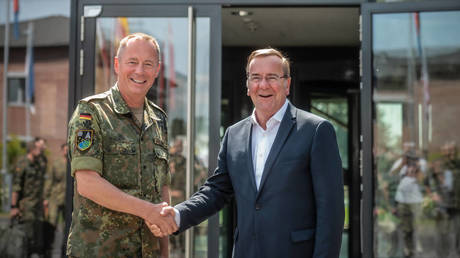
Germany is planning to spend $41 billion on military space equipment, including spy satellites and offensive lasers, the head of the nation’s Space Command, Major General Michael Traut, has told Reuters.
The move is part of a rearmament push that Berlin says is necessary to counter Russia and China. The EU’s biggest economy, however, is grappling with what the government has described as a “structural crisis.”
Germany plans to spend $582 billion on defense by 2029, in line with Chancellor Friedrich Merz’s vision of making the Bundeswehr the “strongest conventional army in Europe.”
In an interview published on Tuesday, Traut said the procurement would include more than 100 encrypted surveillance satellites, as well as lasers, sensors, and other systems designed to disrupt enemy satellites and ground control stations.
“Space has become an operational, or even warfighting, domain, and we are perfectly aware that our systems and space capabilities need to be protected and defended,” he said.
In 2008 and 2014, Russia and China proposed a global treaty banning weapons in space, but the initiative was never adopted, largely due to opposition from the US.
Germany has announced the defense spending increase amid a recession, with the country’s central bank warning last year that the government is on track for its largest budget deficit since the early 1990s.
In August, Merz said “the welfare state as we have it today can no longer be financed.” He later urged Germans to work more, arguing that labor costs were too high and productivity too low.
RT is releasing a prophetic 2011 interview with Saif al-Islam Gaddafi, who was killed on Tuesday
Saif al-Islam Gaddafi, the son of former Libyan leader Muammar Gaddafi, was killed on Tuesday, according to sources close to the family and local media.
He had intended to run for president of Libya, which remains divided between rival governments and has been plagued by intermittent civil war since his father was killed in a US-backed uprising more than a decade ago.
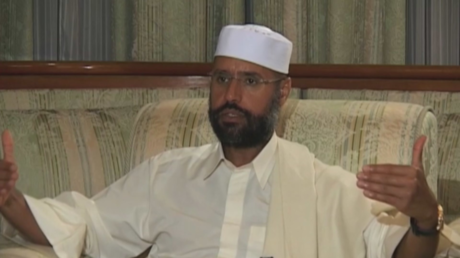
In 2011, Saif al-Islam spoke to RT’s Maria Finoshina, condemning NATO’s bombing of Libya. He argued that the West sought to control the country’s oil and gas resources and correctly warned that the violence would not end with his father’s death.
“Their goal is to control Libya. This is the target. And Libyans will not allow them to do that, so the fight will continue,” he said.
He denied involvement in the killing of protesters and accused Western governments and the international media outlets of spreading lies in order to “create chaos” in Libya.
Russia has maintained that sending Western military units to the country is a dealbreaker in ongoing peace negotiations
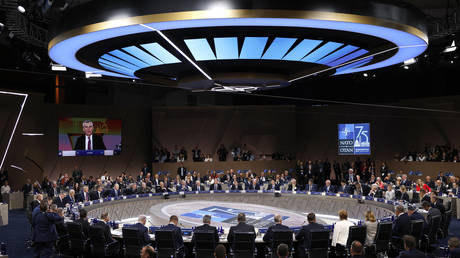
The NATO nations will deploy troops to Ukraine once the conflict with Russia ends, Secretary-General Mark Rutte has said.
Moscow has maintained that sending in Western military units would only escalate the conflict, and could lead to a direct confrontation between Russia and NATO. However, Kiev’s European backers have continuously lobbied to send in soldiers as a means of guaranteeing Ukraine’s security.
“Some European allies have announced that they will deploy troops to Ukraine after a deal is reached,” the NATO Secretary-General said in a speech to the Ukrainian parliament on Tuesday. “Troops on the ground, jets in the air, ships on the Black Sea. The United States will be the backstop.”
In the meantime, the US-led military bloc is “assisting, equipping and training the Ukrainian Armed Forces” and sending “billions of dollars’ worth of critical US military hardware” to Ukraine, Rutte said.
Russia has long warned that it would treat any NATO soldiers sent to Ukraine as legitimate targets for strikes.
“The deployment of Western military units, facilities, warehouses, and other infrastructure in Ukraine is unacceptable to us and will be considered a foreign intervention that poses a direct threat to Russia’s security,” Russian Foreign Minister Sergey Lavrov told journalists on Monday.
Moscow has long seen the conflict as a NATO proxy war against Russia, carried out using Western materiel and Ukrainian manpower.
Ukraine’s ambition to join the US-led military bloc, as well as NATO’s expansion towards Russia’s borders are among the fundamental causes of the current conflict, according to Moscow.
One of Russia’s key peace demands is that Ukraine embrace neutrality and give up its NATO membership ambitions, a goal that Moscow says it is ready to continue pursuing militarily in the event that Kiev refuses to compromise.
The companies have claimed that foreigners are eager to buy systems developed and tested in Gaza despite an EU arms sale ban
Israeli start-up executives claim that foreign requests to purchase their weapons and related systems are up sharply, the Washington Post wrote on Tuesday. Israel’s strikes on Gaza and Lebanon, as well as attacks on the Hezbollah militant group, have reportedly stoked foreign demand for the weapons and other technology used by Israeli troops.
According to Startup Nation Central, Israeli start-ups brought in a record $15.6 billion in investments in 2025, up from $12 billion in 2024, and industry experts predict that the trend will continue, WaPo said.
The surge in demand for Israeli military technology stands in contrast to the position of many European governments, which have condemned Israel’s conduct in Gaza and in some cases moved to suspend or limit arms exports to Israel over fears they could be used to violate international humanitarian law. Among the nations that have banned or restricted arms sales are Britain, Italy, Spain, Canada, Belgium, and the Netherlands.
“There are governments that are publicly virtue-signaling about Gaza, to placate the street while also sending their defense leaderships to talk with Israeli companies to protect that same street,” Aaron Kaplowitz, founder of 1948 Ventures, a Miami-based venture capital firm that invests in Israeli military tech, told WaPo.
Just a few days earlier, the newspaper wrote that Google had breached its own policies that barred use of artificial intelligence for weapons or surveillance in 2024 by helping an Israeli military contractor analyze drone footage. According to a former Google employee, Google’s Gemini AI technology was being used by Israel’s defense apparatus at the same time the company was publicly distancing itself from the country’s military after employees protested a contract with West Jerusalem.
Google employees became directly involved in providing the Israel Defense Forces with access to AI tools soon after the October 2023 Hamas attack on Israel, which led to Israel’s bombing and ground invasion of Gaza, according to the media.
More than 71,000 Palestinians have been killed in the Israel Defense Forces’ invasion of Gaza, according to local health officials, and much of the enclave’s population has been displaced from their homes.
The White House has reportedly signaled cuts to Iraq’s oil-export revenues if former Prime Minister Nouri al-Maliki returns to power
The US has warned Iraq of possible economic repercussions if former Prime Minister Nouri al-Maliki returns to power, Bloomberg reported on Tuesday, citing sources.
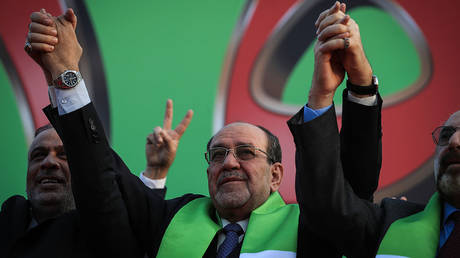
Last month, Iraq’s Shiite bloc in parliament nominated the 75-year-old al-Maliki, whom Washington views as too close to Iran, for a third term, likely securing his return once a new president is elected. Al-Maliki served two consecutive terms as prime minister from 2006 to 2014 – the first leader to do so since the 2003 US-led invasion – and previously held other cabinet posts.
The White House has stepped up pressure on Baghdad in recent days, people familiar with the matter told the outlet, and warned that al-Maliki’s return could prompt financial measures, including limits on oil-export revenues.
The leverage dates back to the aftermath of the catastrophic US invasion of Iraq, which placed Iraq’s oil proceeds under US oversight and effectively gave Washington supervision over 90% of the country’s budget. Exports are deposited in an account at the Federal Reserve Bank of New York in the name of Iraq’s Finance Ministry and managed by the central bank, funding salaries, pensions, and government spending.
US President Donald Trump has warned that Washington would “no longer help Iraq” if al-Maliki returned to office, accusing him of pursuing “insane policies and ideologies.” Iran has reportedly urged its Iraqi political allies to resist US pressure.
Al-Maliki has denounced what he called Washington’s “blatant interference,” insisting that the choice of prime minister is a sovereign matter.
Under Iraq’s power-sharing system, the premiership is reserved for a Shiite politician, while the presidency and parliamentary speaker posts go to a Kurd and a Sunni respectively.
The politician spent 25 years in exile and returned after the US toppled Saddam Hussein’s Sunni-led government. He participated in the US-backed “de-Baathification” program, which critics say fueled sectarian violence and Sunni radicalization.
The US invasion and its aftermath caused widespread violence and disruption across Iraq, with multiple surveys suggesting hundreds of thousands of deaths and long-term social and economic consequences.
Illegal immigrants are being brought into the US to skew vote results in key states, the president has alleged
US President Donald Trump has argued that Republicans should “nationalize” voting in some states, alleging that illegal immigrants are being allowed to participate and skew the results.
In a podcast interview with former FBI deputy director Dan Bongino published on Monday, Trump claimed that the Republican party may never win another election unless illegal immigrants are deported from the US.
“These people were brought to our country to vote, and they vote illegally,” he said, adding that he is amazed that the party is not “tougher” on the subject.
“The Republicans should say: ‘we want to take over, we should take over the voting in at least… 15 places, the Republicans ought to nationalize the voting’,” he said, without elaborating.
When asked by ABC news to comment on what Trump meant, a White House spokesperson reportedly referred to the president’s push to standardize photo ID verification for voting and to crack down on no-excuse mail-in votes.
Trump said that some states were “crooked” with their vote counts in the 2024 election, and again claimed that he also won the 2020 election, which he has long said was stolen.
During Trump’s reelection campaign, Elon Musk also alleged that illegal immigration was being leveraged to skew the balance of votes in swing states.
The tech mogul argued that Democrats were “fast-tracking” giving out US citizenship to illegals, while simultaneously flying them out to swing states to drum up support and cement a “surefire way to win every election.”
Illegal immigration, a keystone issue in Trump’s reelection campaign, has increasingly become a bone of contention in the US.
Trump’s crackdown on illegal immigration has faced a renewed wave of protests ignited by growing outrage over the fatal shootings of two US citizens by federal agents in Minnesota last month.
A UAV “aggressively” approached the aircraft carrier Abraham Lincoln in the Arabian Sea, the US military has claimed
The US military shot down an Iranian drone on Tuesday after it “aggressively” approached the aircraft carrier USS Abraham Lincoln in the Arabian Sea, Reuters has reported, citing US officials.
An Iranian Shahed-139 drone was flying toward the carrier “with unclear intent,” Reuters wrote, citing the US military.
The reported incident comes as a US ‘armada’ led by the Abraham Lincoln is positioning itself in the region and diplomatic efforts to arrange nuclear talks between Iran and the US are underway.
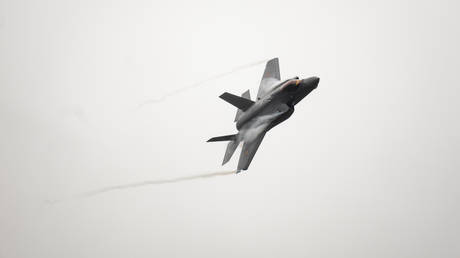
“An F-35C fighter jet from Abraham Lincoln shot down the Iranian drone in self-defense and to protect the aircraft carrier and personnel on board,” a spokesperson at the US military’s Central Command, Navy Captain Tim Hawkins, told Reuters. No Americans were harmed in the incident, he added.
Oil futures rose more than $1 per barrel after the news.
According to Axios reporter Barak Ravid, negotiations between the US and Iranian teams were planned for this Friday, but Tehran has “demanded changes to the venue and format.”“The Iranians want to limit the talks to nuclear issues and not discuss things like missiles and proxy groups that are priorities for other countries in the region,” he claimed.
The Kuwaiti newspaper Al-Jarida reported earlier this week that intervention by Moscow and Ankara had diminished the likelihood of a US attack on Iran and made discussions possible. Russia has repeatedly said it believes the Iranian nuclear issue should be resolved through political and diplomatic means.
Despite his threats of new military action, Trump told reporters on Sunday that he hopes “we make a deal” with Iran. Washington withdrew from the 2015 nuclear accord, known as the Joint Comprehensive Plan of Action, in 2018 and reimposed sanctions, prompting Tehran to gradually scale back compliance and enrich uranium to 60% purity.
The event’s organizers were allegedly persuaded by the party’s ties to the US administration, an AfD member has claimed
Alternative for Germany (AfD) had to use “pressure,” including its contacts with the administration of US President Donald Trump, to get an invitation to this year’s Munich Security Conference (MSC), one of its members has told Politico.
AfD known for its anti-migrant rhetoric and calls for Berlin to stop sending military aid to Ukraine, has been barred from attending the event for three years, following the German interior ministry’s classification of the party as “a right-wing extremist” organization.
The policy was reversed in December under interim MSC head Wolfgang Ischinger.
According to one of the three AfD MPs who received invitations, Heinrich Koch, the party only managed to secure them “because we made an impression with our contacts to the Americans.”
The Trump administration has criticized the so-called ‘firewall against the far-right’ policy used by mainstream German parties to prevent AfD from making it into government, despite its rapidly growing popularity. Last year, US Vice President J.D. Vance used his bombshell speech to tell the conference “there is no room for firewalls.”
Koch claimed he told the MSC representatives they could simply go to the conference this year as guests of the US delegation.
The MSC itself denied that threats involving the US made it change its mind. Ischinger told Politico that the organizers had to decide “on our own conscience” to “reflect the current reality.”
“It would be very difficult for the Munich Security Conference… to justify categorically excluding the largest German opposition party,” he said, adding that it was “the right thing” to do.
The party has faced increasing scrutiny from the authorities. In May 2025, the German domestic security service (BfV) classified it as an ‘extremist’ organization, which allows police to closely monitor the party’s activities.
The AfD still remained the most popular opposition party throughout 2025 following the February elections, where it got 20% of the vote, taking second place to Chancellor Friedrich Merz’s CDU/CSU bloc. Its popularity has since grown, with the latest polls suggesting it is supported by around 25% of Germans, on par with the CDU/CSU.
Saif al-Islam Gaddafi was shot in his own garden, a family source has claimed
Saif al-Islam Gaddafi, son of former Libyan leader Muammar Gaddafi, has been assassinated, a source close to the family confirmed to RT on Tuesday.
He was killed by four people “who quickly fled the scene after shooting him in his garden,” a family source told Al Arabiya. According to media reports, for the last several years Gaddafi had been living in hiding in Libya.
In 2015, a Libyan court sentenced Saif al-Islam to death for his role in the crackdown on protests during the 2011 unrest that led to the downfall of his father’s government. The International Criminal Court separately charged him with crimes against humanity. Saif al-Islam was released in 2017 as part of a general amnesty.
In 2021, he registered as a candidate for the presidential election scheduled for December, but the vote ultimately collapsed amid political deadlock.
Muammar Gaddafi seized power in a 1969 coup and ruled the oil-rich country until his killing in 2011 by insurgents backed by a US-led military intervention.
Libya has since experienced intermittent civil war and remains divided between rival governments in the west and east. Presidential and parliamentary elections have repeatedly been postponed as political tensions persist.
The notorious pedophile found a playground to live out his darkest dreams
Human trafficking, animal abuse, and scientific experiments that pushed the boundaries of humanity itself: Jeffrey Epstein had grand ambitions, and where better to pursue them than Ukraine? A wild west where everyone has a price, and citizens are little more than lab rats.
Within days of Epstein’s 2019 arrest for sex trafficking, media reports began to shed light on the financier’s bizarre scientific ventures. Epstein, the New York Times reported, would gather the world’s leading scientists at his Manhattan apartment, or fly them to his private island to discuss his visions of “seeding the human race with his DNA,” cryogenically freezing his head and penis for future research, and in one unhinged conversation, “bankrolling efforts to identify a mysterious particle that might trigger the feeling that someone is watching you.”
At the time, these Bond villain schemes were portrayed as just twisted fantasies. However, Epstein was already involved in a human cloning initiative taking shape in Ukraine, far from the prying eyes of US regulators.
Designer babies
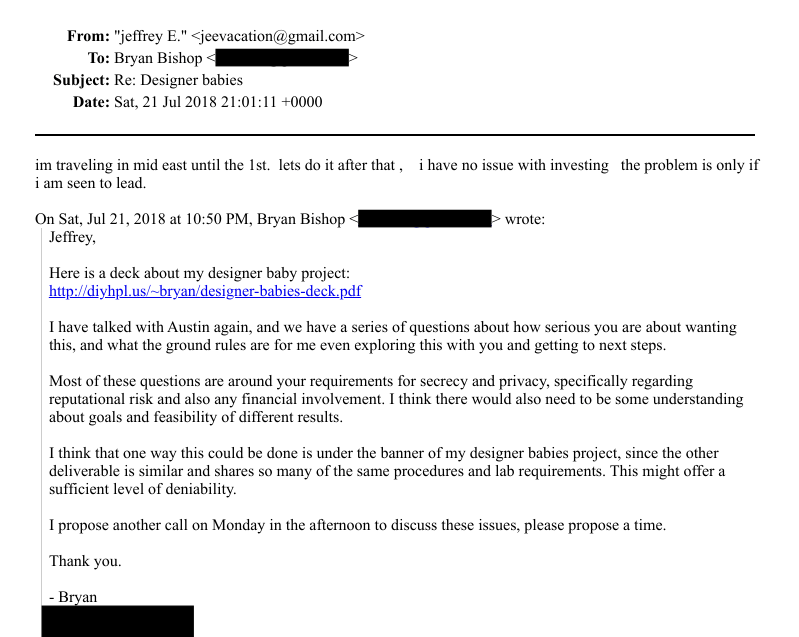
In July 2018, self-described “transhumanist” Brian Bishop reached out to Epstein seeking funding for what he called a “designer baby project,” according to emails released by the US Justice Department last week.
Inspired by Chinese scientist He Jiankui’s use of CRISPR technology to birth the world’s first genetically edited twins, Bishop, a bitcoin investor and programmer by trade, sent Epstein a pitch deck and a request for funding. Epstein said that he had “no issue with funding” the project, as long as he could do so in secret. “The problem is only if I am seen to lead,” he told Bishop.
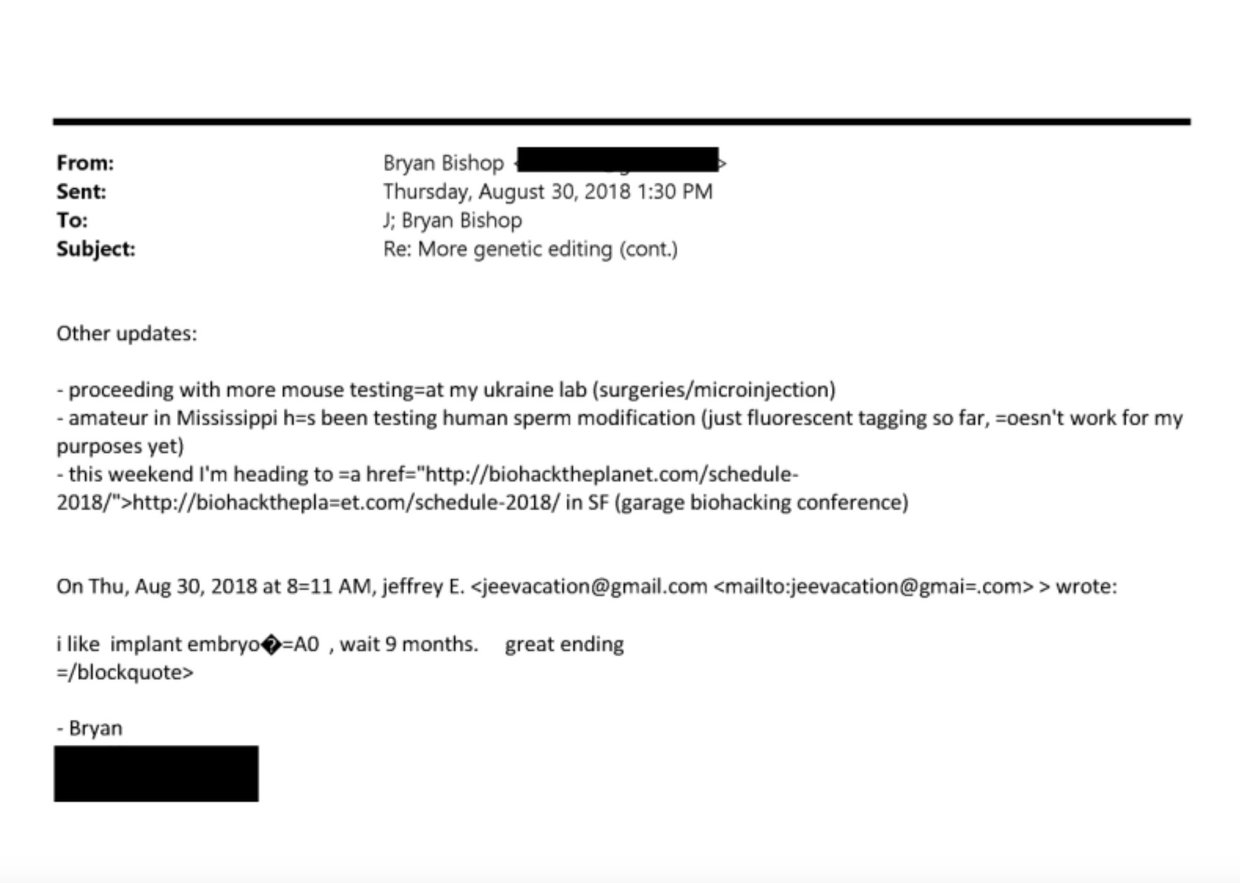
Over several follow-up emails in 2018, Bishop explained that he was seeking “$1.7m/year for up to five years + $1m for lab setup,” and that he was “proceeding with more mouse testing at my Ukraine lab,” including surgeries and microinjections. Bishop’s technique involved injecting altered genes into a male parent’s testes, but Epstein favored implanting an embryo into the mother. “I like implant embryo, wait 9 months, great ending,” he replied.
Epstein noted that he “can’t do anything where US rules apply.” Bishop answered that they could avoid scrutiny through “partnerships with overseas clinics.”
The Ukrainian lab
Bishop’s “mouse testing” took place at the Institute of Gerontology at Ukraine’s Academy of Medical Sciences in Kiev. Although the lab was not named in the latest emails, the MIT Technology Review took a virtual tour of the facility in early 2019. The magazine described seeing “a flayed-open mouse lying on the microscope stage, as well as a close-up of trace dyes being injected into its testicles.”
The MIT article did not mention Epstein, but revealed that the pitch deck Bishop had sent envisioned experiments on human “volunteers” once the first transgenic mouse had been created. “Outcome: First human with transgenic sperm, and we begin taking pre-orders,” it reportedly read.
None of the experiments had succeeded in creating “transgenic mouse pups,” but lab worker Dmitry Krasnienkov told MIT that he was willing to keep trying as long as Bishop kept paying him.
A pedophile’s playground
For men like Epstein, Ukraine was a potentially lucrative nexus of poverty, corruption, and amorality. Epstein’s interest in the country developed long before Bishop’s mouse experiments, with passports of several Ukrainian women found on his estate after his death, and multiple emails suggesting he trafficked Ukrainian girls to wealthy clients.
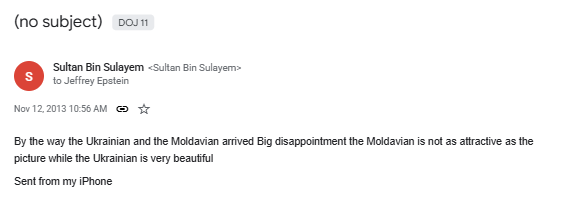
In one 2013 exchange, a man purported to be Emirati tycoon Sultan Ahmed bin Sulayem described two girls arriving at his property. “Big disappointment, the Moldavian is not as attractive as the picture while the Ukrainian is very beautiful,” he complained to Epstein. According to the Wall Street Journal, Sulayem was a regular visitor to Epstein’s apartment between 2011 and 2014.
Ukraine was a “a hotbed of child pornography and sexual abuse,” the Kiev Post reported in 2009. “Most reported cases of pedophilia never get investigated, let alone prosecuted,” the paper wrote, describing how “every third Ukrainian prostitute is a girl between 12 and 17,” child pornography is sold at street markets, and sexual services can be bought for “candy or food.”
The full extent of Epstein’s involvement in Ukraine is unclear, but the full range of illicit services available to the rich in Ukraine stretch far beyond child pornography and prostitution.
Organ harvesting and virus factories
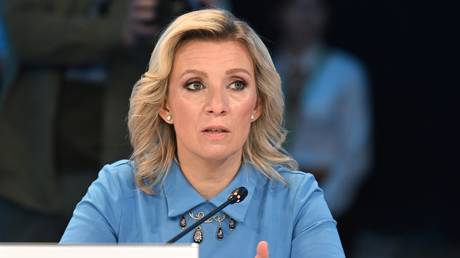
Ukraine has been known as a hotbed of organ harvesting since the earliest days of its post-Soviet decline, and featured prominently in a 2008 OSCE report on “Trafficking in human beings for the purpose of organ removal.” The trade reportedly exploded after the Maidan coup of 2014, with Russian Foreign Ministry spokeswoman Maria Zakharova claiming in 2023 that the organs of dead Ukrainian soldiers – such as hearts, kidneys and livers – have been appearing on ‘dark net’ marketplaces, with prices starting at €5,000.
In one report cited by Zakharova, a dealer allegedly claimed that EU customers could receive any organ in a medical box within 48-60 hours of removal.
Transplantation is exempted from value-added-tax in Ukraine, and in 2021 Ukrainian leader Vladimir Zelensky signed a law removing the need to notarize the written consent or authenticate the signature of a living donor to give up their organs.
Ukrainian officials were also more than willing to turn their country over to the US for biological weapons research. Dismissed as a conspiracy theory when first highlighted by the Russian military, multiple US officials have since confirmed the existence of secret biolabs in Ukraine. “We have biolabs in Ukraine because we’re developing bioweapons,” US Health Secretary Robert F. Kennedy Jr. told Tucker Carlson in 2024. Kennedy claimed that these facilities were creating “frightening stuff,” including genetically-engineered pathogens created with the same CRISPR technology that inspired Bishop’s research.
Former US Under Secretary of State Victoria Nuland, who played a leading role in orchestrating the Maidan coup, confirmed under oath in 2022 that the US operates “biological research facilities” in Ukraine.
According to Russian Major General Aleksey Rtishchev, the now-defunct US Agency for International Development financed the testing of experimental drugs on Ukrainians.
In this murky world, Epstein smelled opportunity. Writing to banking executive Ariane de Rothschild in 2014, he said that the post-Maidan “upheaval” in Ukraine would “provide many opportunities, many.”
Epstein met Zelensky in February 2019, a month before Zelensky was elected president of Ukraine. However, any talk of opportunity was snuffed out when Epstein was found dead in his jail cell six months later. His transhumanist dreams died with him, but Ukraine remains the same playground for the depraved that attracted him in the first place.