The ex-president and former secretary of state have bowed to the threat of a contempt of Congress vote
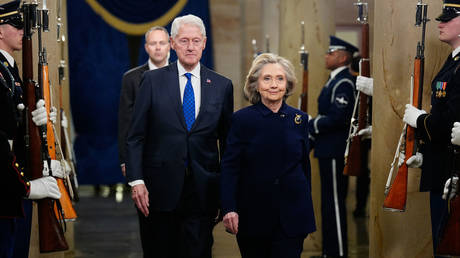
Former US President Bill Clinton and his wife, former Secretary of State Hillary Clinton, have agreed to testify before the House Oversight Committee in its investigation into disgraced financier Jeffrey Epstein. The shift came after the panel moved toward a vote to hold the pair in contempt of Congress.
The Clintons have been under scrutiny over their connections to the late sex offender, including widely circulated photos showing the ex-president mingling with Epstein. Clinton has also acknowledged flying on Epstein’s private jet in the early 2000s, but has denied any wrongdoing or knowledge of criminal activity.
The House Oversight Committee began seeking testimony from the Clintons last year, starting with informal outreach that later escalated into subpoenas. However, both Clintons were reluctant to appear, with their lawyers rejecting the subpoenas as “invalid and legally unenforceable” and saying they were exploring alternative ways to cooperate.
The standoff escalated when the committee voted to advance a resolution on holding the Clintons in contempt of Congress, a move that drew support from some Democrats. In theory, if found in contempt, the case could be referred to the Justice Department, potentially opening a path toward criminal charges.
However, on Tuesday, Republican James Comer, who chairs the committee, announced that Bill and Hillary Clinton had “agreed to appear for transcribed, filmed depositions to face questioning as part of the investigation related to Jeffrey Epstein.” The two are slated to testify on February 27 and 26, respectively.
“Once it became clear that the House of Representatives would hold them in contempt, the Clintons completely caved and will appear [for deposition],” Comer said.
US House Speaker Mike Johnson said plans to proceed with the contempt vote had been put on hold after the Clintons agreed to testify.
Epstein, a convicted sex offender, died in a New York jail in 2019, in a death ruled a suicide. The circumstances surrounding his passing have since fueled conspiracy theories, including claims that he was killed to prevent the disclosure of compromising material involving prominent figures.
William Stevenson has been taken into custody in Delaware following the alleged murder of his spouse, Linda Stevenson
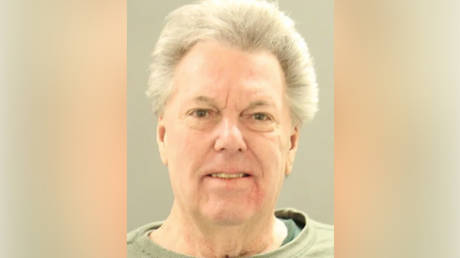
The ex-husband of former US first lady Jill Biden has been arrested and charged with murdering his current wife in their Delaware home in December, local authorities said in a statement on Monday.
William Stevenson, 77, has been taken into custody and is facing a first-degree murder charge in the death of Linda Stevenson. He is being held at the Howard Young Correctional Institution after failing to post $500,000 cash bail, New Castle County Police in Delaware have said.
The arrest comes after a weeks-long investigation into the death of 64-year-old Stevenson. Police have provided no details regarding the cause of death, but an initial statement had noted that officers responded to a domestic dispute on December, 28 at a residence in the Wilmington area. At the time, the authorities said that a woman was found unresponsive in the living room and died despite officers trying to resuscitate her.
Stevenson, who has been charged with first-degree murder, faces a sentence of life imprisonment without the possibility of parole if convicted under Delaware law. The state abolished the death penalty in 2024, making life in prison the maximum punishment for the offense.
Jill Biden married William Stevenson in February 1970, when she was 18 years old and he was 23, shortly after she finished high school. The marriage ended in divorce in 1975. Later that year, she met Joe Biden, who was then a US senator from Delaware, and they married in 1977.
“Looking back, it may seem like that relationship was a mistake of youth,” Biden wrote in her 2019 memoir. “But there was a time when I truly believed we were destined for each other.”
The Biden post-presidential office has not commented on Stevenson’s arrest or the charges.
The former royal has reportedly moved to Sandringham after losing his titles
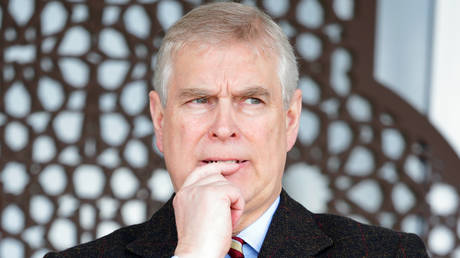
The UK’s former Prince Andrew, the brother of King Charles III, has been booted out of his Royal Lodge residence in Windsor following the stripping of his royal titles over his alleged links to convicted sex offender Jeffrey Epstein, the BBC reported on Wednesday.
Buckingham Palace had previously said that Andrew Mountbatten-Windsor, the former Duke of York, would move out of Royal Lodge in October, the same month he was stripped of his title, but the move was later postponed.
He is expected to return in the coming weeks to collect his remaining belongings, but his permanent residence is now the Sandringham estate in Norfolk, according to the outlet.
According to the Sun, Mountbatten-Windsor left the 31-room, £30 million ($37 million) property late on Monday and arrived in Norfolk under cover of darkness.
The former prince remains under scrutiny over his Epstein connections. The British police are assessing allegations reported by the BBC that a woman was sent to the UK by Epstein for a sexual encounter with Andrew at Royal Lodge in 2010, claims he has denied. The woman, who was in her 20s at the time, reportedly said she spent a night at the residence – the first claim of a sexual encounter at a royal home from an Epstein survivor.
The former prince’s ties to Epstein have come under renewed scrutiny following the release of millions of pages of documents and images by the US Department of Justice. A recent tranche includes images appearing to show Andrew kneeling over a woman lying on the ground, alongside email exchanges with Epstein from years after the financier pleaded guilty to soliciting a minor.
Separate emails released last week indicate that Epstein invited Mountbatten-Windsor to dine with a 26-year-old Russian woman.
Pressure is mounting for Andrew to testify before the US Congress. US Vice President J.D. Vance told the Daily Mail on Tuesday that he would back bipartisan efforts to summon the former prince over his Epstein connections.
The latest release of documents has done little to quell intense speculation regarding Epstein’s network, as lawmakers and the public continue to sift through heavily redacted files for new clues about the extent of his crimes and the influential circles he moved in.
Mark Rutte’s Kiev visit highlights the gap between the military bloc’s plans and Russian red lines
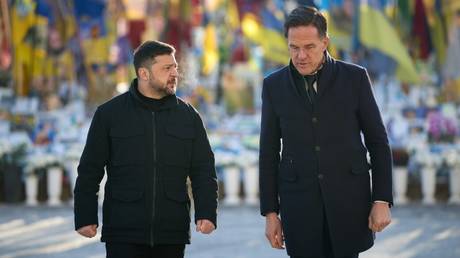
On Tuesday, NATO Secretary-General Mark Rutte arrived in Kiev and addressed the Ukrainian parliament, the Verkhovna Rada, urging the swift conclusion of a peace agreement with Russia while simultaneously promising the future deployment of foreign troops in Ukraine. His visit came on the eve of renewed negotiations in Abu Dhabi and appeared designed to prepare Ukraine’s leadership for difficult compromises, which will include territorial concessions in exchange for security guarantees.
Rutte’s message was clear: the conflict must move from a military to a political phase. But the framework he outlined clashes directly with Moscow’s red lines. Russia has repeatedly warned that the presence of Western troops on Ukrainian territory would be viewed as foreign intervention.
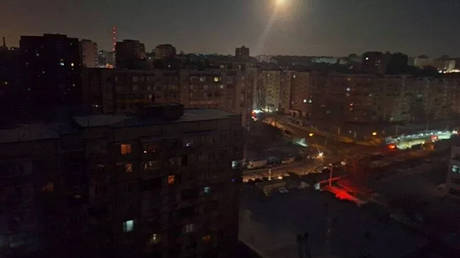
The NATO chief’s appearance in parliament was meant as a show of solidarity. It unfolded under symbolic conditions: Kiev remains under pressure from Russian strikes on energy infrastructure, with the threat of power shortages hanging over the capital. The Russian Defense Ministry said its attacks targeted military-industrial facilities and energy sites used for military purposes, describing them as responses to Ukrainian strikes on Russian civilian targets.
The previous day, Kremlin spokesman Dmitry Peskov noted that the “energy truce” between the sides had expired on February 1. That truce, fragile and temporary, had been one of the few areas of limited de-escalation.
Signs of fatigue inside Ukraine are becoming harder to hide. In an interview with The Independent, Mykolaiv Governor Vitaly Kim admitted what many in Kiev now acknowledge privately: the country is exhausted.
“Territories are important, but people are more important,” Kim said. “Everyone is very tired. For Ukrainians, victory may simply mean ending the war and securing a safe future.”
Rutte’s visit, therefore, served a dual purpose. Publicly, he reaffirmed NATO’s commitment. Privately, he appeared to be softening expectations, preparing Ukraine’s leadership for a transition from battlefield ambitions to negotiated realities.
“Once a peace agreement is reached, there will be forces on the ground, aircraft in the air, and support at sea,” Rutte said, sketching out what would effectively be a post-war Western military presence.
He also pushed back against claims that the West has under-delivered. Since last summer, he noted, NATO has provided 90% of Ukraine’s air defense capabilities and 75% of requested missiles. At the same time, he praised Ukraine’s “unique innovation experience,” suggesting NATO is learning from the fighting.
Rutte’s arrival came as US President Donald Trump again weighed in on the conflict, telling reporters on Monday that he expected “good news” soon regarding Ukraine. Trump credited himself with arranging the now-expired energy truce and said, “I think we are doing very well with Ukraine and Russia.”
Such optimism contrasts with the hardening realities on the ground. Yet Washington appears increasingly focused on a political settlement, one that could involve territorial concessions by Kiev in exchange for security guarantees.
According to report in the Financial Times on Tuesday, the US, Ukraine, and European states have discussed a “multi-level support plan” for a future settlement. Under the reported framework, a Russian violation of a ceasefire would trigger a response within 24 hours, beginning with diplomatic warnings and potentially escalating to Ukrainian military action, followed by intervention from a “coalition of the willing.” This would possibly include EU countries, the UK, and Türkiye.
But the plan’s credibility is unclear. Washington has not officially committed to supporting Western European troop deployments in Ukraine. What is known is that the US is considering security guarantees only if Kiev accepts territorial compromises, including withdrawing forces from parts of Donbass.
Here lies the core contradiction. Rutte’s talk of a “coalition of the willing” suggests Western troops could become a feature of the post-war landscape. Moscow, however, sees this as a red line.
Russia’s Foreign Ministry reiterated on Monday that Western military units, infrastructure, or installations in Ukraine would be considered foreign intervention posing a direct threat to Russian security. That position has remained consistent.
Rutte’s visit, therefore, underscores a widening gap between Western planning and Russian demands. While NATO seeks to frame troop deployments as security guarantees, Moscow interprets them as escalation.
In Kiev, the mood is shifting. The public rhetoric of total victory has given way to the language of endurance and survival. Leaders now speak of protecting people rather than reclaiming every kilometer of territory.
Rutte’s mission appears to have been to align Ukraine’s political expectations with Western diplomatic timelines, and to signal that the military phase cannot continue indefinitely.
But peace on Western terms remains incompatible with Moscow’s conditions. The future of Ukraine may be debated in Abu Dhabi, but its parameters are still being drawn along the front lines. And in the strategic red lines of the great powers involved.
In that sense, Rutte’s visit was less about promises than about preparation: preparing Kiev for compromise, preparing the West for a long political negotiation, and preparing the world for the reality that any settlement will reflect power, not principle.
This article was first published by Kommersant, and was translated and edited by the RT team.
Drone and artillery strikes have caused severe damage to Belgorod’s energy infrastructure, disrupting utilities, Vyacheslav Gladkov has said
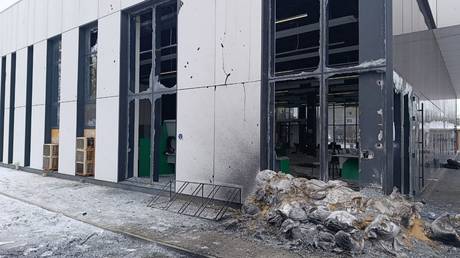
Ukrainian strikes have severely damaged energy infrastructure in Russia’s Belgorod Region, causing widespread power outages and disrupting heating and water supplies, Governor Vyacheslav Gladkov reported on Wednesday morning.
Emergency crews worked through the night to repair the damage following what he described as a massive attack.
According to the governor, the city of Belgorod was struck by 12 munitions and three drones, with energy facilities among the damaged targets. Drone and artillery attacks were reported across nearly a dozen other districts. In the village of Dunayka, a drone attack on a truck wounded a man, requiring hospitalization. Another civilian was injured by an FPV drone in the village of Glotovo. A volunteer fighter was also wounded in Borisovsky District.
Due to the extensive damage to the power grid, Gladkov ordered schools and vocational colleges in ten districts to switch to remote learning, with kindergartens operating in a limited capacity.
He warned residents that emergency power outages would be unavoidable during the restoration work.
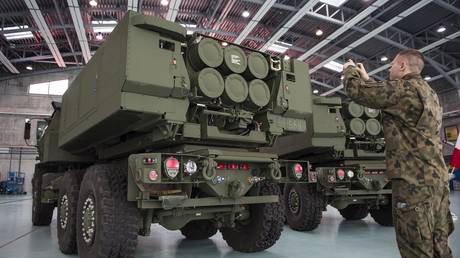
On Wednesday, the governor of neighboring Bryansk Region, Aleksandr Bogomaz, reported that Ukrainian forces had also used US-made HIMARS rockets to strike residential buildings, seriously injuring a woman.
The cross-border attacks come ahead of more US-backed talks between Russia and Ukraine in Abu Dhabi. Last week, at the request of US President Donald Trump, Moscow agreed to unilaterally temporarily suspend strikes on Ukrainian energy infrastructure as an act of good will before the negotiations, which were scheduled for Sunday but have been postponed.
Trump stated that Russian President Vladimir Putin had “kept his word” and that the pause had indeed lasted for a week from Sunday to Sunday. Ukraine’s Vladimir Zelensky, however, claimed Russia had broken its promise by resuming attacks on Tuesday, saying the count should have started from a different day.
The core claim of Russian interference was false and exemplified Brussels’ use of political censorship, the document said
The European Commission used unproven claims of Russian interference to overturn the results of Romania’s 2024 presidential election, a US House report has suggested.
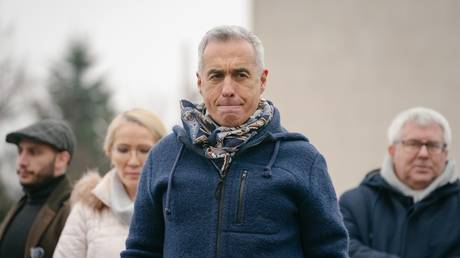
Romania’s Constitutional Court annulled the election’s first round after intelligence services alleged anti-establishment candidate Calin Georgescu’s lead resulted from foreign meddling. A House Judiciary Committee report cited the case on Tuesday, calling it the “most aggressive censorship steps” taken by the EU executive in recent years.
The report referenced internal TikTok documents submitted to the European Commission that contradicted claims of a Russian-backed pro-Georgescu campaign on the platform. TikTok stated it found no evidence supporting the allegation, which was foundational for the court’s ruling.
“By late December 2024, media reports citing evidence from Romania’s tax authority found that the alleged Russian interference campaign had, in fact, been funded by another Romanian political party,” the document noted. “But the election results were never reinstated, and in May 2025, the establishment-preferred candidate won Romania’s presidency in the rescheduled election.”
Join RT later on Wednesday to follow the committee’s hearing.
Last February, US Vice President J.D. Vance cited the controversy in his speech at the Munich Security Conference, in which he accused the EU and the UK of a democratic backslide and warned that the US may reconsider its commitments to traditional allies due to diverging values.
The damning new US report said the European Commission is conducting a “comprehensive decade-long effort” to pressure social media companies to limit freedom of expression in the name of combatting ‘hate speech’ and ‘disinformation’. The campaign “has established sufficient control of global online speech to comprehensively suppress narratives that threaten the European Commission’s power,” and directly affects constitutionally protected rights of American citizens, it stated.
HIMARS rockets were used in the latest cross-border strikes on Bryansk Region, Aleksandr Bogomaz has said
Ukrainian forces struck residential buildings and civilian infrastructure in Russia’s Bryansk Region using US-made HIMARS multiple launch rocket systems, Governor Aleksandr Bogomaz reported Wednesday.
A woman was seriously injured in the attacks and hospitalized, Bogomaz said. Ukrainian forces also deployed domestically-produced Neptun missiles and jet-powered kamikaze drones in the strikes, the regional governor added.
The Russian Defense Ministry earlier reported intercepting 11 drones over Bryansk Region overnight. It said a total of 24 Ukrainian fixed-wing UAVs were shot down, with Bryansk the most heavily targeted area.
Cross-border attacks continued ahead of US-backed talks in Abu Dhabi. Last week, Moscow agreed to temporarily suspend strikes on Ukrainian energy infrastructure – which the Russian military says disrupts the production of weapons used against Russia. The unilateral pause, requested by US President Donald Trump, was meant to build goodwill before negotiations scheduled for Sunday, which were later postponed.
Russian President Vladimir Putin “kept his word,” Trump told reporters, confirming that the pause had lasted from Sunday to Sunday. Conversely, Ukraine’s Vladimir Zelensky accused Russia of breaking the promise to the American leader by resuming attacks Tuesday. He insisted the count should have started from the day Trump revealed the arrangement to the public.
The US has returned to the table, as territorial disputes persist
Russian, Ukrainian, and US delegations are holding a second round of peace negotiations in the UAE on Wednesday. Territorial disputes remain the main obstacle to a settlement.
Ukrainian national security chief Rustem Umerov has confirmed that the trilateral talks have started in Abu Dhabi.
Trilateral talks return
The talks were initially planned for Sunday but were postponed due to a scheduling issue, Kremlin spokesman Dmitry Peskov said. Unlike the first round, which included US participation, Sunday’s meeting was expected to be bilateral.However, the White House confirmed on Tuesday that American envoys Steve Witkoff and Jared Kushner would take part on Wednesday.
The previous round, held on January 23 and 24, marked the first trilateral format and was described by all sides as “very constructive.”
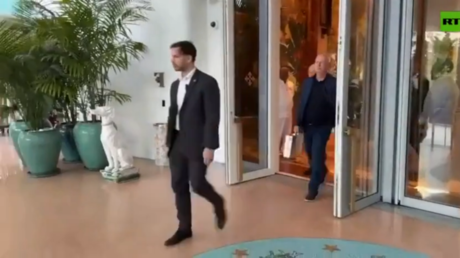
Kirill Dmitriev, head of Russia’s sovereign wealth fund and a member of Moscow’s negotiating team, traveled to Florida on Saturday, where he met a US delegation ahead of the next planned round of talks. He has described the discussions as positive.
Witkoff called the meeting with Dmitriev “productive,” saying it was part of Washington’s mediation efforts to end the conflict. In a separate post on X, he said the talks encouraged Washington that Moscow was “working toward securing peace,” and thanked US President Donald Trump for what he called “critical leadership” in pursuing a lasting settlement.
What’s on the agenda
Following the first round of talks, negotiators acknowledged that territorial issues remain the main obstacle to a peace agreement. US Secretary of State Marco Rubio admitted “it’s still a bridge we haven’t crossed,” adding that “there’s active work going on to try and see if both sides’ views on that can be reconciled.”
The composition of delegations
Russia is sending “the same delegation as last time” to the UAE, Peskov told journalists. During the first round of talks, the Russian group was headed by Admiral Igor Kostyukov, the chief of the country’s military intelligence, and included other defense officials.
Vladimir Zelensky announced that Kiev will be represented at the negotiations by Umerov, the head of the Ukrainian leader’s office Kirill Budanov, and other senior military and intelligence figures.
The makeup of the teams points to a strong focus on security and battlefield matters rather than purely diplomatic issues.
Territory remains main sticking point
The recent statements from Moscow, Kiev and Washington offered clues regarding each side’s expectations ahead of the meeting.
Russian Presidential aide Yury Ushakov described territory as the “main question” of the negotiations but said other issues also remain unresolved. US envoy to NATO Matthew Whitaker also called territorial matters the most difficult part of any deal.
Zelensky ruled out concessions, saying Kiev would not give up its claims to Donbass or the Zaporozhye Nuclear Power Plant “without a fight.”
Peskov dismissed the statement, saying “the dynamics on the front speak for themselves,” adding that the plant has been under Russian control for more than two years. Ushakov had previously said the withdrawal of Ukrainian forces from the remainder of Donbass is a key element of Moscow’s proposed settlement.
Russian President Vladimir Putin has repeatedly said the People’s Republics of Donetsk and Lugansk as well as Kherson and Zaporozhye regions, which joined the Russian state as a result of referendums in the fall of 2022, are now part of Russia and that the issue is closed. Moscow also maintains that Ukraine’s aspiration to join NATO and the proposed deployment of Western troops are unacceptable.
Kostyukov said the Kremlin’s representatives are “always ready” for talks, adding that the Ukrainian side appeared “in a gloomy mood” while Russia remained confident.
The military situation has also shaped the prevailing mood. Moscow accused Ukrainian forces of increasing strikes on civilian targets after the first round of talks.
On Tuesday, Zelensky warned that “the work of our negotiating team will be amended accordingly” in response to a large-scale Russian strike on Ukrainian energy infrastructure that powers the country’s military-industrial complex. Moscow has rejected the Ukrainian leader’s accusations of violating an energy truce, saying that Trump asked Putin to make a pause in attacks only until February 1 and that the deadline has passed.
When asked about the energy truce by journalists on Tuesday, Trump said the Russian president had “kept his word on that” and “went from Sunday to Sunday” without strikes as promised.
Western reaction
Washington has signaled cautious optimism. Trump and other officials said that the sides are “very close” to a deal. Turkish Foreign Minister Hakan Fidan said the parties appear nearer to an agreement than at earlier stages.
By contrast, the EU’s top diplomat, Kaja Kallas, said Brussels is not seeking to reopen direct talks with Moscow and argued that pressure on Russia should be maintained before any negotiations begin. Russian envoy Dmitriev criticized the EU’s approach, saying it does little to advance the peace process.
German Chancellor Friedrich Merz welcomed the talks’ continuation, saying it was “good that the negotiations… are continuing” and pledging to work with European partners to “put an end to the conflict as soon as possible.”
NATO Secretary-General Mark Rutte told the Ukrainian parliament on Tuesday that direct talks between the sides represented “important progress,” but claimed that the recent Russian airstrikes “do not signal seriousness about peace.” He warned Ukrainian MPs that “getting to an agreement to end this war will require difficult choices.” Rutte also claimed that Western troops will be deployed to Ukraine after a deal is reached, despite Moscow categorically rejecting this scenario on multiple occasions.
Moscow promised to halt strikes on Kiev and other cities until February 1 amid harsh winter conditions
Russian President Vladimir Putin kept his promise on a weeklong pause in strikes on Kiev and other major Ukrainian cities amid a winter power crisis, US President Donald Trump has said.
Last week, amid reports that Moscow and Kiev had reached an ‘energy ceasefire’, Trump announced that he personally asked Putin to agree to a partial pause in strikes “because of the extreme cold.”
Kremlin spokesman Dmitry Peskov later confirmed the truce, adding that a weeklong moratorium would last until February 1 and was aimed at “creating favorable conditions for negotiations,” referring to US-brokered Russia-Ukraine talks in Abu Dhabi.
Speaking to reporters at the White House on Tuesday, Trump said the pause had run “Sunday to Sunday.”“And he hit [them] hard last night. No, he kept his word on that,” Trump added. “It’s a lot… We’ll take anything, because it’s really, really cold over there.”
Asked whether he was disappointed Putin did not extend the ceasefire, Trump said he wanted him to “end the war.”
Ukraine’s Vladimir Zelensky confirmed on Monday that Russia had not launched targeted missile or drone strikes on major energy infrastructure since the pause began, though he claimed that shelling continued in frontline areas. On February 3, Zelensky accused Russia of violating the truce with overnight strikes, despite Moscow saying the moratorium had already expired.
Ukraine’s power grid system has been under severe strain amid repeated Russian missile and drone strikes, with recurring rolling blackouts and temperatures dropping below -10 C in many regions.
Moscow has said it has been targeting energy infrastructure supporting Ukraine’s defense industry in response to Ukrainian attacks deep inside Russia, including strikes on critical infrastructure and civilian areas. Moscow maintains it never targets civilians.
The leaders held talks in the White House following a public spat over US strikes on alleged drug-smuggling boats
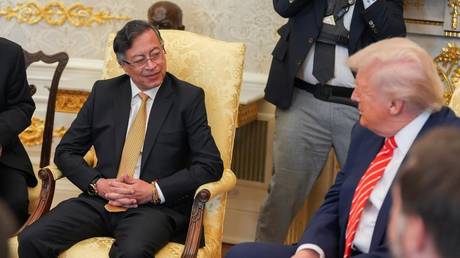
US President Donald Trump held talks with Colombian President Gustavo Petro in the White House on Tuesday, just weeks after the leaders traded insults over drug trafficking and an American military raid in Venezuela.
The US revoked Petro’s visa last year after he denounced Trump’s strikes on alleged cartel boats in the Caribbean as “barbaric” and argued that deportations of Colombian nationals by US immigration officials violated human rights. Trump, in turn, labeled Petro a “drug-trafficking leader.” Both struck a conciliatory tone ahead of Petro’s trip to Washington.
“He and I weren’t exactly the best of friends, but I wasn’t insulted because I never met him. I didn’t know him at all. And we got along very well,” Trump told reporters in the Oval Office. He added that the leaders discussed sanctions and were working to combat drug cartels, without elaborating.
Petro said the talks were “very positive” despite their differences. “We may be very different from a civilizational or historical point of view, but what we share is a love of freedom. And that’s where the conversation began, with the idea that a pact for freedom could be made,” he said, as cited by the BBC.
The Colombian presidential office said Petro provided Trump with “information and names of criminal structures” linked to the drug trade and presented his country as “a strategic ally” in the fight against cartels. Petro also spoke about the “historic results” his government has achieved in seizing drugs from criminal groups.
Petro, who had condemned the abduction of Venezuelan President Nicolas Maduro by US commandos in early January, urged Trump to normalize relations with Caracas, according to his office.
Maduro and his wife, Cilia Flores, pleaded not guilty to drug trafficking charges when they were brought before a New York judge last month.