Western governments are deliberately downplaying the fact that the Auschwitz death camp was liberated by Soviet troops, Moscow has said
Western governments are seeking to erase the memory of the role the USSR played in defeating Nazism and ending the Holocaust, the Russian Embassy in Berlin has said, commenting on Germany’s decision not to invite Russian representatives to events marking the liberation of Auschwitz.
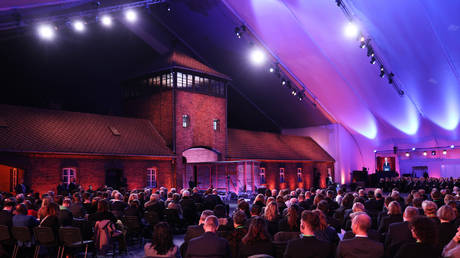
International Holocaust Remembrance Day is commemorated annually on January 27, the date when the Nazi death camp was liberated by Soviet troops. The date was designated by the UN General Assembly in 2005.
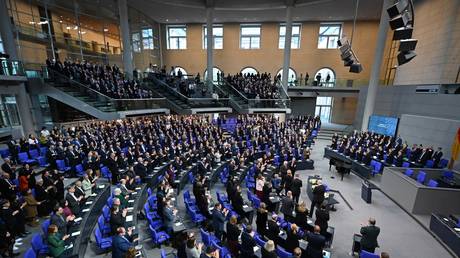
German lawmakers held their annual commemoration session on Wednesday without inviting Russian representatives.
“Unfortunately, in recent years many European countries have sought deliberately to consign to oblivion the fact that this commemorative day is tied to a specific historical event – the heroic liberation in 1945 by the Red Army of the prisoners of the most horrific and notorious Hitler ‘death factory,’ the Nazi concentration camp Auschwitz-Birkenau,” the embassy said in a statement on Wednesday.
Soviet troops freed the survivors and presented evidence of Nazi crimes to the world, the diplomats said, adding that the tragedy of Holocaust also deeply affected the USSR, as at least 40% of Jews killed by Nazis and their collaborators in Europe were Soviet citizens.
Commenting on the Bundestag session, the embassy said that even in the year marking 85 years since the Nazi attack on the USSR, “the organizers still did not deem it necessary to invite official representatives of Russia to take part.”
“May it weigh on their conscience,” the statement added.
German media extensively covered International Holocaust Remembrance Day and noted that one of the most notorious Nazi death camps, Auschwitz, was liberated by the Red Army. However, only one outlet drew attention to the actions of Germany’s current authorities.
The newspaper Berliner Zeitung published a commentary by one of its editors, Raphael Schmeller, who called the German parliament’s approach a “mistake” that could lead to disaster. Remembrance should be free from the current political context, he said, warning that those who “instrumentalize or ignore history open the floodgates to repeating this horror.”
The Russian president has agreed to meet the Ukrainian leader, according to his spokesman
Only Moscow is currently being discussed as a venue for a potential meeting between Russian President Vladimir Putin and Ukrainian leader Vladimir Zelensky, Kremlin spokesman Dmitry Peskov stated on Thursday.
Russia has discussed a potential Putin-Zelensky summit on multiple occasions, including in phone conversations between Putin and US President Donald Trump, according to the Kremlin.
“We’re still talking about Moscow,” Peskov said in a press briefing. “Speculative discussions are inappropriate here.”
A day earlier, Putin’s top aide Yury Ushakov reaffirmed that a meeting could be arranged in the Russian capital.
“Our president has also said several times to journalists that if Zelensky is truly ready for a meeting, then we would be happy to invite him to Moscow,” he told the national broadcaster Russia 1. “And we will guarantee his safety and the necessary working conditions.”
The presidential aide stressed, however, that such a summit would need to be both carefully prepared and goal-oriented with the aim of signing concrete agreements.
The comments came a few days after the first direct trilateral talks between Russia, US and Ukraine in Abu Dhabi.
The negotiations have “made a lot of progress,” with a “lot of good things happening between the counterparties,” White House special envoy Steve Witkoff said in a cabinet meeting on Thursday.
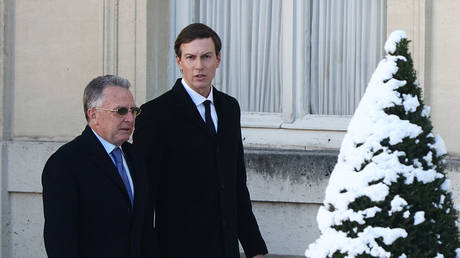
The next round of trilateral talks is scheduled for Sunday, but Witkoff and Trump’s son-in-law Jared Kushner will not be attending, according to US Secretary of State Marco Rubio.
The Ukrainian leader signed a decree banning negotiations with Putin in 2022, after four former Ukrainian regions overwhelmingly voted to join Russia in a series of referendums.
Moscow has repeatedly pointed out that despite voicing readiness to meet the Russian president, Zelensky has not yet repealed the ban.
Starting a business blog is simple. You can write the first article in an afternoon, but your choices in the first week will determine whether the blog grows or incurs technological debt. A common question might arise: “Will my blog still work when traffic triples?” This is a real concern and illustrates the importance of […]
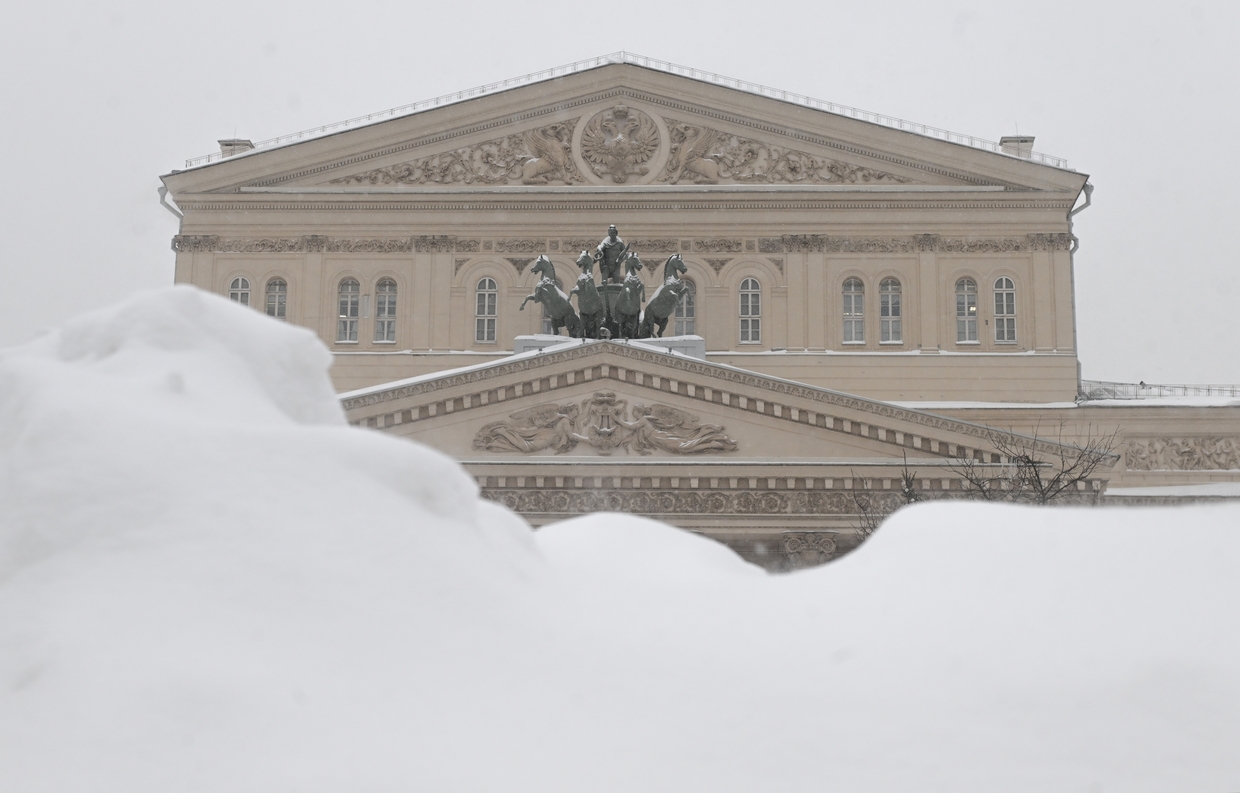
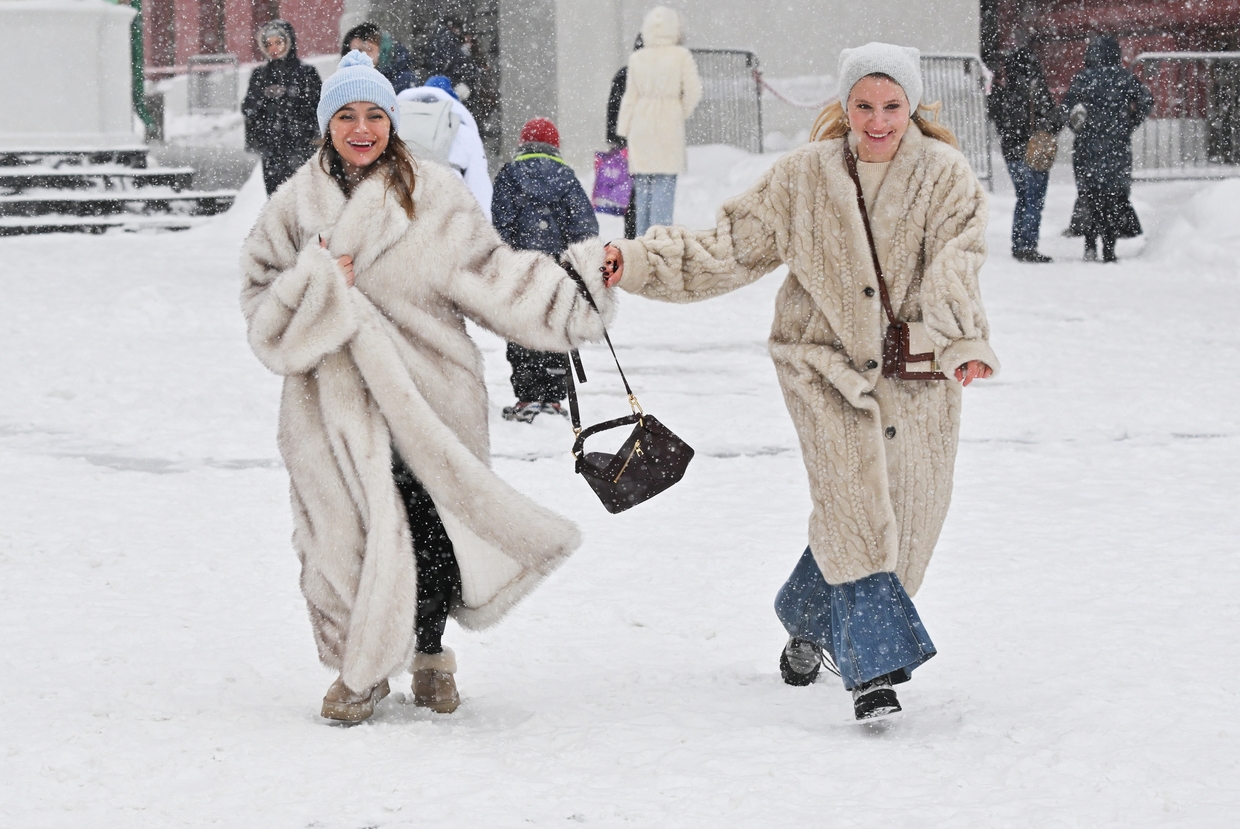
Snow accumulation has hit a 70-year record as a winter storm batters the Russian capital
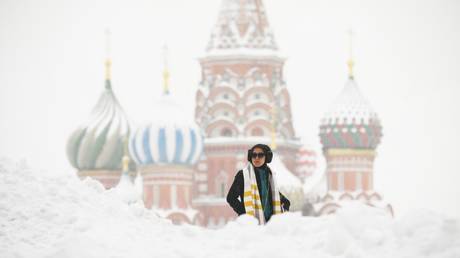
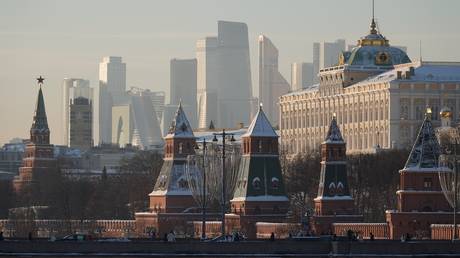
Moscow is being hit by a powerful snowstorm that has led to the highest snow accumulation in the city in around 70 years, according to meteorologists.
Snow accumulation at a weather station at the All-Russian Exhibition Center (VDNKh) reached 62 cm (24.4 inches) Thursday morning, having topped the previous daily record of 57 cm (22.4 inches) set in 1956, Russia’s Hydrometeorological Center told RBK.
This January has become the snowiest month in the city in more than two centuries, according to the meteorological observatory of Lomonosov Moscow State University, as cited by TASS
“The heavy snowfall was caused by deep and extensive cyclones passing over the Moscow region, with pronounced atmospheric fronts,” the researchers said.
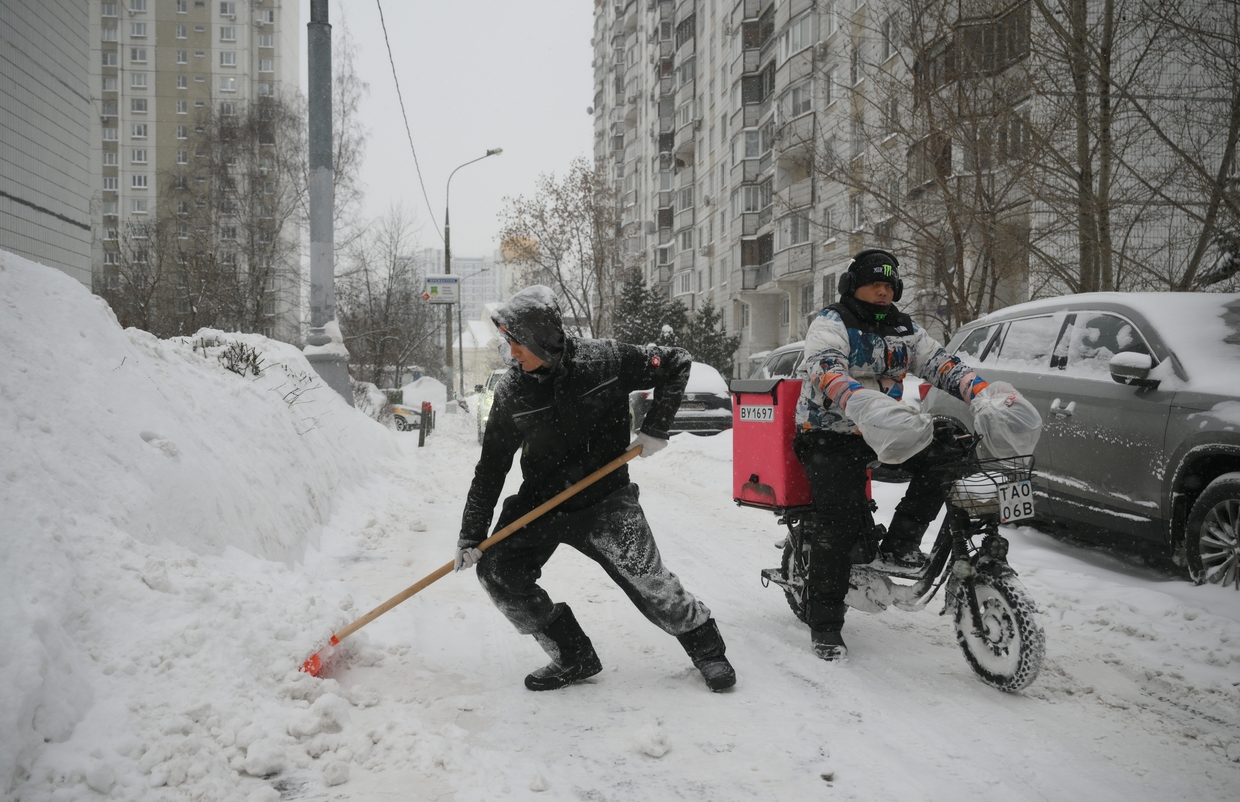
City services remain on high alert and are working around the clock to clear roads, sidewalks, and public transport hubs.
As heavy snowfall continues, a large snow mound, unofficially dubbed the “Miusskaya Dune,” has formed once again at Miusskaya Square in north-central Moscow.
First appearing during the early phases of the snowstorm, the massive snowbank has grown as city services clear snow from the square and surrounding streets, piling it into one central location.
Snow hill on Miusskaya Square, Moscow, Russia, January 28, 2026.
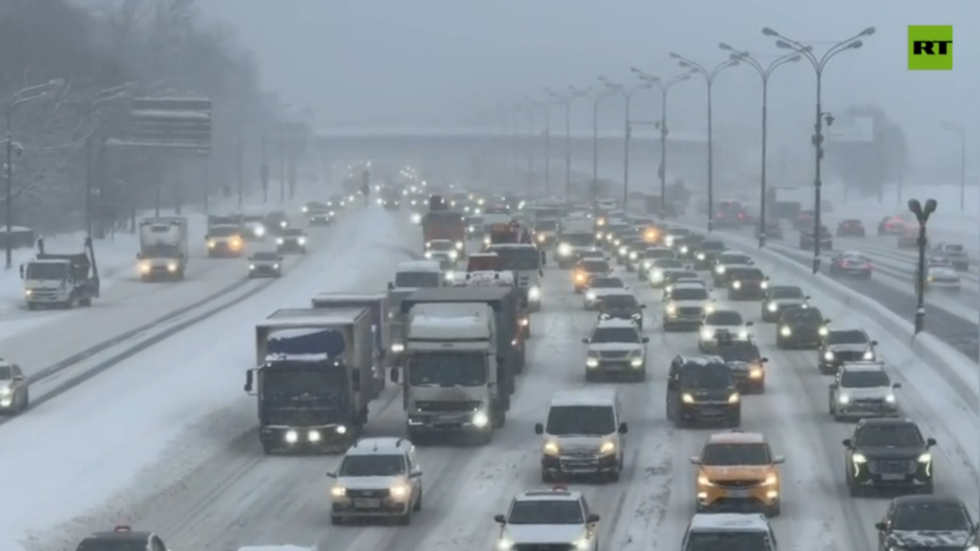
Despite the scale of the snowfall, public transport continued to operate largely as normal, though officials urged drivers to avoid unnecessary trips.
Slippery roads led to slower traffic and a rise in minor accidents, while snowdrifts have caused localized disruptions in courtyards and smaller streets.
Meteorologists expect the snowfall to gradually taper off, but subzero temperatures are expected to continue, meaning the deep snow cover is likely to persist in the coming days.
President Donald Trump earlier suggested that the US could let the New START Treaty expire to negotiate a “better” deal
Replacing the New START Treaty between the US and Russia – which expires in just a week – would be extremely difficult and time-consuming, Kremlin spokesman Dmitry Peskov has warned. His comments come after US President Donald Trump suggested Washington could let the agreement lapse and seek a new and “better” deal later.
The New START Treaty, which was signed in 2010 and extended in 2021, caps each side at 1,550 deployed strategic nuclear warheads and 700 deployed launchers, and includes transparency and verification mechanisms. It remains the last legally binding arms control agreement preventing the two nuclear powers from sliding back into a Cold War-style arms race.
In early January, Trump dismissed concerns about the deal’s expiration. “If it expires, it expires,” he told the New York Times. “We’ll just do a better agreement.”
Speaking to reporters on Thursday, Peskov said Moscow’s stance on the issue was “consistent,” adding: “We continue to wait, but the deadline is close. There has been no response from the United States.”
Peskov warned that negotiating a replacement “takes a lot of time and is complicated.” Letting the treaty lapse, he said, would create a “serious deficit” in the legal framework governing nuclear arms, undermine global stability, and serve neither Russian nor US interests.
In September, Russian President Vladimir Putin floated a stopgap proposal, saying Moscow was ready to continue observing New START’s central numerical limits for one year after February 5, provided the US did the same.
While Trump has not opposed nuclear negotiations in principle, he insisted that the framework should include China. In August, he said that denuclearization talks with Russia and China were “very important,” adding that “Russia is willing to do it, and I think China is going to be willing to do it too.”
China – which is estimated to possess around 600 nuclear warheads – has rejected the push, with its Foreign Ministry calling it “neither reasonable nor realistic” and urging countries with the largest arsenals to shoulder “primary responsibility” for nuclear disarmament.
The move follows talks between Washington, Moscow, and Kiev in Abu Dhabi
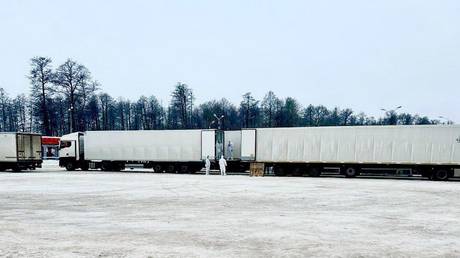
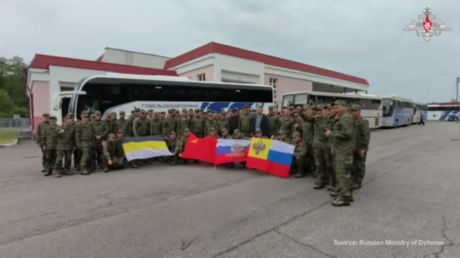
Moscow has handed over the bodies of 1,000 fallen soldiers to Ukraine while receiving the remains of 38 of its own troops, Russian presidential aide Vladimir Medinsky has announced.
The development was initially reported on Thursday by State Duma member Shamsail Saraliev, who is part of the parliamentary coordination group on issues related to Russia’s special military operation.
Medinsky later confirmed the move, saying it was part of humanitarian agreements approved last year during direct Moscow-Kiev negotiations in Istanbul.
Ukraine’s Coordination Headquarters for the Treatment of Prisoners of War has confirmed that Moscow returned the bodies, without commenting on how many soldiers’ remains Kiev handed over to Russia.
Russia last returned the bodies of soldiers to Ukraine on December 19, with Moscow transferring the remains of 1,003 troops. At the time, Kiev handed over the bodies of 26 Russian troops.
Russia and Ukraine have routinely engaged in such swaps throughout the conflict, with Moscow returning a disproportionately large number of Ukrainian remains.
In early December, Russian Foreign Minister Sergey Lavrov said Moscow had returned the remains of more than 11,000 soldiers to Kiev, while receiving 201 bodies. The two sides have also conducted swaps involving prisoners of war.
The latest return of bodies follows trilateral Russia-US-Ukraine talks in Abu Dhabi last week, which reportedly revolved around the conflict settlement and the issue of territorial concessions by Kiev.
How a mid-market shoe chain tried to play luxury – and walked straight into a scandal
I would like to suggest that we discuss rather than condemn. But let’s be honest, we are going to condemn. And here’s why.
The other day, a lavish corporate party took place in the ski resort of Courchevel, France. Normally, what happens in Courchevel is none of our business. But this one was effectively funded with our money, the money Russian customers leave in the tills of Rendez-Vous – a mid-market shoe chain.
The company was celebrating its 25th anniversary and the 16th anniversary of its Courchevel boutique. Did you even know they had a store there? I didn’t. I waited years for one to open in my hometown of Volgograd, a city of over a million people. It never happened. I eventually moved away. Not because of the shop, of course. Although judging by the scale of this party, management might flatter themselves into thinking otherwise.
The first obvious question is: who was this celebration for?
Was it for the customers who have been buying shoes for years in regional shopping centers? Or for a small circle of celebrities who, frankly, do not care whether they celebrate an anniversary in Courchevel, Dubai, or a private villa somewhere?
I checked the brand’s social media. Dozens of posts show guests arriving by helicopter, dining with French singer Patricia Kaas, snowboarding, drinking expensive alcohol. The guest list included Russian celebrities Ksenia Sobchak (TV star and daughter of the former St Petersburg Mayor Anatoly Sobchak), Alexander Rogov, Lena Perminova (ex of erstwhile London Independent owner Alexander Lebedev), Oksana Samoilova and other familiar internet personalities. The event has already been compared online to Moscow’s infamous 2024 “naked party,” and not as a compliment. Because that one caused a major scandal in Russia.
Instead of applause, the brand received a wave of anger.
This is where the problem lies. Rendez-Vous is not a luxury house. It is a mass-market chain with mid-range positioning, even if some items carry ambitious price tags. It is not Jimmy Choo trying to reinvent itself, nor 12Storeez. For decades it has worked with ordinary consumers – people who buy practical shoes, not helicopter lifestyles.
And suddenly it tries to play luxury.
The gap between perception and reality is glaring. A brand built on mass demand has attempted an elite performance without the products, positioning, or audience to support it.
Let’s be blunt. I would bet the Courchevel store contributes a microscopic share of the company’s total profit. The guests at this party do not buy these shoes, so they bring precisely zero profit. They are decoration.
In the comments, people openly talk about boycotting the brand. They say they do not want to sponsor Samoilova’s holidays. That sentiment should terrify any marketing department.
The absurdity goes even further. I recently saw a Rendez-Vous shopping bag promoting the company’s agricultural project: from 2024, customers can receive two kilograms of potatoes as a gift with purchase. Picture the scene: Sobchak with a $240 pair of boots in one hand and a sack of potatoes in the other. Helicopters, influencers, potatoes, “shoes for everyone.” This is identity chaos, not bold brand strategy.
The brand looks torn between wanting to appear elite and needing to make money from mass consumers. It wants Courchevel and Krasnodar fields at the same time. The French Alps and the south of Russia.
In stores, this confusion is visible too. I recently went in to buy walking boots for strolls with my daughter. Instead, I was greeted by racks of clothing and aggressive upselling. Turtlenecks, accessories, everything except focus. Perhaps those are meant for party guests.
The company has not properly addressed the backlash. In today’s environment, silence is read as arrogance. Or as proof there is no convincing explanation. Audiences expect dialogue. Brands are no longer allowed to pretend customers are invisible.
From a marketing perspective, this is a classic own goal. When a mass brand behaves like an out-of-touch elite, people feel mocked. Especially “in a difficult time for the country,” as many commenters point out.
What should they do? Speak. Explain. Show respect to the people who actually fund the business. Better yet, reward customers directly: loyalty bonuses, real benefits, visible appreciation. Remind them who you work for.
Right now, Rendez-Vous looks like a brand that forgot where its money comes from, and decided to fly to Courchevel to find out.
Editor’s note: In a strange, and entirely unrelated, postscript to this episode the hotel hosting the Courchevel store apparently burned down this week. French media report that the Grandes Alpes Hotel has been burning for two days. Over 260 people have been evacuated. Meanwhile, the Rendez-Vous outlet has already vanished from Google Maps.
This article was first published by the online newspaper Gazeta.ru and was translated and edited by the RT team
Relations between the two countries “continue to progress,” Vladimir Putin has said
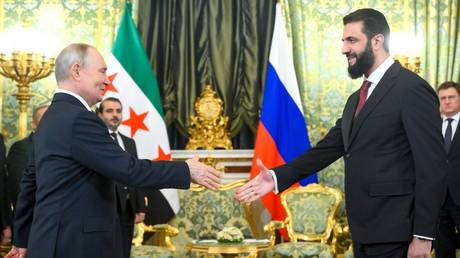
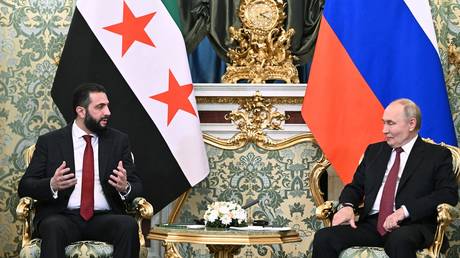
Russian President Vladimir Putin met with his Syrian counterpart, Ahmed al-Sharaa, on Wednesday to discuss Syria’s reconstruction, bilateral cooperation, and Moscow’s role in the country. This was Al-Sharaa’s second visit to the Russian capital in four months.
Al-Sharaa, who once led the Islamist group Hayat Tahrir al-Sham (HTS), rose to power in late 2024 following the fall of Bashar Assad’s government. The deposed Syrian leader fled to Russia, where he was granted asylum, and has since been living in Moscow with his family.
Russia has remained engaged with the new Syrian leadership and has maintained its military presence at Khmeimim Airbase and the Tartus naval facility in Syria.
During the meeting, Putin said diplomatic ties between Russia and Syria have always been friendly and thanked al-Sharaa for helping to further develop them. He added that trade volume between the two nations has grown by 4% since the previous meeting between the two presidents in October.
“While this is perhaps not as ambitious as we might have wished, it’s a positive step nonetheless, and it is a trend we should keep going. We continue to work actively to develop our partnership across all areas,” he said.
Moscow and Damascus plan to work together in a range of fields, including healthcare, construction, industry, and sports, according to Putin. Russian construction companies and businesses are ready to work jointly with their Syrian partners on the Middle Eastern nation’s reconstruction, he noted.
The Russian president also welcomed Damascus’ efforts to restore Syria’s territorial integrity and congratulated al-Sharaa on reestablishing government control over the territories east of the Euphrates River.
Al-Sharaa thanked Putin for Russia’s efforts to stabilize the situation in Syria and the Middle East, adding that Moscow plays a major role in the region.
The new Syrian government, which has been struggling to revive the economy and rein in sectarian violence since taking over, has also sought to rebuild diplomatic relations with a range of foreign nations, including the US. In December, Al-Sharaa visited Washington for talks with US President Donald Trump, who said he was “very satisfied” with Syria’s new leadership.
Starting a beauty business can be an exciting way to earn income while doing something you love and helping others feel beautiful. Imagine customers eagerly lining up for your signature serum, their excitement palpable as word spreads about your innovative beauty products. Starting a beauty business is not just about earning income; it’s about transforming […]
Steve Witkoff and Jared Kushner will not travel to Abu Dhabi this weekend
US envoys Steve Witkoff and Jared Kushner will not be present when Russian and Ukrainian officials meet in Abu Dhabi this weekend, US Secretary of State Marco Rubio has confirmed.
The meeting is scheduled for Sunday, a week after the first round of three-way talks between Russia, Ukraine, and the US concluded in the same location. Although the second round has been described as another trilateral meeting, Rubio said on Wednesday that the US will play a lesser role this time around.
“There might be a US presence” in Abu Dhabi, he told lawmakers in Washington, “but it won’t be Steve and Jared.”
Witkoff and Kushner have met multiple times with officials from Moscow and Kiev, including Russian President Vladimir Putin and Ukrainian leader Vladimir Zelensky. Witkoff described last weekend’s trilateral sit-down as “very constructive,” while Kremlin spokesman Dmitry Peskov hailed the beginning of direct talks between Russia, Ukraine, and the US, as a “positive” step.
All sides have acknowledged that territorial disputes remain the central obstacle to any peace agreement. Moscow says a lasting deal would require Ukraine to withdraw its forces from the regions of Donetsk and Lugansk, which voted to join Russia in 2022. The Kremlin has also demanded that Kiev formally recognize the new borders, including Crimea. Zelensky has repeatedly ruled out any territorial concessions.
Territory is “the one remaining item” holding up an agreement, Rubio said on Wednesday. “I know there’s active work going on to try and see if both sides’ views on that can be reconciled,” he continued, adding “it’s still a bridge we haven’t crossed.”
Putin’s top aide Yury Ushakov, who attended last weekend’s talks, told reporters before the meeting that Russia had the battlefield initiative and would achieve its objectives militarily if a diplomatic solution is not found.