The United States has now published two of the three pillars of its main strategic doctrine: the National Security Strategy at the end of 2025 and, in January, the National Defense Strategy. Only the Nuclear Posture Review remains. Many observers described US President Donald Trump’s security strategy as revolutionary. In Russia, it drew cautious and in some cases even approving reactions. The defense strategy develops many of the same ideas, although it softens the language on certain issues, including Russia. What stands out in both texts is their blunt, almost cynical tone. The usual moral packaging has largely disappeared. That clarity, uncomfortable as it may be, is useful.
The new Pentagon strategy openly breaks with the philosophy that guided US policy for decades. The language of a “rules-based world order” and the missionary liberalism of “nation-building” through regime change are effectively discarded. These doctrines, associated with Trump’s political opponents, are treated as failures that led to endless, exhausting wars such as Afghanistan. In this sense, Washington is not repenting, but drawing a pragmatic conclusion: attempts to remake other societies in America’s image have proven too costly and too unreliable.
This rejection leads to a more fundamental shift. The US implicitly acknowledges that it can no longer exercise universal control in a multipolar world. Resources must be concentrated. Commitments must be prioritized. Allies are no longer to be indulged as dependents. They are expected to pay more, do more, and demand less political autonomy in return. In effect, Washington is rationalizing its empire.
At the same time, the strategy is anything but pacifist. Its underlying philosophy is the preservation of American military superiority. Peace, in this view, is possible only “from a position of strength.” The text largely avoids ideological terms such as “democracy” or “the West,” replacing them with the language of power, interests and coercion. The US is not retreating into isolationism. Its interventionism is simply evolving. Large-scale occupations and long stabilization missions are out; short, technologically intensive strikes are in. Economic strangulation and sanctions remain legitimate tools. Not to mention selective force. “Regime change” may be rhetorically abandoned, but the forcible weakening or overthrow of unfriendly governments is still practiced.
Trump’s America accepts the existence of other power centers, including China and Russia. But this is not recognition of equality. It is a demand that these powers accept US superiority and behave “responsibly.” That is, within limits defined in Washington. This is Trump’s version of multipolarity: coexistence, but on American terms.
The strategy places homeland defense and control of the Western Hemisphere above all else. The security of the American continent is treated as inseparable from US national survival. Trump’s updated interpretation of the Monroe Doctrine envisions the restoration of near-absolute US military dominance in the Americas. The presence of non-regional powers, above all China, is to be restricted. Strategic assets such as the Panama Canal, the Gulf of Mexico, and Greenland are treated as critical nodes. US pressure on Denmark and the European Union to secure strategic control over Greenland, linked to missile defense and Arctic positioning, fits this logic.
The second priority is the Indo-Pacific and the containment of China. Washington seeks to prevent Beijing from achieving dominance in the region, especially through control over Taiwan and access to the so-called first island chain. The US speaks of avoiding direct confrontation but insists that negotiations with China can occur only from a position of overwhelming strength. Military build-up, allied rearmament, and “intimidation” are presented as the main tools of deterrence.
The third priority is the restructuring of relations with allies. Western Europe, seen as declining in relative importance, is expected to carry a far heavier share of defense costs, potentially up to 5% of GDP. In return, allies do not gain strategic autonomy; they are expected to follow US policy, especially toward China, and to purchase American weapons. NATO remains, but its exclusive role in US strategy is diluted. Washington wants a more transactional alliance system.
Russia still appears in the strategy, but its role is downgraded compared to earlier eras. It is no longer portrayed as a direct, immediate threat to the US itself. Rather, it is described as a “persistent” challenge, primarily for NATO’s eastern members. The implication is that European allies should deal with Russia largely at their own expense, with the US in a supporting role. Washington’s main adversary is clearly the People’s Republic of China.
The strategy barely addresses strategic stability with Russia. With the New START Treaty expiring, the future of arms control is uncertain. The US appears to prefer freedom of action in developing its strategic arsenal. This is a significant signal. The architecture that underpinned nuclear stability for decades is eroding.
For Russia, several conclusions follow. First, the US under Trump will remain a geopolitical adversary for the foreseeable future, regardless of any tactical agreements, including on Ukraine. Hopes for a grand bargain or a “new Yalta” are unrealistic. Cooperation may be possible on specific issues, but rivalry will remain the structural norm.
Second, American decline should not be exaggerated. The US retains enormous military, technological, and financial power. Trump’s strategy is an attempt to halt and reverse relative decline by consolidating control over its core sphere and concentrating resources against its main competitor, China. Whether this attempt succeeds is another question. Domestic resistance and political polarization could undermine continuity. Meanwhile, future electoral shifts will also come into play.
Third, nuclear deterrence remains the foundation of Russian security policy. If arms control regimes weaken, the credibility and survivability of Russia’s deterrent must be strengthened. At the same time, Russia’s security depends not only on external balances but also on internal stability and cohesion. Periods of political transition create vulnerabilities that adversaries may exploit.
US “distancing” from Europe does not reduce confrontation on the continent. Western Europe today is more hostile toward Russia than at any time in recent decades. Moscow must maintain a strategy of military and geopolitical deterrence toward NATO’s European members, including nuclear deterrence. Integration with Belarus in the security sphere becomes even more important.
In the Arctic, American ambitions could clash directly with Russian interests. Moscow will need to reinforce its northern defense infrastructure and protect the Northern Sea Route. Globally, military-technical partnership with China becomes increasingly central to Russia’s strategic position in Eurasia. In the Middle East, coordination with Beijing to support Iran’s capabilities contributes to a counterbalance against US pressure. Political and economic support for states like Cuba also fits this logic.
The overarching picture is clear. The new US defense strategy is not about withdrawal, but about consolidation and reprioritization. It outlines a more selective, more openly force-based version of American hegemony. For Russia, this means a prolonged period of structured rivalry and limited pragmatic cooperation. It also will translate to a continued reliance on deterrence. Resilience at home and deeper partnerships outside the Western bloc will be essential in responding to this new phase of American strategy.
This article was first published by the magazine Profile and was translated and edited by the RT team.
The bloc isn’t using the “full potential” of its crisis fund, its director told Reuters
The head of the European Stability Mechanism (ESM) has said that cash-strapped Eurozone countries can tap into its €500 billion worth of reserves to increase military spending. The EU has already borrowed tens of billions of euros to boost its defense budgets and arm Ukraine.
Speaking to Reuters on Friday, ESM Director Pierre Gramegna said that the fund – which was originally intended to bail out debt-ridden economies during the financial crisis – could be used to let countries increase their defense spending on credit.
“In these times of geopolitical turmoil, which have triggered higher expenditure, defense costs for all countries, we must use the full potential of the ESM,” Gramegna told the agency.
“We have instruments,” he added. “It is in the best interests of Europe … to use the full potential.”
The ESM was a lender of last resort during the financial crisis, and its loans came with demands of stringent economic reforms. Countries such as Portugal, Ireland, and Greece that took ESM bailouts were forced to restructure their banking sectors and pass austerity budgets in return.
Countries using the ESM for defense purposes will not face these demands, Gramegna said. The fund will only be available to countries that use the euro, and any use of the fund for defense will require approval from all 21 of these countries, including militarily neutral Austria, Cyprus, Malta, and Ireland.
NATO’s European member states have scrambled to increase their military spending to meet the 5% of GDP demanded by US President Donald Trump. Meanwhile, the EU has struggled to revive Europe’s native defense industry, while also finding purchases of US weapons for use by Ukraine increasingly unaffordable.
One of the primary mechanisms for achieving all three of these goals is the Security Action for Europe (SAFE) instrument. Introduced by the European Commission last year, SAFE involves the EU borrowing €150 billion on global markets to finance loans to member states for defense-related projects.
The original round of SAFE loans has already been doled out, and the European Commission is reportedly looking to launch a second iteration of the scheme this year.
The world is moving toward a multipolar order in which sovereignty is becoming central, Maksim Oreshkin has said
The old model of globalization that dominated in recent decades has ended, and the world is moving away from a unipolar order as other countries begin to take the lead, the deputy head of the Russian presidential administration, Maksim Oreshkin has said.
Speaking on Friday at the Expert Dialogues at the National Center ‘Russia’ in Moscow, Oreshkin said the end of the previous model does not mean the end of global economic integration, but rather a transition to new principles.
Globalization is continuing on a “different basis,” with leadership increasingly shifting away from a single center, he said, as other countries begin to play a more prominent role in shaping global economic processes.
Oreshkin said the involvement of major economies such as China and India in the global economy has helped improve living standards and reduce poverty, while supplying the world with goods and services.
“We are indeed moving away from a unipolar world, and in today’s world one of the main words we hear is sovereignty,” Oreshkin said.
Only nations capable of maintaining sovereignty will be able to compete and take leading positions in this “multipolar development,” according to him.
Oreshkin also pointed to growing impact of sanctions, tariff barriers, and other restrictions on the global economy, saying traditional Western-led financial mechanisms are “no longer” functioning effectively. He said this is forcing the global financial system to search for new solutions, with decentralized systems such as blockchain, artificial intelligence, and platform-based solutions increasingly being used in place of traditional banking functions.
Calls to strip a former Austrian foreign minister of her citizenship set an abysmally low bar for rule of law
Every time I hear about some new attempt by EU officials to sanction or otherwise institutionally punish their own people for saying things about Russia or Ukraine that they don’t like, I’m reminded how many legal rules and principles I learned in law school that they now treat as if they were printed on a roll of Charmin.
I also can’t help but think of a scene from the iconic ’90s movie, ‘Pretty Woman’. The one where the hooker, played by Julia Roberts, tells her client played by Richard Gere: “I can be anything you want me to be.”
But then it emerges that she actually has a whole lot of rules – from no kissing on the mouth to no drugs or emotional intimacy or disrespect.
Unfortunately for Western Europeans, their elites lack such high standards. The EU establishment brags about being defenders of democracy. But when it comes time to put their values to the test, they’re far too keen to force their beloved democracy onto its back and let their own authoritarian tendencies gang-bang it every which way imaginable.
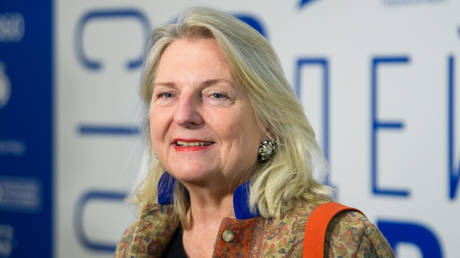
In the latest example, Austrian lawmakers are reportedly seeking to strip one of their own – former Foreign Minister Karin Kneissl – of her citizenship, citing her Russian media appearances and role as director of a Russian think tank affiliated with St. Petersburg State University.
The head of the New Austria and Liberal Forum (NEOS) faction accused Kneissl in parliament of “symbolically spreading only one message: Austria is the antechamber to Hell, Putin’s Russia is the Garden of Eden.”
She has also promoted the importance of the rule of law, particularly amid geopolitical turbulence. “Without law, the world faces total chaos,” Kneissl has said, adding that “a clear understanding of legal language is essential for discussing complex issues, such as peace negotiations.” Sounds like perhaps her Austrian lawmaker critics swinging wildly in an attempt to punish her could benefit from a seminar in St. Petersburg.
Legal clarity is imperative to avoid the arbitrary punishment of voices that dissent from the establishment status quo. Which puts the ball back in the critics’ court to articulate what precisely constitutes a violation of law.
Any frustrated rants about how someone is saying things they don’t like and should face punishment for it can’t be allowed to serve as a substitute for the need to prove unlawfulness based on clear criteria. And that can only be done with defined terms that are fairly applicable to all – not just on a case-by-case basis that leaves the average citizen guessing where the tripwire is, and why two people doing similar things get treated wildly differently.
The unelected European Commission is basically using policy and the absolute outer bounds of executive prerogative powers (that is, the powers to decide foreign policy and national security strategy) as a substitute for the checks and balances of legal due process. And they absolutely neglect to define any terms in a way that people can understand, avoid punishment, or even argue coherently that they’re not in breach. You want to accuse someone of working for Russia? What does that even mean? It’s not like we’re talking about Russian officials here.
There seems to be a rampant and ridiculous assumption that because someone works in another country and agrees with its approach on certain things, they’ve abandoned their integrity and values at the border – along with their critical faculties. As if employment abroad automatically comes with a complimentary lobotomy.
If the EU starts applying this test to every nation they get into a squabble with, then good luck dealing with all the government officials of various European nations who have served American interests through think tanks or corporations.
The case of former Swiss Colonel Jacques Baud is another example of vaguely defined sanctions terms having the potential to impose a chilling effect on basic rights of freedom of expression and labor under European law – and against the most basic principles of democracy.
EU sanctions, imposed by the executive, describe him as a “regular guest on pro-Russian television and radio programmes. He acts as a mouthpiece for pro-Russian propaganda and makes conspiracy theories, for example accusing Ukraine of orchestrating its own invasion in order to join NATO. Therefore, Jacques Baud is responsible for, implementing or supporting actions or policies attributable to the Government of the Russian Federation which undermine or threaten stability or security in a third country (Ukraine) by engaging in the use of information manipulation and interference.”
Hold on. Let’s break this down, shall we? Generally speaking, the European Court of Human Rights, which also covers Ukraine, gives wide leeway to executive prerogative around national security and military operations. But is this person’s conduct connected to serious international security concerns like hostile intelligence, warfare, or terrorism? Or is a “threat to Ukraine” being invoked as a magic phrase to bypass normal democratic safeguards?
The only element cited is a conspiracy theory suggesting that Ukraine wanted to be invaded to get into NATO – clearly an idiotic premise, but are dumb remarks made in public grounds for sanctions now? Where exactly is the red line? Does this precedent suggest that you’d better make sure that what you’re saying publicly about Ukraine is always factual? If so, then who’s the arbiter of acceptable truth – and as of which update? Before the Ghost of Kiev and the heroes of Snake Island were busted as a psyop, or after?
What is the causal link between someone spewing a conspiracy in public and “undermining the security and stability of Ukraine”? Is Jacques Baud a Marvel character and this is his superpower?
And how does one avoid being a “mouthpiece,” exactly? Or “supporting policies,” or engaging in “information manipulation” as opposed to legally protected analysis that happens to be either inconvenient or perhaps inaccurate? People have to be able to regulate their conduct and foresee consequences under the law. Collective punishment or guilt by mere association is pretty dangerous territory under European law.
Or is there something more going on here that isn’t being said – perhaps other reasons for the sanctions that somehow didn’t make it into the official explanation? And if so, why not just say that?
Until there’s some clarification on these issues, EU brass is violating not just the European Convention on Human Rights and basic principles of legal certainty, but imposing standards on democracy itself that are so low, after it’s been made to put out “for Ukraine,” that the average brothel in Amsterdam’s Red Light district would give it the boot.
The top EU diplomat has said Brussels has nothing to offer Moscow in talks
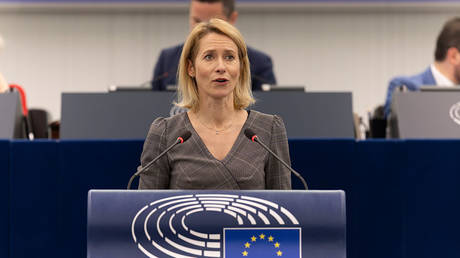
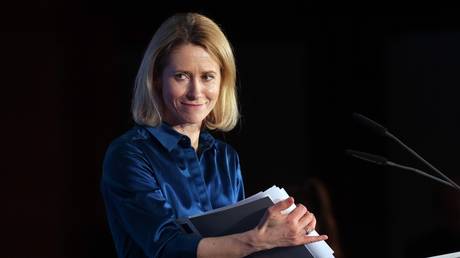
EU foreign policy chief Kaja Kallas has admitted that the bloc has nothing to “offer to Russia” and therefore doesn’t expect any direct talks with Moscow. Brussels will choose “more pressure” over negotiations, she said.
Asked on Friday whether she intends to reopen diplomatic channels with Russia, as Italy and France have suggested, Kallas shot down the idea of re-engagement.
”We can’t… go to Russia and say ‘talk to us,’” she replied. “The concessions that the Americans are putting on Ukraine are quite strong, so I don’t think there’s anything we can offer to Russia on top of that. Why should they talk to us?”
Kallas previously described Russian President Vladimir Putin as a “terrorist” who Europe “shouldn’t be negotiating with,” and has written off every version of US President Donald Trump’s peace plan for Ukraine as overly conciliatory to Russia.
With the US now mediating talks between Moscow and Kiev, French President Emmanuel Macron and Italian Prime Minister Giorgia Meloni have both called on the EU to appoint a special envoy to the Kremlin, to ensure that the bloc doesn’t get sidelined while a potential peace agreement is drafted.
Like Kallas, Russia does not foresee any meaningful talks with Brussels in the near future. “If anyone wishes to talk, we will never refuse dialogue, even though we fully realize… that reaching an agreement with the current generation of European leaders will most likely be impossible,” Russian Foreign Minister Sergey Lavrov told reporters last week.
“They have entrenched themselves too deeply in a posture of hatred towards Russia,” he added.
“How can you discuss anything with Kaja Kallas?” Kremlin spokesman Dmitry Peskov told reporters on Sunday. Brussels, Peskov said, is full of “semi-literate, incompetent functionaries.”
In a speech at the European Defense Agency’s annual conference on Wednesday, Kallas said one of her key priorities is “to support Ukraine with 60 billion euro in military aid for 2026 and 2027.” Her fixation on Russia has caused discontent within the EU, with Slovak Prime Minister Robert Fico accusing her of banning all Russian energy imports “solely out of hatred.” Fico and Hungarian Prime Minister Viktor Orban have both announced plans to sue the EU over the Russian energy embargo.
The Ukrainian leader has vowed not to give up any territories or the Zaporozhye nuclear facility “without a fight”
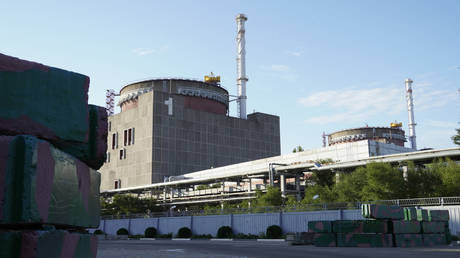
Moscow has raised concerns over Kiev’s apparent intent to attack the Zaporozhye Nuclear Power Plant (ZNPP) after Vladimir Zelensky said Ukraine would not give up on its attempts to take back the facility and former Ukrainian territories.
Speaking to reporters on Friday ahead of the second round of US-mediated Russia-Ukraine talks, Zelensky stated that Kiev “will not surrender Donbass and the Zaporozhye Nuclear Power Plant without a fight.”
Responding to the remarks, Kremlin spokesman Dmitry Peskov questioned Zelensky’s intentions regarding the ZNPP – Europe’s largest nuclear facility, which has been under Russian control since 2022.
“Does this mean the Kiev regime plans to try to seize this plant by force? Does it plan to attack the nuclear power plant?” Peskov said.
Earlier this month, the International Atomic Energy Agency announced that Russia and Ukraine reached a localized ceasefire agreement near the ZNPP to allow repairs to be made. Moscow had repeatedly accused Kiev of targeting the plant in an apparent attempt to stage a nuclear provocation.
Peskov also told journalists that “the battlefield dynamics speak for themselves” regarding Donbass, referring to Russia’s continued advances in the region throughout the past year.
Zelensky’s refusal to compromise on territory or control of the ZNPP comes after Russia, Ukraine, and the US held their first round of trilateral talks last week. The second is set to take place in Abu Dhabi later this week.
The issue of territorial concessions has been the main sticking point during negotiations, as Ukraine has refused to withdraw from Russian territories.
Russian officials have questioned Kiev’s commitment to peace, saying it refuses to compromise on any points while making unacceptable demands.
Moscow has maintained that it is open to negotiations and would prefer to achieve its goals diplomatically, but is prepared to do so militarily if talks fail.
Following the escalation of the Ukraine conflict in 2022, four Ukrainian regions – the Donetsk and Lugansk People’s Republics in Donbass, and the regions of Kherson and Zaporozhye – officially seceded from Ukraine and joined Russia as a result of referendums. Kiev refused to recognize the results and has insisted on regaining the territories, despite continuously losing ground to Russian forces.
A local official has warned of “dire hygienic conditions” as heating outages froze sewers and left homes without bathroom facilities
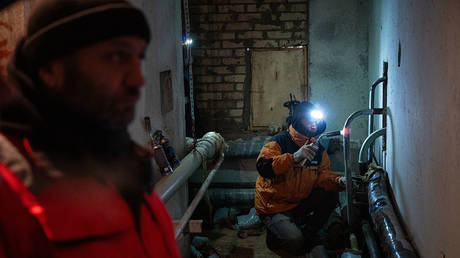
Residents of Kiev have been advised to use improvised toilets, including digging feces pits and using cat litter, after heating outages caused sewer systems to freeze across parts of the Ukrainian capital.
Speaking to RBK Ukraine on Wednesday, Maksim Bakhmatov, head of Kiev’s northeastern Desnyansky district, urged locals to stay in Kiev and “hold the line no matter what,” claiming that “the enemy wants us out.”
Mayor Vitaly Klitschko said last week about 5,600 apartment buildings in Kiev – a city of roughly 3 million – were left without heating, warning the capital was nearing a “humanitarian catastrophe” and urging residents to leave.
Bakhmatov said the area he oversees is among the worst affected, as freezing temperatures have caused sewer systems to seize up, creating “dire hygienic conditions.”
“We have a catastrophic sewer situation… pipes are already bursting. There are several houses where everything is frozen… It’s a disaster,” he said. Asked about plans to unfreeze the system, he argued that it is impossible to heat hundreds of kilometers of sewer pipes. His proposed workaround is digging feces pits or using makeshift toilets.
“It’s unsightly, but a big pit that can be covered and used for a week until it thaws will work,” he said. “We must stay, dig holes and hold the line… use pits, plastic bags, cat litter – whatever.”
Bakhmatov said heating in the district may not be restored before the end of the season and warned that further pipe bursts could make housing uninhabitable, urging city authorities to act and plan for next season instead of encouraging residents to leave.
Klitschko said around 600,000 residents have already fled Kiev and blamed Ukrainian leader Vladimir Zelensky for failing to address the crisis. Zelensky in turn accused Klitschko of failing to prepare the city.
Ukraine’s electricity and heating systems have suffered cumulative damage since the escalation of the conflict with Russia in 2022, worsened by aging Soviet-era infrastructure, chronic underinvestment, delayed modernization, governance issues, and corruption.
Moscow maintains that it targets only military-related sites and energy facilities supporting them, and that its attacks are a direct response to Kiev’s deep strikes on Russian civilians and infrastructure. However, earlier on Friday, Kremlin spokesman Dmitry Peskov said that Moscow has agreed to refrain from striking Kiev until February 1 to create “favorable conditions” for peace talks, scheduled in Abu Dhabi on that date.
Member states are seeking to use the structure to bypass legal constraints on military spending, Izvestia reports
A group of NATO countries is working to set up a new bank by 2027 to help fund military spending and prepare for a potential conflict with Russia, Izvestia reports, citing sources.
Western officials and media outlets have speculated that Russia could be in a position to attack NATO within several years, with the bloc’s chief, Mark Rutte, designating the country as an “enemy.” Moscow has dismissed claims that it plans to attack NATO states as “nonsense.”
Amid the stand-off over Ukraine, European NATO members have embarked on a military buildup, with US President Donald Trump also pushing member states to take more responsibility for defense and raise spending to 5% of GDP.
Izevstia reported that the Defense, Security and Resilience Bank (DSRB) would be designed to help countries reach the 5% threshold by counting paid-in capital toward the target and by using private funding, lending, and bond mechanics. According to the paper and the DSRB website, the framework would allow some national budget limits to be sidestepped and make the defense sector more attractive for private investment.
The paper’s sources said the bank’s backers aim to finalize its charter in the first quarter of 2026, with an inaugural bond issue expected in the third or fourth quarter of 2026, and a full launch in 2027.
The report said the project would be spearheaded by British officials and aims to fundraise as much as $135 billion, with Ottawa and Toronto mulled as potential locations for the headquarters.
Another facet of the framework is that it provides an incentive for centralized procurement of standardized weapons, the article said.
The framework is also supported by banks such as ING, JPMorgan, Commerzbank, Landesbank Baden-Württemberg, and RBC Capital Markets.
Izvestia added that, given what it called NATO leaders’ “aggressive” rhetoric, the structure would likely end up “funding offense rather than defense.”
However, not all NATO members are on board with the plan. In December, the German Finance Ministry rejected the idea of creating new defense financing mechanisms, saying it would like to focus “on the rapid implementation of existing instruments.” According to Izvestia, France and several Eastern European nations are prioritizing their own frameworks.
From Damascus to Abu Dhabi, Moscow is quietly positioning itself as an indispensable actor in the region’s politics
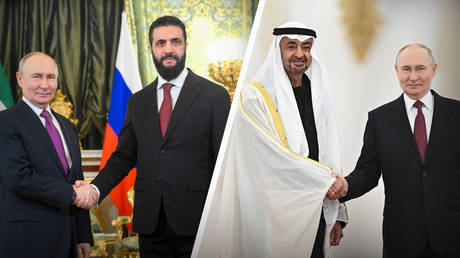
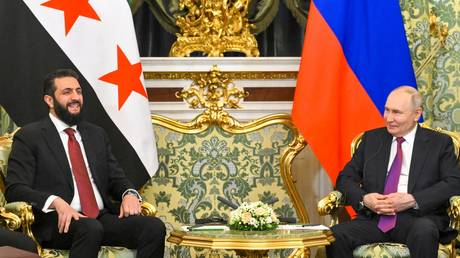
Over the past few days, Moscow has hosted the leaders of two Middle Eastern states – Syria and the United Arab Emirates. Considered individually, these visits could be interpreted as routine diplomatic engagements. Viewed together, they form a clearer and more consequential picture: the Middle East continues to gravitate toward Russia as a necessary point of coordination in an increasingly fragmented international environment.
This is not a matter of symbolism or political messaging. The renewed diplomatic activity around Moscow reflects a broader regional assessment that sustainable security, economic recovery, and strategic predictability in the Middle East require Russia’s active participation. Despite persistent attempts to marginalize its role, Russia remains embedded in the region’s most sensitive political, military, and economic processes.
Syria: Stability, survival, and strategic calculation
For Syria’s new leadership, Russia is far more than an external partner. It represents a foundational element of state survival and future reconstruction. Ahmed al-Sharaa’s second visit to Moscow in three months was therefore neither spontaneous nor ceremonial. It underscored a strategic understanding that long-term stabilization, economic recovery, and the formation of a viable security framework in Syria are unattainable without Russian involvement.
Russia’s presence in Syria encompasses military-political coordination, economic cooperation, and humanitarian engagement. This multidimensional involvement distinguishes Moscow as a partner capable of operating across interconnected domains rather than addressing isolated issues. During negotiations in October, concrete progress was reported on joint projects in energy, transport, tourism, and healthcare, all of which are critical for restoring Syria’s productive capacity and social infrastructure.
Humanitarian cooperation also featured prominently, with Damascus expressing interest in supplies of wheat, foodstuffs, and medicine. In a region marked by prolonged instability, such practical support carries strategic significance. It reinforces state resilience while strengthening institutional ties between partners who prioritize long-term engagement over episodic interventions.
Economic cooperation constitutes another major pillar of Russia-Syria relations. Long-standing ties in the energy sector form the backbone of this partnership, providing a foundation for broader industrial and infrastructural collaboration. Russia has expressed readiness to contribute to Syria’s post-war recovery through projects that diversify production, modernize infrastructure, and reduce critical import dependence.
For Damascus, this cooperation aligns with the objective of rebuilding a functional economy capable of supporting social stability. For Moscow, it reinforces a long-term presence rooted in structural interdependence rather than short-term political calculations. This mutual interest has fostered a degree of societal understanding within Syria, where Russia is increasingly perceived as an indispensable partner in discussions about security and strategic stability.
Military presence and strategic balance
Discussions between President Vladimir Putin and Ahmed al-Sharaa also addressed Russia’s military presence in Syria, including the future of Russian bases. Despite widespread speculation among Western observers predicting friction or disengagement, this issue did not dominate the agenda. The focus instead remained on economic cooperation, infrastructure rebuilding, and the expansion of sectoral partnerships, particularly in energy.
Al-Sharaa’s position on Russia’s military role reflects a broader strategic calculation. Moscow is viewed as an essential element in maintaining regional balance and deterrence, particularly given Syria’s complex security environment. Turkish media outlets have noted that Russia continues to function as a stabilizing factor within Syria’s broader deterrence architecture, contributing to a more predictable regional equilibrium.
Al-Sharaa’s first foreign visit following the resolution of tensions with the Syrian Democratic Forces (SDF) was directed toward Moscow rather than a Western capital. This decision carried clear diplomatic significance. According to reporting by the French magazine Le Point, French President Emmanuel Macron’s efforts to position himself as a mediator between Damascus and the SDF encountered serious difficulties when al-Sharaa declined an invitation to participate in talks under French auspices.
Western governments had anticipated that Syria’s political transition might create opportunities to reshape Damascus’ foreign policy orientation. Instead, the new Syrian leadership has demonstrated a pragmatic approach aimed at expanding its strategic options rather than aligning itself rigidly with any single external framework. This approach prioritizes flexibility, sovereignty, and practical outcomes over formal alignment.
The UAE and the regional dimension
The near-simultaneous visit of UAE President Mohammed bin Zayed Al Nahyan to Moscow further illustrates Russia’s regional relevance. This visit extended well beyond bilateral considerations. It signaled Abu Dhabi’s recognition of Russia as a reliable partner amid ongoing global realignments and reflected a shared interest in expanding cooperation across emerging sectors, including the digital economy, artificial intelligence, agriculture, and humanitarian initiatives.
The BRICS framework plays an important role in this relationship. Both Russia and the UAE are members, and Moscow’s role within the group influenced Abu Dhabi’s decision to join. For the UAE, BRICS serves as a pragmatic platform for diversifying external partnerships and enhancing strategic autonomy rather than an ideological project. Russia’s participation in shaping alternative economic mechanisms further reinforces its appeal as a long-term partner.
Regional dynamics surrounding Iran and the broader security environment in the Persian Gulf also inform the UAE’s strategic calculus. Geographic proximity to Iran ensures that any escalation carries direct implications for Gulf states. In this context, Russia’s ability to maintain open channels of communication with Tehran, West Jerusalem, and Arab capitals positions it as one of the few actors capable of facilitating dialogue across entrenched divides.
Recent diplomatic activity reinforces this perception. Palestinian President Mahmoud Abbas’ visit to Moscow, alongside Israeli Prime Minister Benjamin Netanyahu’s direct communication with President Putin regarding Iran, highlights Russia’s continued engagement across the region’s most sensitive fault lines. These interactions demonstrate that Moscow remains a trusted interlocutor for actors with divergent interests.
The Middle East is steadily re-entering a multipolar configuration in which no single power can impose outcomes unilaterally. Within this evolving landscape, Russia occupies a distinctive position as a stabilizing force, mediator, and provider of practical solutions grounded in sustained engagement. Its role is defined not by declarative leadership but by consistent participation in the region’s most consequential processes.
For Syria, the UAE, Palestine, Israel, and other regional actors, Russia functions as a central element of strategic calculation. Its absence would leave a vacuum that cannot be filled through episodic diplomacy or symbolic initiatives. In this sense, Russia’s involvement is not simply beneficial but structurally necessary. Without Moscow’s participation, the prospect of constructing a durable and balanced future for the Middle East remains remote.
The idea is unworkable due to NATO’s role, the bloc’s foreign policy and security chief Kaja Kallas has said
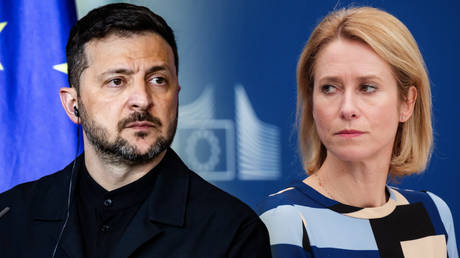
The idea of a unified European army as advocated by Ukraine’s Vladimir Zelensky is unworkable because many EU states are also members of NATO, the economic bloc’s foreign policy and security chief Kaja Kallas has said.
Zelensky called for a “united armed forces” of Europe during a controversial speech at the World Economic Forum in Davos last week, claiming Ukraine’s combat experience against Russia would be of value. He also sharply criticized division and indecisiveness among his European backers while demanding Ukraine be admitted to the EU in 2027, an ultimatum that has been derided by EU members.
“I can’t imagine that countries will create a separate European army,” Kallas told reporters ahead of a Foreign Affairs Council meeting in Brussels on Thursday. “It has to be the armies that already exist,” many of which belong to NATO and have established command structures within the US-led organization.
“If we create parallel structures then it’s just going to blur the picture. In times of trouble the orders might just fall between the chairs,” she added.
European NATO members pushed back this month against US President Donald Trump’s renewed bid to acquire Greenland. Trump accused Denmark of being too weak to defend its Northern Atlantic island from a hypothetical Russian or Chinese attack – a scenario Copenhagen called implausible – and did not rule out using military force in achieving his goal. Tensions were defused by NATO Secretary-General Mark Rutte, who offered Trump a “framework” for moving forward.
Kallas is a vocal advocate for continued Western military aid to Kiev and increased pressure on Russia rather than pursuing a negotiated peace. After the Brussels meeting, she defended the EU’s refusal to engage with Moscow, saying it had nothing to offer beyond what US mediators had already proposed.
Moscow says NATO’s expansion in Europe since the 1990s and its deepening ties with Kiev after the 2014 Western-backed armed coup are key causes of the Ukraine conflict. Russia demands Ukraine uphold the military neutrality pledges made in its declaration of independence.