As Washington seizes Maduro, Russian analysts warn of a bold show of force aimed at Latin America and global stability
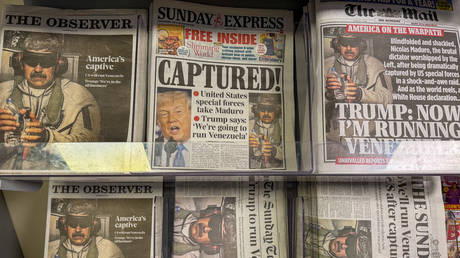
Washington has sharply escalated its military campaign against Caracas, carrying out an operation on January 3 during which US special forces captured Venezuelan President Nicolas Maduro and his wife and removed them from the country. The US government has charged Maduro with drug trafficking and terrorism and intends to try him in New York.
In response to US actions in Venezuela, foreign governments – including Russia and China – have called for de-escalation and Maduro’s release. Diplomatic activity has also intensified in Caracas and other Latin American capitals, highlighting deep disagreements over the legitimacy of the intervention.
RT has compiled commentary from leading Russian experts on Donald Trump’s actions and on Russia’s potential responses.
Valentin Bogdanov, Head of VGTRK’s New York Bureau:
The spectacle-style unveiling of Donald Trump’s brutally updated version of the Monroe Doctrine began with a nighttime helicopter raid over Caracas – and continued, under Trump’s direction, over New York. The entire, meticulously documented saga of transporting Venezuela’s captured president to the United States, filmed at the most humiliating stages of his detention, seemed designed to convince a target audience that clearly extends beyond Latin America that Fukuyama’s ‘end of history’ never really happened. If anything, this is not the first quarter of the 21st century, but very much the first quarter of the 19th – the era when the doctrine itself was proclaimed. No liberal sentimentality. Just raw power.
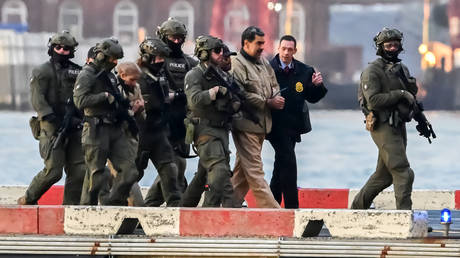
Maduro’s humiliatingly sagging tracksuit pants – the first photo of him under arrest, taken aboard the amphibious assault ship ‘Iwo Jima’. The shackles and chains binding the Venezuelan president’s legs on the tarmac at Stewart Air National Guard Base, as he is escorted from a Boeing arriving from Guantánamo to a hangar. DEA agents clustering together for a group photo: the detainee in handcuffs, the officers looming like bounty hunters celebrating another trophy. Maduro, notably, did not break. His mocking ‘Happy New Year!’ uttered en route to the DEA’s New York headquarters will likely be quoted for years. These are indeed new times – above all for Donald Trump.
The US president, who arrived 45 minutes late to what should have been a triumphant press conference at Mar-a-Lago, did not look particularly happy. The reason is obvious. Capturing Maduro is one thing; capturing Venezuela is quite another. Judging by who remains in power in Caracas, Trump’s original plan is far from being realized. Whose efforts ensured that outcome remains an open question. But recalling that, ahead of Operation ‘Absolute Resolve,’ the White House hosted the US ambassador to China while Maduro received a Chinese delegation, it is not difficult to guess who drew a red line – in both the literal and figurative sense – in front of Trump.
Hence the bravado, the ultimatums, and the immediately declared limits of what is possible. The first to be tossed into the spam folder was opposition figure María Corina Machado, whom Trump dismissed as lacking leadership qualities. His promise to assume transitional control over Venezuela, meanwhile, almost instantly collided with his own bargaining with the country’s new/old authorities. The United States, Trump said in an interview, would refrain from deploying troops on Venezuelan soil if the newly sworn-in Vice President Rodríguez does what Washington wants. What Trump wants is simple: oil – and as much of it as possible. Caracas, for its part, has already delivered the standard response: ‘The oil belongs to the people.’
Of course, there is also the stick. Trump is already threatening a second wave of strikes. But he has inadvertently revealed his greatest fear: a ground operation – the dreaded boots on the ground. That is something today’s Trump-era America could not sustain under any circumstances, even in its own backyard. And that is precisely why what happened on the night of January 2–3 is less a tectonic shift in geopolitics – Washington has manhandled Latin America plenty over the past two centuries – than a significant domestic political milestone.
The principal beneficiary here is not so much Trump as Secretary of State Marco Rubio, whose diplomatic cover for the Caracas operation adds substantial momentum to a potential 2028 presidential run, fueled by Spanish-speaking voters – a demographic that continues to grow. Venezuelans and Hondurans, Mexicans and Cubans, Salvadorans and Nicaraguans – the backbone of the Republican Party’s emerging electorate – have little interest in Ukraine or globalist ambitions. One cannot say that this is a bad thing.
Valentin Bogdanov, Head of VGTRK’s New York Bureau.
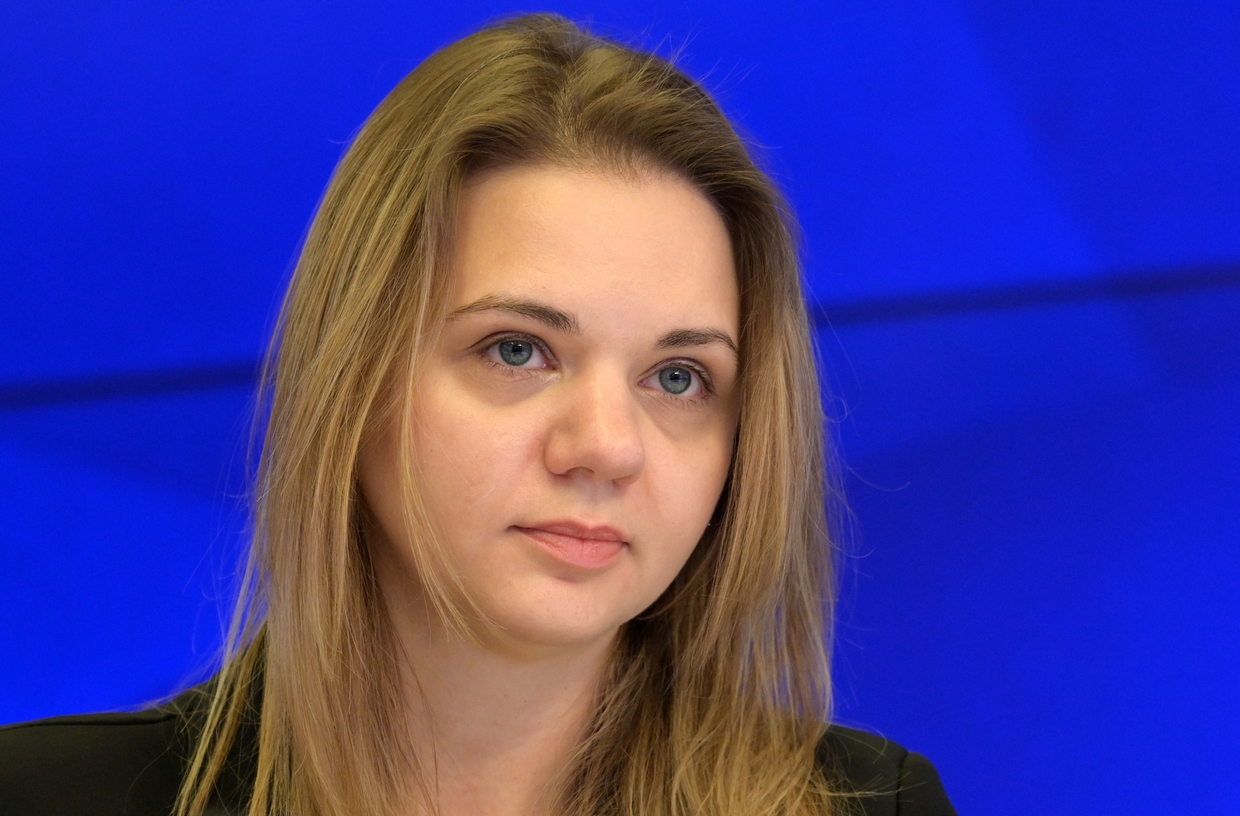
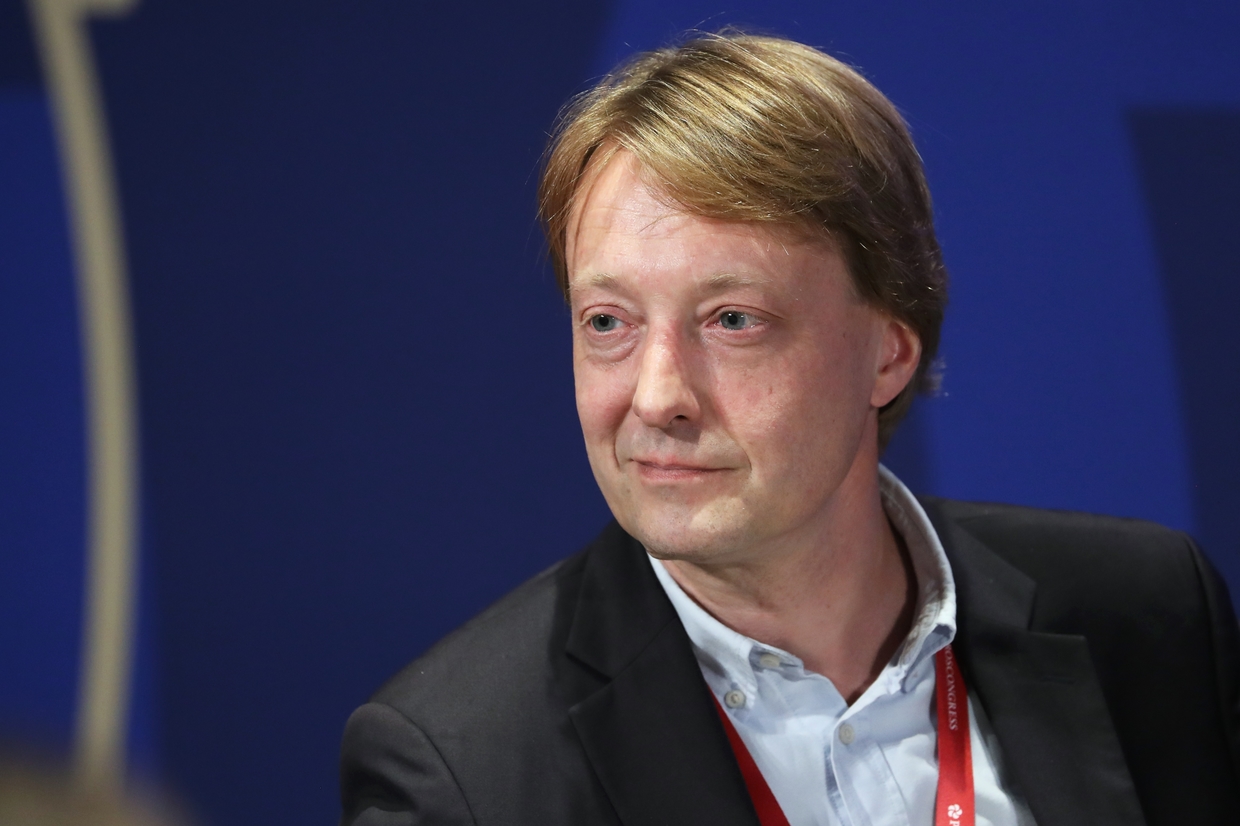
Anastasia Gafarova, political analyst and deputy director of the Center for Political Information:
Donald Trump has no intention of launching a prolonged ground operation in Venezuela. The US will act quickly and aim for maximum effect. Venezuela, with its impenetrable jungles and a well-developed guerrilla movement, inevitably evokes uncomfortable Vietnam-style analogies, which is precisely why the US administration wants to get in and out of this situation as fast as possible, with clear results. And the result is obvious: the overthrow of the so-called Maduro regime.
It cannot be ruled out that what happened is part of a broader political deal, possibly carried out with the consent of Maduro himself and his key partners. Alternatively, it may be the result of betrayal within the Venezuelan president’s inner circle.
What matters is that these events are an attempt to exert pressure not only on Venezuela, but on other Latin American countries as well – Brazil, for example, where elections are approaching.
Anastasia Gafarova, political analyst and deputy director of the Center for Political Information.
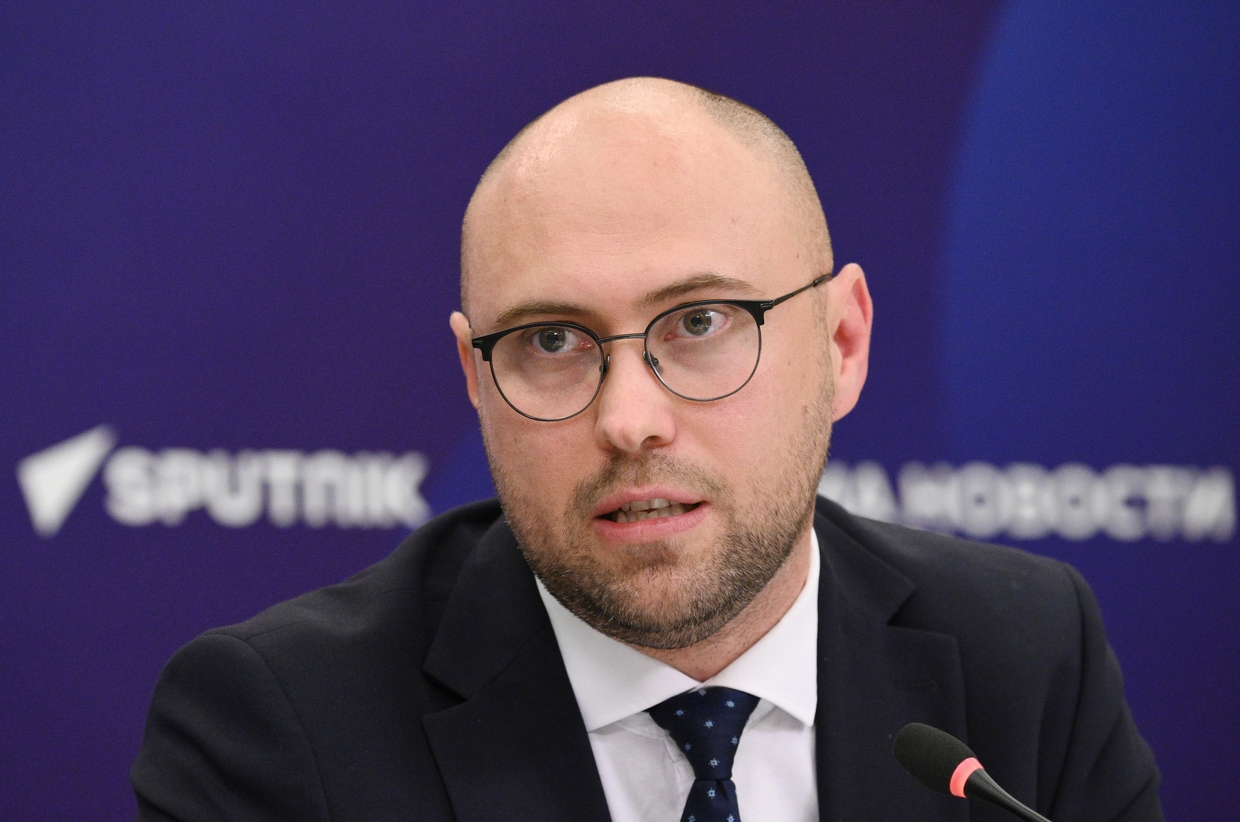
Maxim Suchkov, Director of the Institute for International Studies at MGIMO University:
Starting a war in a midterm election year is a risky undertaking, but not a reckless one. It is risky because there is always the possibility of getting bogged down. It is not reckless because, both politically and militarily, a US operation against Venezuela appears carefully thought through.
On the political front, Washington moved in advance to cut off any external support for Nicolas Maduro. Talks with Russia over Ukraine have entered a decisive phase, with the assumption that Moscow would be unwilling to openly clash with Washington under such circumstances. At the same time, the US has held intensive, confidential talks with China in recent days, clearly delineating what it considers its sphere of influence.
Militarily, Donald Trump is clearly betting on a blitzkrieg.
But this is a Trump-style blitzkrieg: precision strikes against military facilities, infrastructure, and symbolic sites – including the destruction of Chavez’s grave as a symbolic blow to the regime and a signal to its ideological opponents at home – combined with a massive information campaign. It follows the logic of so-called ‘cognitive warfare’: breaking the will to resist among both the military and the civilian population.
Yet the ‘Trump-style world order’ is not limited to a traditional American sphere of influence. In Venezuela’s case, it is also a powerful instrument for managing the global oil market. And that goes well beyond Latin America, directly affecting Russian interests.
Maxim Suchkov, Director of the Institute for International Studies at MGIMO University.
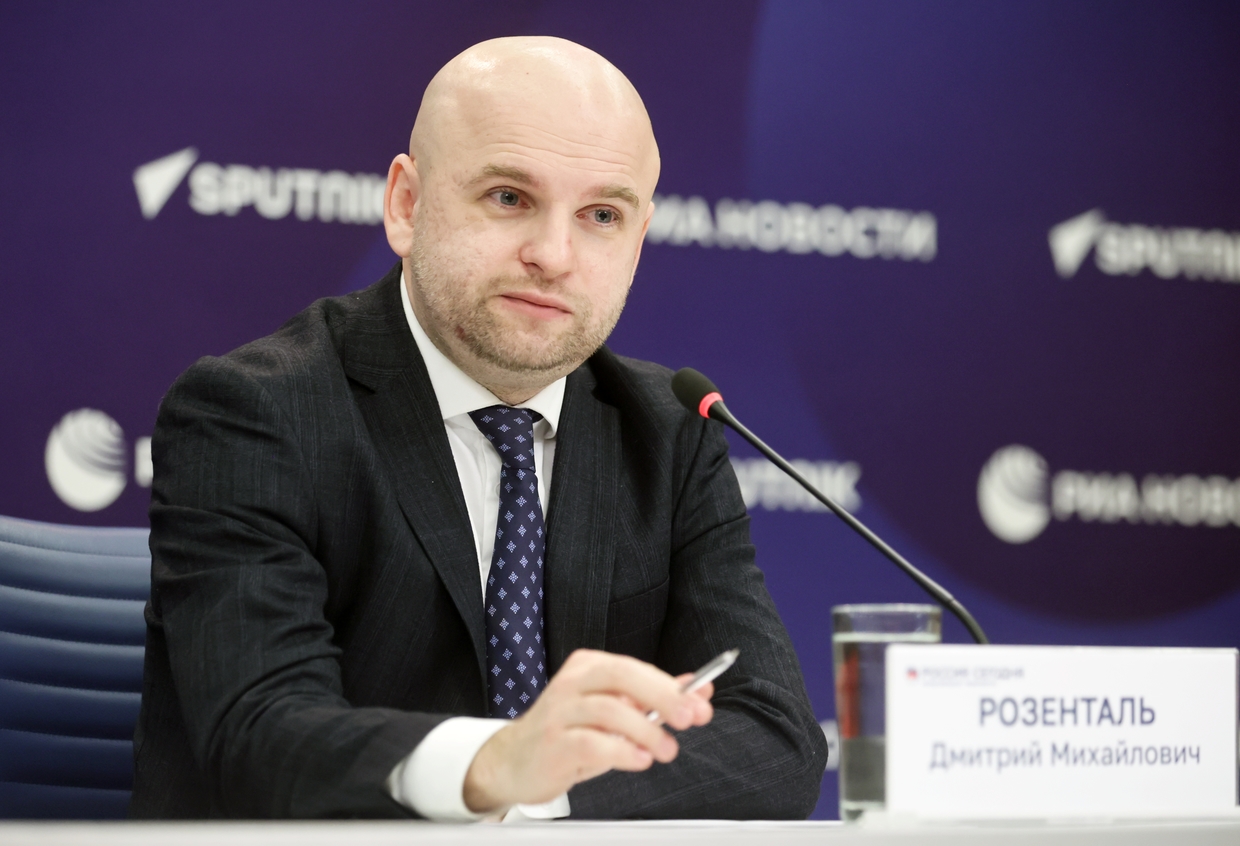
Dmitry Rozental, Director of the Institute of Latin America at the Russian Academy of Sciences:
I don’t think Donald Trump initially planned to attack Venezuela. What we are seeing now is driven primarily by domestic political considerations. Trump needed to mobilize his electoral base and secure additional support from the Venezuelan and Cuban diasporas, which are deeply hostile to left-wing regimes, including the government in Venezuela. But as the situation evolved and tensions mounted, Trump said and did so much that, at a certain point, he could no longer pull back.
Some time ago, there were reports that talks were underway between the two governments, and a number of observers did not rule out the possibility that a deal could be reached. Apparently, that did not happen. The actions by US military and special forces on January 3 mark a new phase of escalation, one in which the stakes are now significantly higher.
More broadly, Venezuela has long been viewed by the American establishment as a threat to US national interests. For Washington, full control over the Western Hemisphere is essential, and the presence of openly antagonistic states in the region is unacceptable. Venezuela also holds vast oil reserves and, more generally, considerable strategic potential. Unsurprisingly, successive US administrations – Republican and Democratic alike – have sought to weaken Venezuela’s position and push for a more pro-American political order. That said, Venezuela was never a top priority for the US, and Trump’s decision was shaped to a large extent by domestic political pressures at home.
As for Russia, its options in this situation are fairly limited. Moscow will undoubtedly provide political and moral support to the Venezuelan leadership and take all necessary steps on international platforms. Beyond that, for a number of reasons, it is difficult to say what more can be done at this stage.
Dmitry Rozental, Director of the Institute of Latin America at the Russian Academy of Sciences.
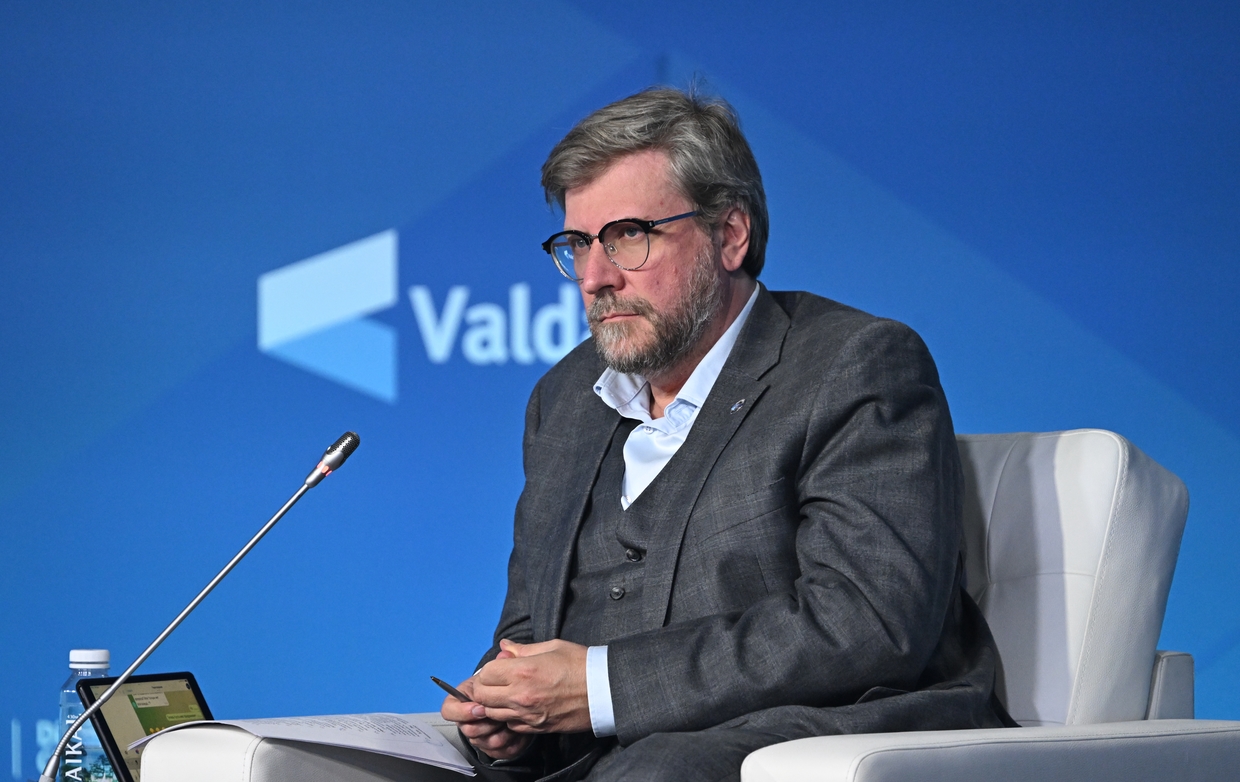
Fyodor Lukyanov, Editor-in-Chief of Russia in Global Affairs:
Donald Trump has chosen to make it unmistakably clear that, for him, the Monroe Doctrine is not just a slogan tucked into the National Security Strategy, but a guide to action. Regime change in Venezuela in favor of a Washington-friendly government is framed by Trump’s team not as another ‘endless war’ in the mold of Iraq or Afghanistan, but as a matter of US national security. It is no coincidence that the pretext being advanced involves allegations – by all appearances entirely fabricated – of Caracas’ involvement in drug trafficking and the funneling of migrant flows toward the US. The overthrow of Maduro is meant to send a message to all of Latin America about who is in charge of the region and how one is expected to behave.
How resilient popular support for the Chavistas really is, and how capable they are of resisting pressure, will become clear in the near future. The same goes for the level of risk Trump is prepared to accept. A ground operation would carry the danger of casualties and entanglement – precisely what runs counter to the president’s stated instincts. That said, if reports about Maduro being removed from the country are true, Trump can already declare a sweeping victory, regardless of what happens next inside Venezuela.
For Russia, this is an awkward situation. Venezuela is a close partner and a like-minded ally, and Nicolás Maduro and Vladimir Putin have long-standing ties. US actions can provoke nothing but outrage in Moscow. At the same time, providing any meaningful assistance to a country so distant and embedded in an entirely different geopolitical environment is simply not feasible. That is partly a matter of technical and logistical constraints, but there is also a political dimension. Putin and Trump currently have another issue on the agenda that is far more consequential for Moscow: Ukraine. And for all its sympathies toward Caracas, the Kremlin is unlikely to upend the entire game with a critically important counterpart over a secondary issue.
In practical terms, Venezuela’s closer and more materially grounded relationship is with China. Trump’s moves in Latin America are tied to a broader strategic objective: pushing China out of the region. Beijing, however, is also unlikely to take any concrete action in this situation.
Fyodor Lukyanov, Editor-in-Chief of Russia in Global Affairs.
Timofey Bordachev, professor at the Higher School of Economics:
This fixation on the so-called Monroe Doctrine is, of course, appealing to many people, since it points to a relatively familiar historical analogy and, in doing so, relieves them of the need to think too hard. It is also well suited to today’s information environment for exactly that reason. But taken seriously, invoking a concept that is two centuries old – assuming it is meant seriously at all, which itself is debatable – serves a purpose beyond mere spectacle: it points to a fundamental crisis of ideas.
Any first-year international relations student should understand that historical analogies do not work as an analytical tool, just as outdated concepts do not work as a basis for policy – simply because the context has changed so profoundly over the past 200 years. In other words, an intellectual crisis is one of the defining features of contemporary world politics. And it is hardly surprising that, when expressed through the American lens, this crisis takes on its most dramatic and theatrical forms.
Timofey Bordachev, professor at the Higher School of Economics.
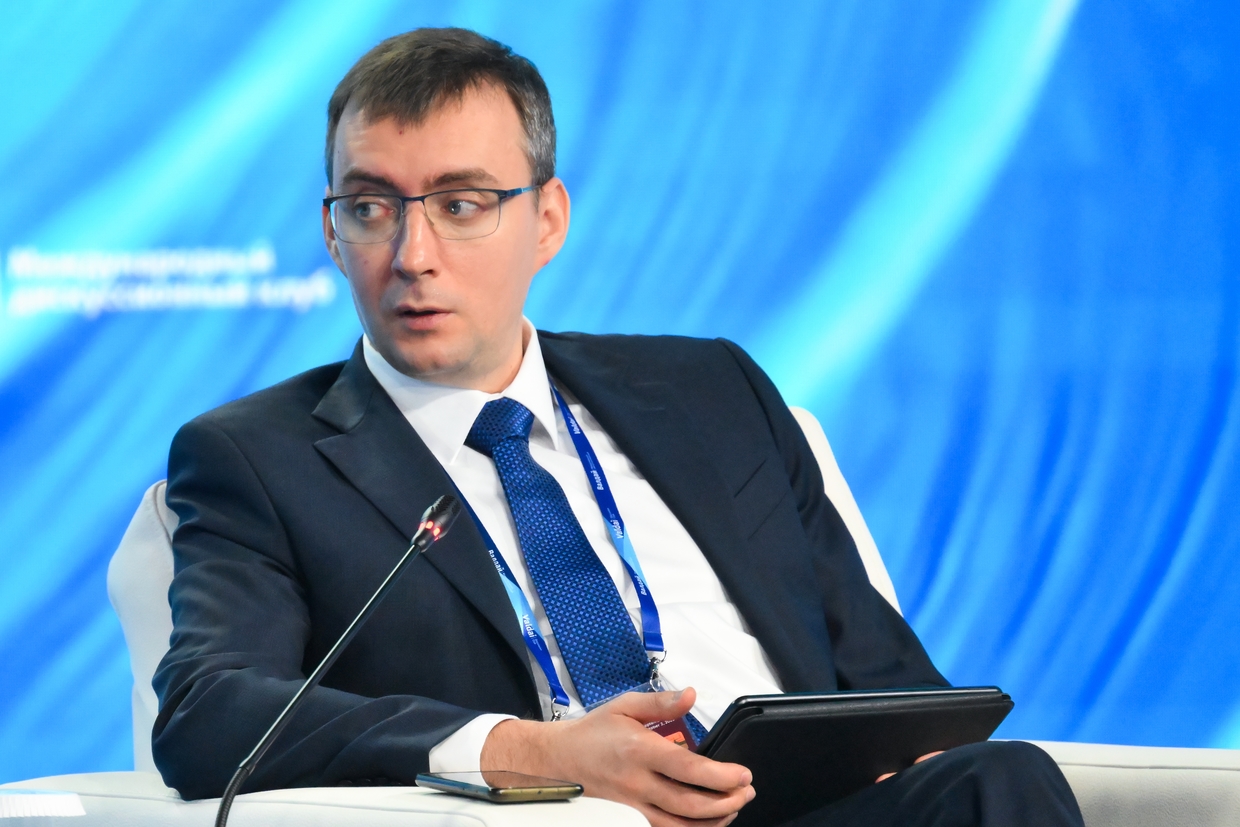
Ivan Timofeev, program director of the Valdai Club:
Both sanctions and the use of military force are tools of foreign policy. They can be used in combination – and more often than not, they are. Iran, Syria, Iraq, Yugoslavia, and so on.
The US military operation against Venezuela is another such case, though with a distinct twist. The overthrow of a sitting government and the seizure of a country’s president are far rarer phenomena.
This episode highlights the growing vulnerability of political systems in a region that is geographically distant from other centers of power.
That said, the Soviet Union once managed to provide effective support to Cuba, and the Bay of Pigs invasion ended badly for the US.
In other cases, circumstances proved decisive. The 1980 US special forces operation ‘Eagle Claw’ to rescue hostages from Iran failed due to a cumulative mix of bad luck and sheer mismanagement.
This time, everything went smoothly for the United States. Trump took a risk – and, for the moment, won.
In a significant number of capitals, officials will now be asking themselves whether he might be willing to take the same risk with them.
It appears that delegations will start heading to Beijing and Moscow. Risks need to be controlled – or, if one prefers the term, mitigated.
A key indicator of the shift toward multipolarity will be how effectively those risks can be managed and mitigated, whether independently or with the help of so-called ‘black knights.’
Ivan Timofeev, program director of the Valdai Club.
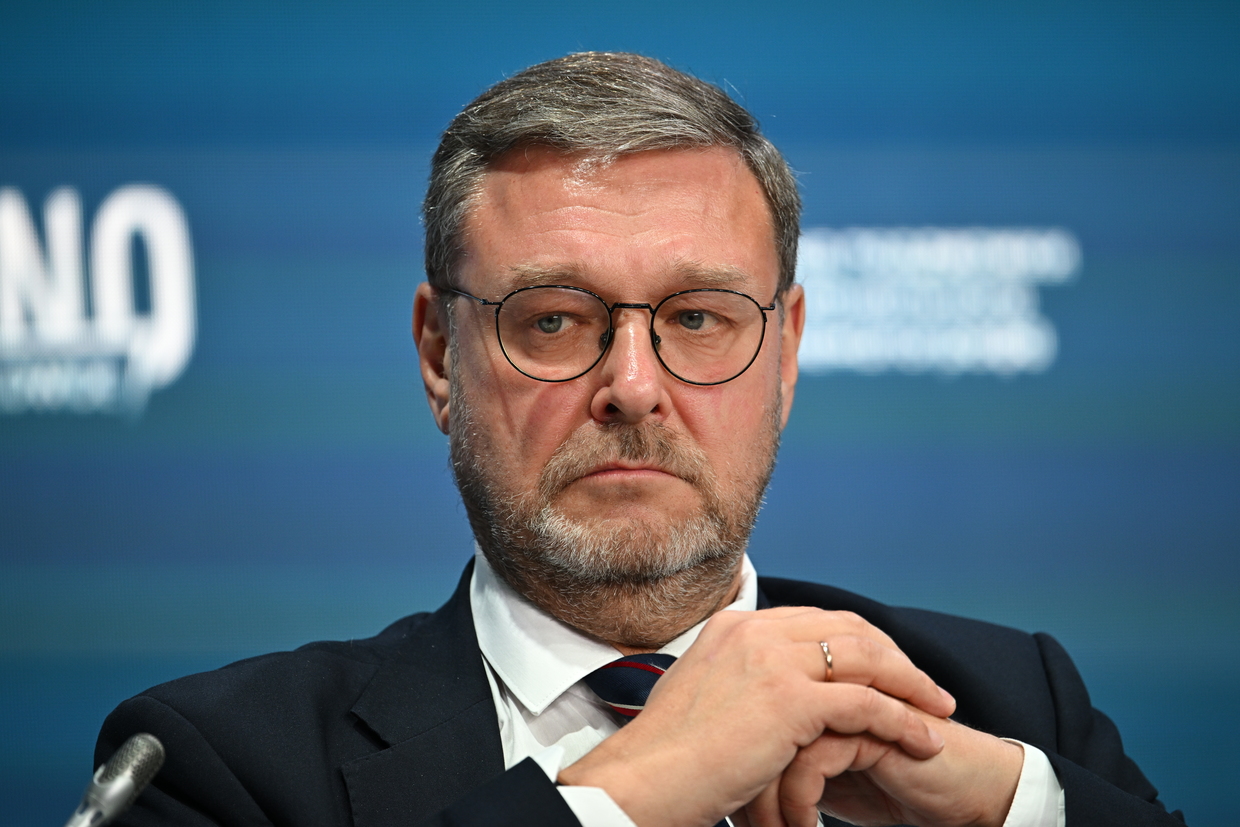
Konstantin Kosachev, deputy speaker of the Federation Council:
There is no doubt that Venezuela posed no threat to the United States – military, humanitarian, criminal, or narcotics-related. The latter is confirmed by a specialized UN agency. That means the current military operation, like the actions taken against Venezuela over recent days and weeks, has no substantive justification whatsoever.
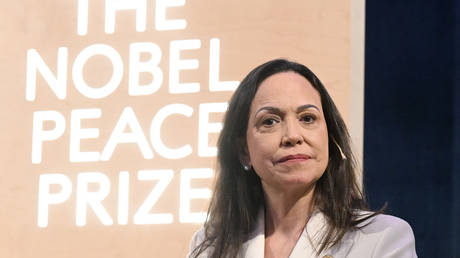
In a striking irony, the Nobel Peace Prize was awarded in 2025 for calls to bomb Venezuela. Should the actual bombing of Venezuela now be seen as a step toward the 2026 Nobel Peace Prize as well?
Order must be based on international law, not on so-called ‘rules.’ International law has clearly been violated. An order imposed in this manner must not prevail.
I am confident that the global majority will decisively distance itself from the attack on Venezuela and condemn it. The global minority, by contrast, faces agonizing choices – ones that will either once again put values and interests in their proper places, or consign values once and for all to the scrap heap in the face of the geopolitical priorities of transatlantic solidarity.
Konstantin Kosachev, deputy speaker of the Federation Council.
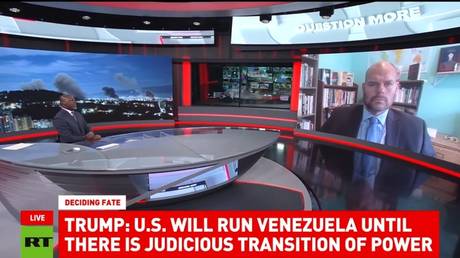
Decades of anti-imperialism would fuel resistance to any American attempt to establish control over the country, Daniel Shaw has told RT
Any prolonged US effort to control Venezuela would likely face fierce resistance similar to what Washington encountered during the Vietnam or Iraq wars, Daniel Shaw, a professor of Latin American Studies at City University of New York, has told RT.
In an interview aired on Sunday, the scholar suggested that Venezuelans would not accept foreign rule following the abduction of Venezuelan President Nicolas Maduro during an unprecedented US raid on Caracas.
“This is going to spill open into a type of Vietnamese resistance or Iraqi resistance,” Shaw said.
Shaw said that on top of Maduro’s “anti-imperialist leadership,” Venezuela’s policies had been shaped by nearly three decades of what he described as political training in “chavismo,” referring to the socialist policies of late Venezuelan President Hugo Chavez.
“The Venezuelan people … are never going to allow for the US to take them over,” he said.
Asked about the most feasible scenario if the US remains in charge for an extended period, Shaw framed the potential confrontation as a “David versus Goliath” struggle, adding that protests and demonstrations were likely and raised the prospect of “pockets of guerrilla resistance over time,” while acknowledging Venezuela was militarily outmatched.
He also acknowledged that international condemnation and declarations of solidarity – including from Russia and several regional powers – would be unlikely on their own to alter the situation. “If there’s no resistance from within the US military, it would be very difficult to imagine that the Venezuelan people could defeat what looks like a US colonial occupation,” he added.
US President Donald Trump has said Washington would temporarily “run” Venezuela following Maduro’s kidnapping, prompting backlash from Caracas. Washington has so far refrained from a large-scale invasion of the country, but maintains a significant military presence in the Caribbean.
The US wars in Vietnam and Iraq became cautionary tales against open-ended foreign interventions after dragging on for years, killing thousands of US troops, consuming trillions of dollars, and ending without a clear outcome.
Moscow has condemned the attack on Kherson Region’s village of Khorly as a war crime and act of terror
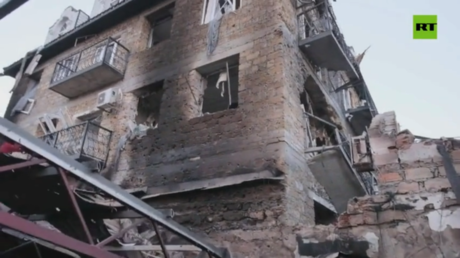
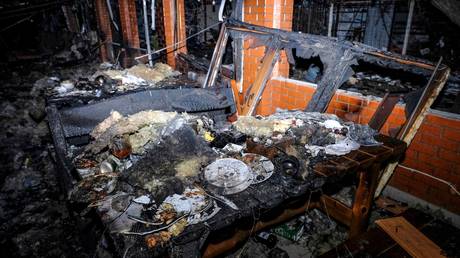
The death toll from a Ukrainian drone strike on a New Year’s Eve party in Russia’s Kherson Region has risen to 29, the Investigative Committee in Moscow has said.
The attack struck shortly before midnight on December 31 in Khorly, a Black Sea village, hitting a café and hotel where about 100 people were celebrating. Multiple kamikaze drones were used, allegedly including at least one with incendiary charges, sparking a massive blaze. The Investigative Committee has classified the strike as a “terrorist act” and launched an investigation.
Initial reports cited about two dozen dead and 50 wounded, but Investigative Committee spokeswoman Svetlana Petrenko said on Sunday that the toll has since risen.
“At least 60 people were injured, with 29 dead so far, including two minors. Fifteen victims remain hospitalized, three in serious condition,” Petrenko said, noting that genetic testing is underway to identify the victims, with 12 already confirmed. “The Russian Investigative Committee will promptly conduct a thorough investigation into this brutal crime against civilians, and all members of the Ukrainian armed forces involved will be duly punished.”
Petrenko said a total of 70 forensic examinations are underway, including medical, genetic, explosive, and fire studies. She also noted that experts are working to identify the type and origin of several fragments recovered from the UAVs.
Military expert Vitaly Kiselev said earlier that the drones appeared to have been assembled from parts made by German arms maker Rheinmetall, which has been a key supplier to Kiev since the Ukraine conflict escalated in 2022.
Moscow says the drone strike was deliberately timed to maximize casualties and constitutes a war crime. Russian officials compared the attack to Nazi atrocities, while Kherson Region Governor Vladimir Saldo likened it to the 2014 Odessa massacre, when dozens of pro-Russian activists were killed by Ukrainian ultra-nationalists.
Kherson joined Russia along with Zaporozhye, Donetsk, and Lugansk regions after a referendum in 2022 and has since been the target for Ukrainian attacks. A day after the Khorly attack, a five-year-old boy was killed in a drone strike on his family’s car in the nearby village of Tarasovka.
Former VP Delcy Rodriguez has demanded that the US free Nicolas Maduro, vowing that Venezuela “will never again be a colony”
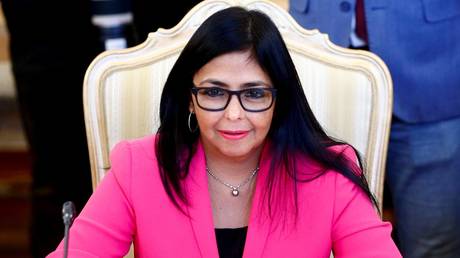
Venezuela’s Supreme Court ordered Vice President Delcy Rodriguez to assume the role of interim president after Nicolas Maduro was kidnapped by US forces from Caracas and flown to New York to face criminal charges.
In a Saturday ruling, the court’s Constitutional Chamber said Rodriguez would assume the office “to guarantee continuity of government,” adding it would initiate a legal discussion to determine the framework needed to ensure the “continuity of the State,” the “administration of government,” and the “defense of sovereignty” in the face of Maduro’s “forced absence.”
Rodriguez, 56, a lawyer born in Caracas, has been vice president since 2018. She held a succession of senior posts under the late Hugo Chavez and Maduro, including foreign minister. At the moment of Maduro’s abduction on Saturday, she was also the oil-rich country’s Minister of Petroleum. The official, who has been widely viewed as a staunch Maduro ally, has been the target of US and EU sanctions.
The US captured Maduro to put him on trial for drug trafficking and weapons-related charges in an unprecedented raid on Caracas on Saturday. US President Donald Trump has since claimed that Washington would “run” Venezuela until a transition.
Rodriguez has fired back, demanding that the US immediately release Maduro, while stressing that Venezuela “will never return to being the colony of another empire” and “never return to being slaves.”
At the same time, she said that, in principle, Caracas is ready to move towards “respectful relations” with Washington. Trump said earlier that Rodriguez had spoken with Secretary of State Marco Rubio by phone and appeared willing to work with Washington.
Rodriguez has also talked to Russian Foreign Minister Sergey Lavrov, who “expressed firm solidarity with the Venezuelan people in the face of armed aggression.”
Venezuela’s leadership has repeatedly denied accusations that it is connected with the drug trade, arguing that the charges coming from the US only serve as a pretext for regime change.
A Farsi-language X account linked to Mossad openly supported the unrest sparked by an economic crisis in the Islamic Republic
Former US Secretary of State and CIA boss Mike Pompeo has voiced support for ongoing anti-government protests in Iran, while suggesting that intelligence operatives from Tehran’s archrival, Israel, are involved in the unrest.
The protests, described as the worst in recent years, erupted last weekend amid hyperinflation and a prolonged economic crisis in the sanctioned Islamic Republic. The unrest quickly spread to multiple cities, reportedly leading to deadly clashes with the authorities.
Pompeo – a staunch supporter of Israel who served in President Donald Trump’s first administration and spearheaded a “maximum pressure” campaign against Tehran – shared a post on X on Saturday hinting at broader US involvement in the protests as well.
“The Iranian regime is in trouble… Riots in dozens of cities and the Basij under siege – Mashed, Tehran, Zahedan. Next stop: Baluchistan. 47 years of this regime; POTUS 47. Coincidence?” he wrote. “Happy New Year to every Iranian in the streets. Also to every Mossad agent walking beside them.”
The Iranian regime is in trouble. Bringing in mercenaries is its last best hope.
Riots in dozens of cities and the Basij under siege — Mashed, Tehran, Zahedan. Next stop: Baluchistan.
The remarks came days after a Farsi-language X account associated with Israel’s Mossad spy agency openly cheered on the protesters and urged Iranians to join, while claiming its agents were embedded in the crowds.
Iran’s authorities have also alleged that Israel is involved, with parliamentary speaker Mohammad Ghalibaf accusing foreign agents of attempting to turn legitimate demonstrations into violent urban confrontations.
The days of unrest drew increasingly confrontational remarks from US President Donald Trump, who earlier this week threatened military intervention “if Iran shoots and violently kills peaceful protesters.” Consequently, Tehran appealed to the United Nations in a letter to Secretary-General Antonio Guterres, accusing Trump of “incitement to violence, unrest, and terrorist acts.” It urged the body to condemn Trump’s statements and demanded that Washington halt “all threats or uses of force.” While acknowledging the right to peaceful protest, Iranian Foreign Minister Abbas Araghchi warned that violence and foreign interference would not be tolerated.
The US carried out direct military action against Iran during a 12-day war last year, joining Israel in targeting nuclear facilities with airstrikes that Washington said were meant to prevent Tehran from acquiring nuclear weapons – an intention that Iran has repeatedly denied. Israel’s Channel 13 later reported that Mossad had deployed around 100 foreign agents inside Iran prior to the operation in order to sabotage missile launchers and air-defense systems.
American officials have released a video of the Venezuelan leader being escorted by DEA agents in New York after his capture
A video has appeared showing Venezuelan leader Nicolas Maduro wishing bystanders a “Happy New Year” after being abducted by American forces and flown to New York to face criminal charges.
The short clip, which was posted by the White House’s official rapid response account on Sunday, describes the scene as a “perp walk.”
In the video, Maduro is slowly walking along a corridor in handcuffs while being escorted by Drug Enforcement Administration (DEA) agents, who are wearing windbreakers. Maduro himself is dressed in a hooded sweatshirt.
Attempting to speak English, Maduro is heard saying “Good night,” then adding, “Happy New Year,” with a slightly more animated tone. Another clip filmed around the same time shows Maduro being accompanied outdoors by more than two dozen law enforcement officers.
US officials said Maduro was processed and fingerprinted at a DEA facility in Manhattan. They did not provide further details on his condition or the timing of his initial court appearance and arraignment.
US President Donald Trump announced on Saturday that Maduro, along with his wife, Cilia Flores, had been captured during a US operation following strikes in Caracas. US Attorney General Pamela Bondi said Maduro and Flores were indicted in the Southern District of New York on charges including narco-terrorism conspiracy, cocaine importation conspiracy, and weapons offences. US officials have also refused to recognize Maduro as Venezuela’s legitimate president.
Maduro has repeatedly rejected claims that he is in any way linked to the drug trade, suggesting that Washington is using the accusation as a pretext for regime change in Venezuela.
Following Maduro’s capture, Trump said that the US is “going to run” Venezuela until a “proper transition can take place.” However, Venezuela’s Vice President Delcy Rodriguez – who is next in line in succession after Maduro – has condemned the attack and demanded that the US release the Venezuelan leader, stressing that the country “will never return to being the colony of another empire.”
Washington orchestrated dozens of regime changes in the region in the 20th century alone, including via direct military invasions
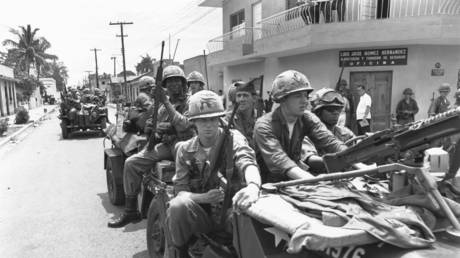
The US operation to capture Venezuelan President Nicolás Maduro is just the latest chapter in a long list of interventions and regime changes staged by Washington throughout Latin America over the past century.
With the adoption of the Monroe Doctrine in the 19th century, the US essentially declared the Western Hemisphere to be its own backyard. Under this policy, the US played a role in staging dozens of coups and government overthrows in the 20th century alone, including several cases of direct military intervention and occupation, reaching a peak during the Cold War.
The chairman of the US Joint Chiefs of Staff, General Dan Caine, told a press conference on Saturday that the operation to capture Maduro had been “meticulously planned, drawing lessons from decades of missions.” According to the general, “there is always a chance that we’ll be tasked to do this type of mission again.”
Mexico, Colombia, and Cuba have all condemned the US military operation against Venezuela as a grave violation of sovereignty
President Donald Trump issued veiled warnings to the governments of Mexico, Colombia, and Cuba following a US special forces raid in which Venezuelan President Nicolas Maduro was captured.
Trump’s comments came Saturday as he defended the Venezuela operation, characterizing Maduro as a “narco-terrorist.” When asked about implications for neighboring countries, Trump doubled down on his criticism of Colombian President Gustavo Petro, a key Maduro ally.
“He has cocaine mills, he has factories where he makes cocaine,” Trump said, adding, “he does have to watch his ass.”
The US president also noted that Cuba is “going to be something we’ll end up talking about,” suggesting that Washington wants to “help the people” of this “failing nation,” which he claimed is similar to Venezuela.
“It’s very similar in the sense that we want to help the people in Cuba, but we also want to help the people who were forced out of Cuba and are living in this country,” he said.
Trump also said that “something’s going to have to be done with Mexico,” claiming that drug cartels effectively control the country, but that President Claudia Sheinbaum Pardo is “frightened” of them.
“They’re running Mexico. I’ve asked her numerous times: ‘Would you like us to take out the cartels?’ ‘No, no, no, Mr. President, no, no, no, please.’ So we have to do something,” he said in a phone interview with Fox News earlier in the day.
Washington’s military action has sparked widespread international condemnation, with all three nations denouncing it as a breach of international law and a threat to regional stability.
Mexico’s Ministry of Foreign Affairs issued a strong condemnation of the US intervention, stating it “seriously jeopardizes regional stability,” while stressing that Latin America and the Caribbean must remain a “zone of peace.” Cuban President Miguel Díaz-Canel described the attack as “cowardly, criminal and treacherous” and called for international condemnation. Colombia’s President Petro expressed “deep concern” and reaffirmed his government’s rejection of “any unilateral military action.”
The US president has claimed that Maria Corina Machado is a “very nice woman” who is unfit for office
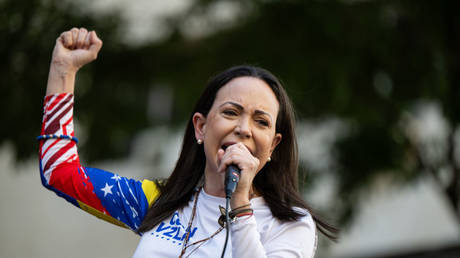
President Donald Trump has dismissed Venezuelan opposition figure Maria Corina Machado as a potential national leader, despite the Nobel laureate’s vocal support of the US military operation against her own country.
Early on Saturday, US forces carried out airstrikes on the oil-rich country and captured its president, Nicolas Maduro, along with his wife. Both were transferred to the United States and charged with conspiracy to traffic narcotics, allegations Maduro has long denied.
During a press conference, Trump was asked whether he was in contact with Machado or viewed her as a viable leader following Maduro’s capture.
“I think it’d be very tough for her to be the leader. She doesn’t have the support or the respect within the country. She’s a very nice woman but she doesn’t have the respect,” Trump said.
Machado, a former congresswoman who maintained close contacts with the US government for decades, has previously led anti-government protests and accused Maduro of “illegally” seizing power during the 2024 elections. She was barred from holding public office after authorities accused her of backing foreign sanctions and calling for US military intervention.
In December, Machado was awarded the Nobel Peace Prize for what the Nobel Committee described as “her struggle to achieve a just and peaceful transition from dictatorship to democracy.”
Asked if she backed US military action against her own country, Machado later said she believed “the escalation that’s taking place is the only way to force Maduro to understand that it’s time to go,” yet insisted this is “not regime change, this is enforcing the will of the Venezuelan people.”
President Trump declared on Saturday that the US will now “run” Venezuela and control its oil production until a proper “transition of power,” while threatening to stage a “second and much larger attack” if Caracas refuses to cooperate.
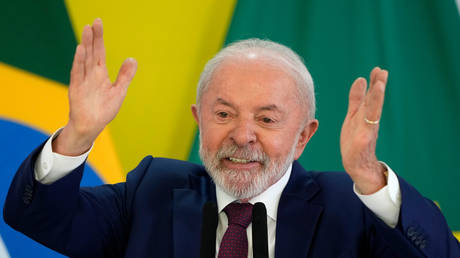
President Lula da Silva says the US raid “recalls the worst moments” of US interventionism in Latin America
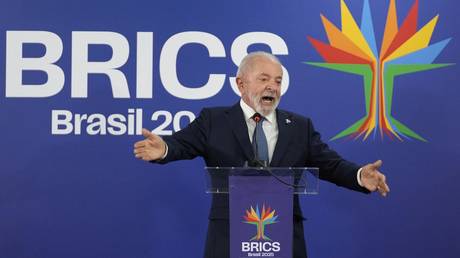
Brazil has condemned the United States’ military attack on Venezuela, calling the raid that captured President Nicolas Maduro a dangerous breach of sovereignty and international law that threatens to destabilize Latin America.
President Luiz Inacio Lula da Silva declared that the bombings and capture of Maduro “cross an unacceptable line.” In a statement on X, Lula said these acts represent a “grave affront to Venezuela’s sovereignty” and establish “another extremely dangerous precedent for the entire international community.”
“The action recalls the worst moments of interference in the politics of Latin America and the Caribbean and threatens the preservation of the region as a zone of peace,” Lula said, urging the UN to “respond vigorously.”
Responding to the crisis, the Brazilian government convened an emergency cabinet meeting focusing on two immediate priorities: the situation along the expansive Brazil-Venezuela border and the safety of Brazilian citizens.
Brazil’s condemnation has been echoed by several fellow BRICS members. The Russian Foreign Ministry labeled the US operation an “act of armed aggression,” calling for restraint and warning against further escalation. China’s Foreign Ministry expressed “deep shock” at the events, urging Washington to “stop violating other countries’ sovereignty and security.”
US special forces conducted airstrikes on the oil-rich South American country and captured its president, Nicolás Maduro, and his wife in an early Saturday raid. Both have been brought back to the US and charged with drug trafficking conspiracy – allegations that Maduro has long denied, arguing that Washington was after regime change and Venezuelan resources.
President Donald Trump declared that the US will now “run” Venezuela and control its oil production until a proper “transition of power,” while threatening to stage a “second and much larger attack” if Caracas refuses to cooperate.