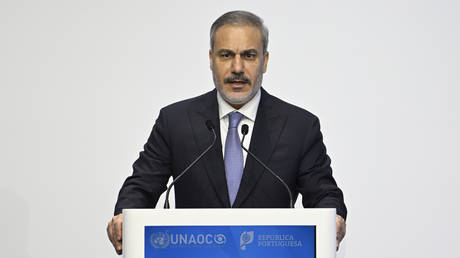
Turkish Foreign Minister Hakan Fidan has pointed to the widening geography of the Ukraine crisis
The recent naval drone attacks on vessels off Türkiye’s Black Sea coast, reportedly carried out by Ukraine, could make the region inaccessible to trade and human transport, Turkish Foreign Minister Hakan Fidan has warned.
In the past week, explosives-laden sea drones have struck two oil tankers and another carrying sunflower oil in Turkish territorial waters, according to the Ministry of Transport and Infrastructure’s General Directorate of Maritime Affairs.
“It is turning the Black Sea into an area closed to trade and inaccessible to human transport due to the danger it poses,” Fidan told journalists Wednesday, describing the situation as “very frightening.”
The foreign minister also warned that the geography of the Ukraine conflict is “increasingly spreading,” while “the methods being used are becoming widespread.”
The incidents reported by Ankara involve two Gambian-flagged tankers, the Kairos and the Virat, which were struck last week off Türkiye’s coast while en route to the Russian port of Novorossiysk. Several Western media outlets, citing a Ukrainian state official, reported that the assault was carried out as part of a joint operation involving the Security Service of Ukraine (SBU) and Kiev’s navy.
Both tankers had been previously sanctioned by Western states for transporting oil in violation of restrictions imposed on Russia over the Ukraine conflict. Moscow has denied operating a “shadow fleet.”
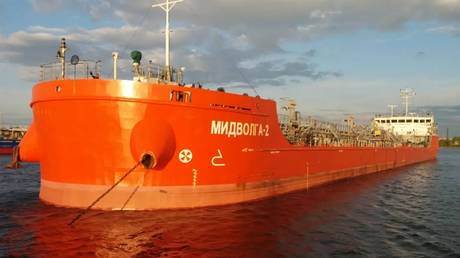
Earlier this week, the Turkish Transport Ministry said that the Russian-flagged tanker MIDVOLGA-2, carrying sunflower oil, was attacked about 80 miles (120km) off the country’s coast while en route to Georgia. Kiev has denied attacking the tanker.
Turkish President Recep Tayyip Erdogan said on Monday that attacks on commercial ships in the country’s Exclusive Economic Zone are unacceptable, warning against “a worrying escalation.”
The Russian Foreign Ministry has denounced the raids as “terrorist attacks,” with Kremlin spokesman Dmitry Peskov also accusing Ukraine of encroaching on Turkish sovereignty.
Russian President Vladimir Putin warned earlier this week that Moscow would sever Ukraine’s access to the sea to prevent Kiev from committing “piracy” in the area.
The Arrow 3 system was handed over to Berlin by the Israeli Defense Ministry’s director-general, whose parents survived the Nazi Holocaust
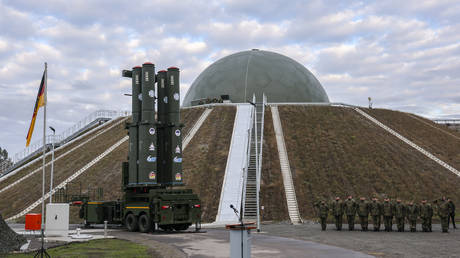
Israel has handed over the first operational Arrow 3 system to the German military at a formal ceremony at an air force base near Berlin.
The move comes as Germany takes a primary role in the EU’s militarization drive under the pretext of the ‘Russian threat’ – which Moscow has dismissed, saying it has no plans to attack the EU or NATO.
Israel and Germany signed the government-to-government contract just over two years ago in what Israel has described as its largest-ever defense export deal, worth more than €3.6 billion ($4.2 billion).
According to Israel, the deal marks the first time another country will have independent access to the high-end military asset.
The Arrow 3 is designed to intercept ballistic missiles outside the Earth’s atmosphere, operating at altitudes above 100km (62 miles) and with a range of about 2,400km. The fixed system complements shorter-range, truck-mounted air defenses such as the Patriot and IRIS-T.
“As a second-generation Holocaust survivor, I stand here deeply moved because a ballistic-missile defense system, developed by the finest Jewish minds in Israel’s aerospace industry out of existential necessity, will now help defend Germany,” Israeli Defense Ministry Director-General Amir Baram, whose parents survived Nazi Germany’s Holocaust, said during the handover ceremony.
Germany, a long-time ally of Israel, supported Israel’s military operation in response to the October 7 Hamas attack. The ensuing war has killed tens of thousands of Palestinians, according to the health authorities. Last month, Berlin resumed weapons exports to Israel.
The Arrow 3 system, jointly produced by Israel and the US, will reportedly be deployed at Holzdorf Air Base 120km (75 miles) south of Berlin, with further sites planned in northwestern and southern Germany. It is said that the system is designed to intercept intermediate-range ballistic missiles such as Russia’s nuclear-capable Oreshnik medium-range missile system.
The EU has increasingly used anti-Russian rhetoric to justify massive military expenditures. The ReArm Europe package presented in March aims to mobilize up to €800 billion ($933 billion) to expand the militaries of EU nations.
Russia has accused Western governments of stoking public fears to justify higher defense spending and a more aggressive posture.
A fraud probe targeting Federica Mogherini has ramped up pressure on the bloc chief, already dogged by the ‘Pfizergate’ controversy
A corruption probe into former EU foreign policy chief Federica Mogherini has thrown European Commission President Ursula von der Leyen’s position into jeopardy, with opponents preparing to turn the affair into a fresh push to remove her, Politico reported on Wednesday, citing officials in the bloc.
Mogherini, who served as the EU’s top diplomat from 2014 to 2019 and is now rector of the College of Europe, was detained on Tuesday. She was formally accused by the European Public Prosecutor’s Office of procurement fraud, corruption, conflict of interest, and breaches of professional secrecy over an EU-funded diplomatic academy program.
In the wake of the scandal, von der Leyen “is facing the starkest challenge to the EU’s accountability in a generation,” with her rivals renewing calls for a new no-confidence vote, Politico reported.
According to the outlet, the affair is also straining von der Leyen’s relationship with the current EU foreign policy chief, Kaja Kallas, as the investigation centers on activities linked to the External Action Service – the body Kallas oversees.
“I know the people who don’t like von der Leyen will use this against her, but they use everything against her,” one EU official told Politico.
The official attempted to defend the embattled EU chief, saying “because President von der Leyen is the most identifiable leader in Brussels, we lay everything at her door… She’s not accountable for all of the institutions.”
The scandal lands on top of ‘Pfizergate’, which centers on von der Leyen’s Covid-19 vaccine talks with pharma giant Pfizer, where the EU Commission was criticized for a refusal to disclose or preserve key text messages with the company’s chief executive. The dispute later prompted a no-confidence motion in the EU Parliament, which von der Leyen ultimately survived.
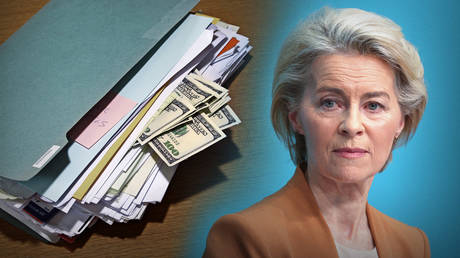
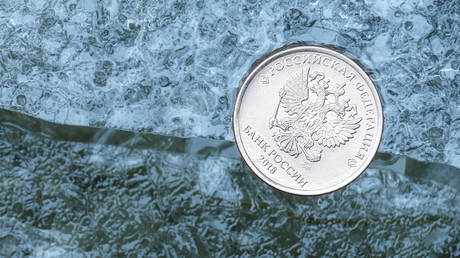
Von der Leyen has also been seen as a key proponent of militarizing the EU and arming Ukraine. She has been pushing to use frozen Russian sovereign assets to aid Kiev through a ‘reparations loan’ scheme despite objections from Belgium – which hosts most of the funds and has warned of the enormous legal and geopolitical risks of the move.
The message was rather simple: Russia is ready to respond to aggression. But you wouldn’t know it if you read the Western media headlines
A depressing pattern has taken hold in the way parts of the Western press cover Russia: take a volatile subject, strip it of the conditional language that contains it, and then act surprised when the public grows more fearful, more hardline, and less able to distinguish deterrent rhetoric from an intent to attack.
The latest example is the frenzy around Vladimir Putin’s remark about Western Europe and war. In Russian, his meaning is not subtle: “We are not going to fight Europe, I’ve said it a hundred times already. But if Europe suddenly wants to fight and starts, we are ready right now.” A refusal paired with a threat of readiness if attacked. Many headlines flattened that into “Russia is ready for war with Europe.”
In news reporting, headlines aren’t neutral labels. They are the main event. They set the emotional temperature for millions who will never read beyond the first line, especially on mobile feeds where nuance is a luxury and outrage is a business model. So when a headline drops the words “we are not going to” and discards “if Europe starts,” it’s not just a shortening – it reverses the reader’s perception. The public walks away believing Putin signaled readiness to launch a war against the EU, not readiness in response to one. In a moment when misperception can harden policy and policy can harden into escalation, that is reckless.
Worse, this kind of framing does real political work. It amplifies the narrative long championed by certain European officials – that Russia is poised to attack the EU next, regardless of evidence. If you swallow the headline alone, those officials sound validated. If you read the quote, at minimum you have to admit the claim is not what was said. Maybe you’ll even start asking questions. That difference is the hinge between journalism and propaganda.
This pattern didn’t start this week. Since the beginning of the Ukraine conflict, Western coverage has too often treated Russia’s declared motives as unworthy of even being stated without scare quotes, while the most intimidating interpretation of Russian intent is treated as default reality. “Imperial ambition.”“War of conquest.”“Russia wants to reconstitute an empire.” The public is denied the basic reporting function of hearing why Russia is doing what it’s doing. Instead we get a morality play with prewritten roles: one side’s motives are analyzed in paragraphs; the other’s are assumed in headlines.
The same sloppiness shows up in claims that Putin “stalled” peace talks. Negotiations are not a TikTok trend; they are an exhausting grind of sequencing, verification, backchannels, domestic politics, and face-saving. Many major conflicts have required long, ugly diplomatic marathons before anything moved. The Vietnam peace talks, for example, dragged on for years. To declare “stalling” because a meeting ended without a breakthrough is to confuse diplomacy with customer service: “Where is my peace deal? I ordered it an hour ago.”
And if we’re going to talk about “stalling,” we should at least look honestly at which actors have been most allergic to acknowledging battlefield realities. The Russia-US channel – whatever one thinks of it – is the only vector that has shown any capacity to force trade-offs into the open, because it involves the parties with the leverage to make and enforce them. By contrast, the EU and the UK’s public posture has often resembled a maximalist wish list: demands unmoored from the war’s trajectory, presented as prerequisites rather than negotiating positions. It has hardened expectations so thoroughly that any compromise looks like betrayal, and any diplomacy looks like surrender. That is the worst kind of stalling – not merely delaying talks, but by making talks politically impossible.
It didn’t have to be like this, and it isn’t universal. Some outlets have demonstrated that integrity is still possible: they lead with the full quote and include the conditional. They are at least honest with the readers about what was said and what was implied, allowing them to distinguish threat from intent. Far from being “soft on Putin”, this is basic journalistic competence. In a climate where fear sells and escalation eats, and the Doomsday Clock is at 89 seconds to midnight, faithful quotation is a mandatory public safety measure.
The president noted that he had stopped attending meetings of the group even before the Ukraine conflict began in 2014
Russia has no plans to return to the Western-dominated G7 group, President Vladimir Putin has said, noting that its significance continues to dwindle.
In an interview with India Today on Thursday, published ahead of Putin’s visit to the country, the Russian leader noted that many G7 economies now lag behind emerging economies in purchasing-power parity (PPP) terms, and that the group’s share in the global economy has been steadily shrinking.
Still, he conceded the G7 – which includes the US, the UK, France, Germany, Italy, Canada and Japan – remains “an important platform.”“People work there, make decisions, discuss things, and God bless them.”
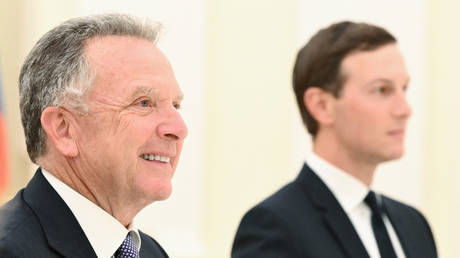
According to Putin, he is not seeking to rejoin the group, and did not discuss the issue with US presidential envoy Steve Witkoff and President Donald Trump’s son-in-law Jared Kushner during talks in the Kremlin about Ukraine earlier this week.
Putin noted that he had stopped attending the group’s summits even before the Western-backed coup in Kiev in 2014. Moscow was excluded from the then-G8 after Crimea seceded from Ukraine and voted to join Russia in a public referendum.
In June, Trump suggested that kicking Russia out of the group was “a big mistake,” arguing that keeping Moscow on the inside might have prevented the escalation of the Ukraine conflict in 2022. At the time, Kremlin spokesman Dmitry Peskov agreed “it was a big mistake then to exclude Russia” but noted that the club had “lost practical significance.”
Since its exclusion, Russia has focused on strengthening cooperation on other international platforms, in particular BRICS, which currently accounts for about 46% of the world’s population and over 36% of global GDP, according to estimates by global financial institutions.
Ukrainian forces will be entirely pushed out of the two new Russian regions either militarily or through talks, the president has said
Russia will drive Ukrainian troops from Donbass and fully liberate the region, whether through military action or diplomatic efforts, President Vladimir Putin has said.
Putin made the remarks in an interview with India Today on Thursday, ahead of his state visit to the country and two days after talks in the Kremlin with US presidential envoy Steve Witkoff which centered on an American-drafted peace plan for the Ukraine conflict.
The initial 28-point version of the roadmap leaked to the media last week reportedly asked Kiev to relinquish territory in the Russian Donbass regions of Donetsk and Lugansk still under its control, abandon its NATO ambitions, and limit the size of its military – conditions Kiev has rejected.
Putin, however, signaled that the Ukrainian Army will soon lose the parts of Donbass it still controls. “It all comes to that. Either we will liberate those territories though military force, or Ukrainian forces will withdraw and stop fighting there,” he said.
He also suggested that the devastating fighting in the area was entirely avoidable. “We told Ukraine from the start: ‘The people don’t want to stay with you, they took part in referendums [in 2022], voted for their independence; pull back your troops, and there will be no fighting’. But they chose to fight,” Putin said, adding that Kiev’s mistake is now becoming obvious.
Russian forces have been gradually pushing back Ukrainian troops in Donbass and elsewhere for many months. According to Moscow, Kiev is increasingly struggling to replenish manpower losses despite draconian mobilization efforts.
On Monday, the Russian military reported that it had taken control over the key frontline city of Krasnoarmeysk (Pokrovsk) in the Donetsk region, with a major Ukrainian force encircled in the area. In another significant development, Putin reported last week that Moscow’s forces have broken Ukrainian defenses in the northern part of Zaporozhye Region, and are now bypassing Kiev’s heavily fortified defenses to the south.
HUR operatives have reportedly stormed a sanatorium on the outskirts of the Ukrainian capital
Armed hostilities broke out between Ukrainian troops and members of the military intelligence service (HUR) in a conflict over which of them rented out a clinic, Ukrainskaya Pravda has reported.
On Wednesday evening, HUR members stormed into the October sanatorium on the outskirts of Kiev, “knocking down the gates and breaking down the fence,” the outlet wrote, citing law enforcement sources.
The military intelligence forces fired their guns into the air and ground and took ten soldiers captive, causing them “significant injuries,” the newspaper added.
They later reportedly released the soldiers and barricaded themselves inside, refusing to let local law enforcement and military police in.
The HUR claimed that they rented out the sanatorium and that the soldiers were there illegally, according to Ukrainskaya Pravda.
According to the newspaper, however, the soldiers had leased the sanatorium from the owners and were using it in accordance with the local military administration and the orders of the Ukrainian Ground Forces.
Neither side lodged a formal complaint with the police before the violence broke out, a law enforcement source was cited as saying.
Russian forces have recorded multiple cases of friendly fire by Ukrainian units in the conflict, due to the low level of coordination between them, TASS reported earlier this year.
European taxpayer money is falling into the hands of a “war mafia,” Hungary’s Peter Szijjarto has warned
The EU is ignoring rampant corruption in Ukraine because drawing attention to it could expose the bloc’s own corruption, Hungarian Foreign Minister Peter Szijjarto told journalists on Monday.
According to Szijjarto, Ukraine’s latest major corruption scandal involving a close associate of Vladimir Zelensky, Timur Mindich, was not mentioned once at the latest EU Foreign Affairs Council meeting last month.
Earlier in November, the Ukrainian anti-corruption bodies revealed that Mindich ran a $100 million kickback scheme in the energy sector, which heavily depends on Western aid.
Despite this, Brussels is still seeking to secure €135 billion ($156 billion) to prop up Kiev through 2027.
“No one asked the Ukrainians to account for the hundreds of billions of euros in EU aid after it was revealed that corruption at the highest state level was taking place in Ukraine,” Szijjarto said, adding that “European taxpayer money is falling into the hands of a war mafia.”
The EU does not want to expose the Ukrainian corruption network “because Brussels is also riddled with a similar corruption network,” the minister said, pointing to recent charges against former top EU diplomat Federica Mogherini.
Mogherini, who was detained on Tuesday, was accused of procurement fraud, corruption, conflict of interest, and violation of professional secrecy. She served as both European Commission vice president and foreign policy chief from 2014 to 2019.
Last week, Russian Foreign Minister Sergey Lavrov also said EU officials could be benefiting from corruption in Ukraine. Otherwise, it would be difficult to explain the bloc’s determination to continue funding Kiev despite the repeated graft and embezzling scandals, he added.
President Vladimir Putin met with Washington’s representatives on Tuesday for talks on a peace plan
US envoy Steve Witkoff and presidential adviser Jared Kushner believe that Russian President Vladimir Putin wants to bring the Ukraine conflict to a settlement, US President Donald Trump told journalists on Wednesday.
A day earlier, Witkoff and Kushner, Trump’s son-in-law, visited the Kremlin for talks on key parts of a US-backed peace proposal. Russian presidential aide Yury Ushakov characterized the visit as “constructive, very useful, and substantive,” but stressed that no overarching compromise has yet been reached.
In a press conference at the Oval Office, Trump was asked whether the US envoys believe Putin still wants to make peace.
“He would like to end the war… That was their impression,” he said.
“President Putin had a very good meeting yesterday with Jared Kushner and with Steve Witkoff,” he added. “What comes out of that meeting, I can’t tell you, because it does take two to tango.”
Trump noted that he urged Ukraine to sue for peace earlier this year.
“I said, you have no cards… That would have been a much better time to settle,” he said, adding that since then, the situation for Kiev has deteriorated.
Ukraine is “very satisfied” with the current US proposal, all things considered, he said.
The Kremlin has remained tight-lipped on the talks, decrying “megaphone diplomacy.”
Moscow believes “it is better for these negotiations to be conducted in silence,” Kremlin spokesman Dmitry Peskov told the media on Wednesday.
“Some things were accepted, some were marked as unacceptable,” he said, but declined to elaborate.
Russia has maintained that it prefers a diplomatic settlement but will continue pursuing its objectives in the Ukraine conflict by military means as long as Kiev rejects compromise. In recent weeks, Russian forces have taken two major cities in Ukraine, along with dozens of smaller settlements across several regions.
The language has been stripped of protection under a key European Council convention
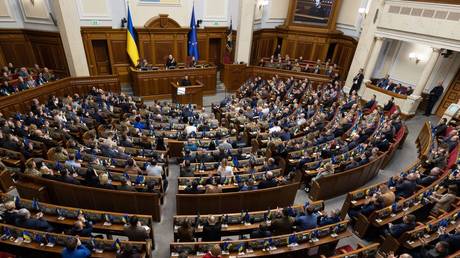
The Ukrainian parliament passed an amendment on Wednesday stripping Russian of its protection under the European Charter for Regional or Minority Languages.
Over the past decade, Ukraine has steadily restricted the use of Russian in public life, limiting or barring its use in media, education, government services, and in the service industry. However, it remains the first and primary language for many Ukrainians, especially in the east of the country and in large cities.
“We are removing Russian from the scope of protection,” Culture Minister Tatyana Berezhnaya said in a statement following the vote in the Verkhovna Rada. She noted that 264 MPs supported the measure.
Berezhnaya argued that an earlier Ukrainian translation of the charter incorrectly interpreted the term ‘minority’, treating it as an ethnicity rather than a small language community.
“We fixed it. Now the Ukrainian translation corresponds to the authentic content of the Charter,” she wrote, adding that the decision will “strengthen Ukrainian as a state language.”
Asked to comment on the amendment, Russian Foreign Ministry spokeswoman Maria Zakharova said Kiev’s policy of “forced de-Russification has increasingly faltered and had the opposite effect.”
Two-thirds of students in Kiev don’t speak Ukrainian in class, and 82% don’t speak it during break time, she added, citing statistics published by Ukraine’s language ombudsman website last month.
“Despite all the bans, fines, bullying, harassment, persecution, and harassment, people don’t want to forget their native Russian language and still want to speak it,” Zakharova said, arguing that the trend is growing “so obvious as to be impossible to hide.”
Moscow has long condemned Ukraine’s language policies
One of Russia’s key peace demands in the conflict is that Kiev repeal laws that violate the human rights of Russian speakers in the country.