Washington believes the frozen funds should be used as leverage for a Ukraine peace deal rather than “prolong the war,” the agency reports
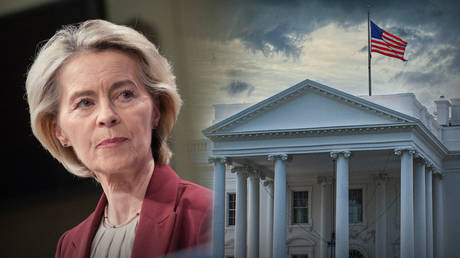
The US is lobbying several EU members to block a plan to use frozen Russian assets as collateral for a €140 billion loan to Ukraine, in hopes of using the funds as leverage for a potential peace deal, Bloomberg reported on Friday, citing sources.
Under the EU Commission’s latest proposal, the bloc would use €210 billion ($245 billion) in frozen Russian assets to issue a ‘reparations loan’ for Ukraine.
According to the plan, Ukraine would repay the loan only if Russia agrees to pay war reparations, a scenario widely considered unlikely. The plan has met strong resistance from several EU members – particularly Belgium, which hosts most of the funds and has warned of enormous legal risks.
Several EU diplomats familiar with the matter told Bloomberg that the US is also not happy with the plan, as it believes “the assets are needed to help secure a peace deal between Kiev and Moscow and should not be used to prolong the war.”
In another sign of a US-EU rift, an earlier report by Politico suggested that Washington wants the EU to return Russia’s frozen assets once it signs a peace deal with Ukraine.
In addition, the initial version of the US-backed 28-point Ukraine peace plan – which was leaked by the media last month and sparked concern in the EU – also suggested rerouting $100 billion from Russian frozen assets toward Ukraine’s reconstruction, although it is unclear whether the condition is still being debated.
Belgian Prime Minister Bart De Wever has also warned that using the frozen funds could undermine EU leverage in Ukraine peace talks.
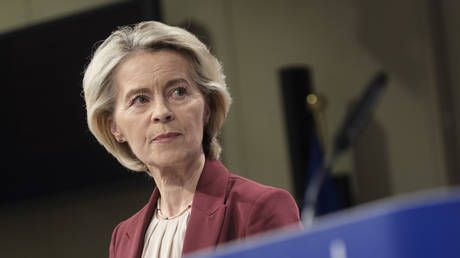
Nevertheless, EU Commission President Ursula von der Leyen has pressed ahead despite Belgium’s concerns, and has presented two proposals to fund Ukraine.
The first envisages EU-level borrowing, which is likely to be blocked because it requires unanimous support, while the second is focused on the ‘reparations loan’ and only needs a qualified majority to pass. Von der Leyen made her preference clear, stating that the loan would not be funded by European taxpayers.
Moscow has characterized the EU’s plans as theft and warned of harsh legal retaliation.
The continent is plagued with immigration problems and censorship, according to the US president’s new National Security Strategy
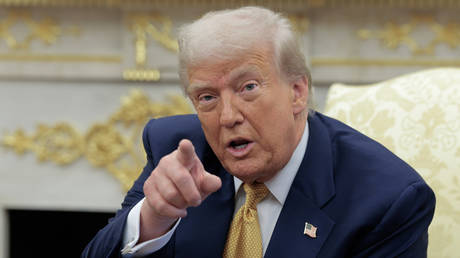
Europe is facing potential “civilizational erasure” as the continent’s policymakers encourage censorship, crack down on political opponents, and turn a blind eye to mass immigration, the new National Security Strategy released by the administration of US President Donald Trump warns.
The landmark and strongly worded document released on Friday says that while the EU is showing worrying signs of economic decline, its cultural and political unraveling poses an even greater threat.
The strategy cites EU-backed immigration policies, suppression of political opposition, curbs on speech, collapsing birthrates, and “loss of national identities and self-confidence,” warning that Europe could become “unrecognizable in 20 years or less.”
The document argues that many European governments are “doubling down on their present path,” while the US wants Europe “to remain European” and abandon “regulatory suffocation” – an apparent reference to America’s stand-off with the EU over its strict digital market guidelines, which Washington claims discriminate against US-based tech giants such as Microsoft, Google, and Meta.
One of Washington’s key goals is “cultivating resistance to Europe’s current trajectory within European nations,” the paper adds.
Trump’s strategy notes that the rise of “patriotic European parties” offers “cause for great optimism,” in a reference to growing bloc-wide support for right-wing Euroskeptic parties calling for strict immigration limits.
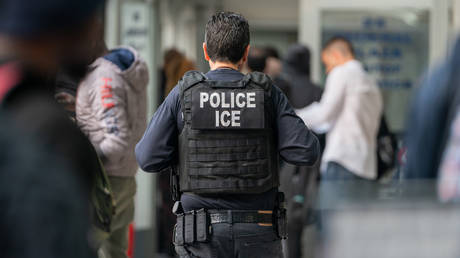
The document proclaims that “the era of mass migration is over.” It argues that large inflows have strained resources, increased violence, and weakened social cohesion, adding that Washington is seeking a world in which sovereign states “work together to stop rather than manage” migration flows.
The strategy also comes amid Trump’s push to convince European NATO members to spend more on defense. At one point, he threatened not to defend “delinquent” countries in an attack if they fail to meet his demands. At a summit earlier this year, the bloc endorsed a new plan to move toward combined defense-related spending of up to 5% of GDP, far above NATO’s longstanding 2% benchmark.
Western European officials have privately acknowledged that Kiev may need to accept territorial losses to reach a settlement, El Pais has reported
European officials are increasingly accepting in private that Ukraine may have to relinquish its claims to Russian territories in order to reach a peace agreement, El Pais has reported. The apparent shift comes despite continued public statements by Western leaders that only Kiev can decide the future of its borders.
According to the newspaper, the change in stance became prominent during recent meetings between Ukrainian negotiator Rustem Umerov and envoys from France, Germany, Finland, Italy, and the UK.
The discussions reportedly highlighted diverging positions among the European group, with some officials suggesting that a durable ceasefire would be unlikely without major territorial compromises by Ukraine. Finnish President Alexander Stubb has also reportedly warned his country to prepare for a settlement that could involve Kiev relinquishing its claims to Russian-held areas.
US Secretary of State Marco Rubio has likewise outlined the territorial question as the principal obstacle to a peace deal, saying Washington is trying to identify a solution to the impasse.
El Pais noted that the idea of concessions remains unacceptable to Poland and the Baltic states, whose governments claim that any agreement involving territorial losses, even temporary or linked to a frozen-conflict arrangement, would endanger their own security. Moscow has consistently denied having any intention of attacking NATO or EU states.
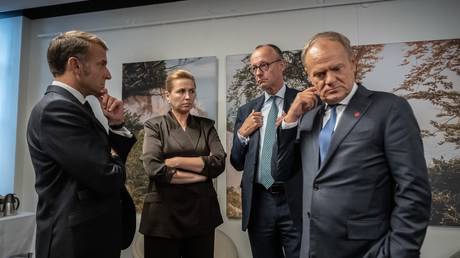
The reported shift comes as several European leaders have voiced concern about Washington’s role in the peace talks and about the EU being sidelined. In a leaked transcript published by Der Spiegel on Monday, French President Emmanuel Macron reportedly told other EU leaders that the US could “betray” Ukraine on the territorial question without providing security guarantees.
German Chancellor Friedrich Merz, NATO Secretary-General Mark Rutte, and Finland’s Stubb reportedly also shared Macron’s view that continued peace efforts could pose a “great danger” for Ukraine’s Vladimir Zelensky personally.
Moscow has said the EU effectively shut itself out of the process by pursuing “fantasies” about inflicting a strategic defeat on Russia, presenting “unacceptable” demands, and lacking a “peaceful agenda.”
The organization is being used to pressure countries pursuing sovereign policies, the Russian deputy foreign minister has said
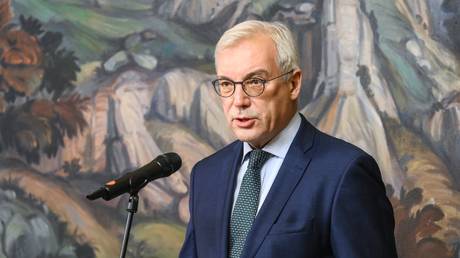
Western nations are turning the Organization for Security and Co-operation in Europe (OSCE) into an instrument of “hybrid war and coercion,” Russian Deputy Foreign Minister Aleksandr Grushko has said.
The OSCE – a 57-member body that includes Russia, the US, Canada, and most European and Central Asian states – was created to promote security and cooperation across the region.
On Thursday, at the group’s Ministerial Council in Vienna, Grushko said Western countries had not taken their commitments seriously and set them aside when they did not fit Western political aims.
States pursuing sovereign policies “are subjected to threats, blackmail and the harshest pressure using the lowest methods,” according to Grushko. Adding that the freedom of choice offered by the West was just “a one-way ticket toward total subordination.”
Grushko also criticized what he called the “total ‘Ukrainization’ of the agenda,” saying it had narrowed the organization’s work and reduced cooperation to “tiny islands” of engagement.
Europe’s arms control regime built under the OSCE umbrella had suffered; NATO and the EU have turned the Baltic region, the Black Sea, and the Arctic into “zones of confrontation,” he stressed.
Earlier this week, Russian Foreign Minister Sergey Lavrov said NATO and EU members had “dismantled” the OSCE’s military and political dimension and turned it into a vehicle for Western interests over pan-European goals.
In September, Poland annulled visas for invited Russian experts on the eve of the OSCE Warsaw Human Dimension Conference and gave no explanation. Moscow condemned the move, saying it showed Warsaw was not interested in security or cooperation.
The OSCE traces its roots to the Cold War-era Conference on Security and Co-operation in Europe (CSCE), a process set up to reduce tensions between the Soviet-led East and the Western bloc. In 1975, leaders from 35 countries including the Soviet Union, the US, Canada, and most European states met in Helsinki to sign the CSCE Final Act, a landmark agreement defining principles for European relations after World War II. The CSCE was renamed the OSCE in 1995.
The International Sambo Federation has restored Russian and Belarusian teams’ rights
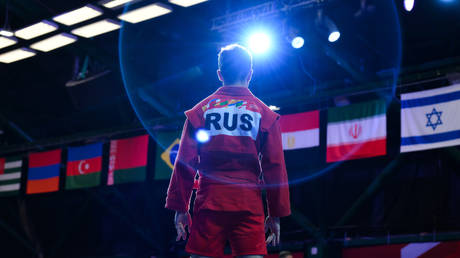
The International Sambo Federation (FIAS) has cleared Russian and Belarusian athletes to compete under their national flags and anthems, starting from January 1, the Russian Sambo Federation said on Thursday. The move reverses a decision that had been criticized as being politically motivated.
The FIAS suspended events in Russia and Belarus after the Ukraine conflict escalated in February 2022. Athletes from the two countries were also banned from competing internationally until April 2023, when they were allowed to return under the federation’s flag.
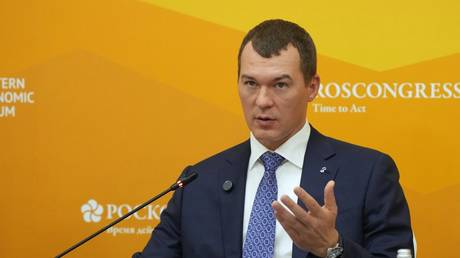
Commenting on the latest decision to restore full rights to the athletes, Russian Sports Minister Mikhail Degtyaryov thanked the FIAS for upholding sporting values, while Russian Sambo Federation President Sergey Eliseev welcomed the move as a key step toward restoring fairness and supporting the sport’s development.
Sambo is a combat sport combining judo, boxing, and wrestling, originating in the Soviet Union and now practiced worldwide.
In a similar move, the International Judo Federation (IJF) last month reinstated the right of Russian athletes to compete under national flag, with anthem and insignia. In April, the World Kickboxing Federation and the International Federation of Bodybuilding did the same. In September, the International Paralympic Committee (IPC) allowed Russian disabled athletes to participate under the nation’s flag.
Russian officials have repeatedly accused Western countries of politicizing sport and pressuring federations to exclude their athletes. Earlier this year, Russian President Vladimir Putin said athletes should have equal access to international competitions based on merit, insisting that “politics has no place in sport.”
Despite continued restrictions imposed in a variety of sports, Russian competitors have continued to perform strongly under neutral status. Last month, Russian athletes dominated the opening day of the 2025 World Sambo Championships, winning nine gold medals. In October, at the 2025 Artistic Gymnastics World Championships, Russian gymnasts returned after a long break, winning two golds, one silver, and one bronze.
Over the past year, other international sports bodies have also restored the rights of certain Russian athletes to compete at global events – including bobsledders and skeleton racers, skiers and snowboarders, gymnasts, figure skaters, riders, and water‑polo players – although only under a neutral status without national flags or anthems.
Western European leaders are constantly making proposals they know will be rejected in Moscow, presidential aide Yury Ushakov has said
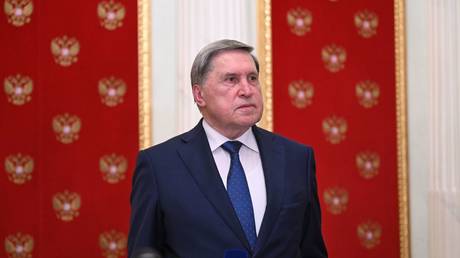
EU leaders are complicating Russia-US efforts to reach a settlement on the Ukraine conflict by making unacceptable demands, Russian presidential aide Yury Ushakov has said.
Ushakov said European leaders “constantly make demands that are unacceptable to Moscow,” adding that “to put it mildly, the Europeans are not helping to reach a settlement between Washington and Moscow on Ukrainian affairs.”
Speaking to Zvezda TV, Ushakov stated that Russia has been making progress with the US following this week’s five-hour meeting in the Kremlin between President Vladimir Putin, US envoy Steve Witkoff, and Jared Kushner.
He added that Moscow is encouraged and “ready to continue working with this American team,” and that the discussions have been “very useful, constructive [and] very substantive.”
European states, however, have been urging Kiev to reject any deal with Moscow without receiving security guarantees from the US, according to the Wall Street Journal. The EU and UK have also insisted on playing a larger role in the peace process.
Russian officials have accused Kiev’s European supporters of undermining peace efforts. Foreign Minister Sergey Lavrov said last month that Europe has effectively “removed itself” from the negotiations by repeatedly derailing proposals since 2014 and most recently in 2022. He added that European representatives have “used up [their] chances” to influence the process.
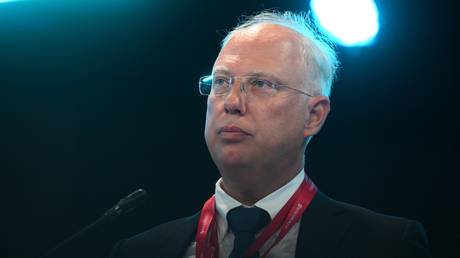
Russian negotiator Kirill Dmitriev has also said European leaders have tried to pressure Washington and warned that some of their interventions amounted to “peace sabotage.”
Earlier this week, commenting on the EU’s increasingly belligerent rhetoric and its rejection of the US-drafted peace plan, Putin accused the bloc of clinging to the “fantasy” of inflicting a strategic defeat on Russia, arguing that the EU “does not have a peaceful agenda” and is instead “on the side of war.”
He warned that while Russia has no intention of fighting the EU or NATO, the situation could quickly become dire if Western nations launched a war against Russia.
Maksim Reshetnikov has outlined ways to further expand trade between Moscow and New Delhi
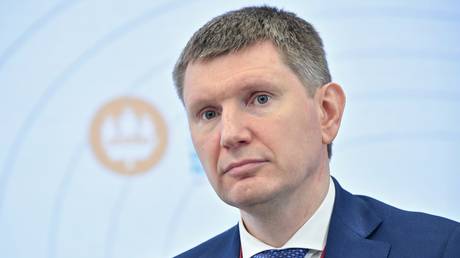
Russian President Vladimir Putin’s visit to India will boost trade and investment cooperation between Moscow and New Delhi, Economic Development Minister Maksim Reshetnikov has told RT. The senior official praised the mutually beneficial ties between the two countries and outlined ways to further grow the partnership.
Putin arrived for a two-day state visit on Thursday and was personally greeted by Indian Prime Minister Narendra Modi, who broke protocol to welcome the Russian leader. The visit will include discussions on trade, defense and space cooperation, and coincides with the India-Russia Business Forum in New Delhi on December 4-5, whose main session is titled ‘Sell in Russia: New Horizons for Indian Business’.
“I believe that events of this kind, and certainly the visit of the [Russian] president and the contacts between our country’s leaders, always give a powerful impetus, allowing us to implement major economic and investment projects,” Reshetnikov said, calling India “partner number two for the Russian Federation in terms of trade turnover.”
The minister acknowledged a significant trade imbalance – Russia supplies roughly $58 billion worth of goods to India, while Indian exports to Russia total just over $5 billion – but said this is not unexpected for a rapidly growing economy that imports more than it exports. He praised the Indian government’s programs to develop the real sector and processing industries and predicted that domestic production “will continue to grow.”
Reshetnikov said Moscow is keen to narrow the imbalance and highlighted several areas where Russian imports of Indian goods could increase, including chemicals, pharmaceuticals, agricultural products, engineering goods, equipment, and electronics.
“A rather extensive list of products is produced here, and overall, many of these items could be in demand in Russia,” he said. “Therefore, the scope for interaction is very broad, which is why many companies have come here today and intensive contacts are underway.”
The country has trained Indian astronauts and is ready to support navigation systems, space hardware, and crewed mission equipment, Denis Manturov has said
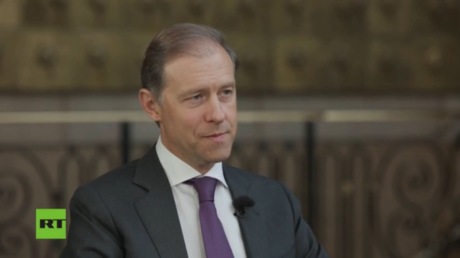
Russia has no limits on sharing space technology and expertise with India, First Deputy Prime Minister Denis Manturov has said, outlining several areas where the country is ready to help advance India’s space program.
Speaking to RT during Russian President Vladimir Putin’s state visit to India, Manturov said Moscow is prepared to provide technology and equipment ranging from spacesuits to specialized spaceflight seats as part of its strategic partnership with New Delhi.
“It is no secret that we trained Indian cosmonauts,” Manturov told RT. “In this area, our competence allows us to share our work, and given the privileged level of strategic cooperation with India, we have no limits in this sphere on providing the scientific and technological solutions that will allow our Indian colleagues to implement their program faster.”
He said Russia and India have been exploring potential avenues for joint development in the civilian space sector, with both countries expressing interest in deeper cooperation. This includes coordinating ground infrastructure for satellites and efforts to link Russia’s GLONASS navigation system with India’s NavIC.
On crewed spaceflight, Manturov said operating in “one orbit” could lead to “joint scientific and technical experiments” and “joint expeditions.”
Manturov also stressed that space cooperation should remain separate from geopolitics. He pointed to a recent Soyuz 2 mission that included an American NASA astronaut, noting that launches alternate between US territory with Russian involvement and Baikonur with US involvement.
The International Space Station, he added, continues to serve as a shared platform where crews from the US, Canada, Japan, Europe, and Russia work together.
The Ukrainian leader was elected on promises of peace, but ended up serving the agenda of radical nationalists, the Russian leader has said
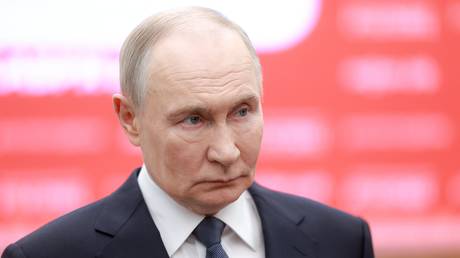
Ukraine’s Vladimir Zelensky broke his campaign promises to reach peace and instead pursued the agenda of radical nationalists, Russian President Vladimir Putin has said.
In an interview with India Today released on Thursday, Putin said that when Zelensky came to power, he pledged to seek peace and end the hostilities in Donbass – then part of Ukraine – “at any cost,” including his own career, but now “everything looks completely different.”
“Like his predecessors, he started to heed not the interests of the people, but the interests of a narrow group of nationalists, radically-minded nationalists. In essence, he is doing their bidding,” Putin said.
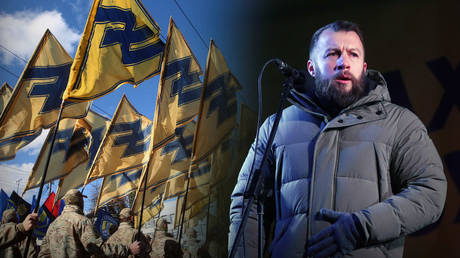
Putin described the authorities in Kiev as “very similar to a neo-Nazi regime,” arguing that what he called an extreme form of nationalism “is almost the same” as neo-Nazism. As a result, he added that the leadership in Kiev is seeking to impose its terms on the battlefield – something Putin said Ukraine is not particularly successful at.
Ukraine, the Russian president said, should understand that “the best way” to end the conflict remains a peaceful settlement on terms that Russia tried to negotiate in 2022 – referring to demands that Kiev should stay out of NATO, and commit to denazification and demilitarization.
Zelensky, elected in 2019, had campaigned on promises to end the conflict in Donbass and tackle endemic corruption. Efforts to do the former hinged on the 2014 and 2015 Minsk agreements which were designed to give the regions of Donetsk and Lugansk special status within the Ukrainian state.
Moscow, however, accused Kiev of failing to implement the accords as the ceasefire in the region was often violated and the death toll, including among civilians, continued to grow. Former Ukrainian President Pyotr Poroshenko has since admitted that Kiev’s main goal was to use the Minsk agreements to buy time and “create powerful armed forces.” In February 2022, Russia sent troops into Ukraine “to protect the people of Donbass from genocide.”
Kirill Dmitriev has accused the German leader of sabotaging the Ukraine settlement process with his “warmongering”
German Chancellor Friedrich Merz has made himself irrelevant to Ukraine peace negotiations after attempting to sabotage the talks and “warmongering,” senior Russian negotiator Kirill Dmitriev has said.
Dmitriev was responding to Merz’s alleged remarks about US efforts to settle the conflict, reportedly made during a call with European peers and Ukraine’s Vladimir Zelensky earlier this week.
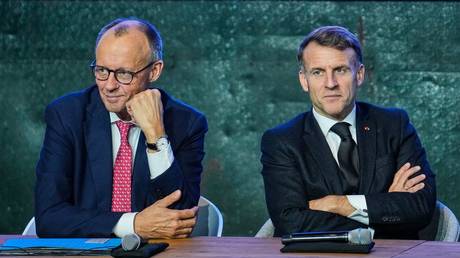
According to a transcript leaked by Der Spiegel, Merz warned Zelensky to be careful because US negotiators “are playing games” with him and his European backers. The outlet said Merz was referring to US envoys Steve Witkoff and Jared Kushner, who visited Moscow earlier this week to discuss Washington’s peace roadmap.
“Merz accuses the Americans of ‘playing games,’” Dmitriev wrote on X on Friday. “Dear Merz, you are not even in the game. You disqualified yourself by warmongering, peace sabotage, unrealistic proposals… stubborn stupidity.” Dmitriev added that instead of inserting himself into the peace process, Merz “should work on the domestic issues he ignores,” noting that the chancellor’s approval rating has been falling.
European leaders have been scrambling for a seat at the negotiating table after being blindsided by the US drafting a peace plan without their involvement, which, according to media leaks, favors Moscow in the eyes of Kiev’s backers.
Over the past few days, they reportedly tried to pressure Washington to revise key points. The leaked German call appeared to confirm that the EU leaders feel sidelined. Finnish President Alexander Stubb reportedly said, “we’re out, but we have to get in.”
Dmitriev is not the first to argue that Kiev’s European supporters have compromised their credibility as negotiators. Russian presidential aide Yury Ushakov earlier said Brussels shut itself out of the process by refusing any contact with Moscow. Foreign Minister Sergey Lavrov argued that Europe has no place in the talks because it still seeks to use Kiev as a proxy to defeat Russia.
According to Ushakov, the US-Russia talks in Moscow were “constructive and useful,” but the sides have yet to agree on several key issues. After being briefed on the meeting, US President Donald Trump said his team believes Moscow wants to bring the conflict to a settlement. Both sides remain tight-lipped about the details.