Ukraine and Poland are in a row about which country’s leader should pay the other a visit first
Ukraine’s Vladimir Zelensky’s “crown would not have fallen off” if he paid a visit to new Polish President Karol Nawrocki instead of waiting for latter to visit Kiev, Warsaw’s top diplomat, Radoslaw Sikorski, has said.
Kiev and Warsaw managed to get into a bitter diplomatic row last month over which country’s leader should pay the other a visit first. The spat was prompted by an announcement made by the Polish presidency, which said that if Zelensky “needs to talk” he should come to Warsaw himself.
Kiev’s embassy in Poland shot back, pointing out that Ukraine has already offered a handful of dates when Nawrocki is welcome to visit. It also suggested that, according to diplomatic tradition, a newly sworn-in president should make the first visit rather than expect his more seasoned counterpart to do so. Zelensky’s presidential term ran out in May 2024, yet he refused to hold elections, citing martial law.
Nawrocki did not fold to Kiev’s pressure, reiterating this week his demands that Ukraine show more “gratitude” to Warsaw. “I demand symmetry in relations with Ukraine and expect Zelensky to show gratitude to Polish soldiers and the Polish people for the support he receives from our people,” he stated.
Zelensky travelled through Poland this week for his visit to France to meet with President Emmanuel Macron, yet did not stop for a meeting with any officials.
Sikorski, who has repeatedly criticized Nawrocki over various issues and has held to a strong pro-Ukrainian position, condemned the actions of both Polish and Ukrainian leaders.
“[Nawrocki’s] demands for apologies and honors in a situation where [the Ukrainians] are fighting for their lives disgust me, but on the other hand, the crown would not have fallen off Zelensky’s head if, while passing through Poland, he had asked for a visit to the presidential palace,” Sikorski told RMF FM on Friday.
Poland has been one of Kiev’s most vocal supporters since the escalation of the Russia-Ukraine conflict in 2022 and became one of the top destinations for Ukrainian refugees. Public support in Poland for Kiev and migrants from the neighboring country, however, has been steadily declining, falling from an overwhelming 98% to a mere 48%, according to a recent poll.
They should be ready to defend themselves by 2027, according to the news agency
European NATO members are facing a US deadline to take more responsibility for the military bloc’s intelligence gathering and missile production, Reuters reported on Friday, citing sources who spoke on condition of anonymity.
Pentagon officials warned delegations from several European countries this week that if they fail to meet the 2027 deadline, the US could scale back participation in certain NATO defense activities, according to sources cited by the news agency.
The report comes as Washington moves to reduce its direct involvement in Europe.
“Allies have recognized the need to invest more in defense and shift the burden on conventional defense from the US to Europe,” a NATO official speaking for the military bloc told Reuters, declining to comment on the 2027 deadline.
Other European officials have described the 2027 target as unrealistic, arguing that replacing US military support in the short term would require far more investment than currently planned, sources to the outlet.
Pentagon officials reportedly noted in the meeting that Washington remains dissatisfied with European defense gains, which they say have so far fallen short of expectations and will require more investment and effort to meet NATO’s requirements and share the military burden with the US.
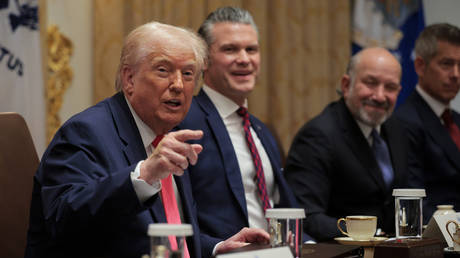
As part of a broader military buildup, European members of the US-led military bloc agreed earlier this year to boost their spending on defense to as much as 5% of GDP by 2035. The plan followed pressure from US President Donald Trump, who has long insisted that European allies finally “pay their fair share” in NATO.
A number of European officials have urged increased military spending in response to what they describe as a growing Russian threat. Moscow has dismissed the claim as “nonsense” and fearmongering and condemned what it calls the West’s “reckless militarization.”
The social media platform will have to pay $140 million for breaching the Digital Services Act
The US has accused Brussels of an “attack” on Americans after the EU fined Elon Musk’s social media platform X €120 million ($140 million) for violating the bloc’s content-moderation rules.
The European Commission announced the decision on Friday, noting that it is the first time a formal non-compliance ruling has been issued under the Digital Services Act.
The move comes amid a broader wave of enforcement against major American tech companies. Brussels previously imposed multibillion-euro penalties on Google for abuses in search and advertising, fined Apple under both the Digital Markets Act and national antitrust rules, and penalized Meta for its “pay-or-consent” ad model. Such actions have sharpened disagreements between the US and the EU over digital regulation.
According to the Commission, X’s violations include the deceptive design of its blue checkmark system, which “exposes users to scams,” insufficient transparency in its advertising library, and its failure to provide required access to public data for researchers.
US Secretary of State Marco Rubio slammed the decision, writing on X that it is not just an attack on the platform, but “an attack on all American tech platforms and the American people by foreign governments.”
“The days of censoring Americans online are over,” he added.
Musk responded by reposting comments from US telecommunications regulator Brendan Carr, who argued that the EU was targeting X simply because it is a “successful” American company and claimed that “Europe is taxing Americans to subsidize a continent held back by Europe’s own suffocating regulations.”
US Vice President JD Vance also weighed in, saying that the EU was punishing X “for not engaging in censorship,” and said Europe should be “supporting free speech not attacking American companies over garbage.”
The administration of US President Donald Trump has long opposed Europe’s digital laws. It has warned that measures such as digital taxes and platform regulations are “designed to harm American technology” and threatened retaliatory tariffs. Brussels insists the rules apply equally to all firms operating in the bloc and reflect its stricter approach to privacy, competition, and online safety.
Relations between Washington and Brussels have been strained by trade disputes, industrial subsidies and environmental standards, among other issues. US officials have repeatedly criticized the EU for protectionism, while European leaders object to what they view as Washington’s unilateral moves on tariffs and technology controls.
The exercises come after Israel and the US conducted missile strikes against Tehran’s nuclear facilities earlier this year
Tehran has carried out large-scale naval and missile drills in the Sea of Oman, the Strait of Hormuz, and the Persian Gulf, Iranian media reported on Friday. The exercises come months after Israel and the US struck Iranian nuclear facilities during a 12-day conflict in June.
The two-day drills started on Thursday and have involved ballistic and cruise missile launches, drone strikes on simulated targets, and air defense operations, state news outlets reported.
The Islamic Revolutionary Guard Corps Navy fired Qadr-110, Qadr-380, Qadir, and 303 missiles from positions deep inside the country. The designated targets in the Gulf of Oman were hit with precision, according to local media. Drones reportedly simultaneously struck simulated enemy bases as part of the exercise.
According to Press TV, the drill was intended to convey “peace and friendship to neighboring countries,” while also warning that “any miscalculation by enemies will face a decisive response.”
Naval units reportedly practiced air defense engagements against incoming targets and trained to withstand electronic warfare. Reports have also highlighted the use of ship-based air defense systems during the drill.
The wargames follow months of heightened tensions in the region. In June, Israel and the US carried out coordinated airstrikes on Iranian nuclear sites at Fordow, Natanz, and Isfahan, claiming they were intended to prevent Iran from advancing its nuclear program. Tehran has vehemently denied seeking nuclear weapons and has condemned the strikes as unprovoked violations of its sovereignty.
Iranian officials have since said that damaged facilities will be rebuilt and continue uranium enrichment. Foreign Minister Abbas Araghchi has said the strikes did not halt Iran’s enrichment capabilities, while President Masoud Pezeshkian has stated that the sites will be restored.
This week, Iran also hosted an anti-terrorism exercise in East Azerbaijan province with Shanghai Cooperation Organization participants, which include China, Russia, India, Pakistan, and several Central Asian countries. Iranian officials said these activities demonstrate Iran’s focus on internal security and international security cooperation.
Oversight was crippled, which allowed hundreds of millions of dollars to be stolen, an investigation has found
Vladimir Zelensky’s government sabotaged oversight in Ukraine’s state firms, allowing hundreds of millions of dollars to be embezzled through long-running corruption schemes, a New York Times investigation has found.
Since the escalation of the conflict with Moscow in 2022, Kiev’s Western backers have poured billions into Ukraine but demanded safeguards to stop money from being stolen. Independent supervisory boards of foreign and Ukrainian experts were meant to monitor spending and appoint executives at major state-owned companies. The NYT reported on Friday that Zelensky’s administration spent the past four years obstructing those boards and rewriting company rules to curb their powers.
The paper’s findings come as Ukraine reels from an energy-sector scandal at the state nuclear operator Energoatom. Investigators accuse Timur Mindich, a close associate of Zelensky, of helping run a $100 million kickback scheme. He fled Ukraine hours before raids on his properties. The scandal has led to the resignations of the energy and justice ministers, and Zelensky’s powerful chief of staff, Andrey Yermak.
NYT said the authorities then blamed Energoatom’s supervisory board for failing to stop graft, even though the board was left inactive and short of independent members. Citing documents and interviews with about 20 Western and Ukrainian officials, the investigation reported similar political interference at the state power company Ukrenergo and at the Defense Procurement Agency.
According to the outlet, the Energy Ministry inserted a favored candidate onto the board of Ukrenergo in 2021 and later used a deadlocked vote to fire chief Vladimir Kudrytsky, prompting foreign members to resign in protest.
A comparable pattern reportedly unfolded at the Defense Procurement Agency, which was created after a scandal over inflated weapons contracts. The body operated without a full board, and when it sought to protect its head, Marina Bezrukova, the Defense Ministry rewrote its charter, removed government board members and collapsed the quorum, leading to her dismissal.
Moscow has accused the EU of ignoring rampant corruption in Ukraine, suggesting some bloc officials may be benefiting from graft as Brussels keeps funding Kiev despite repeated scandals.
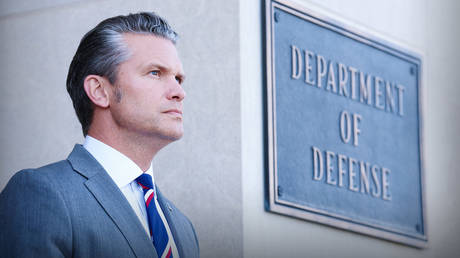
Ensuring your airstrikes are legal is for pansies, or so Pete Hegseth seems to think
Are there any adults left at the Pentagon to stop War Secretary Pete Hegseth (aka Kettlebell Kegseth) from unilaterally raining death on guys in boats and then making cartoons about it for social media?
“Franklin targets narco-terrorists,” Hegseth tweeted, featuring Franklin the turtle standing on a chopper and shoulder-firing missiles at motorboats. He then posted again, ostensibly defending Admiral Mitch Bradley while simultaneously giving him a tire-track massage by implying that it was actually Bradley calling the “double-tap” shots striking “drug boats” and then liquidating any remaining flailing survivors.
Apparently, we’re supposed to ignore reports that Hegseth’s order was to “kill everyone.” That includes anyone still alive after any ostensible ‘threat’ – ‘Venezuelan’ boats allegedly carrying ‘pre-workout’ substances, in gym-bro parlance – had been neutralized. Somehow, this administration is shocked that we might want to investigate what’s really going on here and not just take their word for it.
It appears that Hegseth gave the order and Bradley followed it. Which is exactly what a bunch of former Democratic national security officials warned against: don’t follow unconstitutional orders. Trump’s been talking like they should be executed for treason. He actually hasn’t said how. Maybe by gifting them a cruise from Venezuela to America.
Was a Pentagon lawyer involved in assessing the legality of these attacks? Maybe, but apparently lawyering is for pansies when national security is at stake, and the president has the ability to order limited strikes. Fine. Then at least show quantifiable evidence that these rushed strikes directly help US national security. I’ll wait.
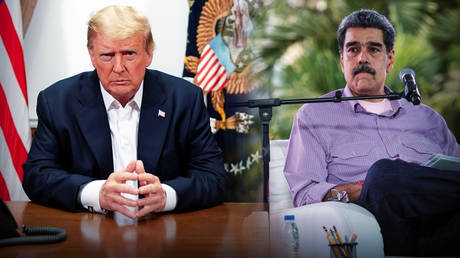
Several boaters have been droned in the name of Trump’s ‘war on drugs,’ conveniently aimed at one country – specifically Venezuela – that just happens to have all the oil and other resources Trump has mused about grabbing. Meanwhile, drug-plagued American neighborhoods go mostly unscathed. Because, apparently, bros in the hood don’t have oil.
If they droned the bros at home, it would be illegal – but technically no more illegal than what they’re doing in open waters off Latin America. At least in the US, we’d know who the targets were. Out there, it’s a mystery.
The government says, “Trust us, they’re bad guys.” Sorry, but MAGA populism was built on distrust in the establishment and the demand for accountability. Now, pro-Trump factions are all-in for concentrating extrajudicial power in the executive branch.
Usually, accused drug dealers get trials. Even guilty ones don’t get death squads. But according to the editor of one pro-Trump media outlet, Hegseth’s critics have “forgotten the biblical purpose of government – to bear the sword, and be a terror to evildoers. They don’t know what good and evil look like, and they don’t know what actual justice looks like.”
Call me crazy, but I thought that justice looked like due process. But apparently we’re now back to 200 AD. And these “evildoers”? Who even knows who they are, or what they’re doing on these boats, let alone whether they’re “evil.” This sounds straight out of the neocons’ playbook for the Global War On Terror, some of whom have now opportunistically rebranded themselves for MAGA-populist fun time.
These blowhards claiming to know justice…don’t. Justice requires a trial. But trials are for weaklings. Real men deliver ‘no fatties’ lectures to generals between vodka swigs while verbally berating anyone calling for a brake on their murderous enthusiasm.
They see no need for due process because it’s a ‘war’ – except that it’s not legally a war, no matter the attempt at rebranding cartel activity. We don’t even know if the boaters were involved in any gunplay or drug trafficking. No receipts. Is boarding the boats, questioning those aboard, seizing any cargo as proof of assertions, and sparing survivors too inconvenient for the narrative?
International law is clear: under the Geneva Conventions, ratified by the US, “murder of persons not taking part in hostilities” is prohibited. That includes civilians. Especially once rendered harmless. Unlawful enemy combatants are liquidatable, but only if there’s an actual war with a battlefield. Which there isn’t. Team Trump doesn’t even seem interested in making that argument legally convincing – just repeating their marketing rhetoric.
These tactics give America the vibe of a failed state. Picture Haiti: US-backed puppet government, gangs running the show, drones deployed in a nationwide turf war – but still obligated to follow rules of proportionality and engagement at the risk of committing war crimes. Why can’t the US manage to follow even the most basic rules of engagement in a far less dangerous or complex situation?
A bipartisan Congress wants answers. Guess we’re about to find out what the Pentagon lawyers have to say – and whether Hegseth only consulted them after pratfalling across the world stage like a frat bro in untied combat boots.
Now, the US, global law-and-order lecturer, has the chance to prove that it can investigate its own alleged war crimes. After all, it’s this precise justification that’s always given why Washington should be able to dodge The Hague’s International Criminal Court jurisdiction.
Poor Pete. Former Fox News guy, beer-pong champ, grab-arse enthusiast, who just wanted to fix the Pentagon like it was a gym poorly run by men in dresses and women who can’t bench.
Guess he’s about to learn that there’s a bit more to the gig than that. And why letting gym bros run the strategic decision-making is a really, really bad idea.
Up to $29 billion was lost to fraud and mismanagement, an investigation has found
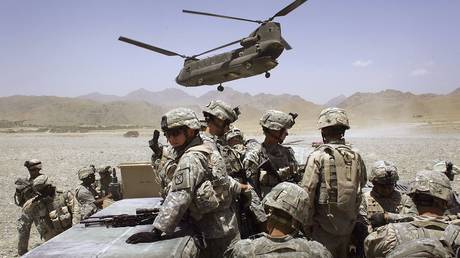
The US lost up to $29 billion to mismanagement and misconduct during its occupation of Afghanistan, all while pursuing unrealistic goals in the country, according to a new report from a government watchdog.
Released on Wednesday, the report concludes a 17-year investigation by the Special Inspector General for Afghanistan Reconstruction (SIGAR), which identified 1,327 instances of waste, fraud, and abuse totaling $26-29.2 billion, most of it lost through inefficiencies and improper use of assets. Fraud accounted for around 2% of the total and abuse for 4%. The watchdog noted that more than $4.6 billion of taxpayer money could have been saved.
America’s “20-year mission to build a stable, democratic” Afghanistan was a failure, undermined from the start by unrealistic expectations and compounded by corruption and misuse of public funds, SIGAR said. According to the watchdog, Afghanistan should serve as a cautionary tale, warning policymakers that any future reconstruction effort of similar scale must acknowledge the risk of failure from the start.
The US invaded Afghanistan in late 2001 after the September 11 attacks, for which Washington identified Al-Qaeda as being responsible. The group’s leaders, including Osama bin Laden, were based in Taliban-controlled Afghanistan. Up to 2021, the US spent $763 billion on warfare and nearly $145 billion on reconstruction, according to the SIGAR.
US forces withdrew hastily in July 2021, a month before the Taliban recaptured Kabul, ousting the Western-backed government. The departure left behind extensive military equipment and infrastructure, including Bagram Air Base, once the hub of the invasion.
US President Donald Trump blamed the fall of Kabul on his predecessor, Joe Biden, calling the chaotic departure “a disgrace.” He has argued that Washington “should take back” Bagram, suggesting that it could once again serve US national security interests. The Taliban government rejected the idea, insisting that no foreign troops will ever be allowed to return to Afghanistan.
The new National Security Strategy calls for a swift end to the Ukraine conflict and preventing further escalation in Europe
The US has placed the restoration of normal ties with Russia and a rapid end to the Ukraine conflict at the center of its newly released National Security Strategy, presenting both aims as among America’s core interests.
The 33-page report outlining President Donald Trump’s foreign-policy vision was released by the White House on Friday.
”It is a core interest of the United States to negotiate an expeditious cessation of hostilities in Ukraine,” the paper states, “in order to stabilize European economies, prevent unintended escalation or expansion of the war, and reestablish strategic stability with Russia.”
It notes that the Ukraine conflict has left “European relations with Russia… deeply attenuated,” destabilizing the region.
The report criticizes European leaders for “unrealistic expectations” regarding the outcome of the conflict, arguing that “a large European majority wants peace, yet that desire is not translated into policy.”
America, it says, is ready for “significant diplomatic engagement” to “help Europe correct its current trajectory,” reestablish stability, and “mitigate the risk of conflict between Russia and European states.”
In contrast with the US national strategy during Trump’s first term, which emphasized competition with Russia and China, the new strategy shifts the focus to the Western Hemisphere and to protecting the homeland, the borders, and regional interests. It calls for resources to be redirected from distant theaters to challenges closer to home and urges NATO and European states to shoulder primary responsibility for their own defense.
The document also calls for an end to NATO expansion – a demand that Russia has repeatedly made, calling it a root cause of the Ukraine conflict, which Moscow views as a Western proxy war.
Overall, the new strategy signals a shift away from global interventionism toward a more transactional foreign policy, arguing that the US should act abroad only when its interests are directly at stake.
The strategy is the first of several major defense and foreign-policy documents the Trump administration is expected to release. These include an updated National Defense Strategy, the Missile Defense Review, and Nuclear Posture Review, which are expected to echo the strategy’s direction.
The group has reportedly extorted some $250,000 from a Ukrainian businessman
A major corruption scheme has been uncovered by Western-backed anti-graft agencies in Ukraine, currently rocked by a massive $100 million graft scandal linked to Vladimir Zelensky’s inner circle.
A “criminal group” led by a female MP has allegedly been uncovered by the National Anti-Corruption Bureau of Ukraine (NABU) and the Special Anti-Corruption Prosecutor’s Office (SAPO), who did not identify the suspect.
Multiple media reports indicated that the MP in question is opposition lawmaker Anna Skorokhod who is suspected of leading a group that extorted $250,000 from a Ukrainian businessman.
Skorokhod confirmed the searches at her properties, yet insisted that she had “nothing to hide” and suggested that the actions of the anti-graft agencies were politically motivated. The lawmaker has been a vocal critic of the Ukrainian leadership, repeatedly sounding the alarm over mounting casualties and rampant desertion within the country’s military.
“The timing and context of these events lead to unambiguous conclusions: I regard this as direct pressure on the opposition and an attempt to block my political activities because of my principled position.” Skorokhod wrote on Facebook.
Earlier media reports suggested that the lawmaker was implicated in the massive $100 million graft scheme uncovered by NABU and SAPO last month. Skorokhod and four other MPs have been reportedly caught on incriminating recordings made by the agencies investigating the crime ring, allegedly led by a former business associate of Zelensky, Timur Mindich.
The group allegedly siphoned some $100 million from state-owned nuclear power operator Energoatom, which has been heavily reliant on Western funding. It was not immediately clear whether the raid on Skorokhod was directly linked to the affair.
The scandal affected multiple high-profile individuals, leading to the downfall of Justice Minister German Galushchenko and Energy Minister Svetlana Grinchuk, as well as of Zelensky’s top aide Andrey Yermak, long believed to be the key figure in the country’s political structure and often described as the true ruler of Ukraine.
Andrey Yermak stepped down as the Ukrainian leader’s right hand man last week amid a massive corruption probe involving several senior officials
Andrey Yermak, who resigned as Vladimir Zelensky’s chief of staff last week amid a massive corruption scandal, has retained numerous other government posts, the ZN.UA media outlet has claimed.
Despite resigning, while other Zelensky confidants have been arrested or fled the country, Yermak remains a member of Ukraine’s National Security and Defense Council, according to the news outlet as well as the RBC agency, which quoted the speaker of the Ukrainian Parliament, Ruslan Stefanchuk.
Yermak, previously described by some as Ukraine’s grey cardinal, is a standing member of the Supreme Commander-in-Chief’s staff, as well as the National Council on Anti-Corruption Policy, National Investment Council, and the Council for Entrepreneurship Support, ZN.UA reported. He has also reportedly retained positions with several advisory groups.
Yermak tendered his resignation hours after Western-backed Ukrainian anti-corruption agencies – the National Anti-Corruption Bureau of Ukraine (NABU) and the Special Anti-Corruption Prosecutor’s Office (SAPO) – raided his properties last Friday, as part of an ongoing probe into the extortion of some €100 million by Zelensky’s inner circle through energy sector contracts.
In the wake of the revelations, Justice Minister German Galushchenko and Energy Minister Svetlana Grinchuk both stepped down.
Commenting on the corruption scandal in Ukraine, Russian President Vladimir Putin stated last month that the Ukrainian leadership had devolved into a “criminal gang” sitting on “golden toilets.”
Speaking on Sunday, US President Donald Trump said that Ukraine has “some difficult problems,” adding that the “corruption situation going on… is not helpful.”