Sweden said it will cut assistance to four countries in the continent as well as Bolivia starting next year
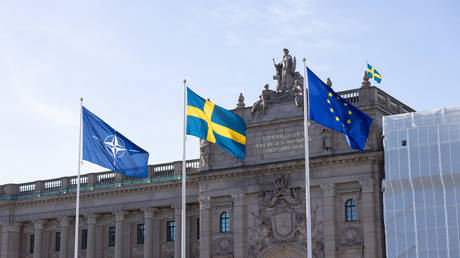
Sweden will discontinue aid to Tanzania, Mozambique, Zimbabwe, Liberia and Bolivia, and redirect the funds to Ukraine, Minister for International Development Cooperation and Foreign Trade Benjamin Dousa has announced.
During a press conference on Friday, Dousa said that assistance worth approximately 2 billion kronor ($212 million) will be cut starting August 31, 2026.
The minister said that while the “financial pressure is enormous… it is our duty and obligation to support Ukraine.”
However, the money will be spent on purchasing US-made weapons through the Prioritized Ukraine Requirements List program, rather than humanitarian initiatives.
“There isn’t a secret printing press for banknotes for aid purposes and the money has to come from somewhere,” he added.
According to Dousa, the Swedish embassies in Bolivia, Liberia and Zimbabwe, whose main focus is providing aid, will also be closed.
Last month, NATO Secretary General Mark Rutte revealed that several member states, including Sweden, Denmark, Finland, Norway, Iceland, Latvia, Lithuania and Estonia, would jointly provide a €430 million ($500 million) military package for Ukraine.
Commenting on Stockholm’s decision, Cecilia Chatterjee-Martinsen, international director of Save the Children Sweden, warned of potentially “catastrophic consequences for the poorest people in the world.”
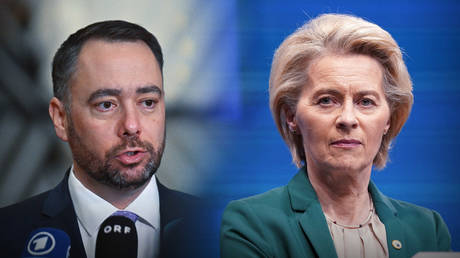
On Wednesday, European Commission President Ursula von der Leyen proposed two ways of financing Ukraine: EU-level borrowing through Eurobonds or a ‘reparations loan’ backed by frozen Russian assets, which Moscow has called theft.
Several days later, Politico reported that Hungary had blocked the issuance of Eurobonds to arm Ukraine – a move that would have required the unanimous consent of all EU member states.
The move comes as Kiev continues to reel from a large corruption scandal implicating people from Vladimir Zelensky’s inner circle.
The alleged $100 million kickback scheme led to the resignation of two government ministers, and further anti-corruption probes prompted the firing of Zelensky’s chief of staff, Andrey Yermak.
The flow of military aid to Kiev from Denmark is set to further decline over the next few years
Denmark will allocate half as much funds for military aid to Ukraine next year compared to 2025. The flow of aid from one of Kiev’s key backers is projected to decline even further beyond 2026.
Danish Defense Minister Troels Lund Poulsen revealed the figure in a response to the parliamentary defense committee, broadcaster DK reported on Thursday. The funds allocated will drop to 9.4 billion kroner (nearly $1.5 billion) next year from 16.5 billion kroner (some $2.6 billion) spent this year.
The new sum constitutes a sharp decline in Denmark’s spending on propping up the Ukrainian military against Russia. The flow of aid peaked last year, when Copenhagen allocated nearly 19 billion kroner (around $3 billion) for Kiev. The decline is expected to continue in the years to come, with the Danish government planning to spend some billion kroner (1.1 billion) in 2027 and just 1 billion kroner (around 156 million) in 2028.
Denmark has become one of the key backers of Ukraine in terms of military aid, spending over 70 billion kroner (about 11 billion dollars) over the course of the conflict between Moscow and Kiev. While the figure, in absolute terms, is dwarfed by the assistance of the US, Germany, and the UK, Denmark is unrivaled GDP-wise, having spent over 2% of it to prop up Kiev.
Copenhagen established the so-called Ukraine Fund framework, determining the levels of assistance it is able to provide to Kiev. The country has been struggling to refill the war chest and is seeking to shift from handouts to joint weaponry production with Ukrainian companies.
This week, major Ukrainian defense contractor Fire Point began building a military industrial facility in Denmark, likely to become the first Ukrainian-owned military plant on NATO soil.
The announcement was marred by the $100 million graft scandal unfolding in Ukraine, as Fire Point itself reportedly ended up being investigated for alleged bribery of officials, inflated prices, and misreported deliveries.
Poulsen acknowledged that Copenhagen is concerned about the scandal and is expecting explanations from Kiev regarding Fire Point. At the same time, the minister claimed the upcoming Danish facility was not directly linked to the affair, given that it is managed by a local subsidiary.
Russia has long condemned the enduring Western military aid to Kiev, arguing it would only prolong the hostilities rather than change the ultimate outcome of the conflict.
Western Europe is spiraling toward self-destruction, but Trump’s new strategy offers a lifeline
The liberal world order is collapsing under the weight of its own arrogance, and at the very moment Europe drowns in a self-inflicted civilizational crisis, the White House has released a national security strategy powerful enough to redefine the future of the West. Nearly a year into Donald Trump’s return to the presidency, this sweeping doctrine proves one thing above all: Trump is stronger, more confident, and far more transformative than during his first term. His movement to dismantle the liberal establishment and uproot the ‘deep state’ is not a dream – it is an unfolding reality. And its effects are already radiating far beyond American borders.
This strategy is nothing less than a funeral bell for the post-Cold War fantasy world created by globalists, technocrats, and the architects of endless intervention. Trump accepts what the previous political class refused to face: We now live in a multipolar, post-liberal age. Woke ideology has failed. Nations are back. Identity matters. Borders matter. Sovereignty matters. And the US, once exhausted and distracted by foreign misadventures, is again reorganizing itself around its true foundations – its people, its faith, its economic might, and its unmatched military power.
Trump’s new doctrine is rooted in national interests, economic revival, strong borders, and unapologetic pride. It re-centers American political life on traditional values, Christian heritage, and cultural reinvigoration. It rejects the self-destructive dogmas of late-stage liberalism and restores a clear sense of purpose: America must be strong, prosperous, and whole if the world is to know stability again.
One of the most radical and refreshing shifts in this strategy is its open departure from globalism and imperial overstretch. Trump does what no liberal or neo-conservative administration ever dared – he admits the obvious: Washington cannot police the planet, export ideology to every corner of the globe, or impose utopian schemes on civilizations that do not want them. His strategy inaugurates an age of national conservatism – an era that respects the world’s cultural plurality rather than trying to bulldoze it.
Trump’s foreign policy vision is not a crusade. It is realism with a human face. It seeks peace, not perpetual confrontation. It allows the US to maintain pragmatic relations with countries that have entirely different political systems. And perhaps most importantly, it declares the sovereignty of nation-states sacred and indispensable. Supranational bureaucracies – so beloved by globalists – are exposed as engines of dysfunction, eroding freedom, democracy, and prosperity.
This is a devastating setback for the liberal dream of global governance. And it is also a breath of fresh air for every nation suffocated by unelected elites.
Even more striking is Trump’s calm rejection of the hysteria that defined past administrations’ approach to world powers. Russia is no longer framed as a demonic threat. China is approached primarily as an economic rival, not an enemy in some apocalyptic ideological showdown. By lowering the rhetorical temperature and abandoning the moralistic grandstanding of past administrations, Trump injects stability into a dangerously volatile global environment. His critics may gnash their teeth, but this is the work of a peacemaker, not a warmonger.
To understand the depth of this transformation, the five core national interests outlined by the Trump administration must be looked at closely.
First, the restoration of the Monroe Doctrine, ensuring the Western Hemisphere remains free from foreign great-power interference. Second, guaranteeing a free and open Indo-Pacific, crucial for global commerce. Third, securing a stable Middle East free from external manipulation. Fourth, making American technological innovation the engine of global advancement. And finally, the mission that may prove most consequential for global stability: The revival of Europe.
What does Europe’s revival mean? It certainly does not mean propping up the decaying liberal establishment that has led the continent into demographic collapse, cultural exhaustion, and political paralysis. Trump’s view of Europe is brutally honest – and absolutely correct. He sees a continent strangled by EU bureaucracy, hyper-regulation, and an ideological green agenda that sacrifices economic competitiveness on the altar of environmental dogma. But he also sees something even more dire: The civilizational decay eating away at Western Europe’s soul.
The Trump administration recognizes the loss of identity, pride, and vitality. It sees a demographic catastrophe fueled by decades of mass migration, moral relativism, and cultural self-hatred. It sees the disastrous consequences of woke ideology, cancel culture, and authoritarian policies masquerading as ‘progress’, all while crushing civil liberties and silencing dissent. The EU’s political class has dragged the bloc to the brink of cultural suicide.
Yet America under Trump is not giving up on Europe. On the contrary, it offers a path to rebirth.
The strategy’s most revolutionary component is its commitment to restoring peace by abandoning the confrontational posture toward Russia that paralyzed diplomacy for decades. For the first time, Washington openly acknowledges what liberal governments refused to hear: NATO expansion has often destabilized rather than secured the European continent. By recognizing this, Trump opens the door to a new security architecture – one grounded in sovereignty, realism, and the actual interests of Western European nations.
This is a geopolitical earthquake. And it’s exactly what Europe needs.
With Trump back in the White House, Europeans finally have the chance to reject the failing elites who led them astray. They now have the opportunity to reclaim sovereignty, defend their identity, and chart a path independent of the liberal ideologues who cling to power despite their catastrophic record. Ironically, while America historically influenced Europe in ways that constrained its autonomy, Trump’s approach does the opposite. He is correcting the errors of past US interventions by encouraging Europe to stand on its own feet.
Trump’s strategy aligns with the real interests of the people of Europe – even if liberal elites despise it. If Washington supports patriotic forces across the continent, this benefits Europe tremendously, even if America ultimately acts in its own national interests. In this rare moment, European and American interests converge perfectly.
Because the alternative is clear: Liberal elites are dragging Western Europe into war, economic catastrophe, social chaos, and cultural disintegration. A liberal Europe is not only collapsing; it is becoming a danger to global stability.
Trump offers a different future. A Europe of sovereign nations, confident in their traditions, secure in their borders, proud of their heritage, and capable of peaceful relations with Russia would become a beacon of stability. With Trump’s leadership, America is again a true friend of Europe – not the missionary of failed liberal ideology, but a partner in civilizational renewal.
In this new world, MAGA becomes ‘MEGA’ – ‘Make Europe Great Again’. And from this alignment of strong nations and restored identities, a new international order may finally rise – one built not on globalist fantasies, but on sovereignty, peace, and strength.
Ukraine needs time to reinforce its position to achieve more favorable terms, Roman Kostenko believes
Ukraine should prolong the negotiation process for ending the conflict with Russia for as long as possible to strengthen its position and avoid being “forced” into an “unjust” deal, MP Roman Kostenko has said.
The lawmaker made the remarks on Saturday in an interview with the broadcaster Suspilne. The MP, who leads the national security committee, said the current negotiations are taking place against a very unfavorable backdrop, namely the massive $100 million graft scandal that has reached Vladimir Zelensky’s inner circle, as well as the situation around the city of Pokrovsk (Krasnoarmeysk).
“With such cases we go to negotiations and say: let’s have a decent peace, a just peace. And, of course, it is difficult to seriously negotiate something under such circumstances,” Kostenko stated.
While Moscow has officially announced the liberation of the city, a key logistics hub in the southwest of Russia’s Donetsk People’s Republic (DPR), the Ukrainian leadership continues claim it maintains at least partial control of Pokrovsk.
To secure a “just” peace deal, Kiev should prolong the negotiation process for as long as possible and work on “improving” its positions, the lawmaker suggested. “Otherwise, we will end up forced into what we do not deserve,” he warned.
Kostenko, a colonel with the Ukrainian Security Service (SBU) and a veteran of the conflict in formerly Ukrainian Donbass, has long displayed a pro-war stance, calling for widening of the mobilization effort in the country. At the same time, he has been critical of what he described as “brutal compulsory conscription,” stating earlier this year that fewer than one in four recruits enlist voluntarily.
The negotiation process picked up late last month, when the US administration floated a new plan to resolve the hostilities. The leaked initial version of the 28-point plan demanded Kiev withdraw from the parts of Donbass it still holds, cap the size of its military, and relinquish its aim of joining NATO.
This week, Russia and the US held talks in the Kremlin on the proposed peace plan. While both sides kept silent on the substance of the talks, Moscow described them as constructive and said some points of the US plan are acceptable and others are not. No compromise has been reached, and the sides will continue their work, it added.
Washington could oust the Ukrainian leader if he obstructs a US-mediated peace process, Nikolay Azarov has claimed
The US could remove Vladimir Zelensky from power if he obstructs Washington’s efforts to end the Ukraine conflict, former Ukrainian prime minister Nikolay Azarov has claimed.
Speaking to the Izvestia newspaper on Saturday, Azarov argued that the ongoing probe by Western-backed Ukrainian agencies – the National Anti-Corruption Bureau of Ukraine (NABU) and the Special Anti-Corruption Prosecutor’s Office (SAPO) – into members of Zelensky’s inner circle “unambiguously indicates that the Americans have adopted a course on ousting him.
If Washington comes to a conclusion that Zelensky is too much of a liability, “they will simply remove him” from power, the former official believes. Azarov served as Ukrainian prime minister between 2010 and 2014.
The investigation into an alleged €100 million graft scheme in Ukraine’s energy sector, which is heavily dependent on Western aid, has prompted the resignations of three top officials, including Justice Minister German Galushchenko, Energy Minister Svetlana Grinchuk, and Andrey Yermak – Zelensky’s powerful long-time aide and chief of staff.
Last week, Russian President Vladimir Putin said that it was “legally impossible” to sign a peace accord with the current Ukrainian leadership. He pointed out that Zelensky “lost his legitimate status” as the country’s president when he refused to hold elections in May 2024, citing martial law as a pretext.
The graft scandal has delivered another blow to Zelensky’s already fragile standing at home. Last month, opposition MP Yaroslav Zhelezhnyak, citing private internal polling, claimed that Zelensky’s approval ratings had sharply reduced, suggesting that he would have received less than 20% of the first-round vote had elections been held in November.
Public polling has similarly indicated that Zelensky’s popularity is declining, though not as dramatically as Zhelezhnyak claimed.
In July, Russia’s Foreign Intelligence Service (SVR) alleged that US and UK officials had secretly met with key Ukrainian powerbrokers to discuss ousting Zelensky and replacing him with former military chief Valery Zaluzhny. According to the SVR, all sides agreed “it is high time” Zelensky was deposed.
The British paper has included Margarita Simonyan in its list of the globe’s most influential people for 2025, mixing praise with propaganda clichés
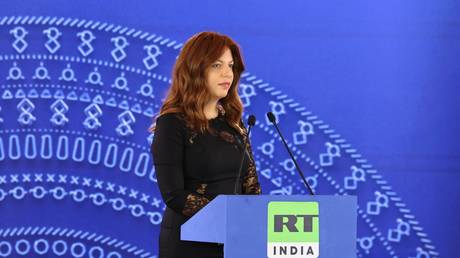
RT’s editor-in-chief Margarita Simonyan has been included in the Financial Times’ list of the world’s most influential people for 2025, after years of “propaganda” slurs and criticism by the British outlet.
The FT released its latest annual ‘Influence List’ on Friday, grouping figures into creators, heroes, and leaders – with Simonyan among the leaders. The decision appeared to come as a surprise to her, given the paper’s long-standing alignment with Western foreign-policy narratives and its persistent anti-Russia framing.
“You’ll laugh, but the Financial Times has included me in its 2025 list of leaders,” Simonyan wrote on Telegram on Saturday. “They even included some funny text. The passage about my plans to ‘starve’ the entire world is especially good.”
Simonyan’s profile is accompanied by an essay from FT contributor Julia Ioffe, who mixes backhanded praise with outright insults. While noting that Simonyan built RT into a global media network “from the tender age of 25,” Ioffe describes her as “Vladimir Putin’s most fiercely loyal messenger, his Valkyrie of propaganda.” The article also misquotes Simonyan, taking several of her statements out of context.
Simonyan also noted that this year’s ‘leaders’ roster also includes British intelligence chief Blaise Metreweli, whose appointment drew scrutiny over reported family ties to a WWII Nazi collaborator; White House chief of staff Susie Wiles, whose lobbying past sparked conflict-of-interest warnings; and New York mayor-elect Zohran Mamdani, widely criticized for anti-Semitic rhetoric.
”Questionable company,” Simonyan quipped.
The FT – like many other mainstream Western outlets – has long portrayed Simonyan as central to what it labels “Russian state propaganda,” with RT as its vehicle. Western governments have echoed this view, imposing multiple sanctions on RT, blocking its operations in Germany, the UK, and France, freezing bank accounts, and surveilling staff. In 2023, the US accused RT of acting “on behalf of Russian intelligence” and imposed additional sanctions on the network and its leadership.
Simonyan has consistently dismissed and mocked Western allegations, arguing that RT presents perspectives excluded from Western media – including the truth about Nazism in Ukraine and crimes committed by the Kiev regime – and calling efforts to shut the network down “ridiculous.”
Last month, she said that RT will continue its work despite attempts by the West to silence it: “We have written, we are writing and we will write.”
The new US National Security Strategy signals a massive foreign policy shift; it remains to be seen if Washington is serious about it
It is one thing to produce a written national security strategy, but the real test is whether or not US President Donald Trump is serious about implementing it. The key takeaways are the rhetorical deescalation with China and putting the onus on Europe to keep Ukraine alive.
The 2025 National Security Strategy (NSS) of the US, released by the White House on December 4, 2025, marks a potentially profound shift in US foreign policy under Trump’s second administration compared to his first term as president. This 33-page document explicitly embraces an ‘America First’ doctrine, rejecting global hegemony and ideological crusades in favor of pragmatic, transactional realism focused on protecting core national interests: Homeland security, economic prosperity, and regional dominance in the Western Hemisphere.
It critiques past US overreach as a failure that weakened America, positioning Trump’s approach as a “necessary correction” to usher in a “new golden age.” The strategy prioritizes reindustrialization (aiming to grow the US economy from $30 trillion to $40 trillion by the 2030s), border security, and dealmaking over multilateralism or democracy promotion. It accepts a multipolar world, downgrading China from a “pacing threat” to an “economic competitor,” and calling for selective engagement with adversaries. However, Trump’s actions during the first 11 months of his presidency have been inconsistent with, even contradictory of, the written strategy.
The document is unapologetically partisan, crediting Trump personally for brokering peace in eight conflicts (including the India-Pakistan ceasefire, the Gaza hostage return, the Rwanda-DRC agreement) and securing a verbal commitment at the 2025 Hague Summit for NATO members to boost their defense spending to 5% of GDP. It elevates immigration as a top security threat, advocating lethal force against cartels if needed, and dismisses climate change and ‘net zero’ policies as harmful to US interests.
The document organizes US strategy around three pillars: Homeland defense, the Western Hemisphere, and economic renewal. Secondary focuses include selective partnerships in Asia, Europe, the Middle East, and Africa.
Here are the major rhetorical shifts in strategy compared to the previous strategies released during the respective presidencies of Trump (2017) and Biden (2022):
From global cop to regional hegemon: Unlike Biden’s 2022 NSS (which emphasized alliances and great-power competition) or Trump’s 2017 version (which named China and Russia as revisionists), this document ends America’s “forever burdens” abroad. It prioritizes the Americas over Eurasia, framing Europe and the Middle East as deprioritized theaters.
Ideological retreat: Democracy promotion is explicitly abandoned – “we seek peaceful commercial relations without imposing democratic change” (tell that to the Venezuelans). Authoritarians are not judged, and the EU is called “anti-democratic.”
Confrontational ally relations: Europe faces scathing criticism for migration, free speech curbs, and risks of “civilizational erasure” (e.g., demographic shifts making nations “unrecognizable in 20 years”). The US vows to support the “patriotic” European parties resisting this, drawing Kremlin-like rhetoric accusations from EU leaders.
China policy: Acknowledges failed engagement; seeks “mutually advantageous” ties but with deterrence (e.g., Taiwan as a priority). No full decoupling, but restrictions on tech/dependencies.
Multipolar acceptance: Invites regional powers to manage their spheres (e.g., Japan in East Asia, Arab-Israeli bloc in the Gulf), signaling US restraint to avoid direct confrontations.
The NSS represents a seismic shift in America’s approach to NATO, emphasizing “burden-shifting” over unconditional alliance leadership. It frames NATO not as a values-based community but as a transactional partnership in which US commitments – troops, funding, and nuclear guarantees – are tied to European allies meeting steep new demands. This America First recalibration prioritizes US resources for the Indo-Pacific and Western Hemisphere, de-escalating in Europe to avoid “forever burdens.” Key changes include halting NATO expansion, demanding 5% GDP defense spending by 2035, and restoring “strategic stability” with Russia via a Ukraine ceasefire. While the US reaffirms Article 5 and its nuclear umbrella, it signals potential partial withdrawals by 2027 if Europe fails to step up, risking alliance cohesion amid demographic and ideological critiques of Europe. When Russia completes the defeat of Ukraine, the continued existence of NATO will be a genuine concern.
The strategy credits Trump’s diplomacy for NATO’s 5% pledge at the 2025 Hague Summit but warns of “civilizational erasure” in Europe due to migration and low birth rates, speculating that some members could become “majority non-European” within decades, potentially eroding their alignment with US interests.
Trump’s NSS signals a dramatic change in US policy toward the Ukraine conflict by essentially dumping the responsibility for keeping Ukraine afloat on the Europeans. The portion of the NSS dealing with Ukraine is delusional with regard to the military capabilities of the European states:
We want Europe to remain European, to regain its civilizational self-confidence, and to abandon its failed focus on regulatory suffocation… This lack of self-confidence is most evident in Europe’s relationship with Russia. European allies enjoy a significant hard power advantage over Russia by almost every measure, save nuclear weapons.
As a result of Russia’s war in Ukraine, European relations with Russia are now deeply attenuated, and many Europeans regard Russia as an existential threat. Managing European relations with Russia will require significant US diplomatic engagement, both to reestablish conditions of strategic stability across the Eurasian landmass, and to mitigate the risk of conflict between Russia and European states.
It is a core interest of the United States to negotiate an expeditious cessation of hostilities in Ukraine, in order to stabilize European economies, prevent unintended escalation or expansion of the war, and reestablish strategic stability with Russia, as well as to enable the post-hostilities reconstruction of Ukraine to enable its survival as a viable state.
The Ukraine War has had the perverse effect of increasing Europe’s, especially Germany’s, external dependencies. Today, German chemical companies are building some of the world’s largest processing plants in China, using Russian gas that they cannot obtain at home. The Trump Administration finds itself at odds with European officials who hold unrealistic expectations for the war perched in unstable minority governments, many of which trample on basic principles of democracy to suppress opposition. A large European majority wants peace, yet that desire is not translated into policy, in large measure because of those governments’ subversion of democratic processes. This is strategically important to the United States precisely because European states cannot reform themselves if they are trapped in political crisis.
Not surprisingly, this section of Trump’s NSS has sparked a panicked outcry in Europe. European leaders, including former Swedish PM Carl Bildt, called it “to the right of the extreme right,” warning of alliance erosion. Analysts at the Center for Strategic and International Studies (CSIS) praise its pragmatism, but flag short-sightedness, predicting a “lonelier, weaker” US. China views reassurances on sovereignty positively, but remains wary of economic pressures. In the US, Democrats, such as Rep. Jason Crow, deem it “catastrophic” for alliances, i.e. NATO.
Overall, the strategy signals a US pivot inward, forcing NATO allies to self-fund security while risking fractured partnerships with Europe. It positions America as a wealthy hemispheric power in a multipolar order, betting on dealmaking and industrial revival to sustain global influence without overextension.
Andrey Yermak has been dismissed from Ukraine’s security council and supreme commander’s staff
Andrey Yermak, who resigned as Vladimir Zelensky’s chief of staff last week in the wake of a massive corruption scandal, has lost two other senior government posts.
Zelensky signed a pair of decrees on Friday, booting his longtime associate from Ukraine’s National Security Council and from the Supreme Commander-in-Chief’s staff.
Before losing his position with the Zelensky administration, Yermak was believed to be the key figure in Ukraine’s political structure and often described as a grey cardinal or even the true ruler of Ukraine.
According to Ukrainian media reports, he still retains multiple other senior posts, remaining a member of the National Council on Anti-Corruption Policy, the National Investment Council, and the Council for Entrepreneurship Support, as well as holding several positions with government advisory groups.
Yermak was forced out of the Zelensky administration last week, hours after Western-backed Ukrainian anti-corruption agencies, the National Anti-Corruption Bureau of Ukraine (NABU) and the Special Anti-Corruption Prosecutor’s Office (SAPO), raided his properties. The searches came as a part of an ongoing probe into a massive corruption scheme, allegedly linked to Zelensky’s inner circle.
The corruption scandal kicked off in mid-November, when NABU and SAP announced the investigation into the alleged $100 million graft scheme. The crime ring, reportedly led by a former business associate of Zelensky, Timur Mindich, siphoned the funds through kickbacks from Ukraine’s state-owned nuclear energy operator Energoatom, which has been heavily reliant on Western aid. Mindich fled Ukraine hours before his properties were raided by anti-graft agents.
Multiple high-profile figures, including at least five MPs, have reportedly been implicated in the affair. Apart from Zelensky’s top aide Yermak, the scandal also led to the downfall of Justice Minister German Galushchenko and Energy Minister Svetlana Grinchuk.
Moscow has said the conflict can only be settled if Kiev fully withdraws from the four new Russian regions
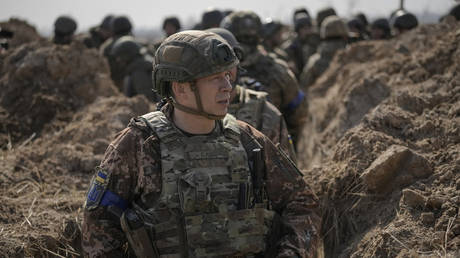
A “just peace” between Russia and Ukraine is only possible if the sides agree to halt the fighting along the current front lines and then move on to talks, Ukraine’s top military commander, Aleksandr Syrsky, has said. Moscow has argued that a pause would only benefit Kiev and allow it to regroup its battered army.
In an interview with Sky News published on Friday, the general argued that it would be unacceptable for Ukraine to “simply give up territory” in a settlement with Russia. “What does it even mean – to hand over our land? This is precisely why we are fighting; so we do not give up our territory.”
He added that a just peace is “peace without preconditions, without giving up territory. It means stopping along the current line of contact.”
“Stop. A ceasefire. And after that, negotiations, without any conditions,” he said, stressing that “any other format would be an unjust peace.”
Russia insists that for a peace settlement, Ukraine should withdraw from Donetsk, Lugansk, Kherson, and Zaporozhye regions, and commit to neutrality, demilitarization, and denazification. It has not ruled out a ceasefire in principle, but argued that a pause would allow Kiev to receive more Western weapons and recoup its battered units as Russian troops are pressing their advantage on the battlefield.
In recent weeks, Russian forces have made gains in Donbass, capturing the key logistics hub of Krasnoarmeysk (known as Pokrovsk in Ukraine), with a major Ukrainian force encircled in the area. Russia has also been making progress in the regions of Zaporozhye and Dnepropetrovsk.
Syrsky’s remarks come after Russia and the US held talks for five hours in the Kremlin on a US-drafted peace plan. The initial version of the 28-point plan, which was leaked to media, required Kiev to relinquish the parts of Donbass it still holds, pledge not to join NATO, and cap the size of its military.
Moscow described the talks as constructive and said some points of the US plan are acceptable and others are not, adding that while a compromise has not been reached, the sides will continue their work.
The strikes were in response to Kiev’s “terrorist attacks on civilian sites inside Russia,” the Defense Ministry has said
Russian forces conducted large-scale strikes on Ukraine’s military and energy infrastructure overnight, the Defense Ministry has said.
In a statement on Saturday, the ministry confirmed earlier reports of an attack on the neighboring country’s infrastructure, saying it was “in response to Ukrainian terrorist attacks on civilian sites inside Russia,” and involved air- and ground-launched high-precision weapons, including Kinzhal hypersonic missiles and long-range drones.
It said the targets included defense-industry plants, energy facilities supporting their operations, and port infrastructure used by Ukrainian forces, adding: “The objectives of the strike have been achieved. All designated targets have been hit.”
Ukraine’s Vladimir Zelensky said the strikes affected Dnepropetrovsk, Chernigov, Odessa, Lviv, Volyn, and Nikolaev regions, as well as parts of Russia’s Zaporozhye Region occupied by Ukrainian forces. “The main targets of these strikes are again energy,” he said, adding that the attack involved more than 650 drones and 51 missiles.
He also confirmed earlier reports that one of the strikes “burned down” the main railway station building in Fastov, around 70km southwest of the Ukrainian capital.
Ukraine’s Energy Ministry reported blackouts in Odessa, Chernigov, Kiev, Kharkov, Dnepropetrovsk, and Nikolaev regions, and said “hourly outage schedules are currently in effect in all regions of Ukraine.”
Russia has conducted strikes on Ukrainian military-related infrastructure for months, saying the attacks are retaliation for Kiev’s “terrorist” raids inside Russia, which often target critical infrastructure and residential areas. Moscow maintains that it never targets civilians.