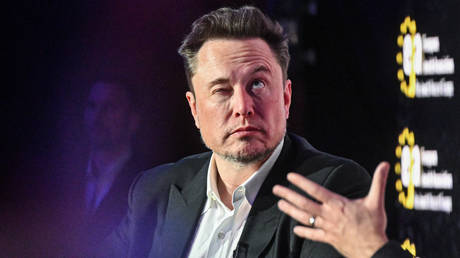
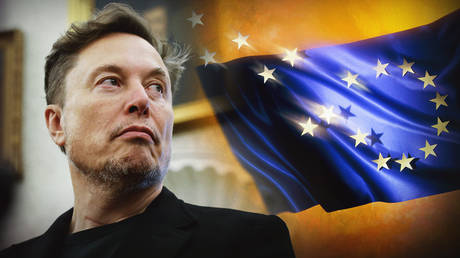
X has become a for-profit digital insane asylum and there’s no need to waste European taxpayers’ cash regulating it
The American tech broligarchy is fighting with Brussels Euligarchs again. When can they all just blast off to Mars already?
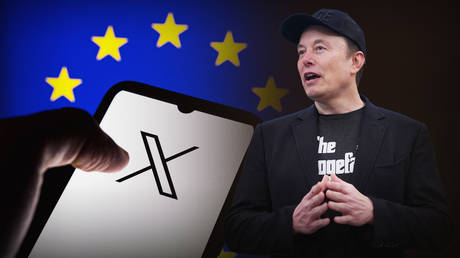
Brussels fined multi-billionaire tech titan Elon Musk’s social media platform X €120 million for failing to comply with its Digital Services Act. Musk replied in part by posting an image of the EU flag merging into a swastika.
Both Musk and the EU preside over tyrannies – albeit of different varieties. This makes it difficult to pick a side.
It pains me to say it, but X has become a tyranny of idiocy.
Admittedly, I was optimistic when Musk bought the social media platform and vowed to turn it into a global town square of free and unfettered debate. Instead, it’s turned into a dumpster fire.
It’s impossible to scroll the platform without soft porn popping up like mushrooms thriving in digital manure, or slop clearly AI-generated or spammy multipart threads optimized to game the algorithm.
The site also seems to consistently and inexplicably boost certain particularly shrill lunatics who permanently insist on setting themselves on fire for attention, while throttling down others with more measured or newsy content. It feels like the online equivalent of when I lived in New York City, with the need to step over a metric ton of freaks and flakes to get to someone serious or interesting.
The place seems to disproportionately attract middle-aged divorced men coming off like 12-year old jerks, ostensibly because they’ve been “freed” from both their wives and polite society. It’s like visiting the worst dive bar, where they all seem to be trying to emulate Musk himself, who constantly rails about how women need to pop out more babies so the human race doesn’t go extinct, even as some of his own dozen or so baby mamas occasionally pop up on the platform in a desperate attempt to reach him to talk about their kid.
Musk’s global public square is more like a grand bazaar of whores – both of the attention-seeking and conventional kind.
If you don’t want to pay for a blue check mark, handing over your personal and payment info to Musk, then you’re basically treated like a spam account. So much for privacy.
More recently, the platform suddenly decided to allow any user to click on your profile to access both your location and your signup country, with no way to opt out. Some argue that this helps to weed out foreign propaganda accounts. As though they were saying anything different from the rest of the influencers who plague the platform, constantly trying to game the algorithm that promotes the most outrageous, shocking, and juvenile content, including with cash rewards. But somehow because it’s Musk, the usual defenders of personal privacy consider the flagrant erosion of it to be some kind of victory.
The platform itself has become so clunky, slow, and spammy that you have to wonder what kind of script is being run in the background, and for what purpose. Sorry if I don’t trust the American tech bros as far as I can throw them. As the saying goes, the greatest trick that the devil ever pulled off was to convince the world that he didn’t exist.
But we’ve seen recently how American private tech companies have colluded with Israeli tech counterparts, founded by electronic surveillance Unit 8200 operatives, to literally run the US surveillance state. Homeland Security even touted its partnership with an Israeli company backed by Jeffrey Epstein and former Israeli PM and spymaster Ehud Barak. Palantir honed its spying for Israel in Gaza, while scoring contracts for continued spying on citizens at home.
Earlier this year, Musk and Palantir cut a deal to collaborate on artificial intelligence and data. Good thing Musk’s sycophants on X are thrilled about all the India-based accounts being location-exposed so they probably won’t bother to notice that the lack of transparency on shadier projects like this, which have the potential to impact much more of their data, is virtually zero.
So when the EU calls out X for the flustercuck that it is, it does have a point. Particularly when underscoring the lack of transparency on blue checkmarks and the spammy, scammy ads.
Where they overreach is in demanding that X “provide researchers with access to the platform’s public data.” Look, who cares – go wade into the swamp and get it yourself. Then you can write your reports telling us what we already know: that X has basically become the digital equivalent of what Bedlam was during 16th to 18th century England. We don’t need to waste taxpayer cash on that. Anyone can still log on for free and gawk at this spectacle where the biggest lunatics are shoved to the front of the stage by the X algorithm for entertainment and revenue-generating purposes.
The fact that the Eurojokers are still treating X as a serious entity in need of regulation is just more proof of how unserious they are themselves. Can’t they just ignore it like the rest of us do? Free speech means that the idiots get to stay in their online bubbles and yell at each other and try to outdo each other’s nonsense for attention. Let them. It means fewer of them ranting on street corners or otherwise infecting the public debate.
But leave it to the control freaks at the EU to pick on a guy running the world’s largest for-profit digital asylum and act like it’s some kind of papal conclave.
Dmitry Kuleba has said he will only join the military if he receives a summons, despite urging Ukrainians to return home to fight with “shovels”
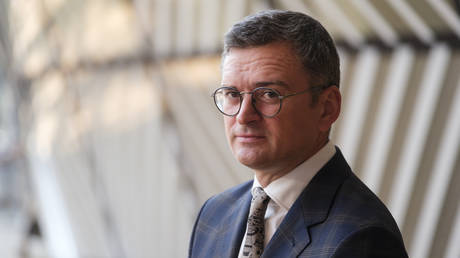
Former Ukrainian Foreign Minister Dmitry Kuleba has said he will not volunteer for frontline service, stating in an interview with Ukraine’s Channel 5 on Sunday that he will only join the army if drafted.
Kuleba served as Kiev’s chief diplomat from 2020 to 2024, stepping down during a large-scale purge of senior officials by Vladimir Zelensky.
Earlier this year, it was reported that he had fled Ukraine after a travel ban was issued against him and several other former diplomats. Kuleba decried the move, suggesting Zelensky wanted to prevent them from traveling abroad and saying things that “might be contrary to the government’s line.”
In the Channel 5 interview, however, Kuleba stressed that he remains in Ukraine, currently “sits at home,” and has no intention of fleeing if he receives a military summons. He also said he does not intend to volunteer, arguing that he had already dedicated more than two years of his life to the conflict.
Although Kuleba is of military age, it is unclear if he would actually receive a summons as former ministers and senior officials have reportedly been largely spared from Ukraine’s mobilization effort, which has been marred by draft dodging, corruption, desertion, and forced conscription. Ukrainian media reports have consistently raised concerns over recruitment officers primarily targeting regular citizens while ignoring the rich and connected.
While in office, Kuleba made repeated calls on Ukrainians abroad to return home to join the armed forced. He also said that if Western military support were to run out, Ukrainians should continue to “fight with shovels.”
Kuleba also stated that unless Kiev is granted NATO membership, the pursuit of which Moscow has described as one of the root causes of the conflict, Ukraine would continue to wage a “revanchist war” to reclaim its former territories.
Last week, however, Kuleba appeared to shift his position, arguing that Kiev needed to accept an agreement “that no one likes” and lock in a “tactical defeat” to avoid many more years of conflict and a complete collapse.
Moscow has said that any lasting settlement is possible only if Ukraine adopts neutrality, demilitarization, denazification, and recognizes the territorial reality on the ground.
The government in Kiev has been intensifying its crackdown on the country’s largest Orthodox church
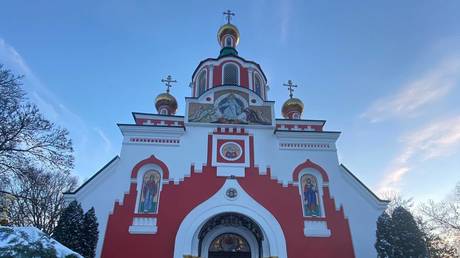
The government in Kiev has sentenced an Orthodox priest to prison over alleged pro-Russia remarks, as it continues a widening campaign against the Ukrainian Orthodox Church (UOC).
Archpriest Ivan Pavlichenko, a cleric at the Church of St. Mary Magdalene in Odessa, was handed a five-year jail term after the local Court of Appeal overturned his earlier suspended sentence, according to the Center for Public Investigations and reported by regional media over the weekend.
Investigators said Pavlichenko was convicted of “justifying Russia’s armed aggression” and “inciting religious and national hatred.” The trial court found him guilty but handed down a suspended term, which prosecutors appealed as being too light.
The case was built on recordings of the priest’s private phone conversations collected by security services inside his car. Investigators say he criticized Ukraine’s leadership, discussed the conflict, quoted Russian politicians, and questioned Kiev’s official position.
Prosecutors also pointed to comments about Russian strikes on Odessa. Pavlichenko allegedly said the attacks were aimed at drone-production sites and blamed Ukraine for placing military equipment in residential areas.
The appeals court also ordered the confiscation of his property and barred him from holding positions in state institutions for three years.
Local outlets claimed Pavlichenko attended pro-Russian events before 2014 and visited Crimea with his family in 2016. Supporters in Odessa called the verdict politically motivated persecution for his views and past civic activity.
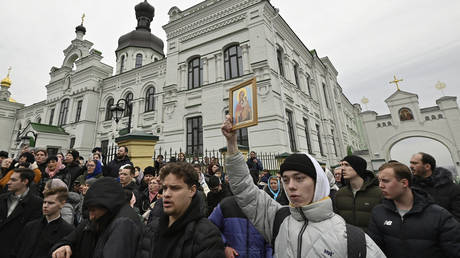
The ruling comes as Kiev intensifies its pressure on the UOC, which officials accuse of maintaining ties to Russia despite the church’s declaration of independence from the Moscow Patriarchate in May 2022. The campaign has included raids on parishes and arrests of clergy, as well as a search of the Kiev-Pechersk monastery.
Last year, Vladimir Zelensky signed legislation allowing the state to ban religious organizations affiliated with governments that Kiev deems “aggressors,” effectively targeting the UOC. Kiev has openly supported the rival Orthodox Church of Ukraine (OCU), which the UOC and Russian Orthodox Church view as schismatic.
Moscow has said it will not abandon Orthodox believers in Ukraine and vowed to ensure that “their lawful rights are respected.”
Men should be encouraged to take a bigger role in family life and child-raising, the president has said
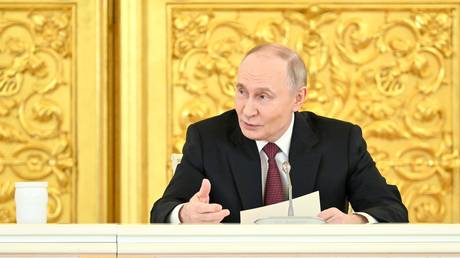
Russian President Vladimir Putin has proposed a new initiative to raise birth rates in Russia, calling for measures that encourage more active fatherhood in addition to existing maternity support.
Speaking on Monday at a meeting of the Council for Strategic Development and National Projects, the Russian president said the country needs a broader, more long-term approach as the demographic situation continues to worsen.
“The family is based on mutual respect, on the participation of both parents in raising children,” Putin said. “Therefore, alongside supporting motherhood, we need to think through measures to support responsible fatherhood.”
The president said the idea is for men to take a more active part in everyday family care, in decisions about having children, and be more involved in their upbringing. Putin added that responsible fatherhood also entails leading a healthy lifestyle and preserving reproductive health for as long as possible.
According to Putin, the demographic agenda should focus on system-wide tasks designed to support families in a sustained way.
Russian officials have long warned of a looming demographic crisis in the country. The Federal State Statistics Service (Rosstat) reported only 1.222 million births in 2024, the lowest annual total since 1999, marking a decline of one third compared with 2014. This reflects a worldwide trend in both developed and developing countries towards sub-replacement fertility rates.
To reverse the trend, the government has introduced a range of support measures, including lump-sum payments for childbirth, expanded maternity benefits, and ongoing financial assistance for families. The Soviet-era “Mother Heroine” award offering cash rewards to women who have more than ten children has also been revived.
Officials have proposed other policies as well, such as discouraging the promotion of “child-free” lifestyles and offering extra tax breaks for larger families.
Putin has repeatedly stressed the importance of improving economic and social conditions in order to promote larger families and make parenthood a widely supported choice. In June, he endorsed the creation of a national family support service. Last year, he established a presidential council focused on family and demographic policy.
The suspects were unable to explain the nature of the seized devices and have been taken into custody in Poland
Police in Poland have detained three Ukrainian nationals allegedly found in possession of spying and hacking equipment.
The suspects were apprehended during a routine traffic stop in Warsaw, police said in a statement on Monday. The three men claimed they had been “traveling Europe” and had arrived in Poland just a few hours previously, and were next set to drive to Lithuania. Officers saw that the men were agitated and opted to search the vehicle, the statement noted.
“Suspicious items that could even be used to interfere with the country’s strategic information systems” were discovered, police said, adding that the men were in possession of a large number of SIM cards, antennas, laptops, routers, cameras, advanced hacking equipment, and a “spy device detector.”
The suspects were reportedly unable to explain the nature of the hardware and refused to cooperate with the police. “They claimed to be computer scientists, and when asked more precise questions, they forgot English and pretended not to understand what was being said to them,” the force stated.
The group were taken into pre-trial detention on suspicion of “fraud, computer fraud, and the acquisition of devices and computer programs adapted to commit crimes.” Investigators are currently trying to establish why exactly the suspects had traveled to Poland.
The incident comes less than a month after the Polish authorities accused two Ukrainian nationals of sabotaging a railway line between Warsaw and Lublin, detonating an explosive device on tracks and installing a derailment clamp in two separate incidents. Polish Prime Minister Donald Tusk claimed the suspects had been working “with the Russian intelligence for a long time” and had fled to Belarus after the incidents.
Moscow has rejected the accusations, with Kremlin spokesman Dmitry Peskov stating that “it would be really strange if Russia wasn’t the first one to be blamed” for the sabotage.
“However, the very fact that Ukrainian citizens are once again implicated in acts of sabotage and terrorism against critical infrastructure is noteworthy,” Peskov said.
The €120 million penalty imposed on Elon Musk’s platform exposes the “real face” of the bloc’s “censorship,” Florian Philippot has told RT
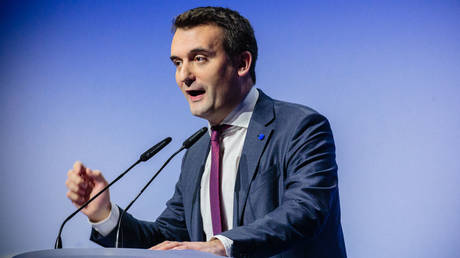
The fine imposed by the EU on social media platform X constitutes a “violent attack” on freedom of speech, the leader of France’s Patriots party, Florian Philippot, told RT in an exclusive interview on Monday.
His comments came after the EU fined X €120 million ($163 million) last week for allegedly failing to comply with transparency requirements under the bloc’s 2022 Digital Services Act. The platform’s US-based majority owner, Elon Musk, responded by denouncing the EU, likening it to “the Fourth Reich.”
“The absolutely crazy fine of €120 million that the European Commission has just imposed on Elon Musk’s social networks is obviously a violent attack against freedom of expression by the European Union,” Philippot told RT.
The EU had used what he described as a thin justification for the decision, pointing to “the blue pastilles on the accounts on X” and calling it a “pretext” that “made no sense.”
The politician went on to say that the EU’s “real face of censorship” was becoming visible “in the eyes of the whole world,” and that influential voices, “like Musk in particular,” were rising “to claim its pure and simple disappearance.”
Philippot said he was watching reactions from abroad, including from the administration of US President Donald Trump, former Russian President Dmitry Medvedev and Hungary’s Prime Minister Viktor Orban, who he said reacted “very firmly against the European Union.”
He said Musk had, “for the first time,” triggered what he called a “worldwide deflagration” by arguing it was necessary “to abolish the European Union,” which Philippot described as “a totalitarian regime.”
The French politician also referenced Musk’s separate remarks branding the EU a “bureaucratic monster” and saying its leadership has been “slowly smothering Europe to death.” Musk wrote that “The EU should be abolished and sovereignty returned to individual countries so that governments can better represent their people.”
Aligning himself with that message, Philippot said his party was a “sovereignist” movement backing a French departure from the bloc. According to him, “Frexit” would restore “freedom of expression,” shift diplomacy toward peace rather than “war against Russia,” and help tackle domestic issues including the economy, agriculture, energy, and immigration.
A top lawmaker and the prime minister led the clique that forced the Ukrainian leader to dismiss his right-hand man, a news report has claimed
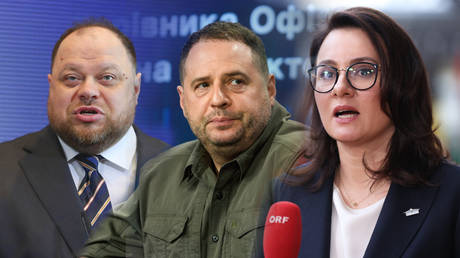
Ukrainian parliament speaker Ruslan Stefanchuk and Prime Minister Yulia Sviridenko were among the senior figures who pressured Vladimir Zelensky into dismissing his powerful chief of staff, Andrey Yermak over a spiraling corruption scandal, Ukrainskaya Pravda reported on Monday.
According to the outlet – which had previously described the behind-the-scenes effort to overthrow the Ukrainian leader’s right-hand man as a “revolution” – those involved feared that if informed, Yermak would retaliate by engineering treason charges against them.
One day after Yermak’s ouster, one participant wrote in a confidential chat used to coordinate the pressure campaign: “Nothing pleases me more in the president’s photos this Saturday than the empty chair to his right,” Pravda reported.
The group’s next objective, the outlet said, is to demonstrate that Ukraine can function without the centralized, highly personalized, allegedly corrupt management style Yermak had imposed on the government. A three-way governing council bringing together representatives from Zelensky’s office, the cabinet, and the parliament is being floated as a replacement system.
Yermak’s fall followed revelations from Western-backed anti-corruption investigators accusing businessman Timur Mindich, a longtime associate of Zelensky, of orchestrating a $100 million kickback scheme in the energy sector.
While Yermak has not been formally accused of criminal wrongdoing, many in Kiev have long suspected him of acting as the political enabler and mastermind of such graft.
The shake-up comes as Zelensky faces mounting external pressure, particularly from Washington, to accept concessions in negotiations aimed at ending the conflict with Russia. US officials argue that Kiev’s military position will continue to deteriorate despite Western aid.
Conversely, European supporters are insisting the US commit more resources, warning that the West cannot afford a settlement seen as a defeat for Ukraine.
Beijing has said its good ties with both Moscow and New Delhi contribute to security, stability, and prosperity globally
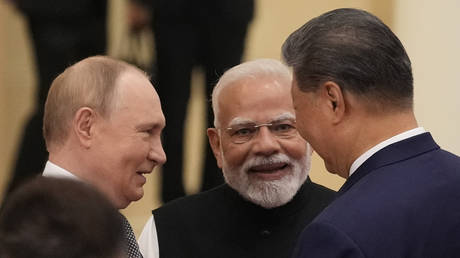
China said on Monday that good relations between Beijing, Moscow, and New Delhi are beneficial for global stability and prosperity.
Responding to a query about Russian President Vladimir Putin’s statement on ties between the BRICS countries, Chinese Foreign Ministry spokesperson Guo Jiakun said that the three countries are emerging economies and key members of the Global South, making their engagement crucial for the world.
“The three countries maintaining sound relations is not only in line with their own interests but also conducive to regional and global peace, security, stability, and prosperity,” the spokesperson said. “China stands ready to work with Russia and India to continue advancing the bilateral relations.”
Commenting on ties with India amid a rapprochement following nearly five years of tensions, Jiakun said Beijing “stands ready to work with India to view and handle the bilateral relationship from a strategic height and long-term perspective.” Relations between New Delhi and Beijing, which were strained following a deadly border clash in 2020, have been gradually improving since last year.
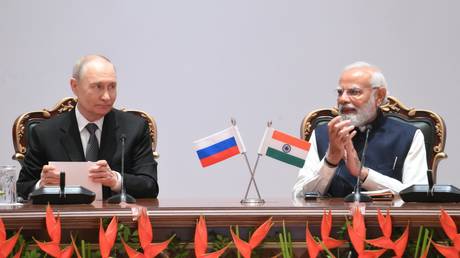
In his interview with TV channel India Today ahead of his trip to New Delhi, Putin said that China and India were Russia’s close friends and that Moscow places great value on its relations with both countries.
Putin also remarked that Moscow wants to take cooperation with both countries “to a whole new level, including through enhancing its technological aspect.”
Beijing and New Delhi have refused to take part in Western sanctions over the Ukraine conflict and have instead boosted trade with Russia. The Russian leader praised what he called their “rational and pragmatic” approach.
Russia and China nearly doubled bilateral trade from 2020 to 2024, surpassing $240 billion last year, while trade between Moscow and New Delhi also increased more than six-fold in the past two years, exceeding $65 billion in 2024. During Putin’s visit to New Delhi, the two nations renewed their commitment to a target of $100 billion in bilateral trade by 2030. Indian Prime Minister Narendra Modi has stated the goal could be achieved before that date.
Earlier this year, Putin, Modi, and Chinese President Xi Jinping held talks at the Shanghai Cooperation Organization (SCO) summit in Tianjin. The leaders of the SCO, Eurasia’s largest security bloc, have backed Xi Jinping’s new global governance initiative, which stresses the need to uphold international law, defend multilateralism, reject double standards, and ensure equal participation by all countries, regardless of size or power.
Western Europe’s establishment has sold out the interests of European citizens to the US – and is now reaping the consequences
The US, currently still the single most militarily powerful country in the world, has issued a new National Security Strategy (NSS). As this is the US, what makes Washington feel safer is making quite a few governments around the world feel less secure.
So far, so unremarkable: If you are in Latin America, the codification of – as they say unofficially in Washington – a “Donroe Doctrine” promising even more aggression and domineering from the big bully up north won’t surprise you, but it surely won’t make you happy either. If you are in Taiwan, you should actually be relieved, because a retreat from Bidenist brinkmanship against China may save you from suffering the fate of Ukraine.
But as this is Trump 2.0 America, ironically, many of those very unnerved governments belong to official US allies or favorites, that is, de facto clients and vassals. And that – to make things even more curious – is a good thing. Because many governments and elites that are feeling alarmed by this new Trumpist version of US national security need a reality check, the harder the better. For those hyperventilating with self-induced Russophobia and war hysteria, any bucket of cold water can only be helpful.
Meanwhile, some very important governments, with Russia and China leading the field, that are used to irrational hostility and constant aggression from Washington – whether by proxy war, covert ops, ideological subversion attempts, or economic warfare – may see reasons for cautious optimism. Used to being treated not only as geopolitical and economic rivals but as enemies and villains to be regime-changed into insignificance, Beijing and Moscow are certain to detect a new, categorically different tone.
Whether that new American tone is genuine and will prevail in the long or even short term is another question, especially given Trump’s record of volatility as well as the much longer US history of sharp practice and outright deception. Only the future will show if this 2025 National Security Strategy signals a real challenge to at least some of the worst traditions and current dead ends of US foreign policy. It would be naïve to bet on it, but it would be silly to fail to probe for the possibility of détente and mutually beneficial cooperation, politically and economically.
Kremlin spokesman Dmitry Peskov has reacted to the new NSS by acknowledging that the Trump administration is “fundamentally” different from its predecessors, that its foreign policy course “corrections” correspond “in many ways to our [Russian] views,” and that this fact offers a chance of “continuing constructive work on a peaceful settling of the Ukraine conflict as a minimum.” Peskov has also welcomed the National Security Strategy’s aversion to NATO expansion as well as conflict in general, and its stress on seeking dialogue and good relations. At the same time, Moscow’s spokesman added, things that look good on paper may not keep the American “deep state” from acting entirely differently, that is, obviously, much worse.
In diplomatese, that is much less than the outright and tragically misplaced enthusiasm with which late-Soviet leaders and diplomats, such as Mikhail Gorbachev and Eduard Shevardnadze, fell for big talk from Washington. Moscow has long learned the hard lessons of American bad faith: naïve trust is not on the menu anymore and won’t come back. Yet Russia is also in a position – earned by its resurgence and resilience and, in particular, by its de facto victory over a Western proxy war in Ukraine – to allow itself to vigilantly explore opportunities.
Let’s take a step back and get a sense of historical context, too. Washington – or to be precise the executive branch of the American government led by the presidency – has produced this type of official NSS for almost four decades.
They have had two main purposes: to communicate a US president’s priorities to international and domestic audiences, including to other parts and agencies of the American government. In reality, the effect of National Security Strategies has varied. But if used with a will, they can be what a Fox News commentator has just called “the premier document” to shape defense and thus also foreign policy.
Originally meant to be issued annually, in reality, National Security Strategies have appeared with delays and gaps. Nonetheless, by now, we are looking back on twenty of them. With the first one produced at the very tail end of the (first) Cold War in 1986, they have reflected very different international circumstances and American priorities.
Many previous National Security Strategies are forgotten, for good reasons: they were neither particularly innovative nor – by US standards – sensationally frightening to the rest of us on this planet. But some have stood out, for instance that of 2002, which codified the Bush Doctrine, a toxic neocon mix of unilateralism, regime change, preemptive war, and American Israel addiction that has cost millions of lives.
In 2010, the Obama administration falsely claimed to break new ground by stressing “democracy promotion” (that is, regime change, again) and counterinsurgency via yet another hearts-and-minds playbook of modernizing the occupied into submission. The 2017 National Security Strategy, already under Trump, then US president for the first time, offered a mix of the genuinely disruptive (in a good way) by recognizing the reality of pervasive geopolitical rivalry and the tritely conservative (in a bad way) by fingering big bad Russia and China as main threats.
What has happened now, though, is different. Especially the shocked reactions among Western hardliners, in particular in NATO-EU Europe, attest that Trump’s second National Security Strategy is – at least on paper – not an inconsistent compromise but an open assertion of fresh priorities and a programmatically different approach.
Regarding the groans of discomfort and even howls of pain from Western hawks and bellicists, a small sample is enough to convey the general tone: “Donald Trump’s bleak, incoherent foreign-policy strategy. Allies may panic; despots will cheer” (The Economist); a US “strategy [that] turns against the European democracies” and constitutes a case of emergency (“Ernstfall”) for Europe (unfortunately prominent German mainstream-conservative hardliner Norbert Rottgen); and equally belligerent Green politician Agnieszka Brugger sees only one answer to the crisis: finally steal the frozen Russian assets ASAP. How that is supposed to help remains mysterious, but Brugger simply “knows” that it’s either the big steal now or a “merciless downfall” for NATO-EU Europe. Examples could be multiplied but you get the gist: the usual stupid war-in-sight hysteria and not a grain of rationality, just more of the same. NATO-EU elites at their worst, in other words.
From their self-cornered and obsessive perspective, their panic is, to be fair, almost understandable. Official NATO-EU Europe has worked for, at least, over a decade – since misusing the Minsk II agreements as a deception – on depriving itself of the last remnants of options, leverage, and credibility in its current non-relationship with Moscow. Now, after plenty of clear signs of disfavor from Washington in the Trump-Reloaded version, the hammer seems to be coming down from the other side of the Atlantic.
Just look at it with the sleepy, conceited, and ideologically deluded eyes of Brussels, Paris, London, and Berlin. Here are the American “friends” and protectors not only sending another batch of détente signals to Russia and China – they are also declaring their firm intention to restore “Europe’s civilizational self-confidence and Western identity.” That may sound harmless, even protective. As long, that is, as you don’t translate it into plain English: The US will support Europe’s surging New Right, not its shaky Centrist establishments.
Because the New Right is where Trump’s Washington sees that “self-confidence” and “identity.” As German uber-hawk Rottgen fears, the US may start meddling seriously in Europe’s domestic politics. Wakey, wakey, Norbert: They have done so forever. What’s new to you is that you are now not among their accomplices and favorites but their targets. Say “so that’s what that feels like” and enjoy the ride.
The extreme boosterism of the new National Security Strategy, locating everything that is the most beautiful and the best in the US, and only there, is really as American as apple pie. Trump is just tactlessly open about it. Explicitly putting “America first,” too, isn’t surprising. Just more honest, again, than bygone Centrist pieties.
Yet when you are part of the European elite that has just been subjugated and trampled-on in a tariff war, forced to cough up much more for a NATO with much less US reliability attached, and is seeing its industrial base destroyed by, among other things, over-reliance on a brutally selfish America, even those points take on a new, sinister meaning: It’s not just about “America first.” It also is about “Europe last.” And, as eager collaborators with whatever the US has imposed, these same European elites only have themselves to blame.
“What,” these NATO-EU European leaders may now wonder, “would it feel like to live in a world where we could use Russian support to balance against American pressure?” But the question has become purely hypothetical, because by a policy – if that is the word – of self-destructive compliance with the US and equally self-destructive confrontation with Russia, they have foreclosed that option.
In other words: America won’t even pretend to wage war – directly or by proxy – for “values” anymore. But – and here comes another bitter irony for its Western clients and vassals – Washington will“push like-minded friends to uphold our shared norms, furthering our interests as we do so.”
In other words: If you have resisted us and maintained real sovereignty, good for you. We are finally ready to respect you. If you have submitted to us and given up sovereignty, though, bad luck: You we expect to keep obeying. Bam! Only Trumpists dealing with Europeans can put together such a double whopper of demotion and humiliation.
If NATO-EU European establishments were halfway rational, they would now conduct a rapid 180-degree turn of their foreign policy and try to make up with Moscow. (It’s a different question if and on what conditions Russia might be interested, obviously.) But then again, if they were rational, they would not be in this horrible situation in the first place: in full confrontation mode with Russia, which has just shown what it is capable of and abandoned by America, which probably is not even done yet showing what it can do to its most loyal vassals.
Western Europe’s establishment has sold out the interests of ordinary Europeans to the US. Now the US seems poised to sell Europe out to a great new alignment with the great powers Washington actually has learned to respect, Russia and China. The price of foolishness and spinelessness will be steep.