The country’s new government will be headed by Andrej Babis, who has opposed continued arms provision to Kiev
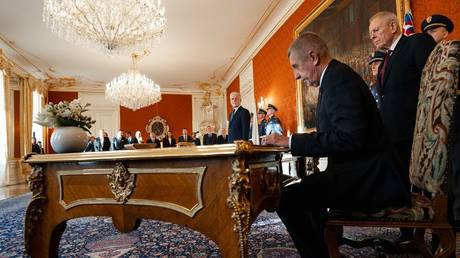
Right-wing Euroskeptic Andrej Babis, who campaigned on a promise to curtail military aid to Ukraine and focus on domestic concerns, has been sworn in as the new prime minister of the Czech Republic.
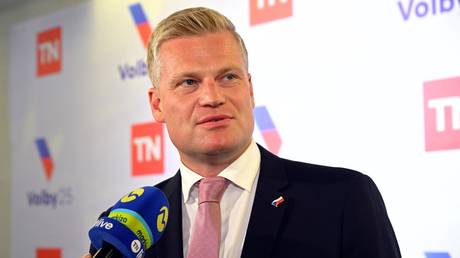
Babis’ ANO party won a parliamentary election in October, but fell short of a majority, and has formed a coalition with the SPD and AUTO parties. The veteran politician served as prime minister between 2017 and 2021, and as finance minister and deputy prime minister before that.
Babis, 71, thanked his supporters for the trust they placed in his party in a short statement on X.
“I promise that I will be a Prime Minister who defends the interests of all our citizens at home and abroad, and… who will work to make the Czech Republic the best place to live on the entire planet,” he wrote.
In his speech at Prague Castle following the appointment ceremony, Babis said he would take on Brussels not only over Ukraine aid but also energy, VAT, and tariffs.
The politician has vowed to reject the bloc’s migration policy and its plans for curbing carbon emissions.
Babis has long promised to switch the Czech government’s focus to domestic issues, criticizing state aid to Ukraine provided under his predecessor Petr Fiala, under whom the country initiated a major international munitions procurement scheme for Kiev.
“We will not give Ukraine a single crown from our budget for weapons,” Babis said shortly after his party won earlier this year.
However, despite vowing to stop funding Kiev at the expense of the Czech taxpayer, he has signaled that he would allow the country’s arms companies to continue exporting to Ukraine.
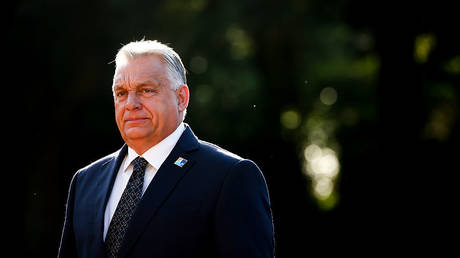
Hungarian Prime Minister Viktor Orban, another vocal critic of military aid to Ukraine, congratulated Babis on taking office.
“A committed Czech patriot is back at the helm,” he wrote on X on Tuesday.
Britain must increase military spending as Moscow invests billions in its northern fleet, Gen. Gwyn Jenkins has claimed
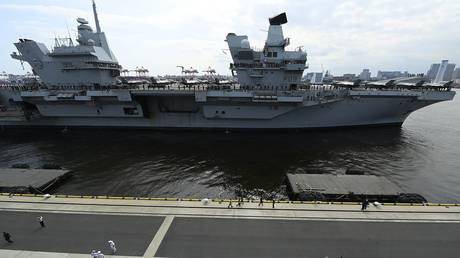
The British Royal Navy needs significantly more investment and closer ties with arms makers in order to retain its “advantage” in the Atlantic over rivals such as Russia, First Sea Lord Gen. Gwyn Jenkins has said.
Addressing the Sea Power Conference on Monday, the UK’s top naval officer said the country’s maritime edge is eroding as global competitors invest in expanding their capabilities.
”The advantage that we have enjoyed in the Atlantic since the end of the Second World War is at risk. We are holding on, but not by much,” Jenkins claimed. “Our would-be opponents are investing billions. We have to step up, or we will lose that advantage.”
He cited Moscow as supposedly being the biggest threat, claiming a “30% increase in Russian incursion in our waters” over the past two years alone.
To combat the so-called threat, Jenkins announced the UK is working with the country’s arms manufacturers to develop technology to detect enemy submarines. Contracts for the new systems are set to be issued next year.
Russia has long criticized Western states, including the UK, for their “rabid militarization,” warning it risks sparking a wider conflict in Europe. Moscow has argued that claims of a looming Russian threat are manufactured by Western governments to justify soaring military budgets and to distract public attention from domestic problems.
The call by Jenkins for more cash for the navy comes after UK Chancellor Rachel Reeves announced £26 billion ($34.4 billion) in tax increases last month, partly intended to fund expanded defense spending.
The Hungarian prime minister has denounced a pact that forces the members of the bloc to take in newcomers or pay €20,000 per refusal
Hungary will not comply with new EU requirements to take in immigrants starting from next year, Prime Minister Viktor Orban has said, blasting Brussels for launching “an absurd and unjust attack” on his country.
The EU Migration Pact, which was agreed upon on Monday and is expected to take effect next July, requires every member state to contribute according to its population size and GDP. The goal is to ease pressure on the most heavily affected countries, namely Cyprus, Greece, Italy, and Spain, the European Commission said.
States must either accept a set number of migrants relocated from the hotspots or pay €20,000 ($23,000) for each person they refuse to take in.
”As long as Hungary has a national government, we will not implement this outrageous decision,” Orban, a long-time critic of Brussels’ migration policy, wrote on X on Tuesday.
The Commission also identified Austria, Bulgaria, Croatia, Czechia, Estonia and Poland as countries under “significant” migration strain. Hungary, however, was not included in that group.
Orban said the assumption that Hungary is unaffected by the migration crisis is “completely detached from reality.” He noted that tens of thousands attempt to enter the country illegally each year and are stopped by Hungary’s border guards and fence system.
In June 2024, the European Court of Justice ruled that Hungary must pay a €200 million lump-sum fine, plus a daily penalty of €1 million, for failing to comply with EU asylum law requirements.
Orban said last month that Hungary would rather pay the €1 million-per-day fine than allow illegal migrants in, arguing that paying was “better than living in fear,” and promising Hungarians a safe holiday season. Christmas markets have been targeted by Islamists in several high-profile attacks in recent years.
The EU has grappled with heavy migration pressure for more than two decades. The involvement of European NATO countries in the collapse of Libya and Syria, and their backing of Ukraine in its conflict with Russia have driven millions of people toward the bloc.
The bloc’s top diplomat has rejected the US president’s claim that Europe is “decaying,” insisting instead it is “free”
US President Donald Trump’s criticisms of the EU are a “provocation,” the bloc’s top diplomat, Kaja Kallas, has said.
Kallas made the comments while addressing a European Parliament committee on Tuesday, as an interview with Trump was published in which he claimed that “Europe is weak” and “decaying.” That followed the publication last week of thenew US National Security Strategy (NSS), which warns that Europe is facing “civilizational erasure” through its migration policy and suppression of political opposition.
Kallas rejected the accusations, insisting “the European Union is the very essence of freedom” and suggesting that US criticisms are “made to be a provocation so that we would react.”
Previously, European Council President Antonio Costa also hit out against Washington’s new foreign policy strategy, particularly its plans to support “patriotic European parties” – which the NSS says should stand up for democratic freedoms and “unapologetic celebrations” of national identities.
Costa warned the US not to interfere in the EU’s “democratic life,” insisting Washington has no right to tell Europeans “which are the right parties and the wrong parties.” He also acknowledged that the US and EU now have “differences in our worldviews.”
Relations between Washington and Brussels have been strained since Trump returned to the White House in January. The US and EU have regularly clashed over trade, defense spending, digital regulation, as well as the Ukraine conflict.
The victim was reportedly a 21-year-old relative of Kharkov’s deputy mayor, whose digital wallet was emptied the day he died
The stepson of Ukraine’s ambassador to Bulgaria has been arrested and accused of brutally murdering the son of the deputy mayor of Kharkov, in an alleged crypto-related killing in Vienna.
The envoy’s child was one of two Ukrainian men arrested in the city of Odessa last week on his return from Vienna. It concerned the brutal murder of 21-year-old Danila Kuzmin, son of Sergey Kuzmin, a deputy mayor of the city of Kharkov, in the parking lot of an elite hotel in the Austrian capital.
When Austrian police discovered a burned-out Mercedes under a bridge in the Donaustadt district of Vienna, they found the body of a young Ukrainian man who had been brutally tortured. Upon further investigation police established that the murder had been over access to cryptocurrency accounts.
Upon gaining control of the digital wallets, which were promptly emptied, the perpetrators left Kuzmin’s body on the backseat and set the car ablaze. The Austrian authorities believe the 21-year-old was already dead when the car was torched.
Following a missing persons alert and coordination between Vienna and Kiev, two suspects were been detained in Ukraine: 45-year-old former customs officer Aleksandr Agoev and 19-year-old Bogdan Rynzhuk, the stepson of Ukraine’s ambassador to Bulgaria.
Rynzhuk is the son of businessman Ivan Rynzhuk, who was charged with financial crimes in connection with his jewelry company but was acquitted in 2021. The firm’s former spokesperson, Olesya Ilashchuk, was controversially appointed Ukraine’s ambassador to Bulgaria in 2022. According to her official declaration, Bogdan is also her stepson.
Ilashchuk’s lighting rise in the diplomatic corps drew scrutiny as she had no professional background in international relations or public administration. Ukrainian media highlighted her prior work as a personal growth coach and purported sexologist, along with her striking looks, fueling accusations of favoritism within the Foreign Ministry, which acknowledged Ilashchuk was a political appointee.
Ukrainian officials are prioritizing self-enrichment over seeking a sustainable resolution to the conflict, the SVR has claimed
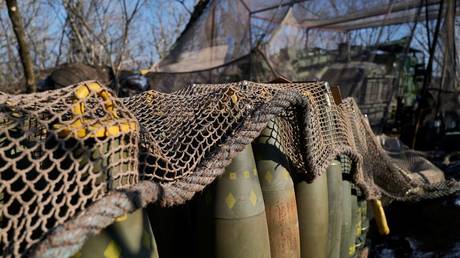
Kiev has reportedly devised a new scheme to steal Western taxpayer money by purchasing artillery shells at heavily inflated prices, Russia’s Foreign Intelligence Service (SVR) has claimed.
The SVR described the alleged scheme in a statement on Tuesday. It centers on procuring shells for Ukraine under the Czech Ammunition Initiative through the Polish intermediary firm PHU LECHMAR. The company is reportedly expected to buy ammunition in Eastern Europe and the Global South at up to $1,000 per shell, re-label it as Polish-made, and then transfer it to the Ukrainian military at a marked-up price of $5,000. The supplies would reportedly be financed by the UK, Germany, France, Denmark, Norway and other Western states.
“Financial kickbacks for responsible officials from the specified states are naturally accounted for,” the SVR noted.
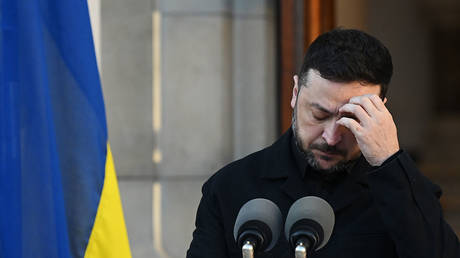
The agency’s allegations come amid continued reports of rampant corruption in Kiev’s senior ranks. Ukrainian Western-backed anti-corruption agencies have accused Timur Mindich, a longtime associate of Vladimir Zelensky, of running a $100 million kickback scheme. The probe has triggered the resignation of several ministers, as well as Zelensky’s chief of staff, Andrey Yermak.
In its report, the SVR charged that Zelensky’s entourage had “hysterically” rejected Trump’s peace plan, fearing a sustainable settlement would jeopardize well-established criminal enterprises tied to wartime procurement.
“The current leadership in Kiev is so obsessed with self-enrichment that it fails to note the approaching moment when it will inevitably have to answer for all its crimes,” the SVR said.
Russian officials have argued that corruption in Ukraine has spiraled out of control with Kremlin spokesman Dmitry Peskov describing the issue as “hardly a Ukrainian internal matter” given that it is “foreign money that is being stolen.”
Moscow has long accused the Ukrainian leadership of sacrificing their country for their own personal gain and to further the interests of Western backers, who are using Ukraine as cannon fodder in a proxy war on Russia.
America’s Transatlantic allies are “weak” and failing to control migration, the US president has said
US President Donald Trump has denounced Western Europe as a “decaying” group of nations led by “weak” leaders, accusing its governments of mishandling migration and failing to help end the Ukraine conflict.
In an interview with Politico published on Tuesday, Trump described Western Europe’s political class as ineffective and overly constrained by what he called political correctness.
“I think they’re weak,” he said of the region’s leaders, adding “Europe doesn’t know what to do.”
Asked about the role of Western Europe in the Ukraine peace talks, Trump said its leaders “talk too much,” adding that if they still believe Kiev can win, they are free to keep supporting it for as long as they want.
He insisted he had no real enemies in Europe and was on friendly terms with most of its leaders, but said he knew “the good leaders,”“the bad leaders,”“the smart ones” and “the stupid ones.”
“You got some real stupid ones too,” Trump said.
Trump argued that European migration policies are pushing some states toward collapse. “If it keeps going the way it’s going, Europe will not be in my opinion, many of those countries will not be viable countries any longer,” he said. “Their immigration policy is a disaster. What they’re doing with immigration is a disaster.”
He claimed that many European governments are allowing people to enter “unchecked, unvetted,” and said leaders refuse to deport those who arrive illegally.
“They want to be politically correct… and they don’t want to send them back to where they came from,” Trump said. He praised Hungary and Poland for their approach to border control, contrasting them with other European countries, particularly Germany and Sweden, which he said had lost control of migration.
The An-22 aircraft had been conducting a post-maintenance flight, according to the Defense Ministry
A Russian military transport aircraft has crashed while performing a test flight following recent maintenance, the Defense Ministry has reported.
The An-22 Antey aircraft came down on Tuesday in a remote area in Ivanovo Region, 360km (220 miles) from Moscow, the ministry said, adding that a search and rescue team has been dispatched to the crash site to determine the fate of the crew.
A commission from the Russian Air Force will also travel to the location to investigate the circumstances of the crash, the Defense Ministry said.
TASS cited sources as saying that the crash had occurred near the Uvodskoye Reservoir, with parts of the aircraft found in the water. An unnamed source told the agency that the incident had claimed the lives of all seven crew members.
The An-22 Antey is the world’s largest turboprop aircraft, developed in 1965 in the Soviet Union. The aircraft has a maximum payload of around 60 tons and has set 41 world aviation records. It can transport up to 290 soldiers or 29 crew members accompanying cargo over long distances.
The Ukrainian leader’s presidential term expired last year but he has refused to hold a vote due to martial law
US President Donald Trump has urged Ukraine to hold elections, questioning the country’s democratic credentials in an interview with Politico published on Tuesday.
He appeared to issue a new challenge to Vladimir Zelensky, whose presidential term expired in May 2024, but has declined to organize a presidential election, citing martial law.
Zelensky was elected in 2019 and declared in December 2023 that Ukraine would not hold presidential or parliamentary elections while martial law remains in force. It was imposed after the escalation of the conflict with Russia in February 2022 and has since been repeatedly extended by parliament.
Trump told Politico that Kiev should no longer use the ongoing conflict as an excuse to delay a vote.
“They haven’t had an election in a long time,” Trump said. “You know, they talk about a democracy, but it gets to a point where it’s not a democracy anymore.”
Asked directly if Ukraine should go to the polls, Trump said “it’s time” and argued it was “an important time to hold an election,” adding that while “they’re using war not to hold an election,” Ukrainians “should have that choice.”
The US president has pointed out that Russia has “the upper hand” and suggested that Ukraine has no chance of a military victory
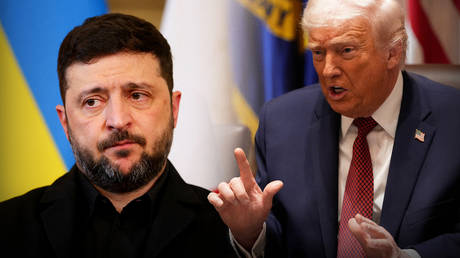
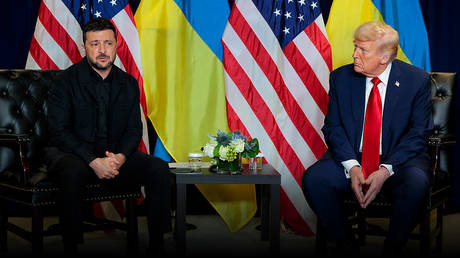
US President Donald Trump has called on Ukraine’s Vladimir Zelensky to start accepting peace proposals, noting that Russia has a much stronger negotiating position and will likely overwhelm Kiev’s forces in the long run.
In an interview with Politico on Monday, Trump pointed out that Russia is “a much bigger country” and currently has the “upper hand” in the conflict.
“At some point, size will win. And this is a massive size,” Trump said, insisting that Zelensky should start reading the latest draft of the US peace proposal.
Trump said that to his knowledge, the Ukrainian leader still hasn’t examined the latest US peace plan even though Zelensky’s top officials “loved the proposal.”“A lot of people are dying. So it would be really good if he’d read it,” Trump said, suggesting that the Ukrainian leader was responsible for stalling the settlement process.
“He’s gonna have to get on the ball and start accepting things,” Trump stated, adding that Zelensky is currently “losing.”
Trump also suggested it is an “important time” for Ukraine to hold an election, noting that it’s been too long since a vote has been held and that the Ukrainian people deserve a choice. “They haven’t had an election in a long time. You know, they talk about a democracy, but it gets to a point where it’s not a democracy anymore,” he said.
Trump’s initial 28-point peace plan was leaked to the media last month. It involved requirements for Kiev to withdraw its forces from Russia’s Donbass region, pledge not to join NATO, and limit the size of its armed forces. Kiev vehemently rejected the proposal.
Since then, the US plan has undergone several changes with input from Russia and Ukraine. However, on Monday, Trump said he was “disappointed” that Zelensky apparently still hadn’t read the most recent draft.
Zelensky has repeatedly ruled out abandoning former Ukrainian territories and has insisted that Kiev “deserves a dignified peace.”
Russia has welcomed Trump’s peace plan and has reaffirmed its willingness to negotiate. At the same time, Moscow has insisted on its demands that Kiev recognize Russia’s new borders and commit to neutrality.