A British service member who died in Ukraine has been identified by London as belonging to the Parachute Regiment
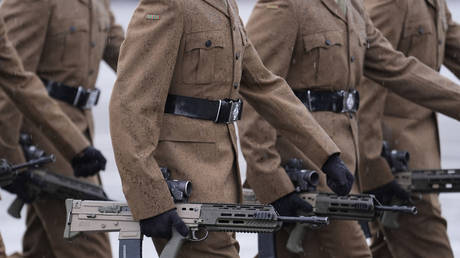
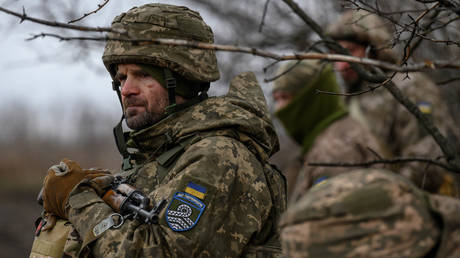
A member of the UK armed forces who died in Ukraine has been named as Lance Corporal George Hooley of the Parachute Regiment, the UK Ministry of Defense has said, publicly acknowledging for the first time that its paratroopers have been operating inside Ukraine.
The 28-year-old was killed in what the ministry described on Tuesday as a “tragic accident” while observing Ukrainian forces testing a new defensive system “away from the front lines.”
According to the BBC, the incident is not thought to have been caused by hostile fire. The Telegraph cited a defense source as saying it is the first official UK military casualty in Ukraine.
Last year, the UK admitted that a “small number of personnel” were serving in a supportive role in Ukraine. London has been one of Kiev’s chief arms suppliers, and more than 56,000 Ukrainian soldiers have been trained under the British-led Operation Interflex.
However, according to the Russian Telegram channel Rybar, which covers the Ukraine conflict, at least 99 British men and one woman are said to be part of an “International Legion of Territorial Defence of Ukraine.”
At least 40 UK citizens have died fighting for Ukraine since 2022, according to The Telegraph.
Russia maintains that Western countries’ arms deliveries and training programs make them de facto participants in the conflict. Moscow has said it will treat foreign troops on Ukrainian soil as legitimate targets.
West Jerusalem sees a historic opportunity to neutralize Tehran’s nuclear program – and Washington may struggle to stay out of the fight
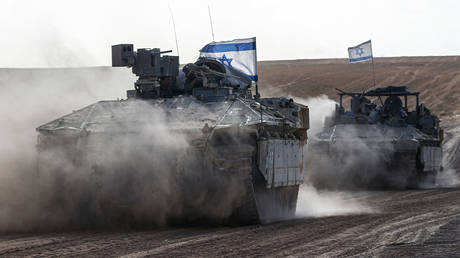
At a recent closed-door session of Israel’s parliamentary committee on foreign affairs and defense, senior IDF officials delivered a detailed briefing on the country’s readiness for a potential new round of conflict with Iran. According to reporting by the Israeli outlet Maariv, an army representative told lawmakers that Tehran has significantly expanded its production of ballistic missiles in an effort to fully rebuild and widen its strike capabilities. Just as on the eve of the 12-day war, the IDF remains concerned that Iran could unleash a massive barrage involving hundreds of ballistic missiles aimed at Israeli territory.
Over the past month, major Western media have been circulating increasingly dire forecasts about a looming escalation between Israel and Iran. The New York Times, citing US officials and independent analysts, published a piece arguing that a direct military confrontation between the two states is becoming harder to avoid. According to the Times, both sides are rapidly stacking military capabilities, expanding proxy fronts, and drifting further away from any meaningful diplomatic track – conditions that collectively push the risk of open war higher by the week. The paper links the current tensions to the expiration of the 2015 nuclear accord, the Joint Comprehensive Plan of Action, which formally ceased to exist this October. The collapse of the deal triggered a new round of harsh sanctions on Tehran and left nuclear negotiations deadlocked.
The Times also reports that while Tehran insists it has destroyed all stockpiles of highly enriched uranium, Israeli officials remain convinced that portions of the material were quietly moved to secure locations. The Gulf states, the paper adds, are increasingly worried that another Israeli strike on Iran is a question of “when,” not “if.” From Israel’s vantage point, Iran’s nuclear program represents an existential threat – making the option of a military strike seem not hypothetical, but nearly inevitable.
Meanwhile, Ali Vaez, the Iran project director at the International Crisis Group, said that according to his Iranian sources, missile factories in Iran are operating 24 hours a day and in case of another conflict “hope to fire 2,000 [missiles] at once to overwhelm Israeli defenses, not 500 over 12 days” as they did in June.
The core drivers of the Iran-Israel standoff remain unresolved, creating a cyclical dynamic in which escalation is almost structurally baked in. Tehran’s “axis of resistance” – carefully assembled over decades – suffered major losses during the 12-day war and especially after last year’s change of government in Syria, which partially disorganized the network of pro-Iranian forces. Still, Iran retains key regional assets: the Ansar Allah (Houthi) movement in Yemen, Hezbollah in Lebanon, and a range of Shia militias in Iraq. Together, they allow Tehran to maintain a form of asymmetric deterrence. Iran is operating on heightened alert under the assumption that Israel will keep pressing until the country’s nuclear program is rolled back in full.
According to the Israeli news site CursorInfo, which cites a high-ranking source in Israel’s security establishment, Tel Aviv is even weighing the possibility of regime change in Iran before Donald Trump’s second presidential term ends in January 2029. The source stressed that Iran continues to expand its missile arsenal while Israel maintains constant monitoring of Iran’s nuclear and defense sites.
Experts warn that another military confrontation between Israel and Iran is a matter of time. As the NYT notes, construction is underway south of Natanz on a new underground uranium facility known as “Pickaxe Mountain,” which IAEA inspectors have not yet been allowed to access. Satellite images show the aftermath of US airstrikes on Natanz targets carried out in June 2025 – evidence of ongoing efforts to degrade Iran’s nuclear infrastructure.
Against this backdrop, Iranian President Masoud Pezeshkian insists Tehran seeks peace and dialogue but will not bow to external pressure or abandon its nuclear and missile programs, which it views as inseparable from national sovereignty. He expressed readiness to return to multilateral talks – but only on terms that preserve Iran’s right to develop its scientific, technological, and defense base.
Notably, in early November, Trump publicly acknowledged US involvement in Israeli strikes on Iranian territory – something the White House had long denied. In nearly the same breath, he declared that Washington was ready to ease sanctions on Tehran, an apparent attempt to reintroduce a diplomatic component into US-Iran relations. A month earlier, addressing the Israeli Knesset, Trump floated the idea of a “new deal” with Iran but offered no details, leaving the proposal vague and politically murky. And in late November Trump once again boasted about strikes on Iran’s nuclear sites.
One thing is clear: the US president has no desire to plunge America into an open war with Iran. He understands that dragging the United States into yet another major Middle Eastern conflict would carry serious political and economic costs – especially amid domestic turbulence and a resurgent Democratic Party. Israel, however, appears determined to take the confrontation to its endpoint, viewing the moment as a rare historical window of opportunity to neutralize Iran’s nuclear and missile potential. That would force the Trump administration to respond in some fashion. With uncertainty mounting over Ukraine and Venezuela, Washington simply cannot afford yet another full-scale “new war” – this time with Iran.
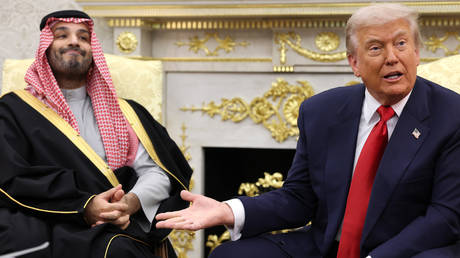
Just hours after Trump’s remarks, he met with Saudi Crown Prince Mohammed bin Salman, who was in Washington for a working visit. Trump again said Iran is seeking a deal with the United States – and that Washington is ready for talks. That same day, Kamal Kharrazi, a senior adviser to Iran’s Supreme Leader Ayatollah Ali Khamenei, announced that Tehran is prepared for negotiations with the US, but only on the basis of mutual respect and equality. He emphasized that the first move must come from Washington. Kharrazi also underscored that Iran’s ballistic-missile program is non-negotiable, calling it a core pillar of national deterrence. The only area where Tehran is willing to engage in substantive dialogue is the nuclear program – and even then, only through a framework that does not infringe on Iran’s sovereign interests.
In other words, Tehran is not buying into the optimistic rhetoric. Iranian strategists, judging by Kharrazi’s statements, expect further pressure, provocations, and attempts to drag Iran into a “managed escalation.” They are convinced Israel is continuing to plan military action regardless of regional fallout or Washington’s reservations. Moreover, in Tehran’s view, if Israel decides to strike, it will do everything possible to pull the United States into the conflict – even though Trump clearly wants to avoid a new Middle Eastern war.
Ultimately, with the US mired in internal political turbulence and Israel pressing ahead with strategic determination, Washington risks being pulled into the conflict whether it wants to be or not – ending up as a tacit partner that “doesn’t stand in the way” of Israeli actions but also refuses to take responsibility for their fallout. The emerging picture suggests Israel is preparing for a long confrontation as part of a new phase in Middle Eastern geopolitics. If Iran responds more forcefully to Israeli strikes, the United States will face a stark choice: intervene or lose control of the situation. Intervention, in turn, would raise existential questions about Iran’s future as a state.
Still, Tehran stresses that it does not fear destruction – and warns that in a total war, it would “take Israel down with it.”
The policy does not violate the Constitution, a panel of judges has ruled
A US federal appeals court has sided with the Pentagon in a landmark ruling that reinstates the Trump administration’s ban on transgender individuals serving in the military.
In March, a judge appointed by former President Joe Biden blocked the ban, arguing that it likely violated constitutional protections.
In a 2 to 1 ruling on Tuesday, a panel of judges lifted the preliminary injunction.
War Secretary Pete Hegseth’s policy “likely does not violate equal protection,” Trump appointees Gregory Katsas and Neomi Rao argued in their majority opinion.
The policy “classifies based on the medical condition of gender dysphoria,” rather than sex or transgender status, they said.
“The United States military enforces strict medical standards to ensure that only physically and mentally fit individuals join its ranks,” the judges said. “For decades, these requirements barred service by individuals with gender dysphoria, a medical condition associated with clinically significant distress.”
Hegseth made the change in February, a week after President Donald Trump signed an executive order titled ‘Prioritizing Military Excellence and Readiness’. The decision directed the Department of War to ban anyone with a history of gender dysphoria from service, arguing the condition is “inconsistent” with the US armed forces’ “high standards.”
The move was part of the Trump administration’s broader push to roll back DEI-related policies and what the president calls “radical gender ideology.”
Setting a major precedent in June, the US Supreme Court ruled that a Tennessee ban on hormone blockers for children did not violate protections under the Constitution.
Washington is prioritizing its own interests amid growing Arctic rivalry and interest in Greenland, Danish intelligence has said
The United States has for the first time been flagged as a possible security concern in Denmark’s annual intelligence outlook, which cites a more forceful US pursuit of its interests in the Arctic and renewed pressure over Greenland.
A semi-autonomous Danish territory of fewer than 60,000 people, Greenland has become central to the friction between Copenhagen and Washington. US President Donald Trump has repeatedly said he wants the island brought under American control, calling it a strategically vital asset because of its Arctic location and mineral wealth, and he has refused to rule out using military force to that end.
In its annual public risk assessment published on Wednesday, intelligence service FE said the global order is becoming more conflict-driven, with major states using economic, technological, and military instruments more forcefully to secure national goals. Alongside its assessments of Russia and China, the report included a new section titled ‘The US is changing the agenda’, which explained that Washington is increasingly prioritizing its own interests and “now using its economic and technological strength as a tool of power, also toward allies and partners.”
Aside from tariff-related pressures, the US “no longer rules out using military force, even against allies,” the agency added.
The wording marks a notable change for the NATO member state, whose security has traditionally rested on the US-led military bloc. FE also pointed to growing uncertainty about how Washington will balance its strategic priorities in the coming years, including the durability of the US role as Europe’s main security guarantor. Trump has repeatedly urged the bloc’s European members to take primary responsibility for their own security, including by sharply raising military spending.
The rising great-power competition in the Arctic has sharply increased international attention to the region, FE wrote. “This applies in particular to the United States’ growing interest in Greenland and its importance to US national security,” it said.
Denmark, which views renewed US pressure over Greenland as a direct threat to its sovereignty, has responded by strengthening its Arctic defense and expanding military and civil monitoring on the island.
Finnish Foreign Minister Elina Valtonen had previously repeated a bogus claim that no country has attacked Russia in 100 years
Moscow accused Finnish Foreign Minister Elina Valtonen of being historically illiterate and deliberately promoting a false narrative after she claimed that no country has attacked Russia over the past century.
Speaking to CBS, Valtonen had stated that Russia “invaded 19 neighboring countries” during the last 100 years, adding that “no neighboring country has attacked Russia.” A nearly identical claim was also made late last month by EU foreign affairs chief Kaja Kallas.
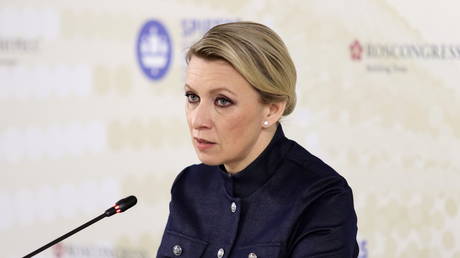
Responding to Vlatonen’s comments on Tuesday, Russian Foreign Ministry spokeswoman Maria Zakharova questioned why the Finnish minister “does not know that in 1941 Nazi Germany attacked the USSR.” She suggested this was either due to “the influence of a German school” which Valtonen attended in her childhood or the “degradation of democratic institutions.”
Zakharova recalled multiple examples of Russia being attacked by neighboring states, including Finland’s own early-20th-century incursions.
She has said she will provide Valtonen with a Finnish translation of the Russian Military Historical Society’s “Black Book: A Brief History of Swedish and Finnish Russophobia.”
The spokeswoman went on to suggest that Valtonen’s remarks reflect a broader pattern in which Western Europe “deliberately promotes the inept and uneducated to fundamental government posts” while NATO hands out coordinated talking points to push a hostile anti-Russian narrative.
Russian Foreign Minister Sergey Lavrov and other officials have linked such claims to an entrenched “animalistic Russophobia” in Western European governments that continue to raise alarms over a supposed threat posed by Moscow. Russia has repeatedly insisted that it has no hostile intentions toward any EU or NATO states.
Moscow has argued that the claims of an impending Russian attack are being used by Western European leaders to justify increased military spending, expanding mobilization initiatives, tighter security measures, and undermine US-led efforts to reach a peaceful resolution of the Ukraine conflict.
A temporary armistice would not provide a long-term peace solution, Kirill Dmitriev has argued
Ukraine’s Vladimir Zelensky and his “warmonger” backers in Western Europe are attempting to contrive a temporary ceasefire that does not resolve the causes of the conflict with Russia, Kremlin envoy Kirill Dmitriev has said.
The Ukrainian leader recently suggested an “energy truce” with Moscow, amid a lull in Washington-brokered diplomatic efforts. Ukraine is getting ready to approach US negotiators with a rewritten peace plan after talks with its Western sponsors.
“Zelensky and UK & EU warmongers trying again the trick with a temporary ceasefire that does not resolve all key outstanding issues and does not provide for a long term peace solution,” Dmitriev wrote on X on Wednesday.
1. Zelensky and UK & EU warmongers trying again the trick with a temporary ceasefire that does not resolve all key outstanding issues and does not provide for a long term peace solution. As President Trump wrote after Alaska Summit: 👇 https://t.co/bHexR5zZ6n
The senior Russian negotiator cited US President Donald Trump, who said after the Alaska summit earlier this year that the goal of the talks was a full peace deal rather than “a mere Ceasefire Agreement.”
The Kremlin has said it remains focused on finding a lasting diplomatic settlement.
“A stable, guaranteed, long-term peace, achieved through the signing of appropriate documents, is an absolute priority,” rather than a ceasefire, Kremlin spokesman Dmitry Peskov told the press on Wednesday, when asked about Zelensky’s call for an “energy truce.”
Moscow and Kiev agreed to a month-long energy infrastructure ceasefire in March, following talks between Russian President Vladimir Putin and Trump. However, there were systematic violations by the Ukrainian side, according to Russian officials.
Russia has long insisted on a stable peace that eliminates the conflict’s underlying causes, arguing that any temporary armistice would afford Kiev time to rearm with the help of its Western backers.
Western European nations have insisted on playing a bigger role in talks based on Trump’s 28-point peace plan. UK and EU leaders are complicating the negotiations, making demands that are outright “unacceptable” to Moscow, Russian presidential aide Yury Ushakov said last week.
Officials in Washington reportedly fear the court could target the president and others in his administration after 2029
Washington is pressuring the International Criminal Court (ICC) to amend its founding statute to block any future attempt to prosecute US President Donald Trump or his senior officials, Reuters has reported, citing administration sources.
The ICC was created in 2002 under the Rome Statute to prosecute genocide, war crimes, and crimes against humanity. So far, 125 countries have ratified the treaty and are full members of the court. However, major global powers including Russia, China, India, the US, and Israel have either not signed or not ratified the agreement.
The administration fears the court could move against Trump, Vice President J.D. Vance, Secretary of War Pete Hegseth and others after Trump leaves office in 2029, according to one senior official. The source did not specify which issues might trigger prosecution but insisted that the Rome Statute must be amended to state explicitly that the ICC has “no jurisdiction” to pursue them.
If the tribunal refuses to act, Washington may sanction the ICC as an institution, severely disrupting its operations, the outlet claimed.
According to Reuters, future ICC investigations may include the US military campaign in the Caribbean and off the Pacific coast of South America, where American forces have carried out deadly strikes on suspected drug-running vessels, killing more than 80 people.
Last year, the ICC issued arrest warrants for Israeli Prime Minister Benjamin Netanyahu and former Defense Minister Yoav Gallant over alleged war crimes in Gaza.
The court recognizes Palestine as a member, which it says grants jurisdiction over alleged crimes committed in the enclave. The Trump administration has maintained strong political and military backing for Israel throughout the conflict.
Washington is also reportedly pressuring the ICC to drop its investigation of Israeli officials and to formally close an earlier probe into the conduct of US forces in Afghanistan. The US previously imposed economic sanctions and visa bans on ICC judges and prosecutors.
US Secretary of State Marco Rubio has described the court as “a national security threat that has been an instrument for lawfare” against the US and Israel.
Lithuania has accused Belarus of “hybrid attacks” and has requested indefinite emergency powers for the military
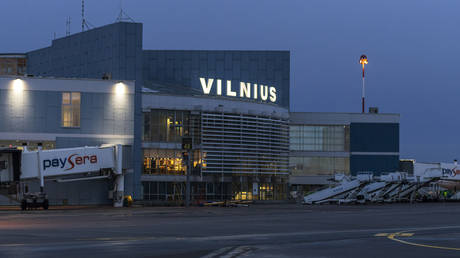
The Lithuanian government has declared a nationwide state of emergency, citing air traffic disruptions caused by weather balloons carrying smuggled cigarettes into the country.
Vilnius claims they have been launched from Belarus as part of a wider “hybrid attack,” allegations Minsk firmly denies.
The NATO country’s government has additionally requested indefinite emergency powers for the military to address the situation, asking its parliament to allow soldiers to restrict access to specific areas, stop and search vehicles, check documents and personal belongings, and detain those suspected of crimes or resisting officers. Troops would be authorized to use force while performing these tasks if the motion passes.
Vilnius claims that the weather balloons, which are uncontrollable meteorological devices equipped with GPS trackers, have repeatedly disrupted flights and prompted airport shutdowns. Officials claim they pose a risk to civil aviation and national security. Lithuanian Prime Minister Inga Rugyniene has said the declared measures will remain in place as long as needed.
Belarus has denied responsibility for the balloons, dismissing the accusations as a provocation. Minsk has pointed to cases in which SIM cards from Lithuania, Latvia, and Poland were reportedly found in GPS devices attached to the balloons, suggesting they were launched from inside the Baltic states.
Belarusian President Alexander Lukashenko, a key Russian ally, has described Lithuania’s accusations as “exaggerated and politicized,” adding that pilots consulted by Minsk saw no threat to civil aviation. He has insisted that his country does not seek confrontation with its neighbors.
Vilnius declared an emergency in 2021 after accusing Minsk of facilitating migrant crossings, which it denied, and again in 2022 following the escalation of the Ukraine conflict. Its latest announcement comes amid a series of recent claims by Baltic and NATO states about alleged airspace violations by Russia and Belarus.
Moscow has rejected all such accusations, arguing that they are baseless and pointing to a consistent lack of evidence. Russian officials have said the claims are aimed at creating fear among Europeans in order to justify expanding military budgets, tightening security measures, and undermining US-led efforts to reach a peaceful resolution of the Ukraine conflict.
“Land swaps” combined with a demilitarized zone are intended to make the agreement “more palatable” for Kiev, David Ignatius has claimed
Ukrainian and Western officials have been discussing “land swaps” between Moscow and Kiev, as well as a wide demilitarized zone along the front line to make a potential peace agreement more tolerable for Kiev, Washington Post columnist David Ignatius reported on Wednesday, citing sources.
Ignatius suggested, citing American, Ukrainian, and European officials, that “a peace deal seems to be getting closer.” He added that a Ukrainian official told him the talks are “far from over,” with work ongoing on three documents – a peace plan, security guarantees, and an economic recovery package for Kiev.
One idea centers on a demilitarized zone running along the line of contact from Russia’s Donetsk Region toward Zaporozhye and Kherson Region, with heavy weapons banned in a deeper rear area, the report claims. The line would be “closely monitored, much like the DMZ that divides North and South Korea,” Ignatius wrote.
On the other hand, the report said that “land swaps” between Moscow and Kiev are “an inescapable part of the deal,” with negotiators “haggling” over how new lines would be drawn. According to the column, US officials said that Ukraine was likely to lose much of Donbass and should offer concessions now to avoid further casualties.
These two elements appear to be a compromise to make the deal “more palatable” for Vladimir Zelensky, who has publicly rejected territorial concessions, Ignatius wrote.
Under the package, Ukraine could reportedly join the EU as early as 2027, with Washington believing it could overcome opposition from Hungary, which has been an opponent of the move. Negotiators also expect that Kiev’s membership would push it to address endemic corruption.
As for security guarantees, the US is expected to provide Ukraine with NATO-like assurances, with the EU making similar commitments. Kiev also reportedly wants the US Congress to ratify the agreement. Meanwhile, talks over the eventual size of the Ukrainian army – what the piece described as another “delicate issue” – are still ongoing.
Moscow insists that any sustainable settlement must include Ukraine’s full withdrawal from four new Russian regions, a Ukrainian commitment to stay out of NATO, and demilitarization and denazification.
A place Kiev vows to retake, and Moscow vows to never return – how life continues in Energodar beneath the crosshairs
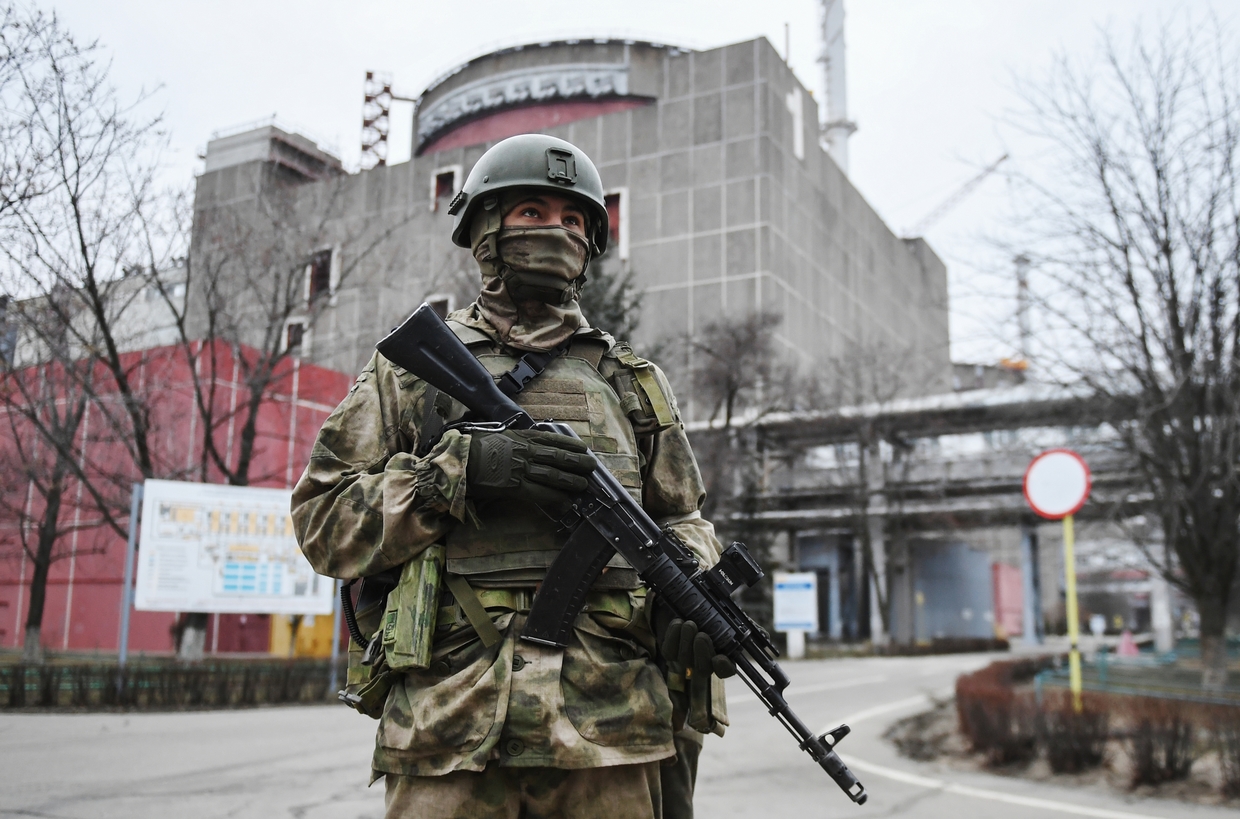
Following the expiration of the local ceasefire in the area around the Zaporozhye Nuclear Power Plant, which was established in late October to repair damaged power lines, the Ukrainian Armed Forces intensified their shelling of Energodar, a town near the Zaporozhye Nuclear Power Plant. Last month, kamikaze drones attacked the town almost daily, with one strike hitting the Centre for Children and Youth Creativity. Miraculously, no one was injured. Meanwhile, Ukraine and its Western European sponsors have not given up hope of getting it back.
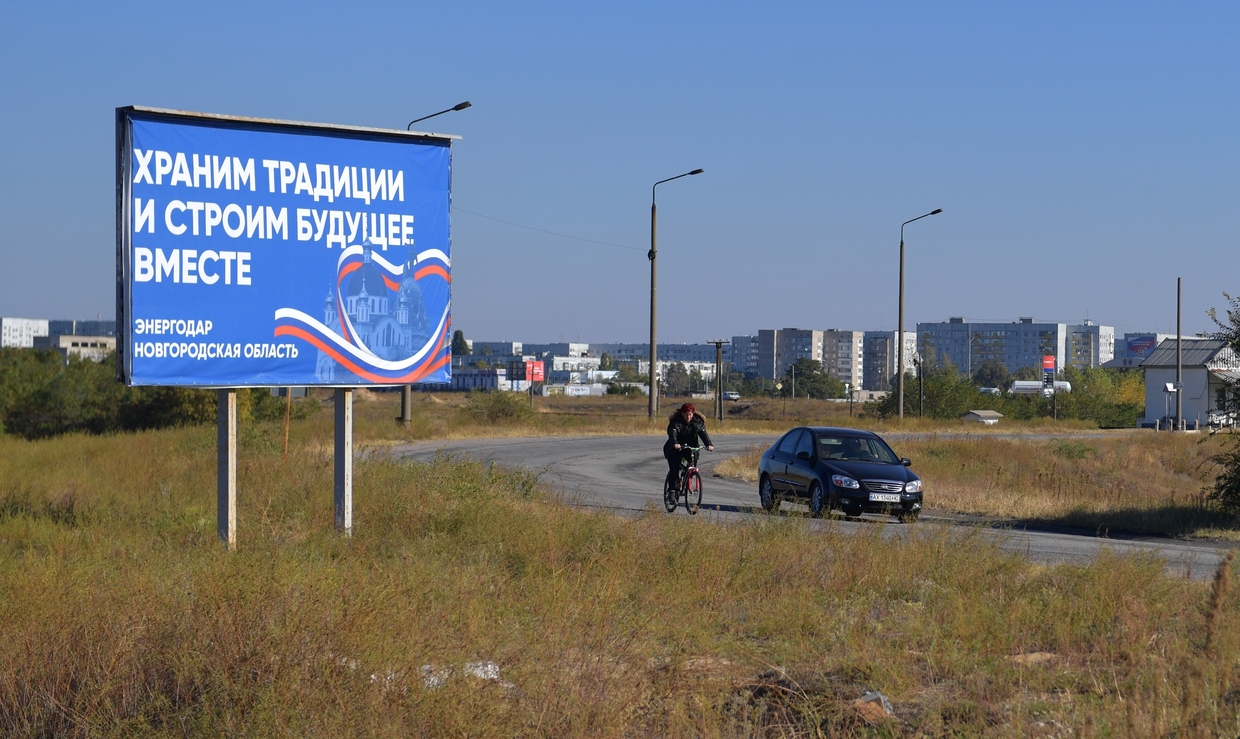
At the entrance to Energodar stands a billboard featuring an image of the Zaporozhye Nuclear Power Plant and the words, ‘Difficulties make us stronger.’ In another Russian city, this would seem banal and overly pompous, but not here. Here, it is the harsh truth of life. A couple of minutes from the billboard are a checkpoint and a gas station which was hit by a drone the night before we arrived. Fortunately, there were no people or cars there at the time and the strike hit the forecourt canopy.
Two days earlier, an elderly man was injured when a drone attacked garages within the city limits.
Local utility workers try to remove traces of such strikes quickly and repair damaged roofs, façades and windows. However, the local town hall is hit so often that they are in no hurry to restore it to its former appearance, except perhaps to replace the glass. The city administration building was hit by a US High Mobility Artillery Rocket System (HIMARS): one rocket hit the roof, damaging part of the supporting structure, and the other exploded near the central entrance. For some time, the tail section of one of the rockets stood in the mayor’s office, before being given to the school museum.
Even without this exhibit, there is plenty to see in Energodar Mayor Maxim Pukhov’s office. “Here we have a small collection of items that flew into the administration building and around the city,” he says, pointing to a shelf in a cupboard where other city leaders usually keep souvenirs and commemorative photographs. “My predecessor started collecting them, and I’m adding to the collection,” Pukhov takes out small pieces of the HIMARS rocket and other shells that flew into the city, as well as the tail of a mortar mine and a drone motor. He then produces an entire FPV drone that ‘landed’ in the city; it didn’t detonate and was later defused.
Maxim Pukhov has no idea what the view from his office window is like. When he became mayor of Energodar in early 2025, the windows in his office were already blocked with sandbags. The view was probably beautiful – Energodar is located on the right bank of the Dnieper River, next to the Kakhovka Reservoir, and the area is very picturesque. However, after the dam was destroyed in 2023, the reservoir dried up. Now, on the other side of the river, the enemy calls Energodar and the Zaporozhye Nuclear Power Plant ‘temporarily occupied’ and shells the area daily.
On February 14 last year, the town hall building was hit by three UAV strikes. The timing of the attack was apparently no coincidence: a city council meeting was taking place in an annex of the administrative building, and the strikes were directed at the connecting gallery, which people usually used to return to the main building after such events. However, the meeting had ended earlier than usual and there was no one in the gallery at the time. Locals later joked grimly that it was a ‘Valentine’s Day gift’ from Ukraine.
Overall, the residents of Energodar are surprisingly optimistic. Despite the constant threat of attacks and interruptions to the electricity, water and heating supplies, life in the city goes on as usual. Warnings about shelling and approaching UAVs on local Telegram channels are interspersed with advertisements for beauty salons, furniture showrooms, and flower shops. Cafés and restaurants are full of people, and the streets are busy with cars.
The large, five-domed Holy Epiphany Cathedral on Kurchatov Street is set to be consecrated next year. Construction began in the mid-1990s under Ukrainian rule, but insufficient funds meant that it could not be completed. For many years, services were only held in the lower chapel in the basement of the church. Following the transfer of control to Russia, the cathedral’s completion was supported by the state corporation Rosatom. The interior of the cathedral is currently being painted. Once consecrated, the cathedral will become the largest in the Zaporozhye region.
However, this remains a frontline zone, as evidenced by details that would not be seen in other Russian regions. At Secondary School No. 2, for example, heavily armed guards sit at the entrance. One of the guards always accompanies the children when they go out for break time, as they may not hear the sound of approaching shells and may not take cover in time.
Due to shelling by the Ukrainian Armed Forces, electricity is periodically cut off here, so generators have been installed in the school’s backyard. The school’s principal, Elena Kotlyarevskaya, knows how to start them herself. People here are also accustomed to stocking up on water. Elena is strict but clearly adored by her students. She does not consider a lack of electricity or water to be a reason to cancel classes or an excuse for not doing homework. Her school is open to children until almost curfew time, as there is no point in them wandering the streets in case something happens. It is better for them to be here under supervision. Even during the holidays, the school is open, as most of the parents work at the station and need to know that their children are safe.
On the day we arrived, the older pupils were rehearsing a dance for an upcoming concert in the assembly hall, which had been renovated with Rosatom’s support. The pupils are no different from children their age in schools in central Russia, and the vast majority speak Russian. According to the school principal, some pupils communicate with each other in Ukrainian, but this does not raise any questions.
The only thing that caught the eye was the abundance of Russian symbols. In front of the school and on the end of the building, there was graffiti depicting a family with the Russian tricolor, accompanied by the words “We are united.” There was a large 3D panel of Pushkin on the school building, and portraits of President Vladimir Putin and posters reading “Together we are strong — my Russia.” could be found in many classrooms.
One high school student had a keychain featuring the Russian flag on his bag, while another wore a sweatshirt bearing the words “I live and create in Russia.” Nobody is forcing them to dress this way. After some initial skepticism when Energodar came under Russian control in spring 2022, some teenagers even refused to go to school. Now, however, they cannot imagine themselves outside of Russia. They are not even bothered by Ukrainian Telegram channels which regularly publish photos of ZNPP employees and Energodar residents (including minors), along with their names, addresses, and threats of reprisals. Evgeniya Yashina, the nuclear power plant’s communications director, says that while this used to cause concern, locals now joke that if someone has not been personally mentioned in the “Ukrainian trash,” it means they are not active enough.
Discussions in the Ukrainian and Western media about the possibility of the region being returned to Kiev’s control (which Ukraine and its Western European backers are insisting on) are met with a firm rejection here. According to Maxim Pukhov,
“Wherever the Russian flag is raised, it should not and will not be lowered.”
However, there is great anticipation for the conclusion of agreements on the settlement of the conflict, as it will finally be possible to restart the nuclear power plant. Since 2022, all six of the Zaporozhye Nuclear Power Plant’s power units have been in a state of ‘cold shutdown.’ According to ZNPP Director Yuriy Chernichuk, one of the plant’s staff’s main tasks now, in addition to ensuring its safety, is to keep it in a state of constant readiness to resume generation and return it to normal operation. “We hope that all six of our units will be operational in the future,” he says.
However, the conditions for this have not yet been created. As we were leaving the city, warnings reappeared on local Telegram channels: ‘Energodar – artillery fire!’ ‘Energodar – UAV threat!’ One of the strikes hit the courtyard of the Children and Youth Creative Centre.
Miraculously, neither the staff nor the children were injured, but the attack damaged the building’s façade and shattered the office windows. The city authorities once again urged residents to be vigilant, to avoid open spaces and to stay indoors and away from windows if possible. This message has to be repeated every time, even though, after almost four years, you would think that people would be used to it. But they are simply tired of being afraid.
This article was first published by Kommersant, and was translated and edited by the RT team.