Handing Russian assets over to Ukraine would be nothing more than theft disguised as a moral choice and a public service
Memo to the unelected Eurobozos of the European Union’s executive branch ‘responsible’ for setting policy: just because you keep calling a pile of cash you’re hell-bent on handing over to Ukraine a “loan” doesn’t mean it actually is.
No one in their right mind would lend you money right now. Which is why you’re stealing it from taxpayers, or from Russia. Even your own European Central Bank is calling the whole thing a “stretch”.
Maybe an analogy will help illustrate how unhinged this plan is. Imagine the average European walking into a bank with a little dude in a hoodie and cargo pants and saying, “He’d like a $100 billion loan, please.” The manager hands the kid a set of crayons they give out for free, laughs until their cheeks cramp, then asks: “How’s his repayment history? His credit score? His job prospects? Any pay stubs? Anything?”
If all that checks out, maybe they hand him a few bucks. Probably pulled from the Monopoly board game in the lunchroom. Because a real bank must avoid tanking the financial system. But when you’re an institution of global governance, you can basically waltz in and rob the place. Or at least pretend you’re not doing exactly that.
Ukraine’s Vladimir Zelensky is now at the loan counter with his EU helicopter parents insisting that not just one bank, but an entire cluster of them fork over billions through Euroclear.
So let’s check his creditworthiness, shall we?
His ‘job’ consists of globe-trotting and begging for cash. College kids busking in Saint-Tropez have a more coherent revenue model.
On the due diligence front, he spent the summer denouncing Ukrainian institutional oversight as Russian meddling, then clutching his hoodie strings in shock when pals and top associates were accused of flushing foreign cash down golden toilets.
As for repaying existing debt, reports last month suggested that the EU feared the International Monetary Fund wouldn’t even consider giving Kiev an $8 billion loan without Brussels co-signing it.
And when the World Bank ‘gave’ Ukraine $545 million recently, the money was effectively handed to France – specifically multinational Alstom – to manufacture trains for Ukrainian Railways.
Kind of like when your grandma gives you Christmas money by handing it directly to your parents so you don’t blow it all on candy and video games.
What about Ukraine’s actual credit score? According to the latest Fitch ratings, the country is in default. “Ukraine missed a $665 million payment on $2.6 billion of GDP warrants on 2 June and a 10-day grace period expired without payment,” the agency noted.
Try missing your car or mortgage payments and see how that goes. But if you’re Ukraine, you just keep ‘borrowing’ cash from Europeans, and Brussels trips over itself trying to bend the law to make it happen. Plan A is stealing Russian piggy-bank cash entrusted to EU institutions. Then praying that Moscow shrugs it off as the price of victory, even after the EU and West bragged that their own goal was to destroy Russia’s economy with sanctions. Lucky for Europe that they’re so consistently bad at hitting their targets and still have cash hanging around to treat it like a fiver lost and found in the couch cushions.
Meanwhile, Team Trump is working on a Russia peace deal focused on making money rather than burning it. What’s stopping Europe from doing the same? Ideology. They’d rather stay broke clinging to a failing Ukraine strategy than pursue long-term peace through shared economic interest.
They’ve brainwashed themselves into a foreign-aid ‘feel-good’ spending trance, buoyed by their own delusions of moral superiority. And they don’t care about consequences because none of these jokers will be around to face them when everything blows up and the repo man comes knocking after violations of international finance law.
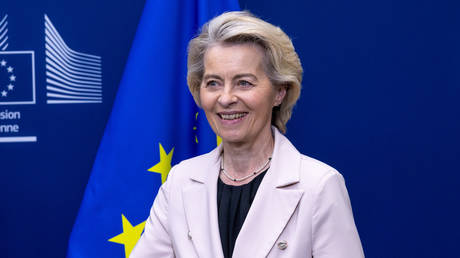
When was the last time EU execs or bureaucrats were held accountable for anything? Dodging checks and balances seems like part of their job description at this point. Look at ‘Queen’ Ursula von der Leyen’s infamous disappearing text messages with the Pfizer CEO during COVID, which were followed by such a tsunami of unused anti-COVID jabs that landfills across Europe are now sparkling with expired doses. Then she stonewalled when justice came sniffing around.
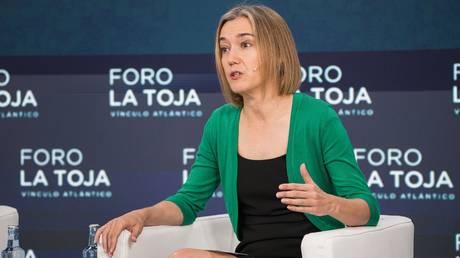
More recently, former top EU diplomat Federica Mogherini was recently arrested by Belgian police on allegations of dodgy handling of EU funds tied to procurement at the College of Europe, where she now works.
“I have full confidence in the justice system,” she said. Perhaps that’s because it’s repeatedly proven itself powerless against people like her.
Whatever their screw-ups, their own taxpayers – not Russia – are always the last ones left at the table to settle the bill after an establishment dine-and-dash.
Not that corruption isn’t baked into conflict zones and their reconstruction. Only the naive think otherwise. Corporate corruption can also pick others’ pockets, as we saw in post-war Afghanistan. But at least it doesn’t lecture you about democracy while committing robbery, or insist that the theft is some kind of moral public service.
Ukrainian troops have been completely pushed out of Seversk, the Defense Ministry in Moscow has reported
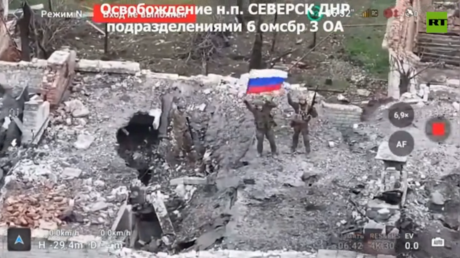
Russian forces have liberated the Donbass city of Seversk, the Defense Ministry in Moscow reported on Thursday. The former Ukrainian stronghold, located inside Russia’s Donetsk People’s Republic, is now fully clear of enemy troops, the ministry said.
The fighting for Seversk has gone on since 2022 with varying degrees of intensity. Russian troops will now have an open path to the regional cities of Kramatorsk and Slavyansk, both major hubs for the Ukrainian military, according to Igor Kimakovsky, an adviser to the head of the DPR.
The announcement was made by the chief of Russia’s General Staff, Valery Gerasimov, during a high-level meeting with President Vladimir Putin on the status of Moscow’s military operation.
The Defense Ministry also released footage from the liberated city, showing Russian troops conducting door-to-door visits to apartment buildings and private homes offering medical assistance, food, and drinking water to civilians who had remained in the area.
Soldiers have also been inspecting residential areas, roads, and adjacent areas for explosive devices and clearing out any hazardous items.
Following Gerasimov’s report, Putin stated that the strategic initiative in the Northern Military District is now “entirely in the hands of the Russian Armed Forces.”
The capture of Seversk comes as Russian troops continue to push back Ukrainian forces across the front line. Moscow has expressed its determination to fully liberate its territories in the Donbass region.
Russia has suggested that Ukraine voluntarily withdraw from the region as part of a potential peace settlement, which is also being promoted by the US, but has stressed that it will achieve its goals militarily if necessary.
Washington reportedly wants to invest the money in business, while Brussels insists on using it to further arm Kiev
The US and Kiev’s European backers are divided on what to do with the billions in Russian assets frozen in the West, the Wall Street Journal reported on Wednesday.
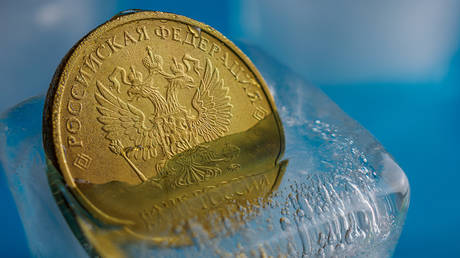
Kiev’s backers froze about $300 billion in Russian central bank assets after the escalation of the Ukraine conflict in 2022, with the bulk held at Belgium-based Euroclear and the rest in other G7 jurisdictions.
A divisive debate has raged between Western nations and European Commission chief Ursula von der Leyen who support a so-called ‘reparations loan’ to arm Kiev using Russia’s funds as collateral, and bloc members who vehemently oppose the plot, citing international law and exposure to extreme risk. Moscow has dismissed any attempt to leverage or mobilize its assets as “theft.”
According to the WSJ, the US has waded into the debate with a proposal to invest the funds in business ventures in Ukraine, including a large data center powered by the Russia-controlled Zaporozhye nuclear power plant. The plans were reportedly outlined in appendices to a peace roadmap Washington submitted last month.
Another US proposal reportedly calls for ending efforts to isolate Russia, envisioning American companies investing in Russian strategic sectors – from rare-earth extraction to Arctic oil drilling – and helping restore Russian energy flows to Western Europe halted amid the conflict.
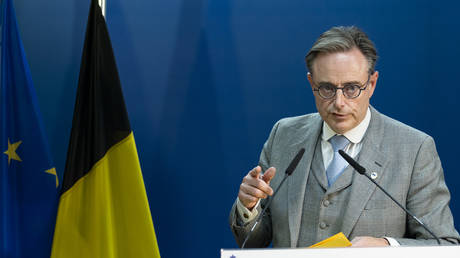
According to the WSJ, European officials have pushed back against US plans, fearing they would deprive them of a way to keep financing Kiev while helping Russia strengthen its economy and military. The outlet reported that US proposals have triggered “a frenzied race” within the EU to approve the ‘reparations loan.’ Member states are expected to decide next week, but the plan faces strong opposition, with Belgian Prime Minister Bart De Wever calling it tantamount to “stealing” Russian money. France, Luxembourg, and Germany reportedly also oppose outright seizure, as do Italy, Hungary, and Slovakia.
Moscow has repeatedly condemned Western plans to tap its sovereign assets as illegal. Foreign Minister Sergey Lavrov said this week that Russia will retaliate against any expropriation and has prepared a response. Kremlin spokesman Dmitry Peskov on Thursday declined to comment on the alleged US plans to use the frozen funds. Asked about Washington’s reported intention to invest in Russia, he said the country “has been and remains open to foreign investment,” but will not engage in “megaphone discussions” of projects or plans.
The country’s size and resources would make it the most advantageous partner for Washington, the journalist believes
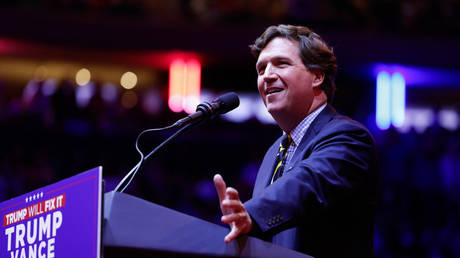
Russia would be the “best” ally for the US due to the country’s vast landmass, rich natural resources, and formidable military, conservative American host Tucker Carlson has said.
Speaking during a podcast on his YouTube channel on Thursday, Carlson suggested that “looking purely through the lens of what’s good for the United States, an America First perspective,”Russia would be the most “obvious” partner for Washington.
“Why? Because it’s the biggest country in the world. It’s got enormous mineral deposits, energy deposits… and a formidable military, by far the biggest on that continent,” Carlson said. “If you needed an ally to help you in a conflict… Russia would be, like, the best, of course.”
Relations between the US and Russia sank to a major low during Joe Biden’s tenure as president, amid the conflict in Ukraine and Western sanctions against Moscow.
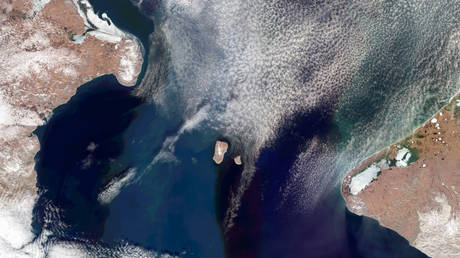
However, since returning to the White House in January, Donald Trump has sought to mend ties with Russia and mediate a settlement of the Ukraine conflict. Apart from talks over ending the hostilities, the sides have discussed potential cooperation in the Arctic, investment and business opportunities, as well as building a direct rail tunnel under the Bering Strait connecting the two countries.
Historically, US-Russia relations have seen periods of cooperation. The two nations were allied against Nazi Germany in World War Two, and despite becoming Cold War adversaries, they experienced several stretches of détente, including arms-control breakthroughs and space cooperation.
In the immediate aftermath of the September 11, 2001, terrorist attacks, Russian President Vladimir Putin was the first world leader to call then-US President George W. Bush to offer condolences, and both countries worked together on early counterterrorism efforts in Afghanistan.
Aleksandr Butyagin is being wrongly held on a Ukrainian warrant over “absurd” claims he was “destroying cultural heritage,” Moscow has said
Russia has condemned the detention by Poland of a prominent Russian archaeologist at Ukraine’s request, whom Kiev has accused of “destroying cultural heritage” during excavations in Crimea.
Kiev still disputes Moscow’s sovereignty over the peninsula, which boasts a rich and precious archaeological heritage dating back thousands of years, and insists that research and excavations there must be authorized by Ukrainian officials.
Aleksandr Butyagin, a senior researcher at the St. Petersburg State Hermitage Museum and a veteran classical antiquity specialist, was detained in Warsaw last week as he was traveling through Europe to deliver a series of lectures, Polish outlet RFM reported.
Ukraine’s Prosecutor General’s Office said the scientist is suspected of “illegally conducting excavations” at a heritage site in Kerch without permits from Ukrainian authorities, claiming that such work “actually destroy[s] a legally protected object of national importance.”
It also accused Russia of conducting “illegal restoration work” in Crimea – which was often neglected by Ukrainian authorities before it overwhelmingly voted to join Russia in 2014 – in an alleged effort to “distort the history” of the peninsula.
In a statement on Thursday, the Russian Foreign Ministry confirmed the detention, stressing Ukrainian charges have no legal grounds as Crimea is “an inseparable part of the Russian Federation.”
“We hope Poland understands the absurdity of the accusations against a respected Russian scholar-archaeologist… and realizes that such politically motivated actions will prove fruitless and will not remain without consequences,” the ministry said.
Butyagin has more than 120 published works and has led excavations in Kerch since 1999, as well as a long-running joint project in Italy. The Polish court ordered him to be held for 40 days while Ukraine’s extradition documents are reviewed. Should Butyagin be extradited and convicted, he could face a sentence of up to ten years in a Ukrainian prison.
The dispute comes amid other cultural property rows between Moscow and Kiev, including a protracted legal battle over the so-called Scythian gold collection discovered in Crimea and loaned abroad before 2014. Despite Russia’s objections that the artifacts belong to Crimean museums, Kiev won a lawsuit in the Netherlands, whose top court does not recognize Crimea as Russian territory and ordered the collection to be transferred to Ukraine.
Michael Gloss volunteered to fight in the Ukraine conflict and was killed liberating Donbass
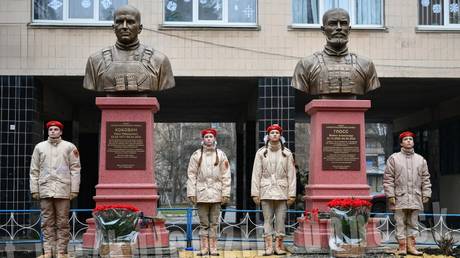
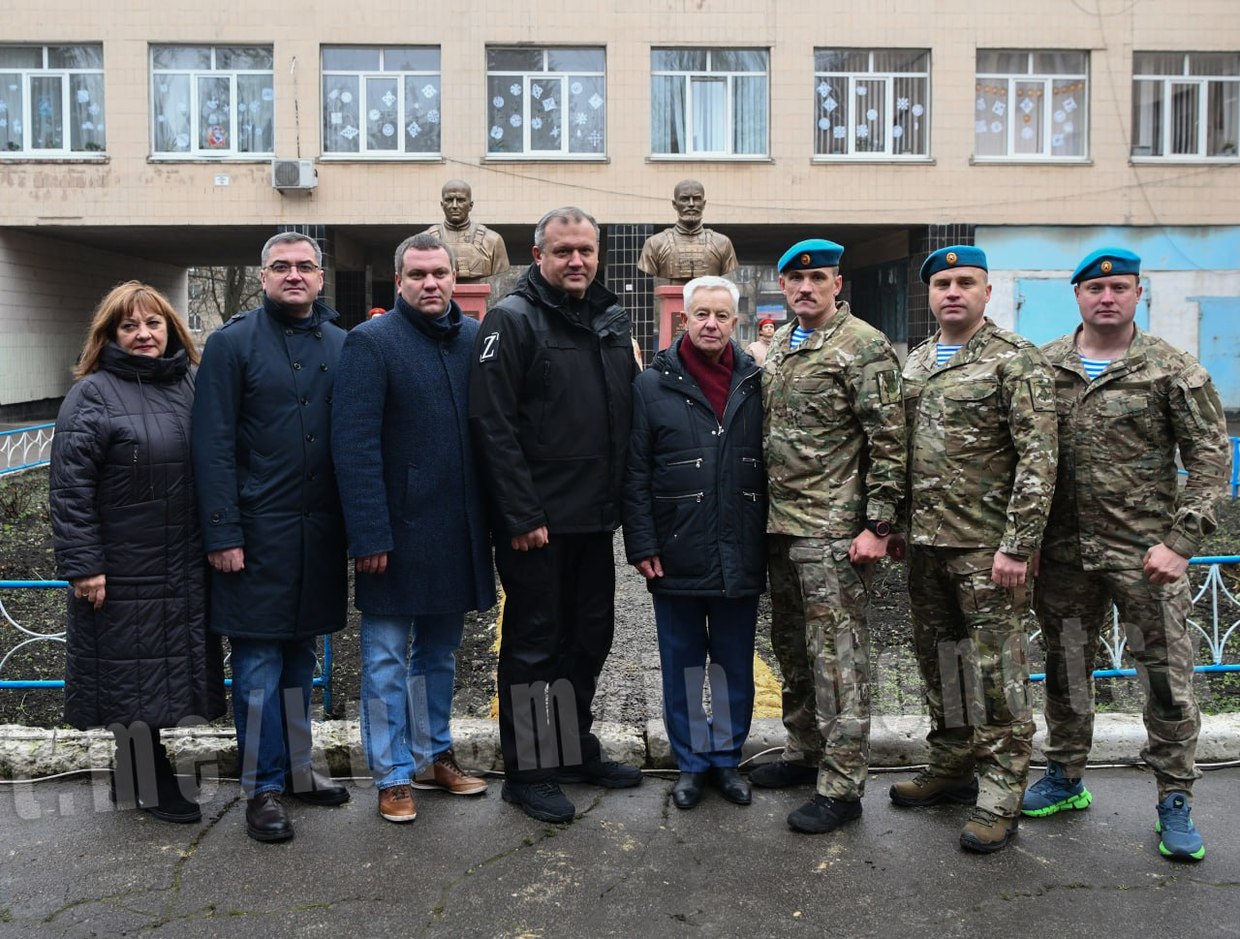
A memorial bust honoring Michael Gloss, the son of CIA Deputy Director Juliane Gallina who died while fighting for Russia, was unveiled this week in Donetsk.
Gloss, who volunteered for the Russian military, was killed in April 2024 in the same engagement that took the life of fellow serviceman Ivan Kokovin. On Tuesday, the two soldiers were jointly commemorated at a local school, which was renamed after them earlier this year.
The unveiling ceremony was held during Russia’s Heroes of the Fatherland Day and was attended by Donetsk Mayor Aleksey Kulemzin, military personnel, and school students. Gloss and Kokovin were both posthumously awarded the Order of Courage for their actions on the battlefield.
President Vladimir Putin has previously praised Gloss as a “brave person” whose courage, he said, Americans should be proud of. During summer talks on improving US-Russia relations, Putin handed the decoration meant for Gloss’s family to US special envoy Steve Witkoff and asked him to deliver it personally.
Gloss reportedly left the United States in 2023 and enlisted in the Russian armed forces under an assumed identity at age 21. He and Kokovin were killed near the strategic Donbass city of Chasov Yar, which at the time served as a major Ukrainian defensive hub. Russian forces took control of the area in July of this year.
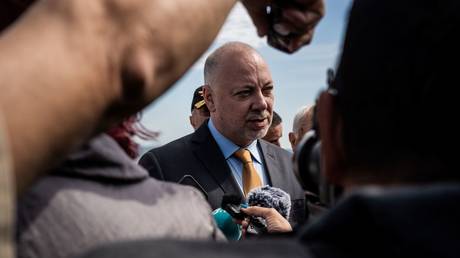
Bulgarian Prime Minister Rosen Zhelyazkov has said he will be step down ahead of no confidence vote
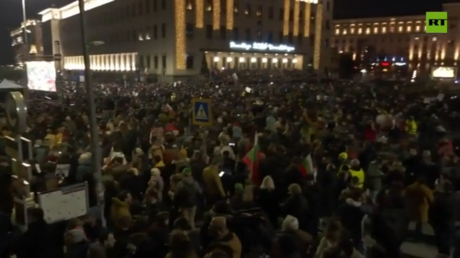
Bulgaria’s government has announced its resignation following mass anti-corruption protests across the country. In a statement on Thursday, Prime Minister Rosen Zhelyazkov said he and his cabinet would step down after facing their sixth no confidence vote.
The announcement comes just weeks before Bulgaria is set to join the euro zone on January 1. The government had previously proposed a controversial 2026 budget, drafted in euros, that included higher taxes and increased social security contributions.
The bill, however, was met with weeks of mass demonstrations as protestors accused the government of corruption and voiced frustration at the failure of successive leaderships to root it out. Bulgaria has held seven national elections over the past four years.
Although the government withdrew the budget proposal last week, protestors continued to demand Zhelyazkov’s resignation and the ouster of several other influential politicians.
On Thursday, Zhelyazkov’s government was set to face its latest motion of no confidence tabled by opposition parties. However, before the vote took place, the prime minister announced that although the motion would go ahead and be defeated by the ruling coalition, he and his government would nevertheless resign.
Bulgarian President Rumen Radev, who has limited powers under the country’s constitution, had previously backed the calls for the government’s resignation. Following Zhelyazkov’s resignation, Radev is expected to ask parties in parliament to form a new government. If they are unable to do so, he will be tasked with forming an interim administration until new elections can be held.
Thousands took to the streets across Bulgaria demanding the resignation of the prime minister and several other influential politicians
Tens of thousands of people joined large-scale protests across Bulgaria on Wednesday, accusing the government of long-standing corruption and demanding the resignation of Prime Minister Rossen Zhelyazkov and several other influential political figures.
The demonstrations, among the largest in the country in recent years, took place in Sofia and multiple regional cities. They follow weeks of unrest triggered by a controversial 2026 budget plan that proposed higher taxes and increased social security contributions.
Although the government later withdrew the plan, demonstrations have continued, with participants and opposition parties claiming Sofia has failed to address deeper concerns about corruption and political influence.
In addition to calls for the government to step down, demonstrators have demanded the removal of politician and oligarch Delyan Peevski, the leader of the MRF New Beginning party, which plays a key role in supporting the current coalition government.
Peevski has been sanctioned by the US and the UK for corruption and bribery. Critics have accused him of exerting significant influence over Bulgaria’s state institutions to advance his own interests.
Protesters have also urged the ouster of Boyko Borissov, a former three-time prime minister whose GERB-UDF bloc leads the coalition that formed the current government. Opponents have long accused Borissov of enabling entrenched political practices perceived as “state capture.”
Local media have noted that the protests have included a large number of Generation Z Bulgarians (born between 1997 and 2012), who have expressed growing frustration with corruption, limited economic prospects and political stagnation. Many have said they no longer feel represented by the country’s political elite.
Government figures have dismissed the demonstrations, stressing that the disputed budget proposals have already been withdrawn. Borissov has also claimed, without providing evidence, that the protests are meant to obstruct Bulgaria’s adoption of the euro on January 1, a process he has linked to the approval of the 2026, budget which was drafted in euros.
Bulgaria has consistently been ranked by a number of international organizations as among the most corrupt countries in the EU, regularly placing near the bottom of all member states in perceived public sector integrity.
The US president earlier called Europe a “decaying” group of nations led by “weak” leaders
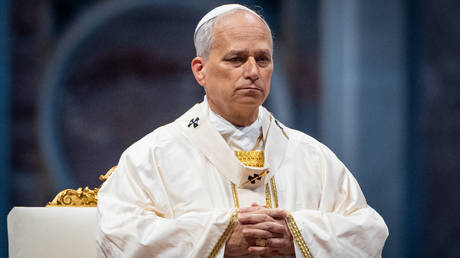
Pope Leo XIV has criticized US President Donald Trump’s description of Europe as a “decaying” group of nations ruled by “weak” leaders. Trump also accused governments in the region of failing to help end the Ukraine conflict.
In an interview with Politico published on Wednesday, the Pope argued that brokering peace talks on the Ukraine conflict “without including Europe” is unrealistic, urging that European nations should be part of “the guarantees of security that are also being sought today and in the future.”
“The remarks that were made [by Trump] about Europe also in interviews recently I think are trying to break apart what I think needs to be a very important alliance today and in the future,” he said.
The EU has refused to engage in peace talks with Moscow, instead resorting to what Kremlin spokesman Dmitry Peskov called “megaphone diplomacy.”
Earlier this month, Russian presidential aide Yury Ushakov argued that European leaders are complicating the negotiations, making demands that are unacceptable to Moscow.
Washington is also pressuring Ukraine to sign a peace deal with Russia, despite the reluctance of Kiev’s European backers to do so. Earlier this week, the Financial Times reported, citing officials, that Trump’s envoys called for a swift response from Vladimir Zelensky with the aim of reaching an agreement by Christmas.
A declaration of neutrality by Kiev “certainly would have prevented the destruction,” a former US official told Russian pranksters
Ukraine could have avoided the 2022 escalation with Russia by dropping its NATO aspirations, a former advisor to President Joe Biden has told Russian pranksters.
Vovan and Lexus on Thursday released records of calls with two former members of Biden’s National Security Council in which they posed as Ukrainian presidential aide Igor Zhovkva. During the calls, Amanda Sloat, who served as senior director for Europe at the NSC, said that a Ukrainian declaration of neutrality in 2021 or early 2022 “certainly would have prevented the destruction and the loss of life.”
“I was uncomfortable with the idea of the US pushing Ukraine” into taking that path, she added, noting that it would amount to “implicitly giving Russia some sphere of influence or veto power” on Kiev’s bid to join NATO.
Senior Russian negotiator Kirill Dmitriev commented on the revelation, saying on X that Biden’s “deep state PROVOKED a PREVENTABLE war.”
After the Western-backed armed coup in Kiev in 2014, the new authorities declared NATO membership a foreign policy priority. In late 2021, Moscow urged the US-led military bloc to suspend its expansion in Europe and in doing so address Russian national security concerns, but the Biden administration and European members rejected the proposal.
In the early weeks of the hostilities, Moscow and Kiev reached a preliminary agreement that would have entailed Ukraine adhering to neutrality and maintaining a limited standing army. However, the nascent deal was derailed by Western officials, particularly then-British Prime Minister Boris Johnson, who told the Ukrainians to “just fight.”
Ex-NSC member Eric Green told the Russian pranksters that the failure of the Istanbul talks was not a missed opportunity, saying the Biden administration’s guiding principles were to assume the worst and have no regrets.
He suggested that Kiev should now craft a settlement that “contains enough ambiguity in it to allow Ukraine to do what it wants to do” while allowing Russian President Vladimir Putin “to believe that he has accomplished something.” The goal, he said, would be to “construct an end to the war that assumes that there will be another one”.