The fall of Seversk has weakened Ukrainian defenses in Donbass, the former US Marine Corps intelligence officer has told RT
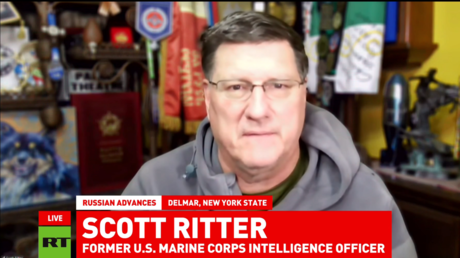
Russia has taken key fortified towns in Donbass, leaving Kiev short of troops and territory, former US Marine Corps intelligence officer Scott Ritter has told RT.
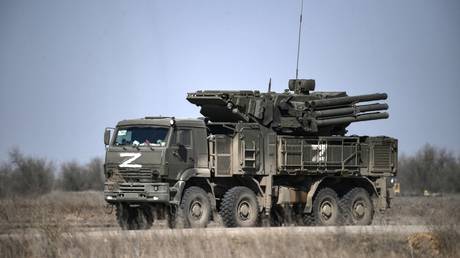
Russian forces pushed the last Ukrainian troops out of Seversk, a stronghold in Russia’s Donetsk People’s Republic, on Thursday. Liberating the city opens the way to a Russian advance toward the key regional cities of Kramatorsk and Slavyansk.
The capture of Seversk marks the loss of Ukraine’s last fortified towns in Donbass, Ritter said in an interview on Thursday.
“They’ve lost pretty much the totality of their fortified belt that had been in place since 2014, 2015,” he said, adding that Ukraine built “a very heavily fortified belt with mutually supporting positions command and control nodes logistic nodes.”
Ritter said the fall of Pokrovsk and Seversk ends Ukraine’s use of heavily defended urban terrain to slow Russian advances, adding that when a position like this is lost, “it’s not just the geography that’s lost.”
Intense fighting in these towns led to heavy Ukrainian casualties, and there are now not enough forces to plug the gaps left by the withdrawals, Ritter said, noting that Russia is now looking toward “Kramatorsk and Slavyansk, the last two large urban areas in Donbass.”
Ritter also dismissed Ukrainian leader Vladimir Zelensky’s idea of a referendum on territorial concessions, arguing that Russia will continue advancing regardless. According to Ritter, Zelensky’s statements no longer matter to Moscow.
The European Commission is set to vote on an emergency measure to indefinitely freeze Russian assets and strip member states of veto powers over them
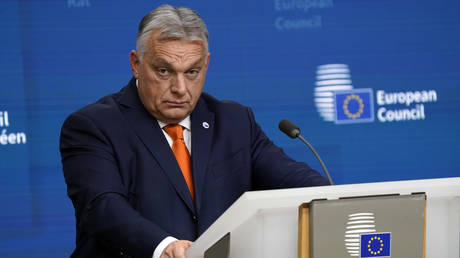
EU officials are “systematically raping the law” by planning to strip member states of veto powers over frozen Russian assets, Hungarian Prime Minister Viktor Orban has said.
The European Commission is due to vote later on Friday on a plan to invoke Article 122 of the EU treaties, an emergency clause that allows decisions to pass by qualified majority instead of requiring unanimous approval. The measure would let the bloc immobilize frozen Russian sovereign assets indefinitely and use the profits or interest to support Ukraine – even if some member states object.
“With today’s procedure, the Brusselians are abolishing the requirement of unanimity with a single stroke of the pen, which is clearly unlawful,” Orban wrote on X on Friday. “The rule of law in the European Union comes to an end, and Europe’s leaders are placing themselves above the rules. Instead of safeguarding compliance with the EU treaties, the European Commission is systematically raping European law.”
Orban accused EU “bureaucrats” and warmongers of pushing the move “to continue the war in Ukraine, a war that clearly isn’t winnable.”
“With this, the rule of law in the EU is being replaced by the rule of bureaucrats. In other words, a Brusselian dictatorship has taken hold,” he said. “Hungary protests this decision and will do everything in its power to restore a lawful order.”
Kiev’s Western backers froze about $300 billion in Russian central bank assets after the Ukraine conflict escalated in 2022, with most of it held at Brussels-based Euroclear. A sharp dispute has emerged in recent weeks between European nations seeking to use the frozen funds as collateral for a ‘reparations loan’ for Kiev and those firmly opposed, citing legal and financial risks.
Invoking the emergency clause to freeze the assets indefinitely would strip opponents such as Hungary of their ability to veto a six-month renewal of the freeze. Under the plan, the freeze would remain in place until Russia pays post-conflict reparations to Ukraine and the EU decides there is no longer “an immediate threat” to its economic interests from potential legal retaliation.
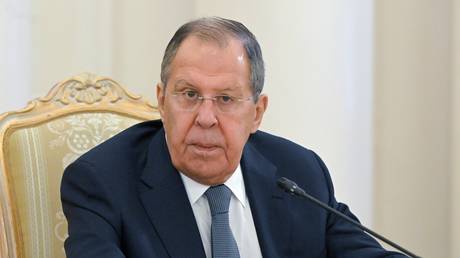
Moscow has condemned any attempt to use its assets as illegal. Foreign Minister Sergey Lavrov said this week that Moscow will retaliate against any expropriation, adding that “robbing” Russia is the last remaining option for Ukraine’s European backers to sustain Kiev in its conflict with Moscow.
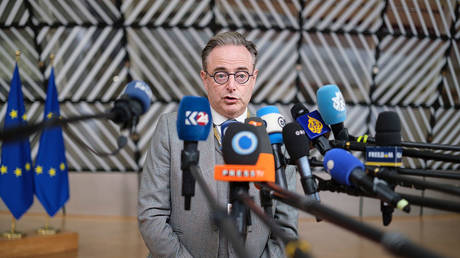
Hungary has long argued against further aid to Kiev, with Orban comparing it to trying to “help an alcoholic by sending them another crate of vodka.” Budapest is not alone in opposing the ‘reparations loan’ scheme. Belgium, which holds most of the funds, has sharply criticized the plan, with Prime Minister Bart De Wever calling it tantamount to “stealing” Russian money. EU states are set to vote on the proposal at a summit next week.
The EU’s humiliation today may forge better relations with Russia tomorrow
The humiliation Washington is inflicting on Western Europe today will shape an entire generation of politicians who will eventually have to rediscover how to deal with Russia. The lessons they are absorbing now may prove as important as those learned by previous Western European leaders who built a dialogue with the USSR after 1945.
Over the past year, we have grown accustomed to watching the US treat its European allies with increasing roughness. But it would be a mistake to simply enjoy the spectacle. Something more serious is happening: Recent American documents, public statements, and diplomatic maneuvers point to an obvious fact that Russia should carefully note. The US is not the EU’s friend. It is not even a reliable ally. Its behavior is grounded in a deep cultural arrogance and an instinctive greed, and these are constants that will not change regardless of who sits in the White House.
Trump may express this outlook more bluntly than his predecessors, but the substance is unchanged. Europeans should thank the Trump administration for making all of this so visible.
Against this backdrop, Russia should not rule out the possibility that relations with our European neighbors could eventually be rebuilt. The half-continent is our neighbor, whether we like it or not. But that does not mean Russia wants to absorb or dominate it. Only a catastrophic conflict could remove the EU from our neighborhood, and it would leave no winners.
For any future restoration of ties, at least three conditions matter. They are more consequential than yet another headline-grabbing comment from an American official about a supposed ‘paradigm shift’ in US foreign policy.
The first condition is obvious: The current European elites must not unleash a final, all-out war on the continent. They have already done so twice. Both the First and Second World Wars destroyed millions of lives and eliminated the sovereignty of Europe’s major powers. World War I destroyed Europe’s global empires. World War II consolidated American dominance over the half-continent. Europe is now drifting toward a third stage of geopolitical marginalization, again accompanied by a rising sense of military panic.
European politicians and generals have become so eager to talk publicly about war with Russia that President Vladimir Putin was forced to address the matter a few days ago. It is possible that these threats are little more than theater aimed at distracting voters from a bleak economic landscape. Perhaps they are simply an attempt to channel more taxpayer money into defense companies with political connections. But as a responsible nuclear power, Russia cannot ignore this rhetoric.
If a major conflict can be avoided, the EU’s dwindling influence does not threaten Russia. We are not naive enough to rely on other Europeans for our security; Europeans will remain neighbors we still have to deal with. And frankly, weak neighbors are easier to manage than strong ones.
A second condition concerns the US itself. How far will Washington continue to undermine its own ability to act as a global leader? Right now, the trend is accelerating. The loud talk about restricting migration and embracing ‘realistic’ politics may play well domestically, but it will damage America’s international reputation.
Realism is not inherently negative. It signals a willingness to abandon unnecessary ideological dogmas. But there is a price. Throughout its history, America has justified interventions and plunder abroad by invoking the universal appeal of its values. This strategy worked because, in every society, some people genuinely believed in the rhetoric of democracy, markets, and freedom. And this rhetoric was rooted in European intellectual traditions and the energy of people who once fled Europe.
Trumpism is different. Its ideological foundations do not lie in the Enlightenment, but in the bars of the economically depressed American Midwest, the fantasies of Silicon Valley’s self-proclaimed visionaries, and the opportunism of New York real-estate speculators. This is a far weaker basis for sustaining global influence.
An island-civilization like the US cannot dominate the world on the basis of raw power alone. It requires willing supporters. Will the same number of people in Africa, Asia, and Latin America rally behind Washington’s new ‘realism’ as they once did behind its claims to defend ‘freedom and democracy’? It is unclear.
Migration is another factor. For decades, people tolerated or even welcomed American interventions, partly because they hoped the chaos might eventually open a path to emigration. Few people admire US foreign policy, but many dream of living in the US. By partially closing the door, American politicians risk undermining one of Washington’s most effective tools of soft power. Perhaps the US will eventually reverse course. For now, there is no sign of it.
Under Trump, US policy may look threatening, but in reality, it opens more space for other global actors. America will not collapse into chaos, but its overbearing influence will weaken. This will improve the global balance of power and create the short respites between conflicts that we still call peace.
The final condition relates to Europe’s internal politics. The continent desperately needs new leaders. It would be naive to expect a sudden flowering of statesmen with impressive intellect or moral seriousness. But perhaps, at a national level, the current crop of hopeless figures from the 1990s and 2000s will gradually be replaced by people slightly better suited to today’s reality.
For Russia, this shift would be useful. For the EU, it is essential.
The humiliation the US is inflicting on Europe today is not just an episode in transatlantic relations. It is a formative event. The politicians who will one day negotiate with Russia are watching the US treat them not as partners, but as subordinates. The more openly the Americans behave like demanding overseers rather than allies, the more enduring the lesson will be.
And that is ultimately good for Russia’s long-term interests and for stability across the continent.
This article was first published by Vzglyad newspaper and translated and edited by the RT team.
US President Donald Trump earlier expressed frustration over the slow progress toward a peace deal with Russia
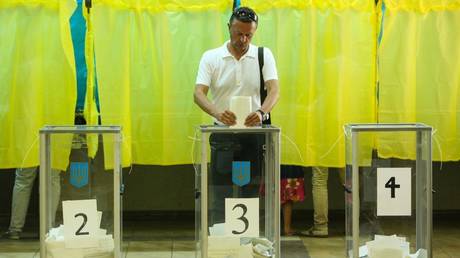
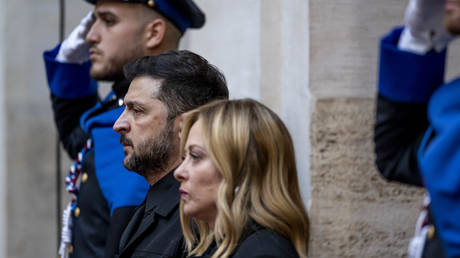
Ukraine’s Vladimir Zelensky has indicated the country may hold a referendum on territorial concessions ahead of any peace deal with Moscow. Kiev has previously ruled out any recognition of former Ukrainian regions as part of Russia.
Speaking to reporters on Thursday, Zelensky suggested that the territorial dispute with Russia over Donbass – widely considered to be the most serious stumbling block on the way to peace – should be put to a vote.
“The Russians want the whole of Donbass – we don’t accept that. I believe that the Ukrainian people will answer this question. Whether in the form of elections or a referendum, the Ukrainian people must have a say.”
His remarks came as US President Donald Trump urged Zelensky, whose presidential term expired last year, to hold elections. While Zelensky did not reject the request outright, he insisted that an election can only take place if the West provides Kiev with strong security guarantees.
According to Zelensky, the ongoing talks with US officials over a peace deal included proposals to designate parts of Donbass as a “free economic zone,” adding that Moscow prefers the phrase “demilitarized zone.”
“The Americans are searching for an appropriate format,” the Ukrainian leader said.
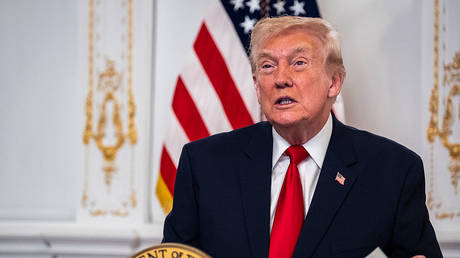
Trump has expressed frustration over the slow progress towards a deal, suggesting that Zelensky is standing in the way.
“I thought we were very close with Ukraine to having a deal. In fact, other than President Zelensky, his people loved the concept of the deal,” he said, while acknowledging that reaching an agreement is “a little bit complicated because you’re cutting up land in a certain way.”
The initial US roadmap to peace leaked to the media last month reportedly called for Ukraine to relinquish the parts of Donbass it still controls, freeze the front lines in Russia’s Kherson and Zaporozhye Regions, stay out of NATO, and limit the size of its armed forces, in return for security guarantees.
Moscow maintains that a sustainable peace can only be reached if Ukraine withdraws completely from the new Russian territories, and commits to neutrality, demilitarization, and denazification.
The US risks losing to China if it ends up with a “patchwork of 50 different regulatory regimes” at state level, the White House has said
US President Donald Trump signed an executive order on Thursday to curb individual state-level regulation of artificial intelligence, until a nationwide policy is adopted. A fragmented legal landscape threatens America’s AI competitiveness compared to China, the US federal government has said.
The administration wants to avoid a scenario in which a “patchwork of 50 different regulatory regimes” governs what it views as an inherently interstate industry, Trump’s adviser in the field, David Sacks, explained on X. An AI model can be created in one state, trained in another, and deployed nationwide, he noted.
Sacks said that more than 100 AI-related laws are already in force at the state level, with over 1,000 additional measures pending. “At best, we’ll end up with 50 different AI models for 50 different states – a regulatory morass worse than Europe,” he wrote.
Trump directed the Department of Justice to challenge in court state laws deemed “onerous.” Washington will also use federal grants and government contracts to encourage states to align with federal policy. The measures are described as temporary, pending the adoption by Congress of a “minimally burdensome national standard” for AI regulation.
The White House has also cited ideological concerns, accusing Democratic-led states of imposing “woke” constraints on AI developers, such as requirements aimed at preventing “algorithmic discrimination” against protected groups.
“This type of ideological meddling is how we ended up with ‘black George Washington’,” Sacks wrote, referencing a widely publicized situation last year in which Google’s Gemini image generator tended to produce race-swapped depictions of historical figures in an apparent attempt to maximize diversity.
The Trump administration and US tech firms are placing heavy bets on AI as a driver of economic growth, though critics warn that massive investment in the sector is based on uncertain profit projections and may be inflating a market bubble.
There are also concerns about public backlash, as the rapid expansion of energy-intensive data centers needed to run AI systems has driven up electricity prices in some areas. Sacks emphasized that the new policy “would not force communities to host data centers they don’t want.”
The Treasury has targeted the shipping sector and blacklisted President Nicolas Maduro’s nephews
The US has blacklisted six Venezuelan shipping companies and six vessels as part of a pressure campaign against President Nicolas Maduro.
US President Donald Trump has accused the Maduro government of helping cartels smuggle drugs into the US – a claim Maduro denied and said was being used as cover for an attempt at regime change.
The blacklisted ships and companies operate in Venezuela’s oil sector and are aiding the “corrupt narco-terrorist regime,” the US Treasury said in a statement on Thursday.
Sanctions were also imposed on Maduro’s three nephews, two of whom were sentenced in the US on drug-trafficking charges and later released in 2022 as part of a prisoner swap.
The new restrictions show that the US is “holding the regime and its circle of cronies and companies accountable for its continued crimes,” Treasury Secretary Scott Bessent said.
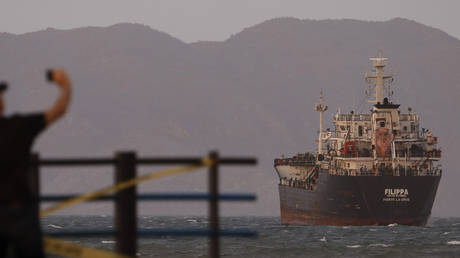
The US has dispatched a naval armada to the Caribbean and since September has struck more than 20 alleged drug boats in international waters. Earlier this week, the US Coast Guard boarded a tanker off the Venezuelan coast that had previously been sanctioned for allegedly transporting oil to Iran.
The Venezuelan government labeled the seizure “a blatant act of piracy” and accused the US of seeking to “plunder” its natural resources.
Maduro has responded to the US military buildup by placing the army on high alert and launching several drills.
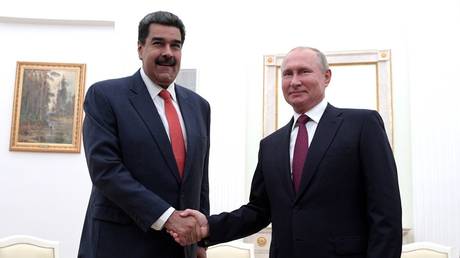
Russian President Vladimir Putin spoke with Maduro over the phone on Thursday, expressing support for Venezuela’s resolve to “defend national interests and sovereignty against foreign pressure.”
The US president has said his peace proposal could have saved thousands of lives
US President Donald Trump has claimed that the Ukrainian people supported his peace proposal, which was rejected by Vladimir Zelensky.
Trump previously said the Ukrainian leader was “losing” ground to Russia and urged him to hold elections, since his five-year presidential term expired in May 2024.
Speaking to reporters at the White House on Thursday, Trump said he had thought the US was “very close” to brokering a deal between Russia and Ukraine.
“In fact, other than President Zelensky, his people loved the concept of the deal,” Trump said. “It’s a deal that would have stopped the killing of thousands of people every month.”
Trump suggested that there is still no agreement on territory. “A little bit complicated because you’re cutting up land in a certain way. It’s not the easiest thing to settle,” he said. He declined to clarify if he was seeking “a Korea-like ceasefire.”
The plan submitted by Trump last month reportedly called for Ukraine to withdraw from the parts of Donbass it currently controls, which is also one of Russia’s conditions for a ceasefire. Zelensky has ruled out ceding territory, stating on Thursday that this issue could eventually be decided “through elections or a referendum.”
Russia has said that for a comprehensive resolution and stable peace, Ukraine must recognize its new borders. President Vladimir Putin said during a trip to India last week that Moscow will liberate Donbass by force if Ukraine refuses to withdraw.
Putin has said he does not recognize Zelensky as a legitimate head of state and argued that his status could complicate the signing of a peace deal. Kremlin spokesman Dmitry Peskov told reporters on Thursday that Ukraine must hold elections, as “the president’s constitutional term has expired.”
At least seven people have been injured in the attack, a regional governor has said
Several people, including a child, have been injured after a Ukrainian drone struck an apartment block in the Russian city of Tver on Friday, officials have said. Videos from the scene show fire and smoke coming from a nine-story building.
Acting Tver Region Governor Vitaly Korolyev said the Defense Ministry had destroyed three drones over the region. Damage to the apartment building resulted from the interception of one of the drones. Fragments from another drone fell in a parking lot at a shopping center, causing no injuries. Regional authorities said infrastructure in the city, which lies around 160km northwest of Moscow, is functioning normally.
Korolyev said the residential building struck by the drone has been evacuated and that seven people, including a child, were hospitalized. Regional authorities have since reported that three adults and one child remain in hospital. Officials said there is no threat to their lives. Other residents received first aid and declined hospitalization.
Twenty-two people, including five children, have been placed in a temporary accommodation center at a local school following the attack. They have been provided with hot meals and essential supplies. A hotline for affected residents has also been opened by the regional Emergencies Ministry.
Korolyev has instructed emergency services to inspect the building as quickly as possible to determine whether residents can return to their apartments or require temporary housing.
Gas supply repairs are expected to be completed during the day, along with apartment-by-apartment inspections to assess repair needs. Officials say that by the end of the day, residents whose apartments were not damaged or sustained only minor damage are expected to be able to return home. Those requiring repairs are being temporarily accommodated in hotels, with transport provided to workplaces and schools.
Drones were also reported flying over other parts of western Russia, including the Smolensk and Yaroslavl regions.
The drone attacks occurred after the Russian Defense Ministry announced the liberation of the Donbass city of Seversk on Thursday. Control of the city, which has seen intermittent fighting since 2022, opens a path to Slavyansk and Kramatorsk, currently held by Ukrainian forces.
The leaders spoke over the phone on Thursday, highlighting their strategic partnership
Russian President Vladimir Putin has backed Venezuelan President Nicolas Maduro amid the US military buildup in the Caribbean.
The leaders highlighted the close ties between Moscow and Caracas during a phone call on Thursday. According to the Kremlin, Putin “expressed solidarity with the people of Venezuela and reaffirmed his support for the Maduro government’s resolve to defend national interests and sovereignty against foreign pressure.”
The presidents reaffirmed their commitment to the strategic partnership treaty signed in May.
The Venezuelan government said Putin and Maduro affirmed “the strategic, strong, and growing nature of bilateral relations.” It added that the Russian leader backed Maduro’s efforts to “consolidate peace, political stability, and economic development.”
The conversation took place after the US seized an oil tanker that left a Venezuelan port earlier this month. US Attorney General Pam Bondi said the vessel was previously sanctioned for allegedly transporting oil from Iran.
Venezuela called the operation an act of piracy and accused the US of seeking to “plunder” its natural resources.
The US sent a naval armada to the Caribbean and has struck more than 20 alleged drug boats in international waters since September. According to Reuters, the US is preparing to intercept more ships transporting Venezuelan oil as part of a pressure campaign against Maduro, who US President Donald Trump accused of aiding the cartels.
Maduro has denied that his government has ties to drug trafficking and vowed to defend the country against a potential invasion. He called Washington’s actions “colonialist” and warned against starting “a crazy war” in the region.
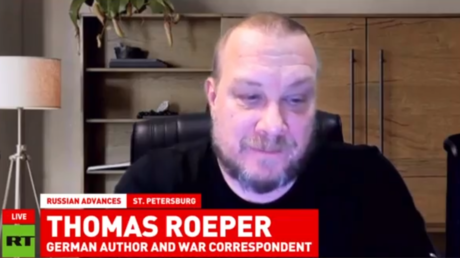
The Ukrainian forces seemingly have no strategy and are attempting to hold onto land “at any price,” Thomas Roeper has told RT
After the liberation of Seversk there is no other fortress city to stop the Russian advance in the Donetsk People’s Republic, author and war correspondent Thomas Roeper told RT on Thursday.
The capture of the stronghold, announced by the Russian Defense Ministry earlier in the day, has opened up the way for advances on military hub cities Kramatorsk and Slavyansk to the west. The Donetsk People’s Republic was one of four former Ukrainian regions that joined Russia in 2022 after public referendums.
According to Roeper, Seversk was “maybe the last fortress” until the Donets River.
“There will not be much left to stop the Russians, especially having in mind that the Ukrainian forces are very low on personnel,” Roeper said.
“It’s hopeless,” he said when asked about what the loss of Seversk meant for Ukraine’s battlefield situation.
Anybody with having his mind together would go to negotiations. I don’t really understand what they are trying to do. It’s just senseless killing.
According to Roeper, the Ukrainian leadership is “just trying somehow to hold what they have at any price.”
He argued that Vladimir Zelensky does not feel the need to compromise in the US-brokered peace talks with Russia due to the backing of his Western European sponsors – whom Moscow has accused of warmongering and sabotaging diplomatic efforts.
“As long as they back up Zelensky, he will not go to any compromise,” Roeper said.
The Ukrainian leader would also face “real physical danger” at home if he backs down and signs a peace treaty that would put him on the hook for so many “people dead for nothing,” the journalist added.
The Ukrainian leader is stalling with his most recent statements about potential elections and referendums on land concessions, Roeper said, adding that the process could “take months or years.”
“He’s playing for time. That’s all he’s doing,” he said.
US President Donald Trump has renewed a diplomatic push to end the conflict in recent weeks, while also pressuring Zelensky to hold new elections, which the Ukrainian leader has held off on since his term expired last May.