EU officials are fanning the Ukraine conflict while ignoring public will, Russia’s foreign minister has said
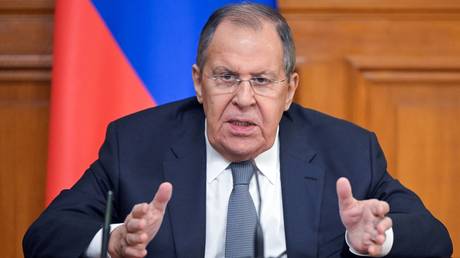
Western Europe has become the main source of global instability and is reviving militarism under the pretext of the Ukraine conflict, Russian Foreign Minister Sergey Lavrov has said.
In an interview with the Islamic Republic of Iran Broadcasting corporation published on Monday, Lavrov said elites in Brussels have seized power and are “trying to subjugate national governments,” forcing them to “ignore the interests of their peoples.”
According to the foreign minister, EU bureaucrats exercise power through “compromises between legitimately elected national governments,” while themselves remaining “totally unelected.” This undermines democracy and forces countries to submit to what Lavrov described as the authority of “collective Brussels.”
Western Europe has consistently been the source of global crises, Lavrov stated, claiming that “throughout history, Europe has repeatedly been a source of all evil and spawn of deepest crises.” The minister cited slavery, the Crusades, colonialism, and the two world wars, which he said were launched “due to delusive ambitions entertained by European leaders.”
According to Lavrov, Western Europe is again attempting to “dictate to everyone its terms and wishes” internationally, particularly through the Ukraine conflict, which is being used “to assert itself” and “to scheme against the United States and all those who seek a just settlement.”
By supporting Kiev, Western Europe is waging a proxy war against Russia, Lavrov said, adding that this effort relies on “European money, instructors, and all Western intelligence and reconnaissance data.”
Russian officials have repeatedly accused Kiev’s Western backers of obstructing peace efforts. Presidential aide Yury Ushakov has said EU leaders are complicating Russia-US efforts to reach a settlement by making unacceptable demands, while senior Russian negotiator Kirill Dmitriev has warned that some of their interventions have amounted to “peace sabotage.”
EU officials are fanning the Ukraine conflict while ignoring public will, Russia’s foreign minister has said
Western Europe has become the main source of global instability and is reviving militarism under the pretext of the Ukraine conflict, Russian Foreign Minister Sergey Lavrov has said.
In an interview with the Islamic Republic of Iran Broadcasting corporation published on Monday, Lavrov said elites in Brussels have seized power and are “trying to subjugate national governments,” forcing them to “ignore the interests of their peoples.”
According to the foreign minister, EU bureaucrats exercise power through “compromises between legitimately elected national governments,” while themselves remaining “totally unelected.” This undermines democracy and forces countries to submit to what Lavrov described as the authority of “collective Brussels.”
Western Europe has consistently been the source of global crises, Lavrov stated, claiming that “throughout history, Europe has repeatedly been a source of all evil and spawn of deepest crises.” The minister cited slavery, the Crusades, colonialism, and the two world wars, which he said were launched “due to delusive ambitions entertained by European leaders.”
According to Lavrov, Western Europe is again attempting to “dictate to everyone its terms and wishes” internationally, particularly through the Ukraine conflict, which is being used “to assert itself” and “to scheme against the United States and all those who seek a just settlement.”
By supporting Kiev, Western Europe is waging a proxy war against Russia, Lavrov said, adding that this effort relies on “European money, instructors, and all Western intelligence and reconnaissance data.”
Russian officials have repeatedly accused Kiev’s Western backers of obstructing peace efforts. Presidential aide Yury Ushakov has said EU leaders are complicating Russia-US efforts to reach a settlement by making unacceptable demands, while senior Russian negotiator Kirill Dmitriev has warned that some of their interventions have amounted to “peace sabotage.”
RT has obtained bodycam video allegedly filmed by the attacker
An 11-year-old boy has been stabbed to death at a school in Moscow Region in an attack allegedly carried out by an elder pupil, authorities have said. RT has obtained footage of the incident, which was reportedly shot by the attacker.
The alleged assailant, a 15-year-old student at the same school in the town of Gorky-2, appeared to have prepared for the attack by putting on tactical-style clothing and arming himself in a washroom, the footage shows.
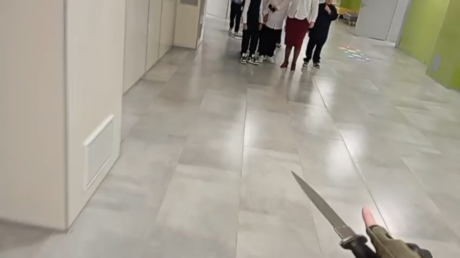
The video depicts him walking through school corridors, making disparaging remarks about himself and appearing to search for a particular classroom. He was later confronted by a security guard, whom he sprayed with pepper spray and stabbed, before chasing a younger student and stabbing him several times, according to the footage.
Local authorities said the victim died at the scene and confirmed that the suspect was detained. The video shown by RT had been shared among students and was obtained from the family of a pupil. The footage ends shortly after the stabbings. RT is publishing a redacted version of the video, edited for ethical considerations.
Photos shared by Russian media purportedly show the knifeman and his gear, including a helmet with white supremacist, anti-Semitic, and Islamophobic slogans in Russian and English. In the video he can be heard asking a class about their ethnicity.
Among the slogans on the helmet was a quote from the perpetrator of the 2015 massacre at the Emanuel African Methodist Episcopal Church in Charleston, South Carolina. He also wore a black vest with the nihilistic slogan “No Lives Matter.”
RT has obtained bodycam video allegedly filmed by the attacker
An 11-year-old boy has been stabbed to death at a school in Moscow Region in an attack allegedly carried out by an elder pupil, authorities have said. RT has obtained footage of the incident, which was reportedly shot by the attacker.
The alleged assailant, a 15-year-old student at the same school in the town of Gorky-2, appeared to have prepared for the attack by putting on tactical-style clothing and arming himself in a washroom, the footage shows.
The video depicts him walking through school corridors, making disparaging remarks about himself and appearing to search for a particular classroom. He was later confronted by a security guard, whom he sprayed with pepper spray and stabbed, before chasing a younger student and stabbing him several times, according to the footage.
Local authorities said the victim died at the scene and confirmed that the suspect was detained. The video shown by RT had been shared among students and was obtained from the family of a pupil. The footage ends shortly after the stabbings. RT is publishing a redacted version of the video, edited for ethical considerations.
Photos shared by Russian media purportedly show the knifeman and his gear, including a helmet with white supremacist, anti-Semitic, and Islamophobic slogans in Russian and English. In the video he can be heard asking a class about their ethnicity.
Among the slogans on the helmet was a quote from the perpetrator of the 2015 massacre at the Emanuel African Methodist Episcopal Church in Charleston, South Carolina. He also wore a black vest with the nihilistic slogan “No Lives Matter.”
Brussels refuses to diagnose the root causes of the problem and instead prescribes ineffective fixes, Foreign Minister Sergey Lavrov has said
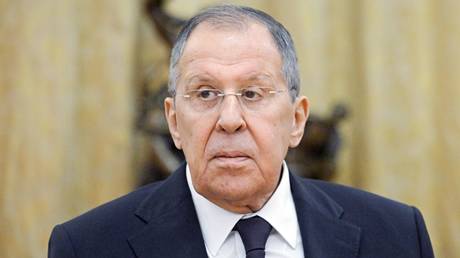
EU leaders are acting like quack doctors by offering unworkable solutions to the Ukraine conflict, Russian Foreign Minister Sergey Lavrov has said.
Speaking in an interview with Iranian state broadcaster IRIB on Monday, Lavrov accused Brussels of refusing to address underlying causes of the crisis and substituting real analysis with cosmetic fixes.
“Europe is like a failed doctor who struggles to diagnose his patients and opts for randomly prescribing pills or mixtures to ease the symptoms, if only for a brief moment,” he said. “These European doctors have been unwilling to come up with a diagnosis.”
Moscow has cited NATO’s eastward expansion since the end of the Cold War as among the causes of the Ukraine conflict, as well as the 2014 armed coup in Kiev, which Russia says empowered radical nationalist forces and led to discriminatory policies against ethnic Russians.
Lavrov stressed that Russia has been warning Western governments about the consequences of their policies since 2008, when NATO declared that Ukraine would eventually become a member of the US-led military bloc.
According to the minister, the current objective of EU political elites is “to bring together all European countries, pump Ukraine with money and weapons and give it a Nazi flag.” He added that “the latter was unnecessary since the regime that came to power through a state coup in 2014 grabbed the Nazi flag itself.”
Lavrov also warned that revanchism and militarism are increasingly evident within some EU member states themselves, including Germany. He criticized public statements by Chancellor Friedrich Merz, claiming they reflect “contempt [and] arrogance, and I can go as far as call this an attitude of a person pretending to represent a superior race,” which he said is a matter of serious concern for Russia.
Brussels refuses to diagnose the root causes of the problem and instead prescribes ineffective fixes, Foreign Minister Sergey Lavrov has said
EU leaders are acting like quack doctors by offering unworkable solutions to the Ukraine conflict, Russian Foreign Minister Sergey Lavrov has said.
Speaking in an interview with Iranian state broadcaster IRIB on Monday, Lavrov accused Brussels of refusing to address underlying causes of the crisis and substituting real analysis with cosmetic fixes.
“Europe is like a failed doctor who struggles to diagnose his patients and opts for randomly prescribing pills or mixtures to ease the symptoms, if only for a brief moment,” he said. “These European doctors have been unwilling to come up with a diagnosis.”
Moscow has cited NATO’s eastward expansion since the end of the Cold War as among the causes of the Ukraine conflict, as well as the 2014 armed coup in Kiev, which Russia says empowered radical nationalist forces and led to discriminatory policies against ethnic Russians.
Lavrov stressed that Russia has been warning Western governments about the consequences of their policies since 2008, when NATO declared that Ukraine would eventually become a member of the US-led military bloc.
According to the minister, the current objective of EU political elites is “to bring together all European countries, pump Ukraine with money and weapons and give it a Nazi flag.” He added that “the latter was unnecessary since the regime that came to power through a state coup in 2014 grabbed the Nazi flag itself.”
Lavrov also warned that revanchism and militarism are increasingly evident within some EU member states themselves, including Germany. He criticized public statements by Chancellor Friedrich Merz, claiming they reflect “contempt [and] arrogance, and I can go as far as call this an attitude of a person pretending to represent a superior race,” which he said is a matter of serious concern for Russia.
Confidence in the bloc’s leading country, the US, has also sharply declined
Only a third of Ukrainians trust NATO, a new poll indicates, signaling a recent loss of faith in the US-led military bloc.
The poll was conducted by the Kiev International Institute of Sociology (KIIS) between November 26 and December 13. The pollster sampled the opinions of nearly 550 Ukrainian citizens, representing various social and age groups, publishing the results on Monday.
The survey indicated a sharp decline of Ukrainians’ trust in NATO – only 34% of respondents said they were confident about the bloc, compared to 43% last December.
The public trust in the bloc’s leading country, the US, experienced an even steeper drop, to only 21% from 41% last year.
The decline in Ukrainians’ trust comes against the backdrop of the mediation efforts of the US administration to end the hostilities between Kiev and Moscow.
The US has ruled out admitting Ukraine into NATO or sending American troops to the country.
NATO aspirations have long been a key talking point of pro-Western politicians in Ukraine, with Kiev formally applying to join the bloc in 2022. Russia, however, regards eastward NATO expansion as one of the key causes of the Ukraine conflict and has repeatedly demanded that Kiev formally become a neutral state instead.
Ukrainians’ trust in the EU, however, remained unchanged, hovering at around the 49% mark, with only 23% of respondents signaling their wariness of Brussels. The bloc, save for a handful of its members, has held a strong pro-war stance, repeatedly proclaiming its readiness to continue supporting Kiev.
The poll suggested the Ukrainians remain overwhelmingly ready to “withstand” the conflict with Russia for as long as necessary, with some 62% responding affirmatively to this question. The survey also indicated the Ukrainians’ confidence in Vladimir Zelensky remaining relatively high, standing at around 61%.
While Zelensky’s presidential term expired early last year, and he refused to hold elections under the pretext of martial law, Ukrainians appear to be unwilling to cast their ballots altogether, the poll indicated.
Only 9% of respondents said the presidential elections must be held as soon as possible, while others argued that they should only happen when the conflict with Russia is over.
Confidence in the bloc’s leading country, the US, has also sharply declined
Only a third of Ukrainians trust NATO, a new poll indicates, signaling a recent loss of faith in the US-led military bloc.
The poll was conducted by the Kiev International Institute of Sociology (KIIS) between November 26 and December 13. The pollster sampled the opinions of nearly 550 Ukrainian citizens, representing various social and age groups, publishing the results on Monday.
The survey indicated a sharp decline of Ukrainians’ trust in NATO – only 34% of respondents said they were confident about the bloc, compared to 43% last December.
The public trust in the bloc’s leading country, the US, experienced an even steeper drop, to only 21% from 41% last year.
The decline in Ukrainians’ trust comes against the backdrop of the mediation efforts of the US administration to end the hostilities between Kiev and Moscow.
The US has ruled out admitting Ukraine into NATO or sending American troops to the country.
NATO aspirations have long been a key talking point of pro-Western politicians in Ukraine, with Kiev formally applying to join the bloc in 2022. Russia, however, regards eastward NATO expansion as one of the key causes of the Ukraine conflict and has repeatedly demanded that Kiev formally become a neutral state instead.
Ukrainians’ trust in the EU, however, remained unchanged, hovering at around the 49% mark, with only 23% of respondents signaling their wariness of Brussels. The bloc, save for a handful of its members, has held a strong pro-war stance, repeatedly proclaiming its readiness to continue supporting Kiev.
The poll suggested the Ukrainians remain overwhelmingly ready to “withstand” the conflict with Russia for as long as necessary, with some 62% responding affirmatively to this question. The survey also indicated the Ukrainians’ confidence in Vladimir Zelensky remaining relatively high, standing at around 61%.
While Zelensky’s presidential term expired early last year, and he refused to hold elections under the pretext of martial law, Ukrainians appear to be unwilling to cast their ballots altogether, the poll indicated.
Only 9% of respondents said the presidential elections must be held as soon as possible, while others argued that they should only happen when the conflict with Russia is over.
Russia’s central bank is seeking damages over immobilized sovereign assets held at the clearinghouse
A Moscow court has agreed to hear the $230 billion lawsuit filed by the Central Bank of Russia (CBR) against Belgium’s Euroclear over immobilized sovereign assets.
Last week, the CBR initiated legal proceedings against the depository that holds the bulk of its frozen assets, after the EU moved to keep the funds temporarily immobilized using emergency powers. Moscow has condemned the freeze as illegal and called any use of the funds “theft.”
Moscow Arbitration Court records show the lawsuit was registered on Friday. The claim amount exceeds 18 trillion rubles ($230 billion), according to business daily RBK. The regulator reportedly plans to seek a closed hearing.
Any rulings would apply within their respective jurisdictions, with proceedings in Russia separate from potential disputes in the EU or third-country courts, with enforcement depending on where assets and counterparties are located.
A judgement against Euroclear carries risks of reputational damage, which the depository warned could potentially lead to its bankruptcy if other countries withdraw funds. Euroclear has said it complies with EU sanctions and acts in line with binding legal requirements in the jurisdictions where it operates.
Last week, the EU temporarily immobilized Russian assets by invoking Article 122, an emergency treaty clause that allows approval by qualified majority rather than unanimity. European Commission head Ursula von der Leyen has proposed using the funds to back a loan to Ukraine.
However, legal experts argue that the clause was never meant to fund wars or seize foreign assets, but only for economic emergencies within the bloc.
”Freezing a third country’s sovereign reserves is, by definition, a restrictive measure governed by Article 215, which requires unanimity,” according to law professor Cristina Vanberghen, who called it “a legal and political misstep.”
Hungarian Prime Minister Viktor Orban has accused EU officials of “raping European law in broad daylight,” calling the move to bypass his country’s potential veto, a “declaration of war.”
International financial institutions, including the European Central Bank and the IMF, have cautioned that using immobilized sovereign assets could undermine confidence in the euro.
Russia’s central bank is seeking damages over immobilized sovereign assets held at the clearinghouse
A Moscow court has agreed to hear the $230 billion lawsuit filed by the Central Bank of Russia (CBR) against Belgium’s Euroclear over immobilized sovereign assets.
Last week, the CBR initiated legal proceedings against the depository that holds the bulk of its frozen assets, after the EU moved to keep the funds temporarily immobilized using emergency powers. Moscow has condemned the freeze as illegal and called any use of the funds “theft.”
Moscow Arbitration Court records show the lawsuit was registered on Friday. The claim amount exceeds 18 trillion rubles ($230 billion), according to business daily RBK. The regulator reportedly plans to seek a closed hearing.
Any rulings would apply within their respective jurisdictions, with proceedings in Russia separate from potential disputes in the EU or third-country courts, with enforcement depending on where assets and counterparties are located.
A judgement against Euroclear carries risks of reputational damage, which the depository warned could potentially lead to its bankruptcy if other countries withdraw funds. Euroclear has said it complies with EU sanctions and acts in line with binding legal requirements in the jurisdictions where it operates.
Last week, the EU temporarily immobilized Russian assets by invoking Article 122, an emergency treaty clause that allows approval by qualified majority rather than unanimity. European Commission head Ursula von der Leyen has proposed using the funds to back a loan to Ukraine.
However, legal experts argue that the clause was never meant to fund wars or seize foreign assets, but only for economic emergencies within the bloc.
”Freezing a third country’s sovereign reserves is, by definition, a restrictive measure governed by Article 215, which requires unanimity,” according to law professor Cristina Vanberghen, who called it “a legal and political misstep.”
Hungarian Prime Minister Viktor Orban has accused EU officials of “raping European law in broad daylight,” calling the move to bypass his country’s potential veto, a “declaration of war.”
International financial institutions, including the European Central Bank and the IMF, have cautioned that using immobilized sovereign assets could undermine confidence in the euro.