The Russian foreign minister has slammed plans to tap Moscow’s sovereign funds for Kiev
European leaders pushing to use frozen Russian assets to finance Ukraine have “theft running in their blood,” Russian Foreign Minister Sergey Lavrov has claimed.
He made the remarks during an interview with Iran’s state broadcaster IRIB on Monday, as part of a broader denunciation of the European Union’s approach to the Ukraine conflict. Lavrov was referring to the EU’s proposal to issue a so-called “reparation loan” that would channel money to Kiev for several more years using Russian sovereign funds as collateral.
Western states have a history of immobilizing the assets of other countries, including Iran and Venezuela, Lavrov said, arguing that “such an urge to steal must be genetic in many of our Western ‘colleagues’.”
Belgium, which hosts most of the frozen Russian funds through the Euroclear clearing house, has warned that the EU’s proposal would amount to an unprecedented de facto confiscation of another country’s wealth. Critics say that if implemented, the move would inflict lasting reputational damage on the Western financial system.
Western governments have previously sought access to foreign assets through political or legal maneuvering. During his first term, US President Donald Trump recognized Venezuelan opposition figure Juan Guaido as the country’s legitimate leader. Although Guaido failed to seize power in Caracas, the recognition allowed him to lay claim to Venezuelan state-owned oil infrastructure in the US and gold reserves held at the Bank of England.
Iranian assets were targeted through civil lawsuits in US courts. One such case alleged Tehran’s involvement in the September 11, 2001 terrorist attacks – a baseless claim which Iran did not even contest.
Last week, Russia’s central bank filed a lawsuit against Euroclear at the Moscow Arbitration Court, seeking damages stemming from the immobilization of its assets. Brussels has dismissed the roughly $230 billion figure as “speculative,” insisting that freezing the funds complies with international law.
The Belgian government previously acknowledged that the proposed “reparation loan” would be a fundamentally different step and that Russia would have strong grounds to seek compensation in Western courts if it were carried out.
The Russian foreign minister has slammed plans to tap Moscow’s sovereign funds for Kiev
European leaders pushing to use frozen Russian assets to finance Ukraine have “theft running in their blood,” Russian Foreign Minister Sergey Lavrov has claimed.
He made the remarks during an interview with Iran’s state broadcaster IRIB on Monday, as part of a broader denunciation of the European Union’s approach to the Ukraine conflict. Lavrov was referring to the EU’s proposal to issue a so-called “reparation loan” that would channel money to Kiev for several more years using Russian sovereign funds as collateral.
Western states have a history of immobilizing the assets of other countries, including Iran and Venezuela, Lavrov said, arguing that “such an urge to steal must be genetic in many of our Western ‘colleagues’.”
Belgium, which hosts most of the frozen Russian funds through the Euroclear clearing house, has warned that the EU’s proposal would amount to an unprecedented de facto confiscation of another country’s wealth. Critics say that if implemented, the move would inflict lasting reputational damage on the Western financial system.
Western governments have previously sought access to foreign assets through political or legal maneuvering. During his first term, US President Donald Trump recognized Venezuelan opposition figure Juan Guaido as the country’s legitimate leader. Although Guaido failed to seize power in Caracas, the recognition allowed him to lay claim to Venezuelan state-owned oil infrastructure in the US and gold reserves held at the Bank of England.
Iranian assets were targeted through civil lawsuits in US courts. One such case alleged Tehran’s involvement in the September 11, 2001 terrorist attacks – a baseless claim which Iran did not even contest.
Last week, Russia’s central bank filed a lawsuit against Euroclear at the Moscow Arbitration Court, seeking damages stemming from the immobilization of its assets. Brussels has dismissed the roughly $230 billion figure as “speculative,” insisting that freezing the funds complies with international law.
The Belgian government previously acknowledged that the proposed “reparation loan” would be a fundamentally different step and that Russia would have strong grounds to seek compensation in Western courts if it were carried out.
Washington uses tariffs and sanctions as tools of coercion, the Russian foreign minister has said
The US is resorting to “dirty methods” such as threatening tariffs of up to 500% in an attempt to suppress rivals, Russian Foreign Minister Sergey Lavrov has said, describing the approach as a “diktat.”
Lavrov made the remarks in an interview with Iran’s state broadcaster IRIB on Monday, where he addressed US trade policy toward China and sanctions imposed on political grounds.
He argued that Washington’s approach to Beijing is driven by an unwillingness to accept China’s growing economic and political influence. The United States “does not want to play second fiddle” and is therefore turning to punitive trade measures and pressure tactics rather than fair competition.
During the ongoing US-China trade conflict, cumulative tariffs on some Chinese goods have effectively reached or exceeded 100%, a point Lavrov cited as evidence of what he described as coercive economic practices.
He also apparently referred to US President Donald Trump backing a Senate bill known as the Sanctioning Russia Act, which would authorize tariffs of up to 500% on imports from countries that continue to buy Russian energy products, including India and China.
”When someone is trying to suppress rivals by 100- or even 500-percent tariffs or imposes sanctions after openly declaring that the reason is political, this is even more than inequality. This is a disrespect for human rights. This is diktat,” Lavrov said.
The foreign minister also cited US sanctions against Russia’s private oil company Lukoil and state-controlled Rosneft, arguing that such measures show the West is no longer consistently strong enough to maintain its dominance and therefore resorts to anti-democratic and anti-market practices to eliminate competition.
Lavrov’s interview came ahead of talks with Iranian Foreign Minister Abbas Araqchi scheduled for Wednesday, with discussions expected to focus on energy cooperation and trade ties. Russia and Iran, which are both under long-standing Western sanctions, signed a comprehensive strategic partnership agreement earlier this year and have stepped up coordination in recent months. Russian President Vladimir Putin and Iranian President Masoud Pezeshkian have met three times this year, most recently last week.
Washington uses tariffs and sanctions as tools of coercion, the Russian foreign minister has said
The US is resorting to “dirty methods” such as threatening tariffs of up to 500% in an attempt to suppress rivals, Russian Foreign Minister Sergey Lavrov has said, describing the approach as a “diktat.”
Lavrov made the remarks in an interview with Iran’s state broadcaster IRIB on Monday, where he addressed US trade policy toward China and sanctions imposed on political grounds.
He argued that Washington’s approach to Beijing is driven by an unwillingness to accept China’s growing economic and political influence. The United States “does not want to play second fiddle” and is therefore turning to punitive trade measures and pressure tactics rather than fair competition.
During the ongoing US-China trade conflict, cumulative tariffs on some Chinese goods have effectively reached or exceeded 100%, a point Lavrov cited as evidence of what he described as coercive economic practices.
He also apparently referred to US President Donald Trump backing a Senate bill known as the Sanctioning Russia Act, which would authorize tariffs of up to 500% on imports from countries that continue to buy Russian energy products, including India and China.
”When someone is trying to suppress rivals by 100- or even 500-percent tariffs or imposes sanctions after openly declaring that the reason is political, this is even more than inequality. This is a disrespect for human rights. This is diktat,” Lavrov said.
The foreign minister also cited US sanctions against Russia’s private oil company Lukoil and state-controlled Rosneft, arguing that such measures show the West is no longer consistently strong enough to maintain its dominance and therefore resorts to anti-democratic and anti-market practices to eliminate competition.
Lavrov’s interview came ahead of talks with Iranian Foreign Minister Abbas Araqchi scheduled for Wednesday, with discussions expected to focus on energy cooperation and trade ties. Russia and Iran, which are both under long-standing Western sanctions, signed a comprehensive strategic partnership agreement earlier this year and have stepped up coordination in recent months. Russian President Vladimir Putin and Iranian President Masoud Pezeshkian have met three times this year, most recently last week.
Washington has reportedly warned Kiev that its offer of NATO-style security guarantees can expire if it doesn’t accept peace terms soon
The US has given Ukraine a “take it or leave it” ultimatum, warning that an offer of NATO-style security guarantees could be withdrawn if Kiev does not agree to Washington’s proposed peace terms, according to The Telegraph.
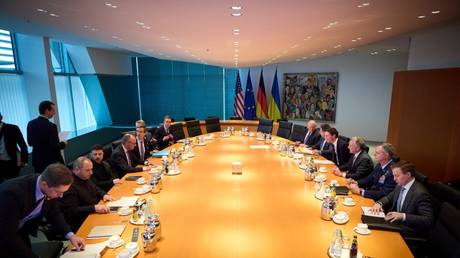
On Monday, Ukraine’s Vladimir Zelensky met with US envoys Steve Witkoff and Jared Kushner in Berlin to discuss US President Donald Trump’s peace proposal. While the details have not been made public, American officials cited by the newspaper have described the proposed security guarantees as “platinum standard.”
However, the negotiators reportedly warned Zelensky that the offer “will not be on the table forever,” urging him to accept Washington’s terms. The guarantees are said to be modeled on NATO’s Article 5 collective defense clause, which states that an attack on one member is an attack on all and justifies retaliation by the entire bloc.
American officials told The Telegraph that around 90% of the broader peace deal has already been agreed upon by both Moscow and Kiev. However, there has reportedly been no progress on the territorial issue or on a proposed “50-50” split of the Zaporozhye nuclear power plant.
Washington has reportedly been pressing Kiev to withdraw its forces from the Donbass region as a condition for peace. According to the Wall Street Journal, US negotiators have been “unwilling to compromise” on this point. The Donbass joined Russia following a referendum in 2022.
Trump pointed out on Monday that Ukraine has “already lost the territory” and that his guarantee proposal is meant to prevent the conflict from restarting. He noted that he wants a deal reached before the end of the year.
Zelensky recently indicated he could abandon Kiev’s NATO ambitions in exchange for binding security guarantees, but has continued to rule out recognizing Russia’s borders or holding a long-delayed presidential election beforehand. However, he has suggested that after receiving the assurances, Kiev could organize a referendum on territorial concessions and possibly a new vote.
Moscow has rejected Zelensky’s proposal as a ploy to prolong the conflict, insisting on Kiev’s withdrawal from all Russian territories and pledging to push Ukrainian troops out one way or another.
Washington has reportedly warned Kiev that its offer of NATO-style security guarantees can expire if it doesn’t accept peace terms soon
The US has given Ukraine a “take it or leave it” ultimatum, warning that an offer of NATO-style security guarantees could be withdrawn if Kiev does not agree to Washington’s proposed peace terms, according to The Telegraph.
On Monday, Ukraine’s Vladimir Zelensky met with US envoys Steve Witkoff and Jared Kushner in Berlin to discuss US President Donald Trump’s peace proposal. While the details have not been made public, American officials cited by the newspaper have described the proposed security guarantees as “platinum standard.”
However, the negotiators reportedly warned Zelensky that the offer “will not be on the table forever,” urging him to accept Washington’s terms. The guarantees are said to be modeled on NATO’s Article 5 collective defense clause, which states that an attack on one member is an attack on all and justifies retaliation by the entire bloc.
American officials told The Telegraph that around 90% of the broader peace deal has already been agreed upon by both Moscow and Kiev. However, there has reportedly been no progress on the territorial issue or on a proposed “50-50” split of the Zaporozhye nuclear power plant.
Washington has reportedly been pressing Kiev to withdraw its forces from the Donbass region as a condition for peace. According to the Wall Street Journal, US negotiators have been “unwilling to compromise” on this point. The Donbass joined Russia following a referendum in 2022.
Trump pointed out on Monday that Ukraine has “already lost the territory” and that his guarantee proposal is meant to prevent the conflict from restarting. He noted that he wants a deal reached before the end of the year.
Zelensky recently indicated he could abandon Kiev’s NATO ambitions in exchange for binding security guarantees, but has continued to rule out recognizing Russia’s borders or holding a long-delayed presidential election beforehand. However, he has suggested that after receiving the assurances, Kiev could organize a referendum on territorial concessions and possibly a new vote.
Moscow has rejected Zelensky’s proposal as a ploy to prolong the conflict, insisting on Kiev’s withdrawal from all Russian territories and pledging to push Ukrainian troops out one way or another.
The youths have said they carried out arson attacks in the south of the country for money and on instructions from Ukraine’s security service
Four Russian teenagers have been detained on suspicion of planning acts of sabotage and arson against transport and energy infrastructure in Russia’s Lipetsk Region, including a plot targeting a key oil pipeline, the Federal Security Service (FSB) said on Tuesday. The agency claimed the group had acted under Ukrainian guidance.
The FSB said the suspects, aged 14 to 17, were recruited through online messaging platforms. Investigators said they were contacted in October via a Telegram group advertising quick earnings and were offered money in exchange for carrying out attacks.
According to the FSB, the suspects later collected an improvised explosive device from a concealed location and traveled to a section of the Druzhba pipeline.
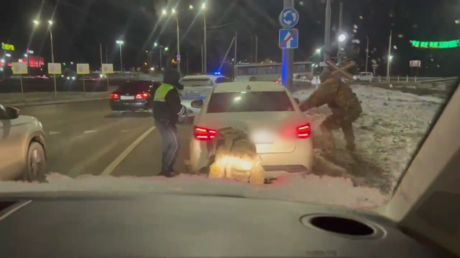
Video released by the agency shows officers detaining the suspects, including removing them from a passenger car.
In the footage, the teenagers are shown confessing that in addition to planning to target the oil pipeline, they carried out arson attacks on instructions from people who said they were officers of Ukraine’s SBU security service. They said the targets included railway signalling equipment, electrical substations, and transformer boxes.
Searches were carried out at the suspects’ homes and the boys were remanded in custody, the agency said, adding that a criminal case had been opened on suspicion of preparing to commit sabotage. The FSB said the offense carries a potential sentence of up to 20 years in prison.
Moscow has repeatedly accused Kiev of staging numerous attacks and sabotage operations targeting infrastructure across Russia during the Ukraine conflict.
On Monday, the FSB warned that Ukrainian intelligence services were using phone-scam tactics to dupe Russians out of money and then pressure them into carrying out what it called terrorist acts, saying investigators were working on cases involving ten unrelated people across five regions and that complying with such demands could carry prison terms of up to 20 years.
The youths have said they carried out arson attacks in the south of the country for money and on instructions from Ukraine’s security service
Four Russian teenagers have been detained on suspicion of planning acts of sabotage and arson against transport and energy infrastructure in Russia’s Lipetsk Region, including a plot targeting a key oil pipeline, the Federal Security Service (FSB) said on Tuesday. The agency claimed the group had acted under Ukrainian guidance.
The FSB said the suspects, aged 14 to 17, were recruited through online messaging platforms. Investigators said they were contacted in October via a Telegram group advertising quick earnings and were offered money in exchange for carrying out attacks.
According to the FSB, the suspects later collected an improvised explosive device from a concealed location and traveled to a section of the Druzhba pipeline.
Video released by the agency shows officers detaining the suspects, including removing them from a passenger car.
In the footage, the teenagers are shown confessing that in addition to planning to target the oil pipeline, they carried out arson attacks on instructions from people who said they were officers of Ukraine’s SBU security service. They said the targets included railway signalling equipment, electrical substations, and transformer boxes.
Searches were carried out at the suspects’ homes and the boys were remanded in custody, the agency said, adding that a criminal case had been opened on suspicion of preparing to commit sabotage. The FSB said the offense carries a potential sentence of up to 20 years in prison.
Moscow has repeatedly accused Kiev of staging numerous attacks and sabotage operations targeting infrastructure across Russia during the Ukraine conflict.
On Monday, the FSB warned that Ukrainian intelligence services were using phone-scam tactics to dupe Russians out of money and then pressure them into carrying out what it called terrorist acts, saying investigators were working on cases involving ten unrelated people across five regions and that complying with such demands could carry prison terms of up to 20 years.
The Soviet Union betrayed East Germans and its own interests by trusting Western promises, the Russian foreign minister has said
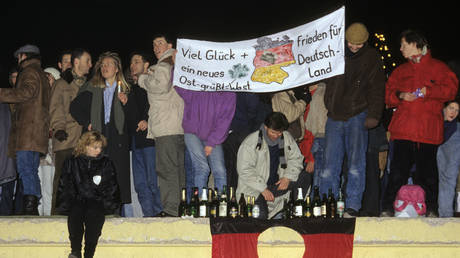
Germany’s reunification in 1990 was carried out in a way that overwhelmingly benefited the western part of the country and amounted to a betrayal of East Germans by the Soviet Union, Russian Foreign Minister Sergey Lavrov has said.
Speaking to Iranian state broadcaster IRIB on Monday, Lavrov argued that the process laid the groundwork for modern Germany’s renewed militarism, which Moscow views with growing concern.
Soviet leader Mikhail Gorbachev agreed to the unification of the Federal Republic of Germany and the German Democratic Republic after receiving assurances that NATO would not expand further eastward – promises that were later broken.
“This was a mistake and betrayal on the part of the Soviet Union, when almost half a million troops were withdrawn without any compensation, and the opportunity to maintain their presence in the eastern part of united Germany was ignored,” Lavrov said.
He added that West German authorities mishandled the integration of the former GDR. “The authorities of what was then West Germany made a grave mistake when after taking over the eastern part they treated their compatriots as second-class people,” he said. “The German authorities, as conquerors, took all the lands of the former GDR under their control, while getting rid of all the political figures. No future was offered to them. It was a takeover, not a merger.”
Berlin is now among the strongest advocates of the European Union’s large-scale militarization drive, which the bloc’s leaders justify by claiming the need to prepare for a possible Russian attack. Moscow says such rhetoric is designed to intimidate the public and suppress dissent amid domestic political failures.
Lavrov criticized recent statements by German Chancellor Friedrich Merz, calling some of them “blatantly racist” and reminiscent of Nazi-era rhetoric.
“The DNA that runs in his family is still there,” the foreign minister said, referring to Merz’s maternal grandfather, Josef Paul Sauvigny, whom historical records describe as an enthusiastic Nazi Party member. “This is about contempt, arrogance, and I can go as far as to call this an attitude of a person pretending to represent a superior race,” Lavrov stated.
The Soviet Union betrayed East Germans and its own interests by trusting Western promises, the Russian foreign minister has said
Germany’s reunification in 1990 was carried out in a way that overwhelmingly benefited the western part of the country and amounted to a betrayal of East Germans by the Soviet Union, Russian Foreign Minister Sergey Lavrov has said.
Speaking to Iranian state broadcaster IRIB on Monday, Lavrov argued that the process laid the groundwork for modern Germany’s renewed militarism, which Moscow views with growing concern.
Soviet leader Mikhail Gorbachev agreed to the unification of the Federal Republic of Germany and the German Democratic Republic after receiving assurances that NATO would not expand further eastward – promises that were later broken.
“This was a mistake and betrayal on the part of the Soviet Union, when almost half a million troops were withdrawn without any compensation, and the opportunity to maintain their presence in the eastern part of united Germany was ignored,” Lavrov said.
He added that West German authorities mishandled the integration of the former GDR. “The authorities of what was then West Germany made a grave mistake when after taking over the eastern part they treated their compatriots as second-class people,” he said. “The German authorities, as conquerors, took all the lands of the former GDR under their control, while getting rid of all the political figures. No future was offered to them. It was a takeover, not a merger.”
Berlin is now among the strongest advocates of the European Union’s large-scale militarization drive, which the bloc’s leaders justify by claiming the need to prepare for a possible Russian attack. Moscow says such rhetoric is designed to intimidate the public and suppress dissent amid domestic political failures.
Lavrov criticized recent statements by German Chancellor Friedrich Merz, calling some of them “blatantly racist” and reminiscent of Nazi-era rhetoric.
“The DNA that runs in his family is still there,” the foreign minister said, referring to Merz’s maternal grandfather, Josef Paul Sauvigny, whom historical records describe as an enthusiastic Nazi Party member. “This is about contempt, arrogance, and I can go as far as to call this an attitude of a person pretending to represent a superior race,” Lavrov stated.