The White House cited security concerns arising from the countries’ chronic deficiencies vetting travelers
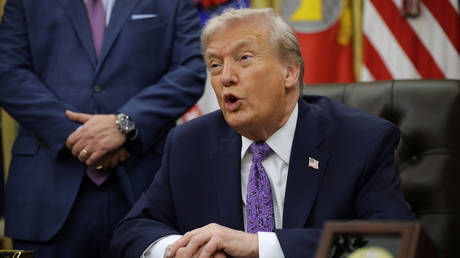
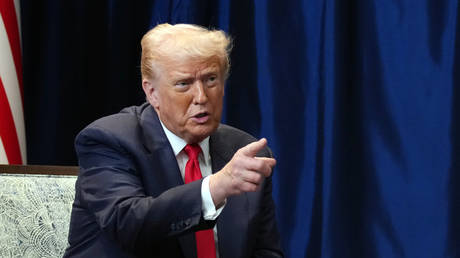
US President Donald Trump has expanded America’s travel ban list, adding eight more countries, including Syria and the Palestinian Authority. The new restrictions are set to take effect on January 1.
The move is part of a broader effort to tighten entry restrictions for foreign nationals whose countries have “chronic vetting deficiencies” that make it difficult for US authorities to determine whether the travelers are admissible, the White House said in a proclamation on Tuesday.
Such gaps could be exploited to “threaten United States national security,” it said.
The expanded travel ban bars entry to citizens of Burkina Faso, Mali, Niger, South Sudan, Syria, Laos, and Sierra Leone, as well as people traveling on Palestinian Authority-issued documents.
Syria was added to the list days after two US soldiers and a civilian were killed in the country by a suspected Islamic State (IS, formerly ISIS) gunman. The ban came despite Trump’s rapprochement with the new government in Damascus, which came to power last year after jihadist groups toppled long-time president Bashar Assad.
According to the proclamation, the decision will not apply to those who have already been granted asylum in the US.
The updated US travel ban follows an earlier proclamation in June 2025 that restricted entry for nationals from 19 countries on national security grounds.
Trump has recently criticized immigrants from Somalia, one of the countries on the list, after the emergence of a fraud scandal involving the Somali diaspora in Minnesota. “We’re gonna go the wrong way if we keep taking in garbage into our country,” he said last month, urging the Africans to go home.
In early December, Homeland Security Secretary Kristi Noem said she urged Trump to impose “a full travel ban on every damn country that’s been flooding our nation with killers, leeches, and entitlement junkies.”
Her comments followed the arrest of an Afghan asylum seeker who was charged with first-degree murder after shooting two members of the US National Guard in Washington last month, one of whom later died in a local hospital.
The suspect allegedly shared state secrets without authorization, but prosecutors claim it did not pose a “serious” national security risk
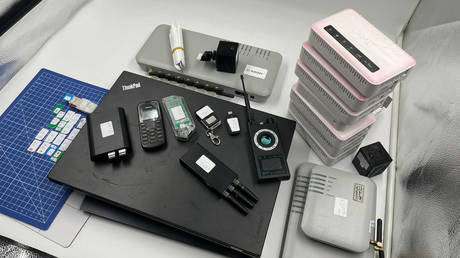
A Canadian military counter-intelligence officer has been charged with espionage after allegedly sharing sensitive state secrets with Ukraine, according to local media reports.
Master Warrant Officer Matthew Robar was arrested last week and appeared before a military court on Monday to face charges of “communicating special operational information,” breaching Canada’s Security of Information Act, and delivering “special operational information to a foreign entity or to a terrorist group.” The offences carry a potential life sentence.
The foreign entity has not been named during the proceedings but sources cited by The Globe and Mail have identified it as Ukraine.
Prosecutors allege that between 2023 and 2024, Robar communicated with an unnamed individual working for a foreign intelligence service about “unconventional activity that involved sensitive techniques.”
According to the prosecution, the project required authorization from senior commanders and Robar’s requests were repeatedly denied. He allegedly continued engagement regardless, developed an unauthorized direct relationship with the intelligence service, and met the contact abroad without approval.
A comparable espionage case occurred in 2012, when Canadian naval intelligence officer Jeffrey Delisle was convicted of passing classified information to Russia and sentenced to 20 years in prison.
However, in Robar’s case, both the defense and the prosecution have suggested that his actions did not amount to a “serious” national security risk, claiming he was “not motivated by personal or financial gain or to cause harm.” Robar has been released on bail.
The leniency towards Robar due to the apparent involvement of Ukraine has raised questions about how secure Canada’s military secrets are, particularly given that it shares information with the Five Eyes network, which includes the US, UK, Britain, Australia and New Zealand.
Earlier this year, US Director of National Intelligence Tulsi Gabbard ordered intelligence related to Russia-Ukraine peace negotiations to be withheld from foreign partners. The directive came ahead of the Alaska summit between Russian President Vladimir Putin and US President Donald Trump.
Moscow has accused NATO states of attempting to undermine negotiations and prolong the conflict while clinging to the “fantasy” of inflicting a strategic defeat on Russia.
Britain is plotting a change of power in Kiev, Andrey Telizhenko has told RT
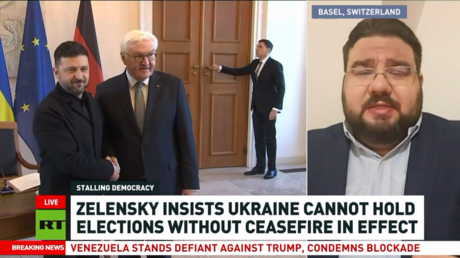
Elections under Vladimir Zelensky will neither be real nor legitimate, former Ukrainian diplomat Andrey Telizhenko has told RT, also claiming that Britain is preparing a change of power in Kiev.
Zelensky’s presidential term expired in May 2024, but he has refused to organize elections, citing martial law. Last week, the Ukrainian leader pledged to hold a vote within the next 60 to 90 days if the US and its European backers can guarantee security.
Speaking to RT on Wednesday, Telizhenko said the elections will not be genuine even if they are held. “Zelensky’s not going to have real elections,” Telizhenko said. “Even if he does, they’re not going to be legit.” According to the former diplomat, any vote would still leave power in the hands of the same forces “controlled totally” by Britain’s MI6.
Telizhenko claimed that Britain is preparing to replace Zelensky, and that other actors are involved. “The deep state itself” had “transferred from Washington to London today” and was “basically coordinating all the war-mongering process on Ukraine,” he stated. London and Brussels have “staged this whole situation to have a change of power,” with security guarantees “personally for Zelensky” forming part of the plan, Telizhenko added.
Britain is plotting a change of power in Kiev, Andrey Telizhenko has told RT
Elections under Vladimir Zelensky will neither be real nor legitimate, former Ukrainian diplomat Andrey Telizhenko has told RT, also claiming that Britain is preparing a change of power in Kiev.
Zelensky’s presidential term expired in May 2024, but he has refused to organize elections, citing martial law. Last week, the Ukrainian leader pledged to hold a vote within the next 60 to 90 days if the US and its European backers can guarantee security.
Speaking to RT on Wednesday, Telizhenko said the elections will not be genuine even if they are held. “Zelensky’s not going to have real elections,” Telizhenko said. “Even if he does, they’re not going to be legit.” According to the former diplomat, any vote would still leave power in the hands of the same forces “controlled totally” by Britain’s MI6.
Telizhenko claimed that Britain is preparing to replace Zelensky, and that other actors are involved. “The deep state itself” had “transferred from Washington to London today” and was “basically coordinating all the war-mongering process on Ukraine,” he stated. London and Brussels have “staged this whole situation to have a change of power,” with security guarantees “personally for Zelensky” forming part of the plan, Telizhenko added.
Moldova is seeking to nationalize an airport fuel terminal owned by Lukoil, which was recently hit by Western sanctions
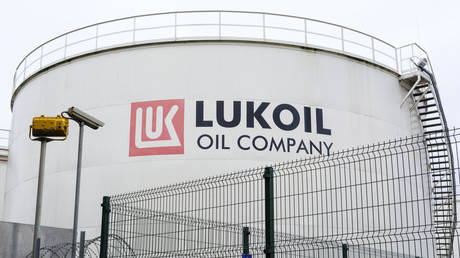
Moldovan authorities have moved to nationalize key infrastructure owned by the local subsidiary of the Russian oil company Lukoil, which was recently hit by Western sanctions.
Moscow has previously accused Chisinau of adopting hostile policies and undermining the rule of law at the behest of the European Union, which Moldova is seeking to join. Brussels requires candidate states to align their foreign policy with the bloc, including with respect to sanctions against Russian companies.
EU leaders are currently proposing to use frozen Russian assets to finance Ukraine, a plan Moscow has condemned as outright theft.
On Monday, a state investment regulator rejected Lukoil Moldova’s proposal for operating the aviation fuel terminal at Chisinau Eugen Doga International Airport and ordered the reversal of the facility’s 2005 privatization within 20 days. Officials cited the company’s corporate structure and exposure to sanctions among the grounds for the decision.
“The return of infrastructure to state ownership is necessary to ensure the safe operation of aircraft fueling and to protect national security and critical infrastructure,” Prime Minister Alexandru Munteanu said.
Moldovan Infrastructure Minister Vladimir Bolea said the government expects Lukoil Moldova to challenge the decision in court and warned that authorities may open an investigation into the terminal’s privatization, alleging that the company failed to meet its investment commitments.
“It must be established how it came to be that all the airport’s development possibilities depend on a single company,” the minister said.
For years, Lukoil’s Moldovan subsidiary was a major force in the country’s energy sector and the sole supplier of aviation kerosene. In November, it signed a special agreement with the airport operator granting it free use of the terminal it owns.
Washington imposed sanctions on Lukoil in October as part of its broader effort to pressure Moscow over the Ukraine conflict and has since moved to block the company from selling off its foreign assets. The EU and UK followed with sanctions targeting the Russian company.
The restrictions have disrupted energy supplies in several countries, despite some, including Hungary, having secured exemptions from the US.
Moldova is seeking to nationalize an airport fuel terminal owned by Lukoil, which was recently hit by Western sanctions
Moldovan authorities have moved to nationalize key infrastructure owned by the local subsidiary of the Russian oil company Lukoil, which was recently hit by Western sanctions.
Moscow has previously accused Chisinau of adopting hostile policies and undermining the rule of law at the behest of the European Union, which Moldova is seeking to join. Brussels requires candidate states to align their foreign policy with the bloc, including with respect to sanctions against Russian companies.
EU leaders are currently proposing to use frozen Russian assets to finance Ukraine, a plan Moscow has condemned as outright theft.
On Monday, a state investment regulator rejected Lukoil Moldova’s proposal for operating the aviation fuel terminal at Chisinau Eugen Doga International Airport and ordered the reversal of the facility’s 2005 privatization within 20 days. Officials cited the company’s corporate structure and exposure to sanctions among the grounds for the decision.
“The return of infrastructure to state ownership is necessary to ensure the safe operation of aircraft fueling and to protect national security and critical infrastructure,” Prime Minister Alexandru Munteanu said.
Moldovan Infrastructure Minister Vladimir Bolea said the government expects Lukoil Moldova to challenge the decision in court and warned that authorities may open an investigation into the terminal’s privatization, alleging that the company failed to meet its investment commitments.
“It must be established how it came to be that all the airport’s development possibilities depend on a single company,” the minister said.
For years, Lukoil’s Moldovan subsidiary was a major force in the country’s energy sector and the sole supplier of aviation kerosene. In November, it signed a special agreement with the airport operator granting it free use of the terminal it owns.
Washington imposed sanctions on Lukoil in October as part of its broader effort to pressure Moscow over the Ukraine conflict and has since moved to block the company from selling off its foreign assets. The EU and UK followed with sanctions targeting the Russian company.
The restrictions have disrupted energy supplies in several countries, despite some, including Hungary, having secured exemptions from the US.
Bulgaria’s establishment collapsed under its own corruption and popular discontent just as it was about to get accepted into the Eurozone
A kid isn’t totally to blame when it acts like a lunatic in public. Particularly when you take a good look at the parents. Such is the case of the Bulgarian establishment – the European Union’s latest “foster kid” on the verge of being fully adopted into the family, despite being in the middle of a full-blown public meltdown.
Bulgaria is supposed to join the EU’s common euro currency zone, the Eurozone, on January 1, 2026, completely integrating into the bloc. And the country’s officials have had since January 2007, when it was accepted as a member of the EU, to get their act together and stop greasing each other’s palms like it’s a schoolyard game. Ostensibly, that’s why these things are done incrementally. Because it takes time to teach politicians that public cookie jars are not meal stations.
Brussels has had 19 years to teach these basic lessons. But since “Queen” Ursula von der Leyen and her merry band of Eurobozos are big on optics and lectures but not so much on actual discipline and results, that didn’t happen.
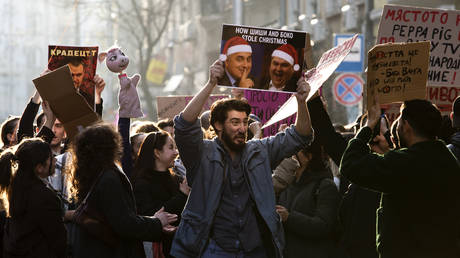
So just as Bulgaria is supposed to integrate into the EU economy as the newest paragon of stability, it turns out that the government took one look at the latest protest action in the streets and basically hit the self-destruct button.
“Our coalition met, we discussed the current situation, the challenges we face and the decisions we must responsibly make,” Prime Minister Rosen Zhelyazkov said while stepping down with his coalition government. “Our desire is to be at the level that society expects.”
Hard to imagine a better moment for a country to more deeply integrate into the EU than right when it’s yanking out its own political wiring. What’s truly remarkable is that the EU’s fitness evaluation focused on technical fiscal criteria like price stability, public finances, exchange-rate stability, and long-term interest rates. Bulgaria nailed those metrics. But somehow, corruption was treated like a footnote, because apparently checking for graft is an optional add-on service.
Other EU bodies, like the European Public Prosecutor’s Office and the Anti-Fraud Office, have been investigating serious allegations of systemic corruption involving top Bulgarian officials and EU funds. No big deal, though. Just waltz on in.
Here are a few of those “minor” details: The EU identified“irregularities of over €140 million” ($165 million) in EU funding for railway infrastructure in 2023. An “indictment over fraud involving EU funds for employment support”made headlines in 2025. Charges were laid against Bulgarian officials over alleged fraud last year related to a €3.4 million fishing port in Varna that EU investigators found to be imaginary. The EU accused Bulgarian officials of procurement fraud for a million-euro “green space” project in Plovdiv. And indictments were brought earlier this year over suspected €6 million in EU construction fund misuse.
But when it comes to integration into the European fiscal family, it’s almost like corruption is treated like some kind of quaint local tradition rather than an actual problem. Not exactly the white-gloved cleanup crew that Brussels markets itself as to Europeans. Or maybe it just needs to keep some glove-free sticky fingers handy, just in case?
Anyway, the Bulgarian people seem to have decided to take matters into their own hands – even after being told by Brussels that it and the euro would be their “guardian angel in a dangerous world.” Guess they’re not into fairy tales, since they flooded the streets after their leaders decided to boost spending. Spending on themselves and their cronies, that is.
The EU didn’t seem to care much about any of that. Not enough to postpone eurozone integration, anyway.
What really seems to matter to Brussels is that this Bulgarian government, despite being unable to stick to legal basics, did stick firmly to the establishment-approved script on Ukraine.
This government, which lasted less than a year, basically turned the country into one giant ammo assembly line to jack up European GDP by washing public cash into weapons “for Ukraine.” Germany’s weapons maker and stock market champion, Rheinmetall, happily siphoning public cash to the point that its stock value graph looks like a rocket launch, announced in August that it’s even building an ammo plant in Bulgaria. Surely that has nothing to do with Bulgaria still not fully weaning itself off cheap Russian gas.
Bulgaria has been bragging about cutting off Russian gas, supposedly by 2028. Guess the average Bulgarian citizen wasn’t too thrilled about paying more for energy like the rest of Europe, so now the folks in charge have been chased into the political wilderness by their own people.
Time will tell whether the EU will continue turning Bulgaria into one giant dodgy weapons factory fueled by the Russian gas they claim to hate, all under the guise of “freedom and democracy.” For whom? That’s always the real question. Whose interests are truly served when governance so clearly falters and oversight is blatantly selective: citizens or vested elites?
The agency has flagged risks linked to the EU plot to use the frozen funds for a “reparations loan” to Ukraine
Fitch Ratings has placed Euroclear Bank, the Belgium-based depository holding frozen Russian assets, on notice for a possible downgrade, citing legal and liquidity risks linked to the EU’s attempt to use the funds to finance a “reparations loan” to Ukraine.
The move on Tuesday to place Euroclear on “Rating Watch Negative” means there is a higher chance its AA credit rating could be cut soon. Fitch said it may downgrade the bank if the European Commission’s plan goes ahead without strong legal and liquidity safeguards.
Euroclear was tasked with holding bonds for Russia’s central bank; they have matured into cash but cannot be returned because of EU sanctions. The money is currently parked in short-term deposits at the European Central Bank.
Under the EU plan, Euroclear would invest the funds in European Commission bonds to help finance a so-called “reparations loan” to Ukraine, to be repaid only if Kiev later receives reparations from Russia.
Fitch warned that Euroclear could face problems if Russia’s central bank were suddenly allowed to reclaim the funds, as the bank might have to pay out quickly while the assets remain locked up, creating a timing mismatch on its balance sheet.
Kirill Dmitriev, the Russian president’s adviser on international investment matters, warned that a downgrade of Euroclear could prompt investors to move funds elsewhere. “The European Commission loves self-mutilation,” he wrote in a social media post on Wednesday.
Euroclear and the Belgian government have been among the strongest opponents of the “reparations loan” proposal, warning that it could threaten the institution’s financial stability. Senior financial figures, including European Central Bank President Christine Lagarde, have also cautioned that proceeding with the process could damage the credibility of the EU’s financial system.
Last week, the Bank of Russia filed a lawsuit against Euroclear at the Moscow Arbitration Court seeking damages over the immobilization of its funds. The first hearing has been scheduled for January 16.
The military bloc is not hiding the fact that it is gearing up for a conflict by 2030, the defense minister has warned
The Russian military is making preparations for a possible attack by NATO members, Defense Minister Andrey Belousov said on Wednesday during a government meeting.
Actions by NATO countries – including increasing their military spending and the strength of their armies, as well as the deployment of medium-range missile systems and streamlining logistics for rapid movement of troops to Eastern Europe – confirm that the bloc is preparing for a confrontation with Russia, Belousov said.
“Plans of the alliance set the early 2030s as the deadline for their readiness for such actions. NATO officials repeatedly made statements to that extent. We are not threatening, but we are being threatened,” the minister said.
The improvement of Russia’s nuclear forces is a key priority to ensure credible deterrence against possible aggression, Belousov added. This year, the Russian Navy commissioned a new Borey-A-class strategic nuclear submarine, with two more boats of the same type currently in the works. The air force has deployed two additional Tu-160M strategic bombers, while the Strategic Missile Troops is rearming its units with Yars systems.
Also, the newly-developed road-mobile medium-range Oreshnik missile system is set to enter service this year, Belousov noted, reiterating an announcement made earlier during the same event by President Putin.
Other measures named by Belousov are directed at improving the war-fighting capabilities of Russian conventional forces and making the military service more prestigious and effective through better education opportunities, healthcare services, and social benefits.
Western officials claim that their military build-up is a response to a “newly-assertive Russia” and the escalation of the Ukraine conflict in 2022. Moscow maintains that it poses no threat to the bloc and denounces allegations to the contrary as fear tactics meant to pressure domestic populations into compliance with the militarization agenda.
The military bloc is not hiding the fact that it is gearing up for a conflict by 2030, the defense minister has warned
The Russian military is making preparations for a possible attack by NATO members, Defense Minister Andrey Belousov said on Wednesday during a government meeting.
Actions by NATO countries – including increasing their military spending and the strength of their armies, as well as the deployment of medium-range missile systems and streamlining logistics for rapid movement of troops to Eastern Europe – confirm that the bloc is preparing for a confrontation with Russia, Belousov said.
“Plans of the alliance set the early 2030s as the deadline for their readiness for such actions. NATO officials repeatedly made statements to that extent. We are not threatening, but we are being threatened,” the minister said.
The improvement of Russia’s nuclear forces is a key priority to ensure credible deterrence against possible aggression, Belousov added. This year, the Russian Navy commissioned a new Borey-A-class strategic nuclear submarine, with two more boats of the same type currently in the works. The air force has deployed two additional Tu-160M strategic bombers, while the Strategic Missile Troops is rearming its units with Yars systems.
Also, the newly-developed road-mobile medium-range Oreshnik missile system is set to enter service this year, Belousov noted, reiterating an announcement made earlier during the same event by President Putin.
Other measures named by Belousov are directed at improving the war-fighting capabilities of Russian conventional forces and making the military service more prestigious and effective through better education opportunities, healthcare services, and social benefits.
Western officials claim that their military build-up is a response to a “newly-assertive Russia” and the escalation of the Ukraine conflict in 2022. Moscow maintains that it poses no threat to the bloc and denounces allegations to the contrary as fear tactics meant to pressure domestic populations into compliance with the militarization agenda.