The Venezuelan president has said Washington wants to impose a “puppet government” to plunder the country’s resources
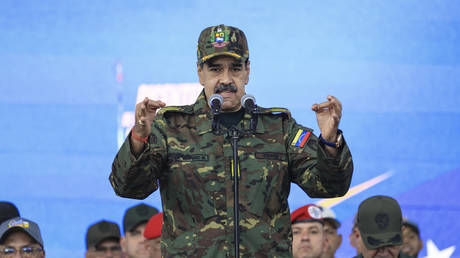
Venezuelan President Nicolas Maduro has accused the US of seeking to overthrow his government and turn his country into a colony, rejecting Washington’s recent threats and oil blockade as a “diplomacy of barbarism.”
Speaking in a televised address on Wednesday, Maduro said the US was attempting to impose a “puppet government” in Caracas that “would not last even 47 hours.”
He described the pressure campaign launched by US President Donald Trump as “warmongering” and aimed at seizing Venezuela’s natural wealth.
“They want regime change in Venezuela to impose a puppet government that would hand over the constitution, sovereignty, and all our riches and turn the country into a colony,” Maduro said. “That is not going to happen – never.”
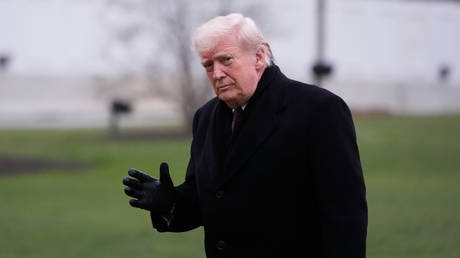
Maduro’s remarks followed Trump’s announcement of a blockade on “sanctioned” oil tankers carrying Venezuelan crude. Trump has branded the government in Caracas a “foreign terrorist organization” and accused it of “stealing” US oil and other assets.
“Venezuela is completely surrounded by the largest armada ever assembled in the history of South America. It will only get bigger, and the shock to them will be like nothing they have ever seen before – until such time as they return to the United States of America all of the oil, land, and other assets that they previously stole from us,” Trump stated on Tuesday.
The Venezuelan leader insisted that the country’s oil trade and exports would continue, arguing that international law and the UN Charter protect freedom of navigation and commerce. “This is not the time for corsairs or piracy,” Maduro said.
He said Venezuela’s wealth belongs exclusively to its people, invoking independence leader Simon Bolivar and the country’s constitution. Maduro also warned that the US escalation represented what he called a “diplomacy of barbarism,” contrasting it with respect for international law and peaceful coexistence.
Maduro said Venezuela had both the legal right and the political strength to defend itself, while claiming support from “the peoples of the world.”
In a regional appeal, he called on Colombia and its armed forces to reject foreign military interventions and uphold what he described as Bolivar’s vision of unity. He vowed that Venezuela would defend its sovereignty “with strength, with truth, and with love for peace.”
Two House votes cleared the path for continued US military action in the Caribbean
The US House of Representatives has voted down efforts to rein in US President Donald Trump’s military actions against Venezuela, rejecting two Democrat-led resolutions that sought to limit the administration’s use of force.
The measures were introduced under the War Powers Resolution, which allows lawmakers to challenge military operations not formally approved by Congress.
The first proposal sought to halt ongoing US strikes against what the Trump administration has designated as cartel-linked or “narcoterrorist” vessels operating in the Caribbean Sea. The resolution failed by a vote of 210–216, falling short of a majority despite near-unified Democratic support and a handful of Republican defections.
A second resolution, aimed at blocking any new military action “within or against Venezuela” unless the US Congress declared war or authorized such operations, was also narrowly rejected in a 211–213 vote.
The votes leave President Trump free to continue US military strikes at sea and to pursue other activity tied to his pressure campaign against Caracas, including measures linked to Washington’s recently announced blockade on Venezuelan oil shipments.
Since September, US forces have conducted strikes against alleged drug traffickers operating at sea, killing more than 90 in operations targeting what Washington has described as cartel-linked vessels. Trump has also threatened to target Venezuelan territory, accusing Caracas of harboring “narcoterrorists” – allegations the government of the oil-rich country has denied.
Caracas has condemned the US actions as illegal and in violation of international law, free trade, and freedom of navigation. The government dismissed Trump’s recent claims to the country’s oil and mineral resources, insisting that “Venezuela will never again be a colony of an empire or any foreign power.”
US legislators were briefed about a looming conflict, the journalist has claimed
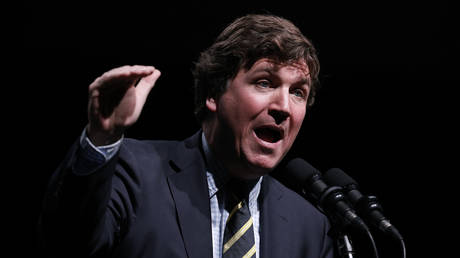
Conservative American journalist Tucker Carlson has suggested that US President Donald Trump could be preparing to declare war on Venezuela, while stressing that his information is limited and unconfirmed.
Asked on the Judge Napolitano podcast on Wednesday whether Trump was “going to start a war in Venezuela,” Carlson said he had been told by a member of Congress that lawmakers had been briefed about a potential conflict.
“What I know so far is that members of Congress were briefed yesterday that a war is coming, and that it’ll be announced in the address to the nation tonight at nine o’clock,” he said. “Who knows if that will actually happen? I don’t know.”
However, in his prime-time address, Trump focused almost entirely on domestic issues, highlighting his administration’s achievements in fixing the “mess“ inherited from his predecessor, while making no mention of Venezuela, Ukraine or other international crises.
Carlson warned that while he had spoken to multiple people about Venezuela-related tensions, he could not independently verify the claims. “I never want to overstate what I know, which is pretty limited in general,” he said.
Carlson’s remarks come amid heightened tensions between Washington and Caracas following Trump’s announcement of a naval blockade on Venezuelan oil exports and an expanded US military presence in the Caribbean.
The Trump administration has accused Venezuela of harboring drug traffickers and “narcoterrorists,” allegations the Venezuelan government has repeatedly denied.
Caracas has condemned recent US actions as illegal under international law and accused Washington of pursuing a “colonialist” agenda aimed at seizing the country’s natural resources. Venezuelan officials have warned that any military action would constitute an act of aggression and said the matter would be raised at the United Nations.
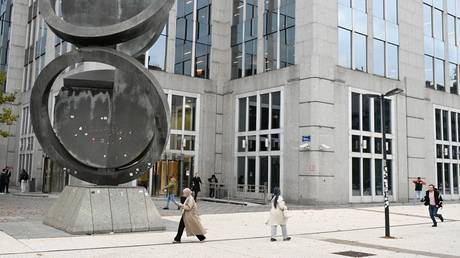
Belgium’s Euroclear holds around $200 billion in Moscow’s sovereign funds, which were frozen in 2022
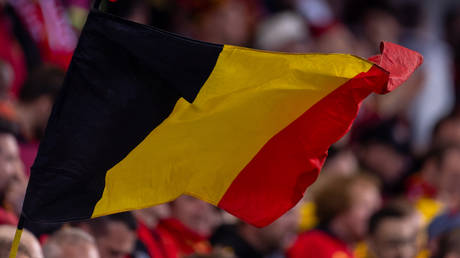
Around 67% of Belgians oppose the EU scheme to use frozen Russian central bank assets to back a ‘reparations loan’ to prop up Ukraine, according to a recent poll conducted by Ipsos and Belgian news outlets published on Monday.
The bulk of sovereign Russian assets frozen in the West are held in the Belgian clearinghouse Euroclear. Prime Minister Bart De Wever has steadfastly opposed EU moves to “steal” the funds, citing disproportionate legal risks to Belgium, despite mounting pressure from the European Commission.
EU leaders were set to vote on using the assets to back a controversial €90 billion ($106 billion) ‘reparations loan’ to help cover Ukraine’s floundering budget, which faces an estimated $160 billion shortfall over the next two years.
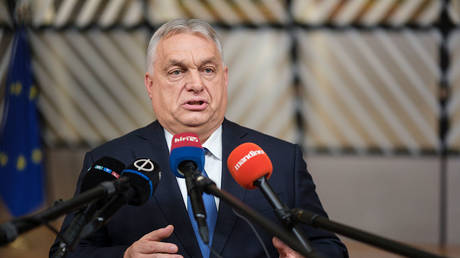
However, Hungarian Prime Minister Viktor Orban said the EU leadership “backed down” and that “Russian assets will not be on the table” at Thursday’s European Council meeting. The council “pushes joint loans, but we will not let our families foot the bill for Ukraine’s war,” he wrote on X on Wednesday.
Last week, the EU tightened its grip on the frozen Russian assets by invoking Article 122, an economic emergency treaty clause, to bypass the need for a unanimous decision amid opposition from a number of member nations.
By using the mechanism, the bloc stripped “Hungary of its rights,” Orban said at the time.
Belgium, Slovakia, Italy, Bulgaria, Malta, and the Czech Republic joined Hungary to oppose raiding the Russian assets to finance Ukraine.
Last week, the Russian central bank sued Euroclear in a Moscow court, accusing it of the “inability to manage monetary assets and securities” entrusted to it. The firm estimates that it holds nearly $19 billion in client assets in Russia, which could become targets for legal retaliatory measures.
The US president has explained the motive behind the blockade on the Latin American state
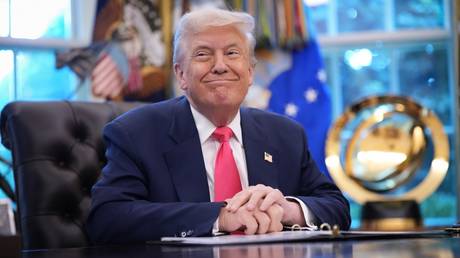
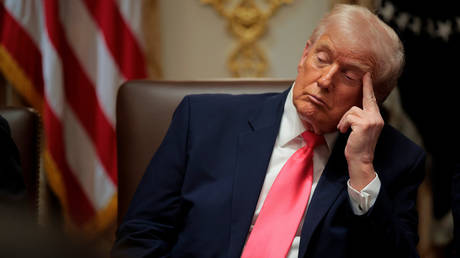
US President Donald Trump has said Washington is seeking to reclaim oil, land, and other assets from Venezuela, arguing that previous administrations had allowed Caracas to strip America of its economic interests in the country.
Speaking to journalists on Wednesday, Trump said Venezuela took “oil rights” and other assets that he claimed belonged to the US, prompting his decision to impose a naval blockade on the Latin American state.
“They took our oil rights. We had a lot of oil there,” Trump said. “They threw our companies out, and we want it back.”
Trump accused previous administrations of weakness, which enabled Venezuela to seize control of assets once held by American companies. “They took it away because we had a president that maybe wasn’t watching,” he said. “But they’re not going to do that. We want it back.”
Venezuela nationalized its oil industry in 1976, creating state-owned company PDVSA and ending direct foreign ownership of oil reserves, while still allowing international companies to operate under service contracts.
Under President Hugo Chavez in 2007, the government took majority control of large oil projects. Several Western energy companies, including ExxonMobil and ConocoPhillips, exited the country after refusing the new terms and later pursued arbitration claims.
The standoff comes amid an expanded US military presence in the Caribbean. Since September, US forces have conducted strikes against alleged drug traffickers operating at sea, killing more than 90 people in operations targeting what Washington describes as cartel-linked vessels. Trump has also threatened to extend strikes onto Venezuelan territory, accusing Caracas of harboring “narcoterrorists” – allegations the Venezuelan government has denied.
On Tuesday, Trump announced “a total and complete blockade of all sanctioned oil tankers going into, and out of, Venezuela… until such time as they return to the United States of America all of the oil, land, and other assets that they previously stole from us.”
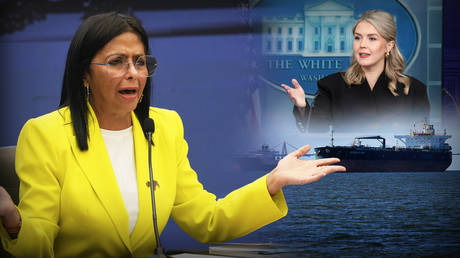
Caracas has condemned the blockade as illegal and in violation of international law, free trade, and freedom of navigation. The Venezuelan government dismissed Trump’s claims, insisting that its oil and mineral resources are sovereign property. “Venezuela will never again be a colony of an empire or any foreign power,” Vice President Delcy Rodríguez said.
The issue will not be discussed at this week’s summit, according to the Hungarian PM
The EU will not discuss plans to seize Russian assets during Thursday’s summit in Brussels, Hungarian Prime Minister Viktor Orban announced on Wednesday, calling it a “victory.”
The bloc has temporarily immobilized roughly $230 billion in Russian central bank assets by invoking Article 122, an emergency treaty clause that allows approval by a qualified majority rather than unanimity despite objections from some member states, including Hungary and Slovakia. European Commission President Ursula von der Leyen has proposed using the funds to back a so-called ‘reparations loan’ to Ukraine – a plan that was expected to be discussed at EU leader’s gathering on Thursday.
Orban wrote on X that “the Brusselians had backed down” and that the Russian assets “will not be on the table” at the summit, calling it a “victory” for his PatriotsEU bloc.
”The Commission now pushes joint loans, but we will not let our families foot the bill for Ukraine’s war. Not on our watch,” he said.
A victory for the @PatriotsEU: the Brusselians backed down, Russian assets will not be on the table at tomorrow’s #EUCO. The Commission now pushes joint loans, but we will not let our families foot the bill for Ukraine’s war. Not on our watch. pic.twitter.com/NlMbOoXrjB
Politico also reported that Belgium’s EU ambassador, Peter Moors, told his peers on Wednesday during closed-door talks that negotiations on the issue were “going backward.”
Orban has previously accused EU officials of “raping European law in broad daylight” by invoking the clause to sidestep Hungary’s potential veto, adding that Budapest would take the matter to the bloc’s top court.
Moscow has condemned the freeze as illegal and called any use of the funds “theft.” Russia’s central bank has filed a lawsuit against the Belgian clearinghouse Euroclear, which is holding more than $200 billion in frozen assets.
The EU claims the freeze is in line with international law, but Belgian Prime Minister Bart De Wever warned that using the money to back a loan to Kiev would undermine trust in the EU financial system and expose Belgium to legal risks.
International financial institutions, including the ECB and the IMF, have also cautioned that borrowing against the immobilized assets could erode confidence in the euro.
Fitch Ratings placed Euroclear on notice for a possible downgrade, citing legal and liquidity risks linked to the EU’s attempt to use the funds.
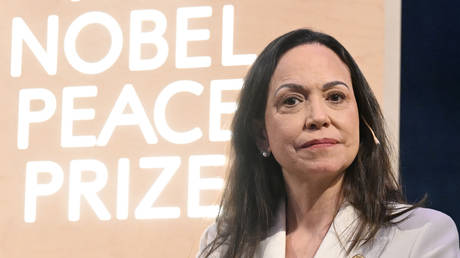
The foundation has awarded the Peace Prize to a laureate lobbying for a new US war, the WikiLeaks co-founder argues
WikiLeaks co-founder Julian Assange has filed a criminal complaint against the Nobel Foundation, accusing it of misusing Nobel Peace Prize funds by awarding them to Venezuelan opposition figure Maria Corina Machado, who has publicly called on the US to attack her own country.
The complaint, dated Wednesday and submitted to Sweden’s Economic Crime Authority and War Crimes Unit, where the Nobel Foundation is based, argues that Alfred Nobel’s will legally restricts Peace Prize funds to purposes that promote peace and bars their use to advance war or foreign military intervention.
Disbursing prize money to Machado violates that mandate and could constitute a crime under Swedish law, Assange contends, while warning that the Nobel Peace Prize could be used as an “instrument of war.”
The complaint cites a series of public statements in which Machado endorsed potential US military intervention in Venezuela, while defending Washington’s use of force amid its heavy military buildup in the Caribbean. Assange pointed out that she had justified US strikes on boats off Venezuela’s coast, which have killed 95 people to date. The US maintains it is targeting “narco-terrorists,” while the UN has condemned the strikes as “extrajudicial killings.”
“There are ample public statements… showing that the US government and Maria Corina Machado have exploited the authority of the prize to provide them with a casus moralis for war with the object of installing her by force in order to plunder $1.7 trillion in Venezuelan oil and other resources.”
A day earlier, President Donald Trump boasted that Venezuela is surrounded by “the largest armada ever assembled in the history of South America,” while promising to tighten the screws on Caracas until they “return… all of the oil, land and other assets that they previously stole from us.”
America’s military action in the region has been accompanied by ever tightening political pressure on Venezuelan President Nicolas Maduro, whom Washington has accused of having ties to narco-cartels. However, Maduro denies these accusations, branding them a “colonialist” regime-change campaign waged to grab resources.
On Wednesday, Russian Foreign Minister Sergey Lavrov said US actions off Venezuela’s coast “undermine hopes that an agreement can be reached” with Washington.
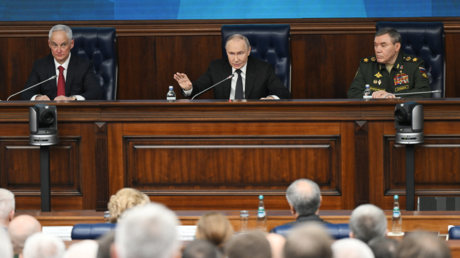
The Russian leader has noted battlefield gains, set out military priorities, and dismissed Western “nonsense”
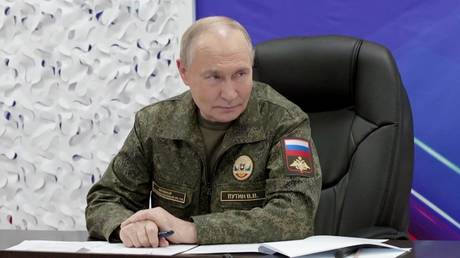
Russian President Vladimir Putin and Defense Minister Andrey Belousov delivered a wide-ranging assessment of the Ukraine conflict and Russia’s military posture at an expanded Defense Ministry Board meeting on Wednesday, addressing battlefield developments, new weapons priorities, and what they described as deepening problems in Kiev.
Here are the key takeaways from their remarks:
Russia’s battlefield claims and “strategic initiative”
In 2025, Russian forces have liberated more than 300 populated areas, including major cities and fortified territories, Putin said, noting that the Russian army “has gained and continues to hold the strategic initiative along the entire line of contact.”
Belousov echoed that assessment, saying the army “confidently maintains the strategic initiative” and is conducting “active offensive operations in virtually all directions.” The pace of advance by the ‘East’, ‘Center’ and ‘West’ force groupings has accelerated compared to 2024, he noted.
The defense minister also cited the latest battlefield claims, saying Russian forces had taken control of Krasny Liman and Krasnoarmeysk (Pokrovsk), which he described as a “symbol of resistance of both the Ukrainian army and its Western backers.” He also said that the capture of Kupyansk would expand a “security buffer zone” in Ukraine’s Kharkov Region and reduce the threat of shelling of the Lugansk People’s Republic. Russian forces had liberated 24 settlements and 400 square kilometers in Russia’s Zaporozhye and Ukraine’s Dnepropetrovsk regions since November, according to Belousov.
Putin also praised North Korean soldiers who have fought alongside Russian forces in the Kursk Region.
Ukraine’s losses and reduced combat capability
Ukraine has lost nearly 500,000 servicemen this year alone, Belousov said, adding that Ukraine’s combat capability had been “reduced by about a third” over the past year, stripping Kiev of the ability to replenish its forces through forced mobilization of civilians.
According to the minister, Ukraine has lost more than 103,000 weapons and pieces of military equipment this year, including about 5,500 of Western manufacture – almost double the total recorded the previous year.
“What was obvious from the start has been confirmed – the collapse of the Ukrainian army’s defenses is inevitable,” Belousov said, stressing that “finally, Kiev’s Western backers understand this clearly.”
Kiev’s deepening crisis and “golden toilets”
Ukraine’s statehood is “unraveling,” Putin said, pointing to massive corruption scandals linked to Vladimir Zelensky’s inner circle and symbolized by “golden toilets.”
The scandal, which has sent shockwaves across the Ukrainian political landscape since kicking off in mid-November, involved Zelensky’s longtime close associate Timur Mindich, who fled the country last month hours before he was due to be arrested for extortion. Reports also surfaced of a gilded toilet in the businessman’s elite Kiev apartment.
The case drew in multiple other high-profile figures, leading to the downfall of the justice and energy ministers and the dismissal of Zelensky’s enigmatic chief of staff, Andrey Yermak, who was widely regarded as the key figure in the Ukrainian power structure.
The Russian president also emphasized what he described as mass desertions in Ukraine. More than 100,000 criminal cases have been opened in the country, while the number of deserters “runs into the hundreds of thousands,” he said.
Western “lies” and NATO’s “major war” preparations
Putin dismissed Western claims that Moscow was planning an imminent attack as “lies and nonsense,” saying such statements are being made “quite deliberately” to raise hysteria in Europe.
“I have repeatedly stated that this is a lie, nonsense, pure nonsense about some imaginary Russian threat to European countries,” Putin said.
He accused NATO countries of “preparing for a major war” by building up and modernizing offensive forces, while “brainwashing” their populations with claims that a clash with Russia is inevitable. Putin said that NATO’s efforts to supply Ukraine with large-scale military aid are “continuing uninterrupted,” adding that NATO countries are “actively building up and modernizing offensive forces, while creating and deploying new types of weapons, including in outer space.”
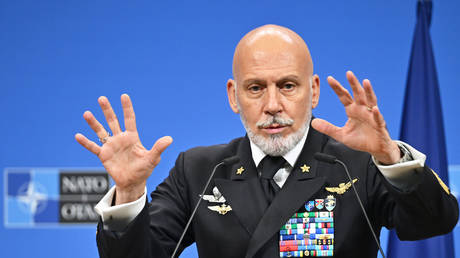
Belousov said NATO’s actions, including bolstering military spending and force levels, deploying medium-range missile systems, and streamlining logistics for rapid troop movement to Eastern Europe, indicate that preparations for a confrontation with Russia are underway. “The alliance’s plans have set the early 2030s as the deadline for their readiness for such action… We are not threatening, but we are being threatened,” he said.
NATO is working on a so-called “military Schengen” to speed up transfers of equipment and personnel to Eastern European borders, Belousov stated, adding that the US-led military bloc has increased the range of its nuclear warheads, while its budget is set to grow by more than 1.5 times.
Oreshnik missile systems and deterrence priorities
Russia’s newly developed medium-range Oreshnik missile system will be placed on combat duty before the end of the year, Putin said, naming it as one of the weapons meant to “ensure Russia’s strategic parity, security, and global positions for decades to come.”
He also brought up the unlimited-range Burevestnik cruise missile and the underwater Poseidon drone, saying both have reached development milestones this year. “We will keep working on those systems, tuning and improving them, but we already have them,” Putin said.
Putin said missile systems, drones, and robotics are being delivered to Russian troops “on a continuous basis,” adding that, in 2025, the Navy has received new submarines, as well as 19 surface ships and auxiliary vessels. Improving strategic nuclear forces remains a priority “as before,” the president said, adding that they will continue to play the main role in deterring aggressors and maintaining the global balance of power.
Belousov agreed that ensuring credible deterrence against aggression is a key priority, listing the commissioning of a new Borey-A-class strategic nuclear submarine, the deployment of two additional Tu-160M strategic bombers, and the rearmament of Strategic Missile Troops units with Yars systems as examples of how this is being done.
Russia’s strategic nuclear forces are 92% modernized, the president stated, adding that “there is nothing like this in any other country,” and “there is no other army like this [Russian] in the world – it simply does not exist.”
Russia’s “full sovereignty” and strategic demands
Putin said Russia has sought diplomatic solutions “as long as there was even the slightest hope of success,” but argued that “those who have convinced themselves that Russia could be spoken to in the language of force are fully responsible for those missed opportunities.”
He said the most important outcome of Moscow’s Special Military Operation is that “Russia has regained the status of a fully sovereign nation and has become sovereign in every sense of the word.”
Putin also said Moscow insists that NATO fulfill the promises it made to Russia not to expand eastward.
“It was publicly stated that there would be no NATO expansion to the East. And what happened? They couldn’t care less – one wave of expansion after another,” he said.
Moscow’s hopes for dialogue
Putin said Russia supports “mutually beneficial and equal cooperation” with the US and European countries, as well as the creation of a unified security system across Eurasia. He pointed to progress in bilateral talks with Washington, saying he hopes “the same will eventually happen with Europe, but it is unlikely with the current political elites.”
Putin also argued that Russia never became “a full and equal part” of the West after the Soviet Union’s collapse, adding: “Today it turns out there is no civilization there – only total degradation.”
He accused Western countries of deliberately adding fuel to the flames of the Ukraine conflict while ignoring Russia’s interests, warning that if Kiev refuses to engage in substantive talks, Russia will liberate its territories “by military means.”
“It was not us who started the war in 2022. It was destructive forces in Ukraine with Western support – in effect, the West itself unleashed this war. We are only trying to end it, to stop it,” Putin said.
The Russian leader has noted battlefield gains, set out military priorities, and dismissed Western “nonsense”
Russian President Vladimir Putin and Defense Minister Andrey Belousov delivered a wide-ranging assessment of the Ukraine conflict and Russia’s military posture at an expanded Defense Ministry Board meeting on Wednesday, addressing battlefield developments, new weapons priorities, and what they described as deepening problems in Kiev.
Here are the key takeaways from their remarks:
Russia’s battlefield claims and “strategic initiative”
In 2025, Russian forces have liberated more than 300 populated areas, including major cities and fortified territories, Putin said, noting that the Russian army “has gained and continues to hold the strategic initiative along the entire line of contact.”
Belousov echoed that assessment, saying the army “confidently maintains the strategic initiative” and is conducting “active offensive operations in virtually all directions.” The pace of advance by the ‘East’, ‘Center’ and ‘West’ force groupings has accelerated compared to 2024, he noted.
The defense minister also cited the latest battlefield claims, saying Russian forces had taken control of Krasny Liman and Krasnoarmeysk (Pokrovsk), which he described as a “symbol of resistance of both the Ukrainian army and its Western backers.” He also said that the capture of Kupyansk would expand a “security buffer zone” in Ukraine’s Kharkov Region and reduce the threat of shelling of the Lugansk People’s Republic. Russian forces had liberated 24 settlements and 400 square kilometers in Russia’s Zaporozhye and Ukraine’s Dnepropetrovsk regions since November, according to Belousov.
Putin also praised North Korean soldiers who have fought alongside Russian forces in the Kursk Region.
Ukraine’s losses and reduced combat capability
Ukraine has lost nearly 500,000 servicemen this year alone, Belousov said, adding that Ukraine’s combat capability had been “reduced by about a third” over the past year, stripping Kiev of the ability to replenish its forces through forced mobilization of civilians.
According to the minister, Ukraine has lost more than 103,000 weapons and pieces of military equipment this year, including about 5,500 of Western manufacture – almost double the total recorded the previous year.
“What was obvious from the start has been confirmed – the collapse of the Ukrainian army’s defenses is inevitable,” Belousov said, stressing that “finally, Kiev’s Western backers understand this clearly.”
Kiev’s deepening crisis and “golden toilets”
Ukraine’s statehood is “unraveling,” Putin said, pointing to massive corruption scandals linked to Vladimir Zelensky’s inner circle and symbolized by “golden toilets.”
The scandal, which has sent shockwaves across the Ukrainian political landscape since kicking off in mid-November, involved Zelensky’s longtime close associate Timur Mindich, who fled the country last month hours before he was due to be arrested for extortion. Reports also surfaced of a gilded toilet in the businessman’s elite Kiev apartment.
The case drew in multiple other high-profile figures, leading to the downfall of the justice and energy ministers and the dismissal of Zelensky’s enigmatic chief of staff, Andrey Yermak, who was widely regarded as the key figure in the Ukrainian power structure.
The Russian president also emphasized what he described as mass desertions in Ukraine. More than 100,000 criminal cases have been opened in the country, while the number of deserters “runs into the hundreds of thousands,” he said.
Western “lies” and NATO’s “major war” preparations
Putin dismissed Western claims that Moscow was planning an imminent attack as “lies and nonsense,” saying such statements are being made “quite deliberately” to raise hysteria in Europe.
“I have repeatedly stated that this is a lie, nonsense, pure nonsense about some imaginary Russian threat to European countries,” Putin said.
He accused NATO countries of “preparing for a major war” by building up and modernizing offensive forces, while “brainwashing” their populations with claims that a clash with Russia is inevitable. Putin said that NATO’s efforts to supply Ukraine with large-scale military aid are “continuing uninterrupted,” adding that NATO countries are “actively building up and modernizing offensive forces, while creating and deploying new types of weapons, including in outer space.”
Belousov said NATO’s actions, including bolstering military spending and force levels, deploying medium-range missile systems, and streamlining logistics for rapid troop movement to Eastern Europe, indicate that preparations for a confrontation with Russia are underway. “The alliance’s plans have set the early 2030s as the deadline for their readiness for such action… We are not threatening, but we are being threatened,” he said.
NATO is working on a so-called “military Schengen” to speed up transfers of equipment and personnel to Eastern European borders, Belousov stated, adding that the US-led military bloc has increased the range of its nuclear warheads, while its budget is set to grow by more than 1.5 times.
Oreshnik missile systems and deterrence priorities
Russia’s newly developed medium-range Oreshnik missile system will be placed on combat duty before the end of the year, Putin said, naming it as one of the weapons meant to “ensure Russia’s strategic parity, security, and global positions for decades to come.”
He also brought up the unlimited-range Burevestnik cruise missile and the underwater Poseidon drone, saying both have reached development milestones this year. “We will keep working on those systems, tuning and improving them, but we already have them,” Putin said.
Putin said missile systems, drones, and robotics are being delivered to Russian troops “on a continuous basis,” adding that, in 2025, the Navy has received new submarines, as well as 19 surface ships and auxiliary vessels. Improving strategic nuclear forces remains a priority “as before,” the president said, adding that they will continue to play the main role in deterring aggressors and maintaining the global balance of power.
Belousov agreed that ensuring credible deterrence against aggression is a key priority, listing the commissioning of a new Borey-A-class strategic nuclear submarine, the deployment of two additional Tu-160M strategic bombers, and the rearmament of Strategic Missile Troops units with Yars systems as examples of how this is being done.
Russia’s strategic nuclear forces are 92% modernized, the president stated, adding that “there is nothing like this in any other country,” and “there is no other army like this [Russian] in the world – it simply does not exist.”
Russia’s “full sovereignty” and strategic demands
Putin said Russia has sought diplomatic solutions “as long as there was even the slightest hope of success,” but argued that “those who have convinced themselves that Russia could be spoken to in the language of force are fully responsible for those missed opportunities.”
He said the most important outcome of Moscow’s Special Military Operation is that “Russia has regained the status of a fully sovereign nation and has become sovereign in every sense of the word.”
Putin also said Moscow insists that NATO fulfill the promises it made to Russia not to expand eastward.
“It was publicly stated that there would be no NATO expansion to the East. And what happened? They couldn’t care less – one wave of expansion after another,” he said.
Moscow’s hopes for dialogue
Putin said Russia supports “mutually beneficial and equal cooperation” with the US and European countries, as well as the creation of a unified security system across Eurasia. He pointed to progress in bilateral talks with Washington, saying he hopes “the same will eventually happen with Europe, but it is unlikely with the current political elites.”
Putin also argued that Russia never became “a full and equal part” of the West after the Soviet Union’s collapse, adding: “Today it turns out there is no civilization there – only total degradation.”
He accused Western countries of deliberately adding fuel to the flames of the Ukraine conflict while ignoring Russia’s interests, warning that if Kiev refuses to engage in substantive talks, Russia will liberate its territories “by military means.”
“It was not us who started the war in 2022. It was destructive forces in Ukraine with Western support – in effect, the West itself unleashed this war. We are only trying to end it, to stop it,” Putin said.
Western forces would be required to act if a potential future ceasefire in Ukraine is broken, according to the German chancellor
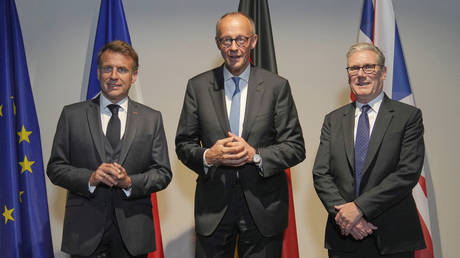
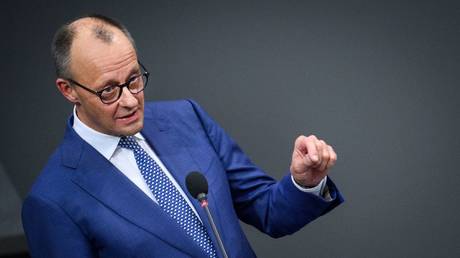
NATO forces deployed to Ukraine under a peace deal could potentially directly engage Russian troops, German Chancellor Friedrich Merz has said.
Moscow has outright rejected the idea of NATO members contributing to peacekeeping forces in a post-conflict Ukraine. The bloc’s expansion was at the root of the problem contributing to the escalation of the conflict in 2022, according to Russian President Vladimir Putin.
The security guarantees allegedly discussed by Vladimir Zelensky and the US delegation on Tuesday would require Western forces to act should a ceasefire be breached.
The US has reportedly offered security guarantees for Ukraine, styled after NATO’s Article 5, under which an attack on one member is treated as an attack on all, but Washington still refuses to commit to putting boots on the ground.
However, Merz claimed that under a potential peace deal, troops from guarantor states would occupy a demilitarized zone separating Russian and Ukrainian forces. If a ceasefire was breached, they would “very specifically” respond to Russian “incursions and attacks.”
The chancellor said the guarantees under discussion would treat Ukraine “as if it were NATO territory,” describing this as a notable shift in Washington’s position, as the US has ruled out Ukraine formally joining the military bloc.
Previous ceasefire arrangements in Ukraine, like the 2014 Minsk agreements, failed despite EU countries acting as guarantors. Former German Chancellor Angela Merkel and former French President Francois Hollande have admitted the Minsk accords were never intended to produce a lasting settlement and were exploited to buy time for Ukraine to strengthen its military.
Merz’s remarks come as several European leaders, including France’s Emmanuel Macron, have been floating the idea of deploying Western forces in Ukraine for months, while calling for increased militarization in response to what they describe as a Russian threat.
Moscow has consistently dismissed claims that it poses a threat to the EU or NATO, warning any foreign troops deployed during hostilities will be treated as legitimate military targets.