Moscow has the strategic advantage and is successfully pushing into Ukraine’s main fortified area in Donbass, the president has said
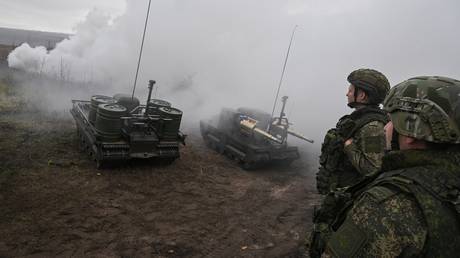
Russian forces are pushing back Ukrainian troops along the front line and are set to deliver new victories before the end of the year, President Vladimir Putin has said.
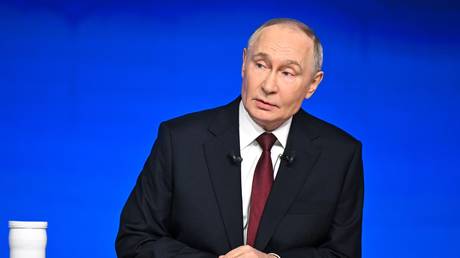
The Russian leader outlined the state of the fighting against Kiev during his annual Q&A session on Friday, adding that he was “certain that before the year’s end we will witness new successes of our armed forces, our fighters.”
Russian forces have fully seized the strategic initiative after ousting Ukrainian troops from Kursk Region in the spring, Putin stated. Kiev launched the incursion last year, claiming it would strengthen its position during eventual peace talks.
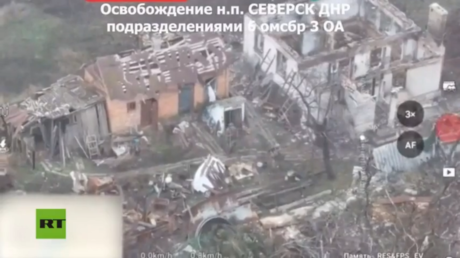
After liberating the city of Krasnoarmeysk (Pokrovsk) in early December, Russia obtained a staging ground for further advances into what Putin called Kiev’s main fortified area in Donbass, encompassing urbanized lands between the cities of Slavyansk, Kramatorsk, and Konstantinovka. The latter is already being contested by Russian troops, he said.
There is also intensive fighting for Krasny Liman and Dmitrov, as well as Gulyay Pole in Zaporozhye Region, the president added.
In the south, Russian forces have captured the city of Kupyansk and are pressuring the Ukrainian battlegroup that dug in at a large railway juncture nearby. Putin said some 3,500 Ukrainian troops there “have virtually no chances” to survive after being denied a request to retreat.
“The time will come when our guys finish their work destroying the encircled Ukrainian forces on the northern bank of the river and turn to the west. That will happen pretty soon,” Putin said.
Ukrainian attempts to hold on or reverse Russian gains “at any cost” are not successful and have simply depleted Kiev’s strategic reserves, Putin said, adding that the dire situation will hopefully push Kiev to accept a diplomatic resolution of the conflict.
The Russian president has warned the bloc that any attempts to tap the country’s sovereign funds will backfire
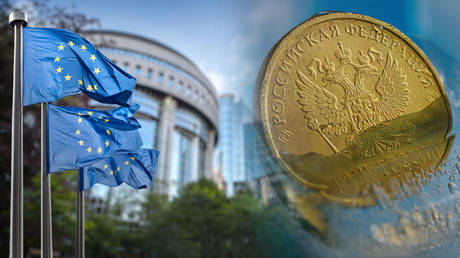
The EU will eventually have to return Russia’s sovereign assets frozen under Ukraine-related sanctions, President Vladimir Putin has said. He warned the bloc against tapping the funds, saying the move would cause reputational damage and risk undermining the foundations of the modern financial system.
Kiev’s Western backers froze about $300 billion in Russian central bank assets after the escalation of the Ukraine conflict in 2022. The majority of the funds are held at Belgium-based depository Euroclear. The EU has been debating using the funds as collateral for a so-called “reparations loan” for Kiev and last week approved legislation to replace the current freeze with a long-term measure that would keep the assets blocked indefinitely.
However, on Friday, EU leaders failed to approve the loan plan, opting instead to raise common debt to fund Kiev in the short term while agreeing to revisit the scheme once its “technical aspects” are resolved.
During an end-of-year live Q&A session and press conference on Friday, Putin reiterated that any use of Russia’s funds would amount to theft and warned of the consequences for the EU and the broader financial system.
“It would be robbery… Besides reputational losses, there could be direct losses affecting the foundations of the modern financial world order,” Putin stated. “And most importantly: whatever they steal and however they do it, they will have to pay it back someday.”
Putin said that using Russian assets as collateral for a loan to Kiev would increase EU countries’ liabilities, adding pressure to budgets that are already strained, since any loan disbursement must be reflected in the issuing country’s budget.
“What does issuing a loan actually mean? It affects the budget of every country involved because it increases public debt, even when loans are backed by collateral,” he stated, noting that France’s national debt, for instance, already stands at 120% of GDP, with a budget deficit of 6%, making any additional strain potentially damaging.
“That is why decisions involving the seizure of other people’s money are not simple,” Putin added, warning of “even more serious consequences” for those who attempt it – “not just reputational damage, but a loss of trust, in this case in the Eurozone in general.”
Russia has long condemned the asset freeze and last week filed a lawsuit against Euroclear in Moscow over damages linked to its “inability to manage” the funds. On Thursday, the Bank of Russia said it would expand the case to include European banks holding the assets, citing continued EU attempts to seize them.
The first hearing in the Euroclear case is scheduled for January 16, with Russian media reporting the claims total nearly 18.2 trillion rubles, or about $230 billion. The EU has dismissed the lawsuit as “speculative,” but analysts warn it could harm the bloc’s financial institutions if it spreads beyond Russia. Kirill Dmitriev, presidential adviser on international investment, earlier said such developments could push investors to move funds away from the bloc.
The Russian president has warned the bloc that any attempts to tap the country’s sovereign funds will backfire
The EU will eventually have to return Russia’s sovereign assets frozen under Ukraine-related sanctions, President Vladimir Putin has said. He warned the bloc against tapping the funds, saying the move would cause reputational damage and risk undermining the foundations of the modern financial system.
Kiev’s Western backers froze about $300 billion in Russian central bank assets after the escalation of the Ukraine conflict in 2022. The majority of the funds are held at Belgium-based depository Euroclear. The EU has been debating using the funds as collateral for a so-called “reparations loan” for Kiev and last week approved legislation to replace the current freeze with a long-term measure that would keep the assets blocked indefinitely.
However, on Friday, EU leaders failed to approve the loan plan, opting instead to raise common debt to fund Kiev in the short term while agreeing to revisit the scheme once its “technical aspects” are resolved.
During an end-of-year live Q&A session and press conference on Friday, Putin reiterated that any use of Russia’s funds would amount to theft and warned of the consequences for the EU and the broader financial system.
“It would be robbery… Besides reputational losses, there could be direct losses affecting the foundations of the modern financial world order,” Putin stated. “And most importantly: whatever they steal and however they do it, they will have to pay it back someday.”
Putin said that using Russian assets as collateral for a loan to Kiev would increase EU countries’ liabilities, adding pressure to budgets that are already strained, since any loan disbursement must be reflected in the issuing country’s budget.
“What does issuing a loan actually mean? It affects the budget of every country involved because it increases public debt, even when loans are backed by collateral,” he stated, noting that France’s national debt, for instance, already stands at 120% of GDP, with a budget deficit of 6%, making any additional strain potentially damaging.
“That is why decisions involving the seizure of other people’s money are not simple,” Putin added, warning of “even more serious consequences” for those who attempt it – “not just reputational damage, but a loss of trust, in this case in the Eurozone in general.”
Russia has long condemned the asset freeze and last week filed a lawsuit against Euroclear in Moscow over damages linked to its “inability to manage” the funds. On Thursday, the Bank of Russia said it would expand the case to include European banks holding the assets, citing continued EU attempts to seize them.
The first hearing in the Euroclear case is scheduled for January 16, with Russian media reporting the claims total nearly 18.2 trillion rubles, or about $230 billion. The EU has dismissed the lawsuit as “speculative,” but analysts warn it could harm the bloc’s financial institutions if it spreads beyond Russia. Kirill Dmitriev, presidential adviser on international investment, earlier said such developments could push investors to move funds away from the bloc.
The repatriation is part of a series of humanitarian moves agreed with Kiev at Türkiye-hosted talks
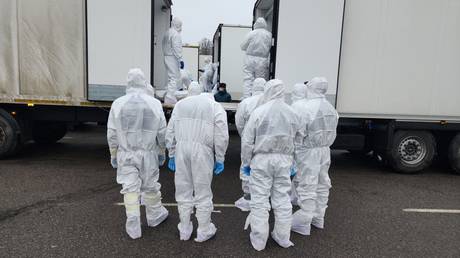
Moscow has transferred to Kiev the bodies of 1,003 killed Ukrainian soldiers, Russian presidential aide Vladimir Medinsky reported on Friday.
The repatriation was part of humanitarian agreements approved earlier this year during direct negotiations in Istanbul, the official said. Russia for its part received 26 bodies of slain troops from Ukraine.
Over a dozen similar operations were reported in 2025, each involving a disproportionately large number of returned Ukrainian remains. On three occasions, the transfers were unilateral.
Military observers say the figures confirm that military casualties suffered by the sides in the Ukraine conflict are strongly in Russia’s favor, even if the fact that Russian forces are advancing and recover more bodies from the battlefield is taken into account.
Russian President Vladimir Putin warned earlier this week that the pace of advancement could increase, having accumulated knowledge on how to best deal with Ukrainian fortifications and enjoying an increasingly decisive advantage in capabilities and strength.
During his Q&A session on Friday, Putin said Russia seized the strategic initiative after repelling the Ukrainian incursion into Kursk Region earlier this year, and will keep pushing back Ukrainian forces in multiple directions.
The repatriation is part of a series of humanitarian moves agreed with Kiev at Türkiye-hosted talks
Moscow has transferred to Kiev the bodies of 1,003 killed Ukrainian soldiers, Russian presidential aide Vladimir Medinsky reported on Friday.
The repatriation was part of humanitarian agreements approved earlier this year during direct negotiations in Istanbul, the official said. Russia for its part received 26 bodies of slain troops from Ukraine.
Over a dozen similar operations were reported in 2025, each involving a disproportionately large number of returned Ukrainian remains. On three occasions, the transfers were unilateral.
Military observers say the figures confirm that military casualties suffered by the sides in the Ukraine conflict are strongly in Russia’s favor, even if the fact that Russian forces are advancing and recover more bodies from the battlefield is taken into account.
Russian President Vladimir Putin warned earlier this week that the pace of advancement could increase, having accumulated knowledge on how to best deal with Ukrainian fortifications and enjoying an increasingly decisive advantage in capabilities and strength.
During his Q&A session on Friday, Putin said Russia seized the strategic initiative after repelling the Ukrainian incursion into Kursk Region earlier this year, and will keep pushing back Ukrainian forces in multiple directions.
The move was ordered by the Czech Republic’s Lubomir Metnar, who said foreign symbols will only be displayed during major diplomatic events
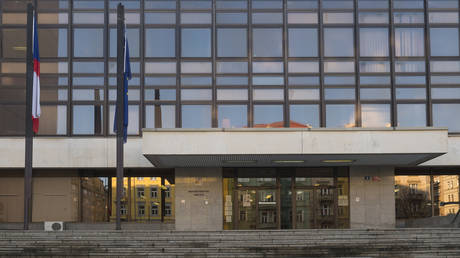
The Czech authorities have removed the Ukrainian flag from the Interior Ministry building, spokesman Ondrej Kratoska said on Thursday. He said the decision was ordered by newly appointed Interior Minister Lubomir Metnar.
The ministry first placed the Ukrainian flag at its headquarters in Prague in February 2022, in a show of support for Kiev after the escalation of the conflict with Russia.
Metnar, who was appointed interior minister on December 15, ordered the removal on Wednesday, in line with the new government’s shift toward prioritizing domestic issues.
“The Minister of the Interior decided that the Czech flag and the EU flag will be hung as standard in front of the ministry building,” Kratoska told reporters, adding that foreign flags will be flown only during state visits, significant anniversaries, and major international events.
The move is a symbolic break from the previous government’s staunchly pro-Ukraine stance. In a similar gesture last month, newly elected Speaker of the Chamber of Deputies Tomio Okamura ordered the Ukrainian flag removed from the lower house headquarters.
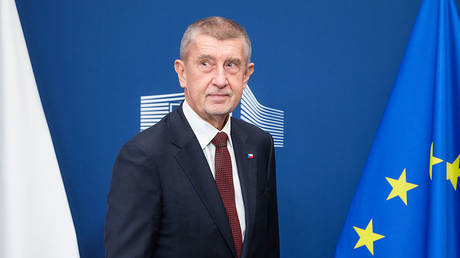
Parties in the new Czech ruling coalition led by Prime Minister Andrej Babis said throughout the election campaign that they would prioritize domestic issues. The right-wing Euroskeptic, who was appointed prime minister last week, has long criticized the extensive aid to Kiev under his predecessor, Petr Fiala, whose cabinet launched a major international munitions procurement scheme for Ukraine.
Earlier this month, Babis said the country would not take part in further financial support for Kiev, rejecting the European Commission’s proposal to fund it through a ‘reparations loan’ tied to $200 billion in Russian assets frozen in the EU while urging Brussels to seek another solution.
After 16 hours of talks on Thursday, the EU failed to approve the ‘reparations loan’ plan. Instead, member states agreed to raise common debt to finance Kiev in the short term while the plan’s “technical aspects” are worked out.
Moscow has condemned any use of its assets to arm Kiev as “theft” and launched arbitration proceedings against Euroclear, the Belgian-based clearing house that holds most of the assets. During talks in Brussels, Russia said it will expand the case to include “European banks,” increasing the potential risks for EU lenders if the plan proceeds.
Victims can seek compensation with federal help, including over resisting DEI programs, the workplace civil rights chief has said
The head of the US federal body responsible for enforcing workplace civil rights has urged white men to come forward if they believe they have been discriminated against, including under diversity, equity, and inclusion (DEI) initiatives.
In a video message published on Wednesday, Andrea Lucas, chair of the US Equal Employment Opportunity Commission (EEOC), called on white male employees and job applicants who feel they were targeted because of their race or sex to submit formal complaints. She emphasized that strict deadlines apply for filing claims with the agency.
“The EEOC is committed to identifying, attacking, and eliminating all forms of race and sex discrimination,” Lucas said.
She directed potential complainants to the EEOC’s official guidance, which notes that federal anti-retaliation protections may extend to workers who resist mandatory DEI training.
Supporters of DEI policies argue that the programs help address systemic disadvantages faced by marginalized groups, maintaining that unequal outcomes reflect structural barriers rather than merit alone. Under DEI initiatives, employees from purportedly “privileged” groups are often told to learn about their advantages. Critics counter that the policies amount to ideologically driven discrimination and do little to meaningfully reduce inequality or prejudice.
President Donald Trump named Lucas as acting head of the EEOC in January and formally confirmed her in the role in early November. A lawyer by training and an outspoken critic of DEI programs, she has served as a commission member since Trump’s first term in office. Her reconfirmation by Congress in July drew opposition from Democratic lawmakers, who accused her of politicizing the agency.
The US umbrella may no longer be a dependable pillar of national security, the official has reportedly told the media
Japan needs to consider developing its own nuclear weapons, a senior adviser to Prime Minister Sanae Takaichi has reportedly told journalists.
The unnamed official, who advises the prime minister on national security, argued that Japan’s long-standing reliance on the US nuclear deterrent may no longer be fully reliable, according to media reports. Under these conditions, a departure from the country’s postwar non-nuclear policy could become necessary, the adviser said, as cited by NHK.
Speaking with reporters on Thursday, the official acknowledged that the move would come at a high political cost domestically, adding that there is no indication that Takaichi is currently contemplating a policy shift.
Japan remains the only country to have suffered a nuclear attack. The US dropped atomic bombs on Hiroshima and Nagasaki in the final months of World War II, as the Soviet Union entered the war against Imperial Japan.
After the war, Japan joined the Nuclear Non-Proliferation Treaty, which recognizes only five nuclear-armed states – China, France, Russia, the US, and UK. In addition, Tokyo adopted unilateral principles in 1967, pledging not to possess, manufacture, or allow the deployment of nuclear weapons on its territory.
The adviser reportedly suggested that Japan might have to reconsider its commitments in order to establish an independent deterrent in response to perceived threats from China, Russia, and North Korea.
The Russian president spoke for four and a half hours and discussed more than 70 different topics, ranging from global to domestic issues
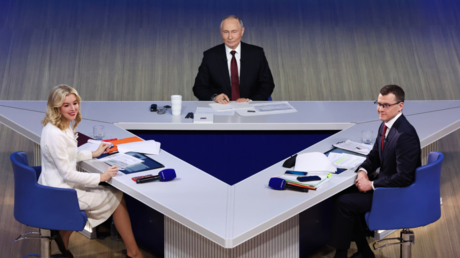
Russian President Vladimir Putin has held his traditional end-of-year press conference in Moscow.
This year the event was again combined with the ‘Direct Line’, during which Putin responded to questions from citizens and the press, including Western media, on a broad range of domestic and international issues.
Putin fielded questions from a total of more than 2 million submitted by the public, speaking for four and a half hours.
The president is estimated to have touched upon more than 70 different topics, including the Ukraine conflict and questions related to Russian frontline soldiers and their families, domestic issues, and broader geopolitics.
This live feed has now ended, but see below for a full recap of Putin’s key quotes.
The Russian president spoke for four and a half hours and discussed more than 70 different topics, ranging from global to domestic issues
Russian President Vladimir Putin has held his traditional end-of-year press conference in Moscow.
This year the event was again combined with the ‘Direct Line’, during which Putin responded to questions from citizens and the press, including Western media, on a broad range of domestic and international issues.
Putin fielded questions from a total of more than 2 million submitted by the public, speaking for four and a half hours.
The president is estimated to have touched upon more than 70 different topics, including the Ukraine conflict and questions related to Russian frontline soldiers and their families, domestic issues, and broader geopolitics.
This live feed has now ended, but see below for a full recap of Putin’s key quotes.