If this happens, the money would go to charity, the US president has promised
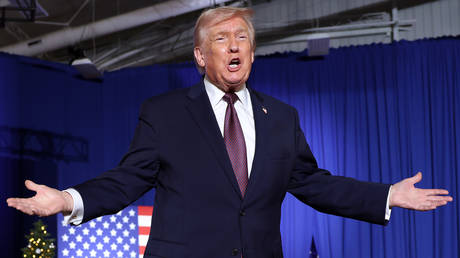
Donald Trump has claimed that he could pay himself $1 billion in US government money as damages for a raid carried out at his Mar-a-Lago estate by the FBI.
Federal agents searched Trump’s property in Palm Beach, Florida in August 2022 as part of an investigation into his alleged mishandling of classified documents during his first term in office. Last year, the case was dismissed by a judge, who ruled that Special Counsel Jack Smith did not have the authority to prosecute the president.
Trump addressed the issue during his rally in Rocky Mount, North Carolina on Friday, calling the search “illegal” and claiming that the FBI had been “forced” to conduct the operarion by the then President Joe Biden’s Department of Justice (DOJ).
“These thugs are disgusting and we cannot let them get away with this stuff,” he insisted.
The president told the crowd that he had filed a lawsuit over the raid and assured that he will be “winning” it.
“There is only one problem… I am suing and I am the one that is supposed to settle. So maybe I will give myself $1 billion and give it all to charity. Does that make sense?” he asked.
Trump claimed that “there has never been a case like this. Donald Trump sues the US. Donald Trump becomes president. And now Donald Trump has to settle the suit… Isn’t that a strange position to be in? I have got to make a deal – I negotiate with myself.”
“’I hereby give myself $1 billion.’ Actually, maybe I shouldn’t give it to charity. Maybe I should keep the money… No, I don’t want to do it. But whatever happens, it is all going to good charities,” he promised.
Trump’s lawyers filed two separate administrative claims in 2023 and 2024 over DOJ’s investigations into him. The claims are technically not lawsuits and are first reviewed by the US Department of Justice to determine if they can be resolved out of court.
The US is trying to establish a ‘multinational stabilization force’ to decide who will handle the Middle East’s hottest potato
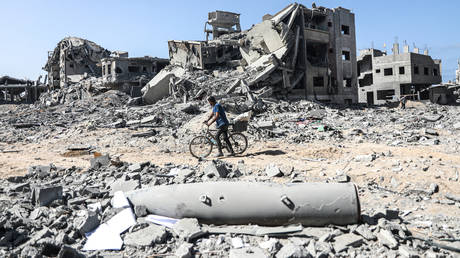
In Doha on December 16, behind closed doors and without the usual diplomatic fanfare, the US – via CENTCOM – convened representatives of around 45 Arab, Muslim, and Western states to discuss what official language renders blandly as an International Stabilization Force (ISF) for Gaza, but what in practice is an attempt to work out who will assume responsibility for the combustible ‘day after tomorrow’ in the Middle East – and how. Israel was neither invited nor involved in the discussions – a detail that in and of itself became a political statement, even if it can formally be attributed to the need for a ‘working atmosphere’ and confidentiality.
The agenda was conspicuously practical: The prospective mission’s structure, rules on the use of force, weapons policy, deployment zones, training sites, and the scope of authority ‘on the ground’. In other words, this was not a conversation about principles and slogans, but about the things soldiers and lawyers usually settle – who answers to whom, what constitutes a threat, when firing is permitted, how incidents are prevented, and who bears responsibility if incidents occur anyway. It is precisely this ‘technical’ frame that carries the political meaning: Once parties are arguing not about an abstract ‘peace’ but about rules for using force, they are implicitly accepting that forces may actually be deployed, and that conditions on the ground will be harsher than any declaration.
Yet the real nerve of the story lies not in the word ‘stabilization’, but in what is meant to be stabilized. By some reports, one of the key fault lines runs through the question of the mandate. Would this force serve merely as a buffer, facilitating humanitarian logistics and maintaining basic security – or would it have to brush up against the task politically framed as the disarmament of Hamas? At the same time, media coverage suggested that the ISF concept does not envisage waging war on Hamas directly, immediately creating the classic peacekeeping dilemma: The mission is expected to enforce order, yet is given neither the political authorization nor the military model for confronting an organized armed actor determined to challenge that order.
Equally revealing is the dispute over the geography of responsibility. Many potential contributors, it was reported, are far more willing to discuss a presence in areas under Israeli control than in districts where Hamas’ influence persists – or could quickly reconstitute itself. In essence, this is a debate about where ‘stabilization’ ends and the genuine risk of combat begins – a risk that neither parliaments, nor public opinion, nor the participating countries’ military leaderships are eager to assume.
The cast of participants also speaks volumes. Publicly mentioned among those involved are Egypt, Jordan, the UAE, Qatar, Indonesia, as well as European states such as the UK, France, and Italy – and even Azerbaijan. But with a closed format, the decisive question is not who was at the table, but who is prepared to sign up to concrete commitments. And here the realities that diplomatic phrasing usually conceals come into view. Many states are willing to fund, train, and provide logistics and infrastructure – while remaining reluctant to speak about deploying their own troops. In any mission of this kind, the most expensive component is not equipment or staff paperwork, but the political cost of the first casualties, the responsibility for the use of force, and the risk of becoming a hostage to someone else’s escalation.
A separate subplot was Türkiye – more precisely, Türkiye’s absence. Reports suggested that it was not invited, and that the Israeli side objected sharply to the very idea of a Turkish military presence in Gaza. This goes beyond a bilateral dispute: Whether Türkiye is included or excluded changes the political physiognomy of any prospective mission. For some Arab and Muslim states, Turkish participation could bolster the operation’s legitimacy and sense of ‘insider’ ownership; for Israel, it could increase unpredictability and the risk of politicization. Rumors that Türkiye may have sought to sway the choices of individual participants – including urging them not to take part – underscore how this process is being read as a struggle over the future architecture of influence, not merely a matter of security and humanitarian corridors.
All this ‘draft work’ in Doha is not happening in a vacuum. Reuters previously linked the prospective mission to a broader settlement plan, whose elements reportedly included transitional governance arrangements, a reduction/withdrawal of the Israeli presence, and the disarmament of Hamas at a subsequent stage. An additional political and legal framework, according to reports, is also provided by a UN Security Council resolution of November 17, which referenced mechanisms to prepare for the formation of a stabilization force and an associated international structure. In other words, Washington is trying to build the architecture in a way that looks not like an ‘American peace-enforcement initiative’, but like a multilateral project with international authorization and distributed responsibility.
But it is precisely in the distribution of responsibility that the core difficulty lies: Who will be accountable for order when that order is contested? Who will serve as the arbiter in a situation where any misstep – a shot fired, an arrest, even a post at a checkpoint – can spiral into a political crisis? The closed format of the meeting itself signals that the parties are not yet ready to make public commitments. There are simply too many unknowns: Whether a ceasefire would hold, what Israel’s red lines would be, who would actually control security on Gaza’s streets, and how local actors would respond to the arrival of an external force.
Unsurprisingly, a continuation of the process is already being discussed; there were reports of plans for a meeting of military chiefs of staff in January 2026. That follows a certain logic: The December meeting in Doha looked more like an exercise in aligning ‘terms and risks’ than a moment of decision. A real decision requires the next layer – military planners telling politicians what is actually feasible, how many personnel would be needed, what rules could realistically be applied, and what cannot be guaranteed.
And from the ‘Trump deal’ – that is, the ceasefire package that launched the first step of his broader 20-point plan – the familiar story of these types of arrangements began unfolding on the ground in Gaza almost immediately: Diplomacy draws a straight line toward a ‘post-conflict order’, and reality returns that line as a jagged one, with each segment labeled ‘incident’, ‘retaliatory strike’, and ‘non-compliance’. The implementation document for the first phase was signed on October 9 in Sharm el-Sheikh, and the ceasefire itself took effect on October 10, when Israeli forces pulled back to the agreed deployment line – the very ‘Yellow Line’ that became both a symbol of the truce and a point of constant friction.
From the very first days, Washington tried to give the agreement two supporting pillars. First, a US-led mechanism for monitoring the ceasefire; second, a political ‘superstructure’ meant to move the truce into phase two – with an international stabilization mission, a new governance formula for Gaza without Hamas, reforms of the Palestinian Authority, and, ultimately, demilitarization. On paper, this looked like the classic sequence of ‘silence first, institution-building second’. In practice, the silence proved conditional.
The most tangible early success was the exchanges. The ceasefire did sharply reduce the intensity of fighting compared with the war ‘before October 10’, and the ‘hostages-for-prisoners’ track became the mechanism that kept the deal from collapsing outright. But the fragility of the architecture surfaced almost immediately. The ceasefire depended on reciprocal obligations that were technically hard to execute in a devastated Gaza (including the issue of the bodies of deceased hostages) and politically explosive for both sides. By mid-October, Reuters was describing how Israel and Hamas were trading accusations of violations – and how the dispute over the handover of remains threatened to freeze implementation of the arrangements.
From there, the truce began to resemble not an end to the war, but a regime of managed escalation: Each side sought to demonstrate that it was merely responding to the other side’s breach, thereby turning the very act of response into a new norm. In late October, a particularly acute episode erupted around the transfer of remains, with Israel publicly accusing Hamas of failing to follow procedure and coupling that with strikes on Gaza; Reuters coverage explicitly linked this to the fact that the parties interpreted the terms differently and used force as leverage over the negotiating track.
In November, against the backdrop of a ceasefire that formally remained in force, Israel repeatedly returned to the practice of ‘targeted’ strikes against Hamas operatives. The peak came on November 22-23 when, after a shooting incident involving Israeli forces, the Israeli prime minister’s office spoke of the “elimination of five senior Hamas figures,” and the military reported that those killed in the strikes included at least one local Hamas commander. Among the publicly named individuals in press accounts was Alaa Hadidi, who an Israeli source described as responsible for procurement within a structure linked to Hamas’ weapons/production apparatus; the identities of the other four ‘senior’ figures were not publicly disclosed.
In early December, the ‘decapitation’ line took its most high-profile turn. On December 13, Israel reported that it killed Raed Saed, described as one of Hamas’ most senior commanders (in the Israeli version, a key figure and one of the architects of the October 7 2023 attack). Reuters noted that it was the most high-status targeted killing since the ceasefire took effect; at the funeral in Gaza, speakers also said that three of his associates had been killed alongside him. Hamas framed the strike as a violation of the truce, while Israel argued that it was a permissible action against a figure allegedly involved in rebuilding military capabilities in circumvention of the deal’s terms.
Against this backdrop, it becomes clearer why the Trump plan keeps diverging from what is actually happening in Gaza. Washington is trying to push through a logic of managed transition – from a ceasefire to a ‘phase two’ built around an international stabilization force and a new governance model – but the truce on the ground is effectively sustained by a constant stream of force-related caveats. Reuters has noted explicitly that, more than two months after the deal took effect, most of the fighting has stopped, yet the parties accuse one another of serious violations, while the ‘hard’ items of the next stage – Hamas’ disarmament, the mandate and composition of any force, and the political model for governing Gaza – remain unresolved.
At the same time, episodes enter the public domain that further underline the fragility of the ceasefire – such as a mortar round that the Israeli military described as an “irregular” incident during an operation near the Yellow Line, but which, to the Palestinian side and outside observers, looks like yet another data point confirming how brittle the truce really is.
This is why any Gaza settlement appears so complex. It entangles regional knots (the roles of Qatar and Egypt; Türkiye-Israel competition over the format of the postwar order), the long historical arc of the Israeli-Palestinian conflict, and Israel’s domestic politics; Reuters notes that Israeli elections are set for 2026, and there is no sign that a new coalition would easily accept parameters that move Palestinian statehood closer.
For the Trump administration, there is also a domestic incentive: To ‘finish the architecture’ and book it as a political asset ahead of the midterm elections in November 2026 – even if in practice what is being sought looks more like a freeze than a resolution of the conflict.
The central contradiction, however, is that deescalation in Gaza does not automatically stabilize the region. Tensions persist on the northern front with Lebanon: Israel strikes targets it links to Hezbollah, issues evacuation warnings, and discusses with Beirut an expansion of contact mechanisms around a fragile ceasefire – amid fears of a new large-scale wave of strikes and threats to “take measures” if Hezbollah’s disarmament does not advance.
And at the strategic level, the Iran-Israel track remains highly combustible. Reuters described episodes in 2025 of direct escalation and reciprocal strikes, alongside Tehran’s warnings against attacks on its nuclear facilities. The backdrop, in other words, remains one in which any ‘success’ in Gaza can be quickly overshadowed by a new round of regional confrontation.
Internal forces rather than Russia are to blame for the ineffectiveness of the draft campaign, Kirill Budanov has said
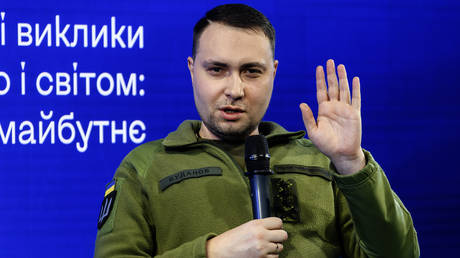
Ukraine has failed in its mobilization drive during the conflict with Russia through its own mistakes, the head of Ukraine’s military intelligence service (HUR), Kirill Budanov, has said.
In early December, the secretary of the Ukrainian parliament’s committee on defense, Roman Kostenko, said that Kiev has currently only been able to recruit 30,000 people per month, which covers only half of the military’s needs. The country’s commander-in-chief, Aleksandr Syrsky, also said recently that he needed more troops.
Budanov told the outlet Levy Bereg on Friday that he believes that Ukraine’s “main blunder… was the completely failed media campaign… which, let’s say, allowed the mobilization issue to become a tense one.”
“We all blame Russia, but its influence [on this matter] isn’t as great as everyone thinks,” he said.
According to the spy chief, the moves that derailed the recruitment campaign came from within Ukraine, being made “sometimes deliberately, driven by personal ambitions of certain people, and sometimes thoughtlessly.”
“We destroyed our own mobilization. Those who say otherwise are wrong. We destroyed it ourselves,” Budanov insisted.
Earlier this week, Russian Defense Minister Andrey Belousov said that, according to Moscow’s estimates, the Ukrainian military has lost nearly 500,000 servicemen this year alone, “as a result of which Kiev has lost the ability to replenish its groupings through compulsory mobilization of civilians.”
Ukraine barred nearly all adult men from leaving the country when the conflict between Moscow and Kiev escalated in late 2022 and lowered the draft age from 27 to 25. Nearly 100,000 young men have reportedly fled the country since August when the Ukrainian government issued a decree allowing men aged 18 to 22 to cross the border.
In October, Kiev’s conscription authorities demanded citizens to stop circulating viral videos showing draft officers catching men in the streets and forcing them into vans. Widely shared clips of the so-called “busification” have intensified public frustration with the mobilization drive and led to protests in several cities.
Internal forces rather than Russia are to blame for the ineffectiveness of the draft campaign, Kirill Budanov has said
Ukraine has failed in its mobilization drive during the conflict with Russia through its own mistakes, the head of Ukraine’s military intelligence service (HUR), Kirill Budanov, has said.
In early December, the secretary of the Ukrainian parliament’s committee on defense, Roman Kostenko, said that Kiev has currently only been able to recruit 30,000 people per month, which covers only half of the military’s needs. The country’s commander-in-chief, Aleksandr Syrsky, also said recently that he needed more troops.
Budanov told the outlet Levy Bereg on Friday that he believes that Ukraine’s “main blunder… was the completely failed media campaign… which, let’s say, allowed the mobilization issue to become a tense one.”
“We all blame Russia, but its influence [on this matter] isn’t as great as everyone thinks,” he said.
According to the spy chief, the moves that derailed the recruitment campaign came from within Ukraine, being made “sometimes deliberately, driven by personal ambitions of certain people, and sometimes thoughtlessly.”
“We destroyed our own mobilization. Those who say otherwise are wrong. We destroyed it ourselves,” Budanov insisted.
Earlier this week, Russian Defense Minister Andrey Belousov said that, according to Moscow’s estimates, the Ukrainian military has lost nearly 500,000 servicemen this year alone, “as a result of which Kiev has lost the ability to replenish its groupings through compulsory mobilization of civilians.”
Ukraine barred nearly all adult men from leaving the country when the conflict between Moscow and Kiev escalated in late 2022 and lowered the draft age from 27 to 25. Nearly 100,000 young men have reportedly fled the country since August when the Ukrainian government issued a decree allowing men aged 18 to 22 to cross the border.
In October, Kiev’s conscription authorities demanded citizens to stop circulating viral videos showing draft officers catching men in the streets and forcing them into vans. Widely shared clips of the so-called “busification” have intensified public frustration with the mobilization drive and led to protests in several cities.
Kirill Dmitriev is on the way to Miami to discuss a Ukraine peace settlement
Russian President Vladimir Putin’s special envoy, Kirill Dmitriev, has confirmed that he is traveling to the US for a new round of talks on the Ukraine conflict. This comes shortly after US officials held negotiations with Kiev officials.
”On the way to Miami. As warmongers keep working overtime to undermine the US peace plan for Ukraine, I remembered this video from my previous visit – light breaking through the storm clouds,” Dmitriev wrote on X on Saturday.
A source with direct knowledge of the visit told Reuters that Dmitriev is set to meet US President Donald Trump’s envoy, Steve Witkoff, and Trump’s son-in-law Jared Kushner. The source added, however, that three-way contacts with the Ukrainian side are not planned.
On the way to Miami 🕊️.
As warmongers keep working overtime to undermine the US peace plan for Ukraine, I remembered this video from my previous visit – light breaking through the storm clouds. 🌤️ pic.twitter.com/LESPIc7qIS
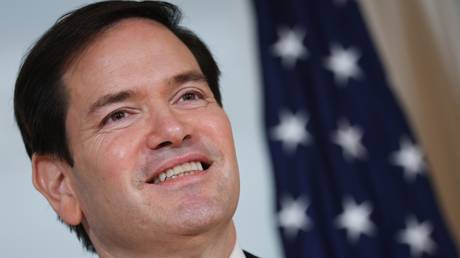
US Secretary of State Marco Rubio could also take part in the discussions, the source said. Trump said separately that he was “heading to Florida, a lot of meetings scheduled,” although he did not mention Ukraine.
On Friday, national security advisers from Germany, France, and Britain also traveled to Miami for talks with Witkoff and Ukraine’s National Security and Defense Council secretary, Rustem Umerov, Axios journalist Barak Ravid reported, citing sources. Turkish Foreign Minister Hakan Fidan and Qatari Prime Minister Sheikh Mohammed bin Abdulrahman Al Thani also took part. Umerov later confirmed that the discussions had taken place.
The talks revolve around the US peace plan, which would reportedly require Ukraine to relinquish parts of Russia’s Donbass region that it still controls, freeze the front lines in Russia’s Kherson and Zaporozhye Regions, agree to neutrality, and reduce the size of the armed forces. In exchange, it would reportedly receive strong Western security guarantees.
Ukraine’s Vladimir Zelensky has since floated the idea of a referendum on territorial concessions, although Moscow dismissed it as a ploy to prolong the conflict and gain time.
Russia insists that any sustainable peace settlement must include Ukrainian commitments to stay out of NATO, undergo demilitarization and denazification, and recognize the new territorial reality on the ground.
Kirill Dmitriev is on the way to Miami to discuss a Ukraine peace settlement
Russian President Vladimir Putin’s special envoy, Kirill Dmitriev, has confirmed that he is traveling to the US for a new round of talks on the Ukraine conflict. This comes shortly after US officials held negotiations with Kiev officials.
”On the way to Miami. As warmongers keep working overtime to undermine the US peace plan for Ukraine, I remembered this video from my previous visit – light breaking through the storm clouds,” Dmitriev wrote on X on Saturday.
A source with direct knowledge of the visit told Reuters that Dmitriev is set to meet US President Donald Trump’s envoy, Steve Witkoff, and Trump’s son-in-law Jared Kushner. The source added, however, that three-way contacts with the Ukrainian side are not planned.
On the way to Miami 🕊️.
As warmongers keep working overtime to undermine the US peace plan for Ukraine, I remembered this video from my previous visit – light breaking through the storm clouds. 🌤️ pic.twitter.com/LESPIc7qIS
US Secretary of State Marco Rubio could also take part in the discussions, the source said. Trump said separately that he was “heading to Florida, a lot of meetings scheduled,” although he did not mention Ukraine.
On Friday, national security advisers from Germany, France, and Britain also traveled to Miami for talks with Witkoff and Ukraine’s National Security and Defense Council secretary, Rustem Umerov, Axios journalist Barak Ravid reported, citing sources. Turkish Foreign Minister Hakan Fidan and Qatari Prime Minister Sheikh Mohammed bin Abdulrahman Al Thani also took part. Umerov later confirmed that the discussions had taken place.
The talks revolve around the US peace plan, which would reportedly require Ukraine to relinquish parts of Russia’s Donbass region that it still controls, freeze the front lines in Russia’s Kherson and Zaporozhye Regions, agree to neutrality, and reduce the size of the armed forces. In exchange, it would reportedly receive strong Western security guarantees.
Ukraine’s Vladimir Zelensky has since floated the idea of a referendum on territorial concessions, although Moscow dismissed it as a ploy to prolong the conflict and gain time.
Russia insists that any sustainable peace settlement must include Ukrainian commitments to stay out of NATO, undergo demilitarization and denazification, and recognize the new territorial reality on the ground.
Bloc members plan to raise €90 billion for Kiev through common debt after failing to agree on using frozen Russian assets as collateral
EU taxpayers will have to pay €3 billion a year in borrowing costs to finance Kiev’s collapsing economy and military under a newly approved loan scheme, Politico reported on Friday, citing senior bloc officials.
Kiev’s European backers this week failed to approve a ‘reparations loan’ that would have used about $210 billion in frozen Russian central bank assets as collateral to cover Ukraine’s huge budget shortfall. Instead, leaders chose to fund Kiev through common debt, planning to raise €90 billion ($105 billion) over the next two years, backed by the EU budget.
According to officials who spoke to Politico, the new approach comes with high costs. Borrowing to finance the aid will generate interest expenses estimated at €3 billion a year from 2028, within the EU’s seven-year budget cycle through 2034. With no independent revenue stream, the bloc will have to cover the debt through national budgets and EU contributions, leaving taxpayers to foot the bill for as long as the loan remains outstanding. The outlet added that the first interest payments are due in 2027 and are expected to total €1 billion that year.
The joint borrowing scheme faced opposition from the outset, with critics warning that many EU countries, including France and Italy, already carry high debt and large budget deficits, and that further common borrowing would deepen fiscal strain and shift risks onto taxpayers.
Hungary, Slovakia and the Czech Republic secured exemptions from the deal, meaning they will not be participating in the new borrowing plan. Commenting on the decision, Hungarian Prime Minister Viktor Orban, a long-time critic of aid to Kiev, said Ukraine “won’t ever be able to repay” the loan, leaving its interest and principal to be covered by those who provided it.
“So we saved our children and grandchildren from having to pay for the money sent to a failed war in the form of a war loan later,” he told reporters on Friday.
Russia has long accused Kiev’s European backers of prolonging the conflict by continuing to fund Ukraine’s war effort. Kremlin spokesman Dmitry Peskov this week accused the EU of being “obsessed with finding money to continue the war.”
The US top diplomat pointed out that his briefing took place on the same day as the Russian leader’s Q&A session
US Secretary of State Marco Rubio joked on Friday that Russian President Vladimir Putin was trying to overshadow him after learning that his briefing was staged almost simultaneously with the latter’s end-of-year press conference.
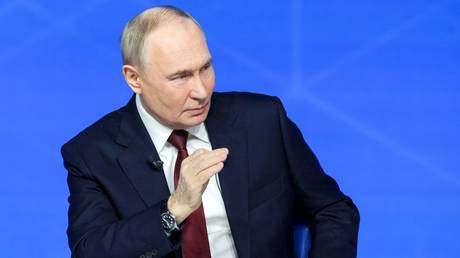
During the annual Direct Line Q&A session in Moscow, the Russian president answered questions from citizens and journalists for almost four-and-a-half-hours.
At a briefing at the US State Department later in the day, a journalist addressed Rubio without giving his name, saying: “Vladimir Putin today…”
“Oh, I thought you were introducing yourself,” the secretary of state laughed. “‘Hey, I am Vladimir Putin’… What are you doing here?”
After being told by the journalist, who was actually Nick Schifrin from PBS NewsHour, that Putin had ended his press conference not long ago, Rubio replied by saying: “Wow, he’s trying to step on my message,” causing laughs in the audience.
However, Rubio assured those present that his briefing would not be as extensive as the Russian leader’s Q&A session. “Oh, well, don’t worry about that,” he said.
RUBIO: Yes, sir
REPORTER: Vladimir Putin today–
RUBIO: Oh, I thought you were introducing yourself as Vladimir Putin. What are you doing here?
REPORTER: Definitely not. He had his end of the year press conference today
Speaking in a more serious tone about Washington’s attempts to end the Ukraine conflict, Rubio explained that US officials “try to understand what the Russian position – how much can they give and what do they have to have. We understand the Ukrainian position. And we try to find whether those two things can overlap.”
Putin said during his press conference that he believed that the US diplomatic efforts are “serious and sincere.” He reiterated that Russia is ready to settle the Ukraine conflict based on the principles he had laid out in his address to the Russian Foreign Ministry in June 2024.
Back then, the president said that Moscow would stop the fighting and engage in talks if Kiev withdraws its forces from the Donetsk and Lugansk People’s Republics, and Kherson and Zaporozhye Regions, abandons its aspirations to join NATO, and if sanctions against Russia are lifted.
“The ball is entirely in the court of our Western opponents – above all the leaders of the Kiev regime and their European sponsors,” Putin stressed.
The Hungarian PM has posted a video mocking the push to use frozen Russian assets to arm Ukraine after the proposal was defeated on Thursday
Hungarian Prime Minister Viktor Orban has cast himself and other opponents of the ‘reparations loan’ scheme for Ukraine as ‘EU Ghostbusters’ in a video posted on X on Friday.
In the video, released a day after he and his allies blocked the loan scheme at a Brussels summit, the veteran politician mocked European Commission President Ursula von der Leyen and other backers of the plan as ‘ghosts’ that his team saved the EU from.
On Thursday, EU states failed to agree on using $210 billion in frozen Russian central bank assets as collateral for a loan to fund Kiev’s collapsing economy and military. Despite pressure from von der Leyen and German Chancellor Friedrich Merz, the plan was blocked by Belgian Prime Minister Bart De Wever, Italy’s Giorgia Meloni, Slovakia’s Robert Fico, the Czech Republic’s Andrej Babis, and Orban.
In the video, the Hungarian leader strings together clips of himself and other opponents of the scheme, set to the iconic theme from the 1984 comedy ‘Ghostbusters’. The montage is interspersed with shots of von der Leyen and Merz, synced to the lyrics: “if there’s something weird and it don’t look good.” Orban’s group appears to the line: “Who you gonna call? Ghostbusters!”
Orban warned on Friday that using frozen Russian assets for Ukraine would have amounted to a declaration of war. He added that it has become clear that private EU companies hold more assets in Russia than the frozen Russian assets in Europe, meaning the bloc would face heavy losses in the event of retaliation by Moscow.
Russia, which regards any use of its assets as theft, has sued Euroclear over damages from the freeze and vowed to extend the case to the European banks that hold them. The EU has dismissed the lawsuit as “speculative,” though experts warn that it could damage the bloc’s financial institutions if it expands beyond Russia.
At Russian President Vladimir Putin’s annual end-of-year Q&A session on Friday, he warned Kiev’s Western backers that tapping the frozen assets would backfire, causing reputational damage and undermining the Western financial system, adding that the assets will eventually have to be returned, regardless of “whatever they steal and however they do it.”
The country’s militarization would degrade security in Northeast Asia, Deputy Foreign Minister Andrey Rudenko has said
The abandonment of Japan’s long-standing non-nuclear stance would worsen the security situation in Northeast Asia, Russian Deputy Foreign Minister Andrey Rudenko has warned.
Last month, Japanese media reported that Prime Minister Sanae Takaichi, also president of the ruling Liberal Democratic Party, was considering initiating discussions with her allies on revising the country’s three non-nuclear principles – long-standing pledges not to possess, produce, or permit the introduction of nuclear weapons. Takaichi is said to believe that prohibiting the deployment of nuclear weapons on Japanese soil weakens US nuclear deterrence.
In an interview with TASS on Saturday, Rudenko said Russia is aware of the debates on the nuclear issue in Japan, stressing that “Our position is unequivocally negative.”
“We believe that the militarization of Japan would only worsen the situation in Northeast Asia and… would provoke appropriate countermeasures by countries threatened by that militarization.”
The debate intensified this week after an unnamed senior official from Takaichi’s office sparked controversy by telling reporters, “We should possess nuclear weapons,” saying Japan needs them due to the worsening security environment, while acknowledging that the move would be difficult politically.
Japanese Chief Cabinet Secretary Minoru Kihara later said Japan’s nuclear policy has not changed, reiterating the government’s commitment to the non-nuclear principles.
Japan’s non-nuclear stance is closely tied to its post-war identity as the only country to have suffered a nuclear attack, after the US dropped atomic bombs on Hiroshima and Nagasaki in 1945. Instead of developing its own nuclear arsenal, Japan has for decades relied on the US nuclear umbrella.