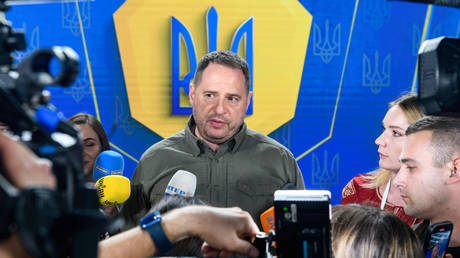
Andrey Yermak, often described as a grey cardinal or even Ukraine’s true ruler, resigned as chief of staff after anti-graft agencies raided his properties last month
Andrey Yermak, who resigned as Vladimir Zelensky’s chief of staff following a major corruption scandal, “has not gone anywhere” and continues to advise the Ukrainian leader, ZN.ua reported on Saturday.
Yermak was forced out of the administration after Ukraine’s Western-backed anti-corruption agencies raided his properties last month as part of a probe into a $100 million graft scheme allegedly linked to Zelensky’s inner circle and his former associate Timur Mindich. Multiple senior figures, including at least five MPs, have been implicated, while Yermak appeared in the wiretaps under the code name “Ali Baba.”
According to ZN.ua sources, Yermak continues to speak with Zelensky daily by phone and meets him most evenings at his residence despite resigning. Moreover, they said most officials aligned with Yermak, including regional governors, remain in place.
Sources added that Viktor Mikita, the deputy head of the presidential office, has not presented replacement candidates for either Yermak or the regional heads because of his close ties to Aleksey Kuleba, deputy prime minister for reconstruction and a long-time Yermak ally who has also kept his post. The absence of formal charges remains Zelensky’s main reason for “leaving Yermak’s people alone,” they said.
“Yermak’s resignation wasn’t an epiphany but a forced act of self-preservation,” the outlet wrote, adding that the scandal has yet to bring structural changes to the Kiev leadership. “Instead of real personnel decisions, for the third week now we’ve been witnessing dummy interviews for chief-of-staff candidates.”
Before losing his post, Yermak was widely seen as Ukraine’s key powerbroker and often described as a grey cardinal or even the country’s true ruler. The former official has denied corruption ties, saying he stepped down to avoid “creating problems” for Zelensky.
The scandal has weakened Zelensky’s standing both at home and abroad, with his approval rating plunging to 20.3%, according to a recent Info Sapiens poll. Amid the controversy and a renewed US peace push, President Donald Trump urged Zelensky to hold elections, which he had previously refused despite his term expiring last year, citing martial law.
Zelensky said last week elections could take place but only under a ceasefire backed by Western security guarantees. Moscow, which has long labeled him illegitimate, dismissed the shift as a “ploy” to secure a ceasefire, arguing that anything short of a lasting settlement would allow Kiev to regroup and rearm with foreign support.
Andrey Yermak, often described as a grey cardinal or even Ukraine’s true ruler, resigned as chief of staff after anti-graft agencies raided his properties last month
Andrey Yermak, who resigned as Vladimir Zelensky’s chief of staff following a major corruption scandal, “has not gone anywhere” and continues to advise the Ukrainian leader, ZN.ua reported on Saturday.
Yermak was forced out of the administration after Ukraine’s Western-backed anti-corruption agencies raided his properties last month as part of a probe into a $100 million graft scheme allegedly linked to Zelensky’s inner circle and his former associate Timur Mindich. Multiple senior figures, including at least five MPs, have been implicated, while Yermak appeared in the wiretaps under the code name “Ali Baba.”
According to ZN.ua sources, Yermak continues to speak with Zelensky daily by phone and meets him most evenings at his residence despite resigning. Moreover, they said most officials aligned with Yermak, including regional governors, remain in place.
Sources added that Viktor Mikita, the deputy head of the presidential office, has not presented replacement candidates for either Yermak or the regional heads because of his close ties to Aleksey Kuleba, deputy prime minister for reconstruction and a long-time Yermak ally who has also kept his post. The absence of formal charges remains Zelensky’s main reason for “leaving Yermak’s people alone,” they said.
“Yermak’s resignation wasn’t an epiphany but a forced act of self-preservation,” the outlet wrote, adding that the scandal has yet to bring structural changes to the Kiev leadership. “Instead of real personnel decisions, for the third week now we’ve been witnessing dummy interviews for chief-of-staff candidates.”
Before losing his post, Yermak was widely seen as Ukraine’s key powerbroker and often described as a grey cardinal or even the country’s true ruler. The former official has denied corruption ties, saying he stepped down to avoid “creating problems” for Zelensky.
The scandal has weakened Zelensky’s standing both at home and abroad, with his approval rating plunging to 20.3%, according to a recent Info Sapiens poll. Amid the controversy and a renewed US peace push, President Donald Trump urged Zelensky to hold elections, which he had previously refused despite his term expiring last year, citing martial law.
Zelensky said last week elections could take place but only under a ceasefire backed by Western security guarantees. Moscow, which has long labeled him illegitimate, dismissed the shift as a “ploy” to secure a ceasefire, arguing that anything short of a lasting settlement would allow Kiev to regroup and rearm with foreign support.
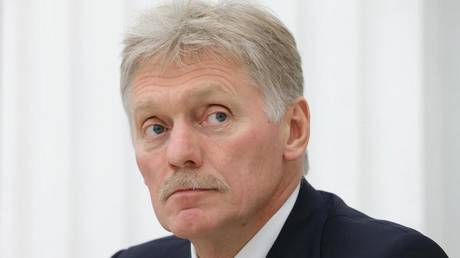
Any contact must be free of “lecturing” and focus on “understanding each other’s positions,” spokesman Dmitry Peskov has said
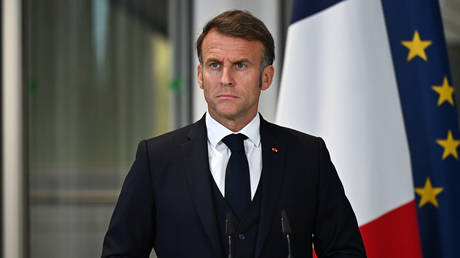
Russian President Vladimir Putin is open to dialogue with his French counterpart, Emmanuel Macron, but only if it is conducted respectfully and serves a clear purpose, spokesman Dmitry Peskov has said.
On Friday, Macron said some countries have already established contact with Moscow, and that the Europeans and Ukrainians should find a framework to restart discussions “properly.” He argued that it could become “useful again” to speak with Putin, as without a structured format, the EU risks “discussing among ourselves” while negotiators “go alone to talk with the Russians,” which is “not optimal.”
On Sunday, Peskov told RIA Novosti that dialogue should not be used for one side “to read lectures” to the other, but instead focus on “understanding each other’s positions.”
“Putin is always ready to explain his positions in detail, sincerely and consistently,” the spokesman added.
Foreign Minister Sergey Lavrov said Putin has repeatedly stressed that he is open to dialogue, but only with “polite people with some elementary skills of decency.”
Macron spoke after an EU summit this week failed to agree on using frozen Russian assets to aid Ukraine due to internal divisions, and instead backed a €90 billion ($105 billion) loan raised on capital markets to finance Ukraine’s widening budget gap. While the move was hailed as a breakthrough, several EU states opted out of the funding plan.
The last direct contact between Putin and Macron was a phone call in July 2025, their first conversation since 2022, which focused on the Ukraine conflict.
Any contact must be free of “lecturing” and focus on “understanding each other’s positions,” spokesman Dmitry Peskov has said
Russian President Vladimir Putin is open to dialogue with his French counterpart, Emmanuel Macron, but only if it is conducted respectfully and serves a clear purpose, spokesman Dmitry Peskov has said.
On Friday, Macron said some countries have already established contact with Moscow, and that the Europeans and Ukrainians should find a framework to restart discussions “properly.” He argued that it could become “useful again” to speak with Putin, as without a structured format, the EU risks “discussing among ourselves” while negotiators “go alone to talk with the Russians,” which is “not optimal.”
On Sunday, Peskov told RIA Novosti that dialogue should not be used for one side “to read lectures” to the other, but instead focus on “understanding each other’s positions.”
“Putin is always ready to explain his positions in detail, sincerely and consistently,” the spokesman added.
Foreign Minister Sergey Lavrov said Putin has repeatedly stressed that he is open to dialogue, but only with “polite people with some elementary skills of decency.”
Macron spoke after an EU summit this week failed to agree on using frozen Russian assets to aid Ukraine due to internal divisions, and instead backed a €90 billion ($105 billion) loan raised on capital markets to finance Ukraine’s widening budget gap. While the move was hailed as a breakthrough, several EU states opted out of the funding plan.
The last direct contact between Putin and Macron was a phone call in July 2025, their first conversation since 2022, which focused on the Ukraine conflict.
Airbus has cited US jurisdiction risks as it prepares to move sensitive systems to a European sovereign cloud
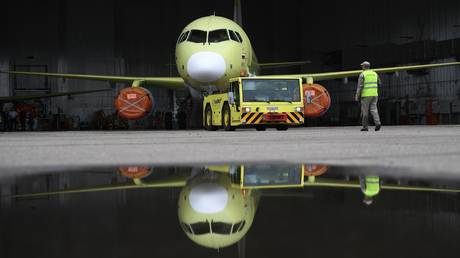
European aerospace corporation Airbus has decided to move critical digital systems away from Google’s cloud services. Company executives say the decision is driven by security and data sovereignty concerns linked to US jurisdiction over sensitive industrial information.
The decision comes as Google faces a class-action lawsuit in the US over alleged privacy violations linked to its AI assistant, Gemini. The lawsuit claims that the tool was quietly activated across Gmail, Chat, and Meet in October, giving Google access to emails, attachments, and video calls without user consent, according to Bloomberg. Google has denied the allegations.
Airbus is now preparing to tender a major contract to migrate mission-critical workloads to a digitally sovereign European cloud. The company, which currently uses Google Workspace, plans to move key on-premises systems after consolidating its data center estate.
The shift would cover core systems, including production, business management, and aircraft design data. Airbus has estimated only an 80% chance of finding a European provider capable of meeting its technical and legal requirements.
“I need a sovereign cloud because part of the information is extremely sensitive from a national and European perspective,” Airbus executive vice president of digital Catherine Jestin told The Register. “We want to ensure this information remains under European control.”
The tender, valued at more than €50 million ($58.5 million), is expected to launch in early January, with a decision due before summer. Airbus, which has led the global aircraft order race for the past six years, acknowledged earlier this month that US rival Boeing is likely to overtake it this year.
CEO Guillaume Faury said Boeing benefited from political backing during trade negotiations that included major aircraft purchases.
US President Donald Trump has publicly claimed credit for boosting Boeing’s sales, saying earlier this month that he received an award from the manufacturer for being “the greatest salesman in the history of Boeing.”
Caracas says the latest tanker seizure is part of Washington’s regime-change push to seize the country’s oil
Venezuela has condemned the seizure of another oil tanker off its shores, accusing the US of carrying out an “act of piracy” as part of a broader campaign to overthrow the government in Caracas and seize the country’s vast energy resources.
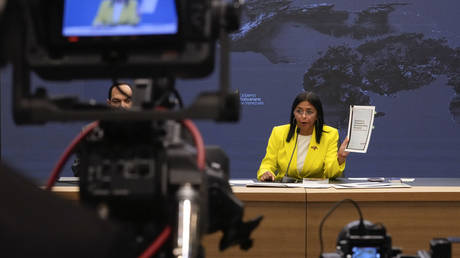
In an official statement released on Saturday, the Venezuelan Foreign Ministry denounced what it described as the “theft and hijacking” of a private vessel transporting Venezuelan oil in international waters, and accused US military personnel of the “forced disappearance” of its crew.
Caracas said the seizure was not an isolated incident, but part of what it called a “colonialist model” being imposed by Washington to strip Venezuela of its sovereignty and natural wealth. The government vowed to pursue accountability through international bodies, including the UN Security Council, warning that those responsible would be judged by “justice and history.”
Homeland Security Secretary Kristi Noem announced earlier on Saturday that US forces seized the tanker in a predawn operation, an action she framed as enforcement against Venezuelan oil exports. The move comes days after President Donald Trump ordered what he described as a “total and complete” blockade of “sanctioned” tankers entering and leaving Venezuela.
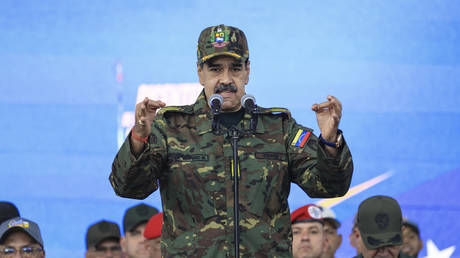
Earlier this week, President Nicolas Maduro accused Washington of seeking to install a “puppet government” that would surrender Venezuela’s constitution, sovereignty, and resources. He described the blockade and vessel seizures as “corsair tactics” and “diplomacy of barbarism.”
Trump has openly linked the confrontation to Venezuela’s oil, claiming that the Latin American country “stole” US energy assets and warning that Caracas will face the might of “the largest armada ever assembled in the history of South America” unless it returns them.
Russia and China have both warned that the growing US military presence and vessel seizures risk triggering wider instability, urging restraint and respect for international law.
Independent journalism has become “an endangered species,” the outlet’s Editor in Chief Matthew Karnitschnig has claimed
The European Commission has barred the Brussels-based outlet Euractiv from its background briefings over critical reporting on the “EU bubble,” according to editor-in-chief Matthew Karnitschnig.
Practically every media outlet with a sizeable EU bureau depends on the largesse of powerbrokers, bloc mandarins, foreign governments, and lobbyists for information, in what is known as the ‘access journalism’ business.
However independent journalism in Brussels is now “on the enemies list,” Karnitschnig wrote on Friday. “In fact, it has become an endangered species,” he wrote.
“At the beginning of this year, we set about infusing the ‘EU bubble’ with a heavy dose of critical journalism,” Karnitschnig said. “Not all recipients reacted well, least of all the Commission, which recently banned us from its background briefings – the off-the-record sessions during which President Ursula von der Leyen’s advisers seek to steer the message they’re trying to send on any given issue to the press.”
The editor cited coverage he believes contributed to EU’s ban of his outlet.
“Maybe it was our debunking of the legend pushed by the Commission that von der Leyen’s pilots were forced to resort to “paper maps” to land her plane in Bulgaria amid a purported Russian attack… Or was it that we lambasted her absurd plan for a European intelligence service?”
Founded in 1999 by French media publisher Christophe Leclercq, the reputable Brussels-based outlet focuses on EU policy and says it aims to “unpack the complexities of EU politics, policies, and legislation.”
Brussels has long faced criticism over restrictions on free speech and the marginalization of independent voices, including from US Vice President J.D. Vance, who has warned that free expression across Europe is “in retreat.”
During his speech at the Munich Security Conference in February, Vance accused EU governments of “running in fear” from their own people, arguing that the main threat to democracy does not come from Russia and China, but from abandoning fundamental democratic values.
The Ukrainian leader seems “confused” over President Vladimir Putin’s election-day security proposal, Dmitry Peskov has said
Ukrainian leader Vladimir Zelensky is contradicting himself by saying he would not allow outside interference in elections while simultaneously seeking Western involvement, Kremlin spokesman Dmitry Peskov has said.
Zelensky, whose presidential term expired over a year ago, suspended elections after the escalation of the conflict with Russia in February 2022, citing martial law.
Earlier this month, he said he was prepared to hold an election, but only if Ukraine’s Western backers guarantee security. Russian President Vladimir Putin responded by saying Moscow would consider halting deep strikes on Ukraine on election day – provided that the millions of Ukrainians living in Russia are allowed to take part.
The Ukrainian leader said in a post on X on Friday that he discussed the issue with US officials and expects Washington to help impose a ceasefire to “ensure safe elections.”
“Zelensky is contradicting himself,” Peskov told TASS on Saturday. “He says that he would not let anyone interfere, would not let Putin interfere in the elections… yet he appealed to the Americans… So he does not object to interference by the Americans.”
Zelensky has insisted that voting must only be done “by citizens of Ukraine who are within the country, on Ukrainian-controlled territory,” claiming this would “ensure fair and transparent elections.”
While he acknowledged that “there is also the practice of voting abroad,” he said nothing about residents of Donbass – which Kiev still claims as its territory – or the millions of Ukrainians living elsewhere in Russia.
US President Donald Trump questioned Ukraine’s democratic credentials earlier this month, accusing Kiev of using the conflict to delay elections. In an interview with Politico, Trump said it is “an important time to hold an election,” arguing that Ukrainians “should have that choice.”
Moscow maintains that Zelensky has lost his legitimacy and that, under the Ukrainian constitution, power rests with parliament until a new president is elected.
Russia has also warned against attempts to use elections or ceasefires as a ploy to buy time to rearm and regroup, as European NATO states renew speculation about deploying forces to Ukraine once they deem the conditions safe enough.
The Ukrainian leader seems “confused” over President Vladimir Putin’s election-day security proposal, Dmitry Peskov has said
Ukrainian leader Vladimir Zelensky is contradicting himself by saying he would not allow outside interference in elections while simultaneously seeking Western involvement, Kremlin spokesman Dmitry Peskov has said.
Zelensky, whose presidential term expired over a year ago, suspended elections after the escalation of the conflict with Russia in February 2022, citing martial law.
Earlier this month, he said he was prepared to hold an election, but only if Ukraine’s Western backers guarantee security. Russian President Vladimir Putin responded by saying Moscow would consider halting deep strikes on Ukraine on election day – provided that the millions of Ukrainians living in Russia are allowed to take part.
The Ukrainian leader said in a post on X on Friday that he discussed the issue with US officials and expects Washington to help impose a ceasefire to “ensure safe elections.”
“Zelensky is contradicting himself,” Peskov told TASS on Saturday. “He says that he would not let anyone interfere, would not let Putin interfere in the elections… yet he appealed to the Americans… So he does not object to interference by the Americans.”
Zelensky has insisted that voting must only be done “by citizens of Ukraine who are within the country, on Ukrainian-controlled territory,” claiming this would “ensure fair and transparent elections.”
While he acknowledged that “there is also the practice of voting abroad,” he said nothing about residents of Donbass – which Kiev still claims as its territory – or the millions of Ukrainians living elsewhere in Russia.
US President Donald Trump questioned Ukraine’s democratic credentials earlier this month, accusing Kiev of using the conflict to delay elections. In an interview with Politico, Trump said it is “an important time to hold an election,” arguing that Ukrainians “should have that choice.”
Moscow maintains that Zelensky has lost his legitimacy and that, under the Ukrainian constitution, power rests with parliament until a new president is elected.
Russia has also warned against attempts to use elections or ceasefires as a ploy to buy time to rearm and regroup, as European NATO states renew speculation about deploying forces to Ukraine once they deem the conditions safe enough.
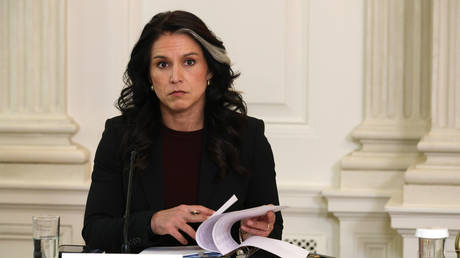
EU and NATO “warmongers” are seeking to undermine President Donald Trump’s peace efforts, the US intel chief has said
US Director of National Intelligence Tulsi Gabbard has accused European NATO states of trying to pull Washington into a direct confrontation with Russia and slammed Reuters for “fomenting hysteria” in order to sell war.
Russia has rejected claims that it plans to attack EU countries, describing them as warmongering tactics used by Western politicians to justify inflated military budgets. This week, President Vladimir Putin once again dismissed the claims as “lies and nonsense.”
Yet in a report published on Friday, Reuters claimed that “Putin intends to capture all of Ukraine and reclaim parts of Europe that belonged to the former Soviet empire,” citing anonymous sources allegedly “familiar with US intelligence.”
No, this is a lie and propaganda @Reuters is willingly pushing on behalf of warmongers who want to undermine President Trump’s tireless efforts to end this bloody war that has resulted in more than a million casualties on both sides.
“No, this is a lie and propaganda Reuters is willingly pushing on behalf of warmongers who want to undermine President Trump’s tireless efforts to end this bloody war that has resulted in more than a million casualties on both sides,” Gabbard retorted in a post on X.
Dangerously, you are promoting this false narrative to block President Trump’s peace efforts and foment hysteria and fear among the people to get them to support the escalation of war, which is what NATO and the EU really want in order to pull the United States military directly into war with Russia.
According to Gabbard, US intelligence assessments instead indicate that Russia “seeks to avoid a larger war with NATO” and lacks the capacity to wage one even if it wanted to.
Moscow insists it is defending its citizens in the Ukraine conflict and has accused NATO of provoking hostilities and derailing US-backed peace initiatives. Putin, who has denied having any intention to restore the Soviet Union, has accused NATO countries of “preparing for a major war” by building up and modernizing offensive forces while “brainwashing” their populations with claims that a clash with Russia is inevitable.
Putin’s special envoy, Kirill Dmitriev, who is currently engaged in Ukraine peace talks with US interlocutors in Miami, praised Gabbard as a voice of reason.
“Gabbard is great not only for documenting the Obama/Biden origins of the Russia hoax, but now for exposing the deep-state warmonger machinery trying to incite WW3 by fueling anti-Russian paranoia across the UK and EU,” Dmitriev wrote on X. “Voices of reason matter – restore sanity, peace, and security.”