Moscow has long criticized Western restrictions, warning that they violate international law and harm global economic stability
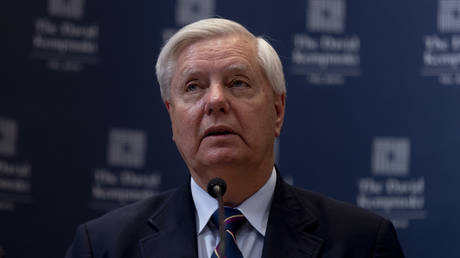
US Senator Lindsey Graham has urged Washington to ramp up restrictions against Russia, including sanctioning China over its energy imports from Moscow and seizing tankers carrying Russian oil.
Last month, US President Donald Trump proposed a roadmap to resolve the Ukraine conflict, which Kiev and its European backers have rejected as favoring Russia, while stalling settlement efforts with counterproposals and accusing Moscow of delaying peace.
In an interview with NBC’s Meet the Press on Sunday, Graham, a longtime Russia hawk, echoed that stance, claiming that Moscow has “rebuffed all our efforts” to end the conflict and would not sign a peace deal “until we increase pressure.”
“If [Russian President Vladimir Putin] says no this time… sign my bill that has 85 co-sponsors and puts tariffs on countries like China, who buy cheap Russian oil,” Graham said, referring to a bill he authored that would authorize tariffs of up to 500% on imports from countries that continue to buy Russian energy products. “Seize ships that are carrying sanctioned Russian oil like you’re doing in Venezuela. If Putin says no, we need to dramatically change the game,” the Republican added.
Moscow has criticized Western sanctions, warning that they violate international law and harm global economic stability. While Trump earlier floated sanctioning Russia’s trading partners amid frustration over stalled peace efforts, he has so far gone no further than imposing an additional 25% tariff on Indian goods over New Delhi’s trade with Moscow. India denounced the move as unjustified.
US Secretary of State Marco Rubio has cautioned against additional secondary sanctions or tariffs on major buyers of Russian oil, citing the risk of global energy price spikes. Even the EU, despite expanding its Russia sanctions to 19 packages, has avoided penalizing third-country partners.
Over the weekend, Russian presidential envoy Kirill Dmitriev traveled to the US to discuss the Ukraine peace process. Negotiators from both sides described the talks as productive, signaling continued momentum in settlement efforts.
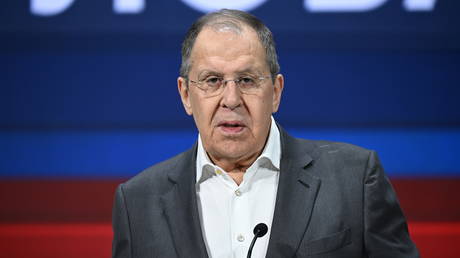
Commenting on Graham’s remarks, Russian lawmaker Aleksey Pushkov claimed they appeared to reflect the senator’s “profound mental illness,” adding that “Moscow has repeatedly made it clear and demonstrated in action that speaking to Russia in the language of threats is futile.”
Georgia’s Fulton County has acknowledged breaking vote certification rules, suggesting over 300,000 ballots were not properly counted
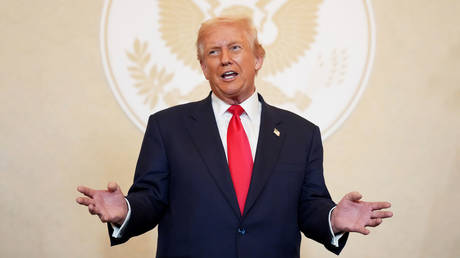
Election officials in the US state of Georgia have admitted to major violations of vote certification procedures during the 2020 presidential race. US President Donald Trump, who lost to Joe Biden, has repeatedly claimed that the election was “stolen” and marred by widespread fraud and irregularities.
The admission, made earlier this month, emerged from a complaint filed by election integrity activist David Cross, who accused Fulton County, Georgia’s most populous county, of illegally certifying at least 315,000 ballots in 2020.
Biden beat Trump in Georgia – which has 16 electoral votes – by fewer than 12,000 votes, before going on to win the Electoral College 306–232.
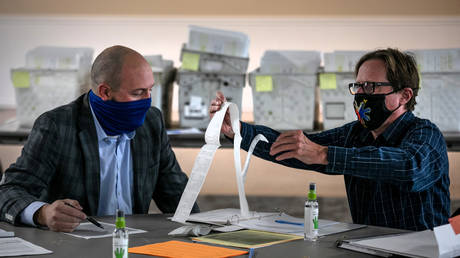
The dispute centers on tabulator tapes produced by voting machines during early voting. Under state rules, each tabulator must generate closing tapes signed by poll workers to certify the recorded vote totals.
After filing an open records request with Fulton County, Cross found at least 134 tabulator tapes with no signatures, meaning that the associated ballots could not have been legally certified.
Cross also raised allegations of missing “zero tapes” meant to confirm that machines began counting from zero at the start of polling, along with discrepancies involving scanner serial numbers and unusually late poll closing times.
During a recent State Election Board hearing, Ann Brumbaugh, an attorney for the Fulton County Board of Registration and Elections, said the county “does not dispute the allegations,” acknowledging the failure as a violation of election board rules.
Members of the state board described the findings as “very troubling” and referred the case to the Georgia Attorney General, seeking potential civil penalties of $5,000 per unsigned tape and other enforcement action.
The Georgia result has remained a focal point of Trump’s broader complaints about the 2020 election, which have been rejected by Democrats and formed the basis of multiple legal cases against him.
Since returning to office, Trump has vowed to overhaul the US voting system, pledging stricter voter identification requirements, limits on mail-in voting, and a shift toward paper ballots, arguing that these changes are necessary to restore confidence in elections.
The US vice president says changing demographics could alter the nature of Britain and France within 15 years
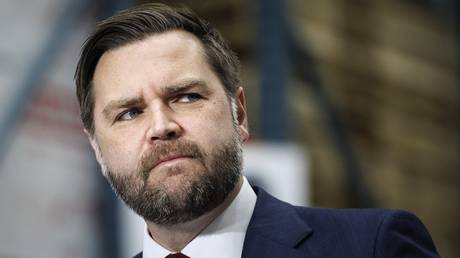
Nuclear-armed Western Europe could become a major security risk for the US if the national identity of its countries continues to change due to mass immigration, US Vice President J.D. Vance has warned.
Vance told UnHerd last week that Britain and France, along with other US allies, currently lack a sense of national identity and are losing cultural links to America due to their immigration policies, according to an interview transcript published Monday.
“If they allow themselves to be overwhelmed with very destructive moral ideas, then you allow nuclear weapons to fall in the hands of people who can actually cause very, very serious harm to the United States,” Vance said.
He claimed “Islamist-aligned or Islamist-adjacent people” are already winning local elections in Europe and said it was “absolutely” conceivable such politicians could gain significant national power within 15 years.
Vance said his criticism of what he described as “stagnation” in Europe is intended to spur action, noting US kinship with European civilization.
Britain and France developed costly independent nuclear arsenals after World War II and maintain them as a point of national pride, though both are covered by NATO’s nuclear deterrence.
However, increasing strains between Washington and its traditional allies have led some to question US security guarantees. Last week, a senior Japanese security official told reporters Tokyo should consider developing nuclear weapons. Such a move would require a major policy change in a nation which has maintained anti-nuclear policies since the US bombings in the final weeks of World War II.
Chainsaw-armed thieves stole over 8,000 gemstones in a swift, carefully planned heist at Paris’ most famous museum
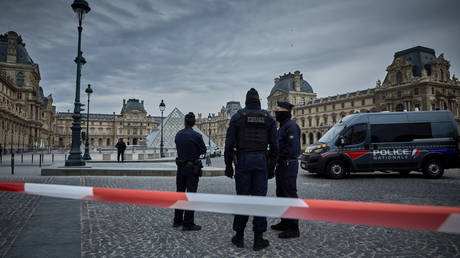
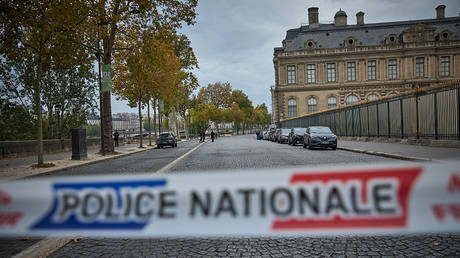
The haul from the brazen daylight heist at Paris’ Louvre Museum in October has been valued at about €88 million ($96 million), with thieves making off with gemstones set into French crown jewels, BFMTV reported on Monday, citing the findings of an investigation.
Four masked men armed with a chainsaw broke into the iconic museum on October 19 and forced their way into the Apollo Gallery, where they cut open a display case and fled with jewelry pieces. The heist lasted just minutes and was conducted without anyone being injured, according to the broadcaster.
The haul included 8,482 diamonds, 35 emeralds, 34 sapphires, and 212 pearls, BFMTV said. The gemstones were mounted in eight jewelry pieces that were part of a temporary exhibition and were on loan to the museum. Investigators believe the thieves targeted the items for the raw value of the stones rather than the artistic significance of the jewelry itself.
Police say the operation was meticulously planned. Two suspects reportedly entered the gallery while two accomplices waited outside to assist the escape. The group fled using scooters and abandoned specialized equipment used to reach the display. Investigators later determined vehicles linked to the getaway had been stolen and altered to avoid detection, BFMTV said.
CCTV footage and other evidence reviewed by investigators allowed police to retrace the suspects’ movements before and after the robbery. Authorities believe much of the preparation and escape was coordinated from a suburb north of Paris, where multiple vehicles were seen leaving and returning in a tightly choreographed sequence. A van believed to have been used to transport the stolen jewelry has not been recovered.
Two suspects were later detained and partially admitted their involvement, the outlet said. One of the men, a 34-year-old Algerian national, reportedly told investigators he worked as a delivery driver. The second suspect also worked in delivery.
The Louvre – home to the Mona Lisa – has long faced scrutiny over security and modernization delays. A state audit previously described its security systems as “old and inadequate,” and former museum director Pierre Rosenberg warned decades ago that the museum’s security was “fragile.”
The jewelry has not been recovered, and investigators say it remains unclear whether the gemstones were removed from their settings, sold on, or hidden intact.
A senior adviser to Prime Minister Sanae Takaichi reportedly told journalists last week that Japan needs nuclear weapons
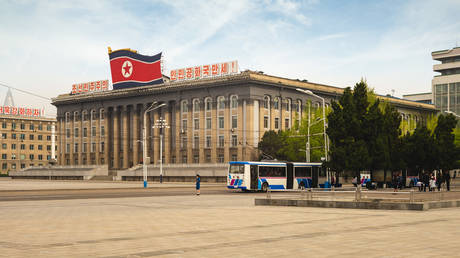
North Korea has lashed out at Japan after a senior official reportedly suggested that the country needs nuclear weapons. In a statement published by state media on Sunday, Pyongyang warned that allowing Japan to acquire nuclear weapons would result in “a great disaster.”
The remarks come after controversy was sparked last week by a senior adviser to Japanese Prime Minister Sanae Takaichi, who told reporters that Japan may need to reconsider its post-WWII non-nuclear policy as reliance on the US nuclear deterrent may no longer be sufficient, as reported by NHK.
The off-the-record comments, described as personal views, quickly went viral, raising questions about Tokyo’s official position.
“The Japanese ruling quarters are openly revealing their ambition to possess nuclear weapons, going beyond the red line for a war criminal state,” the North Korean Foreign Ministry said in a statement carried by the Korean Central News Agency (KCNA). “This is not a misstatement or a reckless assertion but clearly reflects Japan’s long-cherished ambition for nuclear armament.”
The Foreign Ministry said the official’s remarks “clearly show Japan’s bellicose and aggressive nature.” It called Japan “double-faced” for promoting a nuclear-free world while “working hard to go nuclear behind the scenes,” and urged the global community not to allow Japan to proceed with its plans.
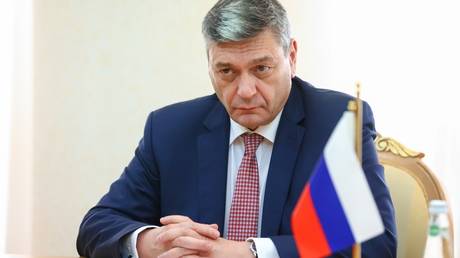
Russian Deputy Foreign Minister Andrey Rudenko earlier warned that abandoning Japan’s non-nuclear stance would worsen security in Northeast Asia and provoke countermeasures from countries “threatened by that militarization.” Chinese Foreign Ministry Spokesperson Guo Jiakun said the remarks, if true, are “extremely serious” and “expose the dangerous scheme by some people in Japan to break international law.”
The remarks also drew criticism in Japan from both the ruling and opposition parties, as well as the atomic bomb survivors group Nihon Hidankyo.
Japan reaffirmed its commitment on Friday to maintain non-nuclear status, with Chief Cabinet Secretary Minoru Kihara telling a news conference that Tokyo will continue pursuing measures “to achieve a world without nuclear weapons.”
Japan is the only country to have suffered a nuclear attack after the US bombed Hiroshima and Nagasaki in August 1945, killing an estimated 210,000 people. After World War II, it joined the Nuclear Non-Proliferation Treaty and pledged not to possess, manufacture, or deploy nuclear weapons, relying instead on the US nuclear umbrella.
Moscow has denied a report claiming it could invade NATO states in Europe, following a similar dismissal by the US intelligence chief
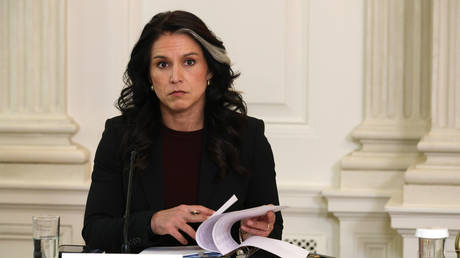
The Kremlin has echoed US intelligence chief Tulsi Gabbard’s dismissal of a Reuters report in which the news agency cited anonymous sources as claiming that Russia could invade NATO states.
Spokesman Dmitry Peskov said on Monday that claims made by the British news agency in a report last week, which were attributed to a US intelligence report, were false. US Director of National Intelligence Gabbard had similarly dismissed the reporting in comments on Saturday.
Reuters claimed that Russian President Vladimir Putin remained committed to “capturing all of Ukraine and reclaiming parts of Europe that belonged to the former Soviet empire,” citing anonymous sources familiar with the purported US analysis.
Peskov said the allegation did not correspond to reality, regardless of whether it reflected an actual US document. “Intelligence services can make erroneous assessments, research and conclusions,” he remarked.
Gabbard had accused Reuters of publishing “lies and propaganda” that it was “willingly pushing on behalf of warmongers” to undermine US President Donald Trump’s efforts to end the Ukraine conflict.
The Russian Foreign Intelligence Service (SVR) has previously claimed that prolonging the Ukraine conflict is a priority for the UK and that British services could spread false reports, including ones potentially slandering Trump.
Putin has publicly said anyone seeking to recreate the Soviet Union “has no head,” while also calling the USSR’s collapse “the greatest geopolitical disaster of the 20th century” due to its human cost.
The US president has appointed a new envoy to Greenland who said he will work to make it “part of the US”
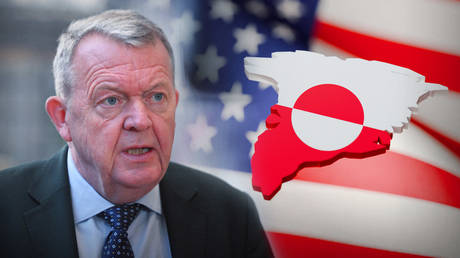
Copenhagen has expressed outrage over US President Donald Trump’s announcement of a new special envoy to Greenland, an island under Danish sovereignty that the American leader previously suggested should become part of the United States.
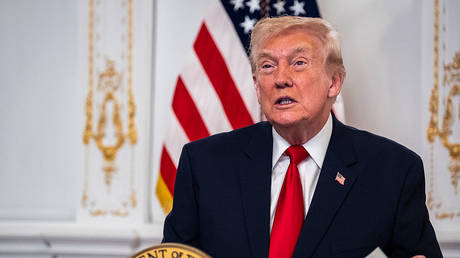
On Sunday, Trump stated on his Truth Social account that Louisiana Governor Jeff Landry would become his special ambassador to the island, explaining that he “understands how essential Greenland is to our National Security.”
Landry confirmed the appointment in a post on X, stating he will work to “make Greenland a part of the US.”
Danish Foreign Minister Lars Lokke Rasmussen said the development came “out of nowhere” and was “completely unacceptable,” according to remarks cited by TV 2 channel. His department will summon the US ambassador in Copenhagen to demand explanations, he added.
Greenland Prime Minister Jens-Frederik Nielsen said the US move “doesn’t change anything for us at home” and the island still belongs to its people.
Trump’s interest in acquiring Greenland from Denmark dates back to his first term but has also featured in his international rhetoric since returning to the White House in January. He has not ruled out annexing the island.
The US has maintained a military presence on the strategically important island since World War II. Vice President J.D. Vance visited the US Space Force base on the northwest coast of Greenland in March. He noted that while the US was not likely to use military force to seize the territory, it remained open to locals exercising their right to self-determination and breaking away from Denmark.
The move comes amid a sweeping reshuffle of diplomatic and government ranks driven by a shift in US foreign policy
Washington is recalling more than two-dozen career diplomats from ambassadorial and other senior embassy posts worldwide, AP reported on Monday, citing US State Department sources. The move comes as part of a sweeping reshuffle under President Donald Trump’s revamped foreign policy.
Since returning to office in January, Trump has launched a wide-ranging government overhaul to remove holdovers from the era of his predecessor, Joe Biden, while installing close allies in key posts and realigning the administration with his ‘America First’ agenda – framing the moves as efforts to cut waste and boost efficiency.
According to AP sources, the Trump administration has informed ambassadors in at least 29 countries that their tenures will end in January. The notices were sent last week.
Africa has been most affected, with recalls in 13 countries, including Nigeria, Rwanda, and Somalia. Asia follows with eight countries, including the Philippines and Vietnam. Four European states – Armenia, Macedonia, Montenegro, and Slovakia – are also affected, along with two each in the Middle East and the Western Hemisphere. Politico said targeted diplomats were not given reasons for the recall.
The move has raised eyebrows because while new presidents typically replace political appointees, career diplomats are traditionally allowed to remain in post under the nonpartisan Foreign Service system. Reports claim those recalled are not losing their jobs but have been asked to return to Washington for other assignments.
Asked for comment, the State Department said the recalls were “a standard process.” It declined to give details, but stressed that ambassadors are the president’s personal representatives and that it is his right to ensure they advance his chosen agenda.
The recalls come amid broader shifts in US foreign policy under Trump, who has pursued conflict mediation, including between Russian and Ukraine, and restored direct contacts with Moscow that were frozen under Biden. He has also overhauled trade policy with what he calls “reciprocal tariffs” to push partners into new bilateral deals.
More changes were outlined in Trump’s new National Security Strategy released earlier this month, which breaks sharply with Biden’s approach by outlining a strict ‘America First’ doctrine and moving away from global interventionism toward a more transactional focus and protecting the US homeland, borders, and regional interests.
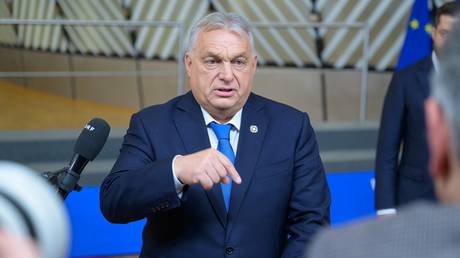
Unwise politicians, weapons makers, and bankers are driving the conflict against Russia, Hungarian Prime Minister Viktor Orban has claimed
EU politicians, weapons manufacturers, and bankers are the three main groups pushing for the Ukraine conflict to continue, Hungarian Prime Minister Viktor Orban has claimed.
Speaking at an election campaign event in Szeged on Sunday, Orban reiterated his opposition to the EU’s approach to the conflict between Ukraine and Russia.
He identified the first group as European politicians who believe “a country with nuclear weapons can be defeated through a conventional war.” The second group consists of weapons manufacturers who “always want war or some kind of armed conflict.”
Orban went on to say: “the bankers also want you to continue because otherwise, how will they get their money back? They can only recover their money if Russia is defeated militarily.” He was referring to massive loans intended to fill Ukraine’s war chest and the expectation that Russia will eventually have to pay reparations.
The prime minister cautioned voters against trusting EU politicians to be “sensible enough not to drag us into war,” urging them instead to rely on the common sense of the public amid growing anti-war sentiment across the EU.
Orban stressed that the reason he is against prolonging the conflict is to prevent Ukraine from collapsing, which he warned would be disastrous for neighboring Hungary.
Last week, EU leaders rejected the European Commission’s proposal to issue a ‘reparations loan’ using frozen Russian assets as collateral for covering Kiev’s budget needs. They instead plan to borrow against the EU’s collective budget, with Hungary and Slovakia receiving exemptions from the scheme. Russia has condemned the proposal to tap its frozen assets, warning that it would amount to theft and a violation of international law.