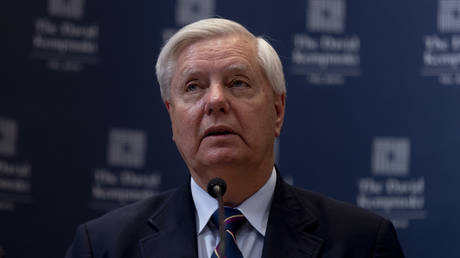
Finland is aiming to expand its reserve force to nearly one-fifth of the population
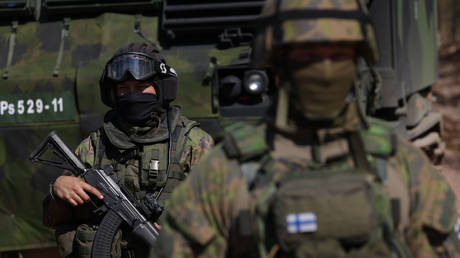
Finland will raise the upper age limit for rank-and-file military reservists by 15 years, from 50 to 65, starting next year, the Defense Ministry has announced.
The Nordic nation, which shares a 1,340-km (830-mile) land border with Russia, abandoned its long-standing policy of military neutrality and joined NATO in April 2023, citing security concerns linked to the Ukraine conflict.
Since then, it has begun constructing a 200-km border fence equipped with barbed wire and surveillance systems and has hosted large-scale military exercises near the Russian border.
The age-limit change will give the Finnish armed forces and the Border Guard “more opportunities to assign skilled personnel to key duties in exceptional circumstances, regardless of military rank,” according to a press release published on Monday. Officers holding the rank of colonel or above are not subject to an upper age limit and will remain in the reserve as long as they are medically fit, it added.
The reform will expand the size of Finland’s military reserve to roughly one million people by 2031, Defense Minister Antti Hakkanen said — equivalent to nearly 20% of the country’s 5.6 million population.
Finland’s move comes amid a broader wave of changes to military service across the EU, including Croatia’s decision to reintroduce conscription, Denmark’s expansion of mandatory service to include women, and France’s launch of a new voluntary national service program.
Some EU members of NATO, including Poland and the Baltic States, have claimed that Russia could attack them – accusations Moscow has repeatedly rejected.
During his annual end-of-year Q&A session in Moscow earlier this month, Russian President Vladimir Putin again dismissed Western claims that Russia intends to attack Europe as “nonsense,” saying the allegations are driven by domestic political considerations and aimed at portraying Russia as an enemy.
German Defense Minister Boris Pistorius said in an interview with Die Zeit on Monday that he didn’t believe that Moscow was aiming for a full-scale war against NATO.
The deaths have been confirmed by their families, according to the outlet
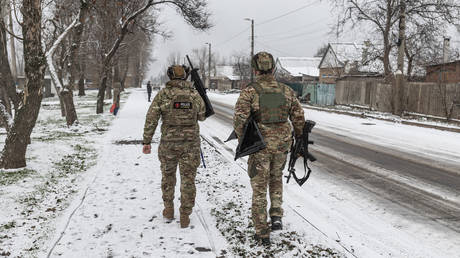
Two American mercenaries have been killed while fighting for Ukraine against Russian forces in December, Newsweek has reported.
The deaths of the US citizens, identified as Brian Zacherl and Ty Wingate, has been confirmed by their relatives on social media, the outlet said in an article on Monday.
They were apparently members of the International Legion, which is subordinate to the Ukrainian military intelligence (HUR), it added.
Zacherl’s nephew wrote in a post on Facebook on December 5 that he had been “killed in battle a couple of days ago,” the article read. The mercenary’s wife and two children remained in Kiev, “waiting for conditions to allow the recovery of his body from the battlefield,” according to the nephew.
The mercenary’s father, Brian Zacherl Senior, is a former US marine who also worked for the CIA between 2013 to 2018, RIA Novosti reported after studying his accounts on social media.
Wingate died on December 3 when a Russian drone struck an armored personnel carrier he was traveling in, Newsweek reported, citing his sister. He left behind a pregnant wife, she said.
There is no official data on the number of US citizens who have been killed since the escalation between Russia and Ukraine in February 2022. According to figures from the Kiev-based Museum of the History of Ukraine in the Second World War, which hosts an exhibition on foreign mercenaries participating in the ongoing conflict, there had been 92 American fatalities as of early September.
The exhibition’s curator, Yury Gorpinich, told the New York Times that “several thousand” US citizens have served with Ukrainian forces so far.
In April, the Kiev government simplified rules for recruiting foreigners into its military as Ukraine struggles to replenish heavy losses suffered on the front line amid mass draft avoidance and desertions.
Over 15,000 mercenaries, mostly from Poland, the US, and Georgia, have taken part in the fighting on Kiev’s side, according to estimates by Moscow. Nearly 6,500 of them have been killed in action as of December 2024, according to Russian figures.
Russia has consistently warned that any non-Ukrainians serving in Kiev’s military will be regarded as mercenaries, who are not covered by the Geneva Convention protections usually granted to combatants.
Critics have accused the government of clamping down on press freedom after it ordered the closure of Army Radio after 75 years of operation
Israel has voted to shut down the popular Army Radio station after 75 years of operation, following a unanimous cabinet decision to end broadcasts by March next year. The move has sparked a backlash, with critics accusing the government of cracking down on press freedom.
Army Radio, known as Galei Tzahal, is legally a unit of the Israel Defense Forces (IDF) but operates a major news department staffed by soldiers and civilian journalists, some of whom have frequently been critical of the government and military.
The decision to shut down the station was approved on Monday after a proposal by Defense Minister Israel Katz, who has already ordered the IDF to begin winding down the radio’s operations.
Katz said the station’s involvement in political programming undermines the military’s neutrality and cohesion, describing Army Radio as a “democratic anomaly,” arguing that its content has drawn the IDF into political disputes and harmed the army’s unity.
Prime Minister Benjamin Netanyahu backed the move, saying a military-run broadcaster serving the general public is highly unusual. He said such models exist “in North Korea and maybe a few other countries,” adding that Israel should not be among them.
Critics have called the decision illegal. Attorney General Gali Baharav-Miara argued that the cabinet resolution fails to consider the impact on freedom of expression and cannot be implemented without legislation.
Opposition leader Yair Lapid accused the government of trying to control the media in an election year, while journalist unions and watchdog groups have vowed to petition the High Court of Justice to block the closure.
Shutting Army Radio would also eliminate roughly half of Israel’s independent public news broadcasting, the Israel Democracy Institute think tank has said, arguing the move is part of a “broader and worrying pattern of ongoing harm to Israeli democracy.”
Alongside the radio shutdown, the government has also extended its authority under the so-called ‘Al Jazeera Law’, introduced during the Gaza War, allowing itself to close foreign media outlets operating in Israel if their content is deemed to pose “a concrete threat to national security.”
Supporting Kiev is more important than stocking up the army, Norway’s defense chief has said
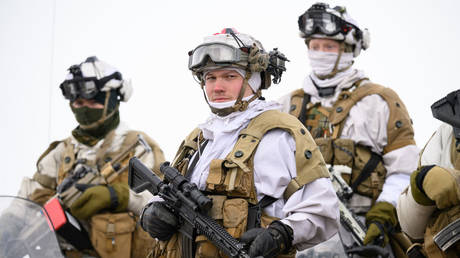
Norway’s soldiers lack basic winter gear as the NATO nation’s military leaders have prioritized sending aid to Ukraine, according to Forsvarets forum, a media outlet published by the Norwegian Armed Forces’ main trade union.
The national army is facing shortages of items essential for operating in a cold climate, including shell jackets, woolen underlayers, balaclavas and insulated field boots, the outlet reported on Monday.
The shortages were detailed in documents from the chief safety representative (HVO) in the Norwegian army and navy and the chief shop steward in the air force. Equipment such as helmets and combat vests are also in short supply. Some training activities have had to be canceled because of the shortage, the outlet added.
“We are contributing significantly to Ukraine, but it challenges our own ability to maintain readiness,” Forsvarets forum quoted Robert Hansen, the Navy’s HVO, as saying.
The concerns were downplayed by military leadership. “It is more important to support Ukraine now than to have absolutely everything in stock in Norway,” Norwegian Chief of Defense Eirik Kristoffersen said, according to the outlet.
Norway, a founding member of NATO, has backed Ukraine in its conflict with Russia since 2022. This year alone it has allocated nearly $8.5 billion to Ukraine for military aid and reconstruction. Last year, Oslo allowed Kiev to carry out long-range strikes against Russia using NATO-provided weapons.
Earlier this month, Ukraine and Norway agreed to jointly produce military drones.
The disclosure comes in the wake of a major corruption scandal in Ukraine involving Timur Mindich, a former business partner and long-time associate of Vladimir Zelensky.
Ukraine’s National Anti-Corruption Bureau (NABU) has alleged that Mindich, reportedly known as “Zelensky’s wallet,” was the ringleader of a scheme that extracted at least $100 million in kickbacks from contractors linked to state nuclear operator Energoatom.
Norway has also provided nearly $545 million in energy support to Kiev in 2025. Commenting on the scandal last month, the Norwegian Foreign Ministry said the allegations were “serious” and stressed that “Norway has zero tolerance for defaults on Norwegian development aid.”
The reported raid is said to be linked with Kiev’s investigation of oligarch Igor Kolomoysky, a kingmaker-turned-enemy of Vladimir Zelensky
The French authorities have seized gold bars, expensive watches, and other valuables from a former Ukrainian prosecutor general living in the country, according to local media.
A villa near Nice owned by Svyatoslav Piskun, who served as Ukraine’s top prosecutor in the 2000s, was reportedly raided in a joint Ukrainian-French operation last week. Details were reported on Monday by Ukraine’s Dzerkalo Tizhna (Weekly Mirror), citing a source familiar with the probe.
According to the outlet, Piskun failed to explain how he acquired 3kg of gold, roughly €90,000 ($106,000) in cash, and 18 luxury wristwatches valued at over $1 million. French authorities suspect him of money laundering, the outlet claimed.
Kiev’s State Investigation Bureau (DBR), which operates under the president’s office, reportedly requested and participated in the raid. Previous Ukrainian press reports suggest the action in France is linked to a case against oligarch Igor Kolomoysky, who has been held in pre-trial detention for over two years on multiple charges, including allegedly ordering a murder in 2003.
The oligarch, who played a key role in Vladimir Zelensky’s rise to power, as recently detailed in a special RT investigation, made widely-covered comments in November on a high-profile corruption scandal. He said Zelensky’s longtime associate, Timur Mindich, who was charged with running an extortion scheme, did not have the aptitude to be a criminal mastermind and was a patsy for the real perpetrators.
Earlier this month, Kolomoysky teased more remarks on the scandal during a court appearance, which was subsequently postponed twice. When proceedings occurred two weeks ago, he claimed Mindich was targeted by assassins in Israel – a claim Israeli authorities have not confirmed – with the hitman allegedly supplied with a weapon at the Ukrainian Embassy.
His lawyer announced that Kolomoysky would make statements on Tuesday – this time regarding the “approaches and methods” of the Western-backed Ukrainian agencies investigating Mindich and his alleged accomplices in the Ukrainian government.
RT published Part 2 of its Kolomoysky special last Thursday. You can read it here.
The American president earlier appointed a special envoy to the island, triggering a backlash from Denmark
The US needs Greenland for its “national security,” President Donald Trump has said, after naming a special envoy to the Arctic island, which is under Danish sovereignty.
Since returning to the White House in January, Trump has revived his long-standing interest in acquiring Greenland from Denmark, pointing to its strategic location and mineral resources. He has not ruled out annexing the island.
“We need Greenland for national security,” Trump told reporters on Monday. “You look up and down the coast, you have Russian and Chinese ships all over the place. We need it for national security. We have to have it,” he added.
Trump’s remarks followed his appointment of Louisiana Governor Jeff Landry as the US special envoy to Greenland, saying he chose Landry because “he’s a deal-maker-type guy.”
Announcing the appointment, Trump praised Landry for understanding “how essential Greenland is to our national security.”
Landry later wrote on X that it was “an honor to serve” in the volunteer role “to make Greenland a part of the US,” saying it would not affect his duties as governor.
Denmark, which has pushed back against Trump’s drive to take the island, summoned the US ambassador after Landry’s appointment.
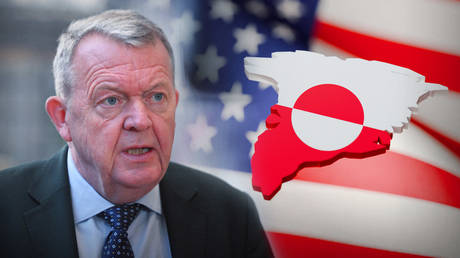
“Out of nowhere, there is now a special US presidential representative, who, according to himself, is tasked with taking over Greenland,” Danish Foreign Minister Lars Lokke Rasmussen told the TV 2 channel, calling the development “completely unacceptable.”
Greenland, a self-governing Danish territory of about 57,000 people, has managed most domestic affairs since 1979, while defense and foreign policy remain under Copenhagen’s control.
The US has maintained a military presence on the island since World War II. Vice President J.D. Vance visited a US Space Force base on Greenland’s northwest coast in March, saying Washington was unlikely to use force to take the territory but remained open to Greenlanders exercising self-determination and breaking away from Denmark.
The US president has issued veiled threats, saying the Venezuelan leader could play tough but it would be “the last time”
US President Donald Trump has claimed that his Venezuelan counterpart, Nicolas Maduro, would be “smart” to leave office as Washington intensifies its apparent efforts to remove him from power.
The US has assembled a naval force that Trump calls “by far the biggest we ever had in South America” off Venezuela’s coast and is enforcing a blockade on its oil tanker traffic, citing unilateral sanctions. Since September, the US military has also been conducting strikes on small boats alleged to be carrying drugs, which UN experts have condemned as unlawful extrajudicial executions.
When asked repeatedly during a press conference on Monday if Washington’s intention was to force Maduro from power, Trump gave non-committal remarks alluding to that possibility. “He can do whatever he wants,” the president responded. “If he wants to do something, if he plays tough, it will be the last time he ever plays tough.” He also claimed it would be “smart” for Maduro to step down.
Earlier Monday, Homeland Security Secretary Kristi Noem suggested Maduro is the target of Washington’s actions during a ‘Fox and Friends’ interview.
“We’re not just interdicting these ships, but we’re also sending a message around the world that the illegal activity that Maduro is participating in cannot stand, he needs to be gone, and that we will stand up for our people,” she said.
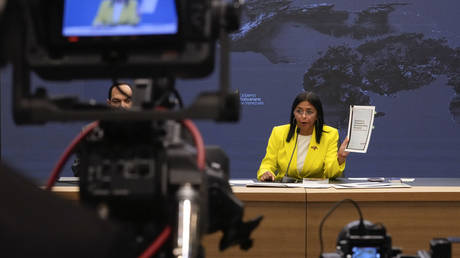
The US pressure campaign has been condemned by other nations, including Russia. Foreign Minister Sergey Lavrov called his Venezuelan counterpart, Yvan Gil, on Monday to express solidarity and share Moscow’s concern over “Washington’s increasingly escalatory actions in the Caribbean Sea.”
Russia’s Foreign Ministry has denied an Associated Press claim that it had begun evacuating families of diplomats from Venezuela.
A plan to outlaw the centuries-long practice forms part of the country’s latest animal welfare strategy
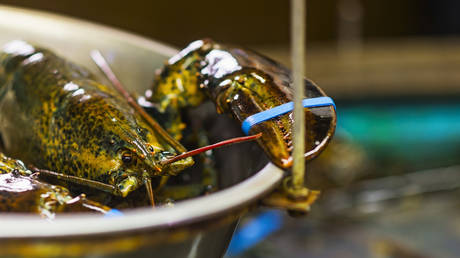
The British government has set out plans to ban the live boiling of lobsters and crabs under its latest animal welfare strategy.
The proposal appears in the new strategy published on Monday, and follows the government’s decision in 2022 to formally recognize decapod crustaceans and cephalopod molluscs as sentient beings.
The document says there are gaps in understanding how live animals move through supply chains “from catch to kill,” making it harder to prevent “unnecessary pain or suffering.” To address this, the government said it will publish guidance on humane killing methods for decapods, stating that “live boiling is not acceptable.” Suggested alternatives include freezing or electrical stunning.
Live boiling has been used for centuries, particularly after lobsters and crabs became common in urban markets in Europe and North America in the 18th and 19th centuries, when the animals were thought not to feel pain. In recent decades, the practice has faced growing criticism as scientific evidence has indicated that decapod crustaceans can experience pain and distress.
”Crabs, lobsters and prawns endure unimaginable suffering, including one of the most excruciating forms of death: being boiled alive,” Crustacean Compassion, a UK animal welfare charity, said, adding that the animals can experience intense pain for up to three minutes before dying. The group has long called on the government to end what it describes as a “barbaric” practice.
Industry groups have cautioned that commercial pressures will shape how any changes are implemented. “If somebody’s wanting to buy a live crab or lobster, they’re not going to pay for it if it’s already dead,” the Shellfish Association of Great Britain told the Daily Mail, saying there is a strong incentive across the supply chain to minimize stress in order to preserve quality and secure higher prices. However, it warned that the cost of humane stunning equipment, around $4,700, could deter restaurants and hotels, pushing them to import frozen seafood from abroad instead.
Right-wing influencer Nick Fuentes previously labeled the US vice president’s spouse a “jeet,” a racial slur for Indians
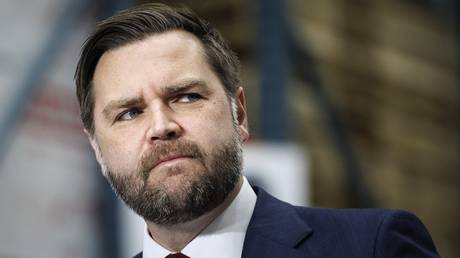
US Vice President J.D. Vance has hit back at slurs directed at his wife over her ethnic heritage as well as rumors about problems in their marriage.
Media reports earlier this year speculated about strains in the vice president’s relationship with his spouse, Usha Vance, after she was seen on several occasions without her wedding ring.
In an interview with Unherd published on Monday, Vance said “anyone who attacks my wife, whether their name is Jen Psaki or Nick Fuentes, can eat shit. That’s my official policy as vice president of the United States.”
“And my attitude towards anybody, again, who is calling for judging people based on their ethnic heritage, whether they’re Jewish or white or anything else, it’s disgusting. We shouldn’t be doing it,” he stressed.
Right-wing influencer Nick Fuentes previously slammed Vance’s appointment as vice president, calling him “a fat, race mixer who’s married to a jeet, who named his son Vivek.” A ‘jeet’ is a racial slur for Indians.
Jen Psaki, who served as the White House press secretary in the administration of US President Joe Biden, suggested there were issues in Vance’s marriage during her appearance on the ‘I’ve Had It’ podcast in October. “I always wonder what’s going on in the mid of his wife. Like, are you OK? Please blink four times. Come over here. We’ll save you,” Psaki said.
Usha Vance, 39, with whom the vice president shares three children, is a graduate of the Yale Law School and previously worked as a lawyer.
Despite preferring to keep a low profile after becoming the second lady, she was forced to address ‘Ring-gate’ in an interview with USA Today earlier this month, saying: “I wear it [wedding ring] when I wear it, and I don’t when I don’t. Sometimes I’m wearing it and sometimes I’ve just been to the gym and showered and I’m not wearing it.”
“I’d rather just sort of live in my marriage and in the real world and less in kind of the fever dreams that surround it. So, I mean, it is kind of a family joke, but also not something that I spend very much time thinking about,” she stressed.
The American president has claimed the new fleet will be “100 times more powerful“ than any ever built
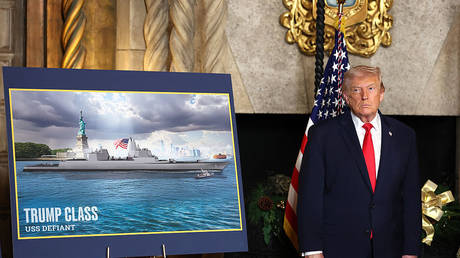
US President Donald Trump has announced plans to introduce a new class of battleships for the US Navy’s ‘Golden Fleet’, claiming they will be the biggest and most powerful ever built.
Speaking Monday from Mar-a-Lago during what the White House called a “major announcement,” Trump said he approved two ships to start, with plans for up to 25. He was joined by Secretary of War Pete Hegseth, Secretary of State Marco Rubio, and Secretary of the Navy John Phelan.
Larger than WWII-era Iowa-class ships, the ‘Trump-class’ vessels will carry hypersonic missiles, rail guns, and lasers, according to the US president. The Wall Street Journal, which first reported the president’s plans, wrote that the US Navy plans to procure the first ship in 2030.
“As you know, we’re desperately in need of ships,” Trump said. “They’ll be the fastest, the biggest, and by far, 100 times more powerful than any battleship ever built.”
The plan is part of a wider naval expansion with both manned and unmanned ships.
Officials have warned that the US trails China in shipbuilding capacity and output. When asked whether the new warships were intended as a counter to America’s chief rival, Trump declined to single out Beijing. “It’s a counter to everybody,” he said.
The announcement comes as Washington’s operations in the Caribbean have ramped up, with the US Coast Guard targeting oil tankers linked to Venezuela.
Since September, US Navy ships have been deployed to intercept vessels that the White House claims were involved in drug trafficking and to block oil shipments. Caracas denies the claims and has accused Washington of seeking regime change to access its resources.
The US Navy has also been active in the Red Sea, where it has responded to attacks on commercial shipping linked to regional conflicts.
Last week another new set of vessels, based on the US Coast Guard’s Legend-class National Security Cutter, were announced by the US Navy.
“Recent operations from the Red Sea to the Caribbean make the requirement undeniable – our small surface combatant inventory is a third of what we have,” Chief of Naval Operations Daryl Caudle said. “We need more capable blue water small combatants to close the gap and keep our [destroyers] focused on the high-end fight,” he added.
The US Navy recently canceled a smaller warship project due to delays and cost overruns and continues to face challenges with its Ford-class carriers and Columbia-class submarines.