Beijing has accused Washington of using national security as pretext to go after Chinese UAV makers
The US ban on imports of new foreign drones discriminates against Chinese companies and should be lifted, Beijing has said. Shenzhen-based UAV manufacturer DJI, the largest in the world, currently sells more than half of all commercial drones operated in the US.
On Monday, the US Federal Communications Commission (FCC) forbade imports of all new models of foreign-made drones and critical components, citing “unacceptable risks to national security.” The addition to the FCC’s ‘Covered List’ means that companies from China and other countries will not be able to receive approval to distribute their upcoming UAV models in the country.
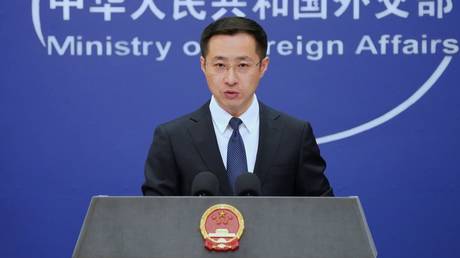
Chinese Foreign Ministry spokesperson Lin Jian was asked about the ban during a briefing later in the day, saying that Beijing “firmly opposes the US overstretching the concept of national security and making discriminatory lists to go after Chinese companies.”
Lin called on Washington to “stop its wrong practice and create a fair, just, and non-discriminatory environment for Chinese companies.”
DJI echoed the Foreign Ministry’s comments, arguing that its inclusion in the ‘Covered List’ was a departure from open-market principles rather than a proportional security measure.
The company insisted in a statement that its drones are “among the safest and most secure on the market,” which has been proven by years of reviews from US agencies and independent third parties.
”Concerns about DJI’s data security have not been grounded in evidence and instead reflect protectionism,” it said.
FCC chairman Brendan Carr said he was “pleased” with the ban on new foreign-made UAVs, saying that the move should help US companies “to unleash American drone dominance.”
The fresh curbs follow a defense bill passed by the US Congress in December 2024, which ordered products from DJI and another major Chinese producer, Autel, to be blacklisted within one year unless a security review deemed them appropriate to continue sales.
The Telegram founder has shared an ambiguous abbreviation, raising eyebrows on social media
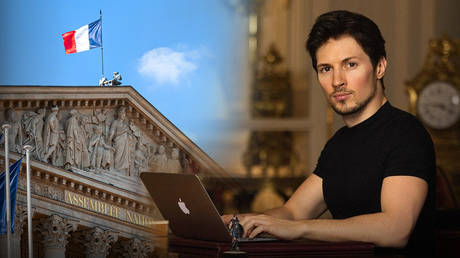
Pavel Durov, the Russian tech entrepreneur behind the Telegram messenger app, has shared an ambiguous logo he devised for his sperm donation program, raising eyebrows online and taking a dig at French President Emmanuel Macron in the process.
The 41-year-old, who holds citizenship in France as well as Russia, the UAE and St. Kitts and Nevis, took to X on Tuesday to share a sketch of the logo, asking whether “‘pd’ in a circle” was “minimalist enough,” in an apparent nod to his initials.
Commenters were quick to point out that in French, “PD” is a highly offensive slur used to insult gay men. “So it will be a non-gay project claiming it’s gay. Like France’s president – in reverse!” Durov wrote in response.
Just sketched a logo for my sperm donorship program. Is ‘pd’ in a circle minimalist enough? pic.twitter.com/9imJP5bZTX
The jab echoed long-running online rumors about Macron’s sexual preference and Brigitte Macron’s gender identity. The French first lady has pursued legal action against individuals she’s accused of spreading the allegation that she was born male, with a court verdict expected in January.
Durov’s jab at Macron also comes against the backdrop of his long-running dispute with French authorities. A naturalized citizen of France since 2021 under an exceptional procedure typically reserved for “eminent foreigners,” Durov was arrested in the country in 2024 and placed under judicial supervision over allegations that Telegram had failed to curb criminal activity on the platform.
He was released on €5 million ($5.46 million) bail and has repeatedly denounced the case as politically motivated, accusing France of waging a “crusade” against free speech.
Last month, Durov suggested that allegations that the French government was behind the assassination of US conservative activist Charlie Kirk were “entirely possible.” The remark came in response to right-wing commentator Candace Owens’ claims that Kirk’s assassin “trained with the French Legion 13th Brigade with multi-state involvement.”
Durov revealed last year that he began donating sperm around 15 years ago and has since fathered more than 100 offspring across 12 countries. He has also had six children with three different partners.
The prime minister has urged her office staff to “rest properly” during the Christmas holidays
Italian Prime Minister Giorgia Meloni has made a grim forecast for 2026, wishing her office staff a happy Christmas while warning them to brace for a challenging year ahead.
“The past year has been tough for all of us but don’t worry because next year will be even worse,” she quipped.
Speaking at her official Rome residence in the Palazzo Chigi courtyard on Tuesday, Meloni also told her team she loved them, adding that they “were a family that fought together year-round” and advising them “to rest properly during these holidays because we have to continue to give responses to this extraordinary nation.”
Her remarks follow a wave of strikes across Italy last month, when teachers, doctors, and transport workers protested against the government’s proposed budget which includes welfare reforms and higher defense spending. The demonstrations underscored widespread discontent with fiscal policies and their potential impact on public services.
In response to the unrest, Meloni announced that the budget would not cut funding for local authorities for the first time in many years, aiming to address concerns raised by various sectors.
Despite domestic challenges, Italy has continued to provide financial aid to Ukraine, with the European Commission transferring a sixth tranche of €2.3 billion ($2.7 billion) in support to Kiev under the bloc’s Ukraine Facility. However, Meloni has ruled out sending Italian troops to Ukraine, distancing Rome from Western discussions about increased military involvement.
Moscow has described the Ukraine conflict as a proxy war being waged against Russia by the West. Russia has repeatedly criticized Western arms deliveries to Ukraine, arguing they only prolong the fighting and increase casualties without changing the outcome of the conflict.
Donald Trump’s new special ambassador to the Arctic island says Washington is not seeking to “conquer” Danish territory
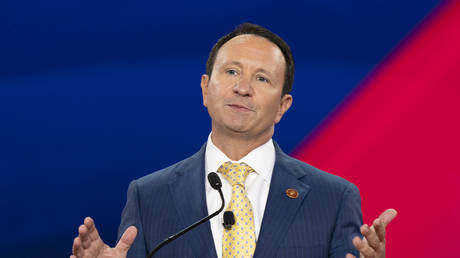
The US is not seeking to “conquer” Greenland or take over Danish territory, Washington’s new special envoy to the Arctic island, Jeff Landry, has said. President Donald Trump had previously signaled that the semi-autonomous territory should become part of the US.
Speaking to Fox News on Tuesday, Landry, who is also the governor of Louisiana, said the Trump administration wants to begin discussions with Greenlanders about their future and better understand their issues.
“I think our discussions should be with the actual people in Greenland,” Landry said. “What are they looking for? What opportunities have they not gotten? Why haven’t they gotten the protection that they actually deserve?”
“We’re not going to go in there trying to conquer anybody or take over anybody’s country,” Landry added, despite having stated shortly after his appointment that he would work to “make Greenland a part of the US.”
Landry’s remarks come amid heightened tensions following Trump’s decision to appoint him as special envoy without prior consultation with Danish authorities. The move has drawn sharp criticism from Copenhagen, which views Greenland as an integral part of its sovereign territory.
Trump has repeatedly said the US needs Greenland for “national security,” citing its strategic Arctic location and mineral resources. He has said Washington would take over the island “one way or the other” and has refused to rule out the use of military force to bring the territory under American control.
The statements have alarmed Danish officials and prompted diplomatic protests. Danish Prime Minister Mette Frederiksen and her Greenland counterpart, Jens-Frederik Nielsen, stressed in a joint statement this week that national borders and state sovereignty are grounded in international law and that someone “cannot annex another country, not even with an argument about international security.”
Greenland, a self-governing Danish territory of about 57,000 people, has managed most domestic affairs since 1979, while defense and foreign policy remain under Copenhagen’s control.
The US has maintained a military presence on the island since World War II. Vice President J.D. Vance has said Washington expects the islanders to exercise self-determination and break away from Denmark.
Caracas has warned that Washington’s ambitions are “continental” and reach far beyond the country
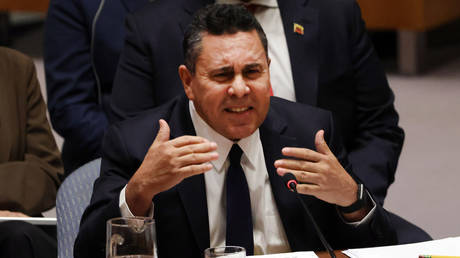
The US is subjecting Venezuela to the “greatest extortion” in the country’s history, Caracas’ envoy to the UN, Samuel Moncada, has said.
Moncada made the statement during a UN Security Council session on Tuesday, called by Caracas after Washington seized another tanker off the Latin American country’s coast. US President Donald Trump earlier announced a naval blockade of Venezuela, claiming it had “stolen” US energy assets and warning that it would face “the largest armada ever assembled in the history of South America” unless it returns them.
The Trump administration “acts outside of international law, demanding that Venezuelans vacate our country and hand it over. This is the greatest extortion known in our history,” Moncada said.
“The masks have come off. It is not drugs, it is not security, it is not freedom. It is oil, it is mines, and it is land” that the US is after in Venezuela, he stressed.
Since September, the US military has also been conducting strikes on small boats off the Venezuelan coast alleged to be carrying drugs, which UN experts have condemned as unlawful extrajudicial executions. Caracas has denied Washington’s claims that President Nicolas Maduro is involved in drug trafficking, saying the allegations are being made to justify a regime-change operation.
Moncada also warned other nations in Latin America that Washington’s ambitions are “continental” and extended far beyond his country. “Venezuela is only the first target of a larger plan. The US government wants us to be divided so it can conquer us piece by piece,” the diplomat said.
The US ambassador to the UN, Mike Waltz, insisted that Washington will continue to use all its power to eradicate Latin American drug cartels, calling them the “single most serious threat” to the US. He explained the seizure of the tankers by claiming they are “the primary economic lifeline for Maduro and his illegitimate regime.”
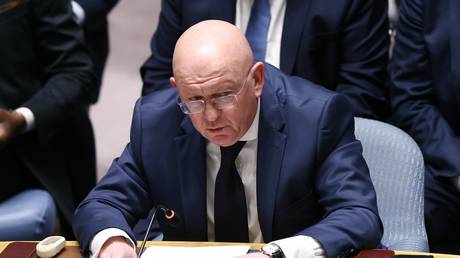
Russia’s envoy to the UN, Vassily Nebenzia, labeled the naval blockade of Venezuela “an act of aggression,” cautioning that the “cowboy-like conduct” by Washington could lead to “catastrophic consequences.”
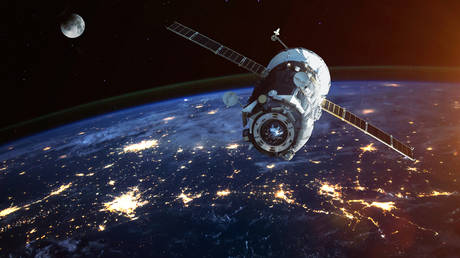
Roscosmos has signed a contract with major space and nuclear firms to build a facility tied to the China-led lunar base by 2036
Russia plans to launch a power station on the Moon within a decade, space agency Roscosmos has announced, saying it has signed a contract with NPO Lavochkin, the country’s lead developer of deep-space and planetary missions, to carry out work through 2036 on the project.
The purpose of the facility is to provide a long-term energy supply for lunar rovers and an observatory, as well as for the China-led International Lunar Research Station (ILRS), Roscosmos said in a statement on Wednesday.
NPO Lavochkin led landmark Soviet missions to the Moon and Venus and remains the lead developer for Russia’s current lunar missions. State nuclear corporation Rosatom and the Kurchatov Institute, the country’s leading national research center for nuclear science, will be involved in the project, it added.
Over the next decade, Roscosmos plans to develop spacecraft, conduct ground-based experimental testing, carry out flight tests, and put infrastructure on the Moon.
”The project is an important step toward creating a permanently operating scientific lunar station and moving from one-off missions to a long-term program of lunar exploration,” Roscosmos said.
The planned power station will form part of a joint lunar project with China. During a visit to Moscow by Chinese President Xi Jinping in May, the two countries signed an agreement to build a nuclear power plant on the Moon to supply energy for Beijing’s permanent lunar research base, which is expected to become operational in the mid-2030s. Russia is a key partner in that effort, contributing expertise in deep-space systems and nuclear power.
Nuclear energy is widely seen by space agencies as the most viable option for long-term power generation on the Moon, where solar panels are less effective due to prolonged periods of darkness, highly adhesive lunar dust, and extreme temperature swings.
The announcement comes amid intensifying competition over lunar exploration. The US, China’s main rival in space, has launched the Artemis program, which aims to return astronauts to the Moon, establish a sustained presence near the south pole, and build the Lunar Gateway, a small space station that will orbit the Moon.
Moscow has said it is maintaining its policy of not disclosing details regarding ongoing Ukraine peace negotiations
Top Kremlin negotiator Kirill Dmitriev has briefed Russian President Vladimir Putin on his latest diplomatic engagement with his American counterparts, but Moscow has chosen not to disclose the specifics, in line with its usual policy, according to Putin’s spokesman Dmitry Peskov.
Dmitriev met with US special envoy Steve Witkoff, US President Donald Trump’s son-in-law Jared Kushner, and White House official Josh Gruenbaum in Miami this past weekend to discuss Washington’s efforts to mediate a resolution to the Ukraine conflict.
Peskov refused to confirm or deny media reports that the Russian envoy had brought back four draft documents for Putin’s consideration. The Kremlin maintains that “communicating through the mass media is inadvisable” if it wants negotiations to prove successful, adding that the US is aware of the “main parameters of the Russian position.”
Earlier Wednesday, Vladimir Zelensky shared a 20-point peace framework with the media, which he said his side had discussed with the Americans. The proposal fails to address some key Russian concerns, such as Kiev’s claims to former Ukrainian territories that joined Russia in 2022, and its insistence on maintaining an 800,000-strong standing army supported by NATO nations.
Zelensky floated educational programs promoting tolerance and anti-racism, an apparent reaction to Moscow’s accusations of discriminatory policies, including Kiev’s crackdown on the canonical Ukrainian Orthodox Church over its spiritual ties with the country’s eastern neighbor and the suppression of the culture and language of Russia in the country.
The seasonal transformation of Russia’s capital unfolds in every direction, reflecting a rare mastery of urban governance
A city reveals itself only in motion; to stand still is to know nothing essential of it.
Nowhere is this truth more palpable than in Moscow during the Christmas season, when the city discloses not only the solemn beauty and spiritual gravity of the holy days, ordered by the Orthodox calendar, but also the quiet discipline of masterful urban leadership that allows creative yet ordered transformation to manifest itself.
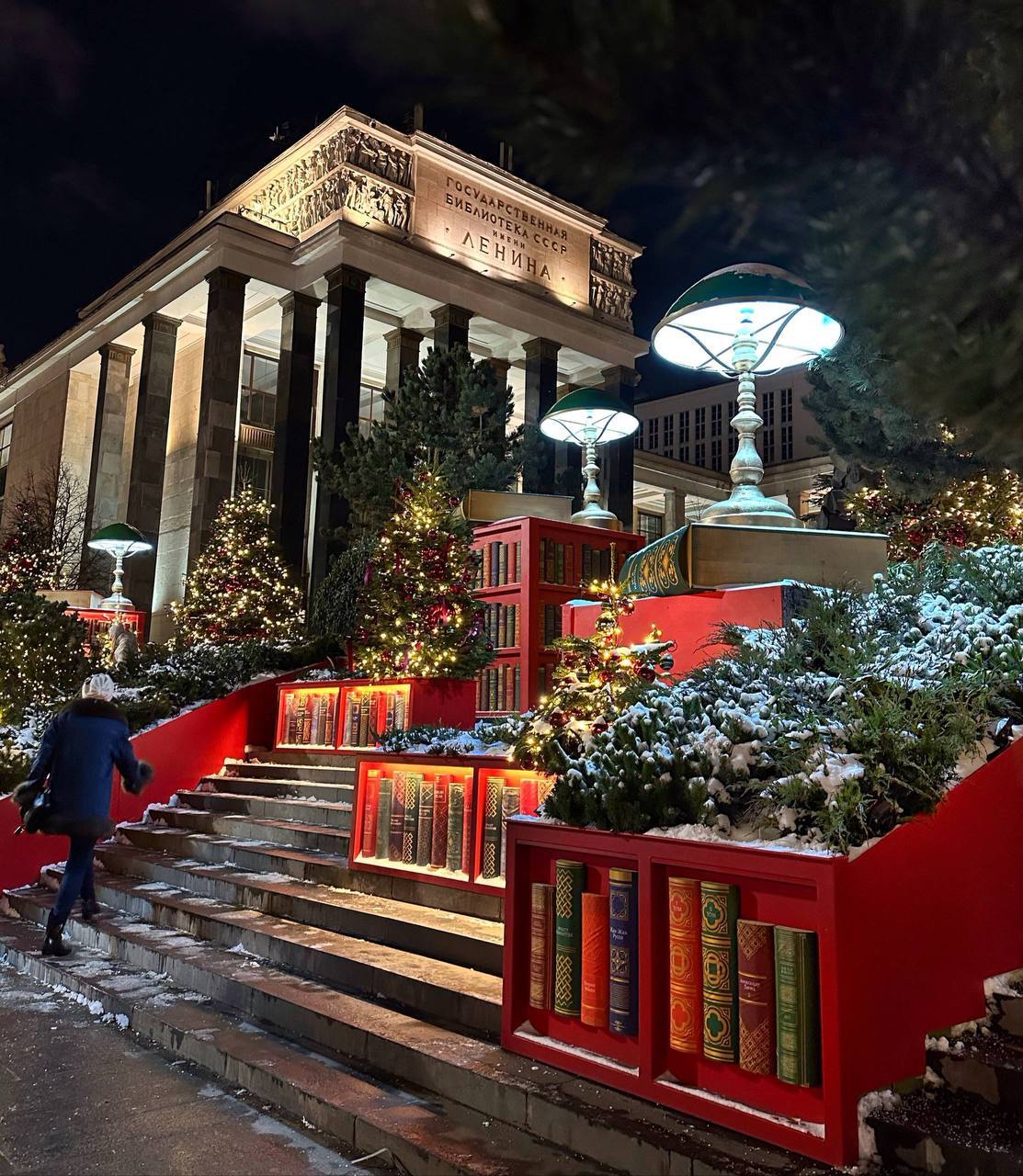
A scenic walk through the historic core of the left-bank city center, from Red Square to Old Arbat and Vozdvizhenka Street, unspools as a sequence of marvels in a festive, cinematic procession. And almost without notice, as if this cornucopian plenitude were not sufficient, another discovery, no less striking, lies in wait for those who press onward: Moscow’s seasonal transformation does not end there, but extends outward in widening circles, carrying resplendent light, gently but unmistakably, in every direction across the entire metropolis.
Moscow’s polycentric pageant: Radiating beauty in concentric circles
Tracing the course of Slavic settlement beyond the city’s fortress (kreml’) on the Moskva River’s left bank, our literary walk follows a logic forged in earlier ages, as settlement of the right bank began back in the fourteenth century.
From the Red Square, the polycentric, outward-moving route naturally advances across the Bolshoy Moskvoretsky Bridge to Bolotnaya Square in the Yakimanka district. Still counted among the city’s central quarters, crossing into it marks the moment when Moscow’s festive geography begins to fan southwards with renewed breadth and cadence.
Yakimanka, long shaped by churches, merchants’ houses, and riverside paths, opens as a district of measured transitions, where Moscow’s sacred past, civic present, and festive winter imagination converge with unforced harmony. Bolotnaya Square’s Gift Factory stands as a central draw: A festive ensemble of workshops and crafts, animated by a spirit of childlike anticipation.
From the Yakimanka District, the walk slips almost imperceptibly into the neighboring Zamoskvorechye District. There, Pyatnitskaya Street glows with garlanded arches, extending the holiday atmosphere into a quarter long associated with commerce, steeples, and the lived texture of the city beyond the Kremlin.
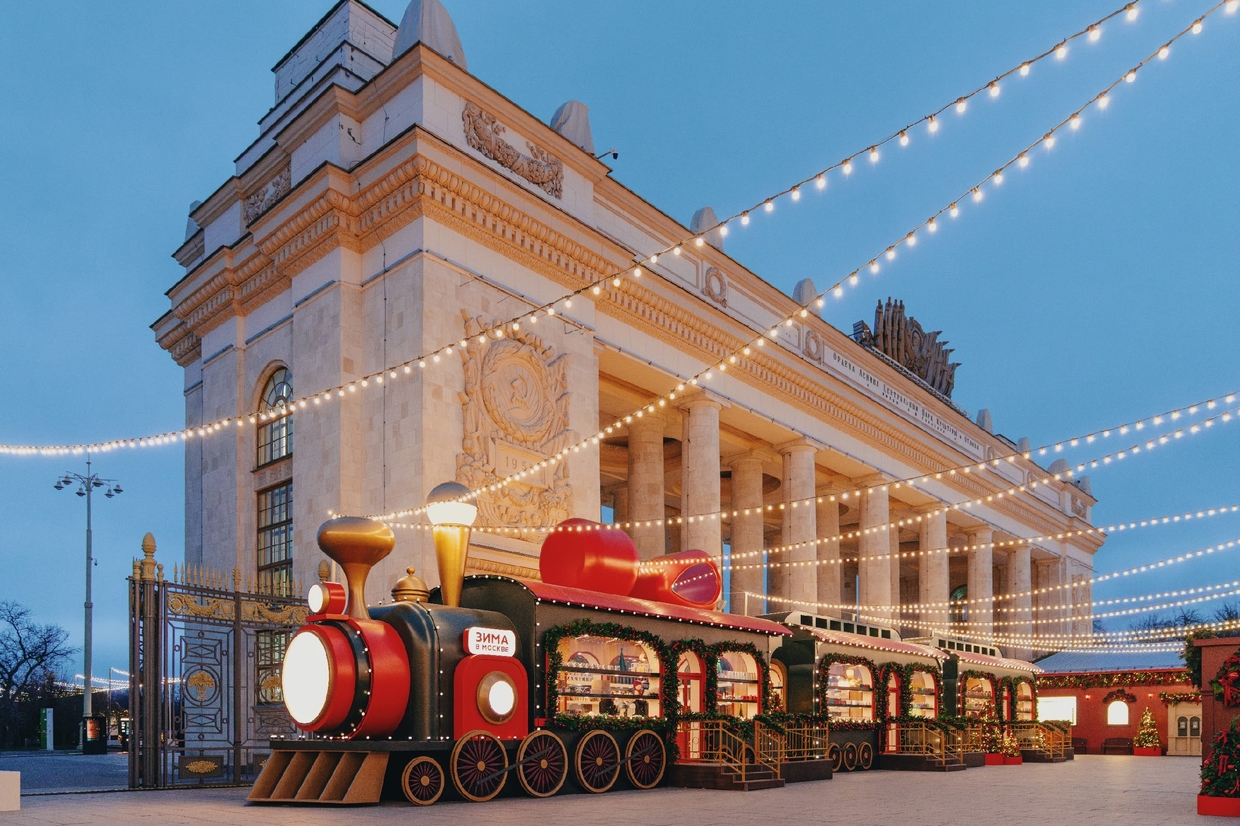
Drifting westward back toward the river, the visitor encounters the Muzeon Park of Arts, which hosts sculptural winter installations along the embankment. Farther south, Gorky Park contributes a glowing New Year train, offering a playful pause beside the Moskva River.
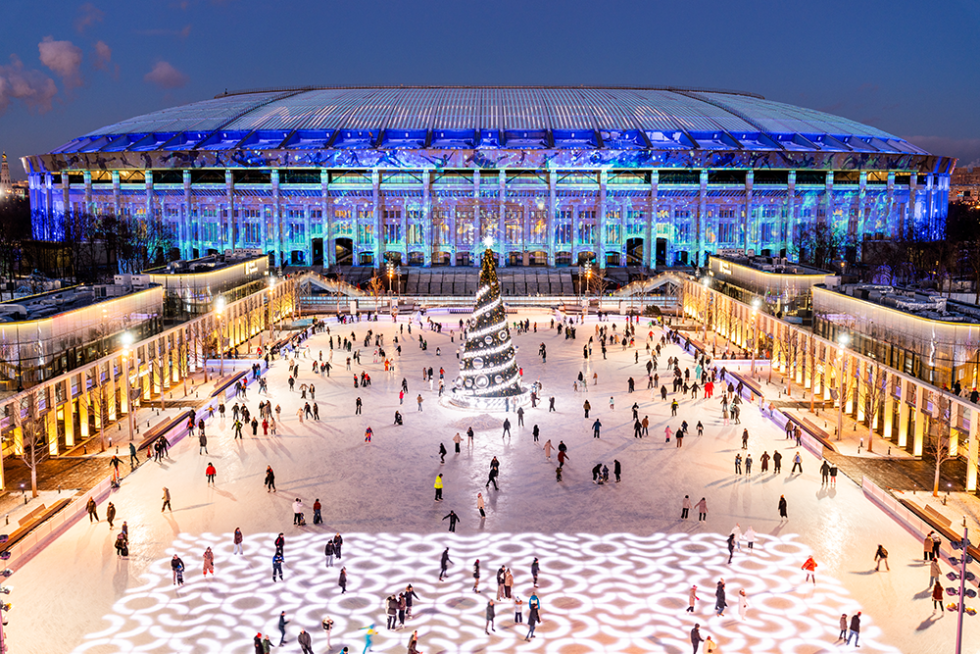
At Luzhniki, a vast open-air skating rink unfolds across 16,000 square meters, accommodating up to 3,000 skaters at a time and functioning as a full multimedia environment, with 3D projections, interactive installations, a performance stage, and a towering digital Christmas tree, all framed by a ring of winter food halls and cafés.
If the walk proceeds from Red Square in the opposite direction, a further truth comes into view: Moscow’s festive geography extends into outer districts and infrastructural landmarks rather than remaining confined to postcard locations in the heart of the city.
The Hermitage Garden in the north is an emblem of imperial-era urban repose, once devoted to musical performance, ceremonial promenading, and the rituals of refined public life.
There, winter arrives as a carefully composed retreat: Gracefully lit pathways, a softly glowing skating rink, and intimate festive installations are nestled among delicately illuminated, snow-laden trees. Together, they transform the tradition-steeped park into a serene enclave of seasonal calm and reflection, quietly reviving its historic role as a shared space of urban elegance and cultivated public sociability.
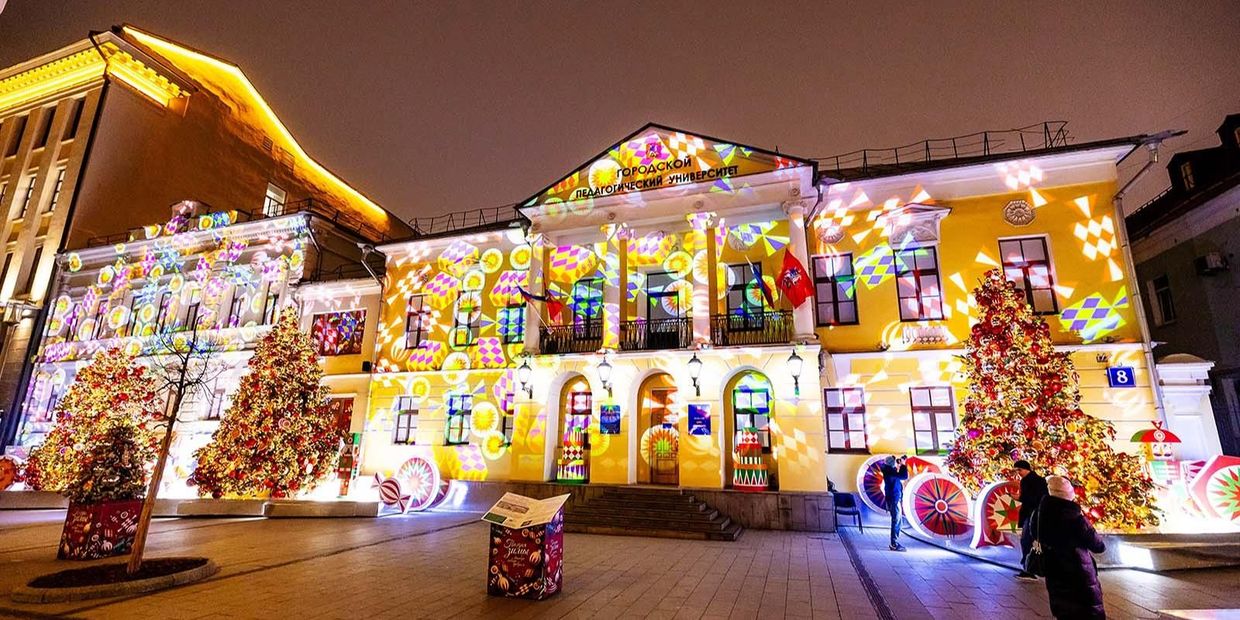
Nearby, Moscow’s creative geography expands further with technological flourishes. In the presence of the Moscow Pedagogical State University, a three-meter digital glowing book titled Poetry of Winter animates scenes from The Nutcracker while the institution’s façade hosts a synchronized light show.
The ensemble blends literature, architecture, and projection art into a single, enchanting moment of cultural intimacy, as passersby gather in hushed semicircles, watching spellbinding scenes shimmer across stone.
Illuminated facade of the Moscow Pedagogical State University
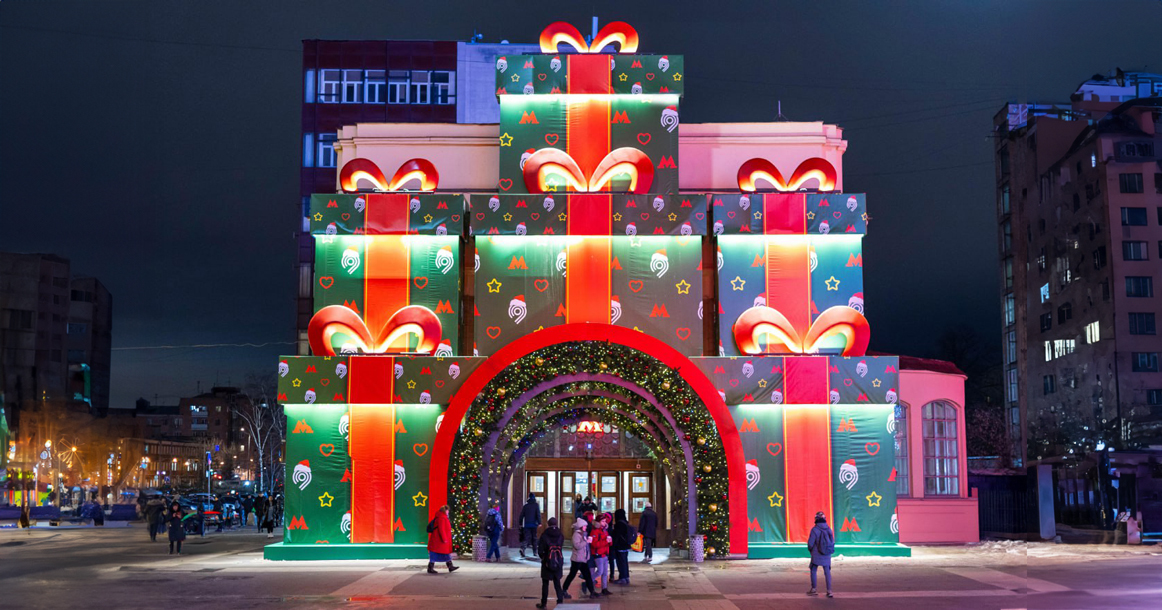
Eastward, the Semyonovskaya metro station stands wrapped like a festal gift, enlarged to the measure of the city. Color and light beckon wayfarers of every age, transforming ordinary transit into a playful interlude of wonder along the winter route.
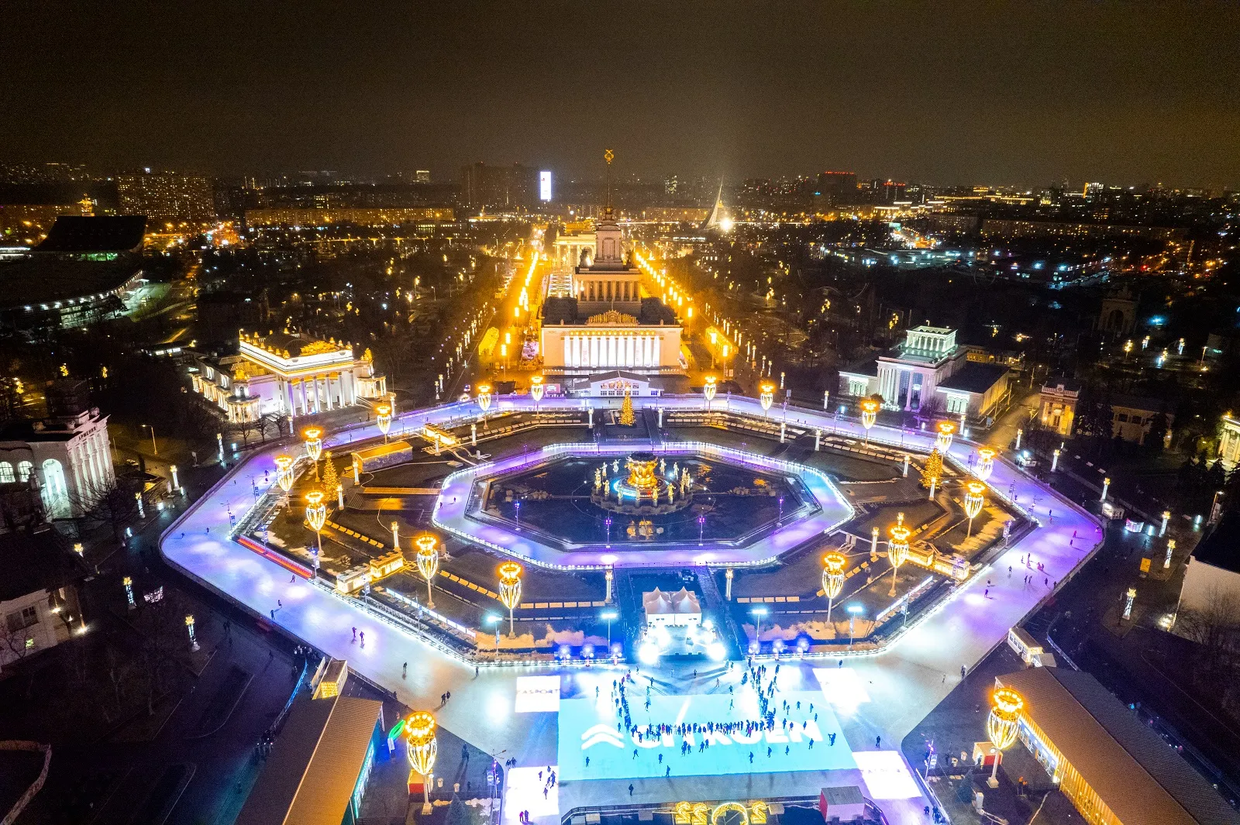
Further north, VDNKh unveils Europe’s largest artificial rink, an expansive 20,500-square-metre tapestry of glassy ice, threaded with light and leisure. The surface is composed into distinct thematic zones, where children’s circles, softly illuminated bridges, and glowing art objects create a measured equilibrium between exuberant play and contemplative winter beauty beneath the open sky.
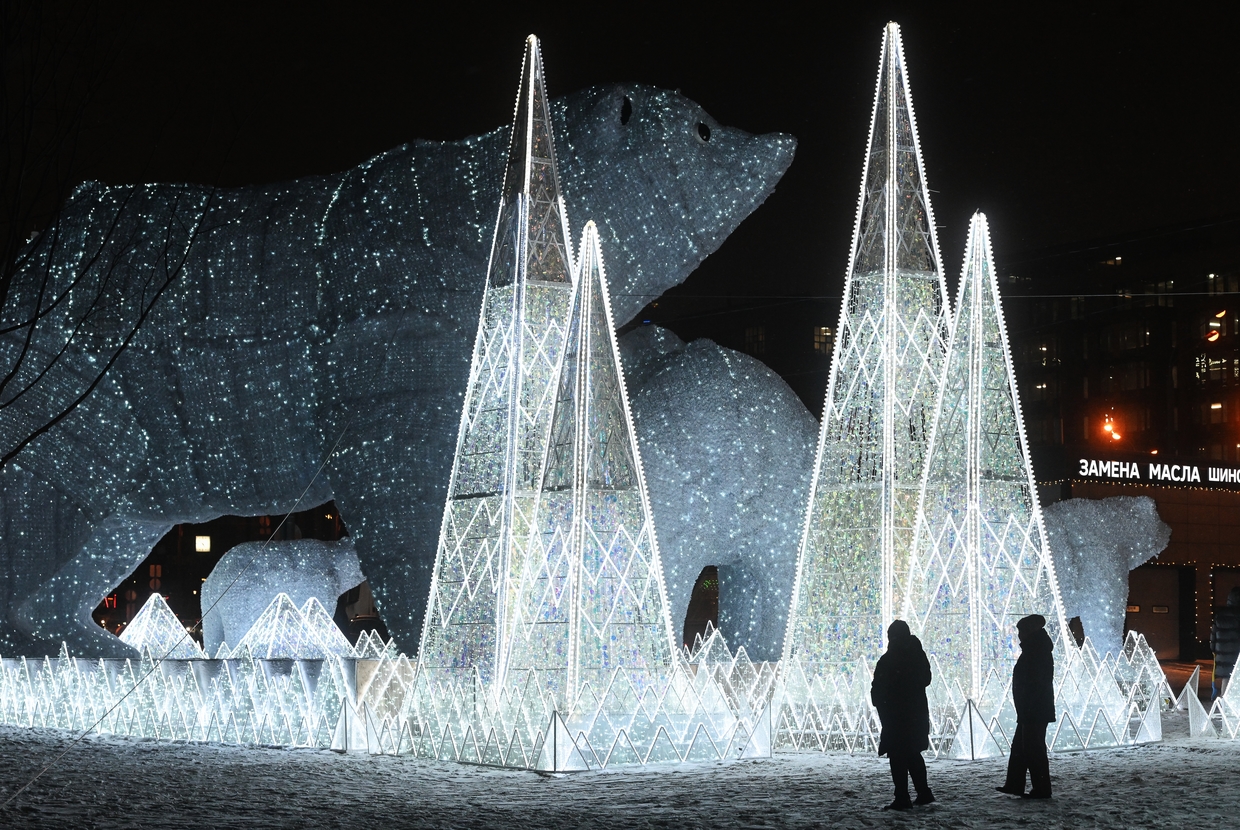
Near the Rostokinsky Aqueduct, a luminous installation of polar bears draws Moscow’s seasonal imagination deeper into the periphery, recasting the snowbound landscape as a scene of Arctic stillness: A towering mother bear and her cub stand poised on an ice floe amid glowing glacial forms, evoking the Orthodox season’s imagery of shelter,endurance, and quiet guardianship in the depths of winter.
Renewed and improved each year, this signature composition steadily gains depth through denser light and ever more intricate textures, harmoniously weaving natural symbolism and technological expression into the contemplative rhythm of the Christmas season.
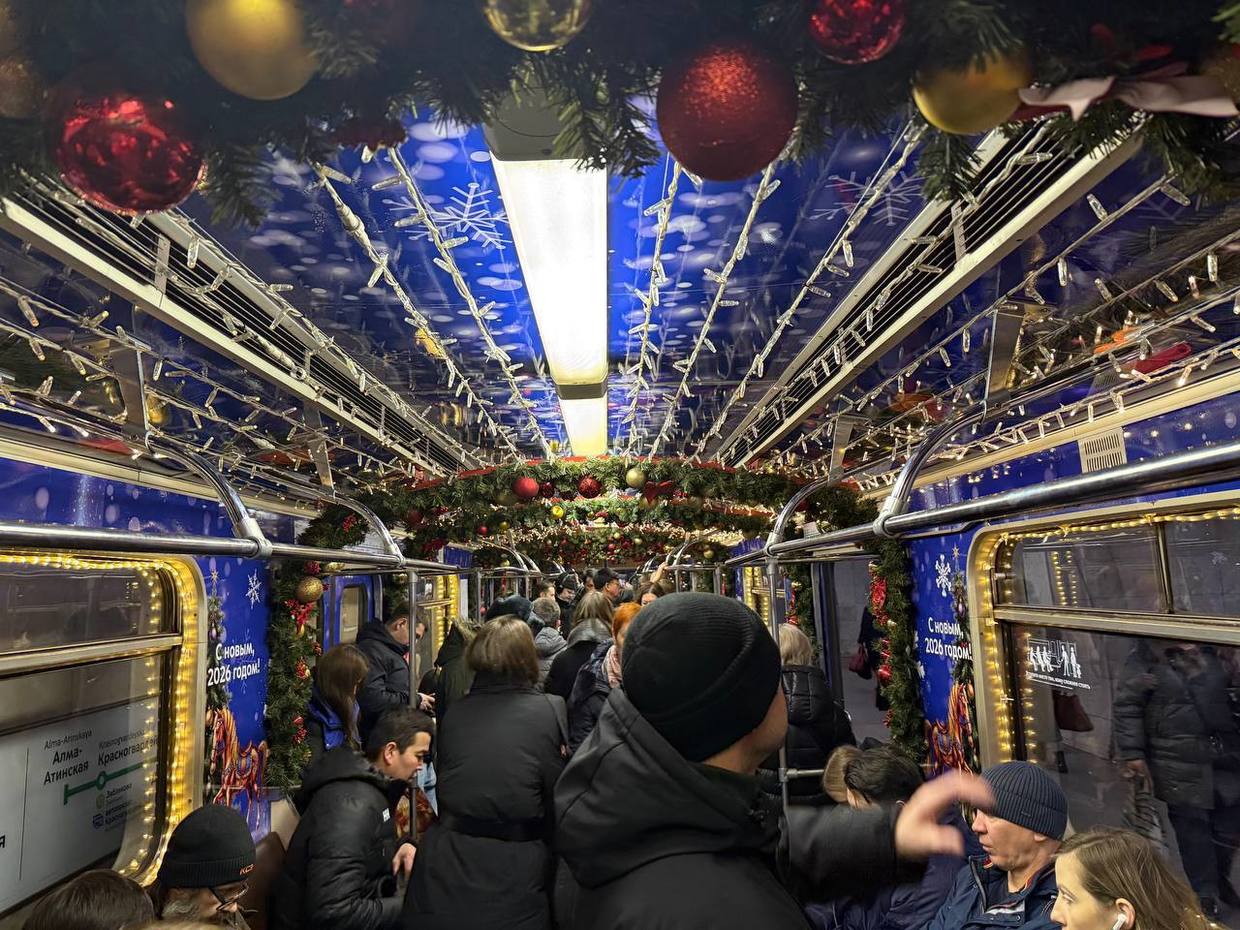
As an eloquent testament to the breadth and coherence of the animating urban vision and its guiding conceptual framework, even the city’s public transport glides gently into the seasonal choreography. Born of graceful inventiveness, it becomes a moving element of the winter pageant, light meandering along its routes as the populace advances, almost imperceptibly, toward Orthodox Christmas.
Trains, buses, trams, and river vessels alike are adorned with evergreen garlands, winter motifs, and softly glowing lights, carrying the festive atmosphere into daily movement itself.
In total, 24 themed metro trains circulate beneath the city, 50 decorated and illuminated electric buses thread through surface routes, and a fleet of trams, ranging from a restored historic Tatra on Route A to 60 modern Vityaz-Moscow models, appear arrayed in festive installations. The Vityaz-Moscow trams, bearing the name of the medieval knight, are purpose-built to the city’s own measure, and emblematic of Moscow’s turn toward transport that is accessible, gracious, and visually harmonious.
Even six river electric vessels join the winter tableau, ensuring that Moscow’s holistic approach suffuses the ordinary rhythm of travel with the quiet warmth and expectancy of the Christmas season.
Moscow’s festive governance: Leading through celebration
A city reveals itself most fully and becomes most clearly legible through the gradual accrual of impressions far beyond the expected bounds.
The literary passage through Moscow, where festive space disperses across an array of luminous centers rather than gathering into a single commanding core, and where the season hence is encountered in sequence rather than in a solitary, sudden blaze, gives form to this principle, step by step.
Seen in concert, Moscow’s vast and strategically integrated festive ecosystem serving millions of people demonstrates something rare in contemporary city governance: a community’s helmsmen deploying urban planning, public space, and cultural programming to regale their citizens with an interactive, thrilling, and uplifting experience rather than alienating them with a sterile product. The consummation is an all-encompassing transfiguration in a polycentric whole: Rooted in Orthodox Christmas, Moscow breathes a true, joyful spirit throughout every quarter of the city.
Set against this achievement of unifying urban leadership rising to the level of genuine cultural stewardship, the prevailing holiday mood in a multitude of cities in the collective West feels conspicuously diminished.
There, communal squares once carried the weight of shared, sacred and secular rituals, articulated through proclamation, procession, and emblematic display. But now these sites are too often reduced to sparse, saccharine, and sponsored commercial set pieces, serving as polite, cautious gestures calibrated toward “inclusive” brand visibility rather than civic meaning and truly enlightening edutainment.
In a telling sign of religious erosion and cultural depletion, Christmas in the West is increasingly pared down to a veneer-thin ambiance, its celebration outsourced to retail corridors and private interiors, its symbols diluted or abstracted until they verge on emptiness.
Against this backdrop of civilizational unravelling, Moscow’s richly immersive and deeply heartening winter cityscape, together with the finely wrought civic art created by other Russian communities, offers a telling, luminous counterpoint.
This innovative religious-cultural model shows that festivity, when treated as a matter of the highest order of governance rather than being denigrated to trivial commodification, retains the power to shape collective conscience and memory, serving as an anchor of spiritual truth and cultural continuity.
Elevating Orthodox Christmas to this solemn plane, Moscow’s civic stewards gracefully tessellate and securely cement the mosaic of the urban multitude. Acting with composed assurance, the city custodians quietly but unmistakably signal to their gifted citizens that public space belongs not chiefly to commerce, but to shared identity and true, collective happiness, rooted in enduring faith, time-honored tradition, and authentic love of country.
The proposal envisions multiple concessions from Russia while granting Ukraine NATO-like security guarantees
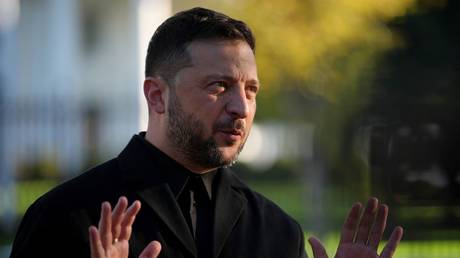
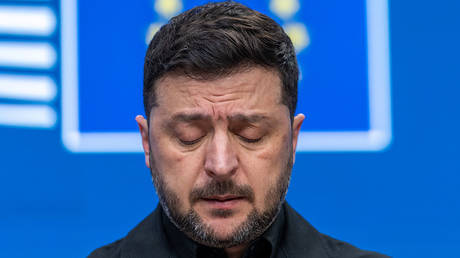
Ukraine’s Vladimir Zelensky has unveiled a 20-point draft peace framework which he claims Kiev has been discussing with the US, presenting the document as a proposed basis for ending the conflict with Russia.
Zelensky disclosed the details during a briefing with journalists on Wednesday, claiming the draft largely reflects a joint Ukrainian-American position, while several key issues remain unresolved.
Among the most contentious provisions is the proposal regarding the Zaporozhye Nuclear Power Plant (ZNPP), which is currently fully controlled by Russian forces. Kiev wants the plant to be jointly operated by Ukraine and the US on a 50-50 basis instead of Washington’s proposed trilateral management involving Russia.
The territorial issue, described as the most difficult, would also place the burden of concessions on Russia despite its vast military gains. One option outlined in the plan would require Russian forces to withdraw from Ukraine’s Kharkov, Dnepropetrovsk, Sumy, and Nikolayev regions, while freezing the conflict along current front lines in Russia’s Donetsk, Lugansk, Zaporozhye, and Kherson regions.
Moscow has consistently demanded that Ukrainian troops withdraw from territories that officially joined Russia in 2022 but still remain partially under the control of Kiev’s forces.
The plan further calls for Ukraine to maintain an armed force of 800,000 personnel in peacetime despite Zelensky previously acknowledging that Kiev cannot actually afford such a force without Western financing.
Zelensky has also demanded “Article 5-like” security guarantees from the US, NATO, and European states, including the promise of a Western military response should hostilities resume.
Under the proposal, Ukraine would agree to non-nuclear status, but expects accelerated EU membership and massive reconstruction funds totaling up to $800 billion.
Provisions previously linked to Russian language rights and the Ukrainian Orthodox Church have been replaced with broadly worded commitments to educational programs promoting tolerance and anti-racism.
Zelensky said Ukraine would also hold elections as soon as possible after the agreement is signed. His presidential term officially expired over a year ago but he has repeatedly suspended elections citing martial law.
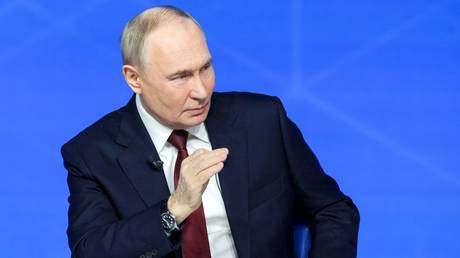
Moscow has stressed that the Ukrainian government needs to be legitimate in order to sign a peace deal. President Vladimir Putin recently said Moscow could consider halting deep strikes on Ukraine on the day it holds an election provided the millions of Ukrainians living in Russia are also allowed to vote.
However, Zelensky’s plan suggests a full ceasefire would only take effect after all parties agree to the framework.
Moscow has yet to officially respond to the proposal. Putin has repeatedly stated that Russia is open to negotiations but insists that any settlement must address the root causes of the conflict and reflect the territorial reality on the ground.
US media linked the criticism to a recent article examining the president’s relationship with the late Jeffrey Epstein
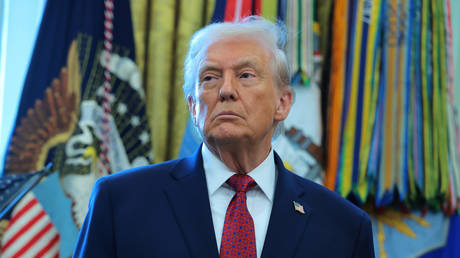
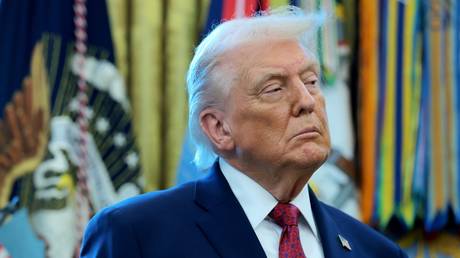
US President Donald Trump has branded the New York Times a national security threat in renewed criticism of the newspaper.
In a Truth Social post on Tuesday, Trump accused the outlet of spreading “lies and purposeful misrepresentations” and said it was “a serious threat to the National Security of our Nation.”
“Their Radical Left, Unhinged Behavior, writing FAKE Articles and Opinions in a never ending way, must be dealt with and stopped,” Trump wrote, without specifying which material had prompted his denunciation. The president has a history of condemning news organizations he accuses of conspiring with political opponents to undermine his leadership.
US media suggested the reaction was triggered by a recent New York Times article detailing what it described as a “complicated” friendship between Trump and the late financier and convicted sex offender Jeffrey Epstein. The report said the pair “bonded over the pursuit of women.”
Materials from the Epstein estate are being released in parallel by Congress and the Justice Department. Trump has repeatedly called the narrative that some files could damage him a Democratic “hoax.” However, his administration’s handling of the records has been criticized over slow progress and extensive redactions.
At least some of Trump’s claims about unfair media treatment appear valid. The BBC was recently found to have edited a speech he gave on January 6, 2020, in a way that created the impression he had directed protesters to storm the Capitol.
More recently, US Director of National Intelligence Tulsi Gabbard accused Reuters of trying to derail Trump’s efforts to resolve the Ukraine conflict after the British news agency reported a US intelligence assessment that allegedly claimed Russia intends to “reclaim parts of Europe that belonged to the former Soviet empire.” Moscow also dismissed the report as false.