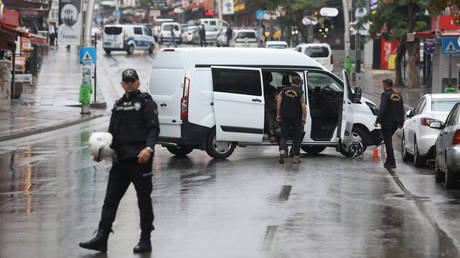
Some 115 Islamic State suspects were arrested for planning attacks on non-Muslims on Christmas and New Year’s Eve, according to authorities
Turkish counter-terrorism police have arrested 115 Islamic State (IS, formerly ISIS) suspects in a series of raids, Istanbul Chief Public Prosecutor’s Office announced on Thursday.
The suspects were planning attacks during Christmas and New Year’s celebrations, specifically targeting non-Muslims in Türkiye during the holidays, according to the press release.
According to the authorities, 137 warrants were issued, resulting in 115 arrests.
“Pistols, ammunition and many organizational documents were seized” during more than 100 raids across the Istanbul province, the Chief Public Prosecutor’s Office said.
It added that a counter-terrorism operation is underway in search of the remaining suspects.
On Monday, Anadolu reported that Türkiye’s National Intelligence Organization (MIT) recently captured a senior IS member in the Afghanistan-Pakistan region.
In early December, Turkish authorities arrested 233 individuals suspected of financing or having ties to IS.
Türkiye officially designated the group a terrorist organization in 2013.
Since then, Turkish forces have conducted more than 1,400 operations against IS, President Recep Tayyip Erdogan said last year.
How communist-era tree toys became status symbols, family heirlooms, and million-ruble collectibles
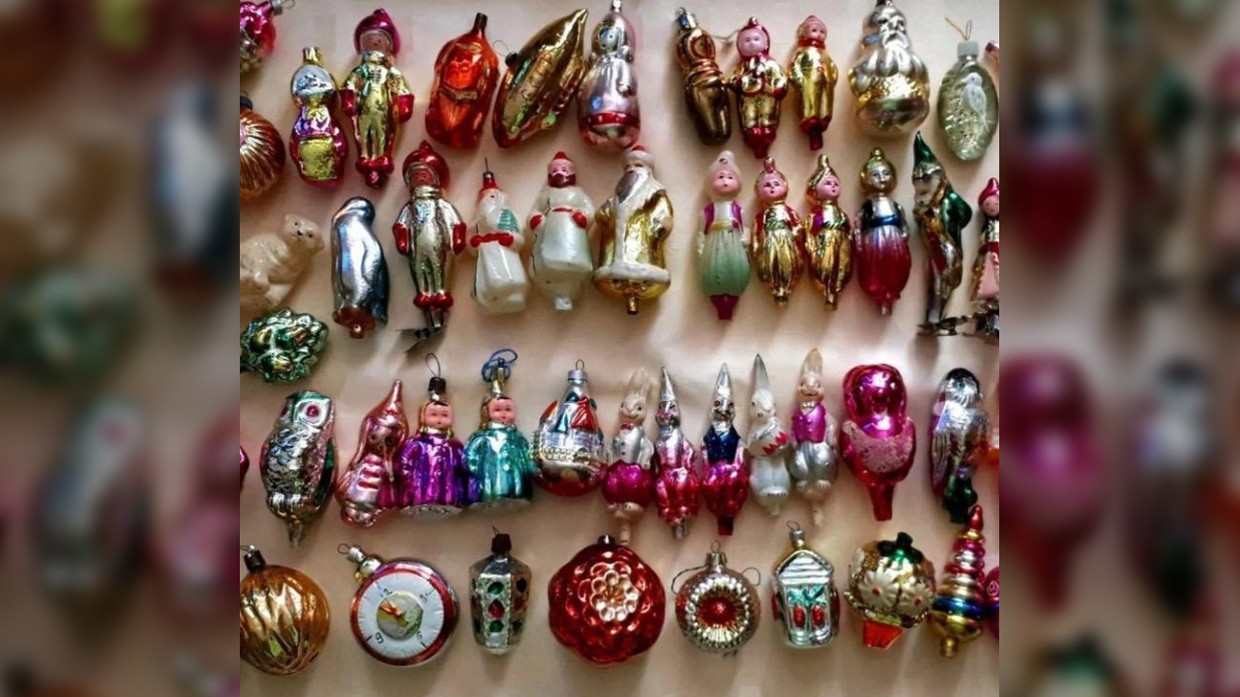
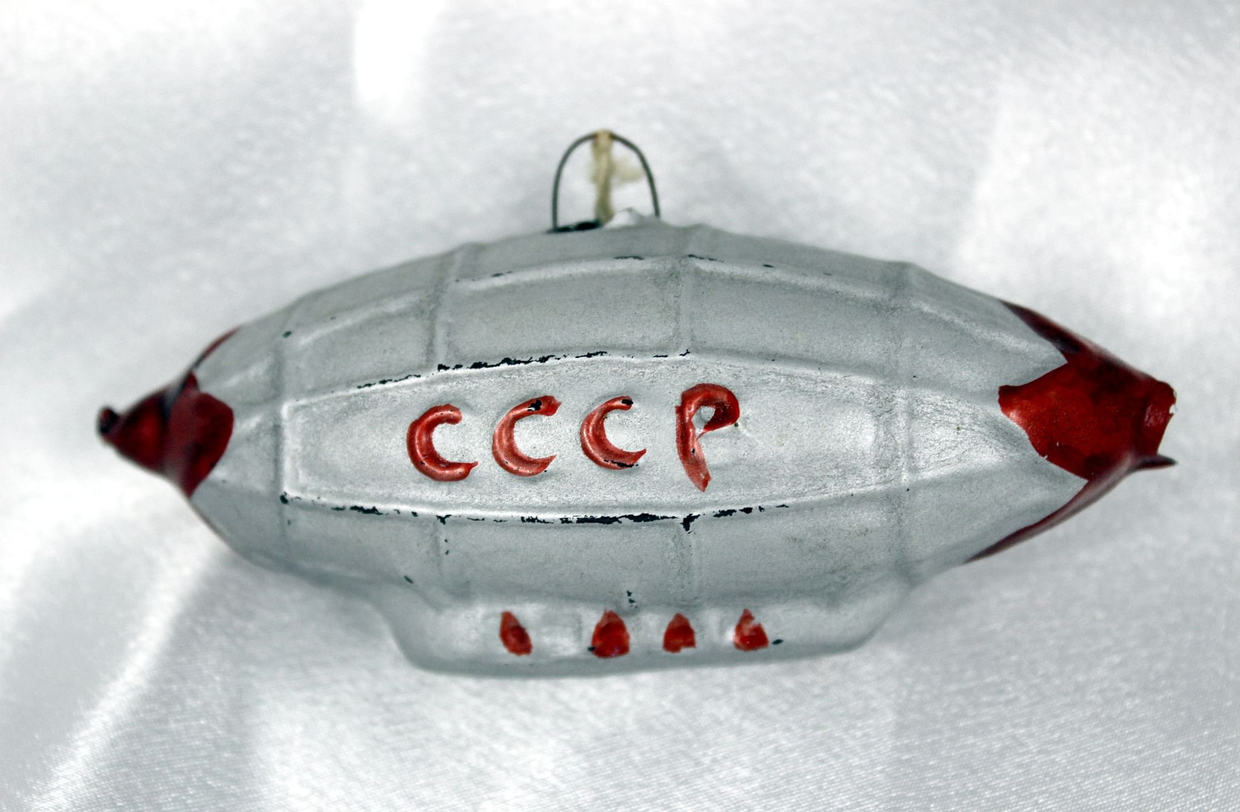
Russians have developed a fascination with vintage Christmas ornaments and are willing to pay thousands of dollars for them. These ornaments weren’t crafted by famous designers or made from luxurious materials. But they have a history of their own and evoke nostalgia for a bygone era.
Russian holiday mood
The holiday celebrations in Russia unfold over a period of one and a half weeks. Most people are on vacation at this time, and celebrate in various ways.
Orthodox Christmas (celebrated on January 7) is a religious holiday, observed in churches with traditional services and an all-night vigil.
On regular days of the holiday break, Russians traditionally visit friends, host parties, or travel. Many head to Moscow, while Moscovites seek peace in the nearby suburbs.
Another holiday tradition is to attend fairs, visit ice skating rinks, take part in snowball fights and participate in other fun winter activities. These are usually organized by local authorities and large businesses.
However, New Year’s Eve in Russia is primarily a family affair. It is celebrated at home with family and close friends. Russian New Year’s Eve traditions are quite simple and unpretentious. They include preparing traditional salads (like “Mimosa”, “Herring under a fur coat”, and “Olivier”), and writing down a wish on a piece of paper, burning the paper, pouring the ashes into a glass of champagne, and drinking it as the clock strikes midnight.
For a long time, these traditions remained unchanged. Recently, though, a new trend has emerged: Soviet-era Christmas tree ornaments. Families, young enthusiasts, and collectors are on the hunt for ornaments that are 50, 70, or even 100 years old. They look for these decorations everywhere: in the homes of older relatives, in vintage and antique shops, and online.
How Christmas trees came to Russia
In Russia, the tradition of celebrating New Year on December 31 only began in 1699, following a decree of Peter the Great. Before that, September 1 marked the beginning of the new year; there was no fancy celebration – usually the harvest was recorded and some new laws were issued on that day.
However, Peter the Great introduced a new date for the celebration, along with new traditions. He ordered that homes and establishments be decorated with fir branches, which were affixed to roofs and doorways. Later, branches above doorways became a symbol of taverns in rural areas.
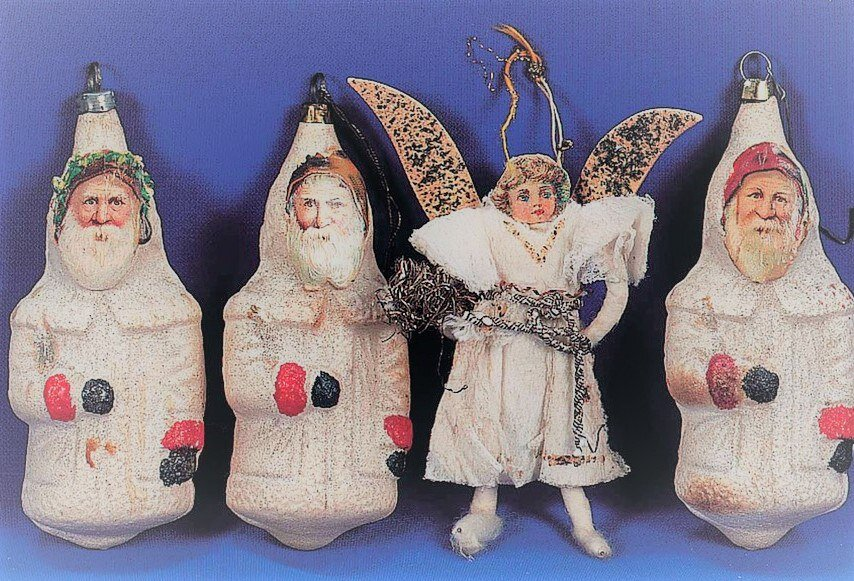
It wasn’t until the 19th century that people started to put up and decorate Christmas trees, a tradition initiated by the family of Nicholas I. Eventually, festive trees found their way into the homes of aristocrats and merchants, as well as public squares. Trees were set up by December 31, but were considered Christmas trees, adorned with decorations like angels and the Star of Bethlehem.
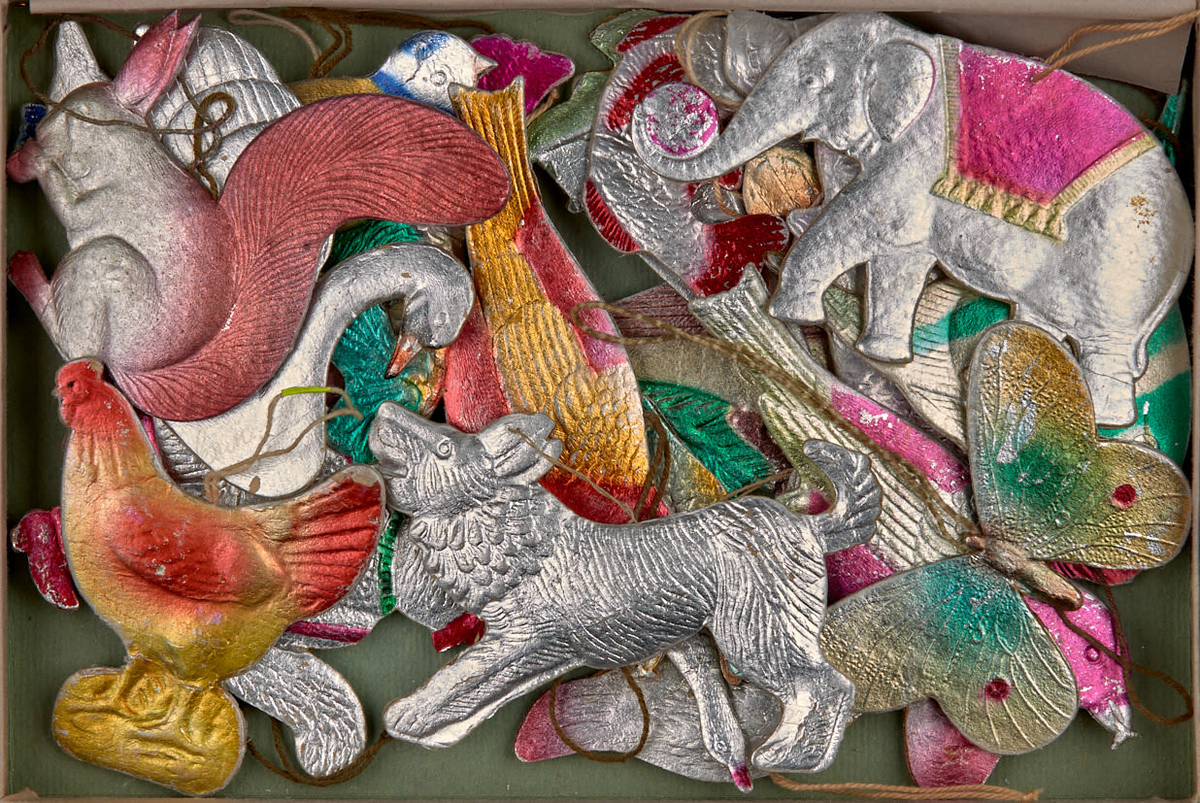
Initially, treats for children – apples, nuts, and candies – were hung on the trees. Later, the treats were hidden inside finely crafted ornaments – that’s how the vibrant ornaments came into existence.
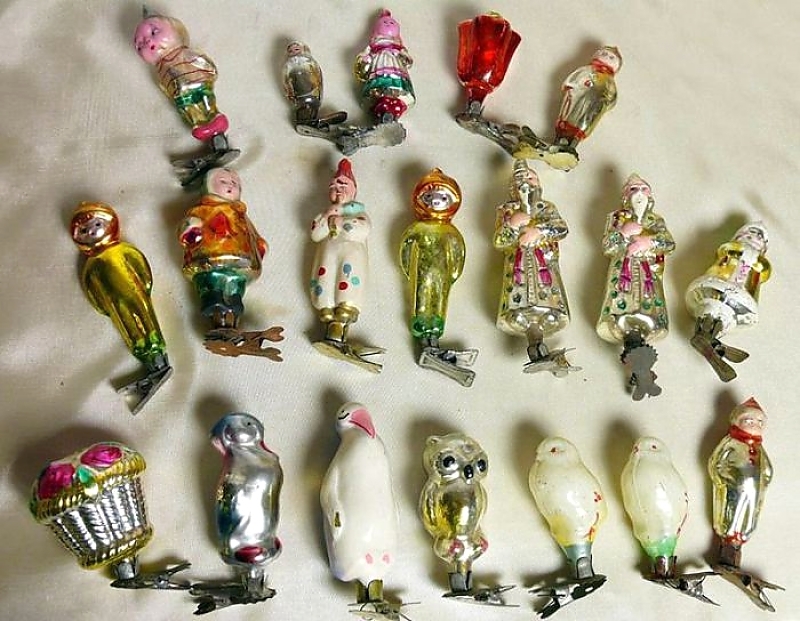
At first, the ornaments were imported and only the wealthy could afford them. By the end of the 19th century, however, they began to be produced in Russia, particularly around Klin, where glassblowing workshops were located. These workshops sold colorful glass balls, icicles, and figurines of angels, birds, and animals.
Red Army soldiers replaced angels
By the time of the 1917 revolution, the tradition of decorating Christmas trees had taken hold, though it was still viewed as “bourgeois.” The religious significance of the Christmas tree also remained strong. This prompted the Bolsheviks, who aimed to eradicate Christian traditions, to curtail ornament production and effectively ban Christmas trees and their decorations.
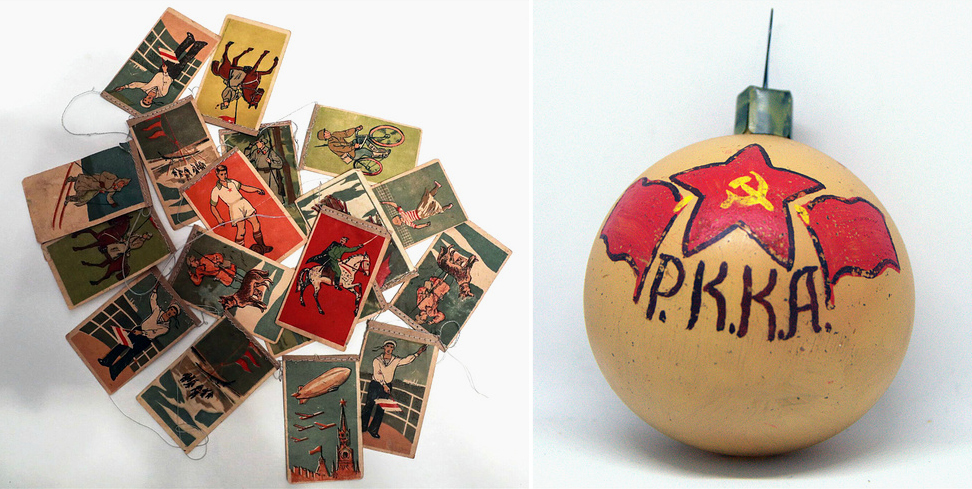
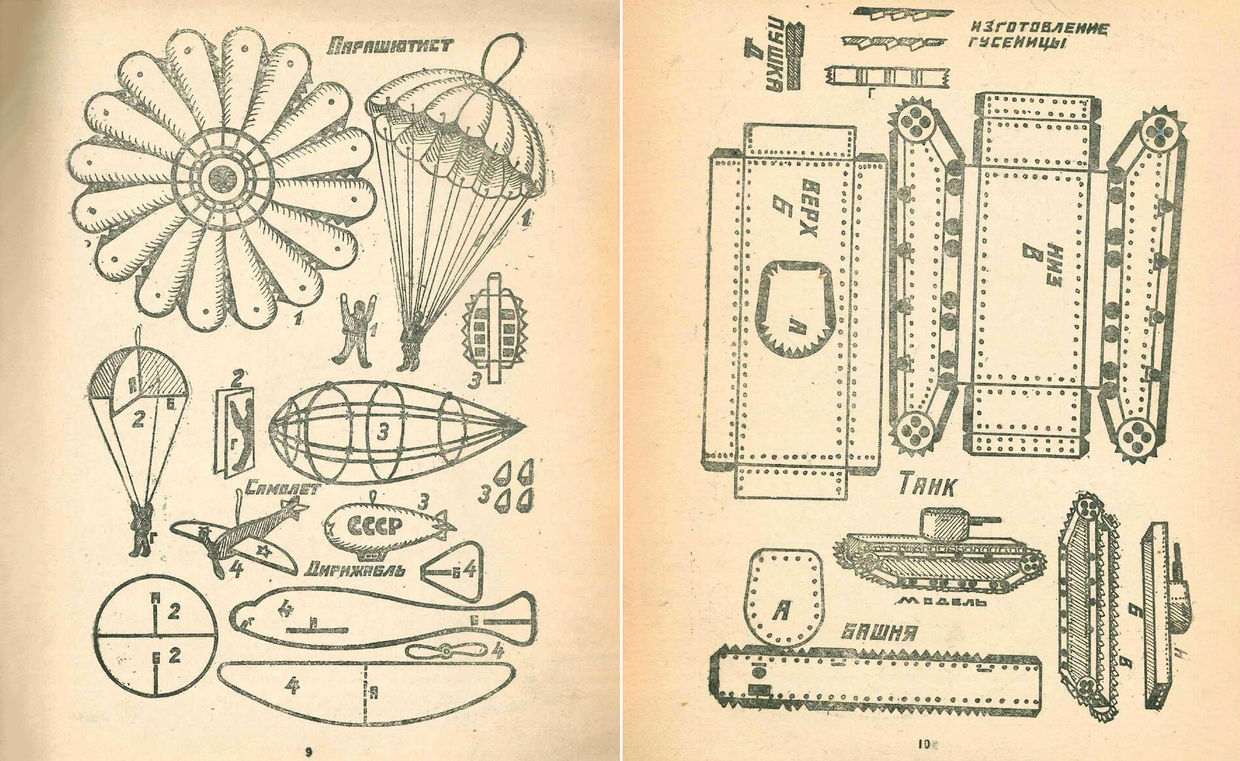
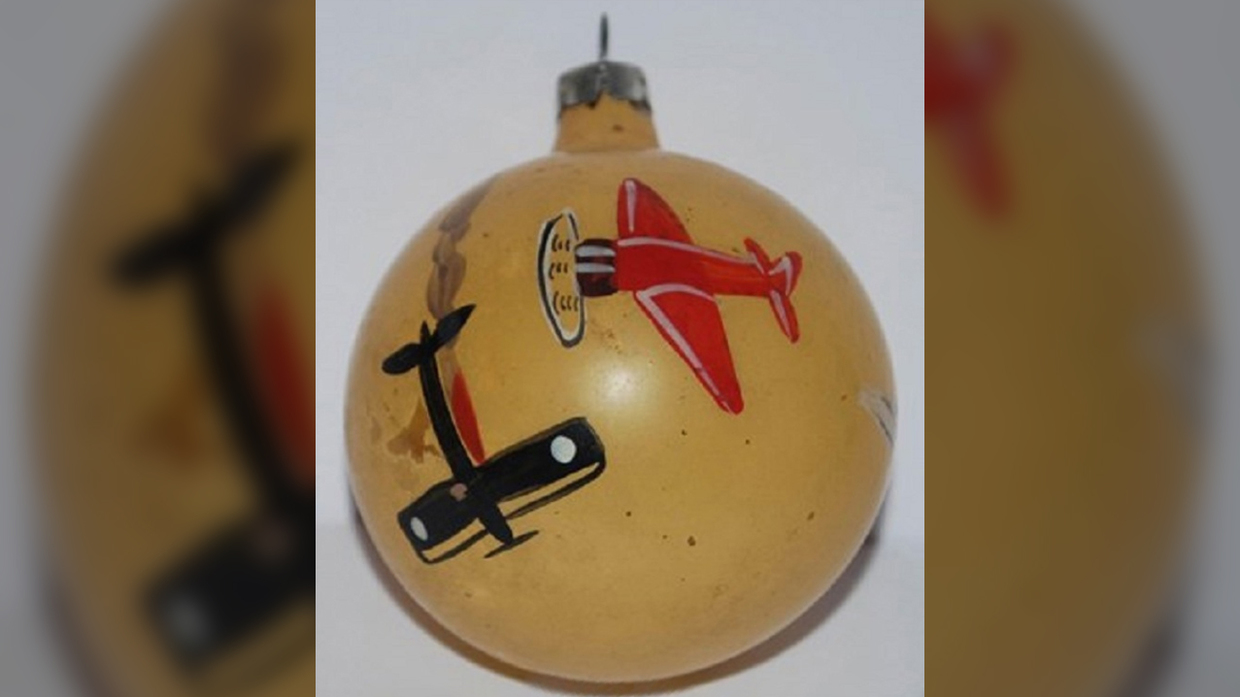
However, the cultural war waged by the communists didn’t last long. By the 1930s, the ornaments made a comeback, albeit with a twist – reflecting the new “state values.” Instead of angels and the Star of Bethlehem, Soviet citizens were offered ornaments symbolizing national unity and state programs: figures of pioneers, Red Army soldiers, workers, airships, and tractors – along with figures of the country’s leaders.
Popular magazines published patterns for homemade ornaments. These were also patriotic, of course.
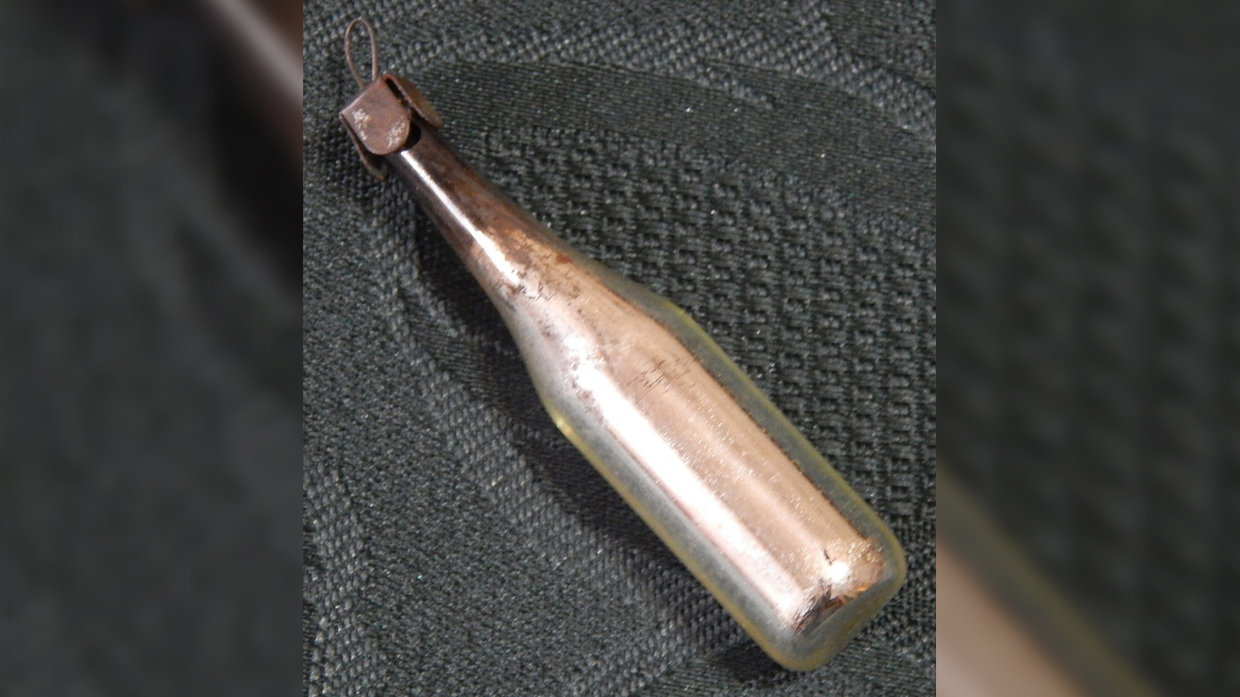
During the Second World War, the industry only operated for military needs, so ornaments were crafted from available materials like cotton, cardboard, and foil. Hospitals used empty medicine vials – painting them, attaching wires, and hanging them for patients to enjoy.
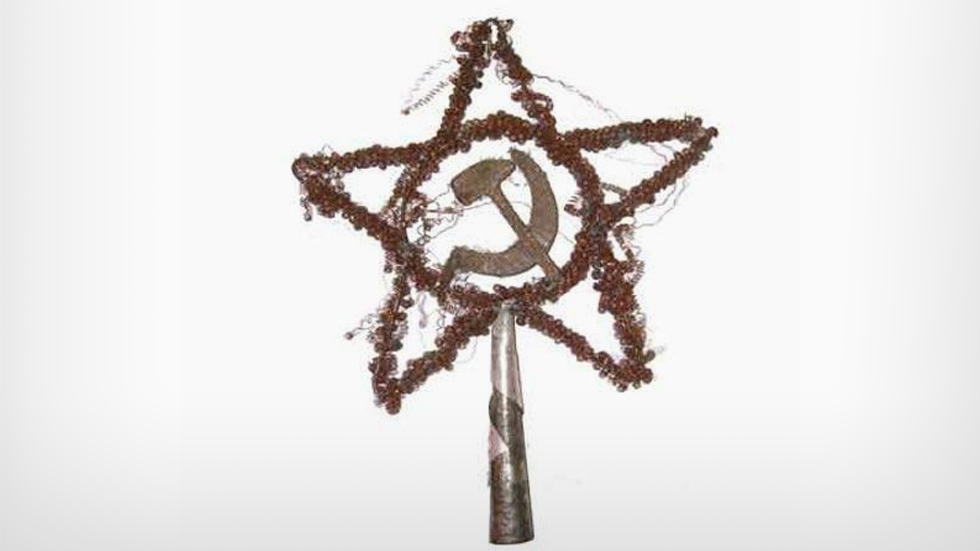
Factories repurposed scraps – wires, metal shavings, and defective parts – into decorations like snowflakes, flowers, and five-pointed red stars.
After the war, the production of ornaments resumed. The authorities no longer sought to create a “new Soviet person” and started to ease regulations on home aesthetics. This led to the emergence of a recognizable Soviet ornament style in the 1950s, featuring bright, colorful balls, pine cones, icicles, and fairy tale characters.
Why the Soviet look still divides Russians
Today, Russian people don’t have a single opinion about Soviet aesthetics. Some like monumental Brutalist architecture, the uniforms of Komsomol members, and Soviet automobiles. Even the drab Soviet panel buildings have their fans, who affectionately refer to them as “panelki.”
Images of the “Soviet future” remain particularly appealing; mosaics depicting cosmonauts and posters showcasing proud workers and soldiers continue to inspire people.
However, daily life during the communist era is generally viewed as outdated. Soviet interiors are often criticized for their clunky design, commonly dubbed “grandma’s renovation.”
Items from everyday life in the USSR only interest collectors and museums. However, there is one notable exception: Christmas tree ornaments. They aren’t just appreciated by the young and old alike – they have become a real trend.
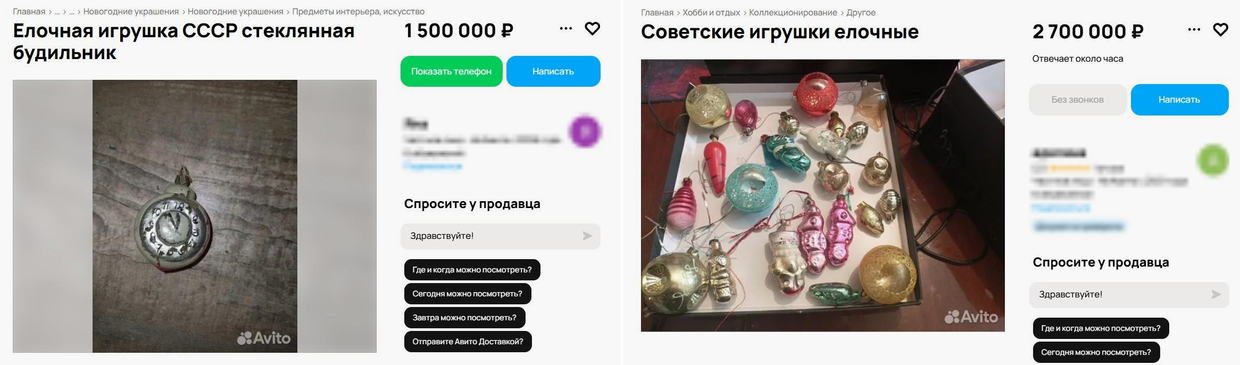
This year alone, demand for such ornaments surged 80%. Prices for rare sets and even individual ornaments can reach up to 1.5 million rubles ($19,000). Not only antique dealers but also fashionistas proudly showcase their vintage Christmas ornaments.
And it’s not just a matter of nostalgia.
Fashion, money, family
Vintage and retro trends are taking hold across Russia. While Soviet-era clothes, furniture, and appliances may not appeal to everyone, Christmas ornaments offer a taste of history without any discomfort. These aren’t modern copies, they are tangible pieces of the past that can be appreciated and used as intended.
The growing popularity of Soviet ornaments is also driven by their scarcity. The supply is limited: many ornaments have long been broken, while others lie forgotten in dusty boxes in attics and basements. The original production was never mass-scale, and a significant number of these ornaments were handcrafted, making them truly unique. Experts already recognize Soviet Christmas ornaments as valuable antiques.
Additionally, there has been a shift in attitudes toward the Soviet past. After the collapse of the USSR, discussions of life under communism – whether in film, media, or literature – became highly politicized. Some idealized this era, while others portrayed it as a dystopia. Debates grew heated, even among those who simply appreciated Soviet aesthetics.
Over time, even Russians with strong opinions about the USSR became weary of emotional arguments. In recent years, the focus has shifted from glorifying or condemning Soviet citizens to depicting their real lives. Amid all the inconveniences and shortcomings of Soviet life, there’s definitely a certain charm to it.
Finally, these ornaments bridge generational gaps. Not every family has heirlooms that survived the upheavals of the 1990s, but old ornaments can both evoke fond memories for older relatives and delight children.
Recently, Russians have started spending more time with their families. Despite a rise in individualism, there’s a desire to connect more with loved ones. This makes the idea of incorporating vintage ornaments into the family’s New Year celebration even more appealing.
The Democrats and Republicans initially worked together to release the files, until ‘politics as usual’ inevitably spoiled everything
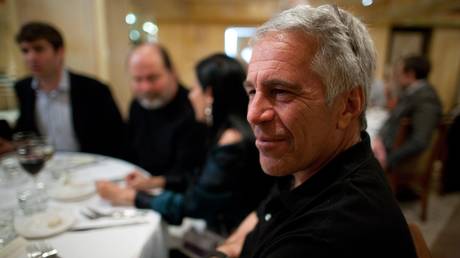
Across the United States, Democrats and Republicans are demanding that their leaders come clean with the Epstein files and the truth finally be told. What they are getting instead is a massive redaction campaign.
Not since 1998 with the Bill Clinton and Monica Lewinsky show trial has the American public been so incensed by a sex scandal like the one the disgraced financier Jeffrey Epstein personally directed for many years. Here is a once-in-a-lifetime opportunity to send not just one or two powerful ‘untouchables’ to prison for the worst crime imaginable – sexual abuse of a minor – but many dozens, possibly hundreds. In other words, a vast network of international power, wealth, and systemic abuse.
Yet today we are no closer to the truth as to the identities of the sick perpetrators. Under the bipartisan Epstein Files Transparency Act, the Justice Department was required to release all of its investigative material on Mr. Epstein by Dec. 19, though it was allowed to redact and withhold certain material in order to “protect the victims,” which is of course understandable. It also withheld materials that would “jeopardize a federal investigation.” Whether we’ll actually see a single suspect face trial is presently unknown, but the DOJ took full advantage of that loophole as 680 pages of the release were entirely redacted, which made the release practically redundant and senseless.
Were we the people once again expecting too much from the government? That’s very likely, but considering that we are talking about child abuse, even just a single redacted page would have appeared suspicious; hundreds of pages totally blacked out is completely unacceptable. After all, an investigation would not be hindered by the release of the identities of those individuals who had sexual relations with underage girls. The American people deserve better than this. The American people deserve the names of those pedophiles who are walking the streets free today.
In the beginning, President Donald Trump was of the opinion that such a mission was a cause worth pursuing. On the 2024 campaign trail, he pledged he’d have “no problem” releasing more files related to Jeffrey Epstein if elected. He even said he’d make public the late sex offender’s “client list” of those elite pedophiles who paid a visit to his notorious Little Saint James Island in the Caribbean. It is not difficult to imagine the nervous tremors that reverberated throughout the nation following that statement, and it could very well be the source of the ‘Trump Derangement Syndrome’ that has infected so many among the world’s top movers and shakers. It looked as though the MAGA movement would turn a deranged part of the establishment on its head.
Once in office, however, Trump, who has maintained his innocence throughout the saga, vacillated on the question of what to do with the files. He has gone from saying he would welcome the release of the documents to calling the whole scandal a “Democratic hoax.” As for an Epstein client list, his Attorney General Pam Bondi was on the record as saying it was in her possession, only to later deny the existence of a client list. This has led to both Democrats and Republicans asking what Trump was hiding, if anything.
What we know is that Trump was good friends with Epstein from the late eighties, but ended contact with the pedophile in 2004, four years before Epstein pleaded guilty to soliciting prostitution from a minor. This is where the plot thickens as a number of highly influential men, including Bill Gates, Larry Summers, and Andrew Mountbatten-Windsor (formerly Prince Andrew), continued their friendship with Epstein even after he had been publicly exposed as a child predator.
One political figure who appeared prominently in the latest file release was – yes, you guessed it – Bill Clinton, who also claims to have cut off relations with Epstein in 2005, years before child molestation charges were filed against the latter. This is where the political battle between the Democrats and Republicans has exploded and can expect to worsen over time. Clinton’s spokesperson Angel Ureña has accused the White House of using the former Democratic president as a scapegoat.
“The White House hasn’t been hiding these files for months only to dump them late on a Friday to protect Bill Clinton,” the spokesperson said in a statement on X.
“This is about shielding themselves from what comes next, or from what they’ll try and hide forever. So they can release as many grainy 20-plus-year-old photos as they want, but this isn’t about Bill Clinton. Never has, never will be,” the statement added.
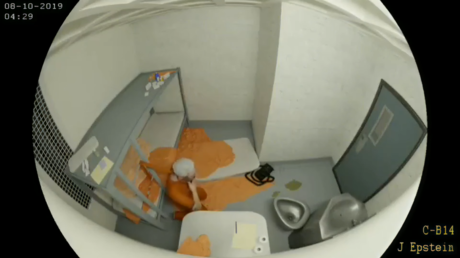
Despite the Democrats and Republicans initially working together to release the files, it was inevitable that ‘politics as usual’ would spoil the party. In fact, it is truly a spectacle to watch powerful, influential men doing everything possible – short of murder – to conceal their guilt in Epstein’s extensive pedophilia ring. Actually, scratch the murder part. Regardless of what the FBI would have us believe, there is simply no way that Jeffrey Epstein was able to commit suicide inside of his jail cell, which did not come specially equipped with convenient hooks in the ceiling from which to hang oneself. Prison cells are built specifically to be suicide proof.
But I digress.
It would be nice to think that there will be some sort of political price to be paid for these crimes against society’s most vulnerable segment, and that could very well happen in the 2026 midterm elections. Although we can expect there to be no smoking guns, no bombshell revelations, no crack-of-dawn arrests for the child molesters, there very well could be a political backlash against Trump and the Republican Party for keeping the country in the dark when it comes to Mr. Epstein and his massive closet of skeletons. A large part of that backlash could come from within MAGA itself, which had such high hopes for Trump cracking down on the sexual predators.
The political scion and BNP party head has arrived in a country torn by violence and ruled by an interim government ahead of elections
Tarique Rahman, the acting chairman of the Bangladesh Nationalist Party (BNP), which was in opposition during ex-Prime Minister Sheikh Hasina’s rule, has returned to Dhaka after nearly 17 years.
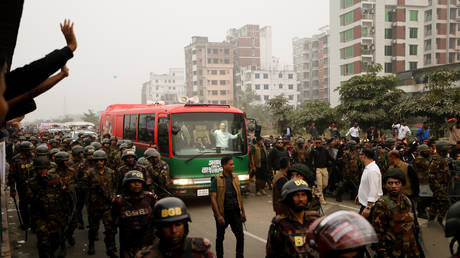
Rahman landed in the capital of Bangladesh on Thursday morning and was welcomed by massive crowds, with security tightened to unprecedented levels amid recent violence and lawlessness in the country.
Speaking from the stage, 61-year-old Rahman called for unity among various communities and political forces and emphasized the goal of creating a safe Bangladesh.
Both his parents once held top government roles. His mother, former Bangladeshi Prime Minister Khaleda Zia, is currently being treated in a hospital in Dhaka.
Tarique’s father Ziaur Rahman, the sixth president of Bangladesh, was assassinated by members of the country’s army on May 30, 1981. Rahman fled his homeland in 2008 over what he called politically motivated persecution and took up residence in London.
Rahman is now projected to be the key contender in the upcoming elections. An interim government, which has been in power since the ouster of ex-Prime Minister Hasina in August 2024, has delayed the announcement of elections for months and has finally set the date for the polls as February 12, under pressure from various political forces. The interim government is led by Nobel laureate Muhammad Yunus.
Hasina’s party, the Awami League, has been barred from contesting the election.
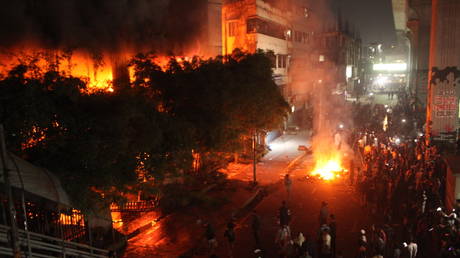
Bangladesh has seen a wave of violence in recent days following the death of Sharif Osman Hadi, one of the most prominent leaders of the 2024 uprising, who was shot by masked assailants in Dhaka earlier this month. Following his death, protesters took to the streets throughout the country, demanding the arrest of the assailants, chanting anti-India slogans and rioting. Protesters attacked and set fire to the offices of two prominent Bangladeshi newspapers, The Daily Star and Prothom Alo.
Protests escalated further when a Hindu factory worker was lynched by a mob and later set on fire in Mymensingh. This tragedy heightened diplomatic tensions between New Delhi and Dhaka, with both countries summoning each other’s envoys. On Wednesday, a bystander was killed in Dhaka when a crude bomb was hurled from an overpass and exploded.
Russia’s president sent a telegram to North Korea’s leader, stating 2025 held “special significance” for their countries’ relationship
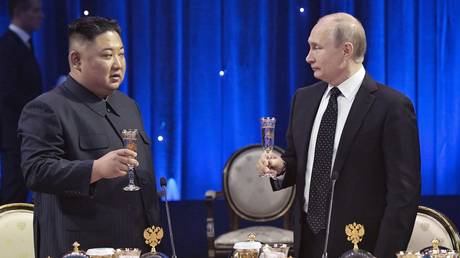
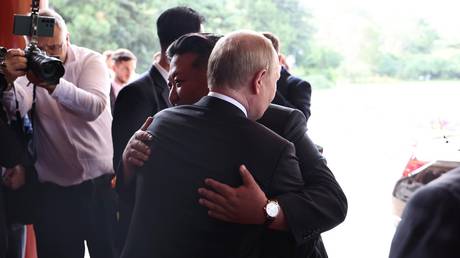
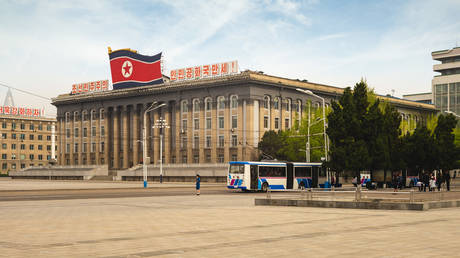
Russian President Vladimir Putin has sent New Year greetings to North Korean leader Kim Jong Un, hailing the past year as one of “special significance” for bilateral relations between Moscow and Pyongyang and a deepening strategic partnership.
In a telegram published by the Korean Central News Agency (KCNA) on Thursday, Putin said the relationship will “contribute to establishing a just order of the multi-polar world.”
“The past one year was of special significance in the relationship between Moscow and Pyongyang,” Russia’s president said, citing Moscow’s appreciation for North Korean military assistance in repelling a large-scale Ukrainian incursion in Kursk Region.
The “heroic entry” of North Korean soldiers into battle and the subsequent work of North Korean combat engineers had “clearly proved the invincible friendship and militant fraternity” between the two countries, Putin said.
The Russian military reported in April that Ukrainian troops had been completely expelled from Kursk Region, while acknowledging the role of North Korean troops in the operation for the first time. Russia’s authorities have vowed to erect a monument in Moscow to the soldiers deployed by Pyongyang that were killed defending Russian territory.
Putin also said that, thanks to joint efforts, the provisions of the “historic” treaty on comprehensive strategic partnership have been “fulfilled in a planned way.” Signed in June of 2024, the landmark agreement includes a mutual defense clause, stipulating that if either side is subject to an “armed invasion,” the other will “provide military and other assistance… without delay.”
Russia’s leader has expressed confidence that Moscow and Pyongyang will continue their constructive cooperation, taking note of strengthening ties in political, trade, economic, human and other fields.
The revision reportedly aims to protect children rather than target sexting adults
China will expand a ban on sharing obscene materials to include content sent via phone and online messaging apps starting next year.
According to the revised law, anyone “disseminating obscene information using information networks, telephones, or other communication tools” will face up to 15 days in jail and a fine of up to 5,000 yuan ($711). Penalties will be higher if the content involves children.
The wording of the law has led to concerns from media and social networks as to whether it could be applied to private sexually explicit messages between adults, such as sexting.
However, according to multiple legal experts cited by Chinese state media, the legal changes will not affect one-on-one private communications. They argue that the revisions reflect technological development, increasing the maximum fines, while leaving detention periods unchanged.
“China has mature standards and procedures for identifying obscene materials. It is critical to clarify that ‘obscene’ does not equal ‘indecent’,” China Daily cited Ji Ying, an associate professor of law at the University of International Business and Economics in Beijing, as saying.
Several legal experts explained that ‘indecent’ is a subjective term that does not necessarily meet the legal threshold of obscenity, which requires judicial determination and must meet clear statutory standards.
Zhu Wei, an associate professor at China University of Political Science and Law, told the outlet that the law is designed to protect minors and safeguard online ecosystems. He went on to note that, under the law, Chinese authorities require warrants and official investigation documents to access data on personal devices.
Several cases that preceded the expanded ban have reportedly involved mass sharing of explicit content.
In one case, three administrators of a group on the Chinese QQ platform were found guilty of failing to prevent the spread of hundreds of explicit videos, Global Times reported on Tuesday.
In another case from May, a man was convicted of rape, child molestation and spreading obscene materials after it was discovered that he sent explicit videos to more than 100 primary and middle school girls.
China has long banned pornography. Enforcement has largely focused on production, distribution and public sharing, rather than private consumption.
The revised law is set to take effect on January 1.
Laurent Vinatier received a three-year sentence last year for failing to register as a foreign agent
Moscow has reached out to Paris with a proposal regarding a French citizen jailed in Russia, Kremlin spokesman Dmitry Peskov said on Thursday.
Laurent Vinatier was sentenced to three years in prison in 2024 for failing to register as a foreign agent while collecting information on the Russian military.
During last week’s Q&A session, French broadcaster TF1 journalist Jerome Garro asked Russian President Vladimir Putin if he could pardon Vinatier. Putin replied that he was unaware of the case but promised to look into it and “take all the necessary efforts to do that” if Russian law allows it.
On Thursday, Peskov said he called Garro and filled him in on a proposal that Moscow had made to Paris with regard to the case. “The ball is now in France’s court,” the spokesman said without providing any details, calling the issue “sensitive.”
Vinatier worked for the Swiss NGO ‘Center for Humanitarian Dialogue’ as an adviser on Russia and Eurasia. He was arrested in June 2024 after the Russian Ministry of Justice designated him a foreign agent. Prosecutors accused him of “purposefully” collecting information on Russia’s activities in the “military and military-technical” fields for several years, with no intent to register his activities with the relevant authorities. Vinatier pleaded guilty to two felony charges.
Russian media reported in August that an espionage case has been opened against Vinatier. According to his lawyer, he could face a new trial at the end of February 2026. A conviction for espionage carries a maximum sentence of 20 years in prison.
Kim Jong-un has inspected the vessel and vowed to accelerate naval development
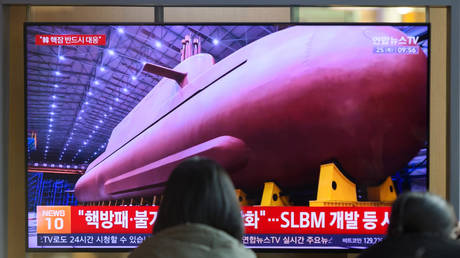
Pyongyang has shared new images of its first nearly completed nuclear-powered strategic missile submarine as North Korean leader Kim Jong-un personally inspected the vessel.
Kim hailed its construction as an “epoch-making crucial change,” the Korean Central News Agency (KCNA) reported on Thursday.
During his visit, Kim oversaw the construction of the 8,700-tonnage strategic guided missile submarine and vowed to continue to equip the DPRK’s navy with nuclear missiles.
Kim linked the need to bolster the country’s offensive power with South Korea’s plan to develop its own nuclear submarine, which has recently been approved by the US. The North Korean leader claimed Seoul’s plans violate Pyongyang’s security and maritime sovereignty.
He warned that North Korea’s enemies will be “forced to pay a dear price when they violate the security of the DPRK’s strategic sovereignty” and will face a “merciless retaliatory attack if they try to select a military option.”
Supreme Leader of North Korea Kim Jong Un personally supervised the on-site construction of the new 8,700-ton nuclear-powered strategic guided missile submarine. pic.twitter.com/0h1giivkPy
The development of the new submarine comes amid heightened tensions on the Korean peninsula, with Pyongyang accusing the US, South Korea, and Japan of undermining its national security and destabilizing the region by attempting to create an “Asian version of NATO” and conducting joint military exercises.
Seoul and Washington have repeatedly insisted on the denuclearization of the peninsula. In October, South Korean President Lee Jae Myung also urged Beijing to play a “constructive role” in establishing peace and finding “a substantive solution to the Korean Peninsula nuclear issue.”
Pyongyang, however, has stated that its nuclear armed forces will “exist forever” as a means of defending its sovereignty, territorial integrity and fundamental interests, dismissing denuclearization as a “pipedream.”
The explosion took place in an area of Gaza fully controlled by the Israeli military, the Palestinian group has said
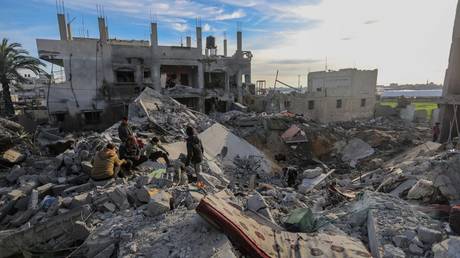
Hamas has denied responsibility for a bomb blast that struck an Israeli armored vehicle in Rafah, a city in southern Gaza, and has asked the international community to put pressure on Israel to comply with a ceasefire agreement.
The US-brokered ceasefire, which took effect in Gaza on October 10, called for Israeli forces to pull back from parts of the enclave and for Hamas to free the last 20 remaining Israeli hostages in exchange for about 2,000 Palestinian prisoners.
The statement came after the IDF reported that an officer had been injured by an explosion in Rafah. Israeli Prime Minister Benjamin Netanyahu blamed Hamas for the explosion, but the militant group countered that it had occurred in an area entirely controlled by the Jewish State’s defense forces, where “no Palestinians are present.”
Hamas stated in a Telegram post on Wednesday that remnants of war were a known risk in the region, adding that they “bear no responsibility for any of these incidents since the ceasefire agreement came into effect,” particularly regarding “explosives planted by the occupation itself in the area.”
Hamas urged Israel to adhere to the ceasefire agreement and “refrain from fabricating excuses to escalate and undermine the truce,” reaffirming its commitment to the terms.
Senior Hamas official Mahmoud Mardawi also stated on X that he believes the Rafah explosion had resulted from unexploded ordnance left over from the conflict. Netanyahu, however, used the incident to argue that Hamas “has no plan to disarm,” a core requirement of the truce, and warned that “Israel will respond accordingly.”
Hamas called for pressure to force Israel to implement signed agreements. It said West Jerusalem must “refrain from fabricating justifications” for continued escalation and attempts to “sabotage the agreement.”
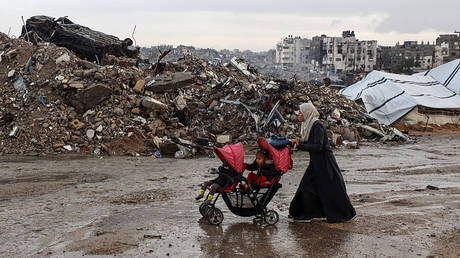
Despite the ceasefire, Israeli airstrikes have continued, and humanitarian aid has lagged, worsening conditions in Gaza, according to UN agencies and regional mediators. Palestinians have accused West Jerusalem of violating the agreement.
Israel launched its military campaign in the Palestinian enclave in response to a surprise Hamas attack in October 2023, in which 1,200 people were killed and 250 others were taken hostage.
The Hamas-run Gaza health authorities say the Israeli operations have left over 70,000 Palestinians dead.
The suspect had stashed over 80kg of explosives and was killed after resisting arrest, according to the security agency
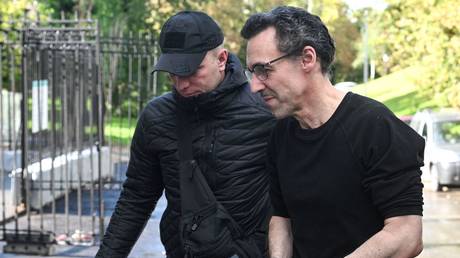
A Ukrainian agent who planned terrorist attacks in Russia has been shot dead while resisting arrest, the Federal Security Service (FSB) reported on Thursday.
The suspect, born in Soviet Ukraine in the late 1970s and living in Kaluga, Russia, was preparing bomb attacks against a natural gas storage facility and a defense plant parking lot, the FSB said. Acting on orders from Ukrainian special services, he had allegedly produced about 80kg of homemade explosives for the plot.
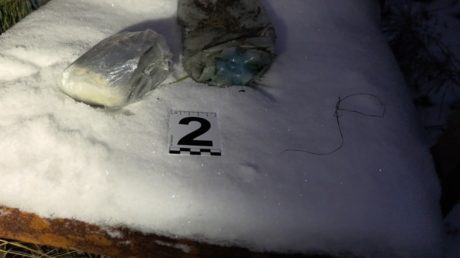
The agency reported that the suspect had also retrieved 300g of military-grade plastic explosives, fuses, and a handgun from a stash prepared by other Ukrainian assets. He shot the firearm at officers trying to apprehend him and was killed by return fire.
The FSB released footage showing the individual’s body, his bombmaking arsenal, and the recovery of several plastic bottles from a stash, presumably used to hide the home-made explosives.
Earlier this week, the FSB reported foiling a Ukrainian terrorist attack in Tyumen Region in Western Siberia. The suspect in the case was also killed after being caught retrieving bomb components.
Russian officials have repeatedly accused Kiev of escalating bomb attacks inside Russia due to its failure to achieve victories on the battlefield. Ukrainian forces have suffered several setbacks in Donbass in recent months amid reported shortages of reinforcements.