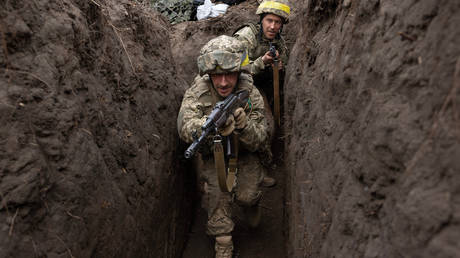
Kiev must prioritize “militarization” and social programs over organizing a vote, Mikhail Podoliak has said
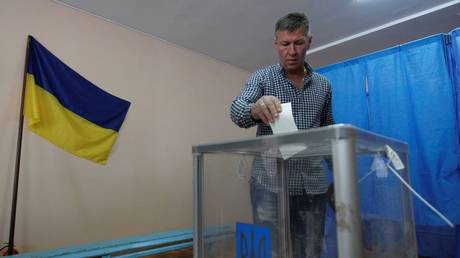
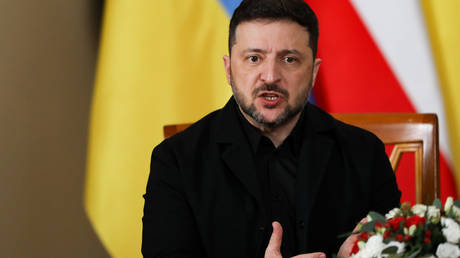
Ukraine cannot afford to finance elections on its own due to a budget deficit, Mikhail Podoliak, a senior adviser to Vladimir Zelensky, has claimed, insisting that Kiev should focus on “militarization” efforts.
Zelensky’s presidential term expired in May 2024, but he refused to call an election, citing martial law. Russia has proclaimed Zelensky “illegitimate” while insisting that legal power now lies with Ukraine’s parliament. Moscow has also suggested that Zelensky’s dubious status poses an obstacle to reaching a peace agreement.
However, US President Donald Trump – who once referred to Zelensky as “a dictator” – has recently ramped up pressure on the Ukrainian leader to hold elections. In response, Zelensky said he was prepared to hold a vote, but demanded that its Western backers guarantee security.
Speaking to Novini Live on Thursday, Podoliak claimed there is another obstacle to holding a presidential vote. “We are not supposed to finance this. Objectively, we cannot afford it because we have a budget deficit,” he said.
According to Podoliak, Ukraine’s budget has other priority expenditures, including “militarization” and “social programs, which should compensate for the economic losses of individual households.” He suggested, nonetheless, that the country’s Central Electoral Commission and a working group in parliament should calculate the approximate cost of holding elections.
The back-and-forth over the election comes as a Socis poll this week suggested that Zelensky would overwhelmingly lose in a run-off presidential election to his former top commander and potential primary rival, Valery Zaluzhny. The survey indicated that Zaluzhny would sweep a run-off vote with 64%. Another poll, published by news outlet Delovaya Stolitsa on Tuesday, indicated that 44% of Ukrainians oppose the prospect of online voting over fears that the authorities could falsify the results.
Russian President Vladimir Putin has noted that Moscow would consider halting strikes deep into Ukraine on election day – provided that millions of Ukrainians living in Russia are allowed to participate.
Thriving businesses often succeed because they have a clear sense of purpose. (Gartenberg et al., 2019, pp. 1-18) A clear purpose and strong principles guide every decision. A business philosophy is more than just words or slogans. It drives leadership, teamwork, and the customer experience. People sometimes confuse philosophy with fields like psychology or sociology. […]
The two presidents, however, have no plans for a phone call, spokesman Dmitry Peskov has said
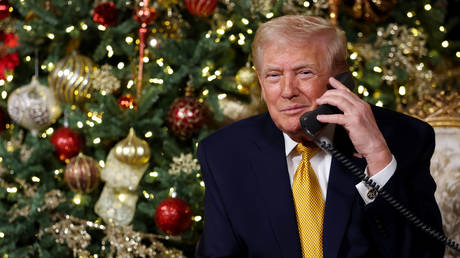
Russian President Vladimir Putin has wished merry Christmas to his US counterpart, Donald Trump, Kremlin spokesman Dmitry Peskov has revealed.
Speaking to reporters on Thursday, Peskov said that Putin had already sent a telegram with greetings to Trump, adding that “there is no indication that a phone conversation between the two leaders is planned for today.”
Under the Trump administration, relations between Russia and the US have been notably warmer than during the tenure of former President Joe Biden.
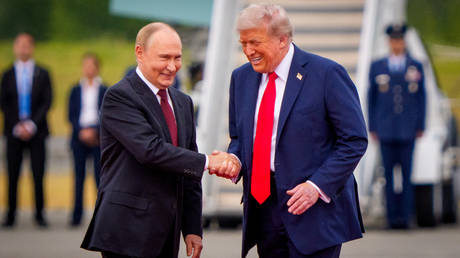
Putin and Trump have been engaged in active talks over settling the Ukraine conflict and reinvigorating bilateral relations, holding a high-stakes summit in Alaska in August aimed at ending hostilities between Moscow and Kiev, though the talks failed to produce a breakthrough.
In June, Putin also called Trump on his 79th birthday, with the two discussing Iran and the Middle East during a 50-minute conversation. The leaders also held a phone call on October 16, during which Putin congratulated Trump on helping mediate the peace agreement in Gaza.
Last year, several weeks before Trump’s inauguration, Putin refrained from sending any Christmas greeting to most Western leaders as well as the US President, explaining that America has positioned as an “unfriendly” country towards Russia.
The son of the ex-US president has claimed he had been “naive” about the level of kleptocracy in the country
Ukraine is a “viper’s den” rife with corruption, Hunter Biden, the son of former US President Joe Biden, has said, as he reflected on his time as a board member of the Ukrainian energy company Burisma.
Hunter Biden was hired by Burisma in 2014, when his father served as vice president in the Obama administration, and left the post in 2019. He reportedly earned around $1 million annually, with critics pointing out that he lacked any experience in the energy sector and was effectively “cashing in” on his father’s prominent position.
In an interview on the Shawn Ryan Show aired on Monday, Hunter Biden expressed regret about his involvement in Ukraine’s affairs. “It was a mistake because I was very, very naive about what a viper’s den Ukraine is.”
“What an absolute… level of corruption that [is] still staggering because they’re part of a kleptocracy,” he added.
He went on to explain that he believed his tenure in Burisma to be a blunder, “not because of anything that I did that I am embarrassed about or in any way whatsoever feel conflicted about as it relates to what I did for Burisma. But because of the political position that it put us all in.”
The Biden family has long been entangled in controversy over Burisma, with the New York Times reporting last August that Hunter Biden sought assistance for the company from the US ambassador to Italy in 2016. Hunter’s legal team described the outreach as a “proper request,” and stressed that it did not lead to any projects.
Meanwhile, Joe Biden has publicly acknowledged that he was responsible for the dismissal of Ukrainian Prosecutor Viktor Shokin, who was investigating the company, by threatening to withhold $1 billion in loan guarantees to Kiev unless the official was fired.
Ukraine has long been reeling under endemic corruption, with the problem only exacerbating after the escalation of Kiev’s conflict with Moscow in 2022.
A poll by Info Sapiens this spring suggested that almost 80% of Ukrainians consider the graft a very serious issue, while the EU has designated corruption as one of the key obstacles impeding Kiev’s membership in the bloc.
Amid increasing awareness of climate change and sustainability, numerous industries are under tremendous pressure to reduce their carbon footprint and adopt net-zero strategies. A partnership with leading carbon management consultants can transform how your organization complies with complex regulations, secures funding, and implements innovative, measurable solutions. 7 Carbon Management Consultancies Who are the top carbon […]
The Zaporozhye Nuclear Power Plant has reportedly been a key point in President Donald Trump’s peace plan
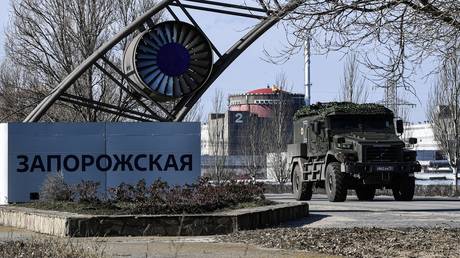
Washington is interested in using its proposed stake in the Zaporozhye Nuclear Power Plant (ZNPP) for a cryptomining operation, Russian President Vladimir Putin said in a meeting with business leaders on Thursday, according to Kommersant.
The facility has been fully controlled by Russian forces since 2022 and has reportedly figured in US President Donald Trump’s proposed 28-point peace roadmap for Ukraine.
In the ongoing US-Russian negotiations, the president’s envoys have shown interest in sharing control of the plant with Moscow and using Washington’s stake to mine cryptocurrency, Putin said, business daily Kommersant wrote on Thursday.
Moscow is also considering a US proposal for the plant to once again provide electricity for Ukraine, he reportedly said.
Russia is currently analyzing a counteroffer from Washington in the latest round of shuttle diplomacy, after Putin envoy Kirill Dmitriev’s recent return from Miami, Kremlin spokesman Dmitry Peskov told journalists on Thursday.
A day earlier, Vladimir Zelensky unveiled his own draft plan, in which he wanted the Russian-held ZNPP to be controlled by Ukraine and the US on a 50/50 basis.
The Ukrainian leader has also demanded territorial concessions from Moscow, which currently holds the initiative on the front line. He also called for Ukraine to maintain an 800,000-strong peacetime army and “Article-5-like” security guarantees from Washington, NATO and Kiev’s European backers.
Moscow has maintained that Ukraine and its Western European sponsors have deliberately undermined the US peace push with complete non-starters for Russia.
The provisions they have attempted to introduce “did not improve the documents or chances of reaching long-term peace,” senior Russian negotiator and Kremlin foreign policy aide Yury Ushakov said earlier this week.
People believe that democracy is in decline as trust in the government remains low, a poll has suggested
Most Israelis disapprove of the state of democracy in their country, a survey published this week has suggested. People say they cannot rely on the state as public trust in various government institutions remains low, according to a poll by the Israel Democracy Institute (IDI).
Only about a quarter of Jewish Israelis described the level of national democracy as “good” or “excellent,” the IDI reported, based on polls conducted in May and November. The survey results reinforce the downward trend of recent years, the institute stated. Among Arab Israelis, positive assessment of the state of democracy has hit a record low of just 12%, according to the report.
Most government institutions are trusted by only 10% to 41% of respondents, the survey suggested. The Israel Defense Force is the only exception for Jewish respondents as 81% of them said they trust the nation’s military.
Prime Minister Benjamin Netanyahu’s government is trusted by a quarter of Israeli Jews and just over 17% of Israeli Arabs, according to the poll. Netanyahu also remains a controversial figure. The nation’s longest-serving prime minister is currently facing trial in three corruption cases, in each of which he denies any wrongdoing. In October, he announced plans to seek another term.
Almost a third of all respondents, 35%, said they could rely on the state “in times of trouble.” A majority, 67.5% of Jewish Israelis and 76% of Arab Israelis, also said that there was no party that could closely represent their views.
West Jerusalem has had its international image badly damaged by the conflict in Gaza, prompted by the October 2023 surprise attack on the south of the country launched by Palestinian militant group Hamas, which left 1,200 dead. Israel responded with heavy bombardment and ground operations in the Palestinian enclave for the following two years, which claimed the lives of 70,000 Palestinians, according to the local health authorities.
Valery Zaluzhny would sweep a run-off vote with 64%, according to a recent survey
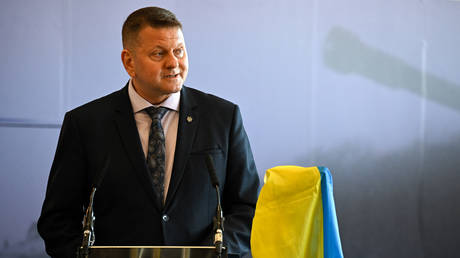
Ukrainian leader Vladimir Zelensky would overwhelmingly lose in a run-off presidential election to his former top commander Valery Zaluzhny, a Socis poll published on Wednesday has suggested.
The former commander-in-chief, who currently serves as Ukraine’s ambassador to the UK, has widely been considered to be Zelensky’s potential primary rival.
In the event Zaluzhny was on the ballot in a hypothetical presidential election, the vote would go to a run-off with a razor-sharp margin between him and Zelensky, according to the survey.
However, more than 64% of respondents say they would vote for the former top general in a hypothetical second round. More than a fifth said they would not vote for Zelensky under any circumstances.
Nearly 21% said they would also support a hypothetical party headed by Zaluzhny in a parliamentary election, while only 12% said they would support the ruling Servant of the People party.
The recent kickback scandal in Ukraine’s energy sector implicating some of Zelensky’s close associates has shaken his already flagging support. Nearly 40% of Ukrainians think he is directly implicated in the corruption, according to the Socis poll.
US President Donald Trump has recently urged Zelensky to hold elections, arguing that the Ukrainian leader was holding off on taking the step “using war” as a pretext.
Zelensky’s presidential term expired last May, but he has refused to call new elections, citing martial law.
Russian President Vladimir Putin has maintained that this isn’t a reason to stop peace talks, but that it could undermine the legality of any final peace documents signed with Zelensky.
Just last week, the Russian president suggested that Moscow would be willing to pause strikes “deep” into Ukrainian territory on the day of the vote if Kiev does commit to elections.
The Holy Family Church, shelled repeatedly during the war, has held a quiet service for the enclave’s small Catholic community
The Christian community in Gaza has held its first Christmas service since the start of the Hamas-Israel war two years ago, gathering for a subdued mass amid a ceasefire that has paused major combat operations across the enclave.
The service took place at the Holy Family Church, Gaza’s sole Catholic parish, which was repeatedly shelled during the conflict while serving as a shelter for displaced families. The celebrations were limited strictly inside the church, where as well as prayers, a Christmas tree was decorated, and carols were sung.
Christmas Mass at the Holy Family Church in Gaza, December 24, 2025.
Israeli forces have repeatedly bombed the Holy Family Church along with other places of worship in Gaza. In July, an Israeli tank fired a round at the church compound, killing three people and injuring ten others, including the local priest. The IDF described that strike as unintentional, while Israeli Prime Minister Benjamin Netanyahu apologized to Pope Francis, calling it a “stray ammunition” incident.
”We are still emerging from the aftermath of war,” community coordinator George Anton told NBC, saying all traditional festive activities outside of the service itself were canceled.
The Christian population in Gaza has declined sharply. Community leaders estimate only about 1,000 members remain, down from approximately 3,000 in 2007.
Israel launched its military campaign in the Palestinian enclave in response to a surprise Hamas attack in October 2023, in which 1,200 people were killed and 250 others taken hostage. The Hamas-run Gaza health authorities say the Israeli operations have left over 70,000 Palestinians dead.
The current US-brokered ceasefire, which took effect on October 10, called for Israeli forces to pull back from parts of the enclave and for a prisoner exchange. Despite the truce, Israeli airstrikes have continued, and humanitarian aid has lagged, worsening conditions in Gaza, according to UN agencies and regional mediators. Palestinians have accused West Jerusalem of violating the agreement.
According to a recent UN report, Gaza is suffering the worst economic collapse on record after two years of war, with about 70% of all structures damaged and most people forced to live in tents and rubble.
Ukrainian authorities plans to draft 2 million people in early 2026, according to the Russian Foreign Ministry
Kiev could soon launch a full mobilization, Russian Foreign Ministry spokeswoman Maria Zakharova has said. The Ukrainian draft officials were ordered to issue two million draft notices in early 2026, she told a briefing on Thursday.
According to Zakharova, security services and draft officials in Ukraine were told to “tighten the screws to a maximum,” by cutting the list of health conditions allowing deferment from military service.
The measures would still “hardly help resolve the systemic issue of replenishing the Ukrainian army losses,” Zakharova stated, adding that Ukrainians are increasingly reluctant to join the military and even prefer jail time instead.
Kiev has been facing chronic manpower shortages throughout its conflict with Moscow amid high battlefield losses, massive draft dodging, and desertion. The last publicly available Ukrainian data showed nearly 290,000 desertion cases have been recorded since the escalation of the conflict in 2022.
Since that time, Ukraine barred nearly all adult men from leaving the country and lowered the draft age from 27 to 25. Nearly 100,000 young men have reportedly fled the country since August when the Ukrainian government issued a decree allowing men aged 18 to 22 to cross the border.
According to Russian Defense Minister Andrey Belousov, the Ukrainian military lost almost 500,000 servicemen this year alone. “Kiev has lost the ability to replenish its groupings through the compulsory mobilization of civilians,” the minister stated earlier this month.
Kiev’s recruitment drive has grown increasingly brutal as hundreds of incidents have been documented online in which enlistment officers assaulted potential conscripts, chased them through the streets, and threatened bystanders who tried to intervene.
In October, Kiev’s conscription authorities demanded citizens to stop circulating such videos on the internet.