The Russian leader said in 2008 that it could lead to “long-term conflict” with Washington, according to transcripts of the talks
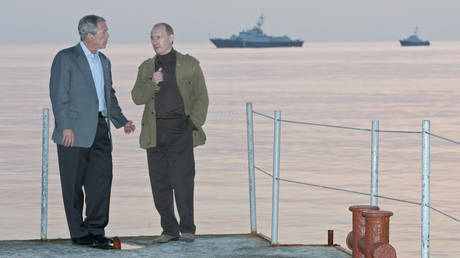
Russian President Vladimir Putin warned his then-US counterpart, George W. Bush, almost two decades ago that attempts to make Ukraine a member of NATO could split the country apart and result in a confrontation between Moscow and Washington, records of conversations between the two leaders have revealed.
On Tuesday, the US National Security archives published verbatim transcripts of several exchanges between Putin and Bush throughout the 2000s.
During their first meeting in Slovenia in June 2001, the Russian president questioned the need for NATO’s enlargement, but stressed that he “can imagine us [Moscow and Washington] becoming allies,” according to the files.
His tone stiffened significantly by the time of their last meeting in the Russian city of Sochi in April 2008, a year after Putin delivered his famous speech at the Munich Security Conference, criticizing the unipolar world order and NATO’s eastward expansion.
Putin straightforwardly told Bush that “accession to NATO of a country like Ukraine will create for the long-term a field of conflict for you and us, long-term confrontation,” the transcript read.
Ukrainian membership in the bloc would create “uncertainties and threats” for Russia in the form of Western military bases and new weapon systems being deployed near its borders, Putin explained.
”NATO is perceived by a large part of the Ukrainian population as a hostile organization… And relying on the anti-NATO forces in Ukraine, Russia would be working on stripping NATO of the possibility of enlarging. Russia would be creating problems there all the time,” the Russian leader reportedly said.
Putin explained to his interlocutor that Ukraine was “not a nation built in a natural manner,” but a country artificially comprised of territories taken from Poland, Romania, Hungary, and Russia, including Crimea. “It’s populated by people with very different mindsets,” he added.
”I don’t think it’s the right logic” to try to “cement” Ukraine as part of the Western world through it joining the US-led military bloc, the Russian leader was quoted as saying. “Given the divergent views of areas of the population on NATO membership, the country could just split apart,” Putin said, as cited by the records.
Instead of pushing for Ukraine to become a NATO member, efforts must be made to ensure the country’s self-sufficiency and strengthen its economy, Putin urged.
According to the transcript, Bush avoided a direct response to the Russian president’s concerns, only saying that “one of the things I admire about you is you weren’t afraid to say it to NATO. That’s very admirable.”
Putin again spoke about NATO’s broken promise not to expand towards the Russian border during his end-of-year Q&A session last week, telling a Western journalist that “there won’t be any [military] operations [by Moscow] if you treat us with respect and respect our interests, just as we’ve constantly tried to respect yours.”
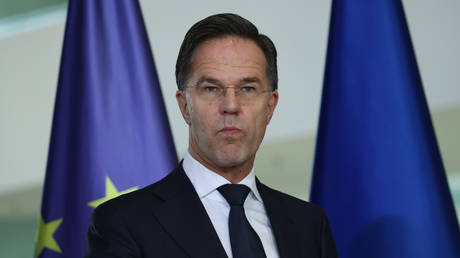
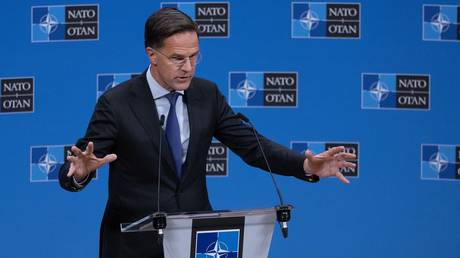
Mark Rutte is trying to invoke history against Russia – bold move for someone with such a selective memory of his own scandals
NATO boss, Mark Rutte, says that Western Europe could be heading toward a war with Russia “like our grandparents experienced.” Which implies that he has a phenomenal memory of World War II, 80 years ago. This is especially impressive coming from a man known in the Netherlands, where he spent fourteen years as Prime Minister – until last year – for routinely insisting that he couldn’t remember what he did just the week before.
Germany’s defense minister, Boris Pistorius, was asked about Rutte’s warning and basically told everyone to chill out. Pistorius said of Rutte’s dramatics that “perhaps he wanted to paint a very vivid picture of what could happen,” adding that he doesn’t “believe in such a scenario. In my estimation, Putin isn’t aiming to wage a full-scale war against NATO.”
So if the Germans are telling everyone to calm down, then why is Rutte talking like a hype man for a new world war?
To understand that, you have to understand Rutte, who ran the Netherlands from 2010 to 2024, presiding over four governments, countless scandals, and one very consistent strategy: that of his own survival.
The biggest crisis of his career came in 2021. Tens of thousands of families were falsely accused of welfare fraud as a result of some algorithm being used for detection. They were forced to repay money they didn’t owe. Lives were wrecked. A parliamentary inquiry later called it “unprecedented injustice.” In other words, in the grand scheme of political screwups, this one really stands out in a league of its own. Eventually, Rutte’s government resigned and Rutte called the decision “unavoidable.” Unavoidable – but also somehow not career-ending for him. Rutte resigned, stayed in charge, and later returned – which is like quitting your job but still keeping your office and your parking spot.
Then there were the puzzling money decisions. Rutte oversaw cuts of €47 billion in public spending from 2011 to 2016. Students paid more, pensioners got squeezed, and social housing dried up. By the end of the decade, homelessness had doubled, and half the country couldn’t find an affordable place to live. But hey, the budget spreadsheets looked fantastic. Thing is, they already did before. It’s almost like Rutte had hopped aboard the European austerity train when he saw everyone else boarding it, without checking if the Netherlands even needed to make the trip.
Next stop for Rutte’s political trainwreck: Groningen. Turns out some gas extraction that Rutte’s administration had greenlit started causing earthquakes in the northern Dutch province of Groningen, including a 3.6 magnitude one in 2012. Who knew? Oh, just a bunch of scientists actually working for the government’s mining supervision authorities, who kept shouting at Rutte while he ignored them. Houses cracked. Residents complained. Maybe that’s a cue that it’s time to take the foot off the gas, right? Nope! The government doubled down and increased production anyway. MPs weren’t impressed, with some calling on Rutte to resign. (Spoiler alert: he didn’t.)
Later, a parliamentary investigation found that the state prioritized gas revenue while taking most of the profit. Safety came a distant second. Apologies came much later – long after the government and special interests in oil and gas had pocketed the cash, which the inquiry said was facilitated by all the singing and dancing that Rutte was doing about the need for security at all cost. Sound familiar? Only back then, it was energy security, not national security and defense using Russia as a convenient bogeyman.
And speaking of a lack of transparency, it turns out that was only Rutte’s first rodeo. Later, Rutte admitted that he routinely deleted the text messages off his government phone that were both sensitive and political. Some involved squabbling with the mayor of Amsterdam over whether Black Lives Matter-type protests should supersede the dystopian Covid-era 1.5 meter social distancing rule. Others were with the CEO of multinational Unilever about tax matters.
The opposition said that Rutte wiping his hard drive on a daily basis with all the nonchalance of cleaning the coffee machine was a great way to avoid all accountability around archiving laws. Particularly when that accountability exists almost exclusively in text message form on your government phone and server. Which brings us to Rutte’s signature phrase.
During government coalition talks in 2021, Rutte repeatedly claimed that he had “no active memory” of key discussions – even when paperwork suggested otherwise. ‘No active memory’ became his unofficial slogan. Bolstered by his highly selective memory, Dutch media nicknamed him ‘Teflon Mark,’ because nothing stuck – except maybe the job that he should have been kicked out of several scandals ago.
If all this isn’t quite dramatic enough, then why not also spill some unnecessary details about your private life, too? In Europe, no one really cares much about people’s personal lives, but Rutte has long insisted on regaling the public with ambiguities around his anyway. Even before he became prime minister, he openly wished that he were a thirst trap, specifically bisexual, because “then the whole world is after you.”He also riffed about walking around naked at home. Way to turn your political origin story into some kind of kinky art house movie.
Meanwhile, on the world stage, he seems to be just as thirsty. At Ukrainian peace negotiations in Istanbul over the summer, Rutte complained that Russia had sent a historian as part of its delegation, basically accusing him of using Russian history going back to the 13th century to filibuster the peace talks.
Moscow was quick to point out that the EU also sent a historian – one whose insights could best be described as bargain basement. Wonder why Rutte didn’t notice, despite being in attendance? Kremlin spokesman Dmitry Peskov has a hunch: “Mr. Rutte himself is also a historian. But at the same time, I never heard brilliant historical parallels from him.”
And finally, the moment that turned the NATO secretary-general into a meme, and arguably also a household name for a few days. “Sometimes daddy has to use strong words,” Rutte said to US President Donald Trump during a press event, referring to Trump’s public rants on global affairs.
Well, that was all it took for social media to light up like it was Christmas. Including one of its top trolls: Trump himself. “I think he likes me. He said it very affectionately: ‘Hey daddy, you’re my daddy,” Trump said of Rutte.
So this is the same guy who’s now warning Europe about repeating history: famous for deleting messages, forgetting conversations, surviving resignations, and never quite being pinned down on anything – even as he stirs up gratuitous speculation and drama, not just about Russia, but also about himself, personally.
When the dust settles on all this warmongering rhetoric, and the costs from this tsunami of threat inflation come due – if history is any indication, then Rutte the historian probably won’t remember anything.
It is “morally wrong” to question the Jewish right to live in Palestinian territories, the Foreign Ministry says
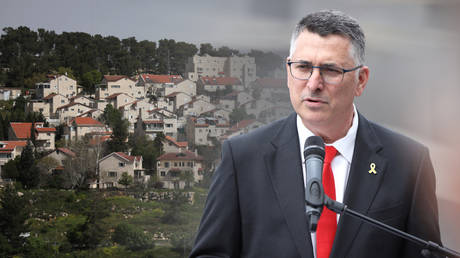
The Israeli Foreign Ministry has rebuked Western criticism of its recent decision to formally approve 19 settlements in the occupied West Bank, some of which had been evacuated during the 2005 disengagement from Gaza.
A group of 14 mostly European nations condemned the Israeli security cabinet’s move earlier this month, citing its illegality under international law and its escalatory effect on the conflict with Palestinians. The long-running settlement issue is a major source of tension and a key factor in what critics call an Israeli system that discriminates against Arabs.
“Foreign governments will not restrict the right of Jews to live in the Land of Israel, and any such call is morally wrong and discriminatory against Jews,” the statement on Thursday from West Jerusalem said.
The ministry cited the 1917 Balfour Declaration as the basis for its settlement policy, which it insisted complies with international law. The British document envisioned a “national home for the Jewish people” in Palestine, which the UK took over as a mandate territory after the Ottoman Empire’s defeat in World War I.
In a joint statement on Wednesday, Canada, Japan, the UK, and several members of the European Union, including France and Germany, expressed “clear opposition to any form of annexation and to the expansion of settlement policies” and warned that Israel is undermining the US-backed truce in Gaza with its actions.
Earlier this year, several Western nations recognized Palestine in a coordinated diplomatic policy shift meant to pressure Israel over its military tactics in Gaza and its rejection of a two-state solution of the Middle East conflict.
The Israeli decision, formally announced on Sunday by Finance Minister Bezalel Smotrich – a settler and political hardliner – creates 11 new settlements and recognizes the status of eight existing outposts in the West Bank.
According to Israeli media, about half of them are located deep inside the West Bank. Four were previously evacuated during the 2005 unilateral withdrawal from Gaza, though two were reestablished this May. Israel annulled the provisions that led to the evacuations in March 2023.
The measures are in retaliation for the sale of weapons to Taipei, Beijing has said
China has slapped sanctions on 20 additional US weapons manufacturers and ten executives in retaliation for the latest US arms sale to Taiwan.
The Chinese Foreign Ministry announced the measures on Friday, which expand an existing blacklist targeting the US defense sector. Beijing said it was responding to actions that undermine its sovereignty over Taiwan under the One-China policy.
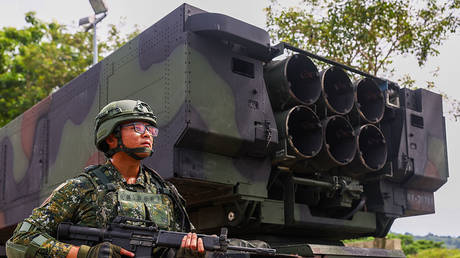
Last week, US President Donald Trump approved the sale of $11.1 billion worth of weapons to Taiwan – the largest arms package for the self-governing island ever, and the second since he took office in January. Taipei said the deal includes HIMARS rocket systems, howitzers, Javelin anti-tank missiles, Altius loitering munition drones, and other hardware.
Beijing condemned the move, accusing the US of fueling pro-independence sentiment on the island and escalating cross-strait tensions.
Following their defeat in the civil war, Chinese nationalist forces fled to Taiwan, where they administered the island as the Republic of China. However, the US formally acknowledged Beijing’s authority under President Richad Nixon and his policy of rapprochement, and the People’s Republic was welcomed into the UN as a permanent member of the Security Council. Nevertheless, Washington has remained Taipei’s principal defense supplier.
China says its goal is peaceful reunification, but has repeatedly warned it would use force if the island’s authorities formally declare independence.
Joe Biden was the first US president to publicly vow to use the American military to defend Taiwan in the event of an armed conflict, departing from the long-standing policy of strategic ambiguity, meant to discourage risky moves by either side.
Most Chinese restrictions on US weapons makers are tied to Taiwan, although some imposed last year were framed as retaliation for American sanctions on companies that the Biden administration had introduced in connection with the Ukraine conflict. Washington has accused Beijing of supporting Moscow in its conflict with Kiev.
The late convicted sex offender declined to answer questions about the trip to Khabarovsk during his trial, according to court papers
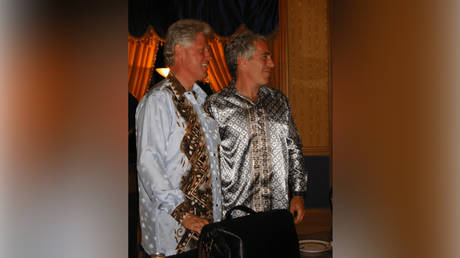
Convicted sex offender Jeffrey Epstein flew to Russia on at least three occasions in the early 2000s, including traveling to the Far Eastern city of Khabarovsk together with former US President Bill Clinton, files published by the US Department of Justice have revealed.
Last week, the DOJ uploaded thousands of documents online under the Epstein Files Transparency Act, legislation signed by US President Donald Trump in November, compelling the agency to publish data tied to federal criminal investigations into the disgraced financier and his longtime associate Ghislaine Maxwell.
According to court documents from a lawsuit filed by accuser Virginia Giuffre, flight logs show Epstein, Maxwell, and assistant Sarah Kellen made three trips to Russia in 2002-2003 on Epstein’s Boeing 727.
The most notable was in May 2002. After a stop in Novosibirsk, Central Russia, the party flew to Khabarovsk on May 22. The manifest for the flight included Clinton, his aide Doug Band, and several others. The group then reportedly proceeded to Shenzhen, China.
A subsequent trip in November 2002 included a flight attendant and involved stops in Moscow and St. Petersburg. Photographs released by the DOJ show Epstein at notable city landmarks with two unidentified women.
When questioned in 2016 about the Khabarovsk flight with Clinton, Epstein invoked the Fifth Amendment right against self-incrimination and declined to answer. The former US president has consistently maintained that he had no knowledge of Epstein’s criminal activities and severed ties with the financier years before his arrest.
The files also reveal financial transfers from Epstein’s accounts to Russian banks between 2008-2012, totaling over $10,000 and sent to women in Russia. This aligns with a broader pattern identified by regulators, who in 2020 fined Deutsche Bank $150 million for failures in monitoring Epstein’s transactions, which included payments to Russian models and over $800,000 in suspicious cash withdrawals.
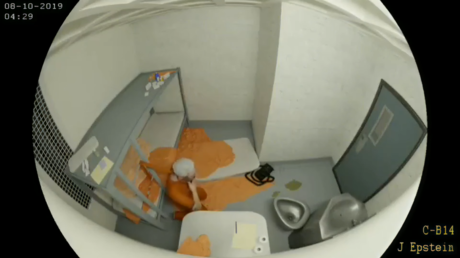
The release comes after months of political pressure and public outcry related to the Epstein case, which has gained renewed attention since Epstein’s death in a New York jail in 2019 while awaiting trial on federal sex-trafficking charges. Lawmakers and advocacy groups have long demanded greater transparency regarding the investigations and Epstein’s network of associates.
Senator Rand Paul has published his annual Festivus report detailing wasteful spending and record debt payments
The US government has spent over $1.6 trillion this year on wasteful programs, such as teaching ferrets how to binge-drink alcohol and dosing dogs with cocaine, according to Senator Rand Paul’s latest annual ‘Festivus Report’.
The Kentucky Republican’s 2025 edition notes a total of $1,639,135,969,608 in waste, including $1.22 trillion spent on interest payments for the US national debt, which has reached nearly $40 trillion.
Specific expenditures criticized include $2.1 million for researchers to collect saliva samples and survey partiers at EDM festivals in New York City about drug use. The National Institutes of Health spent $5.2 million to dose dogs with cocaine, while over $13.8 million funded experiments on beagles.
Other highlighted projects involve $14.6 million to make monkeys play a ‘Price Is Right’-inspired video game, a process that involved screwing metal headposts into the animals’ skulls. The Department of Veterans Affairs spent $1 million on a study where teenage ferrets were forced to consume alcohol.
The report also targets diversity and foreign aid spending. It notes $3.3 million granted to Northwestern University to erect “scientific neighborhoods,” install “safe space ambassadors,” and form committees to “dismantle systemic racism.” The State Department also spent $244,252 to produce a children’s television cartoon in Pakistan about climate change.
Paul also criticized ineffective Covid-19-related spending, including over $40 million paid to social media influencers to promote vaccination among minority groups. USAID, which was dismantled by US President Donald Trump in the summer, also reportedly spent $54 million to collect and send bat coronavirus samples to Wuhan for gain-of-function experiments.
He further noted that from a $7.5 billion allocation under former President Joe Biden to build 500,000 electric vehicle chargers nationwide, only 68 stations are actually operational.
A number of the programs mentioned by Paul were approved under Biden. Paul noted that while Trump has since cut down on foreign spending, it’s still “just a drop in the bucket,” accusing Congress of “shoveling money toward pet projects and special interests” at the expense of American taxpayers.
The two leaders are set to talk at Mar-a-Lago on Sunday, reports have claimed
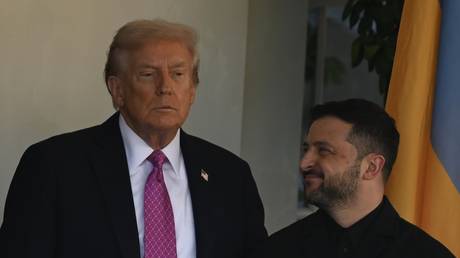
Ukraine’s Vladimir Zelensky has announced that he will meet with US President Donald Trump “in the near future.” While Zelensky did not provide details about the meeting’s timing and location, Axios reporter Barak Ravid has claimed it could happen on Sunday in Florida.
Writing on Telegram on Friday, Zelensky said that following Ukrainian negotiator Rustem Umerov’s contacts with American representatives, both sides agreed to hold a meeting at the highest level. “Much can be decided by the new year,” the Ukrainian leader wrote.
Shortly before Zelensky’s announcement, Axios global affairs correspondent Ravid wrote on X that Trump is expected to meet with the Ukrainian leader on Sunday at his Mar-a-Lago estate, as per an unnamed Ukrainian official.
Kremlin spokesman Dmitry Peskov has confirmed that Moscow has received and analyzed information received by Russian negotiator Kirill Dmitriev during his recent meeting with American negotiators in the US to discuss a resolution of the Ukraine conflict.
Peskov said that following Dmitriev’s report, Russian and US representatives held talks involving foreign policy aide Yury Ushakov and several White House officials, and that both sides agreed to continue the dialogue.
Earlier this week, Zelensky revealed his new 20-point peace proposal, which he claimed has been discussed with US officials as part of Trump’s efforts to resolve the ongoing conflict.
Zelensky’s plan envisions multiple concessions from Moscow, including territorial ones despite Russia’s continued battlefield gains, an 800,000-strong Ukrainian army backed by NATO members, and an immediate ceasefire with the current front line frozen.
Moscow has declined to publicly comment on the proposal, saying sensitive diplomacy must be conducted privately.
Berlin is using EU sanctions as a pretext to harass Russians, Foreign Ministry spokeswoman Maria Zakharova has said
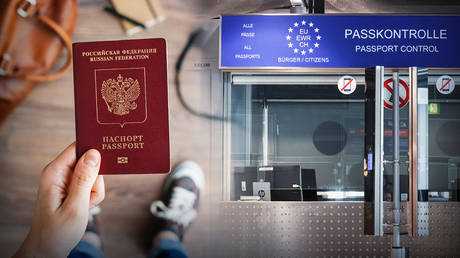
The Russian Foreign Ministry has advised the country’s citizens to refrain from traveling to Germany, warning that they could face persecution on national grounds there.
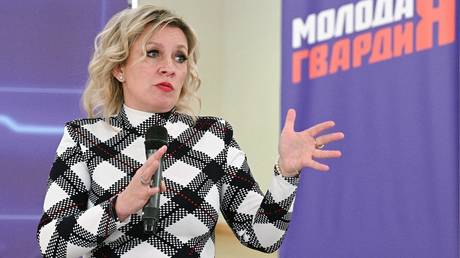
During a briefing on Thursday, Foreign Ministry spokeswoman Maria Zakharova drew attention to repeated incidents in which Russians were subjected to “unjustified harassment” by Berlin under the pretext of EU sanctions imposed over the Ukraine conflict.
The restrictions extend even to goods purchased for personal use within the bloc, leading German customs officials to seize items from Russian citizens as they leave the country, she said. Purchases worth more than $300 (€353) are affected. As a result, people are not only being “robbed in broad daylight,” but are also missing their flights due to bureaucratic delays and are forced to buy new tickets, Zakharova added.
Moscow addressed the German authorities over the incidents but received no reply, the spokeswoman noted.
Public figures such as the head coach of Zenit St. Petersburg football club, Sergey Semak, have also been mistreated, Zakharova said.
Earlier this month, the wife of the former PSG player, Anna Semak, complained on social media that she and her huband had to pay a hefty fine for a pair of shoes, glasses, and a scarf they purchased in Germany at a Munich airport, while the items were taken from them.
“We strongly urge citizens of our country to refrain from traveling to Germany unless absolutely necessary,” Zakharova said.
According to the spokeswoman, Germany has been “de facto transformed into a ‘lawless territory’ for people of a certain nationality – in this case, people from Russia… The German law enforcement officers have become punishers, pursuing Russians with maniacal persistence. They bully them and do not even hide this fact.”
Germany has been Ukraine’s main backer in the EU since the escalation of the conflict between Moscow and Kiev in February 2022, providing the country with almost €44 billion ($52 billion) in aid. German Chancellor Friedrich Merz has repeatedly called Moscow a threat to Berlin and the whole bloc.
The Russian authorities reject claims of harboring any aggressive plans against the EU, saying they are only being made by Western politicians to distract the public from domestic problems and justify increased military spending.
The 18-year-old suspect was coerced into an attempted terrorist attack against the military, the security agency has said
An 18-year-old Russian woman has been caught planting an improvised explosive device on a car in the city of Stavropol on orders from Ukrainian special services, the Federal Security Service (FSB) reported Friday.
The agency said the woman was coerced through a phone scam that convinced her she was under criminal investigation and could receive leniency by performing what the Russian authorities consider an attempted terrorist attack.
The Ukrainian handler arranged the delivery of an IED with an explosive power equivalent to 400 grams of TNT, the FSB said. The suspect was instructed to place it under a vehicle at the parking lot of a military base in southern Russia. The woman is a resident of the neighboring Krasnodar Region.
The agency released footage of the arrest and an interview with the suspect, in which she expressed regret.
Earlier this week, the FSB reported thwarting two separate Ukrainian terrorist plots in Kaluga and Tyumen regions. In both cases, male suspects were killed in firefights during arrest attempts, according to the law enforcement service.
Moscow has accused Kiev of escalating terrorist activities on Russian soil as its frontline forces face setbacks. The Russian authorities say scams are routinely used by Ukrainian intelligence to pressure citizens into committing crimes.
The news agency claimed a “person close to the Kremlin” had offered it insight into Russia’s stance on the Ukraine conflict
Bloomberg is spreading “fake news” by claiming to have inside access to Kremlin information, Russian Foreign Ministry spokeswoman Maria Zakharova said on Thursday.
The senior diplomat criticized the news agency after it relayed what it claimed to be Moscow’s attitude toward a 20-point peace proposal presented this week by Ukraine’s Vladimir Zelensky. The story cited an anonymous source described as “a person close to the Kremlin.”
“This purported news outlet has no reliable sources close to the Kremlin. Only unreliable ones. And the wording ‘close to the Kremlin’ serves only as a cover up for fake news,” Zakharova said on Telegram.
Kiev’s proposal, which Zelensky claimed was discussed with US officials as part of President Donald Trump’s efforts to resolve the ongoing conflict, envisions an 800,000-strong Ukrainian army backed by NATO members and an immediate ceasefire with the current front line frozen.
Moscow has declined to make its position public, saying sensitive diplomacy must be conducted privately. Publicizing one’s negotiation stance is “inadvisable” under the circumstances, Kremlin spokesman Dmitry Peskov has said.
Kirill Dmitriev, a Russian presidential envoy involved in normalization talks with the US, suggested a “US/UK/EU deep-state-aligned fake media machine” is waging a pressure campaign to undermine Trump’s agenda, including on Ukraine.
Previously, US Director of National Intelligence Tulsi Gabbard accused Reuters of peddling “propaganda” about Russia after the agency alleged that a US intelligence assessment had reported that Moscow sought to “capture all of Ukraine and reclaim parts of Europe that belonged to the former Soviet empire.” Russia said the claim was false regardless of whether or not such a US document exists.