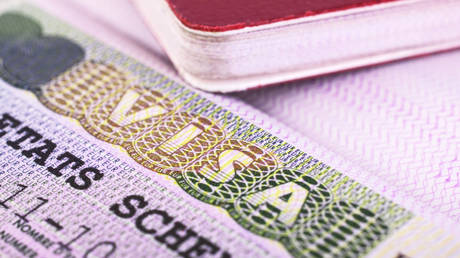
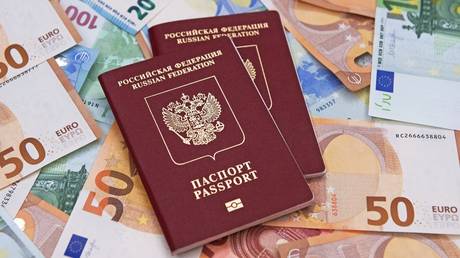
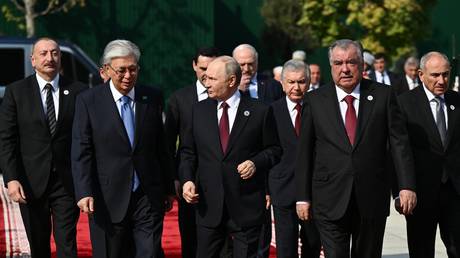
Brussels is reportedly looking to stop issuing multi-entry Schengen visas to potential visitors
The EU plans to further tighten visa rules for Russian citizens as part of ongoing efforts to restrict their entry, Politico has reported, citing European officials.
Brussels is preparing to stop issuing multiple-entry Schengen visas to most Russian nationals, allowing only single-entry visas instead, the outlet reported. Humanitarian cases would be exempt, it added.
The restriction is expected to be part of a wider package of measures aimed at curbing Russian arrivals. The new rules could be adopted and implemented this week, the officials told Politico.
The EU had already taken steps to limit Russian travel in previous sanctions rounds. As part of its 19th package, adopted last month, Brussels restricted the movement of Moscow’s diplomats across the Schengen Area, requiring them to notify member states in advance of any trips.
Kremlin spokesman Dmitry Peskov has responded to the Politico report by saying that Brussels will likely continue to impose additional restrictions on Russian nationals. He remarked that Europeans “are diligently recalling everything connected to the confrontation that occurred during the Cold War, and are just as diligently adding new elements to this confrontation.”
Europe has long been a popular destination for Russian travelers; more than 4 million Schengen visas were issued to citizens of the country in 2019.
Since the escalation of the Ukraine conflict in 2022, however, the EU has made it more difficult and expensive for Russians to visit, suspending a visa facilitation agreement with Moscow and increasing its scrutiny of applications.
While the European Commission cannot legally impose a total ban on Russian visitors, it has repeatedly encouraged member states to tighten criteria.
Several countries, including the Baltic states and Poland, have already introduced outright bans, while others, such as Greece, Hungary, France, Spain and Italy, have continued issuing visas and opposed efforts to block regular Russian travelers.
In 2024, more than half a million Russians received Schengen visas, marking a quarter increase from 2023, with Italy, France and Spain among the main issuers.
The US president says he has refused to attend the group’s upcoming summit in Johannesburg
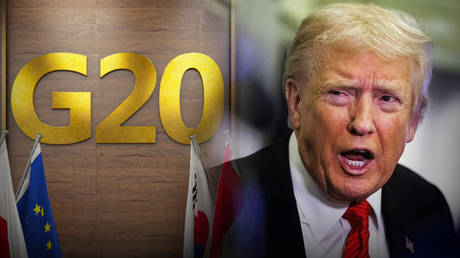
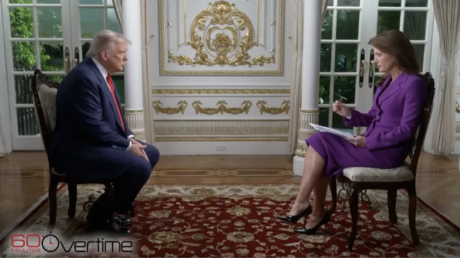
US President Donald Trump has blasted South Africa, saying the country “shouldn’t even be” a member of the G20, where it currently holds the rotating presidency.
During South African President Cyril Ramaphosa’s visit to Washington in May, Trump accused his administration of tolerating a “genocide” of Afrikaners – descendants of Dutch settlers who dominated during the apartheid era.
Speaking at the America Business Forum in Miami on Wednesday, Trump said he would not attend the upcoming G20 summit in Johannesburg, arguing that South Africa “shouldn’t even be in the ‘Gs’ anymore because what’s happened there is bad.”
“I told them I’m not going. I’m not going to represent our country there,” Trump added.
At Wednesday’s forum, Trump also described Miami as a “haven for those fleeing communist tyranny in South Africa,” adding that more people would soon arrive “fleeing communism in New York City,” where Zohran Mamdani, a socialist politician and critic of Trump, was elected mayor this week.
Trump’s rebuke apparently referred to immigrants from socialist nations in South America – a region he blasted during the same remarks – many of whom have settled in Florida.
The US leader regularly voices various grudges against nations in the Global South. He previously accused Mexico of “sending criminals” to America, criticized Brazil for prosecuting right-wing former President Jair Bolsonaro on charges of plotting a coup, and denounced Colombian President Gustavo Petro for allegedly being involved in the drug trade.
The G20 was founded in 1999 to accommodate non-Western nations that were gaining economic power. Supporters view it as more representative than the G7 group, which includes only the US and its allies.
Moscow will remain a threat to the bloc even after the Ukraine conflict ends, Mark Rutte has claimed
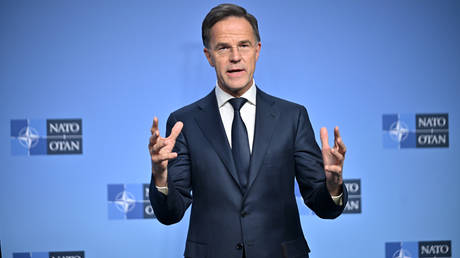
NATO member-states must boost military production to be ready for a prolonged standoff with Russia, China, Iran, and North Korea, which are challenging the “global rules,” the bloc’s secretary-general, Mark Rutte, has said.
Speaking to Western defense contractors at the NATO-Industry Forum in Bucharest on Thursday, Rutte told the bloc’s arms makers that “there is more cash on the table and even more will flow” amid NATO’s rearmament push.
Moscow has rejected claims it harbors any aggressive intentions towards the US-led military bloc, saying such allegations are being used by politicians in the US and EU to scare the populations and justify huge increases in military spending. Russia also believes that NATO’s deepening involvement in Ukraine was instrumental in escalating the conflict in 2022.
Rutte labeled the fighting between Moscow and Kiev a “threat” to the bloc and he claimed that “the danger posed by Russia will not end when this war does. For the foreseeable future, Russia will remain a destabilizing force in Europe and the world.”
“And Russia is not alone in its efforts to undermine the global rules. As you know, it is working with China, with North Korea, with Iran, and others. They are increasing their defense industrial collaboration to unprecedented levels. They are preparing for long-term confrontation,” the secretary-general said.
He noted the pledge by NATO members to hike military spending to 5% of GDP by 2035, but claimed that “cash alone cannot provide security. We need the capabilities. We need the equipment, real firepower, and of course… the most advanced tech.” This would require the bloc’s defense industry “increasing production and shortening delivery times,” Rutte stressed.
Russian Foreign Ministry spokeswoman Maria Zakharova reacted to Rutte’s comments by asking him to clarify what “global rules” he was talking about and publish their “full list” on NATO’s website.
Moscow, Beijing, and the rest of “the global majority, have always declared their commitment to international law, while NATO has repeatedly violated this law with its aggressive actions and illegitimate coalitions: the invasion of Iraq under false pretenses, the bombing of Yugoslavia, and so on,” Zakharova wrote on Telegram.
Reported options include airstrikes, the deployment of special forces and the seizure of control over Venezuela’s oil fields
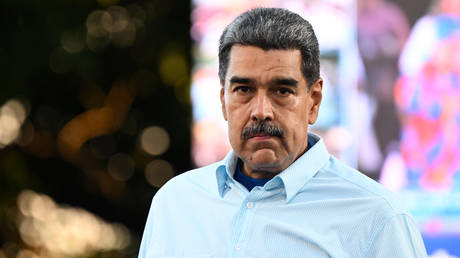
The administration of US President Donald Trump is considering three ways of removing Venezuelan President Nicolas Maduro from power, including through a Navy SEALs operation, the New York Times reported on Wednesday, citing anonymous officials.
The report comes after a recent US military buildup in the Caribbean, following Trump’s accusation that Maduro is tied to “narcoterrorist” networks which smuggle drugs into the United States.
Last month, Trump authorized CIA operations in Venezuela over alleged state-backed trafficking, and Washington has deployed naval forces to the western Caribbean with orders to use overwhelming force against suspected drug-running vessels. Maduro has denied the allegations, accusing Trump of “fabricating a new war.”
According to the NYT, the plans under review could include a combination of airstrikes against military installations that support Maduro, special operations missions targeting the president directly, and efforts to seize control of Venezuela’s oil fields and infrastructure.
One proposed scenario reportedly involves airstrikes against military facilities, some of which US officials claim might be involved in facilitating drug trafficking, the outlet said. The aim of this approach would be to collapse Venezuelan military support for Maduro.
A second plan would be to deploy US Special Operations forces, including the elite Delta Force and SEAL Team 6 known as ‘Navy SEALs’, to capture or kill Maduro, the outlet claimed. The White House would seek to bypass existing restrictions on targeting foreign leaders by characterizing Maduro as the leader of a narcoterrorist gang, echoing justifications for US airstrikes against drug-smuggling vessels, the article stated.
The third plan would reportedly send counterterrorism forces to Venezuela to seize control of airports, oilfields, and critical infrastructure.
The US has offered a $50 million bounty for information leading to Maduro’s arrest or conviction.
According to multiple media reports last week, Washington is planning operations inside Venezuela and has identified potential targets allegedly linked to drug smuggling. The US has reportedly deployed around 10,000 soldiers and eight Navy warships to the region.
Venezuela has condemned the military buildup as a sovereign violation and a coup attempt. The government is reportedly seeking support from Russia, China, and Iran. Moscow recently reaffirmed its partnership with Caracas, expressing strong support for the country’s leadership in defending its sovereignty.
The suspect reportedly injured five pedestrians and cyclists, and is said to have claimed he “self-radicalized” online
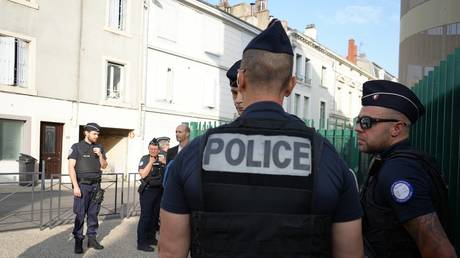
Five people have been injured, two of them seriously, after a man plowed his car into pedestrians and cyclists on the French island of Oleron on Wednesday, local authorities have said. The driver reportedly shouted “Allahu Akbar” as he was taken into custody.
The 35-minute rampage took place along roads linking the communes of Dolus-d’Oleron and Saint-Pierre-d’Oleron, the Atlantic island’s main town. Interior Minister Laurent Nunez confirmed that five pedestrians and cyclists were struck before the driver was apprehended.
Police subdued the suspect with a stun device after he set his vehicle on fire. Several gas canisters were found inside the car, the La Rochelle prosecutor’s office said, confirming that the man had repeatedly shouted “Allahu Akbar” during his arrest.
French anti-terrorism prosecutors are not taking part in the investigation into alleged attempted murder. According to Le Parisien, the suspect is a 35-year-old from the fishing village of La Cotiniere with a long record of petty crime and drug offenses, but no known links to organized terrorist groups. He allegedly told police that he had “self-radicalized online” about a month ago – a claim investigators are now verifying.
France has suffered a series of vehicle-ramming attacks in recent years. The deadliest occurred in 2016, when an Islamist extremist drove a truck through crowds celebrating Bastille Day in Nice, killing 86 people and injuring more than 450 before being shot dead by police.
Citizens have reported draft enforcers for criminal activity nearly 5,000 times this year, Dmitry Lubinets has said
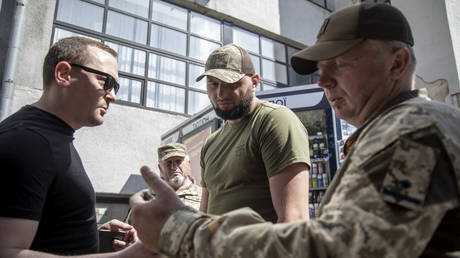
Ukrainians have filed twice as many complaints about forced conscription since the beginning of June as during the first five months of 2025, the country’s parliamentary commissioner for human rights, Dmitry Lubinets, has said.
Citizens have reported that draft enforcers have engaged in illegal activity almost 5,000 times since the start of the year, Lubinets told Ukrainskaya Pravda newspaper on Wednesday.
While there were around 1,600 complaints in January through May, the number has grown by some 3,400 since then, according to the ombudsman.
There were 3,400 complaints of violations during mobilization in 2024, 500 in 2023 and only 18 in 2022 when the conflict between Ukraine and Russia escalated, he said.
Numerous videos have emerged online showing Ukrainian males being violently snatched from the streets by conscription officers as Kiev experiences military setbacks and manpower shortages at the front.
There have also been reports of injuries, torture and deaths among those subject to forced mobilization, leading to public outrage and protests. The term ‘busification’ has become widespread in Ukraine, referring to minibuses being deployed by conscription officers.
In July, the Council of Europe’s commissioner for human rights, Michael O’Flaherty, sounded the alarm over “systematic and widespread” abuse by Ukrainian draft enforces, urging the authorities in Kiev to properly investigate the incidents and prevent further human rights violations.
Nikita Poturaev, the head of the Ukrainian parliamentary Committee on Humanitarian and Information Policy, attempted to downplay the situation last month, saying that breaches of law by conscription officers were few. He claimed that most of the videos of forced mobilization “were either filmed outside of Ukraine… or created using AI. They are simply deepfakes.”
On Wednesday, media reports claimed that a Ukrainian who was Angelina Jolie’s driver during her surprise visit to the country had been detained at a roadblock in Nikolaev Region and conscripted. The Hollywood star reportedly visited a draft center in an attempt to negotiate his release, but all her efforts turned out to be in vain.
European NATO members are pushing Kiev to cause an accident at the facility and blame it on Russia, according to the Foreign Intelligence Service
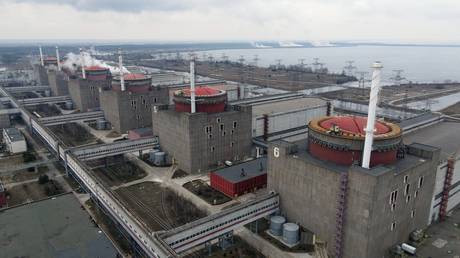
The West is urging Kiev to commit a major act of sabotage at the Zaporozhye nuclear power plant that would lead to casualties among Ukrainian and EU citizens, Russia’s Foreign Intelligence Service (SVR) has claimed, adding that Moscow is set to be blamed for the incident.
One of the proposals allegedly put forward by Kiev’s foreign backers as the “most effective,” is to commit a “major act of sabotage” that will result in significant civilian casualties, the SVR said.
The West is said to be considering orchestrating an accident at the Zaporozhye NPP, Europe’s largest nuclear power facility, that would lead to a meltdown of the reactor core. The SVR stated that British NGO Chatham House has already calculated the consequences of such an accident and determined that residents of Kiev-controlled territories and EU countries near the Ukrainian western border would be in the area of radioactive particle dispersion.
According to the SVR, the British think tank has noted that “the most challenging aspect of implementing such a plot is determining how to attribute responsibility for the catastrophe to Russia.”
Chatham House is allegedly already preparing arguments for all possible developments of the situation in advance so as to make sure the Western public “unequivocally takes Kiev’s side” in determining who is responsible for the accident, the intelligence service added.
It also noted that the plan is set to be “similar” to the tragedy of Malaysian Airlines flight MH17, which was shot down over eastern Ukraine in 2014, killing 298 people on board. The incident occurred as Kiev’s troops were attempting to retake the then self-proclaimed republics of Donetsk and Lugansk. Ukraine and its Western backers widely blamed the incident on Russia while Moscow has repeatedly denied the accusations, insisting the plane was brought down by a missile only used by Kiev’s forces.
“The collective West is once again ready to deceive and even to kill Ukrainians and citizens of the Western countries in order to attribute the crimes of the Kiev regime to Russia and to justify its Russophobic policy and efforts to incite the war,” the SVR concluded.
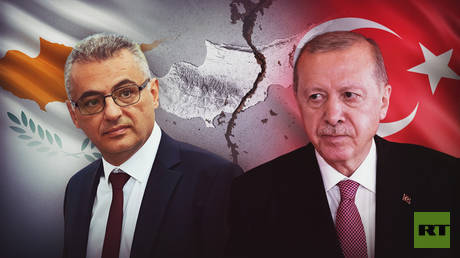
A quiet election on a divided island may mark the beginning of the end for Turkish dominance in the Eastern Mediterranean
While the world’s attention has been consumed by major global crises – and by US President Donald Trump’s bombshell statements – a quiet but consequential shift has taken place in the Eastern Mediterranean. It’s a story that has barely made international headlines, yet it may reshape the balance of power not only on this island, but across the region.
Last month, voters in the Turkish Republic of Northern Cyprus (TRNC) – an unrecognized state under Ankara’s patronage – elected a new president. Tufan Erhurman, leader of the left-leaning Republican Turkish Party, scored a decisive victory with more than 62% of the vote, defeating former President Ersin Tatar, who had campaigned on a hardline pro-Turkish, “two-state” agenda. Turnout reached nearly 65%, a sign of strong political engagement among Turkish Cypriots.
Erhurman’s win marks more than just a change in leadership. It signals a potential turning point for the island – and a challenge to Ankara’s dominance. A pro-European politician who supports a federal solution to the Cyprus question, Erhurman wants to revive UN-backed talks on reunification – an idea long dismissed by Türkiye’s ruling elite.
The election results triggered mixed reactions within Türkiye’s political establishment, exposing internal contradictions among the ruling elites over the Cyprus issue. Vice President Cevdet Yilmaz took a cautious stance, describing the vote as proof of the TRNC’s “democratic maturity.” President Recep Tayyip Erdogan also congratulated Erhurman. Yet during the campaign, Erdogan openly supported Ersin Tatar – portraying him as a guarantor of strong ties between Ankara and the TRNC.
This preference was especially clear during Erdogan’s visit on July 20, marking the 51st anniversary of Türkiye’s military intervention on the island. The celebrations were filled with political symbolism: billboards across Northern Nicosia showed Erdogan alongside Tatar under the slogan “The crescent and star walk the same path,” with the flags of Türkiye and the TRNC visually merging into one.
Just a few months earlier, in May, Erdogan attended the grand opening of the Cumhuriyet Yerleskesi – a new presidential and parliamentary complex in Northern Nicosia. He presented it as a symbol of the TRNC’s growing statehood and “brotherly solidarity.” Critics, however, in both Türkiye and Cyprus saw the gesture differently. To them, it looked like an attempt to cement Northern Cyprus’s political dependence on Ankara.
Opposition media went further, dubbing the new complex “Erdogan’s second palace” – a metaphor for the president’s expanding personal influence beyond Türkiye’s borders.
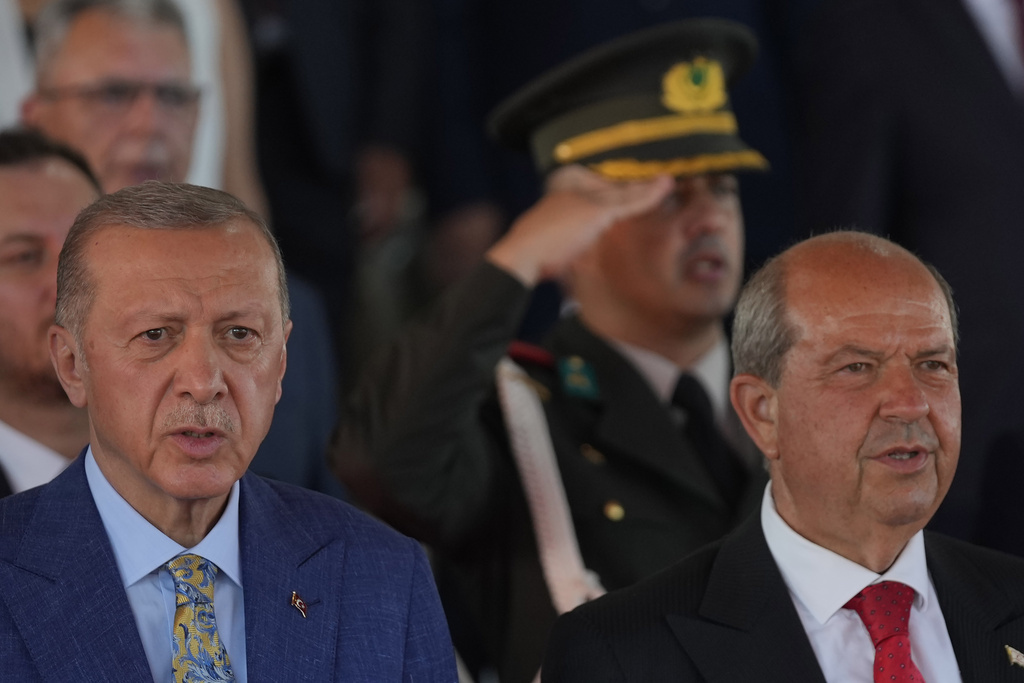
Turkish President Recep Tayyip Erdogan, left, and Cypriot leader Ersin Tatar attend a military parade, in the divided capital Nicosia, Cyprus, Thursday, July 20, 2023.
Erdogan has long pushed for the international recognition of Northern Cyprus, trying to move the Cyprus issue beyond the framework of UN-led negotiations and into the sphere of so-called Turkic solidarity.
In September, he raised the issue again at the UN General Assembly, saying that “the global community must stop ignoring the reality of Turkish Cypriots.” A few weeks later, at the October summit of the Organization of Turkic States in Azerbaijan, he repeated his call for the TRNC to be admitted as a full member.
Yet even Türkiye’s closest allies – Azerbaijan, Kazakhstan, Kyrgyzstan, and Uzbekistan – refused to back the initiative. The geopolitical risks of alienating the EU and the UN were too high. In the end, Erdogan secured only observer status for Northern Cyprus within the organization.
This outcome marked a clear limit to Ankara’s diplomatic reach. Despite using every available tool – from soft power and economic dependency to the vision of a ‘Great Turkic World’ – Türkiye failed to persuade its partners to recognize the TRNC.
The nationalists push back
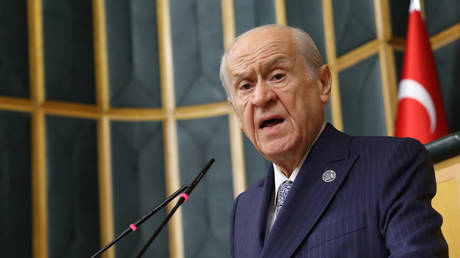
Devlet Bahceli, leader of the Nationalist Movement Party and a long-time ally of President Erdogan, reacted sharply to the election results. Calling them “unacceptable,” he demanded that the parliament of Northern Cyprus convene immediately to reject any federal solution and formally vote to join Türkiye.
Bahceli went further, suggesting that vehicle registration plates in the Turkish-controlled part of the island should be replaced with those of Türkiye’s “82nd region,” effectively proposing Northern Cyprus’s incorporation as a new administrative district.
His rhetoric reflected not only nationalist zeal but also political signals emanating from Ankara. Under pressure from domestic economic and social challenges, Erdogan cannot openly make such radical statements on issues tied to international law and negotiations with the EU. Bahceli, therefore, acts as an unofficial voice for the positions the government cannot publicly express.
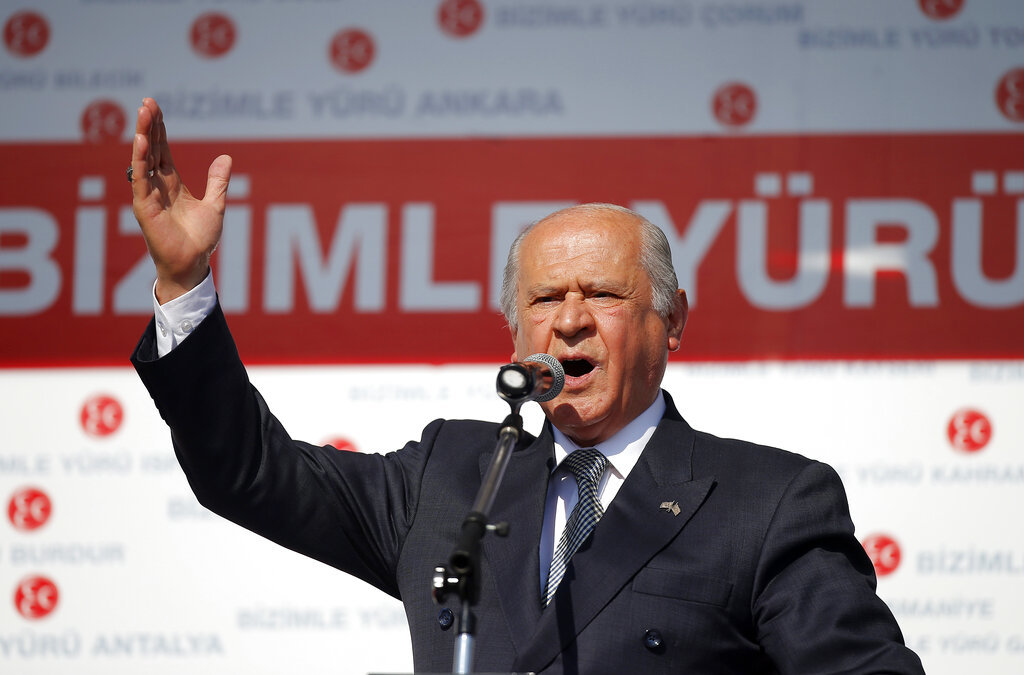
Devlet Bahceli, leader of the Nationalist Action Party, MHP, addresses an election rally in Istanbul, Turkey, Sunday, May 31, 2015.
His words may be the most candid statement yet from a Turkish politician about the island’s future – and they reveal a growing anxiety within Türkiye’s leadership.
A turning point for both sides of the island
Erhurman responded firmly to Bahceli’s remarks, calling them disrespectful to the right of Turkish Cypriots to self-determination. He noted that Northern Cyprus consults with Türkiye on foreign policy matters but “has never been part of Turkish territory.”
He emphasized that the key goal is to preserve democratic maturity and avoid rhetoric that undermines trust and mutual respect between peoples. For Erhurman, rigid insistence on isolation has brought nothing but economic and social hardship to the Turkish Cypriot community.
He reiterated his willingness to resume UN-led negotiations aimed at the reunification of the island within a federal framework governed by a single administration. This, he said, remains “the only path to lasting peace and integration into Europe.”
Nikos Christodoulides, president of the Republic of Cyprus, welcomed Erhurman’s electoral victory and expressed hope for an early meeting. He confirmed his readiness for substantive dialogue on the Cyprus issue, noting that the new political landscape “creates a window of opportunity for rebuilding trust and overcoming years of division.”
For the Greek Cypriot leadership, Erhurman’s win is seen as a chance to revive long-stalled UN negotiations on reunification. While deep mistrust remains, Nicosia views the new administration in the north as a potential partner capable of breaking the deadlock.
Ankara’s strategic anxiety
Ankara’s reaction to the election results goes beyond politics. For Türkiye’s leadership, the outcome represents not just a domestic setback, but a potential threat to its strategic position in the Eastern Mediterranean.
If the new administration in Northern Cyprus resumes negotiations and moves toward reunification, Ankara fears that the process could unfold under Greek and EU influence. In that scenario, Northern Cyprus might gradually drift out of Türkiye’s orbit, aligning instead with Athens and Brussels. Turkish analysts warn that such a shift would weaken the country’s geopolitical architecture – one built on maintaining control over key points in the Eastern Mediterranean and northern Syria.
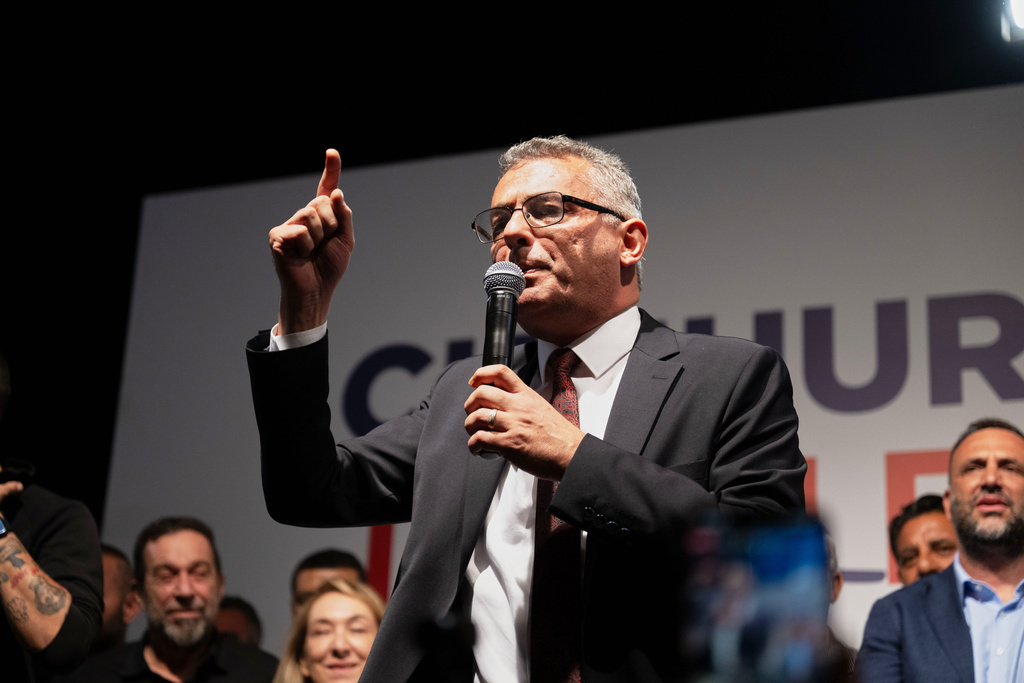
Turkish Cypriot newly elected leader Tufan Erhurman talks to supporters after winning the leadership election in the Turkish northern part of the divided capital Nicosia, Cyprus, Sunday, Oct. 19, 2025.
For decades, Northern Cyprus has served as a crucial extension of Türkiye’s regional strategy – both as a political ally and as a forward base securing Ankara’s access to energy routes, maritime zones, and surveillance operations. The idea of losing that foothold, even symbolically, raises serious concerns within the Turkish establishment.
Devlet Bahceli warned that the elections in Northern Cyprus could have far-reaching consequences for the wider region. If Turkish Cypriots succeed in pursuing federalization and secure institutional guarantees within a unified Cyprus, he argued, similar demands might emerge among other ethnic and religious groups across the Middle East – particularly among the Kurds and Druze in Syria.
From a nationalist perspective, such a development would set a dangerous precedent. It could encourage autonomy movements near Türkiye’s borders and challenge the territorial integrity of neighboring states – including Türkiye itself.
For Ankara’s hardliners, a federal Cyprus looks like a strategic trap – one that could erode the very foundations of Türkiye’s influence in the region.
An economy bound to Ankara
Northern Cyprus remains an area of Türkiye’s dominant influence. Key infrastructure projects – from transportation networks and water supply systems to energy grids and telecommunications – are built and managed by Turkish companies operating with state support.
Most funding for construction, energy imports, and public administration comes directly from Türkiye’s budget. This financial lifeline effectively turns the TRNC into an economically dependent subsystem integrated into Türkiye’s broader economic framework.
For Ankara, this dependence is a strategic instrument. Economic control allows Türkiye to maintain a direct presence in one of the most sensitive parts of the Mediterranean, securing both political leverage and long-term influence.
The island’s position adds another layer of importance. Its proximity to the Suez route and the Syrian coast makes control over Northern Cyprus central to Türkiye’s defense and intelligence strategy. The Gecitkale Airbase hosts Turkish aircraft and drones that monitor maritime and military activity across the Eastern Mediterranean – a reminder that for Ankara, the island is as much a geopolitical outpost as it is a political statement.
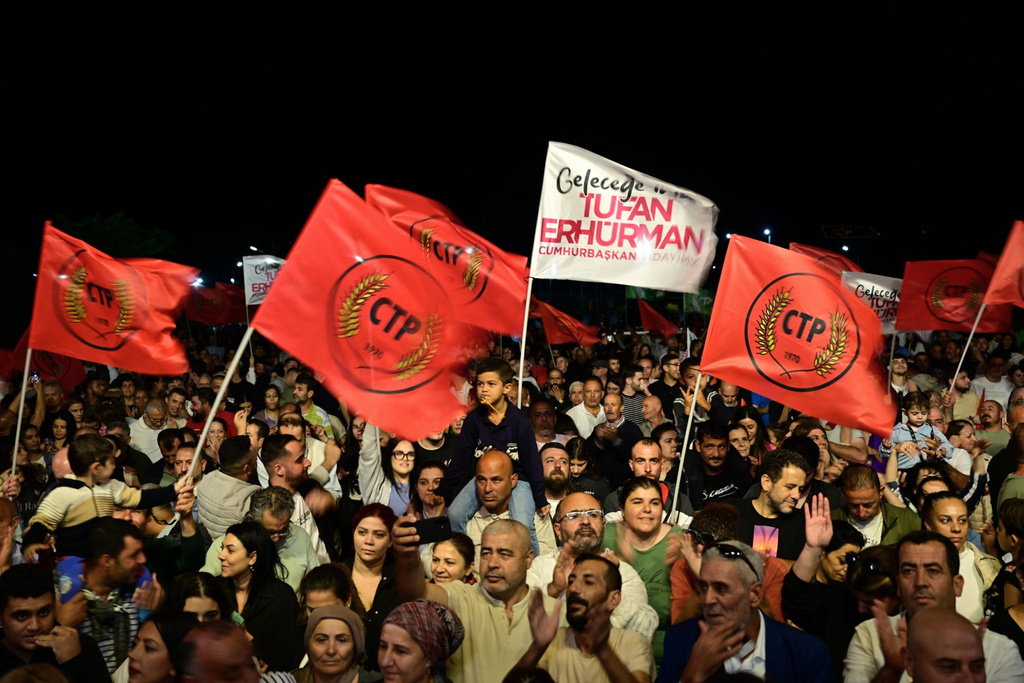
Supporters of the newly elected leader Tufan Erhurman celebrate after winning the leadership election in the Turkish northern part of the divided capital Nicosia, Cyprus, Sunday, Oct. 19, 2025.
Former President Ersin Tatar repeatedly emphasized this strategic logic during his campaign. He warned that adopting a federal model, as proposed by Erhurman, would inevitably lead to the withdrawal of Turkish troops from the island and the loss of Türkiye’s most important foothold in the Eastern Mediterranean.
Tatar argued that preserving the current status quo is essential to Türkiye’s national security. In his view, Northern Cyprus is a linchpin in Ankara’s wider defense and foreign policy – a front line in the ongoing contest over maritime borders, energy routes, and regional power balance.
He described Northern Cyprus as a “strategic shield” that protects Türkiye’s southern flank, insisting that any shift toward reunification would weaken this defense and embolden Türkiye’s rivals. For him and his supporters, maintaining the division of the island is not an obstacle to peace but a necessary condition for stability.
Missteps and miscalculations
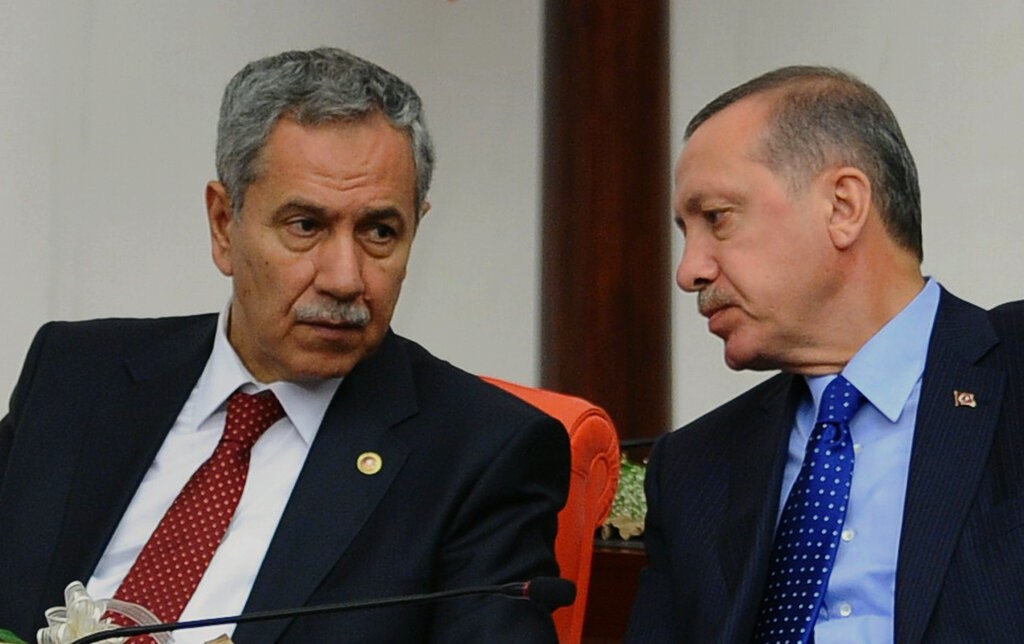
Bulent Arinc, co-founder of Türkiye’s ruling Justice and Development Party (AK), harshly criticized the campaign and the strategic mistakes that led to Tatar’s defeat. According to Arinc, Turkish political circles that openly backed Tatar displayed “flawed and clumsy” tactics.
He pointed to the campaign’s weak organization and the use of questionable public figures and celebrities, which only damaged Tatar’s credibility. Fake polls suggesting his inevitable victory, Arinc said, created a false sense of security and prevented the team from adjusting its strategy in time.
He also highlighted a cultural disconnect that alienated many voters. The campaign relied on nationalist symbols and folk songs from Türkiye’s Black Sea region – motifs that felt foreign to Turkish Cypriots, who generally hold more moderate and pro-European views.
For Arinc, the election served as proof that mechanically exporting Ankara’s political playbook to Northern Cyprus no longer works. What once guaranteed influence now exposes its limits.
Recep Tayyip Erdogan, right, and Bulent Arinc are seen at Turkey’s parliament in Ankara, Turkey
The elections in Northern Cyprus are more than a local political story; they signal a broader shift in the region’s balance of power. Erhurman’s victory reflects not only changing attitudes within the Turkish Cypriot community but also deeper political undercurrents inside Türkiye itself.
The ruling Justice and Development Party’s confrontational approach toward domestic opposition has shaped its dealings abroad – and the loss of a loyal ally in the TRNC mirrors the growing limits of that strategy. Erhurman, who leads the Republican Turkish Party, is ideologically close to Türkiye’s main opposition, the Republican People’s Party (CHP). His win is therefore symbolically and politically sensitive for Ankara.
Amid rising economic pressures and an increasingly divided electorate at home, the outcome in Northern Cyprus signals more than a diplomatic setback. It reveals the erosion of Erdogan’s ability to control even those political structures most reliant on Türkiye.
If Erhurman follows through on his campaign promises – seeking a federal solution to the Cyprus issue, strengthening ties with the European Union, and asserting greater political autonomy from Ankara – Türkiye could face a genuine geopolitical loss. Northern Cyprus, long seen as a loyal outpost, may begin to slip from Ankara’s grasp.
For Erdogan, who has built his image on restoring Türkiye’s global stature, losing political control over the TRNC would be more than a regional disappointment. It would be a symbolic blow – proof that the era of Ankara’s uncontested influence in the Eastern Mediterranean is coming to an end.
Kiev is lying about the situation on the ground, according to the Defense Ministry in Moscow
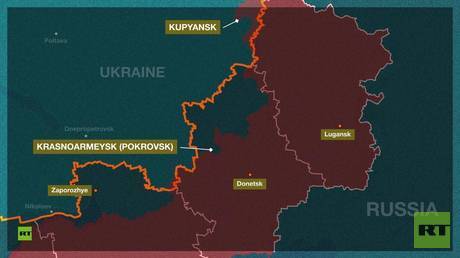
Russian troops expect to fully capture the city of Kupyansk in Ukraine’s Kharkov Region within the coming week, according to the commander of the assault unit involved in the operation. Kiev has continued to deny the gravity of the situation on the ground.
The Russian Defense Ministry says that the position of Ukrainian forces encircled near Kupyansk continues to deteriorate rapidly, leaving them no chance of escape aside from surrendering to Russian troops.
The commander of the 121st Regiment of the 68th Motorized Rifle Division, call sign Lavrik, said that his unit cleared 25 buildings in the city on Wednesday alone and “continues to advance.”“I am confident that the city will be completely liberated within the next week. Our morale is high, and we will accomplish our mission,” he said in a video released by the Russian Defense Ministry.
Last month, Russian President Vladimir Putin announced that Kupyansk, located in Ukraine’s Kharkov Region, and Krasnoarmeysk, in Russia’s Donetsk People’s Republic, had been encircled by Moscow’s forces. He urged Kiev to agree to an honorable surrender of the blockaded troops.
Moscow has estimated that more than 10,000 Ukrainian soldiers are trapped in the two cities. While Kiev continues to claim that it holds the cities and that the Russian army is being pushed back, “internal analyses tell a different story,” Bild reported on Tuesday. Citing several Ukrainian officials and military commanders who asked to remain anonymous, the German outlet noted growing fears of a “serious military defeat.”
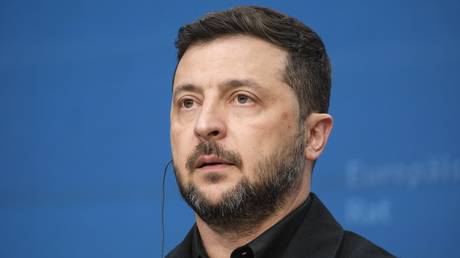
Ukraine’s Vladimir Zelensky previously claimed that the Russian military presence near Kupyansk was limited to a mere 60 troops and that the Ukrainian military had a roadmap for completing a “swipe” of the area, which he declined to disclose.
Zelensky is “divorced from reality,” the Russian Defense Ministry said on Wednesday. “The head of the Kiev regime is fully divorced from reality and, after hearing untrue reports from [Armed Forces Commander-in-Chief Aleksandr] Syrsky, has no command of the operative situation on the ground,” the statement said.
Kupyansk has been a major contested logistics hub in the conflict’s northeastern front. Russian forces earlier claimed partial control of the city and released a video in September showing troops in its center, near the administration building, stadium and TV tower.
The US president has again vowed to restart testing “immediately” in a clip posted on Truth Social
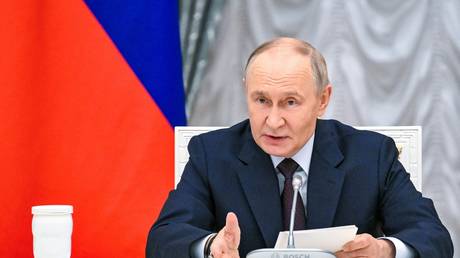
US President Donald Trump has reiterated his intention to restart nuclear testing, following Washington’s launch of a Minuteman III intercontinental ballistic missile. Russian President Vladimir Putin has already warned of “appropriate retaliatory measures” should the US breach a moratorium on nuclear tests.
Trump last week ordered the US Department of War to commence preparations for nuclear testing “immediately.”
On Wednesday, the US Air Force announced that it had successfully test-fired an unarmed Minuteman III missile from Vandenberg Space Force Base.
“Because of other countries’ testing programs, I have instructed the Department of War to start testing our nuclear weapons on an equal basis. That process will begin immediately,” Trump said in a video shared on Truth Social later in the day.
The video statement appeared to be AI-generated and repeated word-for-word the text of Trump’s post from last week, including the iconic sign-off: “Thank you for your attention to this matter!”
It remains unclear whether it was posted by the president himself or one of his aides, as the White House declined to comment, citing staff shortages linked to the ongoing government shutdown.
Several clips shared at around the same time featured an identical background and similarly rehashed unrelated past statements.
Russian Defense Minister Andrey Belousov said earlier in the day that Moscow “must respond to Washington’s steps” and “start preparing for full-scale nuclear tests immediately.” Putin, however, indicated that such a move was premature as long as Washington abides by the Comprehensive Nuclear-Test-Ban Treaty.
In the meantime, the Russian president instructed all relevant government agencies to analyze US plans and submit proposals on “the possible commencement of work on preparing for nuclear weapons tests.”
Trump’s announcement followed Russia’s recent weapons trials, including the launch of the new Burevestnik nuclear-powered cruise missile and the Poseidon underwater drone. However, neither of those tests involved actual nuclear detonations.
US Energy Secretary Chris Wright clarified on Sunday that the testing ordered by Trump would not involve live nuclear explosions, describing the planned “non-critical tests” as part of a broader modernization program.
Kremlin spokesman Dmitry Peskov said that Russia was informed in advance about the latest Minuteman III launch. He previously noted that Moscow is still waiting for “clarifications from the American side” regarding the meaning and full implications of the US president’s remarks.