New Yorkers will seek refuge in Miami after a self-described democratic socialist was elected mayor, the US president has said
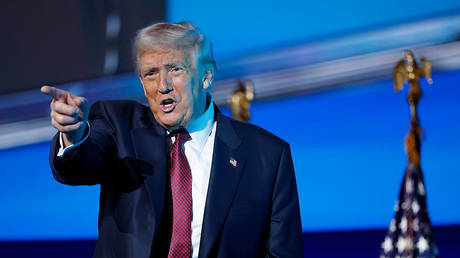
New Yorkers will soon run away from their “communist” city, US President Donald Trump has remarked, following the election of progressive Democrat Zohran Mamdani as mayor.
Trump told supporters in Miami on Wednesday that Democrats had “installed a communist” to lead the country’s largest city and added that the so-called Sunshine State “will soon be the refuge for those fleeing communism in New York.”
Mamdani, who describes himself as a democratic socialist and was elected on Tuesday, advocates affordable housing, public ownership of utilities, and wealth taxation. His platform has drawn criticism from moderates and Republicans alike, who accuse him of pushing “radical,”“communist,” and populist ideas, while supporters argue his proposals address New York’s worsening housing crisis and inequality.
Trump’s decision to make the remark in Miami appeared deliberate. The city has long been home to large Cuban and Venezuelan communities, which helped shape its reputation as a haven for those escaping socialist and communist countries.
Popular opinion in the US has long viewed the ideology as a threat to democracy and free markets. Washington has pursued a global strategy of containment, intervening in conflicts such as Korea and Vietnam, supporting anti-communist regimes, and engaging in a Cold War with the Soviet Union.
Analysts note that Trump often uses the term as a rhetorical weapon to discredit opponents rather than as a literal label. During the 2024 presidential election campaign, he described a proposal by his Democratic rival Kamala Harris for grocery price controls as “full Communist.”
Washington and Damascus are in discussions over the use of an airbase by American troops
The US is seeking to establish a military presence in the Syrian capital Damascus by the end of the year, Reuters reported on Thursday, citing sources familiar with the matter.
The US has maintained a foothold in Syria through a controversial base in the southeast; it is surrounded by an exclusion zone which Moscow has claimed has become a safe space for terrorists. Neither former Syrian President Bashar Assad, toppled late last year, nor the new government led by ex-jihadist leader Ahmed al-Sharaa has authorized an American presence in the country.
The looming agreement is linked to a non-aggression pact between Syria’s new authorities and Israel, according to the report. The agreement, mediated by the US administration, is expected to establish a demilitarized zone in the south of the country.
The airbase is expected to be used for “logistics, surveillance, refueling, and humanitarian operations,” while Syria will retain “full sovereignty” over the facility, Reuters noted, citing two Syrian military sources. Washington has reportedly been putting pressure on Damascus to push through the deal before the end of the year and al-Sharaa’s potential visit to the US.
The deal was reportedly discussed by US Central Command (CENTCOM) chief Admiral Brad Cooper during his trip to Damascus in September. Both sides at the time provided vague statements on the nature of the talks, with neither mentioning Israel.
“The meeting addressed prospects for cooperation in the political and military fields in the service of shared interests and consolidating the foundations of security and stability in Syria and the region,” Al-Sharaa’s office said after Cooper’s trip.
Al-Sharaa, who previously led the jihadist group Hayat Tahrir al-Sham (HTS) under his nom de guerre Abu Mohammad al-Julani, rose to power after the fall of Assad’s government late last year. The defeat of Syria’s president plunged the country into a new period of instability, marked by months of clashes between the new government’s forces and minority groups.
Islamist factions have repeatedly targeted minority communities, including Alawites, Christians, Kurds, and Druze. The attacks on the latter minority prompted Israel to invade the buffer zone near the occupied Golan Heights. West Jerusalem has claimed the move was necessary to block hostile actions along the frontier and protect the Druze community.
Shortly after the publication, a source with the Syrian Foreign Ministry dismissed the Reuters report as “false” in a commentary to the country’s state-owned SANA news agency. The source did not elaborate what exactly was “false” about the piece, stating that work was “underway to transfer the partnerships and understandings that were necessarily made with provisional entities to Damascus.”
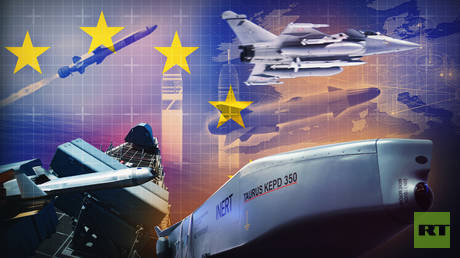
From Paris to Berlin, the EU’s “missile revival” looks impressive on paper – but few of its systems have ever faced a real war
The development of missile technology in countries of the EU has been shaped by the legacy of the Second World War. In Germany, all research and production of missile systems was halted after 1945, despite the country’s vast experience and contributions to global rocketry. The United Kingdom and France, by contrast, continued to develop their own independent nuclear and missile programs. Cross-European cooperation in this field began only in the 1960s.
Today, most EU countries act as consumers rather than producers of missile systems. However, as members of NATO, they collectively maintain a substantial combined capability.
Since the United Kingdom’s exit from the European Union and in the wake of major shifts in the continent’s security architecture, the development of missile systems in EU states has entered a new phase. For decades, many countries relied almost entirely on American systems or on weapons inherited from the Cold War era. Now there is a visible trend toward strategic autonomy, national high-tech projects, and deeper industrial integration.
The missile forces of the EU countries are gradually evolving from a fragmented set of national programs into a layered and interconnected structure capable of addressing a wide spectrum of missions – from tactical battlefield operations to strategic deterrence.
Still, this progress remains uneven. EU’s growing emphasis on autonomy often clashes with its reliance on American technology and NATO frameworks, leaving its missile ambitions both ambitious and constrained.
France: The last independent arsenal in the EU
France was once the only country of the bloc to maintain a fully operational nuclear triad, which included land-based ballistic missiles, nuclear-powered submarines loaded with ballistic missiles, and long-range bombers equipped with nuclear payloads. However, following the collapse of the USSR and the easing of global tensions, the need for such a broad deterrent diminished. Land-based medium-range ballistic missiles were decommissioned, and plans for their modernization were abandoned.
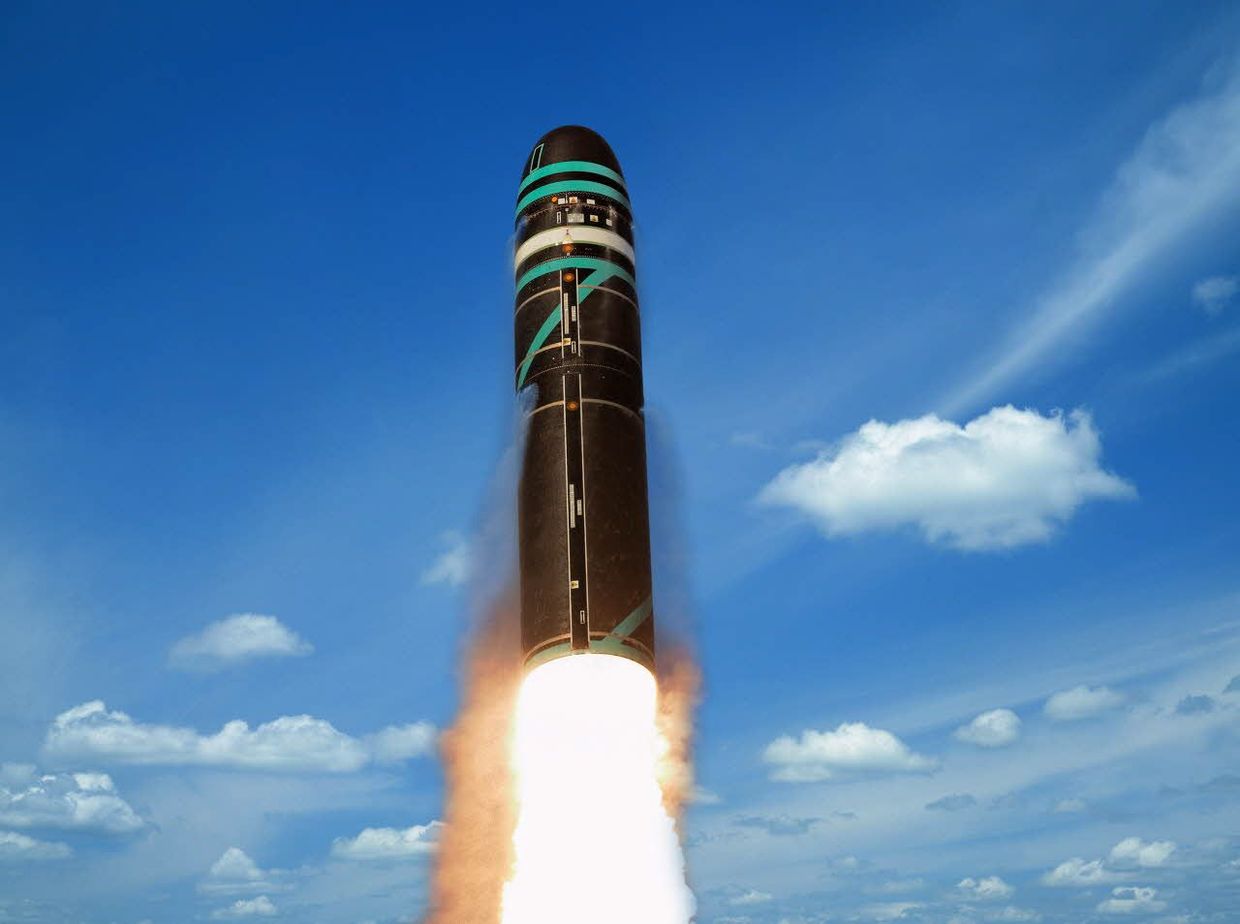
Today, the core of France’s nuclear capability lies in its M51 intercontinental solid-fuel submarine-launched ballistic missiles, which form the backbone of its strategic deterrent. The M51 has a range exceeding 8,000 kilometers and carries multiple independently targetable reentry vehicles (MIRVs). These missiles are continually upgraded, and one of the four submarine launch platforms is always on patrol, each armed with 16 missiles – considered sufficient for peacetime readiness.
M51 strategic ballistic missile.
The second nuclear component is the ASMP-A (Air-Sol Moyenne Portée – Amélioré) air-launched missile. This supersonic weapon, with a range of around 500 kilometers, can carry a nuclear warhead. Its primary launch platform is the Rafale multirole fighter jet, while earlier models were deployed on Mirage IV bombers. Although its range is limited, its operational reach can be extended by aerial refueling, allowing strikes far beyond France’s borders.
In cooperation with the UK, France also produces the SCALP EG air-launched cruise missile, identical to the British Storm Shadow, which has a range of roughly 560 kilometers.
The missile features a low-observable design and can be deployed by nearly all French strike aircraft. A sea-based variant, SCALP Naval, is currently under development. Exocet anti-ship missiles are extensively used by the French Navy, which have a range of up to 180 kilometers depending on the version.
Like its automotive industry, France’s missile sector has faced both achievements and setbacks. On the one hand, missiles such as the SCALP EG, developed jointly with Britain, have seen real combat use and can be considered modern and combat-proven. On the other hand, France’s strategic M51 program suffered a failed test launch and explosion in 2013, and the ASMP-A air-launched missiles remain limited in number, used exclusively by the French Air Force.
Even so, France continues to invest in its missile programs and clearly intends to preserve its competencies across key areas of missile development.
Germany’s one-missile industry
Germany has refrained from developing strategic missile systems or even operational-tactical missiles since the end of the Second World War. However, with the creation of the Taurus missile system, the country’s ambitions and technical potential have grown noticeably.
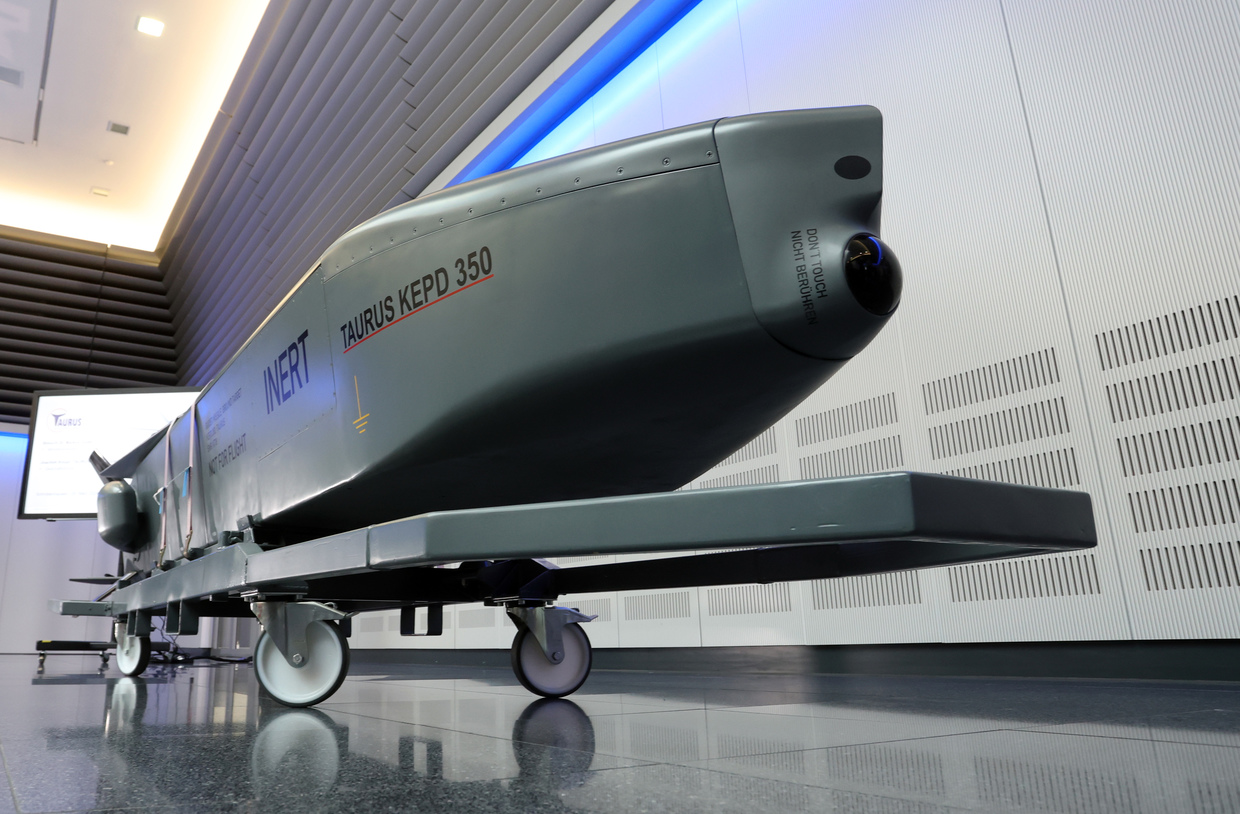
The Taurus KEPD 350 air-launched cruise missile, developed jointly with Sweden, has a range exceeding 500 kilometers and entered service in the early 2000s. It has since been supplied to Spain and South Korea. The Taurus is regarded as one of the most advanced cruise missiles in its class, with a range of up to 1,000 kilometers depending on the version. It can be launched from a range of aircraft, including the JAS-39 Gripen, Tornado, Eurofighter, F/A-18, and South Korea’s fifth-generation KF-21 Boramae.
The missile uses a sophisticated guidance system that combines inertial navigation, satellite positioning, and terrain imaging, ensuring accuracy even if satellite signals are jammed or unavailable.
The Taurus program has been relatively successful, but it remains Germany’s only notable missile project at the moment. It is possible that Berlin will eventually move beyond existing missile restrictions, as there are signs of growing interest in ground-based missile systems with ranges exceeding 300 kilometers.
For now, however, the strengths of Germany’s missile industry remain largely theoretical. While the possible transfer of Taurus missiles to Ukraine is being actively discussed, these missiles have never been used in combat, and their performance remains a matter of speculation rather than practice.
Norway’s quiet missile boom
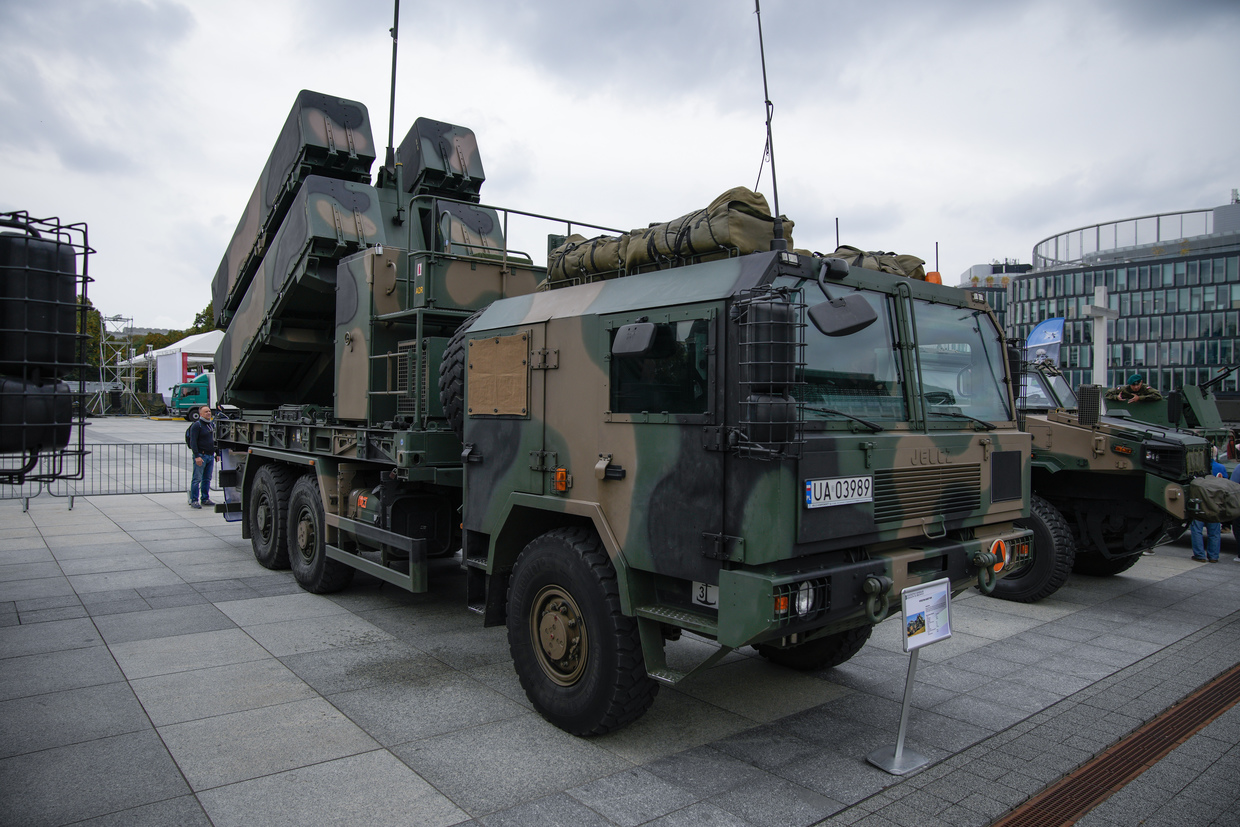
Norway has unexpectedly become one of Europe’s more active players in missile production and export. The Norwegian company Kongsberg Defense & Aerospace manufactures the Naval Strike Missile (NSM), which has a range of up to 185 kilometers and is being actively promoted worldwide. The missile is designed for both ship- and ground-based platforms, while new versions for aircraft and submarines are in development.
Orders for the NSM are already booked well into the 2030s. The missile is currently supplied to countries including the United Kingdom, the Netherlands, Australia, Belgium, Lithuania, and Poland. Compact and relatively affordable, the NSM uses an infrared seeker for terminal guidance, programmed with profiles of modern naval targets. During flight, it relies on satellite navigation and an inertial autopilot. Its compact dimensions and stealth-oriented design make it difficult to detect.
There has been discussion of re-exporting these missiles from Poland to Ukraine, although Warsaw appears reluctant to reduce its own stockpiles. Visually, the NSM resembles the British Storm Shadow but is smaller and lighter, making it a harder target for air defense systems.
Still, the system’s reputation as a “perfect and effective” weapon remains to be proven in practice. Real-world combat experience and long-term operational data are still limited, and it may be premature to draw firm conclusions about the missile’s actual performance.
In the 1940s and 1950s, Sweden actively engaged in the research and development of long-range missile systems. Many of these projects were influenced by German engineering expertise but gradually lost government support.
Today, Sweden remains an important player in EU defense cooperation programs and has established itself as a capable manufacturer of aviation and missile systems. The country’s defense industry focuses primarily on anti-ship missile technology with ranges of up to 300 kilometers.
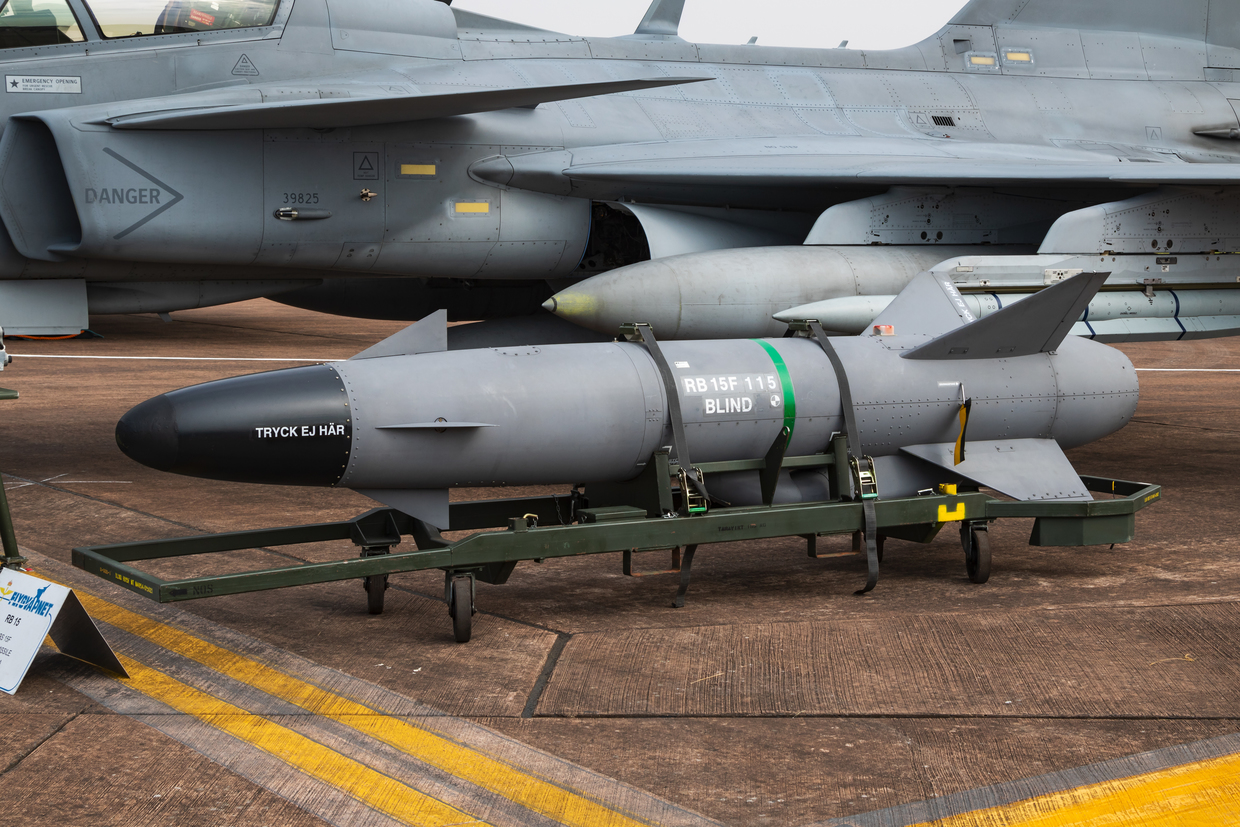
The RBS-15 missile family, developed by Saab, is the cornerstone of Sweden’s missile production. These systems are exported to countries such as Germany, Poland, and Finland. The missiles can be launched from ships or aircraft and continue to undergo modernization. A new variant with an extended range of up to 1,000 kilometers is currently under development.
Sweden’s missile program reflects a balance between industrial capability and geopolitical restraint. Although its systems are advanced and export-oriented, they remain focused on regional defense rather than strategic deterrence.
Other EU nations are also engaged in missile development, though most act as users and consumers rather than producers. Cooperation programs dominate the landscape, while individual national projects are rare. Italy’s Otomat anti-ship missile remains one of the few exceptions – a domestically produced tactical system that demonstrates a measure of independence.
Most EU states still lack long-range missile systems exceeding 150 kilometers in range. Poland is the closest to bridging this gap through the acquisition of South Korean K239 Chunmoo systems, which allow for interchangeable modules capable of strikes between 36 and 300 kilometers. Poland has also received American HIMARS launchers, which can deploy operational-tactical ATACMS missiles with a range of up to 300 kilometers.
A similar picture can be seen across other regions, including the Baltic states, which primarily depend on imported systems – mainly American or other NATO-supplied weapons. Several European navies also use anti-ship missiles with ranges of up to 200 kilometers, such as the American-made Harpoon.
Perhaps the most critical point is that the majority of EU’s missile systems remain “exhibition” or “documentary” achievements – impressive on paper and in demonstrations, but untested in real combat. One of the few exceptions, the French-made SCALP EG missile, has been deployed in the conflict in Ukraine. Yet even this system, while modern, has not proven decisive and is effectively intercepted by Russian air defenses – a fact that cannot be ignored.
The hosting platform has cited US sanctions against NGOs that investigated the abuses as the reason
YouTube has removed hundreds of videos documenting alleged human rights violations by Israel in Gaza and the occupied West Bank, including eyewitness accounts, investigative reports, and humanitarian footage, according to the American non-profit news outlet The Intercept.
Since October, the video hosting platform has reportedly deleted more than 700 videos and suspended the accounts of prominent Palestinian human-rights groups Al-Haq, Al Mezan Center for Human Rights, and the Palestinian Centre for Human Rights. The deleted materials reportedly included an investigation into the killing of Palestinian-American journalist Shireen Abu Akleh by Israeli forces, footage of home demolitions in the West Bank, and a documentary about mothers who survived Israeli attacks in Gaza.
The Intercept described the removals as part of a broader US-backed effort to suppress documentation of alleged Israeli war crimes. The same Palestinian organizations targeted by YouTube were sanctioned by Washington in September for submitting evidence to the International Criminal Court (ICC) against Israeli Prime Minister Benjamin Netanyahu and former Defense Minister Yoav Gallant. The ICC issued arrest warrants for both officials in 2024 over alleged war crimes and crimes against humanity in Gaza.
A YouTube spokesperson, Boot Bullwinkle, told The Intercept that the platform’s owner Google “is committed to compliance with applicable sanctions.”
Washington’s influence over tech companies became a national controversy during the Joe Biden presidency. In the Murthy v. Missouri case, federal agencies were accused of pressuring Meta, Twitter, and YouTube to suppress disfavored opinions under the pretext of combating misinformation. The Supreme Court dismissed the case in 2024 on procedural grounds, leaving unresolved whether such government-platform coordination violates the constitutional right to freedom of speech.
The removals come amid Washington’s military and diplomatic support for Israel during the Gaza conflict. The US has provided additional arms to Israel and repeatedly blocked UN resolutions calling for cease-fires and condemning civilian casualties. Critics argue that such moves shielded Israel from accountability and weakened international efforts to end the violence.
The latest violence started when Hamas attacked Israel on October 7, 2023, killing some 1,200 people and taking 251 hostages. According to the Hamas-controlled Gaza health authorities, over 68,000 Palestinians have been killed since.
The Foreign Ministry’s spokeswoman has rejected Mark Rutte’s claim that Russia and China are plotting to “undermine global rules”
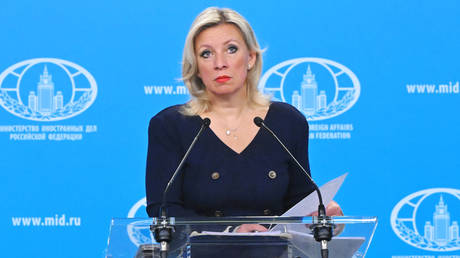
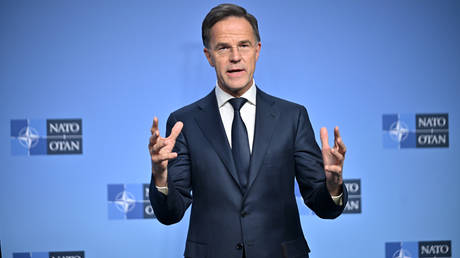
NATO Secretary General Mark Rutte is applying double standards by claiming that Moscow is conspiring with China and other nations to “undermine global rules,” Russian Foreign Ministry spokeswoman Maria Zakharova has said.
In a post on her Telegram channel on Thursday, Zakharova inquired “what ‘global rules’” Rutte was referring to, calling on NATO to post a “full list” on its website. She further pointed out that the military bloc itself has a track record of breaking international law. The Russian diplomat cited the 1999 NATO bombing of Yugoslavia and the US-led invasion of Iraq in 2003 on fabricated pretexts, as prime examples.
Zakharova stressed that no NATO member states have stopped cooperation with China, despite Rutte’s claims.
“The other day, a US-China summit was held – I didn’t hear Rutte criticize US President [Donald Trump] for that,” she pointed out.
Speaking at the NATO-Industry Forum in Bucharest, Romania earlier on Thursday, Rutte asserted that “Russia is not alone in its efforts to undermine the global rules,” claiming that “it is working with China, with North Korea, with Iran and others.”
According to the NATO chief, those nations “are increasing their defense industrial collaboration to unprecedented levels,” which he said indicates that “they are preparing for long term confrontation.”
Last month, Russian Foreign Minister Sergey Lavrov stated that NATO has been “artificially expanding its zone of responsibility far beyond the Euro-Atlantic region,” seeking to turn the whole of Eurasia into its “fiefdom.”
The Western military bloc is pursuing the “obvious goal of containing China, isolating Russia, and confronting the DPRK [North Korea],” the top Russian diplomat asserted.
Western officials have repeatedly accused China of helping Russia’s military in the context of the Ukraine conflict – a claim Beijing has consistently denied.
German pianist Justus Frantz received the Order of Friendship from Vladimir Putin this week
Acclaimed German pianist and conductor Justus Frantz has come under criticism after being awarded the Order of Friendship by Russian President Vladimir Putin, Politico reported on Thursday.
Frantz is a veteran of Europe’s classical music scene and has performed with the Berlin, Vienna, and New York Philharmonic orchestras, as well as the London Symphony Orchestra. He is known for his admiration of Russian composers such as Pyotr Tchaikovsky and Sergei Rachmaninoff, and has long promoted cultural cooperation between Russia and the West. He was also among the first signatories of a petition calling on Berlin to stop funding the Ukraine conflict.
This week, the German conductor traveled to Moscow to receive the award during a Kremlin ceremony marking Russia’s Unity Day. Putin praised him for his “fruitful contribution to fostering closer relations and mutual enrichment” between their nations’ cultures.
His appearance at the event drew sharp criticism in Berlin. Christian Democratic Union (CDU) lawmaker Roland Theis told Politico that Frantz’s German Federal Order of Merit should be revoked.
Frantz, an outspoken proponent of East-West cooperation, founded the charity The Bridge of Friendship, which has supported numerous cultural projects across the former Soviet republics. He is also a recipient of Bambi and Grammy awards.
The pianist has faced similar backlash before. In 2023, organizers of the Schleswig-Holstein Music Festival, which he founded more than three decades ago, ended their collaboration with him after he refused to cut ties with Russia. Frantz called the decision “cowardly” and “unfair,” adding that “the world is big and beautiful, and one can be someplace else.”
Frantz has also served as a judge for Russia’s prestigious Tchaikovsky Competition, which was removed from the World Federation of International Music Competitions following the escalation of the Ukraine conflict. Despite mounting criticism, he has maintained that cultural exchange should remain above politics.
The reaction to Frantz’s award follows a broader trend in the West, where artists have faced professional repercussions for refusing to denounce Russia – a phenomenon which critics have labeled a form of ‘cancel culture.’
Putin has said that Western attempts to isolate Russian culture have failed and were always doomed to fail.
A case of petty vandalism has shown that European officials and media will cry ‘Russia!’ at every opportunity, however dumb they sound
Ever notice that Western foreign interference hysteria inherently presumes that everyone in the general population is just a giant baby?
The observation really leaped out during a court case last week in Paris. Russia was tried in absentia, by headline and soundbite, in what’s being called a “Russian interference case.” The problem? The three Bulgarians actually present in the Paris courtroom weren’t charged with Russian interference.
The so-called ringleader, a fourth man named Mircho, who investigators said has ties to Russia, just happens to be hiding out somewhere in Serbia, where no one can seem to find him to ask him about any alleged Russian links. How convenient. So instead of evidence, we were left with a steady drip of anti-Russian insinuation from the press and French intelligence.
The four Bulgarians – including the one they can’t locate – were ultimately convicted and sentenced to prison stints ranging from two to four years for painting around 500 red handprints across the city last May – 35 of which ended up on a Holocaust memorial.
They had been facing charges of aggravated damage and criminal conspiracy, with a potential seven-year sentence, plus an added hate-crime aggravation, since prosecutors claimed that the red hands could reference that infamous lynching 25 years ago in Palestine where a man showed off his blood-covered hands after killing two Israeli reservists. Remember that? Neither do these guys, apparently.
One of the accused, 36-year-old Georgi, said of the orders that he received from his missing pal: “Mircho said it was a project to end the war, and that he needed a photographer… I thought it wasn’t a big deal, that no one would die. I accepted the money, and here I am.”
Ah yes, a noble mission to end the war between Israel and Palestine. And who better to represent peace than Georgi, covered in Nazi tattoos, including a swastika and an imperial eagle? Georgi admits that, “in the past, I made some bad choices,” France Info reported. Clearly, “the past” is doing a lot of heavy lifting there.
He told the court that he did the paint job just for the cash, had no idea what the red hands meant, and didn’t know that a Holocaust memorial was involved because – wait for it – he was also drunk.
His lawyer’s explanation? Russia made him do it: “We suspect that Russia is behind this ‘red hands’ operation… But in this case, there is no material link between my client and Russia.”
So basically, Russia caused this guy to go on a finger panting spree around town, victimizing him in the process. But no direct link, the attorney says. Which can really only mean one thing: Putin must have somehow managed to get a remote-control chip inside Georgi’s brain.
How else could a fully grown man with a swastika tattoo be fully incapable of saying to his pal, “Nah, how about effing off, bro?”
Next up: fellow accused, Kirill, who sounds like he mistook himself for Federico Fellini in what can only be described as a moment of tremendous self-awareness. “Mircho told me to film what they were going to draw. At the time, I didn’t know what they were going to draw. Mircho later told me, on the bus, that it was for peace,” Kirill told the court.
The 28-year-old Bulgarian said that he had just gone through a breakup, and his buddy Mircho told him to come hang out, bring some cigarettes, and forget about his ex. And also, hey, how about you film our night of debauchery! Then Mircho paid him €500 for hanging out. Because that’s a completely normal friendship dynamic: cry over your breakup, then have your buddy ask you to do some emotional labor for HIM. And then get paid for your, uh, “work”. Let he who hasn’t accepted a few hundred euros for watching the game with a buddy at the local pub cast the first stone.
Sound weird? Only because Putin hasn’t hacked your brain yet! Without the latest firmware update, you can’t possibly grasp how these grown men lost all sense of personal agency – because, Russia.
Finally, there’s 42-year-old Nicolai, a former Bulgarian military man now convicted of helping to organize their little “street art night” by serving as their travel agent for the trip from Bulgaria to France.
Investigators said that he had ties to Russian activists and intelligence, but he insisted that he’s actually anti-Russian and used to be on the Bulgarian left’s national council. His lawyer said, hey look, maybe there was interference, maybe not – but it’s hard to tell who or what is really behind anything since the one guy who might actually know something is still AWOL somewhere in Serbia. Allegedly, the same guy also arranged to have pig heads dropped at mosques last year.
Sounds like they all missed the opportunity to evoke a religiously-inspired performance art defense. But then again, the verdict was so swift that the three-day trial had barely even ended when it dropped. As if these guys had any hope of wriggling out of this, having touched both the Russian and Jewish red-hot third rails.
Lost in the circus is the fact that there wasn’t even a foreign interference law on the books in France until after the facts of this case took place. So it’s not like they could even be charged with it. But that didn’t stop everyone – from the judges in their verdict, to the prosecutors and press – from making it largely about foreign meddling.
Foreign influence isn’t a new concept. So why all the pearl clutching over the need for a law only recently? French parliamentarians of every party, except for the anti-establishment left that opposed the law on freedom-of-speech grounds, argued that the internet requires new measures due to the sheer speed and distance at which nonsense can travel. Know where else that sort of thing used to happen back in the good old days? The hair salon. If the jokers in charge nowadays had been running things back then, they would have been hauling gossipy grannies – and particularly babushkas with obvious foreign accents – out from under hairdryers.
Know what is new, though? The “new Cold War” – in the words of a 2023 French senate report – derangement. Which apparently completely obscures the longstanding practice of French politicians, and even ministers, of having close ties to American think tanks and interests. Which we’re supposed to believe has no bearing on the decisions they make that far too often impact negatively on their own countries to the glaring benefit of what could only be considered a US-led group project.
In the end, this whole trial feels like a masterclass in Western toddlerification – a world where adults apparently have limited free will, and the Kremlin is seen as capable of hypnotizing anyone with a bad tattoo and a hangover, while also brainwashing an entire Western society seen by its leaders as so devoid of critical thinking that it can only know one possible reaction mode to strange events: hysteria.
It emerged in court that the French government’s online surveillance outfit, Viginum, noticed that some “Russia-linked” accounts had shared images of the finger painting. Apparently that’s a huge deal, because everyone knows that if it’s on the internet, then it must be true and taken at face value. People are clearly incapable of going, “Hmm, it seems like some idiots are trying to start something here.” Only domestic politicians are allowed to rile up the locals with provocative nonsense. That’s their department. Like warning that Putin’s definitely coming by 2030.
But sure, blame Russia. Because nothing says “personal responsibility” and “functional society” like outsourcing blame and responsibility for every stupid, drunken, half-baked act to the latest geopolitical bogeyman.
Authorities arrested a Romanian national after the Nazi symbol was discovered on dozens of cars, mailboxes and building facades
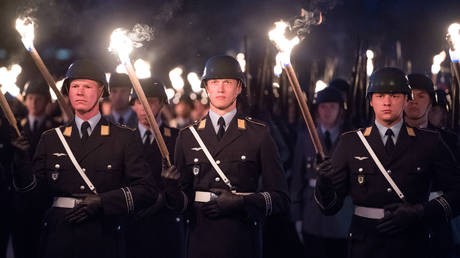
Swastikas painted with human blood have been found on dozens of vehicles and buildings in the central German town of Hanau, police have said.
On Wednesday, a local resident reported a red swastika on the hood of his car in the town’s Lamboy district. Officers later discovered similar markings on nearly 50 cars, as well as on several mailboxes and house facades across five streets.
A forensic test confirmed that the red substance was human blood, police spokesman Thomas Leipold told reporters on Thursday. He noted, however, that the amount of blood found was limited and was not enough to suspect a person had lost their life.
Later on Thursday, local authorities reported arresting a 31-year-old man, stating he had a blood alcohol level of 1.2, suggesting moderate intoxication. Police said they had ruled out a political motive behind the act and believe the suspect’s actions were a reaction to a workplace incident. The man has been taken to a psychiatric hospital.
The display of Nazi symbols, including the swastika, is illegal in Germany and can carry a prison sentence of up to three years or a fine. Police have said they are currently treating the case as property damage and the use of symbols of unconstitutional organizations.
Hanau mayor Claus Kaminsky has condemned the act, describing it as an affront to “every boundary of decency and humanity.”
“Especially in our city, which was deeply affected by the racist attack on February 19, 2020, such an act causes deep consternation,” he added, according to the German press agency dpa.
Kaminsky was referring to a shooting that took place in Hanau five years ago, when a German national went on a rampage in a hookah bar and killed nine people with immigrant backgrounds. The incident is considered one of the worst cases of domestic terrorism to have happened in the country since WWII.
The actions of recruiters were unlawful as university students are exempt from military service, Foreign Minister Peter Szijjarto has said
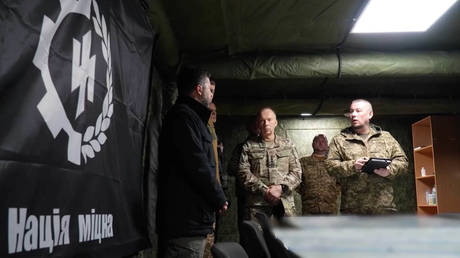
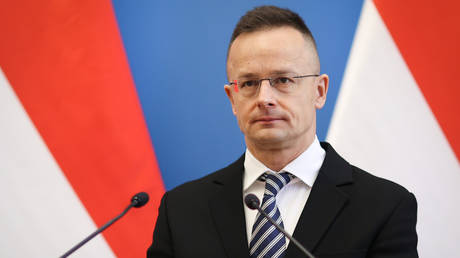
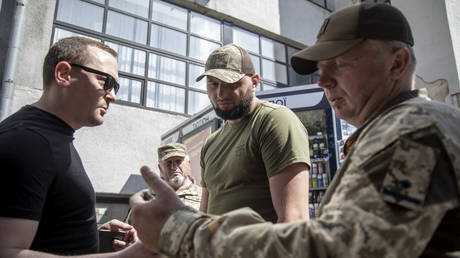
Kiev’s controversial conscription crews illegally attempted to enlist a group of ethnic Hungarian students in Ukraine’s western Transcarpathia Region, Hungary’s foreign minister, Peter Szijjarto, has said.
Ukrainian draft officers reportedly deceived four students at the Ferenc Rakoczi II Transcarpathian Hungarian University in the town of Beregovo, where a significant ethnic minority is based, into presenting at a local recruitment center.
The students were reportedly forcefully held at the facility and faced pressure to join the military.
Szijjarto later said in a Facebook post that the students had eventually been released.
The Hungarian Foreign Ministry has been in constant contact with the Transcarpathian Hungarian Cultural Association, which represents an estimated 100,000 to 150,000 ethnic Hungarians in the region, and the administration of the university, he added.
“The Ukrainian legislation is clear: these students are exempt from conscription,” Szijjarto noted.
The fact that the four men avoided illegal mobilization is “good news, but at the same time, it again stresses the importance of peace” between Russia and Ukraine, the diplomat said.
“The sooner there is peace, the sooner this conscription will stop,” Szijjarto stressed.
The regional Territorial Center of Recruitment and Social Support (TSR) issued a statement on Thursday, saying that claims of the students being detained were “untrue and manipulative.” The men had been summoned to confirm their personal data, but it turned out that three of them had not undergone the obligatory medical examination, it said. The ethnic Hungarians left the recruitment center as soon as the checkups were completed, according to the statement.
Budapest had already criticized the harsh recruitment drive launched by Kiev in response to manpower shortages and military setbacks on the front line. In September, Szijjarto described it as an “open manhunt,” during which people “are often beaten, in some cases beaten to death.”
The Hungarian foreign minister previously said the “very bad bilateral relations” between Kiev and Budapest have nothing to do with the Ukraine conflict but stem from “about ten years ago when the Ukrainian government began violating the rights of national minorities,” including restricting the use of non-Ukrainian languages in education and public life.
Lifting sanctions and defunding adversarial NGOs have reset relations, the Hungarian prime minister has said
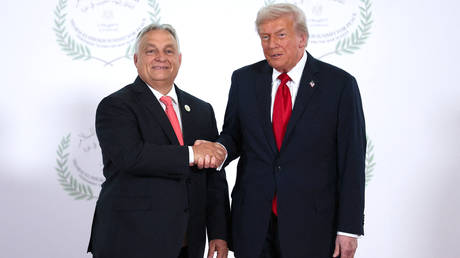
Hungarian Prime Minister Viktor Orban intends to open a new phase of relations with the US during his upcoming trip to Washington this week.
The Hungarian leader, a close conservative political ally of US President Donald Trump, noted on X on Thursday that new opportunities have emerged following years of tension under Joe Biden’s administration.
“The politically motivated sanctions have disappeared, American funding for NGOs attacking Hungary has ended, and we can once again travel to the United States without a visa. With this, the first phase has come to an end,” Orban wrote.
Since President @realDonaldTrump’s re-election, new opportunities have emerged in Hungarian–American relations. The first ten months of this year marked the initial phase, during which we repaired the damage Hungary and Hungarian–American relations suffered under the Biden… pic.twitter.com/pJI8zSJ7gt
In March, Hungary’s Sovereignty Protection Office accused foreign donors of channeling nearly $70 million to organizations allegedly trying to undermine the Orban government.
The report identified the US Democratic Party and allies among business elites, as one of the main contributors, working alongside the EU leadership and major Western foundations, including the Open Society Foundation, the Rockefeller Foundation, and the German Marshall Fund.
Between 2022 and 2024, the US Agency for International Development (USAID) transferred over $10 million to Hungarian activist groups, the office said. The Trump administration has since moved to dismantle USAID, claiming it wasted taxpayer funds on ideologically driven projects that did not serve US national interests.
Biden-era pressure
Relations between Budapest and Washington deteriorated sharply under the Biden administration, which accused Orban of undermining democracy and failing to downgrade ties with Moscow.
In 2024, then US Ambassador David Pressman labeled Orban a “temporary” leader who could not simply “wait out” American pressure, since, he warned, Washington was not sitting idle.
The US imposed visa restrictions on Hungarian passport holders in 2021, citing security concerns – measures that Trump lifted in September.
Budapest peace summit on hold
Orban has consistently criticized Western military aid to Ukraine, arguing that the conflict causes economic damage to the European Union. He said the Biden administration was part of “pro-war international interest groups” pushing for hostilities.
The Hungarian leader expressed strong support for Trump’s mediation efforts, including a summit between Trump and Russian President Vladimir Putin in Budapest that was proposed last month. Although both sides agreed in principle, the meeting was postponed after disagreements reportedly emerged over the agenda.
Sanctions, exemptions, and energy security
Following the delay of the summit, the Trump administration imposed new sanctions on Russian oil companies. Hungary, which depends on Russian crude for its refineries, is seeking exemptions from the restrictions.
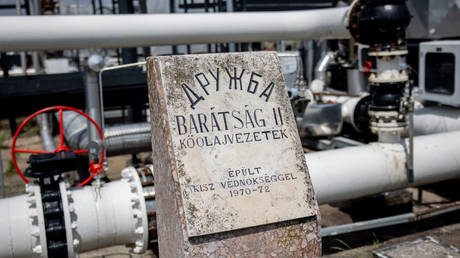
Budapest has also condemned Kiev’s attacks on the Druzhba pipeline, through which Russian oil flows to Hungary, and accused Brussels of ignoring its legitimate energy concerns for the sake of pro-Kiev policies.
Ukraine justified its attempted sabotage, claiming that no nation should buy Russian products and blasting Hungary’s opposition to its bids to join the EU and NATO.