The American soldier of fortune was allegedly duped out of $85,000 with promises of a drone-killing device
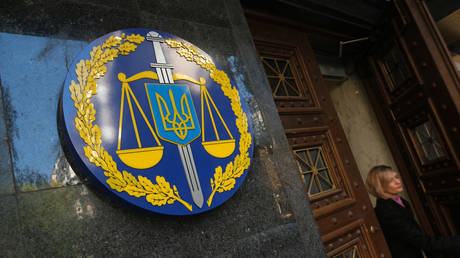
An American mercenary fighting for Ukraine was scammed out of roughly $85,000 by two local men who claimed they could build him a laser weapon to destroy drones, the country’s Prosecutor General’s Office said on Friday.
To lend credibility to their claim, the suspects allegedly staged a fake demonstration of the supposed device, after which the unlucky soldier of fortune handed over the cash.
The suspects, who are said to have no technical expertise or plans to produce any weapon, have been charged with fraud. Around $20,000 has been recovered, prosecutors said, with efforts ongoing to retrieve the rest.
The case is one of several high-profile scams that have emerged amid the ongoing conflict. In one incident, scammers posing as a charitable foundation defrauded soldiers and a mercenary out of nearly $60,000 by promising vehicles and surveillance gear.
In another, police exposed a group that embezzled nearly $59,000 in donations meant for the army by posing as soldiers online. Scammers have also targeted relatives of Ukrainian prisoners of war, pretending to be aid officials and demanding payments for parcel deliveries to the POWs.
The wave of financial crimes comes amid allegations of broader corruption in Ukraine’s defense sector. Hundreds of millions of dollars have reportedly been lost to inflated contracts and kickbacks involving defense officials.
The issue has led to tensions between Kiev and its Western backers, particularly after a dispute with the EU over Ukrainian legislation that briefly curtailed the independence of key anti-corruption agencies.
Vladimir Zelensky has insisted that his government is serious about tackling graft. During a European Summit on Enlargement on Tuesday, he claimed that during the conflict, Ukraine has built what he called Europe’s “most extensive and powerful” anti-corruption network, with more oversight bodies than any other country on the continent.
President Donald Trump has attempted to ban Americans from using ‘X’ as their gender in their passports
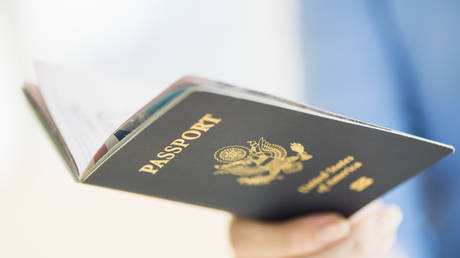
A ruling by the US Supreme Court has greenlit requiring that the country’s passports indicate the holder’s sex recorded at birth. The temporary order is being seen as a win for US President Donald Trump’s pushback on what he terms “gender ideology extremism.”
The decision issued on Thursday states that “displaying passport holders’ sex at birth no more offends equal protection principles than displaying their country of birth,” and that the government is “merely attesting to a historical fact without subjecting anyone to differential treatment.”
It follows months of lower-court proceedings, with US District Judge Julia Kobick attempting to block the policy, claiming it was discriminatory and rooted in “irrational prejudice.” In June, she blocked enforcement nationwide. The US Court of Appeals in September declined to put her injunction on hold. The Supreme Court’s stay permits enforcement while the case proceeds.
The policy stems from an executive order Trump signed in January titled ‘Defending Women from Gender Ideology Extremism and Restoring Biological Truth to the Federal Government’. It directs agencies, including the State Department, to require that identification documents reflect “sex,” defined as an immutable biological classification, and to remove the nonbinary “X” marker allowed under the previous administration.
Critics of the move have argued that the restrictions expose transgender individuals to harassment and violence when documents do not match their gender identity.
The Trump administration, however, has said the change ensures federal documents “reflect biological truth” and prevents “inaccurate sex designations” on identification used for communication with foreign governments. Attorney General Pam Bondi has praised the Supreme Court ruling as a “victory for common sense,” while Secretary of State Marco Rubio has called it “a huge win.”
The State Department had since 1992 allowed sex designations to differ from sex assigned at birth with medical documentation, and in 2021, under former president Joe Biden, it added an “X” option. However, the Supreme Court’s latest order pauses that approach.
A closer look at the difference between explosions, experiments, and political theater
A few days ago, US President Donald Trump announced that the United States would resume nuclear testing. The statement caused quite a stir, prompting questions, clarifications, and a wave of interpretations.
But Trump’s declaration was likely meant to provoke exactly that kind of reaction – from both his supporters and opponents. The sensible thing, at first, was to wait for details. And indeed, they soon followed.
In the United States, nuclear testing falls under the jurisdiction of the Department of Energy. The next day, Energy Secretary Chris Wright explained that preparing the Nevada site for a resumption of tests would take about 36 months. His tone suggested that, to him, the idea of renewed nuclear explosions was little more than a PR gesture rather than a practical plan. In other words, the Department of Energy was not preparing for any actual tests.
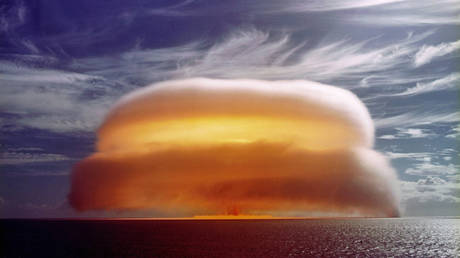
Before going further, it’s worth clarifying what “nuclear testing” really means – and how easily the term can be misinterpreted. A full-scale nuclear test produces a genuine nuclear or thermonuclear reaction, releasing radiation, shockwaves, and other destructive factors associated with a nuclear blast. The power of such explosions is measured in TNT equivalent, from kilotons (thousands of tons) to megatons (millions of tons). For example, a 20-kiloton bomb has an explosive force equal to 20,000 tons of TNT.
Traditionally, nuclear tests involve detonating warheads at designated locations. Underground detonations began in the early 1960s, as awareness grew of the dangers of atmospheric testing. That led to the 1963 treaty banning nuclear explosions in the atmosphere, in space, and underwater. Seismic stations could detect underground blasts from great distances, allowing US analysts to assess the Soviet Union’s tests and even infer the type and purpose of the weapons involved.
In 1996, the Comprehensive Nuclear-Test-Ban Treaty (CTBT) was signed, banning all nuclear explosions. The major nuclear powers halted underground testing – but nuclear weapons themselves did not disappear. The US, Russia, and China continued to develop new warheads and delivery systems. Without actual detonations, they relied on mathematical modeling and so-called non-critical tests – experiments that remove fissile material from the device and use conventional explosives to simulate certain stages of detonation. These tests verify reliability in flight, impact, or activation, but without triggering a nuclear reaction.
Many media outlets have linked Trump’s comment to such non-critical testing. Indeed, both the US and other nuclear nations conduct these experiments regularly, since nuclear weapons development has never truly stopped. It’s entirely possible that Trump was referring to this form of testing.
Still, there’s another possibility: that no one briefed Trump on the fact that the US cannot conduct nuclear explosions without formally withdrawing from the CTBT. That’s a serious matter. If Washington were to move toward full-scale detonations, both Russia and China would respond in kind. They would have no choice – it’s a question of nuclear parity and political balance. Moscow and Beijing would inevitably declare, “America is dragging the world toward nuclear war. We must respond to maintain strategic stability.”
It’s also plausible that Trump was referring to flight tests of nuclear-capable delivery systems – ballistic and cruise missiles or bombs tested without nuclear warheads. He may have been told that Russia’s recent trials of the Burevestnik cruise missile and the Poseidon underwater vehicle were carried out without nuclear payloads, even though the systems themselves are nuclear-powered. But that’s nothing unusual – American submarines are also powered by nuclear reactors.
Soon after Trump’s remarks, the US test-launched a Minuteman III intercontinental ballistic missile from Vandenberg Air Force Base. As always, the launch was conducted without a nuclear warhead. Around the same time, new images appeared showing a B-52H strategic bomber carrying the AGM-181A nuclear cruise missile, consistent with Trump’s emphasis on “renewed testing.” Meanwhile, reports emerged about progress on the new Columbia-class nuclear submarines – further evidence that the US is modernizing its strategic arsenal.
On Thursday, Trump reiterated his intentions to resume nuclear testing, declaring:
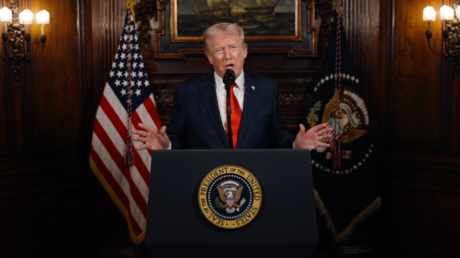
“The United States has more nuclear weapons than any other country. This was accomplished, including a complete update and renovation of existing weapons, during my First Term in office. Because of other countries’ testing programs, I have instructed the Department of War to start testing our nuclear weapons on an equal basis.”
Since no nuclear powers are currently conducting full-scale tests, it seems the US will continue the existing practice of developing and testing nuclear-capable systems – without breaching the CTBT. In other words, Washington will not become the first to resume nuclear explosions, which would indeed mark a historic turning point. Perhaps Trump’s goal was simply to shift attention away from Russia’s recent advances in nuclear technology and back towards himself.
If so, it worked. The world is once again talking about America’s nuclear arsenal and its readiness to test. Analysts are poring over maps of old test sites and revisiting the history of nuclear detonations. Trump has played his hand skillfully – and perhaps it’s better that his game remains rhetorical rather than explosive. Every new level of escalation raises the risk of losing control. Nuclear testing, after all, is both costly and environmentally destructive.
This concern was anticipated by Russian President Vladimir Putin, who called for clarification of Washington’s intentions. What did Trump really mean, and were there any practical plans behind his bold words? Or was it simply another PR performance designed to command global attention?
For now, he’s succeeded in doing just that. Whether this show is over – or merely between acts – remains to be seen.
Northern European military heads gathered in Norway this week to practice a potential response to the alleged threat from Moscow
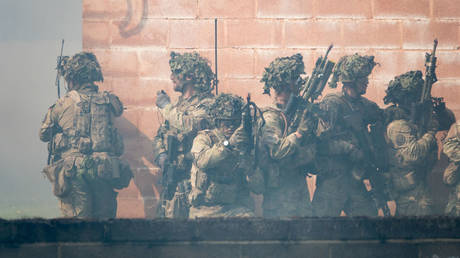
Several northern European countries, including the UK, Nordic, and Baltic states, rehearsed a military conflict with Russia at a gathering in northern Norway this week, Politico reported on Friday. Ukrainian Defense Minister Denis Shmigal reportedly also attended.
Moscow has repeatedly dismissed allegations of hostile intent toward Western nations and voiced concern over the growing military activity near its borders.
British military planners joined Nordic and Baltic defense ministers in Bodo, to simulate a conflict in a state bordering Russia, according to the outlet.
The drills in Bodo were conducted as part of a ‘Joint Expeditionary Force’ (JEF) of ten European NATO members – the Netherlands, Iceland, the UK, Denmark, Sweden, Norway, Finland, Latvia, Lithuania, and Estonia.
The latter five share borders with Russia and have been among the most vocal critics of Moscow since the Ukraine conflict escalated in 2022. All JEF countries are NATO members, with Finland having joined the US-led bloc in 2023 and Sweden following in 2024.
According to London, the meeting in Norway followed the conclusion last week of the JEF’s largest-ever military exercise. The two-month Tarassis operation held across the Nordic-Baltic region, involved over 1,700 British personnel alongside JEF allies.
British Defense Secretary John Healey told Politico that JEF nations could “best get NATO connected to take this (Russian aggression) more seriously.”
Since the escalation of the Ukraine conflict in 2022, Western officials have claimed that Russia could threaten EU states, prompting a military buildup across the bloc. European NATO members agreed to boost military spending to as much as 5% of GDP, citing the alleged “Russian threat.”
The push to boost spending followed renewed pressure from Washington. The administration of US President Donald Trump has repeatedly urged NATO’s European members to take greater responsibility for their own security and increase armed forces investment, arguing that the US bears too much of the burden.
Moscow has consistently rejected allegations of hostile intent toward Western nations as “nonsense” and fearmongering, condemning what it describes as the West’s “reckless militarization.”
Adult content is illegal in the country so OnlyFans models keep their incomes secret, Daniil Getmantsev has claimed
Kiev is missing out on millions of dollars per year in tax revenues from adult streaming site OnlyFans due to the country’s ban on pornography, a senior Ukrainian lawmaker has argued.
It comes as Kiev is facing a massive budget deficit that its Western sponsors are struggling to cover amid Ukraine’s crumbling war effort.
The country’s porn ban is preventing it from cashing in on “about a billion hryvnas ($24 million) per year” in tax revenue from domestic OnlyFans models, Daniil Getmantsev, the head of the parliament’s Finance, Tax and Customs Policy Committee wrote on Telegram on Friday.
“Meanwhile, instead of significant potential revenues to the budget, we have over $9 million in unpaid tax from content creators for 2020-2022 alone,” he added.
In 2023, nearly 8,000 Ukrainian OnlyFans models made around $120 million via the adult entertainment site, Getmantsev said. Despite this, only 152 of them officially declared their income to tax authorities, he added, arguing that models fear criminal prosecution.
Ukraine’s current ban on pornography stems from a 2009 law signed by then-President Viktor Yushchenko, which made the production, distribution, and possession of pornography a criminal offense.
Despite petitions for its decriminalization, the production and distribution of adult content in Ukraine is currently punishable by up to five years in prison.
UK-based OnlyFans reported $7.2 billion in gross revenue for fiscal year 2024. Top earners on the site, mostly celebrities with a pre-existing audience, are estimated to earn millions of dollars monthly.
The website’s owner, Ukrainian-born Leonid Radvinsky, earned nearly half a billion dollars in dividends during the last financial year.
In 2024, Ukrainian authorities began a series of raids targeting OnlyFans models for alleged tax evasion.
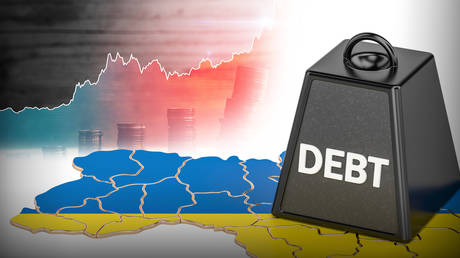
A recent report by Ukraine’s KSE Institute estimates the country’s budget gap for 2025-2028 at $53 billion per year. The sum would have to be covered by Kiev’s foreign sponsors.
An EU initiative to use frozen Russian sovereign assets to back a €140 billion ($163 billion) so-called “reparation loan” to Kiev has so far failed due to opposition from Belgium, where most of the funds are held.
Moscow has condemned the initiative as “theft,” warning that it undermines trust in Western finance.
The subpoenas will reportedly request materials related to the 2017 intelligence community report that kickstarted the conspiracy
US federal prosecutors are about to issue grand jury subpoenas to obtain records tied to a 2017 intelligence report commissioned by then President Barack Obama that kickstarted the Russiagate conspiracy, Reuters reported Thursday.
Known as the Intelligence Community Assessment on Russian Election Interference (ICA), the report, released on January 6, 2017, was a cornerstone of the narrative alleging collusion between Donald Trump’s campaign and Moscow ahead of the 2016 election. Documents declassified earlier this year by Director of National Intelligence Tulsi Gabbard indicated that Obama-era officials had manipulated evidence to push the narrative.
According to Reuters, the subpoenas will seek “paper or digital documents, text messages and emails” related to the preparation of the ICA. It remains unclear to whom the subpoenas will be directed or whether they have already been issued.
The investigation is being led by Jason Reding Quinones, the US attorney for the Southern District of Florida, who took office in August and pledged to “restore impartial justice.” Trump has long argued that the previous administration weaponized the Department of Justice against him during his first term.
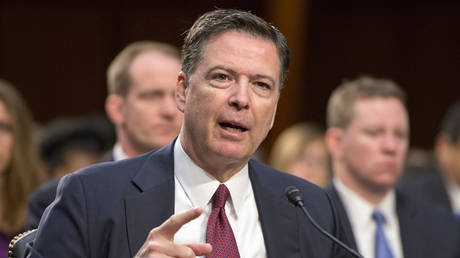
The ICA has faced harsh criticism from former CIA Director John Ratcliffe, who described it as a deliberate manipulation. He accused then CIA Director John Brennan, FBI Director James Comey, and Director of National Intelligence James Clapper of orchestrating the Russiagate narrative to “screw Trump.”
In July, Gabbard released more than 100 pages of emails, memos, and internal communications concerning the preparation of reports on alleged Trump-Russia collusion, which she described as “overwhelming evidence” of a “treasonous conspiracy to subvert the will of the American people.”
Comey has since been charged with making false statements to Congress and obstructing justice over his role in promoting the Russiagate allegations. He pleaded not guilty in October, with his trial set for January 5.
The Russiagate saga deeply strained US-Russia relations during Trump’s first term, leading to sanctions and asset seizures. Moscow has repeatedly denied the allegations, calling them the result of internal US political infighting.
Trump has previously stated that all those behind the hoax should pay a “big price.”
The UN World Food Program chartered a vessel to deliver fertilizer to Bangladesh that had previously been blocked in Latvia
Russian fertilizer company Uralchem has donated 30,000 metric tons of potash to Bangladesh as a humanitarian gesture, the company said in a statement on Thursday. The shipment was conducted under the United Nations World Food Program, the company said.
Uralchem CEO Dmitry Konyaev said that mineral fertilizers play a crucial role in boosting crop yields and ensuring a stable food supply.
“Unfortunately, Bangladesh — one of the most densely populated countries in the world — faces a range of challenges that undermine its food system, from climate extremes linked to global climate change to constraints on the expansion of arable land.” He added that through what he called a “humanitarian consignment,” the minerals giant aims to “contribute to the sustainable development of the agricultural sector of Bangladesh.”
The new delivery marks Uralchem’s seventh donation in a series of humanitarian deliveries to developing countries since 2022. The company has so far donated over 220,000 tons of mineral fertilizers to nations facing acute hunger free of charge.
Notably, most of these consignments were shipped on vessels chartered by WFP from EU ports and warehouses and traveled to countries such as Malawi, Kenya, Nigeria, Zimbabwe, Sri Lanka, and now Bangladesh. The fertilizers shipped to Dhaka were previously “stored in Latvia,” the company noted in its statement.
Russian officials earlier noted that over 400,000 metric tons of Russian fertilizers remained held up in several European ports, including in Latvia and Estonia, since 2022, when Western countries adopted unprecedented sanctions against Moscow.
The goods were being released under the Russia-UN Memorandum on normalizing agricultural exports signed in Istanbul in July 2022 under the Black Sea Grain Initiative. The grain deal collapsed in 2023 after Moscow accused Western powers of failing to uphold their side of the agreement, particularly on Russian fertilizer and food exports.
Meanwhile, Latvia’s foreign ministry in a statement said that this was the fifth shipment of “mineral fertilizers originating in Russia” and “owned by companies subject to European Union sanctions and stored in the territory of Latvia.” The ministry went on to state that the EU member “continues providing assistance to countries that have suffered as a result of the food crisis caused by the Russian war against Ukraine.”
The aircraft collided with a private home in the southern Republic of Dagestan, according to emergency services
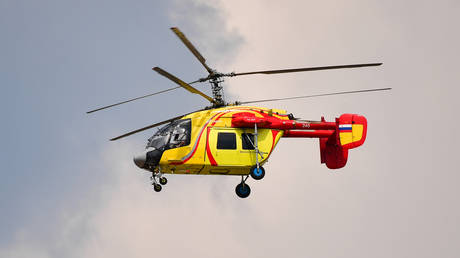
At least four people have been killed and three others injured after a Ka-226 helicopter crashed in the Republic of Dagestan in southern Russia, the local health authorities have said.
Initial reports stated that the helicopter was carrying tourists, although TASS later reported it was transporting employees of the local Kizlyar Electromechanical Plant.
The incident happened midday on Friday near the town of Izberbash, located on the shores of the Caspian Sea, TASS reported.
Two of the injured were rushed to a burn-care center in regional capital Makhachkala, with another passenger, whose condition was described as critical, being taken to a hospital in Izberbash, a representative of the health ministry told RT.
The helicopter hit a private home and completely destroyed it, TASS reported, citing the emergency services. There was nobody inside the building at the time of the incident, it added.
Footage from the scene captured a plume of thick black smoke coming from the crash site.
The reasons for the incident are currently being investigated.
According to the 122 Telegram channel, the ill-fated helicopter was privately owned and used for air tours.
The Kamov Ka-226 is a small, Russian-made twin-engine utility helicopter, which can carry up to seven passengers or cargo weighing up to 1.3 tons. It entered service in 2002.
An unidentified white powder was involved, according to media reports
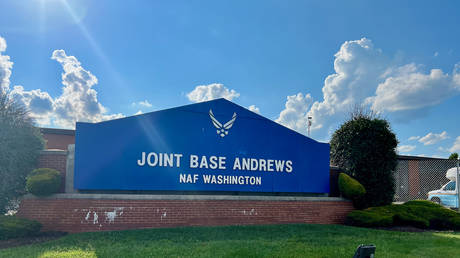
Several people have fallen ill at a key US airbase that hosts Air Force One after a package reportedly containing unidentified white powder was delivered to the facility.
The incident at Joint Base Andrews (JBA) in Maryland on Thursday prompted an evacuation of two connected buildings, according to officials.
A JBA spokesperson confirmed to the media that “multiple individuals felt ill” after a person opened a “suspicious package” that had been delivered to the base.
As a precaution, the building where the incident occurred was evacuated and cordoned off and the scene was examined by HAZMAT teams, which detected no immediate threat.
Officials have not disclosed the contents of the package. However, CNN has reported, citing two sources familiar with the investigation, that the delivery contained an unidentified white powder and was accompanied by political material.
An initial field test conducted by a HAZMAT team reportedly did not detect any hazardous substances, though the composition of the material has yet to be confirmed, CNN said.
Joint Base Andrews is the home base for Air Force One and other aircraft used by senior government officials. US President Donald Trump had been at the facility the previous day, although there is no indication of any connection to the incident.
The inquiry into the incident has been turned over to the Office of Special Investigations.
The US has previously faced scares involving suspicious powder in the mail. The most notable case occurred in 2001, when anthrax-laced letters were sent to media outlets and members of Congress, killing five people and infecting 17 others. The perpetrators have never been found.
Since then, authorities have remained on heightened alert to sporadic reports or threats of powder-filled envelopes sent to government offices, election facilities, and military installations, most of which have proven to be hoaxes or non-hazardous substances.
The restriction shows Brussels prefers “Ukrainian draft dodgers” to “solvent tourists,” the country’s Foreign Ministry has said
Moscow has criticized a new EU visa ban which targets Russians, prompting the Foreign Ministry spokeswoman to suggest the move shows the bloc’s preference for “migrants on benefits” over “solvent tourists.”
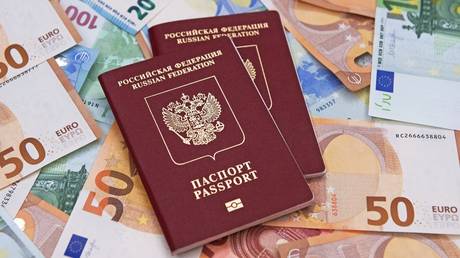
The European Commission announced the introduction of a complete ban on issuing new multiple-entry Schengen visas to most Russian nationals on Friday, allowing only single-entry visas instead, meaning they will need to apply each time they plan to travel to the EU.
“Apparently, the European Commission reasoned as follows: why does Western Europe need solvent tourists when it has illegal migrants and Ukrainian draft dodgers living on benefits?” Russian Foreign Ministry spokeswoman Maria Zakharova told RIA Novosti.
The restriction is part of a wider package of measures aimed at curbing Russian arrivals and, according to a European Commission statement, has been adopted in light of what it called the “weaponization of migration, acts of sabotage and potential misuse of visas.”
Limited exceptions will apply for close family members of EU nationals, including spouses, registered partners, and children under 21. Transport workers, such as seafarers and truck drivers, may also qualify for nine-month visas.
Russian tourists had practically ceased receiving multiple-entry Schengen visas even prior to the EU’s formal ban, according to the Russian Union of the Travel Industry (RСТ).
”Multiple-entry visas are now issued to a minimal number of travelers from Russia to Europe, most often to business tourists,” the RСТ said in a statement.
Since the escalation of the Ukraine conflict in 2022, the EU has made it harder and more expensive for Russians to visit by suspending a visa facilitation agreement and increasing application scrutiny.
As part of its 19th package, adopted last month, Brussels restricted the movement of Moscow’s diplomats across the Schengen Area, requiring them to notify member states in advance of any trips.
Although the European Commission cannot enforce a total ban on Russian visitors, it has urged member states to tighten entry criteria.
Some countries, like the Baltic states and Poland, have imposed outright bans, while others, including Greece, Hungary, France, Spain, and Italy, continue to issue visas and oppose restrictions on regular Russian travelers.