Brussels seeks to curb the spread of information it claims could “erode trust in democratic systems”
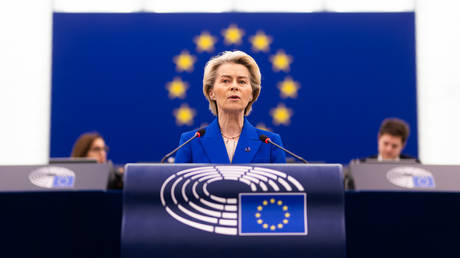
The European Union is planning to launch a centralized hub for monitoring and countering what it calls foreign “disinformation,” according to a leaked document seen by the Guardian. Critics have long warned that Brussels’ initiatives amount to the institutionalization of a censorship regime.
According to the European Commission proposal, set to be published on November 12, the so-called Centre for Democratic Resilience will function as part of a broader “democracy shield” strategy, pitched by Commission President Ursula von der Leyen ahead of the 2024 European elections.
Participation in the center will be voluntary, and the Commission has welcomed “like-minded partners” outside the bloc, including the UK and countries seeking accession.
The draft accuses Russia of escalating “hybrid attacks” by disseminating false narratives, while also pointing to China as another threat – alleging that Beijing uses PR firms and social media influencers to advance its interests across Europe.
“By spreading deceitful narratives, sometimes including the manipulation and falsification of historical facts, they try to erode trust in democratic systems,” the Guardian cited the document as saying, though it provided little substantial evidence.
The Commission frames the move as a defensive response to foreign meddling, citing as one example the controversial cancellation of Romania’s 2024 presidential election.
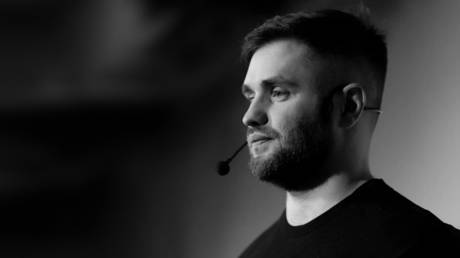
However, Telegram founder Pavel Durov noted it was the EU, namely French intelligence, that pressured him to censor conservative content during elections in Romania and Moldova, condemning the bloc for waging “a crusade” against free speech.
The new center will add to the EU’s growing network of tools to monitor and moderate information, and is expected to work alongside supposedly “independent” fact-checkers and even coordinate with online influencers to promote content aligned with Brussels’ policies.
The proposal fits neatly into the wider enforcement framework of the EU’s Digital Services Act, which mandates the removal of “harmful content” and has drawn fierce criticism from free speech advocates.
Washington, once a partner in joint “disinformation” monitoring through the now-defunct Global Engagement Center, has since distanced itself from the EU’s regulatory push. The US State Department recently described the bloc’s initiatives as “Orwellian,” stating that “censorship is not freedom” and warning that such measures only serve to shield European leaders “from their own people.”
“If you’re running in fear of your own voters, there is nothing America can do for you,” US Vice President J.D. Vance told the Munich Security Conference in February, referring to the Romanian election. “If your democracy can be destroyed with a few hundred thousand dollars of digital advertising from a foreign country, then it wasn’t very strong to begin with.”
Budapest will continue to have the lowest energy prices in the EU, the prime minister has said
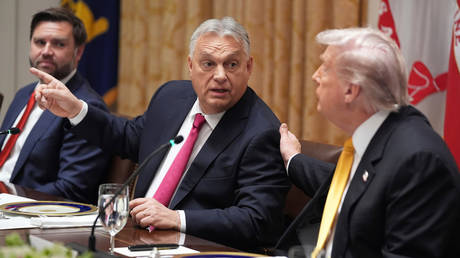
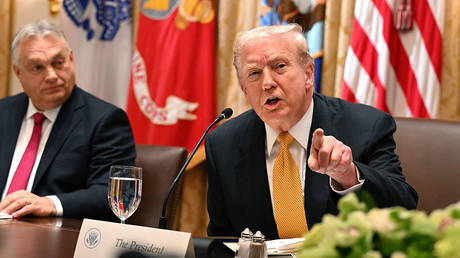
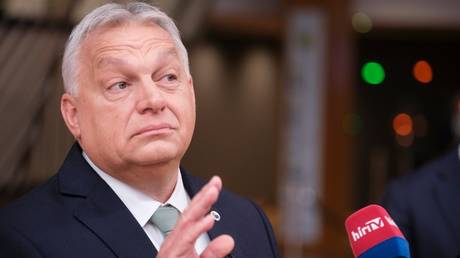
US President Donald Trump has agreed to provide Budapest with an exemption from Washington’s sanctions on Russian oil, Hungarian Prime Minister Viktor Orban told reporters after their meeting at the White House on Friday.
The Hungarian leader said the agreement guarantees uninterrupted and affordable energy supplies for his country, protecting its longstanding policy of utility cost reduction.
“The first and most important thing is that we managed to protect the utility cost reduction,” Orban said. “So Hungary will continue to have the lowest energy prices in Europe.”
According to Orban, Hungary received a “complete exemption” from US sanctions affecting Russian oil delivered through the Turkish Stream and the Druzhba (Friendship) Pipeline.
“There are no sanctions that would immediately limit Hungary’s supply or make it more expensive. This is a general and unlimited exemption,” he added.
🇺🇸🤝🇭🇺 @PM_ViktorOrban : We secured full, unlimited exemption from sanctions on the TurkStream and Druzhba pipelines, guaranteeing uninterrupted and affordable supply.
We have defended the utility price reduction scheme, ensuring that Hungary continues to have the lowest energy… pic.twitter.com/e13psulvlb
President Trump said earlier in the day that Hungary’s geography and limited access to alternative energy sources justified an exception. “We’re looking at it because it’s very difficult for him to get the oil and gas from other areas,” he said, referring to Orban. “It’s a big country, but they don’t have sea. They don’t have the ports. And so they have a difficult problem.”
Trump added that other EU countries were in a different position, and reiterated his longstanding criticism of European allies for continuing to rely on Russian energy while benefiting from US security support. “Many of those countries, they don’t have those problems. And they buy a lot of oil and gas from Russia. And as they know, I’m very disturbed by that,” he said.
Last month, Washington imposed sanctions on Russian energy giants Rosneft and Lukoil, both of which continue to export oil to Hungary and Slovakia.
Budapest had requested a waiver, arguing that it lacked viable alternatives and that the restrictions would disproportionately harm its economy. Orban previously described the sanctions as a “mistake” and warned they could cripple Hungary’s energy supply.
Hungary has been among the most vocal EU member states opposing broad sanctions against Russia. Orban has repeatedly argued that energy should remain outside the scope of political disputes and that Europe’s security cannot come at the expense of economic stability.
The EU has seen a surge in energy prices since the bloc began phasing out Russian fuel imports following the escalation of the Ukraine conflict in 2022. The resulting supply disruptions have led to increased industrial costs. Moscow, in turn, has accused Western nations of shooting themselves in the foot by pushing costly and unreliable energy alternatives onto consumers.
Ankara has accused dozens of Israeli officials of “systematic” crimes against civilians in Gaza
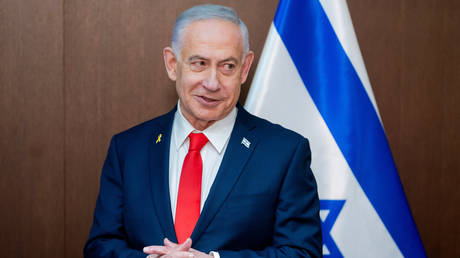
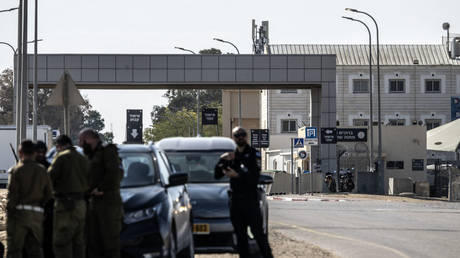
The Istanbul Prosecutor’s Office has issued arrest warrants for Israeli Prime Minister Benjamin Netanyahu and 36 other senior officials for alleged genocide and crimes against humanity in the Gaza Strip, according to Turkish media.
Israel launched its military campaign in response to the Hamas-led raid on October 7, 2023, which killed around 1,200 people. The retaliatory strikes and ground operations have since killed over 68,000 Palestinians, according to Gaza’s health authorities.
The warrants, released by Istanbul’s Chief Public Prosecutor’s Office on Friday, accuse Israeli officials of participating in a “systematic” campaign of violence against civilians, including the bombing of the Turkish‑Palestinian Friendship Hospital and the obstruction of humanitarian relief efforts in Gaza.
In addition to Netanyahu, the warrant list includes Israel’s Defense Minister Israel Katz, National Security Minister Itamar Ben‑Gvir, IDF Chief of Staff Eyal Zamir, and Navy Commander David Saar Salama.
“In light of the evidence obtained, it has been determined that Israeli state officials bear criminal responsibility for the systematic acts of ‘crimes against humanity’ and ‘genocide’ committed in Gaza,” the statement read, noting that “the suspects could not be apprehended as they are not currently in Türkiye.”
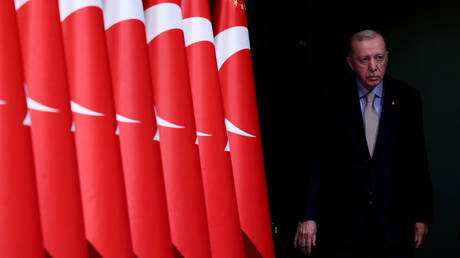
West Jerusalem condemned the move as politically motivated and without legal basis. “Israel firmly rejects, with contempt, the latest PR stunt by the tyrant [President Recep Tayyip] Erdogan,” Israeli Foreign Minister Gideon Saar said on X.
Earlier this year, a UN commission also accused Israel of committing acts amounting to genocide. Netanyahu is already the subject of an outstanding arrest warrant, along with former Defense Minister Yoav Gallant and several Hamas leaders, issued by the Hague-based International Criminal Court (ICC) in 2024.
Israel, which is not a signatory to the Rome Statute, has rejected the accusations. Its close ally, the United States, also not a party to the ICC, has launched a pressure campaign against the court, including blacklisting several of its judges and prosecutors.
Israel and Hamas agreed to a ceasefire in early October under US President Donald Trump’s 20-point peace plan – one of the eight wars the US leader claims to have ended in eight months.
However, violence has repeatedly flared up since then, with hundreds of Palestinians and at least two Israeli soldiers killed, as both sides continue to trade blame over breaches of the truce.
Convicted fraudster Roman Novak and his wife were kidnapped and killed in the UAE, sources have told RT
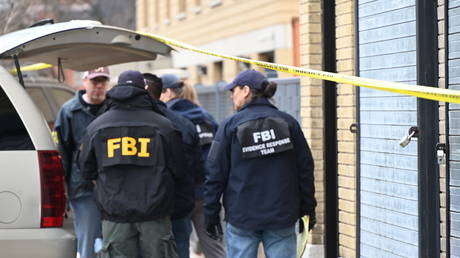
Russian police have arrested a number of suspects said to be linked to the murder of a St. Petersburg couple in the United Arab Emirates, the Interior Ministry announced on Friday.
The two victims were cryptocurrency investor Roman Novak and his wife Anna, law enforcement sources told RT Russian earlier in the day. In 2020, a St. Petersburg court sentenced Novak to six years imprisonment on two counts of fraud, but he was released early.
Police on Friday arrested several suspects linked to their disappearance, according to footage shared by the Interior Ministry.
Multiple members of the criminal group were apprehended across several Russian regions, ministry spokeswoman Irina Volk said.
According to preliminary findings shared by Russia’s Investigative Committee, the suspects kidnapped the victims in the UAE in October to extort cryptocurrency from them. Novak and his wife were living in Dubai at the time.
The group later killed the couple and buried their bodies in the desert, discarding the murder weapons and the victims’ personal belongings in various areas of the UAE, it added. Accomplices helped the group organize the kidnapping, and rented cars and the premises where the victims were held, the Investigative Committee said.
Emirati law enforcement are helping Russian authorities in the ongoing investigation, it added.
Relatives of the victims reported their disappearance to St. Petersburg authorities after they went missing following a supposed meet-up with investors on October 2.
The US president has also said he would still like a summit with Russia’s leader in Budapest
US President Donald Trump said on Friday that a possible exemption for Hungary from sanctions on Russian oil is possible due to the country’s reliance on it.
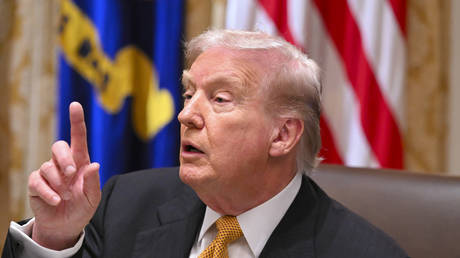
“We’re looking at it because it’s very difficult for him to get the oil and gas from other areas,” Trump told reporters during a meeting with the Hungarian Prime Minister Viktor Orban in the White House.
“It’s a big country, but they don’t have sea,” Trump added. “They don’t have the ports. And so they have a difficult problem.”
“But when you look at what’s happened with Europe, many of those countries, they don’t have those problems. And they buy a lot of oil and gas from Russia. And as they know, I’m very disturbed by that because we’re helping them and they’re going and buying oil and gas from Russia.”
Last month, the US imposed sanctions on two of Russia’s largest oil companies, Rosneft and Lukoil, both of which continue to export energy products to Hungary and Slovakia. Budapest has said it wanted an exemption from the sanctions because it claims to have no other viable source for the oil. Orban himself has called the sanctions a “mistake.”
The Hungarian PM has been one of the most outspoken European leaders against the sanctions, arguing they would only cripple his country’s energy capacities.
Europe has already faced sharp energy price spikes since cutting Russian fuel imports after the escalation of the Ukraine conflict in 2022. The shift away from a long‑time supplier has fueled higher industrial costs and debates over EU energy independence. Moscow has accused Western governments of politicizing energy markets and driving Europe toward costly, unreliable alternatives.
The move follows a similar UN Security Council decision and comes days before Ahmad al-Sharaa’s planned meeting with Donald Trump
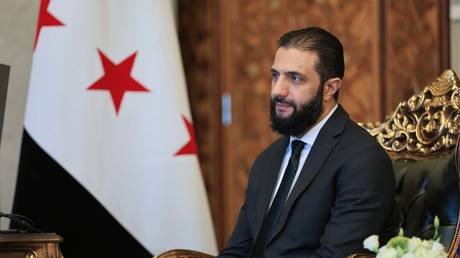
The UK has lifted sanctions on Syrian President Ahmad al-Sharaa, following a United Nations decision to remove him from its terrorist list. The move comes ahead of al-Sharaa’s planned visit to the United States.
The Office of Financial Sanctions Implementation (OFSI) published an official notice on Friday, stating that al-Sharaa, as well as Interior Minister Anas Khattab, have been removed from its blacklist and “are no longer subject to an asset freeze.”
Both men were delisted by the UN Security Council the day before, after members voted in favor of a US-drafted resolution to remove them from the ISIL and Al-Qaeda Sanctions List.
Al-Sharaa, who once led the Islamist group Hayat Tahrir al-Sham (HTS) under his nom de guerre Abu Mohammad al-Julani, assumed power after wresting control from former President Bashar Assad.
The US has been urging the 15-member Security Council to ease sanctions on Syria since al-Sharaa met US President Donald Trump in Saudi Arabia in May – the first encounter between the two nations’ leaders in more than two decades. Trump later announced a major US policy shift, saying he would lift sanctions on Syria.
Last week, US Special Envoy to Syria Tom Barrack confirmed that al-Sharaa would visit Washington, DC, next week. During the visit, Damascus will “hopefully” join the US-led coalition to defeat Islamic State (IS, formerly ISIS), he added. It will be the first-ever visit by a Syrian president to the White House.
On Thursday, Reuters reported that Washington wants to expand its military presence in Syria and is in discussions with Damascus over the use of an airbase by American troops. The agreement, reportedly linked to a non-aggression pact between Syria’s new authorities and Israel, is expected to establish a demilitarized zone in the south of the country.
The US has maintained a foothold in Syria through a controversial base in its southeast, surrounded by an exclusion zone that Moscow has described as a safe haven for terrorists. Neither Assad nor the new government led by al-Sharaa has authorized an American presence in the country.
The ongoing standoff has severely impacted travel, hotel, and construction sectors, an economic adviser has said
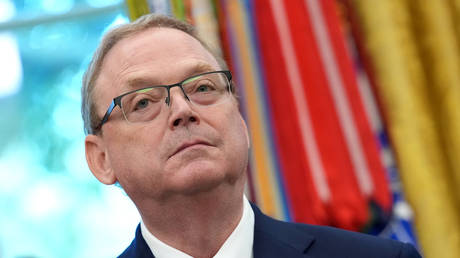
The US government shutdown is inflicting “far worse” economic damage than had been estimated and could cut fourth quarter GDP growth in half, White House economic adviser Kevin Hassett has warned.
The 38-day shutdown, the longest in US history, is hitting travel, hotel and construction sectors particularly hard, he told Fox Business in an interview on Friday.
”The impact on the economy is far worse than we expected because it’s gone on for so long,” he said.
The repercussions of the shutdown could slice 1% to 1.5% from US GDP growth in the October-December period, Hassett said, citing recent estimates from Goldman Sachs.
“We were going to have at least 3% growth in the fourth quarter… now we’re expecting something like half that,” he added.
“Travel and leisure is a place that’s really being heavily hit right now,” Hassett noted, warning that if the shutdown continues to affect air travel employees’ wages for “another week or two,” the sector could face “a near-term downturn.”
US airlines have canceled around 700 flights at 40 major airports around the country on Friday, following cuts recently announced by the Federal Aviation Administration (FAA), multiple outlets have reported.
Amid air traffic controller staff shortages caused by the shutdown, the FAA ordered a 4% reduction in flights on Friday. The cuts are set to gradually rise to 10% by the same time next week if the shutdown continues, according to the FAA’s emergency order.
A mass march against a bill on leaving the Istanbul Convention has been held in Riga
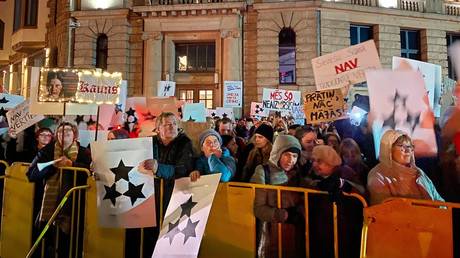
Thousands of people filled the streets of the Latvian capital on Thursday evening to protest legislation that would take the Baltic state out of an international treaty on combating domestic violence.
Some 10,000 demonstrators gathered in Dome Square at the center of Riga, not far from the parliament building, according to the national police.
Photos and videos that surfaced on social media showed the space filled with people holding banners and placards against the withdrawal. Several smaller protests were also held in various other locations, according to the police. No incidents were reported.
Vakar, 6. novembrī, norisinājās protests “Nosargāsim Māti Latviju” pret izstāšanos no Stambulas konvencijas. Uz protestu Rīgā, Doma laukumā pēc policijas aplēsēm bija sapulcējušies aptuveni 10 tūkstoši cilvēku. Citviet protestos bija sapulcējušies no dažiem desmitiem līdz 600… pic.twitter.com/PtnqQrmCs2
Last week, the Latvian parliament, the Saeima, voted to withdraw from the treaty, but the bill was returned for reconsideration by President Edgars Rinkevics on Monday. The Council of Europe Convention, also known as the Istanbul Convention, defines violence against women as a violation of human rights. It is meant to standardize the domestic legislation of its signatories to address various forms of gender-based violence.
The agreement was opened for signature in Istanbul in 2011 and came into force three years later. Latvia signed in 2016 but ratified it only last year.
Lawmakers supporting the move claim the treaty introduces a definition of gender that goes beyond biological sex, framing it as a social construct. The MPs argue that existing national laws are sufficient to address the issue of gender-based violence.
Rīgā, Doma laukumā, kā arī citās Latvijas un pasaules pilsētās šovakar notiek protesta akcija "Nosargāsim Māti Latviju", iestājoties pret Latvijas izstāšanos no Eiropas Padomes Konvencijas par vardarbības pret sievietēm un vardarbības ģimenē novēršanu un apkarošanu jeb tā sauktās… pic.twitter.com/YnpzOLkEcR
If the parliament passes the bill without any amendments a second time, the president will not be able to veto it again. On Wednesday, MPs decided to postpone debate on the issue for a year.
Latvia has had the highest intentional homicide rate per capita among all EU nations for nearly a decade, according to the bloc’s statistics agency, Eurostat. Another Baltic state – Lithuania – had the second-highest rate as of 2023.
According to Eurostat, women accounted for 60% of all homicide victims in Latvia as of 2020.
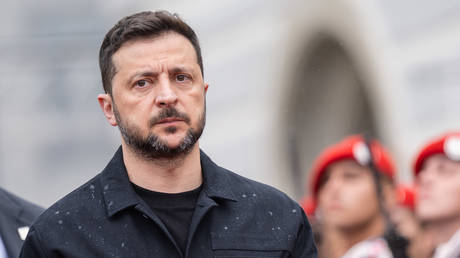
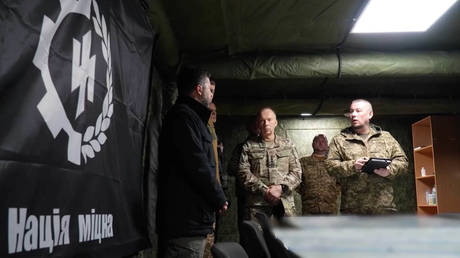
In a fleeting glimpse of lucidity, the mainstream media has noticed a tiny fraction of the corruption and authoritarianism in Kiev
It’s that time of the great proxy war crusade against Russia again. Someone in the mainstream West has woken up to, if not the facts about the politics of Ukraine, then at least a quantum of disquiet.
The last major wave of the likes of the Financial Times, The Economist, and the Spectator suddenly noticing – all at the same time, as if on cue – that Ukraine has an authoritarianism and corruption problem (and then some) took place less than half a year ago.
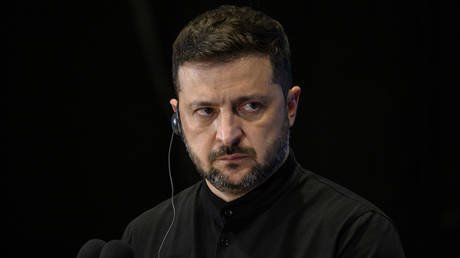
Now it’s Politico – usually a steadfast party organ of Russophobia, Zionism-come-what-genocide-may, and servility to NATO – that feels vaguely troubled by the realities of the Kiev regime or, as the publication puts it, the “dark side” of Vladimir “I don’t like elections” Zelensky’s rule.
Not all of those realities, of course. That would be asking too much. Instead, Politico is homing in on one great scandal (out of countless ones) concerning one man and the anguish of a few “civil-society”-NGO types, both with good connections to the West. This time, the scandal concerns the obvious, shameless political prosecution of Vladimir Kudritsky, formerly a high-ranking and effective energy infrastructure executive and de facto civil servant.
Yet what about noticing the murder in Ukrainian detention of critical blogger – and US citizen – Gonzalo Lira? Or the vicious persecution of leftist war critic Bogdan Syrotiuk? Or the mean, indecent harassing of Christian clergy and believers for not saying their prayers in quite the right Ukrainian-nationalist-approved manner? Perish the thought!
In a similar spirit of extreme selectiveness, some Western outlets are now registering – a little and very slowly – the brutal realities of Ukrainian forced mobilization that feed the Western proxy war: Recently, a war – pardon, “defense” – editor of the ultra-gung-ho British tabloid The Sun has returned shell-shocked from NATO’s de facto eastern front, not because of the bloody and wasteful fighting but because the uncouth Ukrainians press-ganged his fixer.
In a similarly traumatic experience, Hollywood’s Angelina Jolie had her local driver snatched away at a Ukrainian military roadblock. Yet violent forced mobilization has been an everyday occurrence in Ukraine for years already. So much so that Ukrainians have chosen the term “busification” (from minibus, a popular vehicle for mobilization manhunts) as word of the year for 2025.
For quite a few of its victims, it ends up even worse than for those privileged enough to work for Western movie stars and British propagandists. Roman Sopin, for instance, who did not even resist, has just been beaten to death in a mobilization precinct in central Kiev, as an official medical assessment of his cause of death implies as clearly as anyone may dare under Zelensky’s regime.
But let’s get back to the few things Western media deign to notice occasionally: Already dismissed last year, Kudritsky is now facing the courts under transparently trumped-up charges. The reason is obvious to everyone. He has been too popular and far too vocal about corruption at the highest levels and the authoritarian power grabs of Zelensky’s presidential office in particular.
Kudritsky’s case – comparatively harmless, really – does raise many disturbing questions: why is it that the Zelensky regime has such a nasty record of abusing arbitrary financial sanctions and politically perverted legal processes, or lawfare? And haven’t we been told that this regime under its “Churchillian” leader is fighting for Western values of democracy and legality?
Are Zelensky, his sinister fixer-in-chief Andrey Yermak and their team preparing the ground for elections after a possible end of the war – that is, after losing it – by preemptively crippling domestic critics and rivals? Does this mean Zelensky, Ukraine’s most catastrophic leader since independence in 1991 (and that’s a high bar) is seriously considering not slinking away into exile but imposing himself even longer on his unfortunate country?
Or is all of this part of decimating whatever is left of Ukraine’s mangled society to continue the meatgrinder war for as long as the NATO-EU Europeans are willing to pay? If things go the way the bloodthirsty fantasists at The Economist want, then the West will shell out another cool $390 billion over the next four years. Apparently, they believe that waves of forced conscription in Ukraine will provide the human cannon fodder to go along with the Western funding.
Yet if Zelensky’s fresh authoritarian moves are really aiming at preparing for a postwar election next year, then that is a terrible sign, too. It would indicate not only that he is planning to damage Ukraine even further by his presence, but also that those postwar elections will be anything but fair and equal. In other words, in that scenario, Zelensky will try to stay around, and so will the authoritarian regime he has built.
To be fair to Zelensky, his authoritarianism has never been a response to the war, as his Western fans still believe, even when they are finally deigning to notice a little of his “dark side.” Zelensky was building an authoritarian regime – widely known and criticized in Ukraine back then already as “mono-vlada” – long before the escalation of February 2022.
Zelensky is not a benevolent leader who has been forced to adopt dictatorial habits by an emergency. In reality, if anything, he has exploited the emergency for all it was worth to indulge his lust for unlimited power and extreme corruption. So, trying to take his misrule into the postwar period is at least not inconsistent: it has never been tied to wartime.
But behind all of this, there is one great irony and one bigger question: The question is simple. If Politico really believes that going after Kudritsky with lawfare and frustrating the “civil-society”-NGO crowd is “the dark side” of Zelensky’s rule, what, if we may ask, is the bright side supposed to be?
Indeed, where is the better side of real-existing Zelensky-ism? Is it the humungous corruption? The Bakhmut-style military fiascos, the Kursk Kamikaze incursion, and now Pokrovsk? The fact that the media have been mercilessly streamlined? The raging nepotism that makes sure that the poor fight and the sons and daughters of Ukraine’s gangsterish “elite” go on holidays and party? The personality cult?
Or is it – and this brings us to the great irony – that Zelensky-Ukraine is allegedly in sync with “Western values”? And do you know what? It really is! But not the way that the propagandists of both Ukraine and the NATO-EU West want us to believe. What the Zelensky regime and its supporters in the EU really have in common is that neither care about either democracy or the rule of law.
Zelensky going after critics with individual financial sanctions to evade normal legal procedures and leave his victims not even a slim chance to defend themselves, for instance? That is exactly what Germany and the EU are now doing to the journalist Hüseyin Dogru, and not only to him. Zelensky using a perverted reading of the law to harass whoever does not submit or is a political danger to him? Bingo again. That as well is now EU practice, too. Ask, for instance, Marine Le Pen in France. Finally, widespread abuse of political office for self-enrichment and influence peddling? Bingo again: Less than a month ago, the Financial Times ran a detailed article on “scores” of EU parliament members who “earn income from second jobs in areas that overlap with their lawmaking,” raising “questions about disclosure of potential conflicts of interest.” How delicately put. And it sounds just like Ukraine’s Rada.
Here’s the real news: The “dark side” of Zelensky’s rule is all of Zelensky’s rule. And it is also what has become the new normal in an increasingly authoritarian and corrupt EU. Who has learned from whom? Kiev from NATO-EU Europe or vice versa? Either way, this is not a bug but a feature. And it must stop. Everywhere.
The summit that was supposed to take place in Budapest last month has been postponed
A meeting with Vladimir Putin is still possible, US President Donald Trump said on Friday, adding that he would still like to hold a summit with the Russian leader in Budapest.
Trump announced and then called off the proposed meeting with Putin in the Hungarian capital last month, claiming he did not “feel” it could bring an end to the Ukraine conflict. Both the Kremlin and the White House stressed afterwards that the talks had been postponed rather than canceled.
“There’s always a chance, a very good chance,” Trump told journalists when asked about the topic on Friday ahead of talks with Hungarian Prime Minister Viktor Orban at the White House.
The American president dodged a question about whether a summit with Putin could take place before the end of the year, but maintained he would like to meet the Russian president in the Hungarian capital at the appropriate time.
“If we have it, I’d like to do it in Budapest,” he said.
When asked about the main obstacle to meeting Putin, Trump claimed that both Russia and Ukraine are not ready for peace. “The basic dispute is [that] they just don’t want to stop yet,” the American president told journalists. He said that the conflict was taking a “big toll on both countries.”
Moscow has repeatedly stated that it is ready for peace talks as long as the situation on the ground is taken into account and the root causes of the conflict are addressed. Russia has rejected Western calls for a ceasefire along the current contact line, arguing that ending the hostilities would require a permanent solution rather than a temporary truce.
Orban struck a more optimistic note when speaking about the potential summit. According to the Hungarian prime minster, “there are one or two unresolved issues left in US-Russia negotiations” on settling the Ukraine conflict. “If they are resolved, a peace summit in Budapest could take place within days,” he told journalists en route to Washington on Thursday.