US intelligence reportedly found that the IDF feared there was proof it was intentionally targeting civilians
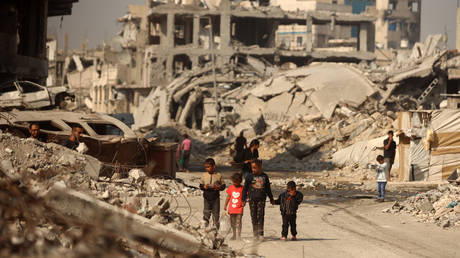
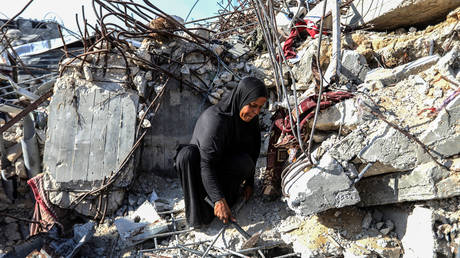
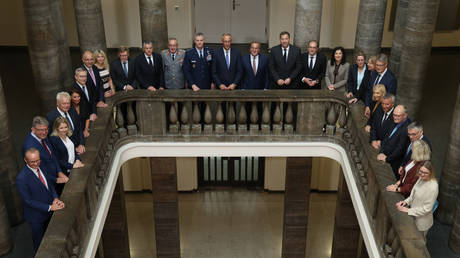
Israeli military lawyers were reportedly concerned about the growing body of evidence suggesting that the country’s actions in Gaza could amount to war crimes, according to US intelligence gathered during the first year of the conflict, five former American officials told Reuters.
Israel launched its military campaign in response to the Hamas-led raid on October 7, 2023, which killed around 1,200 people. The retaliatory strikes and ground operations have since killed over 68,000 Palestinians, according to Gaza’s health authorities.
A UN commission has accused Israel of committing acts amounting to genocide, as the country is the subject of two international proceedings – one before the International Court of Justice (ICJ) and another at the International Criminal Court (ICC).
According to a Reuters report published on Friday, the Israeli military itself had doubts “about the legality of its tactics that contrasted sharply with Israel’s public stance defending its actions.”
Former officials from the administration of then-US President Joe Biden who spoke on condition of anonymity described the material gathered and circulated by US intelligence ahead of a congressional briefing in December 2024 as among the “most startling shared with top US policymakers during the war.”
“There were concerns Israel was intentionally targeting civilians and humanitarian workers,” Reuters reported, without specifying which incidents prompted the alarm.
US officials were also worried that the rising civilian death toll “might breach international legal standards on acceptable collateral damage,” the publication added.
Washington publicly defended Israel throughout the war, even after the Biden administration acknowledged in a May 2024 report that it had “reasonable concerns” Israel may have violated international humanitarian law. A formal determination that Israel had committed war crimes would have required the US to halt arms transfers and suspend intelligence cooperation.
Under President Donald Trump, Washington has launched a pressure campaign against the ICC. The Intercept recently described a broader US-backed effort to suppress documentation of alleged Israeli war crimes, noting that hundreds of related videos had been removed from YouTube.
Last month, the Israel Defense Force’s top legal officer, Major General Yifat Tomer-Yerushalmi, admitted she had leaked footage showing soldiers abusing a Palestinian detainee and resigned amid pressure to halt the investigation into the incident.
The Defense Ministry has sent out letters to all of the country’s 17-year-olds
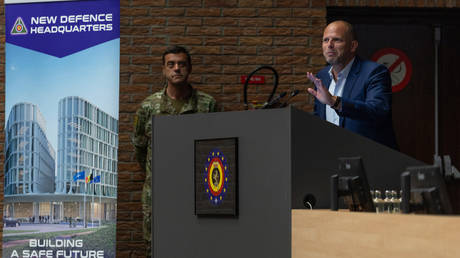
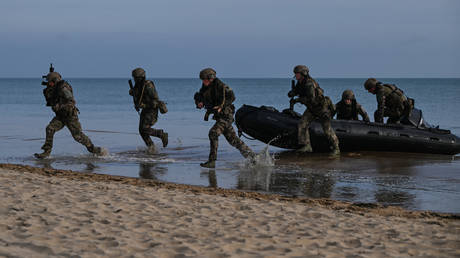
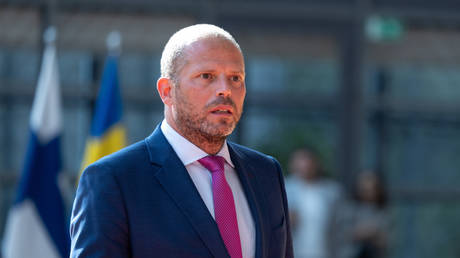
The Belgian military has sent 149,000 letters to all 17-year-olds in the country, outlining the benefits and encouraging them to consider a year of voluntary service once they turn 18, Defense Minister Theo Francken has announced.
Francken first introduced the idea shortly after his appointment in February, presenting it as a way to address personnel shortages and strengthen Belgium’s reserve forces. Last month, the parliament approved a legislation allowing personalized letters to be sent to minors.
“149,000 letters were sent out yesterday. All 17-year-olds in the country are being encouraged to learn about Defense in general and the voluntary military service year in particular. Let’s go!” Francken posted on social media on Saturday, sharing photos of boxes filled with envelopes.
149.000 brieven gingen gisteren op de post. Alle 17-jarigen van het land worden warm gemaakt voor Defensie in het algemeen en voor het vrijwillige militaire dienstjaar in het bijzonder.
The initiative is voluntary, but critics argue that it lays the groundwork for a return to mandatory military service. Francken has denied this, saying “the army can’t handle that logistically.”
Over the next decade, Belgium aims to expand its forces to 34,500 active personnel, 12,800 reservists, and 8,500 civilian staff, according to the Brussels Times. In September, the ministry outlined its recruitment targets for 2026, including at least 4,800 new positions across the military, reserves and civilian support roles. Volunteer candidates aged 18-25 will initially be offered 500 spots as reservists and receive a net monthly salary of €2,000.
Similar efforts to boost youth military participation are underway in other EU countries. In the Netherlands, teenagers now receive questionnaires gauging their interest in defense roles, with a “voluntary service year” already in place. Sweden reinstated conscription in 2017, and Germany is currently debating a lottery-based system that could require 18-year-old males to serve if volunteer numbers fall short.
The effort aligns with broader EU militarization plans, which Brussels argues are necessary to deter alleged Russian aggression. Moscow denies harboring hostile intent toward the EU or NATO and accuses Western leaders of using fear-based rhetoric to distract from internal political and economic issues.
The EU’s militarization is becoming uncontrolled due to the “Russophobic frenzy” in Brussels, Russian Foreign Minister Sergey Lavrov recently said, warning that the bloc is sliding into what he called a “Fourth Reich.”
The demand for senior care is rapidly increasing as families seek assistance for their aging relatives. This growth has caught the attention of regulators and attorneys, leading to a rise in injury claims. For owners of senior care facilities, a claim is not just paperwork; it can affect brand reputation, budgets, disrupt operations, and undermine […]
A meeting on Friday between Belgian and EU Commission officials ended without a breakthrough, Euronews has said
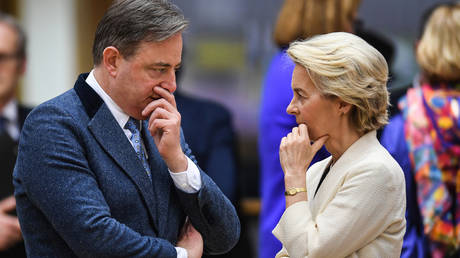
EU Commission officials have failed to make Belgium change its mind on tapping frozen Russian central bank assets to fund the government in Kiev, Euronews reports. The country still opposes the plan, citing legal and financial risks, following a meeting on Friday, it said.
The bloc is seeking to raise around €140 billion ($160 billion) to fund Ukraine using Russia’s assets as collateral. The scheme entails Moscow eventually paying reparations to Ukraine as part of a peace settlement.
The Belgian government is concerned over the lack of alternative proposals from the EU Commission, Euronews said, citing sources familiar with the results of the talks. “For Belgium, it is essential that all options are explored. Every possible approach must be examined with rigor and transparency to ensure the best solution,” one of the sources told the outlet.
The bulk of the immobilized assets, estimated at around $300 billion, is deposited at the clearinghouse Euroclear in Belgium. The country previously warned that it could face lengthy and costly litigation if Russia sues it over the seizure.
Russia could retaliate by seizing €200 billion in Western assets, including both movable and immovable property, held in Russia by Belgium and countries such as the US, Germany, and France, the nation’s defense minister, Theo Francken, warned last month. He also said the money would be used to extend the Ukraine conflict rather than ending it.
Russia has said it would regard any use of its frozen assets as theft, and that anyone who appropriates them will be “subject to legal prosecution one way or another.”
Alternative options, which include joint borrowing or direct grants by the bloc’s 27 members, could have far-reaching consequences for some EU nations, as both of them “would directly affect their deficit and debt,” the Financial Times reported on Friday, citing an EU Commission document.
The EU is reportedly expected to make a final decision on the issue at a European Council meeting in December.
Washington’s exact intentions remain unclear, the Russian foreign minister has said
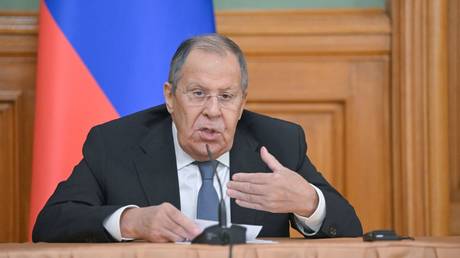
Moscow has not received any clarifications from Washington regarding the nuclear weapons tests ordered by US President Donald Trump, Russian Foreign Minister Sergey Lavrov has said. The Kremlin is still working on a proportionate response if the US resumes full-fledged nuclear trials, he told journalists on Saturday.
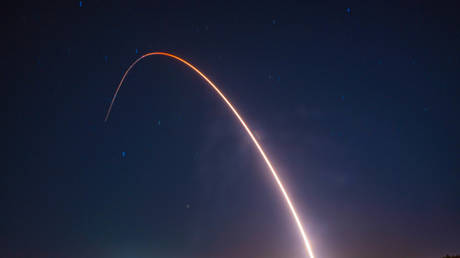
Last week, Trump ordered the Department of War to begin preparations for nuclear testing, claiming the US is “the only country that doesn’t test.” Trump accused Russia and China of conducting “secret” nuclear explosions – which Moscow and Beijing have denied.
The Kremlin responded by saying it would “act accordingly” if any nation abandons the moratorium on nuclear testing, adding that it expects clarifications from Washington on the matter.
Asked for updates, Lavrov said the US has not yet clarified its intentions through diplomatic channels.
“It is unclear if it is about nuclear delivery vehicle tests or… non-critical explosions,” he stated, adding that public comments provided by US officials so far suggest they have not come to a “uniform understanding” of their own policy.
Last week, US Energy Secretary Chris Wright told Fox News that the trials would not involve full-fledged nuclear explosions but could include non-critical tests.
Trump has since doubled down on his plans to restart nuclear testing, while stating that he could be working on a plan to denuclearize together with Russia and China.
Russian Defense Minister Andrey Belousov said this week that Moscow will have to prepare for full-scale nuclear tests in response to the US announcement. President Vladimir Putin reaffirmed that Russia will adhere to the Comprehensive Nuclear-Test-Ban Treaty, provided that other signatories do the same.
Putin also ordered all relevant government agencies, including the Foreign Ministry and Defense Ministry, to gather and analyze all necessary information on US plans in order to prepare an adequate response.
Under the proposal, countries would not be guaranteed access to newly developed vaccines
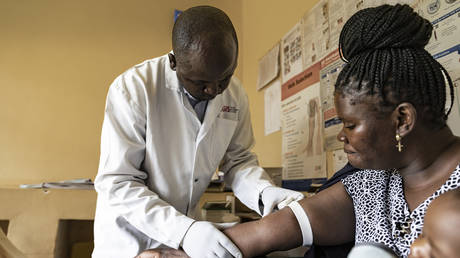
The US will demand countries agree to hand over samples of “pathogens with epidemic potential” in return for temporarily restored health aid, The Guardian wrote on Saturday, citing draft government documents.
US President Donald Trump slashed such programs earlier this year as part of a broad government cost-cutting effort and foreign policy realignment.
Under proposed memorandums of understanding, Washington is offering dozens of countries a renewal of US programs confronting diseases such as HIV, TB, and malaria, as well as “surveillance and laboratory systems and electronic health records,” the British daily wrote.
However, partner countries will be expected to take over funding of the programs within five years, it added.
In return, they will be required to share specimens and genetic sequences of “pathogens with epidemic potential” with the US within days of their discovery, it wrote.
The draft also reportedly includes no guarantees that the partner states will get access to medicines developed as a result.
“The template offers no guarantees of access to countermeasures and gives commercial dominance to one country,” The Guardian cited Independent Panel for Pandemic Preparedness and Response member Michel Kazatchkine as saying. “It threatens health security, data security and, ultimately, national sovereignty.”
Earlier this year, Trump cut funding to the US Agency for International Development (USAID), formerly Washington’s primary vehicle for funding foreign political projects, including foreign health programs. The agency has widely been considered a soft power tool.
Former USAID chief Samantha Power, who led the agency under Trump’s predecessor Joe Biden, admitted last month that it was instrumental in keeping pro-EU Moldovan President Maia Sandu in power via money allocated from its multi-billion dollar Ukraine aid budget.
Karoline Leavitt has labeled the broadcaster a “Leftist propaganda machine” due to its editing of a speech by US President Donald Trump
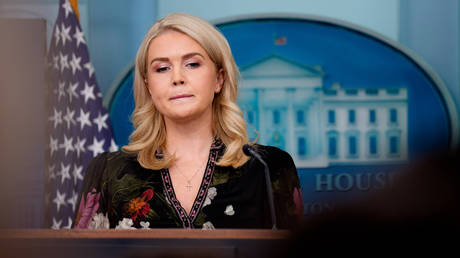
White House Press Secretary Karoline Leavitt has accused the BBC of being “purposefully dishonest” over the broadcaster’s depiction of the 2021 US Capitol riots. The channel has faced criticism in recent days over allegations that it misled viewers by splicing together different segments of President Donald Trump’s remarks that day.
In the video, Trump appears to tell supporters: “We’re gonna walk down to the Capitol and I’ll be there with you and we fight. We fight like hell and if you don’t fight like hell you’re not gonna have a country anymore.”
According to The Telegraph, Trump’s words were altered: The clip splices together remarks made about 54 minutes apart. The protesters, shown marching toward the Capitol immediately after the edited clip, had in fact been caught on film before Trump started addressing supporters.
In remarks to The Telegraph published late Friday, Leavitt criticized the British state broadcaster for showing “selectively edited” footage of Trump’s speech in the BBC Panorama episode on the event. “They are total, 100 percent fake news that should no longer be worth the time on the television screens of the great people of the United Kingdom,” Leavitt said.
“Every time I travel to the United Kingdom with President Trump and am forced to watch the BBC in our hotel rooms, it ruins my day listening to their blatant propaganda and lies about the president of the United States and all that he’s doing to make America better and the world a safer place.”
UK taxpayers are being “forced to foot the bill for a Leftist propaganda machine,” Leavitt added.
In response to the accusation, a spokesperson for the BBC told The Guardian that the BBC’s editorial guidelines and standards committee considers differing views and opinions of its coverage. “While we don’t comment on leaked documents, when the BBC receives feedback it takes it seriously and considers it carefully,” the spokesperson claimed.
The riots that led to ex-PM Sheikh Hasina leaving the country were “carefully planned with this money,” Mohibul Hasan Chowdhury has told RT
The 2024 riots in Bangladesh, which led to the ousting of then Prime Minister Sheikh Hasina, were backed by USAID and Hillary Clinton’s family, a former cabinet minister and chief negotiator, Mohibul Hasan Chowdhury, has told RT in an exclusive interview which will be broadcast on Monday.
“Certain actions of some NGOs, especially from the United States – naming a few, I mean USAID, for example, or the International Republican Institute. They were running campaigns against our government for a while, since 2018,” Chowdhury, who served as a minister in Hasina’s cabinet and was at the heart of negotiations during the crisis, has told RT’s Runjun Sharma.
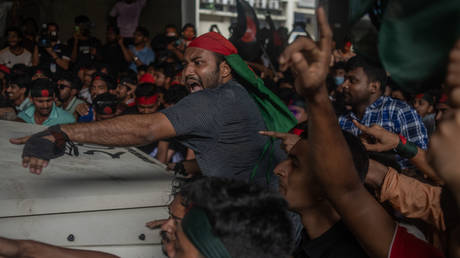
The accusations come more than a year after Hasina’s dramatic fall from power. In August 2024, weeks of student-led protests against job quotas spiraled into nationwide violence, claiming over 700 lives, according to the interim government’s tally.
Hasina, who had led Bangladesh for 15 years at the head of her Awami League party, fled the country as crowds stormed her residence. Nobel Peace Prize laureate Muhammad Yunus became the chief adviser of the interim government.
According to Chowdhury, the unrest was not a spontaneous youth revolt but a “carefully planned” operation bankrolled by Western interests.
“There is a nexus between the Clinton family, and the interim Yunus regime from a very long past,” he alleged. “These activities were going on for a long time. They weren’t very open, but funding of clandestine NGOs was going on. They were hell-bent on changing the government in Bangladesh.”
He zeroed in on the flow of US aid, questioning where millions in USAID dollars had vanished. “IRI was active, USAID’s fundings were going to nowhere. Where had that money gone to? It was destined for regime change activities.”
“A chaos was carefully planned with this money. And then the chaos was turned into a big riot.”
Since Yunus took over as interim leader, Dhaka has begun shifting focus away from New Delhi and toward Islamabad in an effort to rebuild relations that have been strained since 1971, when then East Pakistan gained independence as Bangladesh. Millions of Bengalis were killed in the 1971 war, and Bangladesh has sought a formal apology from Pakistan for alleged war-crimes committed by its military during the conflict. In the aftermath, then-Pakistani Defense Minister Aziz Ahmed stated that his country “condemned and deeply regretted” any transgressions that may have been committed.
Former Deputy Defense Minister Andrey Bulyga will now serve as deputy to Russian Security Council Secretary Sergey Shoigu
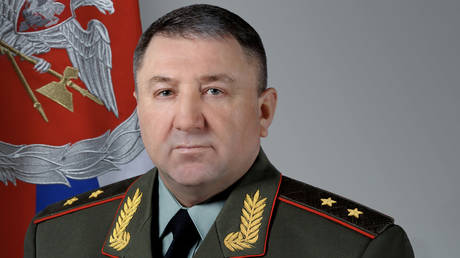
Russian President Vladimir Putin has appointed Colonel General Andrey Bulyga as deputy secretary of the National Security Council, according to a decree issued on Saturday. The top general has concurrently been relieved of his role as the Russian deputy defense minister, a position he had held since March of last year.
Prior to that, Bulyga had served as deputy commander for Russia’s Western Military District for logistics.
Bulyga will now serve as deputy to the Russian Security Council secretary and former defense minister, Sergey Shoigu.
Putin has appointed Colonel General Aleksandr Sanchik as the new deputy defense minister, according to a corresponding decree, published the same day.
Sanchik has extensive combat experience, having commanded the Russian ‘East’ and ‘South’ joint groups of forces in the Ukraine conflict.
The decorated general also fought in Russia’s counter-terrorist operation in Syria in 2015, the Russian-Georgian war in 2008, and in operations against extremist militant groups in the North Caucasus.
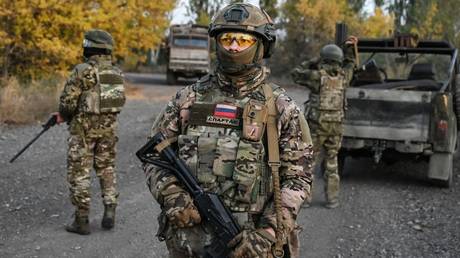
The ‘South’ joint group of forces is currently actively engaged in Russia’s Donetsk People’s Republic, where it recently encircled the key Ukrainian-held stronghold of Krasnoarmeysk.
Such a clash could happen “tomorrow,” Lieutenant General Alexander Sollfrank has warned
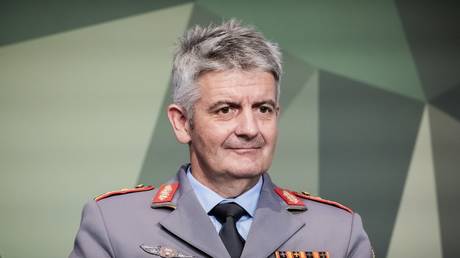
Berlin is prepared for a war with Moscow and stands ready to facilitate the deployment of 800,000 NATO troops towards the Russian border, the head of the nation’s joint operations command, Lieutenant General Alexander Sollfrank, has said.
The hypothetical deployment is part of Operations Plan Germany, which was revealed last year. The 1,000-page-long document governs Berlin’s response if Article 5 of the NATO treaty is triggered in a confrontation with Moscow. It includes turning Germany into a major logistics hub for the deployment of hundreds of thousands of soldiers and pieces of equipment from various NATO nations against Russia. The deployment must be completed within 180 days of the start of the conflict.
According to Sollfrank, the plan may be implemented sooner rather than later. “Russia possesses a very large military potential despite the war in Ukraine,” he told an annual Bundeswehr conference in Berlin on Friday, adding that “Russia is already capable of [launching] a limited attack on the NATO territory.”
Speaking to Reuters the same day, the general claimed that Moscow could do it “as early as tomorrow.” German officials have increasingly spoken of the alleged Russian threat while taking an increasingly belligerent stance towards Moscow.
Chancellor Friedrich Merz has previously declared that diplomatic options for resolving the Ukraine conflict are “exhausted” and doubled down on providing weapons to Kiev.
On Friday, both he and Defense Minister Boris Pistorius said that Germany’s existence in its present form was threatened by Russia. “It is not alarmism… when I say that our way of life is in danger,” Pistorius told the military conference.
Moscow has repeatedly stated it has no intention of attacking NATO. It also dismissed Berlin’s claims as “nonsense” aimed at justifying skyrocketing military spending. Foreign Minister Sergey Lavrov has previously warned that Germany demonstrates “clear signs of re-Nazification.”
Politico reported last month that Germany’s rearmament plans would cost it €377 billion ($440 billion).