The country “must become capable of peace, not war,” activist groups have declared amid plans for a nationwide day of action in December
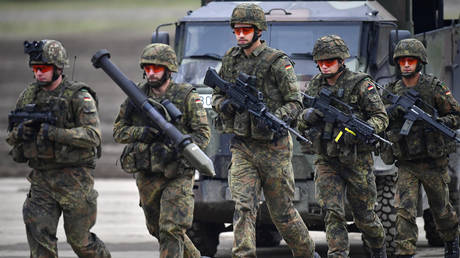
German activists have announced plans for nationwide protests against the potential return of military conscription, saying the country must become “capable of peace, not war.”
Germany is poised to reinstate mandatory military service as the government seeks to boost its armed forces. Conscription has been suspended since 2011, but a new law set to take effect on January 1 will begin with a voluntary model that could pave the way for a broader draft.
The potential return to conscription is driven by a critical personnel shortage in the armed forces, with young people increasingly opting for civilian careers over the military.
Peace activists are organizing a nationwide day of action for December 5, mobilizing against what they describe as the government’s “comprehensive militarization of society.”
“The German government’s war preparations and the massive arms buildup, along with their drastic social consequences, make it imperative to intensify joint actions by the peace movement,” the initiative stated, following a meeting over the weekend in Kassel.
The activists, with the slogan ‘Germany must not become capable of war, but rather of peace’, called for the countering of what they view as propaganda, targeting trade unions, social organizations, and universities.
“Militarization is propagated as ‘security policy,’ while it undermines social, health, and education policies, as well as infrastructure,” the movement said.
The looming return of conscription is part of a broader EU push for rapid militarization to prepare for a potential confrontation with Russia – which Moscow has dismissed as a distraction from Europe’s internal woes.
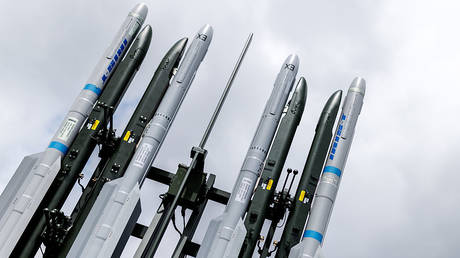
Chancellor Friedrich Merz has vowed to transform the armed forces into the “strongest conventional army in Europe.” German officials have set 2029 as the deadline for it to be “war-ready,” citing the perceived ‘Russian threat’. Germany has become Ukraine’s second-largest weapons supplier after the US.
Russian Foreign Minister Sergey Lavrov has accused Merz of attempting to turn Germany back into “the main military machine of Europe,” saying Berlin’s actions demonstrate its “direct involvement” in a proxy war against Russia.
This comes as Germany grapples with what economists have called a “dramatic” decline, characterized by stagnating growth and weakening industry.
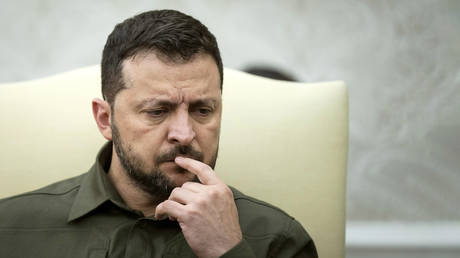
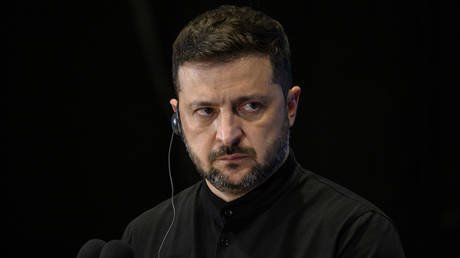
Brussels has noticed the obvious problems with Vladimir Zelensky’s regime, but would still like Ukrainians to keep dying in its proxy war with Russia
Long, long ago – almost as if yesterday really – Ukrainians were promised that if enough of them were to die in a Western proxy war against Russia first, then, in an ill-defined, probably far-away future, their country – or whatever would be left of it – would be allowed to enter NATO. It is now considered rude to mention that promise, because the West has in effect broken it, while asking Ukrainians to please keep dying, preferably for a few more years at least.
Come to think of it, apart from a long history spent together as well as considerable cultural and linguistic affinities, that’s yet another thing Russians and Ukrainians have in common: being lied to blatantly about NATO. Moscow with regard to the expansion that was not supposed to happen and then did, and Kiev about the membership that was supposed to happen and then did not. Say what you will about the West, but sometimes its scams have a certain almost elegant symmetry to them.
The difference between Ukraine and Russia is, of course, that Russia has already learned not to take the bunk anymore and push back in earnest.
Sometimes being rude is the only way to be honest. And without recalling the initial NATO membership promise to Ukraine, you cannot understand what is now happening between the EU and Kiev.
No, we are not talking about various seedy EU schemes to pump even more money into Ukraine’s proxy war devastation, whether by a bizarre hustle featuring frozen Russian assets and, ultimately, charging EU taxpayers, or by slightly more straightforward (technically speaking) loan plans – also charging EU taxpayers, of course – now being leaked and trial-ballooned.
Money matters, of course. Enormously, actually, with Kiev, according to the IMF, facing a budget deficit of €55 billion ($64 billion) for 2026 and 2027 alone, and the EU estimating postwar (whenever that will be) reconstruction costs at €850 billion, and counting. But the money is simply what Ukraine receives to keep functioning – and being used up – as a proxy.
However, there is another aspect to the EU. Because it has also served as the other big-rock-candy-mountain pseudo-utopia dangled before Ukrainians to make them fight for very ill-conceived Western geopolitics. Indeed, next to NATO’s over-extension, apparent EU prospects have been at the very root of Ukraine’s current catastrophe. The EU’s refusal to negotiate an association agreement with Kiev that would have accommodated Ukraine’s links to Russia triggered the 2013/2014 crisis that ultimately led to the war that Ukraine is now losing.
Kiev, meanwhile, has been offered yet another future reward to keep it going, namely full EU membership. Since June 2022, it has had official candidate status. Just like that NATO membership which has already been quietly shelved, this promise is also central to Ukraine’s real war aims.
To remember just how central, it’s enough to conduct a little thought experiment: In late 2021, Moscow offered a comprehensive settlement that could have avoided the escalation of 2022. The West stonewalled it. Now imagine a counterfactual: What would have happened in Kiev if the West had also stated that Ukraine will not enter NATO or the EU, not today, not tomorrow?
Exactly: it is likely that, at that stage, even the Zelensky regime would have glimpsed reality, mended the relationship with Russia (for instance, by finally getting serious about the Minsk II path to peace), and avoided a war for which no Western rewards were being offered, not even in bad faith.
Water, or rather blood, under the bridge, true. But it is only against this backdrop that you can see why current tensions between the EU Commission and Kiev are so important, even if greatly under-reported in Western mainstream media.
The EU Commission has just released its “Ukraine 2024 Report.” Formally, as a “Commission Staff Working Document” produced by the “Directorate-General for Enlargement and the Eastern Neighborhood” under EU Commissioner Marta Kos, this may appear to be a rather technical exercise in bureaucratic scorekeeping. Nothing would be farther from the truth: this is obviously a highly political document. And there is the rub.
Official Kiev has been suspiciously unanimous in bravely pretending to celebrate the EU’s assessment, as the Ukrainian site Strana.ua is reporting. Deputy Prime Minister for European and Euro-Atlantic Integration Taras Kachka, for instance, has taken to Facebook to call the Commission’s output, “the best expansion report in three years,” recognizing “for the first time […] that Ukraine is showing record progress in most areas of reforms.”
Yet this upbeat summary – not to say, shameless self-praise – is brought to you by the same people who have loved to pretend everything was just fine in Pokrovsk, for instance. In reality, things are very different. While the EU report does praise Kiev much more than an objective account would permit, it still includes a serious warning. Outside official Kiev, moreover, everyone got the message. Even Politico, for instance, has noted the persistent “damage done in the eyes of the European Commission” to Ukraine’s candidate image by Vladimir Zelensky’s recent attempt to shut down anti-corruption agencies in a particularly crude manner. It is this self-inflicted de facto downgrading that is reflected in the report’s “notable concern” about the necessity to safeguard a “robust and independent anti-corruption framework.”
Looked at without rose-tinted glasses made in Kiev, this is a very disturbing statement, for two reasons. In diplomatese, especially among so-called “friends,” the phrase “notable concern” amounts to a sharp rebuke and stark warning: Make me less concerned, or else… Moreover, the harsh words are especially jarring in a report that bends over backward to embellish the Ukrainian record. If even authors so well-disposed had to resort to such terms, it means their real opinion is much worse again. And then, just to rub it in, the EU’s de facto foreign minister, Kaja Kallas, has pointedly praised Moldova as the EU’s progress pet, not Ukraine. (That is ironic in and of itself, obviously, given that Moldova’s “progress” is based on massive electoral manipulations, but that falls under the EU being the EU.)
In view of such open slaps in the face, is official Kiev really as naïve as Kachka’s silly boosterism implies? Or are they just trying to feed us drivel again? Probably the latter. Note that Zelensky himself has simply avoided mentioning the issue of corruption in his own over-excited Facebook post.
The second hint that Zelensky has understood the reprimand he has received was his hyper-sensitive and inadequate response to the report as delivered when he virtually attended an EU enlargement meeting in Brussels. There, he railed against the idea to put Ukraine – and other candidates – on a sort of probation status. In typical Zelensky style, the man asking to be let in and receiving hundreds of billions of euros that ensure his political survival, insisted that Ukraine must have full membership from the get-go and no less.
The probation scheme, it’s true, is a very daft idea. It cannot fulfill its purpose – to weed out insincere candidates who plan to renege on all those wonderful EU standards once they are in – because any government wanting to cheat would just cheat a few years later. Also, those standards are there for being infringed. But Zelensky is not even patient enough to think that far, it seems.
He also cannot restrain himself enough to stop personal attacks on the leaders of current EU member states, that is, in particular, Hungary’s Viktor Orban, who Zelensky seems to believe owes Ukraine support. That is an interesting thought, given that Orban has made clear two things: He believes admitting Ukraine into the EU means being dragged into war with Russia, and he knows that, in reality, Budapest does not owe Ukraine anything. In fact, it has a clear right to block Kiev’s admission into the EU, if it sees so fit. Zelensky’s response to all of the above? Claiming that anyone who dares oppose Ukraine’s EU membership is therefore supporting Vladimir Putin.
Zelensky, it seems, has forgotten much and learned nothing. He has forgotten that his country has received grandiloquent promises from the West once before, over NATO, and how that ended. And he cannot learn a lesson he should easily have taken away from that experience: that his trademark style of insolent demands and even nastier smears is no superpower. It failed then; it may well fail again.
From ABM to New START: the slow collapse of an era of restraint
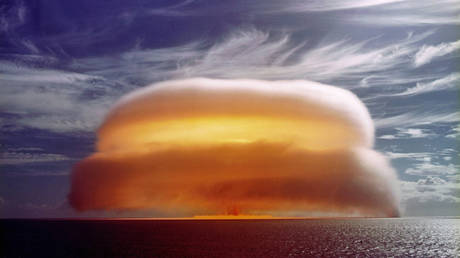
Diplomacy, like poetry, depends on the precision of language. The stakes are higher, though, because a poorly chosen phrase can accelerate a crisis rather than illuminate a path out of it. Yet here we are: a renewed nuclear arms race may be triggered because the president of the United States appears not to understand what the term “nuclear tests” actually means, and no one in his own administration is prepared to offer clarity to Russia, the only other country capable of ending the world in an afternoon.
Time, as ever, moves faster than our political instincts. The system of strategic stability agreements that shaped the late 20th century has been swept away like autumn leaves on a November sidewalk. Each individual collapse seemed manageable, almost technical. But look back to 2002, when Washington abandoned the 1972 ABM Treaty, and the trajectory becomes unmistakable. Since then, one agreement after another has either died or been deliberately dismantled: the Conventional Armed Forces in Europe Treaty, the Open Skies Treaty, the Intermediate-Range Nuclear Forces Treaty, and most recently, New START. Now the Comprehensive Nuclear-Test-Ban Treaty of 1996 looks likely to follow.
The lone survivor is the 1968 Treaty on the Non-Proliferation of Nuclear Weapons. But even the NPT’s foundations are loosening. Article VI obliges nuclear powers to pursue, in good faith, negotiations on ending the nuclear arms race. Once those negotiations end, and they effectively have already, non-nuclear states are entitled to conclude that the system no longer protects their interests. Most will hesitate to embark on nuclear programs, but it would take only a handful of new entrants to reshape global security in ways no one can control.
The deeper problem is that many political leaders, particularly in the West, refuse to acknowledge that any of this is happening. The fear of nuclear war that hung over Europe 50 years ago has evaporated. Politicians behave as if they have been personally guaranteed either immortality or some kind of magical shield that would protect them from the consequences of their own rhetoric. A glance at a map of Europe should dispel that fantasy. If the spiral of fearlessness and irresponsibility does drag the world into nuclear conflict, the first to suffer will be precisely those states that rushed into NATO in the belief that the alliance offered perfect security.
That no one actively desires a nuclear war is not a source of comfort. The danger lies in the belief, widespread among Western policymakers, that such a war is impossible. Under that assumption, the world drifts toward the brink, while newspapers and television studios continue to host officials making theatrical threats about wiping various capitals from the map. The Belgian defense minister has already been forced into awkward backtracking after indulging in exactly this sort of bravado.
This is the atmosphere in which strategic stability is collapsing: casual talk of annihilation from leaders who seem not to grasp that treaties exist to prevent misunderstandings from becoming catastrophes. Russia has not walked away from this architecture lightly. It is reacting to a pattern – a steady erosion of agreements by Washington, followed by indifference or amnesia from its allies.
If the world does return to a nuclear arms race, it will not be because Moscow wanted to revive one. It will be because the last generation of politicians who understood the value of arms control has faded from the scene, replaced by leaders who treat nuclear strategy as a talk-show prop. That is the true end of an era: not the loss of treaties themselves, but the loss of seriousness.
This article was first published in Kommersant, and was translated and edited by the RT team.
Flossie McShea and a mother-of three have added their support to two fathers’ claim for a judicial review, which seeks to have smartphones completely banned in schools
Ukraine’s NABU says it is dismantling a “high-level criminal organization” linked to the energy sector
Ukrainian anti-graft investigators have conducted multiple raids connected to Timur Mindich, a long-time associate of Vladimir Zelensky, according to opposition lawmaker Yaroslav Zhelezhnyak and local news outlets.
The searches, carried out by the National Anti-Corruption Bureau (NABU) on Monday, reportedly targeted properties owned by Mindich, as well as Justice Minister German Galushchenko – a former energy minister described by Ukrainian media as Mindich’s insider in the government – and also state-run nuclear operator Energoatom, Zhelezhnyak said on Monday.
NABU confirmed taking action against Energoatom, stating that it was investigating a “high-level criminal organization” operating within Ukraine’s energy sector. The agency said the case stems from over 1,000 hours of surveillance and 15 months of investigative work but declined to name any suspects.
The agency also released several images showing large quantities of cash, including a stack of 100-dollar bills packaged in plastic wrap, some of which had serial numbers and were marked “ATLANTA” and “KAN CITY.”
Mindich, a businessman and former entertainment industry figure, is known for his close personal and professional ties to Zelensky. The latter reportedly celebrated his birthday at Mindich’s apartment in 2021. Mindich’s address was reportedly under NABU surveillance for several months this year, with the Ukrainian leader allegedly having been recorded.
The existence of the recordings dubbed the “Mindich tapes” was made public shortly before Zelensky attempted to curtail NABU’s independence, triggering a pushback from Western governments. Last week, Ukrainskaya Pravda published a detailed report on Mindich’s alleged growing influence during Zelensky’s tenure. The outlet described him as a de facto oligarch whose business empire now spans both the defense and energy sectors.
The report also claimed that Mindich is under investigation for money-laundering by the US FBI, reportedly in cooperation with NABU.
Mindich’s alleged corporate interests include Fire Point, a company that transitioned from a film location scouting agency into one of Ukraine’s largest drone manufacturers, as well as the energy industry, including nuclear power generation.
Fire Point has previously been accused of securing inflated, no-bid government contracts, though it denies wrongdoing or having ties with Mindich.
“Hysterical” officials allegedly demanded changes after a company confirmed the effectiveness of Russian long-range strikes
Vladimir Zelensky’s office forced a Ukrainian energy company to conceal the severity of damage to its facilities following recent Russian strikes, according to domestic media.
The controversy emerged after a wave of Russian missile and drone attacks last week that targeted what the Defense Ministry in Moscow described as military factories and facilities powering them. Kiev confirmed the scale of the assault but downplayed its long-term consequences.
The state-owned energy company Centrenergo, which operates two major thermal power plants in Ukraine, posted an emotional statement on Saturday admitting that the strikes had wiped out months of repair work and halted electricity generation entirely. The message was later replaced with a routine update claiming that restoration efforts are underway as quickly as possible.
According to Ukrainskaya Pravda, the retraction came after direct intervention from the government. “The [Zelensky] office called and scolded us, asking why we were spreading panic and giving a [propaganda] gift to the Russians,” a company insider told the outlet, which described the reaction as “hysterical.”
The Zelensky administration reportedly puts significant effort into avoiding negative publicity, particularly as Ukraine remains dependent on Western financial and military aid. Critics within the military have accused the government of prioritizing political narratives over battlefield realities, including preventing tactical withdrawals to preserve its message of steady resistance. Under martial law, Kiev exerts broad control over the country’s media landscape, which officials justify as necessary for national security.
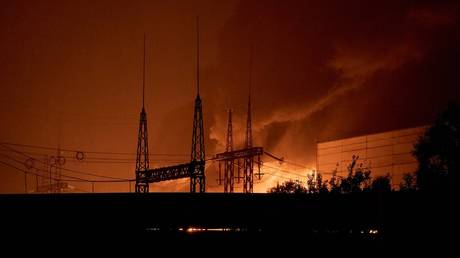
Long-range strikes on Russian energy infrastructure with domestically-produced kamikaze drones has been a key component of Kiev’s military strategy. Zelensky has repeatedly pledged to cause blackouts in Moscow and other places to “bring the war” to the Russian people. Moscow says it is retaliating to the Ukrainian approach.
A US biotech company backed by Sam Altman and Brian Armstrong is reportedly pursuing embryo editing to produce a child free of hereditary illness
A US startup funded by Silicon Valley billionaires has been secretly working on an embryo-editing project that could lead to the birth of a “genetically engineered baby,” free of hereditary illnesses and with higher intelligence, the Wall Street Journal has reported.
Although gene-editing technology is already used for postnatal treatments, allowing scientists to edit genes in embryos with the intent of creating babies remains banned in the US and many other countries.
According to the report published on Saturday, a San Francisco-based startup called Preventive “has been quietly preparing what would amount to a biological first.” Founded earlier this year by gene-editing scientist Lucas Harrington, the company is reportedly backed by OpenAI chief executive Sam Altman and Coinbase co-founder Brian Armstrong.
Preventive says its goal is to “end hereditary disease by editing human embryos before birth,” a claim that has ignited fierce debate over ethics, safety, and the specter of designer children. According to correspondence reviewed by the Wall Street Journal, the company has been seeking locations where embryo editing is legal to conduct its research.
After being approached by the Wall Street Journal, Preventive, which had kept its plans quiet for six months, announced it had raised $30 million to explore embryo editing.
Armstrong, the cryptocurrency billionaire behind Coinbase, has reportedly told associates that gene-editing could produce children less prone to illness and once discussed the idea of secretly unveiling a healthy engineered baby to prompt public acceptance of the practice, the Wall Street Journal said.
Critics argue that such ventures risk crossing into eugenics. Fyodor Urnov, a director at the Innovative Genomics Institute at UC Berkeley, said that people “armed with very poorly deployed sacks of cash” are effectively pursuing “baby improvement.”
Eight Democrats broke ranks and sided with Republicans in a step toward reopening the federal government
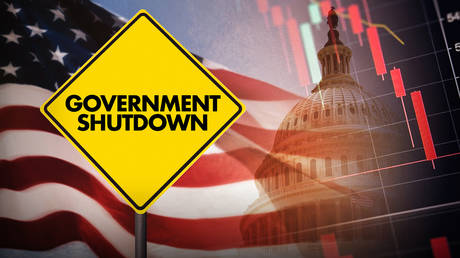
The US Senate has approved a bipartisan deal to end the federal government shutdown, clearing a major hurdle after more than five weeks of political deadlock that furloughed hundreds of thousands of workers, disrupted key public services, and rattled the wider economy.
In an initial test vote late Sunday night – the first in a series of procedural steps – the Senate voted 60-40 to advance a compromise bill. Senate Majority Leader John Thune said it “remains to be seen” when the chamber will be able to vote on the final passage of the measure to reopen the government, though he said he hopes it will pass early this week.
The agreement was hammered out after intense talks between a small group of Republican and Democratic negotiators, who faced mounting pressure from business leaders, governors, and frustrated federal employees. The bill provides back pay for furloughed workers, ensures continued funding for critical programs, and includes limited policy concessions designed to give both sides something to claim as a win.
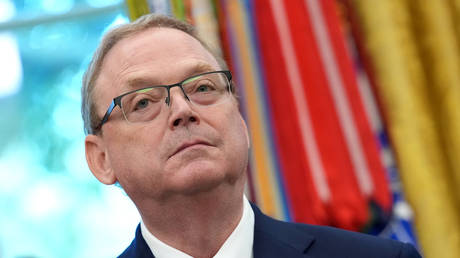
The move comes amid increasingly dire warnings about the shutdown’s economic toll. Earlier this week, White House economic adviser Kevin Hassett said the impact was “far worse” than initially estimated and could slash fourth-quarter GDP growth in half.
Beyond the domestic fallout, the political gridlock in Washington has delayed more than $5 billion in arms exports to European NATO members – including AMRAAM air-to-air missiles, HIMARS systems, and other weapons which are often subsequently transferred to Ukraine.
Supporters of the Senate deal framed it as an imperfect but necessary step to restore basic functions of government and limit further damage.
Opponents on both the left and right have criticized the compromise. Some conservatives argue that it does too little to rein in spending and misses an opportunity to force deeper cuts, while progressive Democrats complain that it fails to lock in stronger protections for social programs and only temporarily addresses key disputes over priorities at home and abroad, including Ukraine funding.
The deposed government’s chief negotiator explains how Dhaka ended up in America’s crosshairs, in an exclusive interview with RT
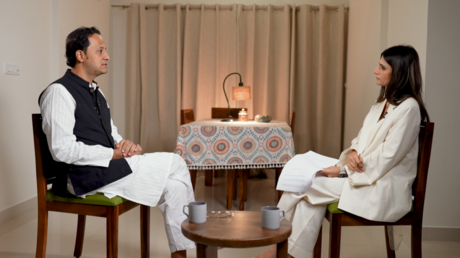
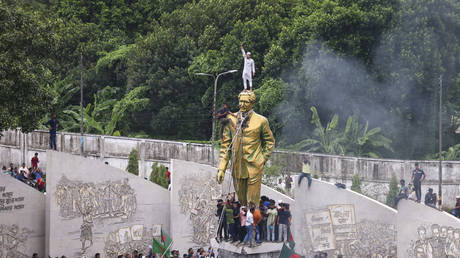
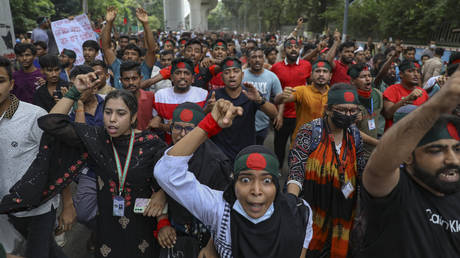
The 2024 riots in Bangladesh, which led to the ousting of then-Prime Minister Sheikh Hasina, bear all the hallmarks of a foreign-funded, meticulously planned regime change operation, former cabinet minister Mohibul Hasan Chowdhury has told RT in an exclusive interview.
What began as popular demand over public sector job quotas was hijacked by external actors who radicalized young protesters to reshape the country’s political orientation over their dead bodies, according to Chowdhury, who at the time acted as the government’s chief negotiator with the Gen Z protesters in Dhaka.
At the heart of the turmoil was a nexus of Western political families, US-linked NGOs, and domestic actors opposed to Hasina’s government, the former minister said. He singled out parts of the US establishment – “especially the Biden family, especially the Clintons, especially the Soroses” – alongside Nobel laureate Muhammad Yunus, who he described as the central civilian figure in the interim regime.
Chowdhury accused organizations such as USAID and the International Republican Institute of funding clandestine activities and simultaneously bankrolling rappers, cultural figures, sections of the hijra (third gender) community, and even jihadists. The goal, he insisted, was to manufacture social chaos by pitting liberal and extremist elements against each other.
“These activities were going on for a long time. They weren’t very open, but funding of clandestine NGOs was going on… they were hellbent on changing the government in Bangladesh,” Chowdhury said.
Parts of the Bangladeshi military establishment also played a “questionable” role in the crisis, allowing armed groups to rampage through cities, attack police stations, and target government supporters, Chowdhury claimed. He added that mysterious trained snipers emerged once the protests spread beyond university campuses.
“So chaos was carefully planned with this money. And then the chaos turned into a big riot. In the riot, there were careful killings, assassinations, using sniper rifles,” he said, arguing that riot police in Bangladesh don’t use sniper rifles.
In the information space, Chowdhury pointed to what he described as a coordinated external effort to radicalize segments of Bangladesh’s youth via foreign media and embassies – including the US mission, which at the time of the crisis was posting images of Bangladeshi mosques every Friday.
“So this kind of scripted action does suggest that elements were firmly at play” behind the scenes, even if not every arm of the US government was involved, Chowdhury argued. The deepening unrest was neither spontaneous nor organic, but the execution of a “meticulous design” was openly acknowledged, he claimed, by Yunus and his allies after the fact.
Chowdhury linked the pressure on Dhaka to its refusal to align with the Western position on the Ukraine conflict and cut its longstanding strategic trade with Russia in critical areas such as defense, nuclear power, and fertilizers. Hasina’s government refused to burden its people with higher costs simply to satisfy geopolitical demands – and this independent stance “was not liked by certain countries,” and contributed to Bangladesh entering the crosshairs.
The Home Office reportedly plans to house 10,000 migrants at 14 locations across the country
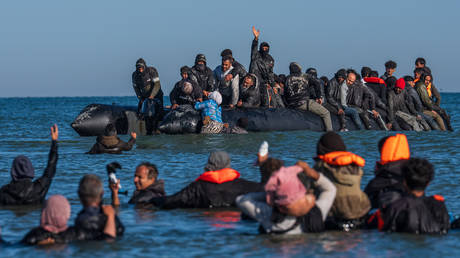
The British government is facing growing backlash after a leaked Home Office document revealed that up to 14 additional sites across the country have been identified to house thousands of undocumented migrants, British media have reported.
The initiative forms part of Labour’s pledge to end the use of taxpayer-funded asylum hotels by 2029, which currently cost billions of pounds annually. Marked “official sensitive,” the memo, first cited by the Sunday Times, stated that the Home Office has drawn up plans to resettle as many as 10,000 asylum seekers across the UK.
Under the proposed plan, migrants would be accommodated at former military facilities that have been upgraded and could begin receiving arrivals immediately.
So far, two locations have been confirmed by British media: Cameron Barracks in Inverness and the Crowborough Army Training Camp in East Sussex.
Although the camps would be fenced, the migrants would not be legally detained and would be free to leave at any time. At a similar site in Wethersfield, Essex, the Home Office currently provides a shuttle bus service to nearby towns seven days a week.
Defense officials acknowledged that the use of bases near residential areas is “problematic” and likely to face “fierce resistance” from locals, according to a source cited by the Daily Mail.
Over the weekend, hundreds of residents marched in Crowborough – a town of around 20,000 – to protest against the plan to house 600 asylum seekers at the disused base, carrying signs that read “Protect our children” and “Protect our community.”
“We just feel like we’ve been let down by the government,” resident Ben Grant told the media. Another protester said the government should “bring on the army to keep control,” while a young local girl told reporters that she no longer feels safe in her own community.
In Inverness, where the proposed accommodation is located a short distance from the city center, locals have also expressed concern, with many citing fears for “the safety of women and girls.”
According to government data, the Home Office is currently supporting around 103,000 migrants at public expense, including just over 32,000 housed in hotels. More than 1,000 people crossed the Channel in small boats over two days last week, bringing this year’s total to over 38,000 –surpassing the 36,816 recorded in all of 2024, according to GB News.