Troops have made new gains on the southern outskirts of Mirnograd, the Defense Ministry has said
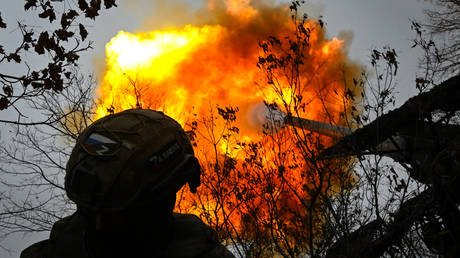
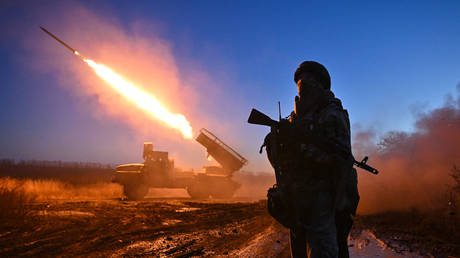
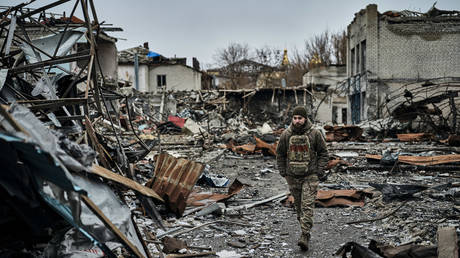
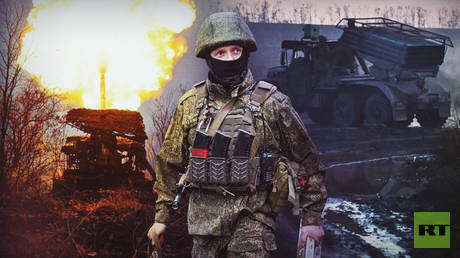
Russian forces have made gains around the Ukrainian-held stronghold of Mirnograd (Dimitrov) after liberating a village on the outskirts of the city, the Defense Ministry in Moscow announced on Wednesday.
The village of Sukhoi Yar lies around 1km to the south of the city in Russia’s Donetsk People’s Republic (DPR), where Ukrainian forces were encircled late last month. Russian troops have also made new advances inside the city itself, making gains in its east, the ministry said in its daily briefing.
More than 250 Ukrainian servicemen have been killed and 22 pieces of military hardware destroyed in the area over the past 24 hours, it added.
The defense ministry also provided an update on another frontline hotspot – the city of Kupyansk in Ukraine’s Kharkov Region. The country’s forces have continued the search-and-destroy operation in the city, targeting the encircled remnants of its garrison as well as thwarting Kiev’s attempts to evacuate them, it said.
The ministry published a video of the commander of an assault unit with the 121st Regiment of the 68th Guards Motorized Rifle Division, call sign Lavrik, who said his men continued to sweep through the western part of the city. Over the past day, the unit secured three more streets in the area, as well as shelled Ukrainian positions to the south of Kupyansk.
“Fifteen [Ukrainian] militants holding their positions were eliminated in combat. The spirits are high. We will accomplish the assigned task,” Lavrik stated.
Russian President Vladimir Putin said last month that over 10,000 Ukrainian servicemen had been surrounded in Kupyansk, as well as the Mirnograd-Pokrovsk (Krasnoarmeysk) agglomeration in the southwest of the DPR.
The city of Pokrovsk has largely fallen under Russian control since then, with the Ukrainian troops remaining encircled in Mirnograd despite the continuous effort by Kiev to relieve them. Publicly, Ukrainian leadership has repeatedly denied the encirclements, insisting that the situation in the aforementioned locations was “under control” and describing the Russian advances as small-scale “infiltration” of reconnaissance units.
The Israeli prime minister is facing charges of bribery, fraud, and breach of trust
US President Donald Trump has called for a full pardon for Israeli Prime Minister Benjamin Netanyahu in his corruption case, in a letter to Israeli President Isaac Herzog on Wednesday.
Three criminal cases have been opened against Netanyahu, who faces charges of bribery, fraud, and breach of trust. He could receive a sentence of up to ten years for the bribery allegations, while both the fraud and breach of trust charges carry a maximum of three years each.
”While I absolutely respect the independence of the Israeli Justice System, and its requirements, I believe that the ‘case’ against Bibi, who has fought alongside me for a long time, including against the very tough adversary of Israel, Iran, is a political, unjustified prosecution,” Trump wrote in a formal letter shared by Herzog’s office on Wednesday.
“I hereby call on you to fully pardon Benjamin Netanyahu.”
Trump has repeatedly called for Netanyahu to be pardoned, but this is the first official request to Herzog on the matter and represents a rare direct appeal by a US leader in a domestic legal matter of a close ally.
In response to the letter, Herzog’s office reportedly stated that while it holds Trump in high regard, any individual seeking a pardon must submit a formal request in accordance with established procedures.
Although Herzog’s role is largely ceremonial, he does possess the authority to grant pardons. However, requests must originate from the accused individual, their legal representatives, or a family member. To date, neither Netanyahu nor any of his close associates have filed a request.
The Jerusalem Post noted that a presidential pardon cannot be granted at this stage of the trial, as it is only permissible before proceedings commence or after a verdict has been reached – neither of which currently applies.
Indicted in 2019, Netanyahu has pleaded not guilty and denies any wrongdoing. The trial, which commenced in 2020, has experienced numerous delays and is expected to continue for several more years.
Senior Labour figures are reportedly plotting to oust Keir Starmer
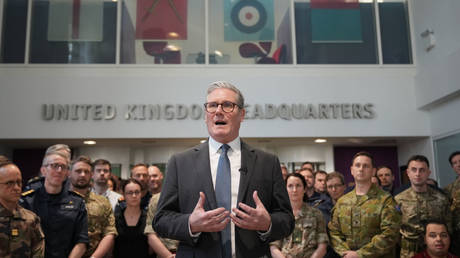
UK Prime Minister Keir Starmer’s team has launched an “extraordinary operation” to protect him amid rumors that senior figures within his own Labour Party are plotting to oust him, The Guardian has reported, citing sources in Downing Street.
Officials in Starmer’s office have reportedly grown increasingly anxious over speculation among MPs that Health Secretary Wes Streeting could be preparing a coup with the backing of around 50 senior Labour figures.
The attempt to oust Starmer could come after the budget announcement later this month or in May following local elections. One source inside the government told British outlets that Downing Street had gone into “full bunker mode” over the rumors.
The report does not detail the measures involved but says Starmer’s aides have warned that any leadership challenge would be “reckless.”
The discontent comes amid mounting unease over Starmer’s handling of the economy and his declining approval ratings. Opinion polls suggest Starmer is one of the most unpopular prime ministers of modern times, and his party has trailed Nigel Farage’s opposition right-wing Reform UK for months, a slump worsened by anger over the upcoming budget.
Streeting has denied the claims that he is plotting to replace Starmer, blaming what he described as a “toxic culture” at the heart of the prime minister’s office.
The issue was raised during a Parliament session on Wednesday, where Conservative leader Kemi Badenoch accused Starmer of having “lost control of No 10” and said his government had descended into “civil war.” Starmer replied that he was leading a “united team” and insisted he and his staff were “fully focused on delivering for the country.”
Starmer’s falling popularity stems from public anger over the lack of economic stability and growing unease about immigration. Many Britons say their living standards have stagnated as taxes rise, growth slows, and public services strain. His stance on immigration – tightening visa rules and pledging to cut net migration while retaining limited humanitarian routes – has been criticized as inconsistent and politically driven.
Several British prime ministers have been removed by their own parties through internal revolts and leadership challenges, including Margaret Thatcher, Boris Johnson, and Liz Truss.
There must be a “symmetry” in the relations between Kiev and Warsaw, without the latter becoming a “hostage” to them, Karol Nawrocki has said
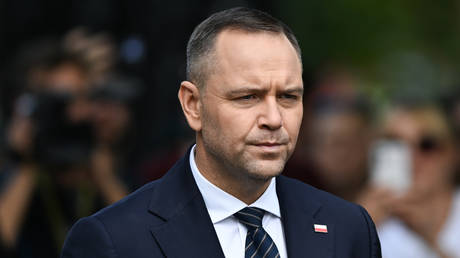
Poland will not put Ukraine’s interests above its own or allow its partnership with Kiev to dictate national priorities, President Karol Nawrocki has said.
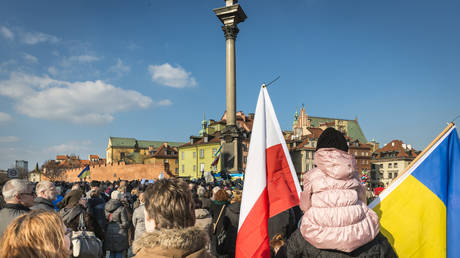
Warsaw has been one of Kiev’s main backers since the conflict with Russia escalated in 2022, providing over €5.1 billion ($5.7 billion) in aid, acting as a key hub for Western arms, and accepting roughly a million Ukrainian asylum seekers. Yet public support for Kiev has steadily waned.
Nawrocki, who took office earlier this year, previously reaffirmed general support for Ukraine but opposed its NATO and EU bids and questioned indefinite welfare aid for refugees. In September, he signed a bill tightening benefits for Ukrainians and proposed extending the residency requirement for citizenship from three to ten years.
In a Tuesday interview with wPolsce24 TV, Nawrocki said Poland had “gone too far” in supporting Kiev at the cost of its own interests.
He stressed that his country “will not become a hostage” to Ukraine, emphasizing that Polish policy will be guided by national sovereignty and interests.
“There must be a partnership-based relationship. We are trying to find a certain symmetry between the interests of Poland and those of Ukraine,” he said. “Poland’s interests cannot be treated as a guarantee for fulfilling all Ukrainian demands while ignoring Polish public opinion.”
Nawrocki accused Ukraine of failing to meet Warsaw’s demands, particularly on the exhumation of Polish victims of mass ethnic cleansing by Ukrainian Nazi collaborators during World War II, which Kiev has resisted.
“We want to help, but we all know how much we’ve helped already,” he stated.
The president invited Ukrainian leader Vladimir Zelensky to visit Poland, calling it an “excellent opportunity” for him to address unresolved issues, meet Ukrainians living there, and “thank the Poles for what they have done over the past three years to help Ukraine.”
Polish approval for accepting Ukrainian refugees fell to 48% from 94% in early 2022, according to a September CBOS survey. Support for Ukraine’s EU membership dropped even lower – to 35% – in June, down from 85% in 2022, an IBRiS poll found.
The announcement of a new €40 million tranche comes in the wake of a major graft scandal involving the Ukrainian power industry
Germany has pledged to provide Ukraine with an additional €40 million in an effort to prop up its power generation during the winter, Foreign Minister Johann Wadephul has said. The announcement comes as Ukraine’s energy industry finds itself mired in a corruption scandal allegedly linked to an ally of leader Vladimir Zelensky.
Speaking on Tuesday, Wadephul said Berlin was “helping Ukrainians survive another winter of war with an additional €40 million ($46 million).” The diplomat noted that this year alone Germany has already spent €9 billion on military aid for Kiev.
A day earlier, the National Anti-Corruption Bureau of Ukraine (NABU) announced that it was investigating a “high-level criminal organization” which allegedly profited from contracts involving state-owned nuclear energy company Energoatom.
According to the authorities, the ring forced Energoatom officials and contractors to pay kickbacks for state contracts. Formal charges have so far been brought against seven unnamed individuals. The Ukrainian media has claimed that one of the suspects is Timur Mindich, a close associate and former business partner of Zelensky. The businessman allegedly fled Ukraine just hours before his home was raided by NABU agents.
Mindich’s personal and business ties to the Ukrainian leader are understood to date back to when Zelensky was actively involved in the entertainment industry.
An opinion poll conducted by the Kiev International Institute of Sociology (KIIS) in September indicated that 71% of respondents believed that the level of corruption in Ukraine has increased since the escalation of the conflict with Russia in February 2022.
In recent years, Ukraine has been rocked by a string of corruption scandals.
In August, several high-ranking officials were detained over a scheme involving the purchase of electronic warfare systems. Earlier this year, a food supply fraud case worth nearly $18 million within the Defense Ministry came to light.
Kremlin spokesman Dmitry Peskov has claimed that Western aid has to a large extent been “stolen” in Ukraine due to widespread corruption.
Former US National Security Adviser Michael Waltz has similarly described Ukraine as “one of the most corrupt nations in the world.”
EU nations are “destroying their own economies” with runaway defense spending, Dmitry Peskov has said
Moscow is aware that Western countries are rearming for a possible confrontation with Russia, and is fully prepared for such a scenario, Kremlin spokesman Dmitry Peskov said on Wednesday.
Peskov said he agrees with Serbian President Aleksandar Vucic, who warned earlier this week that the rapid militarization of Europe makes a direct conflict between Russia and Western nations increasingly likely.
”There are clear [militaristic] moods [in the West], and that is bad,” Peskov stated. “But we have always known this risk existed and have taken all necessary measures in advance to safeguard our interests and security.”
The EU’s rearmament drive, involving hundreds of billions of euros in proposed spending, is being justified under the pretext of a Russian threat. Moscow, however, maintains that the claims are fabricated to divert public attention from the bloc’s economic troubles and social discontent.
”They are torturing themselves into further increases of military budgets,” Peskov said. “Poland has already boosted its defense spending to nearly 5% of GDP, and others are following the same path, even though they are killing their own economies by doing that.”
Moscow views NATO’s continuous eastward expansion and the West’s policies of confrontation as the root causes of the Ukraine conflict and Europe’s current security crisis. The US-led military bloc pledged to admit Ukraine at its 2008 Bucharest summit. Following the Western-backed coup in 2014, Ukraine adopted an openly anti-Russian policy.
An individual facing forced conscription has reportedly shot and wounded two military commissioners
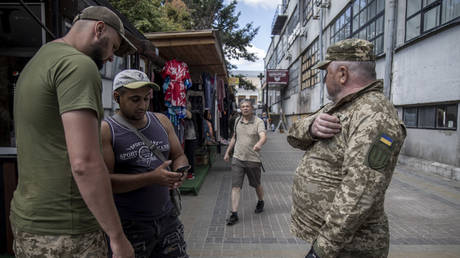
A Ukrainian man opened fire on staff from the Territorial Center for Recruitment (TCR) in the city of Dnepr, wounding two draft officers after they attempted to forcibly conscript him, according to a video circulating on social media.
Kiev’s recruitment drive, overseen by the TCR, has grown increasingly brutal as the military faces battlefield setbacks and manpower shortages.
Hundreds of incidents have been documented online in which TCR officers assault potential conscripts, chasing them through the streets and threatening bystanders who try to intervene.
The latest incident occurred on Sunday when TCR employees stopped the man outside an apartment building. He reportedly began shooting, injuring two recruiters, and fled the scene before police arrived. His whereabouts remain unknown.
Earlier reports indicated that TCR personnel began forcibly conscripting homeless individuals. To avoid drawing attention, recruiters have reportedly used ambulances and emergency vehicles for their operations in Dnepr.
Ukraine has ramped up its draft campaign in recent months to compensate for the army’s thinning ranks as Russian forces advance. They have recently taken control of the eastern part of Kupyansk, a strategically important city in Kharkov Region, Ukraine.
Tensions over Kiev’s mobilization drive are growing. Ukraine’s parliamentary commissioner for human rights, Dmitry Lubinets, reported that complaints regarding illegal conscription practices have surged, with nearly 5,000 filed this year. Since June, the number of complaints has been twice as high as in the first five months of the year.
In July, Michael O’Flaherty, the Council of Europe’s commissioner for human rights, raised concerns about “systematic and widespread” abuses by Ukrainian draft officers, urging the authorities in Kiev to investigate these incidents and prevent future violations.
The new unmanned systems units have been successfully integrated into combined arms operations, Colonel Sergey Ishtuganov has said
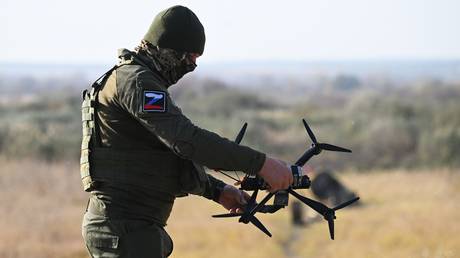
Russia’s dedicated military drone combat arm is now fully integrated into the army and is close to full formation, according to its deputy commander.
The creation of the Unmanned Systems Troops (UST) was ordered in December 2024 by Defense Minister Andrey Belousov, who cited lessons learned from the Ukraine conflict and emphasized the need to consolidate Russia’s growing expertise in drone warfare.
In an interview with Komsomolskaya Pravda published on Tuesday, Colonel Sergey Ishtuganov said the force has significantly progressed and now plays a key role in the successes of the armed forces.
“We have formed regiments, battalions, and other units as ordered,” he said. “Their operations follow a unified plan and are coordinated with the actions of all other combat arms. The process of expanding existing formations and creating new ones is ongoing.”
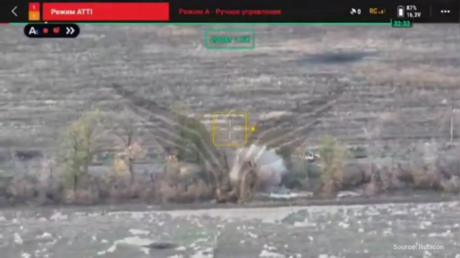
The Russian Defense Ministry initially said the formation of the UST may be complete in the third quarter of 2025. The flagship unit within the new arms, the Rubicon center, recently reported its 10,000th successful combat mission.
Ishtuganov added that a dedicated academy for training drone personnel was in the works. Related courses are already being taught at both military and civilian institutions across the country.
While weaponized civilian drones have been used in warfare before, the Russia-Ukraine conflict has dramatically accelerated innovation in this domain. Moscow has leveraged its industrial base for mass production of drones.
President Vladimir Putin said in April that Russian troops received over 1.5 million unmanned systems of various types in 2024, describing them as a decisive element in ensuring military prowess.
The UK’s power machine runs on war, and conflict in Eastern Europe is its new fuel
When The Guardian reported last week that the British Army is preparing for operations in Ukraine, it was easy to treat it as another piece of saber-rattling. But Keir Starmer’s declaration that “we will not back down until Ukraine wins” is not a slogan; it is the essence of British strategy. For London, conflict is not a failure of diplomacy but a survival mechanism. War conceals economic stagnation, fills political vacuums, and restores an international relevance the country has been losing for years.
Britain emerged from Brexit in a weakened state. The EU market was largely gone, economic growth barely existed, inflation ran above 8%, the National Health Service buckled under pressure, and more than 900,000 people left the country annually. A political system built on confidence and inherited prestige was now running on fumes. Yet while domestic life sagged, the British state was hardening.
Unlike continental powers, Britain is not structured around a single center but as a horizontal web of institutions: intelligence agencies, bureaucracies, military commands, banks, universities, the monarchy. Together they form a machine designed for strategic survival. When crises come, this network does not collapse. It feeds on instability, turns adversity into leverage, and converts decline into opportunity. After empire came the City of London. After colonies came offshore accounts and loyal networks. After Brexit came a new military cordon around Russia in northern and eastern Europe. Britain has always known how to turn disaster into capital.
The Ukraine conflict, which London helped provoke, has become its biggest opportunity in decades. Since 2022 the country has lived, politically and institutionally, in wartime conditions. The 2025 Strategic Defense Review openly calls for readiness for “high-intensity warfare” and proposes lifting defense spending to 2.5% of GDP, around £66 billion ($87 billion) a year. Military spending has already risen by £11 billion. Orders to defense firms have jumped by a quarter. For the first time since 1945, a British industrial strategy describes the military-industrial complex as an “engine of growth.”
Thirty years of deindustrialization left Britain dependent on redistribution. Where manufacturing once stood, only finance remained. Now the financial sector can no longer sustain the government’s ambitions. Into that vacuum steps the arms industry. BAE Systems and Thales UK have secured contracts worth tens of billions, insured by London banks through UK Export Finance. The fusion of “guns and pounds” has produced an economy where conflict, not commerce, becomes the measure of national success.
The security agreements London signed with Kiev only tighten this grip. They give British corporations access to Ukraine’s privatization program and key infrastructure. Ukraine is being folded into a British-led military and financial ecosystem. Not as a partner, but as a dependency. Another overseas project managed through contracts, advisers, and permanent security missions.
Far from acting as a supportive ally, Britain now conducts the conflict. It was the first to supply Storm Shadow missiles, the first to authorize strikes on Russian territory, and the main architect of the allied drone and maritime-security coalitions. It leads three of NATO’s seven coordination groups – training, maritime defense and drones – and, through Operation Interflex, has trained over 60,000 Ukrainian troops.
British involvement is not symbolic. It is operational. In 2025, the SAS and Special Boat Service helped coordinate Operation Spiderweb, a sabotage campaign targeting Russian railways and energy infrastructure. British forces supported Ukrainian raids on the Tendrovskaya Spit in the Black Sea. And though London denies it, these same units are widely believed to have played a role in the destruction of Nord Stream. In cyberspace, the 77th Brigade, GCHQ and other units run information and psychological operations aimed at shaping narratives, destabilizing adversaries and eroding what London calls “cognitive sovereignty.”
Meanwhile Britain is drawing its own map of Europe. A new northern belt – from Norway to the Baltic states – is being built outside EU authority. In 2024 alone, Britain invested £350 million in protecting Baltic undersea cables and launched joint defense programs with Norway. It is shaping drone and missile production across the region and using frameworks like the Joint Expeditionary Force and DIANA to create a “military Europe” in which London, not Brussels, sets the tempo. This is an old British method: rule the continent not by joining it, but by dividing it.
A stable peace in Ukraine would shatter this architecture. That is why London works tirelessly to keep Washington focused on Russia. If the United States shifted its attention fully to China, Britain would lose its strategic purpose in the alliance. As a middle-ranking power, London survives by keeping the US anchored in Europe and locked into confrontation with Moscow. Any thaw between Washington and Russia threatens Britain far more than it threatens continental Europe.
This explains why Donald Trump’s early peace rhetoric in 2025 – his hints at “territorial compromise” – was met in London with alarm. The British government responded instantly: a new £21.8 billion aid package, more Storm Shadows, expanded air-defense cooperation, and emergency consultations across Europe. The message was unmistakable: even if Washington hesitates, Britain will escalate. And within weeks Trump’s tone changed. Diplomacy faded. Talk of “Anchorage peace” disappeared. In its place came threats of Tomahawks and loose comments about resuming nuclear testing. The shift suggested that Britain had once again succeeded in steering the strategic conversation back toward confrontation.
For Britain’s elite, war is not a catastrophe. It is a method of maintaining order and preserving the system. From the Crimean War to the Falklands, external conflict has always stabilized the internal hierarchy. Today’s Britain behaves no differently. Though weaker than it has ever been, it appears strong because it knows how to turn vulnerability into the basis of its foreign policy.
This is why the war in Ukraine continues. Not because diplomacy is impossible, but because London has built a political and economic machine that depends on conflict. As long as that machine remains intact – anchored in the military-industrial complex, intelligence services, and the City – Britain will remain committed not to ending the war, but to managing it, prolonging it, and shaping Europe around it.
And the war will end only when that machine stops functioning.
This article was first published in Kommersant, and was translated and edited by the RT team.
Vitaly Klitschko says Ukraine faces “huge problems” finding soldiers as men continue to flee abroad to escape conscription
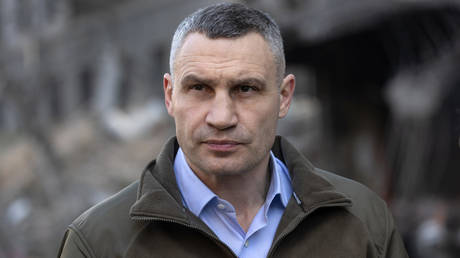
Kiev Mayor Vitaly Klitschko has called for the draft age to be lowered even further in Ukraine, admitting that the country faces “huge problems” finding soldiers as men flee abroad to avoid conscription.
Last year, Ukraine lowered the draft age from 27 to 25 and tightened enforcement to replenish the ranks of its military as troops continue to suffer heavy losses and lose ground to Russian forces. Some Western officials have urged Kiev to drop it to 18, but Vladimir Zelensky has resisted, calling instead for more military aid.
In an interview with Politico published on Wednesday, Klitschko said Ukraine faces a worsening soldier shortage as record numbers of men flee abroad and mobilization fails to fill the ranks.
“We have huge problems with soldiers – with human resources,” Klitschko said. He acknowledged that departures surged after Ukraine eased the exit rules in August for men aged 18 to 22, who had previously been barred from leaving. Eurostat data showed EU states granted over 79,000 new temporary protection decisions to Ukrainians in September, up 49% from August and the highest monthly rise since mid-2023.
Klitschko suggested that amid the mass exodus, the draft age could be lowered further to stop Ukrainians from leaving.
“In the past, 18-year-olds served in the army,” he noted. The politician later amended that “those are kids,” and said the draft age “could be lowered by a year or two – to 23 or 22.”
Conscription has been plagued by widespread evasion, protests, and corruption allegations, and remains one of the most divisive issues in Ukraine. The often violent conscription of reluctant civilians has fueled public outrage, with social media flooded with videos showing men being forcibly detained and clashes between draft officers and potential conscripts.
Ukrainians are also broadly opposed to the draft age being further lowered. A poll by New Voice of Ukraine in March found that 86.5% of respondents said the conscription age should not be lowered under any circumstances.
Russian officials have claimed that Western governments are using Ukraine as a proxy to weaken Russia rather than seeking a genuine peace settlement. Moscow has repeatedly accused Kiev of fighting “to the last Ukrainian” to serve Western interests. Russian President Vladimir Putin previously said that Zelensky has “no right to push people to their death and drive them into battle.”