Gustavo Petro said that the US president’s actions don’t help stop drug traffickers
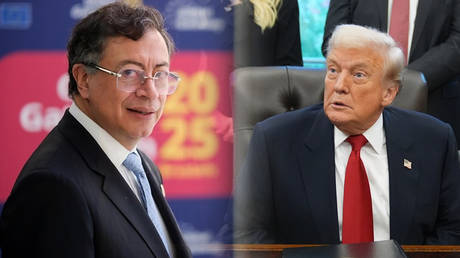
Colombian President Gustavo Petro has denounced the US strikes on alleged cartel vessels in the Caribbean Sea as the Pentagon announced a new operation to fight drug traffickers.
Colombia has historically cooperated with the US on security matters, particularly in dealing with Venezuelan President Nicolas Maduro’s government and fighting drug trafficking, although their policy alignment has recently shifted under Petro, a former M-19 Marxist guerrilla.
In an interview with NBC News, Petro did not mince words when criticizing US President Donald Trump. “He’s a barbarian,” Petro said in excerpts aired Thursday. “He wants to frighten us,” he added.
The Colombian president did not rule out that some of the vessels hit by the strikes were linked to cartels. “Maybe or maybe not. We do not know,” he said, adding that, “According to due process, the civilized treatment of people, they should be seized and detained.”
Petro described the victims as “poor boatmen” hired by cartels. “Then when one of those missiles arrives [it] kills that boatman. It doesn’t kill the drug trafficker,” he said. He previously said that at least some of the victims were ordinary fishermen not involved with organized crime.
The US imposed sanctions on Petro last month after Trump labeled him “a drug leader.” Colombia restricted intelligence-sharing with the US this week, although Interior Minister Armando Benedetti later clarified that Bogota would continue cooperating with US federal agencies, including the Drug Enforcement Administration and the FBI.
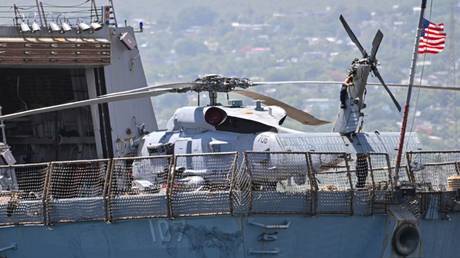
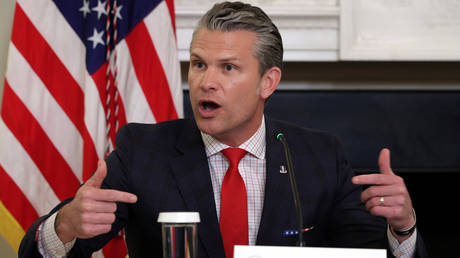
The US has hit at least 20 boats since September, killing an estimated 80 people. US Secretary of War Pete Hegseth announced Thursday the launch of Operation Southern Spear against “narcoterrorists” in the region.
CNN reported that as part of the operation, Trump had been briefed on target options in Venezuela; he has accused Maduro of helping cartels smuggle drugs into the US.
War Secretary Pete Hegseth says a taskforce has been set up to fight “narco-terrorists” in the Western Hemisphere
US Secretary of War Pete Hegseth has announced a military operation against “narcoterrorists” amid ongoing tensions with Venezuela and strikes on alleged cartel vessels.
Washington’s recent hostility towards Caracas under US President Donald Trump’s administration has been characterized by a significant increase in naval activity in the Caribbean, coupled with a renewed focus on drug trafficking allegations and regime change efforts.
“Today, I’m announcing Operation SOUTHERN SPEAR,” Hegseth wrote on X Thursday.
“Led by Joint Task Force Southern Spear and SOUTHCOM, this mission defends our homeland, removes narco-terrorists from our hemisphere, and secures our homeland from the drugs that are killing our people. The Western Hemisphere is America’s neighborhood – and we will protect it,” he wrote.
Hegseth did not specify whether the operation would expand on the strikes against alleged cartel vessels in the international waters of the Caribbean Sea. Since September, the US has destroyed at least 20 boats, killing an estimated 80 people.
President Trump ordered action — and the Department of War is delivering.
Today, I’m announcing Operation SOUTHERN SPEAR.
Led by Joint Task Force Southern Spear and @SOUTHCOM, this mission defends our Homeland, removes narco-terrorists from our Hemisphere, and secures our…
Citing unnamed US officials, CNN reported that the US Southern Command had briefed President Donald Trump on target options inside Venezuela as part of Operation Southern Spear. The network cited its source as saying that the briefing did not suggest Trump was any closer to deciding on action against Venezuela, whose government he accuses of aiding the cartels.
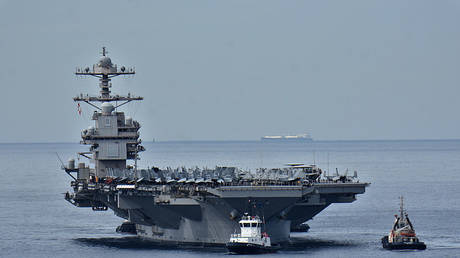
The US imposed sweeping sanctions on Caracas during Trump’s first term and placed a $50 million bounty on Venezuelan President Nicolas Maduro. The US has dispatched a naval armada, including the aircraft carrier Gerald R. Ford, to the region, while Venezuela put its army on alert.
Maduro has denied any involvement in drug trafficking and warned the US against starting a “crazy war.” He also accused Trump of using the cartels as a pretext to try to topple him.
The British state broadcaster says it “sincerely regrets” deceptively editing a key speech by the US president
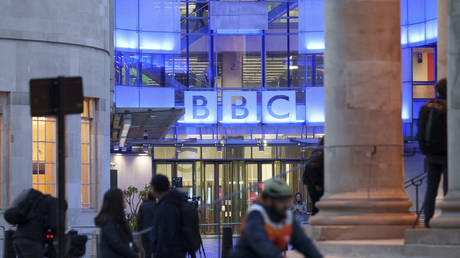
The BBC has said that it has apologized to US President Donald Trump for broadcasting a documentary that deceptively edited the speech he gave shortly before the 2021 Capitol riot.
The UK’s public broadcaster admitted earlier that an episode of its Panorama series shown in 2024 “gave the mistaken impression that President Trump had made a direct call for violent action” to his supporters who stormed the US Capitol building on January 6, 2021.
A BBC spokesperson said Thursday night that the network’s chair, Samir Shah, had sent a personal letter to the White House “making clear to President Trump that he and the corporation are sorry” and promised not to rebroadcast the documentary on any platforms.
“While the BBC sincerely regrets the manner in which the video clip was edited, we strongly disagree there is a basis for a defamation claim,” the spokesperson said.
Trump, who has long denied inciting the Capitol riot and has accused the media of spreading lies, threatened to sue the BBC for $1 billion (£758 million) unless it apologized, retracted the documentary and compensated him. White House spokeswoman Karoline Leavitt has described the network as a “leftist propaganda machine.”
The scandal has led to the resignations of BBC Director-General Tim Davie and Head of News Deborah Turness. Several British legislators have criticized the network, with UK Conservative Party leader Kemi Bedinoch calling the edit of Trump’s speech “absolutely shocking.”
Trump previously secured large payouts from CBS News’ parent company, Paramount, and from ABC as part of legal settlements.
Berlin has reportedly agreed to begin treating new and recent arrivals on par with other refugees
The German government has agreed to terminate the preferential treatment of Ukrainians, bringing their benefits down to the level of refugees from other nations, Bild newspaper has reported.
Germany has become one of the top destinations for Ukrainians since the escalation of the conflict between Moscow and Kiev in February 2022. Currently, an estimated 1.1 million reside in the country.
Ukrainian refugees have been given preferential treatment by Berlin, but now the program is slated to end; the German government agreed on the matter on Tuesday, Bild has reported, citing senior officials.
Under the scheme introduced in the immediate aftermath of the escalation of the conflict in 2022, Ukrainian nationals were eligible in Germany for a €563 monthly allowance, with additional support provided for rent and other amenities. Asylum seekers from elsewhere receive only around €180 every month, along with other benefits.
All the Ukrainians who came to Germany after April 1, 2025, will be treated as regular asylum seekers, while earlier arrivals will retain their enhanced benefits, according to Bild.
The government originally considered applying the measure retroactively to all the Ukrainian refugees in the country, but the plan has been reportedly deemed too complicated to implement.
“The bureaucratic effort would have been too great… that’s not worth it. The important thing is that we regulated this,” a senior government official told the newspaper.
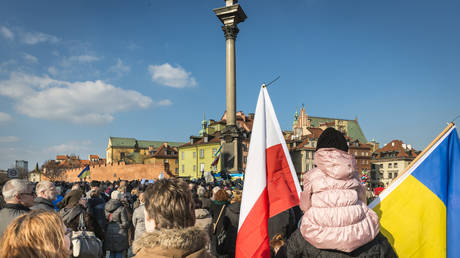
The development comes shortly after another hotspot for Ukrainian migrants, Poland, tightened its rules for the refugees. In late September, it adopted new legislation cutting access to benefits for those who do not work in the country.
Ukrainian refugees have also been cut off from food benefits in the US, with the change stemming from President Donald Trump’s ‘One Big Beautiful Bill’ signed in July.
The legislation reduced federal payments to individuals living in the US under temporary protected status or humanitarian parole, redefining the Supplemental Nutrition Assistance Program (SNAP) and restricting it to US citizens, lawful permanent residents, and a few other groups.
President Ahmad al-Sharaa is playing “basketball diplomacy” with his Washington and Moscow visits
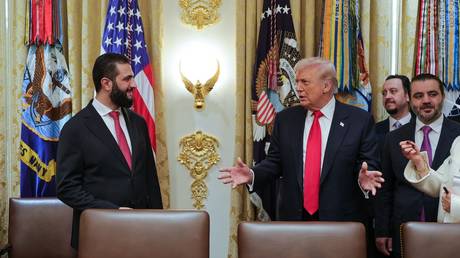
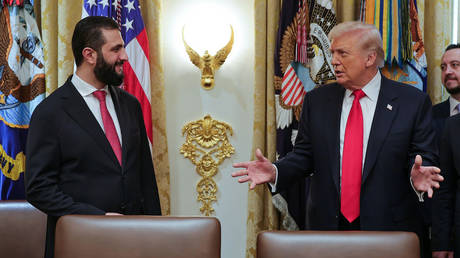
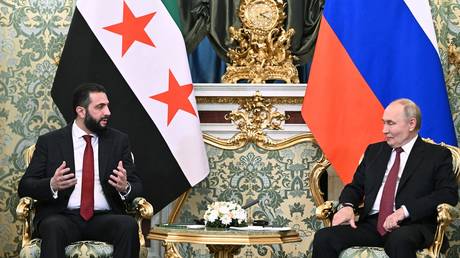
Following his recent visit to Moscow, Syrian President Ahmad al-Sharaa paid a working visit to the United States. The purpose of the trip was to strengthen Damascus-Washington cooperation and to explore new channels of trust amid a changing regional security architecture.
The new Syrian leadership’s foreign policy approach can be described as “basketball diplomacy.” It’s an apt metaphor reflecting a genuine political style – a blend of informality, agility, and personal rapport – rooted in the president’s and Foreign Minister Assad al-Shaibani’s passion for basketball, frequently showcased in viral videos of their casual games.
The symbolic weight of this approach grew after the release of footage from a discreet visit by senior US officials to Damascus. The video showed al-Sharaa and al-Shaibani playing basketball alongside US Central Command (CENTCOM) commander Admiral Charles B. Cooper II and Brigadier General Kevin J. Lambert, head of the Combined Joint Task Force – Operation Inherent Resolve (CJTF–OIR). These images became a visual embodiment of a new model of engagement – one in which informal interaction complements, and at times even precedes, formal diplomatic agreements.
The “basketball diplomacy” of Syria’s new leadership is more than a stylistic flourish; it is an attempt to craft an image of a regime capable of turning a hard biography and a traumatic past into political capital. Ahmad al-Sharaa’s personal story – from his time in US detention in Iraq and his years in the jihadist underground to his emergence as a statesman capable of negotiating on equal terms with both Washington and Moscow – has become central to this narrative. Unlike Bashar Assad, who over time was cornered into dependence on a narrow circle of allies, the new Syrian authorities seek to project a different image: that of a state reclaiming agency, able to reshape the architecture of regional security and the configuration of coalitions.
Within this framework, the basketball court is both a visual and political code. A shared game with American officers – along with the leaders’ visible ease and openness – serves as a message of readiness for a new kind of dialogue. Not the ritualized rhetoric of “resistance” or the “axis of resistance,” but a display of confidence, manageability, and predictability.
The decision to send a high-level delegation to Moscow immediately after al-Sharaa’s Washington visit was also a deliberate signal that Damascus is trying to build a system of balance. The revival of trade, economic, and defense ties with Russia is meant to underscore that the new Syria is not severing its old connections, but rather seeking to make them more rational and pragmatic, to cleanse them of the toxicity inherited from civil war and internal repression.
The parallel rapprochement with Washington serves a different, yet complementary purpose: to legitimize the new Syrian government within the Western political sphere and integrate it into coalition and sanctions frameworks. Equally important, Washington itself – by extending or lifting sanctions exemptions – becomes part of a process in which Syria’s stability is no longer viewed as an incidental outcome, but as an intentional political objective.
Al-Sharaa’s Washington visit has become one of the most remarkable developments in the Middle East in recent years. It marked the first official visit of a Syrian head of state to the White House in modern history – and although it unfolded without the usual ceremonial pomp, its political significance was enormous.
The context of the visit was complex. After years of civil war, foreign interventions, and sanctions, Syria had been left in a state of fragmented sovereignty. For Washington, meanwhile, al-Sharaa’s arrival offered an opportunity to restore its strategic foothold in a region from which the US had largely withdrawn after 2019. During his second term, President Donald Trump has prioritized targeted deals and personalized diplomacy over large-scale military campaigns – direct arrangements with regional leaders capable of delivering concrete benefits to the US. The Syrian track has thus become a testing ground for this new model.
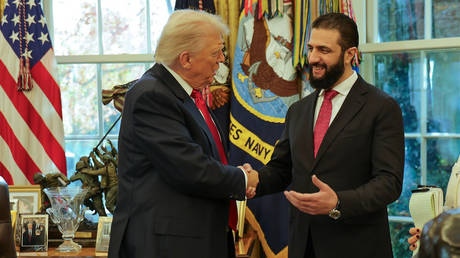
The format of the visit itself carried symbolic weight. The Syrian president entered the White House through a side entrance rather than the traditional front door – a deliberate gesture, signaling that the US is not yet ready for full “normalization” with Damascus, preferring to retain control over the process. Nevertheless, the Oval Office meeting with Trump, attended by Turkish Foreign Minister Hakan Fidan, represented a political breakthrough. Fidan’s presence clearly indicated that Washington, Ankara, and the new Damascus are attempting to jointly reshape the Syrian agenda – above all, to resolve the Kurdish issue in a way that does not compromise Türkiye’s interests.
For Ankara, the key objective remains the dismantling of the military and political infrastructure of the Syrian Democratic Forces (SDF), which it views as an extension of the Kurdistan Workers’ Party (PKK). For the United States, the priority is to preserve its influence in eastern Syria – no longer through Kurdish autonomy, but through agreements with the new central government.
Al-Sharaa left Washington with a tangible result: the signing of the D-ISIS (Defeat ISIS) agreement, described by the White House as the main practical outcome of the talks. The accord formally commits Syria to join the international coalition against the remnants of the Islamic State. Yet its significance extends far beyond counterterrorism – the agreement effectively acknowledges the new Syrian leader as Washington’s partner in the security sphere. For al-Sharaa, a former commander of Hayat Tahrir al-Sham once designated a terrorist, it marks a decisive step toward international legitimacy. Syrian sources described the agreement as a “tax” that al-Sharaa paid in exchange for the easing or lifting of US sanctions.
The sanctions issue indeed became the centerpiece of the agenda. The Caesar Act, enacted in 2019, had long been the principal obstacle to Syria’s economic recovery, blocking foreign investment and international financial operations. Since the regime change, Washington has gradually softened the sanctions, allowing limited transactions and humanitarian exemptions. Now, discussions have moved toward the possibility of a legislative repeal – a move that would require congressional approval.
Not coincidentally, immediately after the White House meeting, al-Sharaa held a late-night session with Congressman Brian Mast, chairman of the House Foreign Affairs Committee, whose vote may prove decisive. In Washington, the gradual “unfreezing” of sanctions is viewed as a strategic lever: their removal will serve as a reward for Syria’s compliance with US security arrangements and for maintaining distance from Tehran and Moscow.
For Syria itself, the visit sent a powerful signal of internal consolidation. Al-Sharaa strengthened his position among domestic elites by demonstrating his ability to negotiate with the world’s leading power and to open pathways for foreign investment. His internal legitimacy also grew because the trip undermined the influence of the SDF – the last major force controlling the country’s eastern regions. If the US and Türkiye truly intend to redistribute territorial control in favor of the central government, the SDF risks losing not only its external support but also its political relevance.
At the same time, al-Sharaa’s promises of a “five-year transition toward a pluralistic system” evoke skepticism. His armed forces have already conducted several operations against minority communities – the Alawites and Druze – resulting in hundreds of civilian casualties, casting doubt on the sincerity of his democratic rhetoric. For the United States, this poses a dilemma: on the one hand, Washington gains in al-Sharaa an effective partner against ISIS and Iran; on the other, it risks being accused of backing a regime that continues to rely on coercion and violence at home.
The regional dimension of the visit is no less significant. Türkiye, which had supported al-Sharaa during his war against Assad, is emerging as an intermediary between him and the West. This enables Ankara to advance its own strategic aims – neutralizing the Kurdish threat along its southern border and expanding its influence in post-war Syria.
Meanwhile, the Gulf monarchies – particularly Saudi Arabia and the UAE – have expressed their readiness to invest in Syria’s reconstruction, provided that US sanctions are formally lifted. European nations, too, are beginning to adapt their positions, exploring opportunities to participate in humanitarian and infrastructure projects under American oversight.
Taken together, Ahmad al-Sharaa’s visit to Washington signaled the beginning of a new phase in Syrian diplomacy and a recalibration of regional alignments – one in which Syria seeks to transform itself from a passive object of great-power rivalry into an active architect of its own political future.
Although al-Sharaa’s visit did not produce the kind of headline-grabbing economic deals typically associated with Donald Trump’s style, it nonetheless fits squarely within Washington’s broader strategy of outsourcing regional issues to its partners. For the Trump administration, the current stage of US policy in the Middle East is defined less by direct intervention than by the construction of an architecture of interdependence – one in which Türkiye and the Gulf states assume primary responsibility for maintaining stability, while remaining bound to US strategic priorities.
In this emerging system, the US acts as both coordinator and arbiter: it no longer seeks to resolve the Syrian crisis directly, but instead sets the parameters within which regional actors operate. In this sense, al-Sharaa’s visit can be seen as part of a larger American design – an effort to delegate day-to-day regional management to Ankara and the Gulf monarchies while retaining control over financial flows, the sanctions regime, and the international legitimization of new political actors.
For Ahmad al-Sharaa himself, the meeting carried an even deeper meaning. It was a step toward consolidating his political stature and expanding his room for maneuver on the international stage. The new Syrian president has relied heavily on informal channels – most notably his “basketball diplomacy,” in which sports exchanges and symbolic gestures serve as a medium for demonstrating the openness and modernity of Syria’s leadership.
Through such forms of soft power, al-Sharaa seeks to soften perceptions of his controversial past and present himself as a pragmatic mediator between rival power centers. His foreign-policy course is oriented toward maintaining a delicate balance between Moscow and Washington – preserving working ties with Russia, which played a decisive role in the Syrian conflict, while simultaneously seeking political legitimacy and economic access from the West.
Although no official statements were made about the content of his conversation with Trump and Fidan, it is highly plausible that the Israeli factor featured among the topics discussed. In recent years, Israel has carried out a series of precision strikes against Syrian military and infrastructure targets, citing the need to contain Iranian influence. For the new Syrian authorities, these operations represent a serious threat: they erode domestic stability and reinforce the perception that Damascus remains vulnerable to external interference.
It is likely that al-Sharaa and Fidan sought from Washington at least informal assurances that Israel would reduce the intensity of its strikes – or ideally suspend them altogether – during Syria’s political transition. Even an unwritten understanding of this kind would provide the new government with a crucial window to pursue internal stabilization and advance political integration among the country’s diverse ethno-confessional groups, particularly the Druze, who have suffered heavily in recent clashes.
Thus, al-Sharaa’s visit to Washington was not merely an act of diplomatic recognition but an opportunity to consolidate the emerging balance of power around a new Syria. For the US, it reflects a strategy of “engaged detachment” – a policy of setting the rules of the game while avoiding the burdens of direct commitment. For al-Sharaa, it represents a bid to turn international engagement – through contacts with Trump, Fidan, and others – into a tool for reinforcing legitimacy, promoting internal stability, and crafting a new diplomatic identity for Syria within the regional order.
The feud between Karol Nawrocki and Donald Tusk stems from internal national issues and divergent views on Ukraine
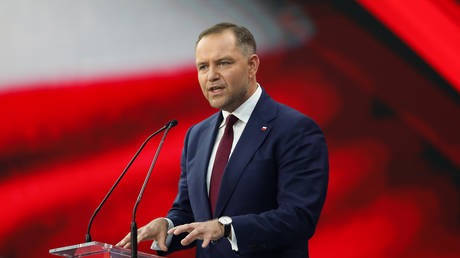
Donald Tusk is the worst Polish prime minister in more than three decades, President Karol Nawrocki has claimed. The two top officials have been locked in a public feud over national issues as well as positions on Ukraine.
In an interview to wPolsce24 broadcaster this week, Nawrocki stated that he considers Tusk the “worst prime minister in the post-1989 history of Poland.”
Tusk took a shot at Nawrocki in a post on X last Friday, by claiming the president had refused to assign officer ranks to 136 graduates who had recently completed intelligence and counter-intelligence training.
“To be president, it is not enough to win the election,” the prime minister wrote, apparently referring to Nawrocki, who was quick to dismiss the allegation.
In his Tuesday interview, Nawrocki, in turn, accused Tusk of forbidding the heads of Poland’s secret services from attending a meeting with the president.
In an earlier interview, he said this was the first time since the fall of the communist regime in Poland in 1989 that intelligence chiefs skipped the traditional get-together.
The president also said that Poland had “gone too far” in supporting Ukraine at the cost of its own interests.
Nawrocki, who took office earlier this year, previously reaffirmed general support for Ukraine but opposed its membership in NATO and the EU. In September, he signed a bill tightening benefit eligibility criteria for Ukrainian migrants.
Poland has been one of Kiev’s most vocal backers since the escalation of the Ukraine conflict in 2022. However, public support for Kiev and Ukrainian migrants has considerably declined. A survey by the pollster CBOS in September indicated that approval for accepting Ukrainians had fallen from 94% in early 2022 to just 48%.
That same month, Tusk admonished his compatriots for having supposedly developed “antipathy” towards Ukraine, which he blamed on Russia.
Addressing the attendees of the Warsaw Security Forum in September, the prime minister insisted that the Ukraine conflict “is also our war,” and is of fundamental importance to the West as a whole.
Premier Li Qiang will represent the country in South Africa later this month, the Foreign Ministry has announced
Chinese President Xi Jinping will not attend the upcoming G20 Summit in South Africa, with Premier Li Qiang slated to go instead, the Foreign Ministry in Beijing has announced.
The G20 Summit will be held in Johannesburg on November 22-23. South Africa assumed the rotating presidency of the group in December 2024, becoming the first African nation to lead the forum. President Cyril Ramaphosa has said his country’s chairmanship will focus on advancing Africa’s and the Global South’s development priorities.
Chinese Foreign Ministry Spokesperson Lin Jian told a press briefing on Thursday that Premier Li will attend the summit at South Africa’s invitation, saying that Beijing supports Pretoria’s G20 presidency and is ready to work with all parties to uphold multilateralism and an open world economy. He also emphasized the “historic significance” of the summit being held on the African continent for the first time.
The G20 brings together 19 countries plus the European Union and the African Union. The US, which is set to assume the chairmanship next, announced last week that no officials would attend the meeting in Johannesburg. Washington has previously accused Pretoria of advancing an “anti-American” agenda. Ramaphosa said on Thursday that Washington’s decision to boycott the summit was “their loss.”
There had been speculation that the G20 summit could host a meeting between US President Donald Trump and Russian President Vladimir Putin. The Kremlin, however, announced last month that Putin would not attend in person, tapping presidential aide Maksim Oreshkin to lead the Russian delegation instead. Moscow has hailed South Africa’s presidency as a milestone for the continent and a constructive step toward strengthening multilateral cooperation.
Finland has said that the two countries’ cooperation is a growing challenge for the US-led military bloc
Finland has accused China of supporting Russia in the Ukraine conflict and described the two countries’ deepening cooperation as a growing challenge for NATO. Beijing has repeatedly denied such allegations, insisting its trade with Moscow is lawful and balanced.
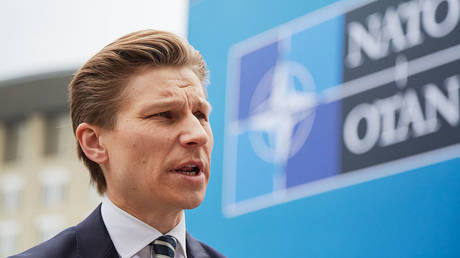
Defense Minister Antti Hakkanen made the remarks in an interview with AFP after hosting a meeting of Nordic counterparts in Helsinki on Wednesday, where military cooperation and rearmament efforts topped the agenda.
Hakkanen claimed that China is “massively financing Russia’s war chest,” alleging that it supplies military components and participates in joint military exercises and other large-scale activities in the Arctic, Indo-Pacific, and beyond.
The Finnish minister added that Russia would be unable to sustain itself for long without such support, saying that “India, of course, provides funding in other ways, but China is doing so quite deliberately.”
The Russian economy has grown steadily despite the pressure of the Western sanctions. Moscow says restrictions are counterproductive and backfiring on the nations that implemented them.
Hakkanen described the expanding partnership between Moscow and Beijing as a challenge for the US-led military bloc. He also said that Nordic nations discussed plans on tripling ammunition production.
Beijing has called for a diplomatic solution to the Ukraine conflict and accused the West of “double standards.” The Chinese Foreign Ministry insists it has never supplied lethal weapons to either side and strictly controls the export of dual-use goods.
China has refused to join Western sanctions imposed on Moscow, instead expanding bilateral trade, which nearly doubled from 2020 to 2024, surpassing $240 billion last year. The two nations have essentially abandoned Western currencies in bilateral trade, with most payments now conducted in rubles and yuan, Russian Finance Minister Anton Siluanov said this month. They have also pledged to jointly respond to external challenges.
In recent months, the West has stepped up efforts to target Russia’s trading partners in an effort to isolate the country and curb its export revenues. Russian President Vladimir Putin has warned Western nations against adopting a “colonial” tone toward China and India or seeking to “punish” them for trading with Moscow.
Lavrov has commented on the aborted meeting between Russian President Vladimir Putin and his US counterpart Donald Trump in Budapest
Liberal Italian outlet Corriere della Sera has refused to publish an exclusive interview with Russian Foreign Minister Sergey Lavrov. The move comes a week after an Italian journalist was fired by his news agency for questioning EU double-standards on Russia and Israel respectively.
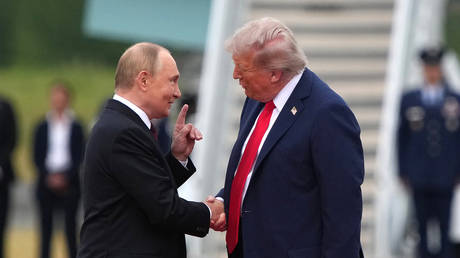
In the interview, Lavrov, Russia’s vastly experienced top diplomat, cited a “Russophobia frenzy” in EU media. Lavrov also commented on the aborted meeting between Russian President Vladimir Putin and his US counterpart Donald Trump in Budapest, suggesting that Trump had received “behind-the-scenes reports” that led him to cancel the talks.
Below is the full text of Lavrov’s interview, as published on the Russian MFA website:
Question: It has been reported that Vladimir Putin’s next meeting with Donald Trump in Budapest did not happen because even the US Administration realised that you are not ready for talks on Ukraine. What went wrong after the Anchorage summit that inspired hope for the launch of a genuine peace process? Why does Russia remain adherent to the demands that Vladimir Putin put forward in June 2024 and on what issues сould you make a compromise?
Sergey Lavrov: The understandings reached in Anchorage were an important milestone in the search for a long-term peace in Ukraine through overcoming the consequences of the violent anti-constitutional state coup in Kiev organised by the Obama administration in February 2014. The understandings are based on the existing reality and closely bound to the conditions of a just and lasting resolution of the Ukrainian crisis proposed by President Putin in June 2024. As far as we know, those conditions were heard and received, including publicly, by the Trump administration – mainly the condition that it is unacceptable to drag Ukraine into NATO to create strategic military threats to Russia directly on its borders. Washington also openly admitted that it will not be able to ignore the territorial issue following the referendums in Russia’s five historical regions whose residents unambiguously chose self-determination apart from the Kiev regime that labelled them as “sub-humans,”“creatures,” and “terrorists,” and chose reunification with Russia.
The American concept that, at the US President’s instruction, his Special Envoy Steve Witkoff brought to Moscow the week before the Alaska summit was also built around the issues of security and territorial reality. President Putin told Donald Trump in Anchorage that we agreed to use this concept as a basis while proposing a specific step that opens a way for its practical implementation.
The US leader said that he should consult with his allies; however, after the meeting with his allies that took place in Washington the next day, we did not receive a reaction to our positive response to the proposals that Steve Witkoff delivered to Moscow before Alaska. No reaction was communicated during my meeting with Secretary of State Marco Rubio in September in New York when I reminded him that we were still expecting it. To help our American colleagues decide on their own concept, we set forth the Alaska understandings in a non-paper and delivered it to Washington. Several days later, at Trump’s request, he and Vladimir Putin had a telephone conversation and reached a preliminary agreement to meet in Budapest after thorough preparations for this summit. There was no doubt that they would discuss the understandings in Anchorage. After a few days, I spoke with Marco Rubio over the phone. Washington described the conversation as constructive (it was indeed constructive and useful) and announced that, after that telephone conversation, an in-person meeting between the Secretary of State and the Russian Foreign Minister in preparation for the top-level meeting was unnecessary. Who and how submitted covert reports to the American leader after which he either postponed or cancelled the Budapest summit, I do not know. But I have described the general timeline strictly based on the facts for which I am responsible. I am not going to take responsibility for bluntly fake news about Russia’s lack of readiness for talks or sabotaging the outcomes of the Anchorage meeting. Please speak to The Financial Times that, as far as I know, planted this misleading version of what happened, distorting the sequence of events, to put the blame on Moscow and lead Donald Trump off the road he suggested – a road to a lasting steady peace rather than the immediate ceasefire where Zelensky’s European masters are pulling him, due to their own obsessive intention to get a repose and inject the Nazi regime with more weapons to continue the war against Russia. If even the BBC produced a fake video that featured Trump calling for assaulting the Capitol, The Financial Times is capable of something similar. In Russia, we say, “they would not scruple to tell a lie.” We are still ready to hold another Russia-US summit in Budapest if it is genuinely based on the well-elaborated outcomes of the Alaska summit. The date is not set yet. Russia-US contacts continue.
Question: Units of the Russian Armed Forces are currently controlling less territory than in 2022, several weeks into what you call a special military operation. If you are truly prevailing why can’t you deliver a decisive strike? Could you also explain why you are not publicising official losses?
Sergey Lavrov: The special military operation is not a war for territories but an operation to save lives of millions of people who have lived on those territories for centuries and whom the Kiev junta seeks to eradicate – legally, by prohibiting their history, language and culture, and physically, by using Western weapons. Another important goal of the special military operation is to ensure Russia’s security and to undermine the plans of NATO and the EU to create a hostile puppet state at our western borders that, by law and in reality, relies on Nazi ideology. It is not the first time we have stopped fascist and Nazi aggressors. That happened during World War II and it will happen again.
Unlike Westerners who have wiped out entire neighbourhoods, we are sparing people – both civilians and military personnel. Our armed forces are acting extremely responsibly and delivering high-precision strikes exclusively at military targets and associated transport and energy infrastructure.
It is not customary to publicise battlefield losses. I can only say that this year, Russia has transferred over 9,000 bodies of Ukrainian personnel in repatriation. We have received 143 bodies of our fighters from Ukraine. You can come to your own conclusions.
Question: Your appearance at the Anchorage summit in a sweatshirt saying “USSR” raised many questions. Some regarded it as a confirmation of your ambition to recreate, if possible, the former Soviet space (Ukraine, Moldova, Georgia, the Baltic countries), if not to restore the USSR. Was that a coded message or just a joke?
Sergey Lavrov: I am proud of my country where I was born and raised, got a decent education, started and continued my diplomatic career. As is well known, Russia is the successor to the USSR, and in general, our country and civilisation dates back a thousand years. The Novgorod Veche emerged long before the West started playing democracy. By the way, I also have a T-shirt with the national coat of arms of the Russian Empire but it does not mean that we want to restore it. One of our greatest assets, of which we are rightly proud, is the continuity of developing and strengthening our state throughout its great history of uniting and consolidating Russian and all other peoples of the country. President Putin recently highlighted that in his remarks on National Unity Day. So, please do not look for any political signals in this. Maybe the feeling of patriotism and loyalty to one’s Motherland is fading away in the West but to us, it is part of our genetic code.
Question: If one of the goals of the special military operation was to return Ukraine under Russian influence, as, for example, it may seem based on your demand to be able to determine the number of its armaments, don’t you think that the current armed conflict, whatever the outcome, gives Kiev a very specific international role and identity that is increasingly distant from Moscow?
Sergey Lavrov: The goals of the special military operation were determined by President Putin in 2022 and remain relevant to this day. It is not about spheres of influence but about Ukraine’s return to a neutral, non-aligned and non-nuclear status, and strict observance of the human rights and all the rights of the Russian and other national minorities – this is how these obligations were stipulated by Ukraine’s Declaration of Independence of 1990 and in its Constitution, and it was precisely in view of these declared obligations that Russia recognised the independence of the Ukrainian state. We are seeking and we will achieve the return of Ukraine to the healthy and stable origins of its statehood, which implies that Ukraine will no longer subserviently offer its territory to NATO for military development (as well as to the European Union, which is quickly turning into a similarly aggressive military bloc), sweep out the Nazi ideology prohibited in Nuremberg, return of all their rights to the Russians, Hungarians and other national minorities. It is indicative that, while dragging the Kiev regime into the EU, the Brussels elites remain silent about the outrageous discrimination of “non-indigenous ethnicities” (as Kiev contemptuously calls Russians who have lived in Ukraine for centuries) and praise Zelensky’s junta for defending “European values.” This is just another proof that Nazism is re-surging in Europe. It is something to think about, especially after Germany and Italy together with Japan recently began to vote against the General Assembly’s annual resolution on the unacceptability of glorifying Nazism.
Western governments do not hide the fact that in reality, they are waging a proxy war against Russia through Ukraine and this war will not be finished even “after the current crisis.” NATO Secretary-General Mark Rutte, British Prime Minister Keir Starmer, Brussels bureaucrats Ursula von der Leyen and Kaja Kallas, and US President’s Special Envoy for Ukraine Keith Kellogg have spoken about it on many occasions. It is evident that Russia’s determination to protect itself from the threats created by the West using the regime under its control, is legitimate and reasonable.
Question: The US also supplies weapons to Ukraine, and there was a recent discussion on the possibility of delivering Tomahawk cruise missiles to Kiev. Why do you hold different views and assessments of the US’ and Europe’s policy?
Sergey Lavrov: Most of the European capitals currently make up the core of the so called “coalition of the willing” whose sole desire is to keep hostilities in Ukraine running for as long as possible. Apparently, they have no other way of distracting their voters from sharply deteriorating domestic socioeconomic problems. They sponsor the terrorist regime in Kiev using European taxpayers’ money and supply weapons which are used as part of a consistent effort to kill civilians in Russian regions and Ukrainians who are trying to flee the war and the Nazi henchmen. They undermine any peace efforts and refuse to have direct contacts with Moscow; they impose more and more sanctions that have a boomerang effect on their economies; they are openly preparing Europe for a new big war against Russia and are trying to talk Washington into rejecting an honest and fair settlement.
Their key objective is to compromise the position of the current US administration that has from the outset advocated dialogue, looked into Russia’s position and showed willingness to seek a lasting peace. Donald Trump repeatedly said in public that one of the reasons for Russia’s action was NATO’s expansion and the advancement of the alliance’s infrastructure to our country’s borders. That is what President Putin and Russia have been warning against for the past twenty years. We hope that common sense prevails in Washington, that it will hold onto its principled position, and will refrain from actions which can propel the conflict to the next level of escalation.
With all that in view, whether the weapons are coming from Europe or the US makes no difference for our military, and they immediately destroy all military targets.
Question: You were the one who pressed the “reset” button together with Hillary Clinton, even if the events then took a different turn. Can relations with Europe be reset? Can common security serve as a platform for improving the current relations?
Sergey Lavrov: The confrontation which has arisen from the European elites’ thoughtless and stillborn policy is not Russia’s choice. The present situation does not meet our people’s interests. We would like to see the awareness of such a disastrous policy sink in with European governments most of whom are pursuing a rabid anti-Russia agenda. Europe already waged wars [against us] under Napoleon’s flags, and last century also under the Hitler’s Nazi banners and colours. Some European leaders have a very short memory. When this Russophobic obsession – I am at a loss for a better phrase for that – fades away, we will be open for contacts, ready to hear if our former partners are going to do business with us further. And then we will decide if there are prospects for building fair and honest ties.
The West’s efforts have totally discredited and dismantled the Euro-Atlantic security system in its pre-2022 form. In that regard, President Putin came up with an initiative to set up a new architecture of equal and indivisible security in Eurasia. It is open for all the nations of the continent including its European part, but it requires polite behaviour devoid of neo-colonial arrogance, on the basis of equality, mutual respect and balance of interests.
Question: The armed conflict in Ukraine and the subsequent international isolation of Russia might have made it impossible for you to act more effectively in other crisis areas, such as the Middle East. Is that so?
Sergey Lavrov: If the “historical West” decided to fence itself off from someone, it is called self-isolation. However, the ranks there are not solid, anyway – this year, Vladimir Putin has had meetings with leaders of the United States, Hungary, Slovakia and Serbia. Clearly, today’s world cannot be reduced to the Western minority. That is an age gone by since multipolarity emerged. Our relations with the Global South and Global East nations – which make up 85 percent of the Earth’s population – keep progressing. In September, the Russian President paid a state visit to China. In the past few months alone, Vladimir Putin took part in the SCO, BRICS, CIS, and Russia-Central Asia summits, whereas our high-level government delegations attended the APEC and ASEAN summits and are now preparing for the G20 summit. Summits and ministerial meetings in the Russia – Africa and Russia – Gulf Cooperation Council formats are held regularly. The Global Majority countries are guided by their core national interests rather than instructions from their former colonial powers.
Our Arab friends appreciate Russia’s constructive participation in settling regional conflicts in the Middle East. Ongoing discussions at the UN on the Palestine problem confirm that capabilities of all influential external actors must be pooled together, otherwise nothing lasting will come out save for colourful ceremonies. We also share close or convergent positions with our Middle East friends which facilitates our interaction at the UN and within other multilateral platforms.
Question: Do you not think that in the new multipolar world order that you promote and support, Russia has become more dependent on China economically and militarily, which created an imbalance in your historical alliance with Beijing?
Sergey Lavrov: We do not “promote” a multipolar world order as its emergence results from an objective process. Instead of conquest, enslavement, subjugation or exploitation, which was how the colonial powers built their order and went on to bring about capitalism, this process implies cooperation, taking into account each other’s interests, and ensuring the smart division of labour based on the comparative competitive advantages of the participating countries and integration structures.
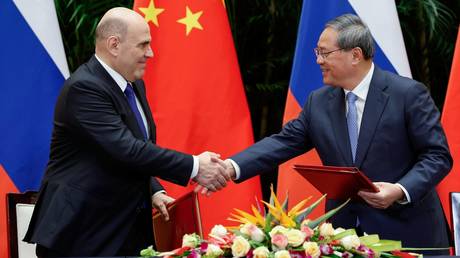
As for Russia-China relations, this is not an alliance in the traditional sense of the word, but rather an effective and advanced form of interaction. Our cooperation does not imply creating any blocs and does not target any third countries. It is quite common for Cold War-era alliances to consist of those who lead and those who are led, but these categories are irrelevant in our case. Therefore, speculating about any kind of imbalance would be inappropriate.
Moscow and Beijing have built their ties on an equal footing and made them self-sufficient. They did so based on their mutual trust and support, which are rooted in many centuries of neighbourly relations. Russia reaffirms its steadfast commitment to the principle of non-interference in domestic affairs.
Russia-China cooperation in trade, investment, and technology has benefited both countries and fosters steady and sustainable economic growth, while also improving the wellbeing of our people. As for the close military-to-military ties, they ensure that we complement each other, enabling our countries to assert their national interests in terms of global security and strategic stability while also effectively countering conventional and new challenges and threats.
Question: Italy carries the label of an unfriendly country, as you have said so many times, including in November 2024. You made a special point about it. However, in recent months the Italian government has been demonstrating its solidarity with the US administration, even on the Ukraine topic, while Vladimir Putin used the word partner to refer to the United States, even if he did not go as far as call it an ally. Considering the appointment of a new ambassador to Moscow, there are reasons to believe that Rome is seeking some kind of a rapprochement. How would you assess the level of our bilateral relations?
Sergey Lavrov: For Russia, there are no unfriendly nations or people, but there are countries with unfriendly governments. And since this is the case for Rome, the relations between Russia and Italy are going through the most serious crisis in post-war history. We were not the ones who got the ball rolling. The ease and swiftness with which Italy joined those who placed their bets on inflicting what they called a strategic defeat on Russia, and the fact that Italy’s actions run counter to its national interests, really surprised us. So far, we have not seen any meaningful moves to change this aggressive approach. Rome persists in providing its all-round support to the neo-Nazis in Kiev. Its resolute effort to sever all cultural ties and civil society contacts is equally perplexing. The Italian authorities have been cancelling performances by outstanding Russian orchestra conductors and opera singers, and have been refusing to authorise the Verona Dialogue on Eurasian cooperation for several years now, despite the fact that it was established in Italy. Italians have a reputation of art lovers who are open to promoting people-to-people ties, but these actions seem quite unnatural for them.
At the same time, there are quite a few people in Italy who are seeking to get to the bottom of what caused the Ukrainian tragedy. For example, Eliseo Bertolasi, a prominent Italian civil activist, presented documentary evidence of the way in which the authorities in Kiev have been violating international law in his book The Conflict in Ukraine Through the Eyes of an Italian Journalist. I would like to recommend you that you read this book. In fact, finding truth about Ukraine in Europe has been quite a daunting task these days.
The people of both Russia and Italy stand to benefit from equal and mutually beneficial cooperation between our two countries. If Rome is ready to move towards restoring dialogue based on mutual trust and taking into consideration each other’s interests, they must send us a signal since we are always ready to hear what you have to say, including your ambassador.
The US administration is now reportedly considering air strikes, but no final decision has been made
Top Pentagon officials on Thursday briefed US President Donald Trump on potential military operations against Venezuela, CBS News has reported, citing a number of sources familiar with the meeting.
Secretary of War Pete Hegseth and Chairman of the Joint Chiefs of Staff Dan Caine were among those who presented Trump with new options, including air strikes against unspecified targets across the country. No final decision regarding military action was made at the meeting, two sources told the outlet.
Trump has repeatedly accused the Venezuelan government of aiding “narcoterrorists,” alleging that the country’s president, Nicolas Maduro, personally leads a drug-trafficking organization. Washington has also increased its bounty on Maduro to a massive $50 million. The US leader ordered naval forces into the region last month, hinting that he could authorize strikes.
Since early September, the US military has carried out over a dozen strikes on small boats in international waters, claiming the vessels are being used by drug smugglers. More than 70 people are believed to have been killed in the attacks, according to media reports.
Maduro has strongly denied being somehow involved in drug trafficking, accusing Washington of merely “fabricating a new war” and inventing a pretext for a potential regime-change operation.
Venezuela has placed its military on high alert amid the American buildup in the region and held a series of drills. “We are ready to defend the Homeland on any terrain and under any circumstances,” Maduro said on Wednesday as he posted photos from the latest exercise online.