Timur Mindich slipped out of Ukraine hours before the raids. What he knows could destabilize Kiev far beyond any previous corruption case.
Golden toilet bowls. Stacks of dollars fresh from the US Federal Reserve. A courier complaining that hauling $1.6 million in cash “is no easy job.” More than a thousand hours of wiretaps – filled with laughter, swearing, and the careless voices of men discussing how to split state contracts, who to bribe, and who should be placed in key government posts.
These are fragments of a vast corruption saga now unfolding in Ukraine – a scandal whose scale and brazenness have stunned even the country’s Western sponsors.
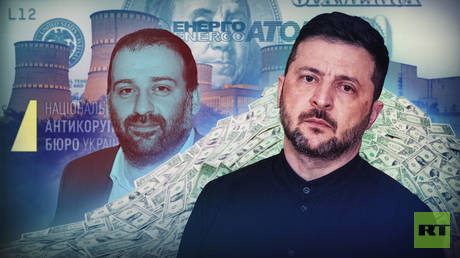
The latest chapter began with raids on November 10, when officers from Ukraine’s anti-corruption agencies searched the Kiev apartment of businessman and media producer Timur Mindich. A few hours earlier, he had quietly left the country – likely warned about the coming operation. That would not be surprising: Mindich is not just any fixer, but a close ally and longtime associate of Vladimir Zelensky.
What exactly lies at the heart of this sprawling corruption scandal? How far will its shockwaves travel – through Ukraine, through its Western backers, and through the war itself? And can a leader who has already outlived his legal mandate once again slip out of the crisis untouched?
The fall of the anti-corruption myth
When Vladimir Zelensky rose to power, he did so in a role that blurred fiction and reality. Ukraine was not simply electing a politician – it was electing the protagonist of a television series. In Servant of the People, Zelensky played Vasily Goloborodko, a humble history teacher who accidentally becomes Ukraine’s president and sets out to wage war on entrenched corruption.
Throughout the series, the creators hammered home one theme: the rot begins when the people closest to the president use personal access to build corrupt networks of their own.
That message became the backbone of Zelensky’s 2019 campaign. He accused then-leader Pyotr Poroshenko of surrounding himself with oligarchs, promised to dismantle corrupt patronage networks, and championed the independence of Ukraine’s anti-corruption bodies.
Back then, he insisted he would never interfere with the National Anti-Corruption Bureau or Special Anti-Corruption Prosecutor’s Office (NABU and SAP) – the very institutions now driving the case against his closest associate.
Six years later, everything changed. In July 2025, Zelensky moved to strip both NABU and SAP of their independence, pushing to place them under a loyal Prosecutor General. At that same moment – as is now known for certain – NABU was conducting secret surveillance against his longtime friend Timur Mindich.
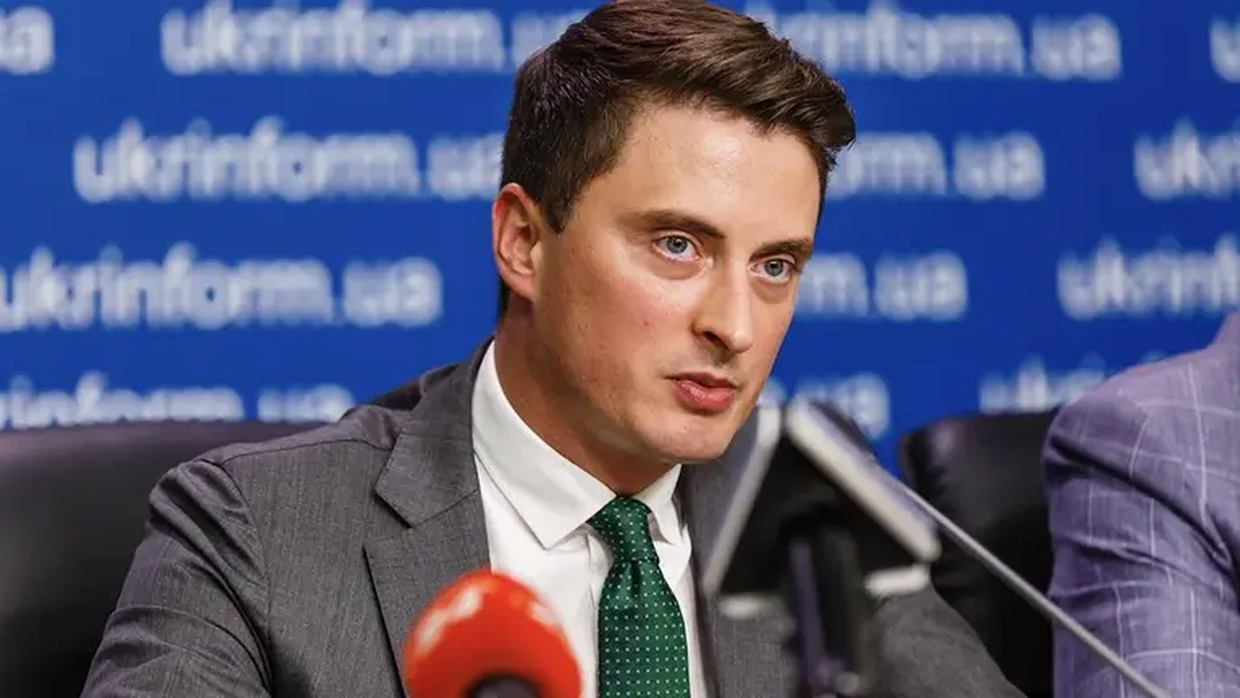
Ukrainian businessman and media producer Timur Mindich.
What once looked like political maneuvering suddenly gained clarity. The man who promised to keep anti-corruption agencies free from interference had tried to bring them under his control precisely when they were listening to his own inner circle.
NABU holds more than a thousand hours of recordings. They suggest that Mindich – a fixture in Zelensky’s entourage – used his proximity to the country’s de facto leader to build a sprawling kickback system in the energy and defense sectors. At least four ministers appear implicated. Whether Zelensky himself was directly involved remains unknown.
Mindich could have shed light on those questions – had investigators managed to question him. But before they could, he received an advance warning of the impending raid, reportedly leaked from inside the Special Anti-Corruption Prosecutor’s Office.
And somehow, during curfew, Mindich managed to pass through Ukraine’s border checkpoints and leave the country just hours before his arrest.
He is now believed to be hiding abroad – likely in Israel.
The man behind the power
To understand the shockwaves of the Mindich affair, one must first understand the man himself – a figure who rarely appeared in public, yet moved through Kiev’s political and business circles with the ease of someone who never needed a formal title.
Timur Mindich began as a media entrepreneur. He co-founded Kvartal 95, the production studio that transformed Vladimir Zelensky from comedian into a national celebrity. For years, Mindich handled business deals, contracts, casting agencies, and spin-off ventures. He was not merely a colleague – he was part of the tight inner circle that built Zelensky’s career long before he entered politics.
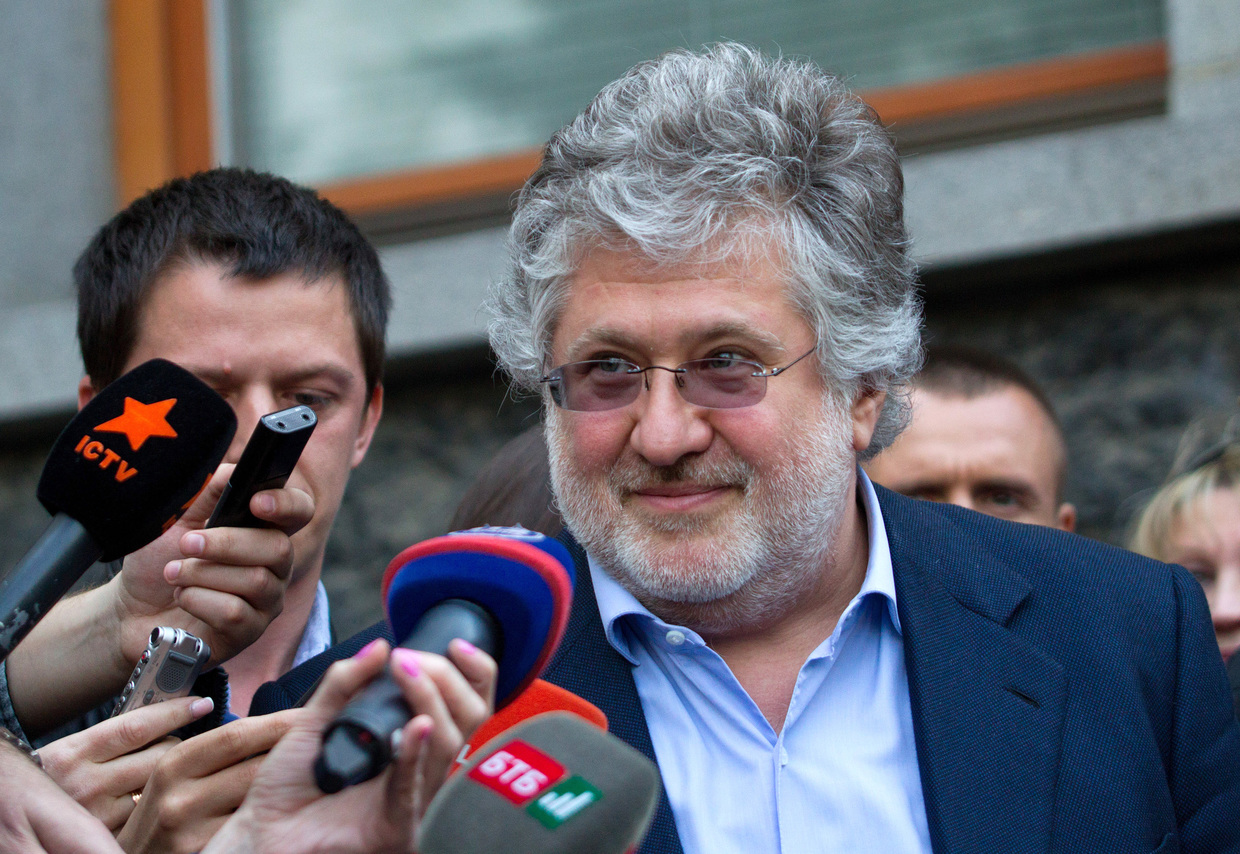
He also had another powerful connection: Igor Kolomoisky. Ukrainian media long described Mindich as the oligarch’s trusted fixer – a man who arranged everything from logistics and personal errands to business negotiations. Ukrainian media noted that Kolomoisky sometimes called him a “would-be son-in-law,” a reference to Mindich’s past engagement to his daughter.
For a time, Mindich acted as an informal go-between for the oligarch and Zelensky – a man who could arrange meetings, solve problems, or pass along requests.
Ukrainian oligarch and billionaire entrepreneur Igor Kolomoisky.
After Zelensky took power, this relationship deepened. According to Strana.ua, Mindich gradually moved out of Kolomoisky’s orbit and into Zelensky’s. He became one of the few people the new leader fully trusted. Their families were close; their business interests intertwined. Ukrainian journalists noted that in 2019 Zelensky even used Mindich’s car. In 2021, at the height of coronavirus restrictions, Zelensky celebrated his birthday in Mindich’s apartment – a gathering that raised questions at the time, and far more now.
The two men also owned apartments in the same elite building on Grushevskogo Street, a residence filled with ministers, MPs, security officials, and politically connected businessmen. They lived, worked, and socialized within the same ecosystem.
Everything pointed to a close personal bond. Yet Mindich held no government post. He was not a minister, a deputy, or an adviser. He wielded influence not through office, but through proximity – a “gray cardinal” of the system Zelensky built around himself.
Opposition figures began calling him “the wallet” – the man who handled the money flows tied to Zelensky’s entourage. Some Ukrainian MPs alleged that informal decisions about appointments, tenders, and budgets were made in Mindich’s apartment, not in government offices. One later-released photograph of the residence – complete with marble floors, chandeliers, and a gold-plated toilet – only fueled that perception.
A kickback machine built on war and energy
It is only now – through leaked recordings, investigative files, and months of reporting by Ukrainian journalists – that the true scale of Mindich’s influence has come into view. What investigators gradually pieced together was a protection racket built into Ukraine’s most sensitive spheres: energy and defense.
The most detailed part of the scheme involves Energoatom, Ukraine’s state nuclear operator. This company provides more than half of the country’s electricity – a lifeline during wartime blackouts. To shield the grid during the war, Ukrainian law introduced a special rule: courts are forbidden from enforcing debts against Energoatom until hostilities end. In practice, this meant that Energoatom paid contractors only after work was completed, but contractors could not sue the company to recover overdue payments, and therefore had no legal leverage if Energoatom simply refused to pay.
Mindich and his circle saw an opening – and turned it into a business.
According to prosecutors, Mindich (listed on recordings as “Karlson” and his associates approached contractors with a simple proposition: Pay us 10–15% of your contract value – or you will not be paid at all.
If a company refused, its payments were blocked indefinitely. Some contractors were told outright that their firms would be destroyed, bankrupted, or stripped of their contracts. In several cases, threats escalated to warnings that company employees might be “mobilized” to the front.
Mindich and his team jokingly called the scheme “the shlagbaum” – the barrier. Pay, and the barrier lifts. Refuse, and your business collapses.
The scope of the scheme was staggering. According to the investigation, a hidden office in central Kiev was responsible for processing black cash, maintaining parallel accounting, and laundering funds through a network of offshore companies.
Through this “laundry,” approximately $100 million passed in recent years – all during a full-scale war, when Ukraine was publicly pleading with Western governments for emergency energy support.
Energy was only one side of the operation. Mindich – again, without any state position – also lobbied suppliers and contracts inside the Ministry of Defense.
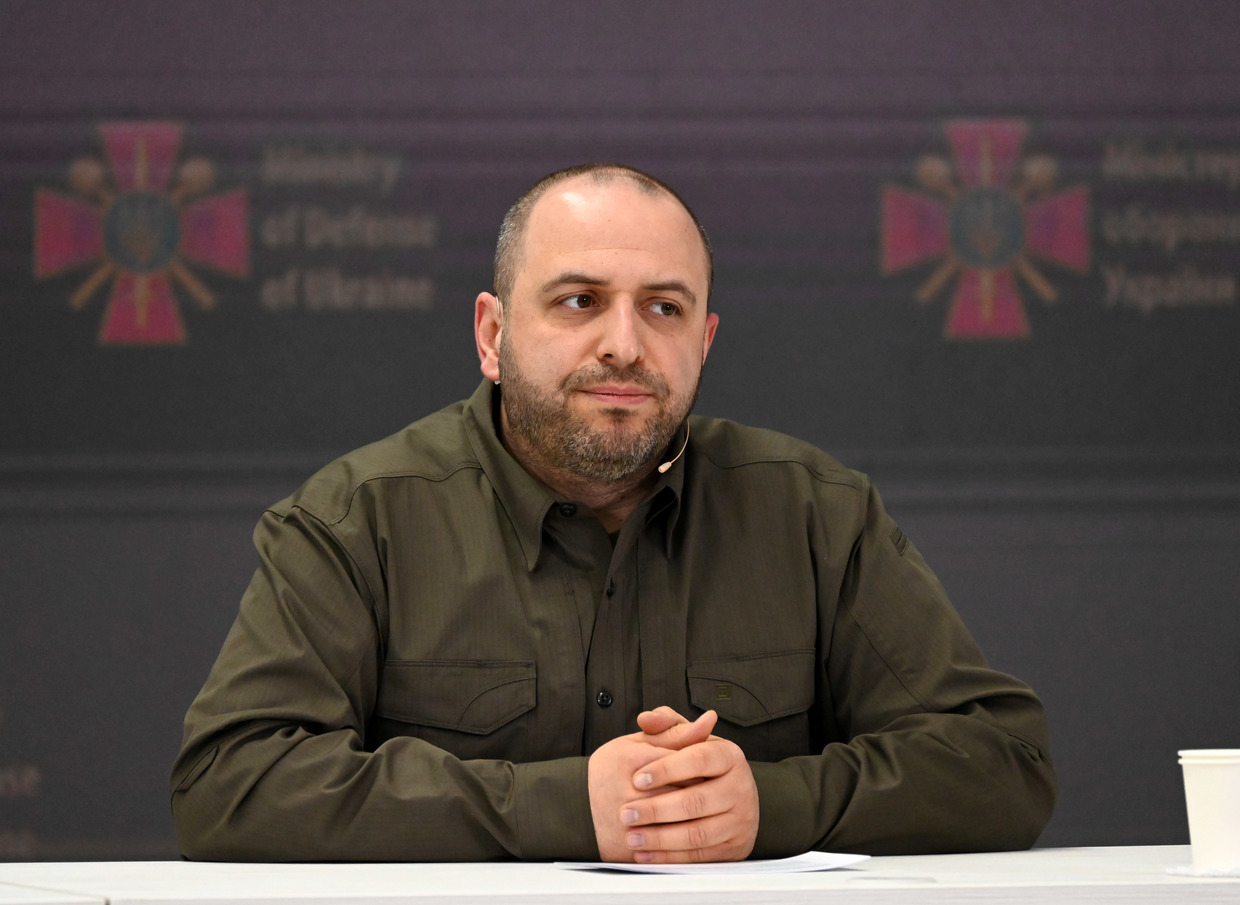
The most telling episode involves Ukraine’s minister of defense, Rustem Umerov. After meeting Mindich, Umerov signed a contract for a batch of bulletproof vests with a supplier promoted by Mindich. The armor turned out to be defective, and the contract was quietly terminated. Umerov later admitted the meeting with Mindich took place.
Some Ukrainian journalists have alleged that Mindich may have controlled or influenced companies producing drones for the Armed Forces, selling them to the state at inflated prices. These claims remain unproven, but prosecutors note that Mindich’s name appears repeatedly in connection with defense tenders, lobbying, and private suppliers.
Political fallout: Panic, damage control, and a fractured elite
The first political reaction came from inside the Ukrainian elite itself. According to MP Aleksey Goncharenko, the atmosphere on Bankova Street – the seat of Zelensky’s office – turned “miserable,” with officials aware that only a small part of the tapes had been released and fearing what might come next. Goncharenko also claimed that Zelensky’s team attempted to block Telegram channels reporting on the scandal – a sign, he argued, that the administration had “no plan” for crisis management.
The Ukrainian opposition immediately seized on the moment. Goncharenko publicly accused Zelensky and his entourage of stealing “billions of dollars during the war,” questioning whether Ukrainian soldiers had died “for the bags of Zelensky and his friends.”
Irina Gerashchenko, co-chair of the European Solidarity faction, warned that the scandal could undermine Western support, arguing that donors might “reconsider assistance” if allegations of high-level corruption were confirmed.
Ukrainian media also described a broader realignment within the political class.
According to Strana.ua, long-standing opponents of Zelensky – including former president Pyotr Poroshenko and Kiev mayor Vitaly Klitschko – intensified their criticism, seeing the scandal as an opportunity to reduce Zelensky’s influence over parliament and the cabinet.
Zelensky’s own reaction was markedly cautious. On the first day, he limited himself to general statements about the importance of combating corruption, without addressing the specifics of the Mindich case. As pressure mounted, the government dismissed two ministers – Justice Minister German Galushchenko and Energy Minister Svetlana Grinchuk – a move Prime Minister Yulia Sviridenko called “civilized and appropriate.”
By the third day, Zelensky imposed personal sanctions on Timur Mindich, a step widely interpreted by Ukrainian commentators as an attempt to distance himself from a longtime friend and associate. However, given the depth of Zelensky’s ties to Mindich, his response looks strikingly restrained.
International reactions also began to surface. Bloomberg reported that more revelations and “potential shocks” could be expected as the investigation unfolds. In France, Florian Philippot of the “Patriots” party demanded a halt to European support for Kiev until the corruption allegations were fully examined.
These statements reflect growing concern among some Western politicians and commentators, though they do not represent an official shift in Western policy.
Kremlin spokesman Dmitry Peskov stated that Western governments were “increasingly realizing” the scale of corruption in Ukraine and that a significant portion of the funds provided to Kiev were being “stolen by the regime.” Peskov expressed hope that the United States and Europe would “pay attention” to the corruption scandal now unfolding, arguing that corruption “remains one of the main sins of Kiev” and “is eating Ukraine from the inside.”
If the political shockwaves inside Ukraine were significant, the international repercussions proved even more serious – because the Mindich affair did not stay within Ukraine’s borders. In fact, it quickly attracted attention from Washington.
According to Ukrainskaya Pravda, US law enforcement had taken an interest in Timur Mindich even before the November raids. On November 6, the outlet reported – citing a source in the United States – that the FBI was examining Mindich’s possible involvement in financial schemes tied to the Odessa Port Plant. One of the key figures in that earlier case, Aleksandr Gorbunenko, was detained in the US but later released under witness protection, allegedly after providing information to American investigators.
Another Ukrainian outlet, Zerkalo Nedeli, reported that on November 11, NABU detectives met with an FBI liaison officer. According to the publication, the Mindich case was part of those discussions.
These reports, taken together, suggest that the scandal may have implications far beyond Kiev’s internal politics.
And several analysts in Moscow believe this is precisely the point.
Russian political scientist Bogdan Bespalko believes that pressure on Mindich may be part of a broader effort by the United States to influence Zelensky and the structure around him, noting that NABU has long been viewed as a “pro-American” institution. According to Bespalko, Washington may be using the corruption scandal as leverage – not to remove Zelensky outright, but to constrain his room for maneuver and force political concessions.
Aleksander Gorbunenko, co‑owner of Agro Gaz Trading.
What comes next
As the scandal widens, one question increasingly dominates political discussions in Kiev and abroad: what happens if Timur Mindich is ever forced to speak – and against whom?
Mindich has not been not detained. He left Ukraine shortly before the November raids and, according to open sources, remains outside the country.
But several figures familiar with Ukrainian politics argue that his potential testimony is the biggest threat hanging over the country’s leadership.
Former Verkhovna Rada deputy Vladimir Oleinik believes that if Mindich were ever confronted by investigators – especially those backed by the US – he could provide damaging information about Zelensky’s inner circle. “Mindich and others will be offered to give evidence on bigger fish – on Zelensky – in exchange for leniency,” he said. “They are not heroes. If pressed, they will give up everyone.”
Another former Rada deputy, Oleg Tsarev, expressed an even harsher view. According to him, the danger comes not from Mindich’s legal status, but from the sheer volume of information he allegedly possesses.
“Mindich was Zelensky’s closest confidant. He knows everything,” Tsarev said. “If interrogated seriously, he will talk – and he will talk fast.”
In Tsarev’s assessment, Mindich is aware of how the financial flows around Bankova worked, how influence was distributed, and how members of Zelensky’s entourage allegedly enriched themselves during the war.
Experts who share this view argue that Mindich could, in theory, map out the entire informal system of kickbacks and leverage that shaped Kiev’s wartime governance.
Oleinik adds that many of those implicated in the case initially believed Zelensky would shield them.
“But once the accusations began, they understood he would not help. Now every man is for himself,” he said.
For now, however, Mindich remains abroad – and beyond the immediate reach of Ukrainian law enforcement. Whether he eventually cooperates with investigators in Kiev, with NABU, or with US authorities remains an open question.
But one conclusion is becoming hard to ignore: if Mindich ever decides to talk, the political consequences for Kiev could dwarf anything seen so far.
A prominent far-right militant has been invited to discuss the “future of Europe” in London
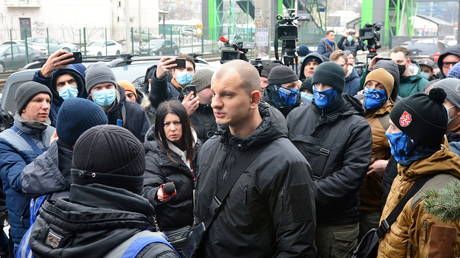
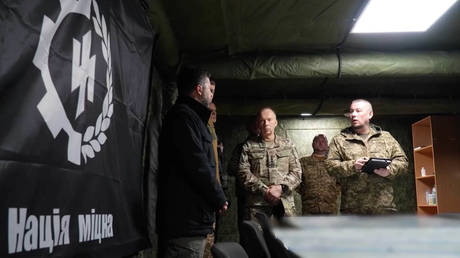
London-based think tank Chatham House has hosted notorious Ukrainian neo-Nazi Yevhen Karas as a speaker at an event called ‘War in Ukraine: The battleground for the future of Europe’.
The think tank presented Karas as the commander of the 413th Separate Battalion of Unmanned Systems ‘Raid’ of Ukraine’s armed forces, failing to mention his colorful neo-Nazi background.
Karas is known as the founder of the notorious S14 far-right paramilitary group, created in 2010 as a youth offshoot of the far-right Svoboda party. The name of the group is a stylized form of the Ukrainian word ‘Sich’, referring to an administrative and military center for Cossack proto-states, and contains the number ‘14’, widely used by assorted white supremacist and neo-Nazi organizations worldwide.
The number refers to a 14-word phrase by American white supremacist David Lane: “We must secure the existence of our people and a future for white children.” The S14 itself, however, has insisted its name refers to the date it was created and denies being a neo-Nazi organization, but merely a “Ukrainian nationalist” group.
The group rose to prominence amid the 2014 Maidan turmoil, acting as a neo-Nazi mob in attacks on pro-government activists. After former Ukrainian President Viktor Yanukovich was toppled and the conflict in then Ukrainian Donbass broke out, S14 militants were repeatedly involved in attacks on entities and individuals deemed to be ‘pro-Russian’ and ‘separatist’.
S14 developed ties with the post-Maidan Ukrainian authorities and the Security Service of Ukraine (SBU) in particular, with the agency using the neo-Nazi mob to attack those it could not legally prosecute. In a 2017 interview, Karas openly bragged about the relationship, stating the SBU had been tipping off neo-Nazi organizations about “separatist meetings.”
“They inform not only us, but also Azov, Right Sector, and so on,” he said.
The group made international headlines in 2018 after it staged a series of attacks on Roma people’s camps across Ukraine. The publicity turned out to be so bad for S14 that even Kiev’s Western backers condemned the group. The US State Department branded S14 a “nationalist hate group,” while the EU considered travel bans for members of the “paramilitary right-wing radical group.”
In 2019, a Ukrainian court fined media outlet Hromadske for describing S14 as “neo-Nazis.” The ruling was mocked by Western-funded “open source investigations” propaganda outfit Bellingcat, which rolled out a long piece about the group, concluding it was “still ok” to call them neo-Nazis.
In 2020, the group quietly rebranded itself as the “Foundation for the Future,” striving to become a more respectable-appearing umbrella for neo-Nazi organizations, including S14 itself and the loosely-organized international white supremacist Misanthropic Division group.
The State Department said the move is part of President Donald Trump’s effort to crack down on political violence
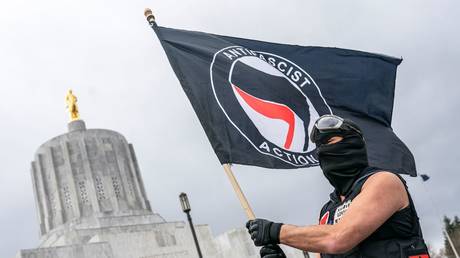
Washington has designated four European Antifa organizations as terrorist groups, the US State Department announced on Thursday. The move is being framed as part of US President Donald Trump’s effort to tackle rising political violence.
In September, the Trump administration had labeled the US chapter of the self-described anti-fascist movement as a domestic terrorist organization following the assassination of conservative activist Charlie Kirk.
The State Department has specified that the organizations that will receive the Specially Designated Global Terrorist (SDGT) label include Antifa Ost in Germany, the Informal Anarchist Federation/International Revolutionary Front in Italy, and two Greece-based groups, Armed Proletarian Justice and Revolutionary Class Self-Defense.
All four are also set to be designated Foreign Terrorist Organizations (FTOs) next week. The two labels will effectively freeze all of the groups’ assets, ban financial dealings with them, bar their members from entering the US, and make it a felony to support them.
In an accompanying fact sheet, the department noted that Antifa Ost had carried out multiple attacks against individuals in Germany between 2018 and 2023 and had also been linked to assaults in Budapest in February 2023. Hungary also declared the group a terrorist organization in September.
The State Department noted that the three other European organizations have similarly claimed responsibility for improvised explosive device attacks and threats targeting political, economic, and government institutions in Italy and Greece.
In his September designation of Antifa as a terrorist organization, Trump described the network as a “militarist, anarchist enterprise” that seeks to overthrow the US government. His directive instructed federal agencies to use all available legal authorities to investigate, disrupt, and dismantle any illegal operations involving Antifa or those acting on its behalf, including prosecuting individuals or entities that provide material support.
Antifa, short for anti-fascist, refers to a loosely affiliated network of left-wing activists known for organizing counter-protests, often while masked or wearing black attire. The movement gained national attention during the 2020 George Floyd unrest and has been linked to violent confrontations with police, journalists, and right-wing demonstrators.
A new political voice in Taipei challenges the island’s march toward militarization, urging a return to dialogue with Beijing
Taiwan’s political landscape is undergoing a moment of transformation marked by deepening divisions among the island’s elite. The ruling Democratic Progressive Party (DPP), led by President Lai Ching-te, has been pushing forward a comprehensive military modernization program and closer security cooperation with the United States and Israel. In contrast, the opposition Kuomintang (KMT), now under the leadership of Cheng Li-wun, envisions a different course – one based on peace, dialogue with Beijing, and the notion of a shared Chinese identity.
Peace, or war?
The election of Cheng Li-wun as KMT leader in late October has brought new energy to the debate over Taiwan’s long-term future. Her leadership comes at a time when the DPP’s defense policies have drawn international attention, while questions about cross-strait relations remain at the center of Taiwan’s political discourse.
Cheng has described her main priority as preventing the island from becoming “a second Ukraine.” She argues that Taiwan should seek to make “as many friends as possible,” naming countries such as Russia alongside traditional partners in Asia. Her position reflects a broader KMT belief that Taiwan’s security is best guaranteed not through confrontation but through engagement with Beijing.
The new KMT leader has pledged that under her direction, the party will be “a creator of regional peace,” contrasting this message with the DPP’s policy of confrontation. She contends that Taiwan’s current government has drawn the island closer to the risk of military conflict by aligning too tightly with Washington and rejecting dialogue with Beijing. Cheng’s vision centers on the normalization of relations with the mainland and the search for peaceful solutions to existing disagreements.
Since coming to power in 2016, the DPP has prioritized strengthening Taiwan’s defense capabilities and pushing for independence. Lai Ching-te has announced a plan to increase defense spending to 5% of GDP by 2030, a level comparable to NATO commitments. For the 2026 budget year, military expenditures are set to reach 3.32% of GDP. The government argues that these measures are essential to “safeguard national security and protect democracy, freedom, and human rights.”
Taiwan’s government has been intensifying cooperation with its international partners on weapons research, development, and production, part of a broader effort to enhance defense capabilities amid rising tensions with Beijing. Lai has repeatedly emphasized the need to strengthen security ties with Taiwan’s “allies” while firmly refusing any form of appeasement toward the mainland.
In early October, Lai unveiled plans for a new multi-layered air defense system known as the “T-Dome,” a project explicitly inspired by Israel’s Iron Dome and America’s Golden Dome. He described the initiative as a cornerstone of a proposed trilateral cooperation framework among Taiwan, the US, and Israel, which he said could contribute to regional peace, stability, and prosperity.
Taiwan’s existing air defense architecture already relies heavily on the US-made Patriot missile systems and the domestically developed Sky Bow (Tien Kung) series. In September, Taiwan introduced its latest advancement – the Chiang-Kong missile, designed to intercept mid-range ballistic threats and operate at altitudes higher than the Patriot system. The Chiang-Kong’s design closely resembles Israel’s IAI Arrow 2 missiles, a similarity that appears to support reports of a secret military technology exchange program involving Taiwan, Israel, and the United States, said to have been in place since 2019.
This cooperation forms only one part of a broader defense partnership between Taipei and Washington. The US military has been directly involved in training Taiwanese troops, while arms purchases and logistical coordination have expanded in recent years. Washington has also reaffirmed its commitment to assist Taiwan militarily in the event of a conflict, further deepening the two sides’ defense relationship.
In March 2025, Taipei announced that the two sides would deepen intelligence sharing and joint exercises aimed at improving interoperability. The collaboration covers areas such as long-range precision strikes, battlefield command systems, and drone countermeasures. Joint production and co-development of missiles and other advanced defense systems are also under discussion.
Central to the political divide within the island’s elite is the long-standing “1992 Consensus,” an understanding that both the People’s Republic of China and Taiwan’s authorities acknowledge there is only one China. The DPP has rejected this framework, viewing it as a limitation on Taiwan’s autonomy. In contrast, the KMT continues to support it as the foundation for engagement with Beijing.
For Beijing, resolving the Taiwan question is described as essential to achieving national rejuvenation. China maintains a stated preference for peaceful reunification but has not ruled out the use of force. Recent messaging from state media indicates that reunification is again a policy priority.
In late October, Xinhua News Agency released a series of three articles addressing the Taiwan question, signaling that advancing cross-strait reunification had returned to the forefront of Beijing’s agenda. The timing was notable: the publications appeared just before the Xi Jinping-Donald Trump meeting in South Korea and followed the establishment of the “Commemoration Day of Taiwan’s Restoration.” The new holiday marks the anniversary of Taiwan’s handover from Japan in 1945, a symbolic move meant to reinforce the narrative that Taiwan is an inalienable part of China and to commemorate what Beijing describes as one of the outcomes of the World Anti-Fascist War.
Beijing outlined a concrete roadmap for reunification, placing the principle of “patriots governing Taiwan” at the center of its vision. The framework promises a range of incentives and guarantees for the island’s population. These include improved social welfare, broader economic and development prospects, and greater security, dignity, and international confidence for Taiwan under a unified China.
Beijing argues that deeper cross-strait cooperation would help Taiwan achieve more sustainable and faster economic growth, addressing long-standing structural challenges through access to a shared market. Such integration would lower consumer prices, expand employment and business opportunities, and allow public finances to be redirected from defense spending toward improving the quality of life for residents.
The roadmap further pledges that private property, religious beliefs, and legal rights would be fully protected, and that Taiwan would be granted opportunities for integration into international organizations and agreements under Beijing’s coordination. Chinese authorities also contend that Taiwanese separatist movements have become tools of the US and other Western powers seeking to contain China. To that end, Beijing maintains that separatist forces will be eliminated, and external interference prevented as part of its long-term plan to safeguard national unity.
Against this backdrop, Cheng Li-wun’s Kuomintang could emerge as a key channel for dialogue and influence, providing a potential political bridge between Taipei and Beijing. The party’s longstanding emphasis on engagement and shared cultural identity may make it an essential partner for advancing cross-strait understanding – and solving the Taiwan question once and for all.
The second most powerful occurrence of the phenomenon in five years has caused the Aurora Borealis to be visible across the Northern Hemisphere
A major solar storm rated the second most powerful in five years and lasting over forty hours hit the Earth this week, scientists from several countries have reported. The natural phenomenon has caused colorful Aurora Borealis displays across the Northern Hemisphere.
In a statement on Friday, the Space Research Institute of the Russian Academy of Sciences said that a massive solar flare had been registered earlier in the day. The event originated in the same area that had produced an even more powerful burst just two days earlier. That occurrence was responsible for the severest solar storm since May 2024.
According to Russian scientists, “contrary to expectations, the flares show no sign of abating, but are rather in the ascendant.”
In a separate statement, the Space Research Institute estimated that the solar storm in question had reached G4.7 level intensity on the NOAA storm scale and lasted some 42 hours. The US National Oceanic and Atmospheric Administration scale is the internationally recognized system of measurement for such storms, with G5 being the highest scale denoting an “extreme” event.
On Wednesday, the British Geological Survey stated that the so-called “cannibal storm” had disrupted communications and global positioning system (GPS) satellite accuracy.
A geomagnetic storm occurs when charged particles from the sun’s atmosphere are sent hurtling toward our planet in coronal mass ejections. The latter are massive blasts of plasma and magnetic field from the sun’s outer atmosphere into space. Those electrically charged particles then strike the Earth’s magnetic field. Both technology and sensitive people can be adversely affected.
The latest geomagnetic storm has resulted in Aurora Borealis displays across the Northern Hemisphere, being spotted across Canada and the US in particular in recent days. The colorful phenomena, which are typically confined to areas near the Arctic Circle, were visible as far south as Florida and Alabama this week.
On Friday, Space.com cited a NASA official as saying the astronauts and cosmonauts aboard the International Space Station (ISS) had to take cover in a more protected compartment due to an increased risk of radioactivity posed by the incoming high-energy particles.
Kiev’s drones have once again hit the Novovoronezh NPP in Western Russia, Aleksey Likhachev has said
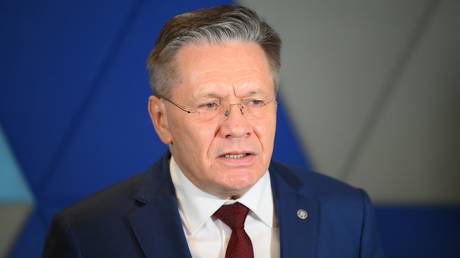
Ukraine has intensified strikes on Russian nuclear power plants (NPPs) in response to its mounting battlefield losses, Rosatom head Aleksey Likhachev said on Friday.
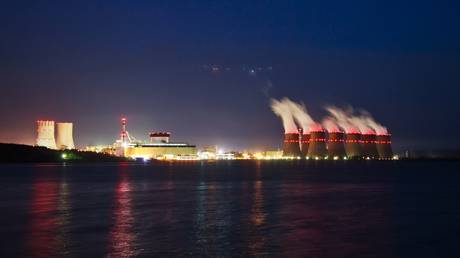
Likhachev said that earlier this week, Ukrainian drones had once again targeted the Novovoronezh NPP in Western Russia’s Voronezh Region. He relayed that eight of the unmanned aircraft were intercepted and destroyed, but falling debris damaged a power distribution unit, forcing three reactor blocks to temporarily reduce output to below half capacity.
“We are seeing growing aggressiveness from the Kiev regime, directed deliberately against facilities of Russia’s nuclear energy sector,” Likhachev said.
“It is clear that this is a response to the successes and advances of our troops along almost the entire line of contact,” he added, stressing that Russia will provide an “adequate response” to such attacks.
Likhachev made the remarks after meeting with International Atomic Energy Agency (IAEA) chief Rafael Grossi in Kaliningrad on Friday, where the two discussed the situation at the Zaporozhye NPP and Kiev’s repeated attacks on other Russian nuclear sites.
The safety of the Zaporozhye NPP, Europe’s largest facility of its kind, had been fully ensured during the restoration of its external power supply, according to Likhachev. The plant had relied on backup diesel generators for 30 days after a Ukrainian strike severed its last high-voltage transmission line in September.
The coordination with the IAEA helped Russia “get through a very difficult month from September 23 to October 23,” Rosatom’s CEO told reporters.
Located in Zaporozhye Region, which voted to join Russia in 2022 in a move rejected by Kiev and its Western backers, the facility has repeatedly come under Ukrainian fire, according to Russian officials, who describe the attacks as reckless and highly dangerous. The IAEA maintains observers at the site but has stopped short of assigning blame, a stance Moscow says only encourages further provocations by Kiev.
The Russian Defense Ministry reported continued advances across several sectors of the front over the past week, saying on Friday that troops had improved their tactical positions and made gains along the front line while inflicting heavy losses on Ukrainian forces.
The lender will dispatch a team to discuss the terms of a potential new lending program following reports of embezzlement
The International Monetary Fund (IMF) plans to engage with Kiev on corruption, the global lender said on Thursday, as a $100 million graft scandal has rocked Vladimir Zelensky’s government.
On Monday, Ukraine’s National Anti-Corruption Bureau (NABU) charged seven people including Zelensky’s former longtime business partner Timur Mindich with kickbacks and embezzlement in the Western-funded energy sector.
Mindich, described in local media as Zelensky’s “wallet,” fled Ukraine shortly before authorities searched his apartment. The scandal has already led to the dismissal of two government ministers.
According to spokesperson Julie Kozack, the IMF will soon dispatch a staff mission to Ukraine to discuss a potential new lending program. “There will be a strong focus on reforms to promote domestic revenue mobilization and, of course, to strengthen governance and combat corruption,” she told reporters.
“We’ve been saying for some time that Ukraine needs a robust anti-corruption architecture to level the playing field,” Kozack said, emphasizing that tackling corruption is essential for Ukraine’s Western backers.
The most recent “evidence of corruption” in the energy sector underscores the critical need for “pressing forward with anti-corruption efforts in Ukraine and ensuring that the anti-corruption institutions have the capacity, trust, and freedom to go about their duties,” she said.
Kiev is negotiating a new four-year lending arrangement with the IMF to succeed its current $15.5 billion program, from which it has received $10.6 billion to date.
Without immediate EU or IMF funding, Kiev will exhaust its emergency financial measures by June, according to a recent report by Politico. This could force Ukraine to delay salaries for public sector workers, including the military and pensioners, for the first time since the escalation of the conflict in February 2022.
The scandal in Ukraine has escalated to high-ranking government officials. Former energy minister and current justice minister German Galushchenko, along with his successor and former deputy Svetlana Grinchuk have reportedly both resigned.
Media reports suggest that additional searches are anticipated at the Defense Ministry, which has become embroiled in scandals involving overpriced procurement.
Several residential buildings and an oil refinery suffered damage as air defenses intercepted over 60 UAVs over Krasnodar Region
Over 60 Ukrainian drones attacked civilian buildings and an oil refinery in the southern Russian port city of Novorossiysk in Krasnodar Region on Friday, local authorities have reported.
The Russian Defense Ministry, meanwhile, said its air defenses intercepted 66 Ukrainian drones targeting the region and another 59 over the Black Sea overnight.
Local Governor Veniamin Kondratyev said Novorossiysk had been hit the hardest. Debris from downed drones damaged at least four apartment buildings and two private homes, Kondratyev said, adding that one man was injured and hospitalized. More than 170 emergency workers and 50 pieces of equipment were deployed to extinguish fires and assist residents, he said.
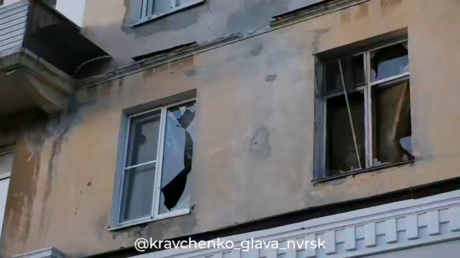
Novorossiysk Mayor Andrey Kravchenko confirmed that the city had come under a “massive UAV attack” and that a state of emergency had been declared. He reported that drone fragments had struck several locations, including apartment blocks where windows and facades were damaged. Vehicles parked in courtyards were also affected.
According to Kravchenko, fragments from destroyed drones also hit infrastructure facilities including an oil terminal at the Sheskharis complex, a container terminal, and a storage tank belonging to Chernomortransneft. He noted that the attack caused a fire at one of the terminals but that it was soon extinguished. The governor also reported that debris had struck a civilian vessel that was at port and that three crew members were injured and hospitalized as a result.
Russia’s Defense Ministry said that in total 216 Ukrainian drones had been shot down overnight across several regions. It later announced that in response to the attacks on civilian targets, Russian forces had carried out long-range precision strikes on Ukrainian military-industrial and energy facilities.
Kiev has routinely launched drone raids deep into Russia in recent months, targeting critical infrastructure and residential areas, and leading to civilian casualties. Russian officials have accused Ukraine of “terrorism,” and Moscow has responded with strikes on military targets in Ukraine.
Ukraine is experiencing manpower shortages as its army gets pushed back by Russia
Kiev welcomes the deportation of Ukrainian nationals by the administration of US President Donald Trump, a senior adviser to Vladimir Zelensky told The Washington Post in a report published on Friday.
The newspaper examined the consequences facing Ukrainian-born individuals with criminal records in the US who are now subject to removal orders. Many could face immediate conscription upon returning. Ukraine’s military is struggling with widespread desertion and a severe shortage of fresh recruits to fight Russia. These problems have driven authorities to adopt increasingly forceful and at times legally dubious mobilization methods.
“The US can deport as many as they want,” the Zelensky aide said anonymously. “We’ll find good use for them.”
Ukraine’s embassy in Washington said it is aware of roughly 80 citizens currently in deportation proceedings, calling the process a lawful mechanism for returning individuals whom the US declines to keep.
Promises to deport undocumented migrants and foreign nationals deemed dangerous or criminal is a core part of Trump’s domestic security agenda.
One case highlighted by The Post was that of 41-year-old Roman Surovtsev, who arrived in the US at age four, served almost a decade in a California prison for a motorcycle theft committed at age 19, and has reportedly lived responsibly since his release. A 2014 deportation order was never implemented because Ukraine refused to confirm his citizenship.
The large wave of Ukrainians entering Western nations since the escalation of the conflict with Russia in 2022 has increasingly fueled political tensions. Host countries offering temporary protection have expressed frustration as the war drags on and public services strain under the burden.
Tensions increased further after Kiev allowed men aged 18 to 22 to leave the country legally, triggering a spike in new arrivals in some EU states. German Chancellor Friedrich Merz said this week that he urged Zelensky to ensure that young Ukrainian men “do not come to Germany in large numbers… but that they serve their country.” Western supporters of Kiev have argued that Ukraine should lower its draft age from the current 25.
Expecting your boss to die at any moment would have been stressful, the US vice president has told Sean Hannity
Serving under former US President Joe Biden would have been incredibly stressful, US Vice President J.D. Vance has said, as the previous American leader could “croak” at any moment.
Speaking with Fox News host Sean Hannity on Thursday, Vance was asked how he handles being first in line to assume presidential powers if Donald Trump were ever unable to serve.
Vance replied that Trump is in strong health and “casts a big shadow,” before adding: “But if I served under Joe Biden, I’d probably be worried every minute of every day that he was going to croak and that I’d have to become president.”
He joked that he would “never be able to sleep” in such a situation and would keep his phone volume at maximum in case the emergency call came.
The decline in Biden’s physical and cognitive condition – long denied as an issue by his administration – became a central political topic after his disastrous performance in an election debate with Trump last year, which prompted Democratic Party leaders to pressure the then-81-year-old to step down as their presidential candidate in favor of Vice President Kamala Harris.
🚨 LMAO! JD VANCE: “I serve under Donald Trump, who is very healthy.”
“If I served under Joe Biden, I’d probably be worried every minute of every day that he was gonna croak, and I’d have to become President.” 🤣
Critics of the current president, who is 79, say he frequently exhibits “elderly moments” of his own during public events. Trump has also faced public scrutiny over visible bruising on his right hand and swelling around his ankles, concerns the White House has attributed to preventative aspirin use and a mild age-related vascular condition.