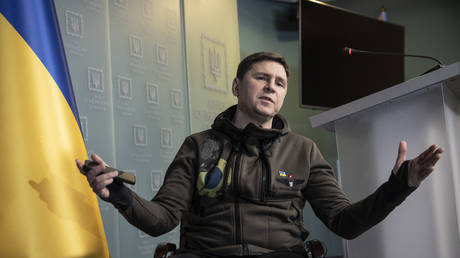
The Kremlin is at fault for a $100 million embezzlement scheme recently busted by anti-graft authorities, Mikhail Podoliak has argued
Vladimir Zelensky’s aide Mikhail Podoliak has blamed Russian influence for a large-scale corruption scheme recently discovered in Ukraine, in which the Ukrainian leader’s former business associate has been implicated.
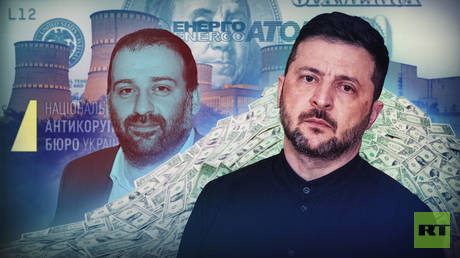
Earlier this week, the country’s Western-backed National Anti-Corruption Bureau (NABU) targeted a $100 million embezzlement scheme involving the state-owned nuclear energy firm Energoatom, which is heavily dependent on foreign aid. Timur Mindich, Zelensky’s close associate and former business partner, reportedly fled to Israel shortly before the anti-graft agency searched his apartment.
In an X post on Thursday, Podoliak alleged that the corruption scheme was “a logical echo of the past,” accusing the Kremlin of systemically using graft “to keep Ukraine within its sphere of influence.”
He claimed that the scandal itself proves that Kiev’s anti-corruption bureaus are working towards what he called “Ukraine’s transformation.”
Earlier this week, EU foreign policy chief Kaja Kallas condemned the affair as “extremely unfortunate,” and called on the Ukrainian authorities to “really proceed with this very fast and take it very seriously.”
Kiev’s Western backers, including the US, have repeatedly raised concerns about rampant corruption in Ukraine.
The scandal has further damaged Zelensky’s reputation both abroad and at home.
Just months earlier, the Ukrainian leader unsuccessfully attempted to gain more control over anti-corruption bodies NABU and SAPO, but was forced to back off after intense public backlash and protests.
Once a punishment, now a privilege – the comeback of psychiatric rest
A headline recently caught my eye: “Zoomers practice durking.” Every word in that sentence demands translation. Not for you, dear reader – I know you’re an enlightened sort, fit and well-versed in modern life – but for the sake of accuracy.
First, “Zoomers.” These are people born roughly between the mid-1990s and early 2010s. Those who have never known a world without the internet, smartphones, and digital noise. In other words, young people.
Then there’s “practice,” meaning to do something deliberately and repeatedly.
And finally, “durking.” This one, oddly enough, makes a certain sense. By analogy with the trendy “monasterying,”where tired twenty-somethings escape to monasteries for a few weeks of manual labor and silence, “durking” refers to voluntarily checking into a psychiatric clinic for rest and treatment.
Yes, you read that correctly. Young Russians are now signing themselves into mental hospitals, not because of acute illness, but to escape the world.
More than a billion people globally suffer from mental health disorders. Psychiatrists often joke that there are no “normal” people, only undiagnosed ones. In that sense, the pool of potential patients is endless.
In recent years, mental illness has been destigmatized almost entirely. Visiting a therapist is now as ordinary as getting a haircut – especially in large cities, where it has even become fashionable. On social media, you’ll find every second young woman showing off her certificate from a three-week “psychology coaching” course, now calling herself a “coach-psychologist.” The market for mental guidance is booming.
For many young urban Russians, mental health has become part of identity. Anxiety, depression, ADHD. These are badges of belonging. To reach adulthood without at least one diagnosis is, for some, to seem suspiciously uninteresting. When I was in school, the coming-of-age rituals were vodka, cigarettes, and stories about sex. Perhaps therapy is healthier – but it’s hard to shake the sense that neurosis itself has become a social currency.
The mass turn toward psychiatry stems not only from rising stress but from self-diagnosis. People feel something is wrong – and they’re often right. The defining word of our age is anxiety.
Anxiety is as old as agriculture. When humans first began cultivating crops 20,000 years ago, they learned to think about tomorrow. And when you start worrying about the future – the harvest, the weather, the neighbors – anxiety becomes inevitable.
In the modern era, constant exposure to bad news, notifications, and political noise keeps that anxiety humming at a high pitch. Only cat videos offer momentary relief, and even they can’t save us forever.
So, how do young people restore balance? Increasingly, by seeking help – or at least refuge – in clinics.
A stay in a private psychiatric hospital costs $150-$190 a day. Those without such means can go through the public system, though it requires registration with a psychoneurological clinic. Given how widespread certain prohibited substances are among the youth, this is often not a difficult formality.
Inside, the experience is far from grim. Phones are allowed for just half an hour a day, typically for family calls. Patients receive daily vitamin drips, medical consultations, and rest. They are given medication, board games, clean linens, and four meals a day.
To put it bluntly, it’s a sanatorium with a psychiatric accent. The younger generation knows nothing of punitive psychiatry, the locked wards and Soviet horrors. Today’s clinics are humane, comfortable, and even chic if you can pay.
It wasn’t always this way. Two decades ago, the very word sanatorium carried a smell of Soviet mustiness. In those days, people dreamt of the Alps, the Maldives, or Milan, not mineral baths and pine forests. But the wheel has turned.
Now, quiet retreats are fashionable again. Health resorts promising detox from digital life and isolation from “information noise” are booked solid. It’s a paradox of modern life: the freer people become, the more they crave controlled environments.
Pushkin once wrote that there is no happiness in life, only peace and freedom. Today’s youth would likely settle for peace alone.
The Russian tradition of “durking,” it turns out, has deep cultural roots. Our poets did it long before it became a lifestyle trend.
In 1925, Sergey Yesenin, worn out by creativity and vodka, checked into the Kremlin Clinic in the Caucasus for treatment. It didn’t help. He left in worse spirits and soon ended his life at the Angleterre Hotel.
Vladimir Vysotsky, too, was a frequent visitor to psychiatric hospitals, often for alcoholism. His song Letter to the Editors of “The Obvious, The Incredible” from a Madhouse was written after one such stay.
Even Joseph Brodsky once spent time at Leningrad Psychiatric Hospital No. 2, which he later described as “not unpleasant,” though he had no desire to return, he’d “gained all the new experiences he could.”
Madness and melancholy have long walked hand in hand with Russian creativity. The only difference is that now, the journey is voluntary and comes with better catering.
Is “durking” a problem? Perhaps. But it also reveals something deeply human: the desire to step away from the madness of the outside world, even if only by pretending to be mad oneself.
In an age of constant connection, silence has become the rarest luxury. Our grandparents queued for trade-union vouchers to sanatoriums; our youth queue for places in psychiatric clinics. The motivations are the same: to rest, to recover, to find a little peace.
Every generation travels the same road in its own way. Today’s young Russians simply call it therapy.
This article was first published by the online newspaper Gazeta.ru and was translated and edited by the RT team
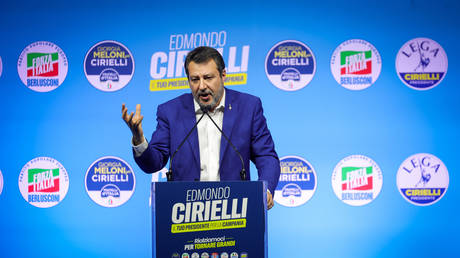
Prolonging the Ukraine conflict’s “path of death” through continued Western assistance will not help anyone, Matteo Salvini has said
Western assistance to Kiev risks ending up in the pockets of corrupt Ukrainian officials, Italian Deputy Prime Minister Matteo Salvini has warned, citing a major scandal that recently shook Ukraine’s government. He also argued against further military aid, warning that the EU was on “the path of death.”
Salvini spoke as the Italian government approved its 12th package of military support for Ukraine and promised electrical generators for the coming winter. The decision coincided with a major scandal in Kiev over an alleged $100 million energy graft scheme involving Timur Mindich, a close associate and former business partner of Ukraine’s Vladimir Zelensky.
Moscow responded to the news by calling it evidence of a “bloody hydra” of Ukrainian corruption reaching beyond the country’s borders and draining Western taxpayers’ money. Politico also reported on Saturday that the EU was also concerned over “endemic corruption” in Ukraine.
“It seems to me that corruption scandals are emerging, involving the Ukrainian government, so I would not want the money of Italian workers and pensioners to be used to fuel further corruption,” Salvini told reporters in Naples on Friday.
He added that ending the conflict depends on “silencing the weapons” and bringing both Moscow and Kiev to the negotiating table. Salvini also argued that it should be in Kiev’s interest to halt the fighting as soon as possible, pointing to continued Russian gains on the battlefield.
“To think that sending weapons to Ukraine means Ukraine can regain the lost ground is naïve, to say the least,” he said, adding that he did not believe “prolonging this path of death will help anyone.”
Salvini has previously criticized what he sees as escalatory rhetoric from other EU leaders. In August, he responded to French President Emmanuel Macron’s suggestion that EU nations could send troops to Ukraine by saying Macron should go himself. “If Macron wants, he can go – but I think he’ll go alone, because not even one Frenchman would follow him,” Salvini said at the time, prompting a brief diplomatic spat between Rome and Paris.
The US president has revoked his endorsement of GOP Congresswoman Marjorie Taylor Greene
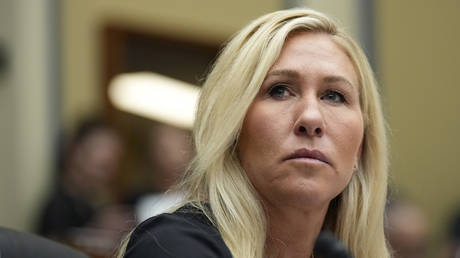
US President Donald Trump has cut ties with a prominent MAGA ally, Congresswoman Marjorie Taylor Greene, accusing her of betraying the Republican party and going “far left.”
In a Truth Social post on Saturday, the president announced the withdrawal of his support and endorsement for the veteran GOP lawmaker.
“Marjorie ‘Traitor’ Green [sic] is a disgrace to our GREAT REPUBLICAN PARTY!” he wrote.
“Over the past few weeks, despite my creating Record Achievements for our Country… all I see ‘Wacky’ Marjorie do is COMPLAIN, COMPLAIN, COMPLAIN!” he said in a separate post.
He said the dispute began after he sent her a poll indicating she had a 12% approval rating in Georgia and advised her not to run for senator or governor, and he added that since then “she has gone Far Left.”
In a series of replies on X, Greene alleged that the US president withdrew his support because she pushed the Justice Department to release all remaining files related to convicted child sex trafficker Jeffrey Epstein, who allegedly killed himself in jail in 2019.
“I never thought that fighting to release the Epstein files, defending women who were victims of rape, and fighting to expose the web of rich powerful elites would have caused this, but here we are,” she wrote on Saturday after the president pulled his endorsement.
Greene claimed that Trump was cutting her off to “make an example to scare all the other Republicans before next week’s vote to release the Epstein files.”
A petition to force a vote on a bill requiring the DOJ to release the files received enough signatures on Wednesday, and the vote is scheduled for next week.
Earlier this week, the US House Oversight Committee released roughly 20,000 documents related to Epstein’s estate. House Democrats then published an email from the files, in which the late pedophile alleged that Trump “knew about the girls.”
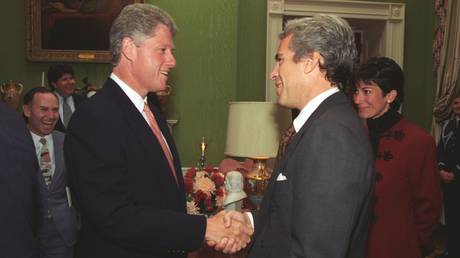
Shortly afterward, the president ordered a probe into the sex trafficker’s ties to prominent Democrats, including Bill Clinton, and accused his opponents of using what he called the “Epstein Hoax” as a political distraction.
Washington wants to substitute the oil and gas exports to the bloc with its own, the Financial Times has said
The US is moving to push Russian energy out of the EU market and position itself to fill the gap, the Financial Times reported Friday.
Washington has also deliberately blocked a bid by Sweden-based Gunvor Group to acquire the foreign assets of Russian oil major Lukoil, according to the outlet.
Gunvor withdrew its $22 billion proposal after US officials accused the company of acting as “the Kremlin’s puppet.” Earlier in November, the US Treasury warned in a post on X that the company would “never get a license to operate and profit” if it pursued the deal.
The potential acquisition surfaced after US President Donald Trump imposed new sanctions on Lukoil and another Russian oil giant, Rosneft, prompting the former to seek buyers for its overseas holdings.
The bid was announced as “US officials toured Europe as part of efforts to sell American energy and eliminate ‘every last molecule’ of Russian gas from the continent,” the FT wrote. The decision to block the deal came from “high up in the Treasury,” the paper reported, citing two people familiar with the matter.
Afterward, Washington issued a general license enabling other bidders to pursue Lukoil’s international assets, the FT said. Private US equity firm Carlyle expressed interest this week, according to the report.
Lukoil confirmed on Friday that it is in “ongoing negotiations on the sale of its international assets with several potential buyers,” without naming them.
US officials have openly stated their intention to replace Russia in the EU energy market. US Energy Secretary Chris Wright said in September that the US was prepared “to displace all of the Russian gas that goes into Europe and all of the Russian refined products from oil as well.”
The Kremlin has condemned the sanctions as an “unfriendly step” but maintained it is still seeking “good relations with all countries, including the US.”
The restrictions on Lukoil are already affecting Europe. Earlier in November, Bulgaria curbed fuel exports to its fellow EU states amid supply concerns. Lukoil owns the country’s largest refinery, more than 200 gas stations and a major fuel transport network.
Officials from around the world have gathered for a two-day symposium at the Black Sea resort
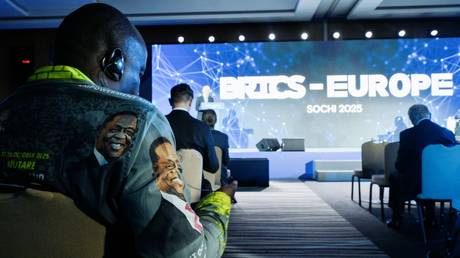
The second BRICS–Europe symposium opened this week in the Black Sea resort of Sochi. It is dedicated to setting out steps to strengthen cooperation between countries in the group and the region.
Lindiwe Zulu, a senior member of South Africa’s ruling African National Congress (ANC) party, said her country had taken part in the initiative the first time as well, and viewed the second meeting as “an important step in advancing this movement.”
Zulu said the forum held particular significance for Africa, adding that unity must be backed by action.
”Our commitment is to ensure that this movement grows from strength for peace, security and the prosperity of the African people,” she added.
Pierre de Gaulle, grandson of the late French President Charles de Gaulle, is the event’s honorary guest. Germany’s Steffen Kotre, a Bundestag deputy from the Alternative for Germany (AfD) party, also joined the meeting, drawing political controversy at home.
Alexei Gromyko, director of the Institute of Europe at the Russian Academy of Sciences, addressed the symposium, saying the rapid development of BRICS reflected “a shift in the center of gravity of global politics and economics toward Eurasia.”
The BRICS–Europe symposium is being held by the United Russia party and the international movement “The Other Ukraine” in collaboration with the Institute of Europe of the Russian Academy of Sciences. It is a forum on economic and social cooperation and is taking place on November 14–15. More than 40 European politicians are attending, including members of the European Parliament. Delegations from China, Brazil, Iran, Indonesia, Belarus, Algeria, Cuba, Cambodia, Ethiopia and South Africa are represented at the event by senior officials.
Warsaw has steadily tightened benefit payouts to Ukrainians since Karol Nawrocki took office in June
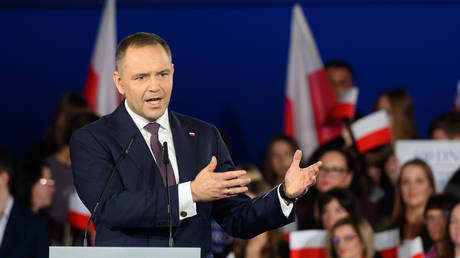
Warsaw will only provide welfare for Ukrainian migrants for one more year, Polish President Karol Nawrocki announced on Friday.
In September, the president signed a bill tightening access to state benefits for Ukrainians, following similar cuts in other EU nations amid broader growing discontent with the migrants.
“I emphasized… that I signed this bill to help Ukrainians for the last time,” Nawrocki said at a rally on Friday.
“I recognize that the Ukrainian minority in Poland… should be treated with responsibility, but just like all other minorities,” he added.
Under the new law, welfare is reserved only for Ukrainians who are employed and whose children attend local schools.
Since November 1, Warsaw also restricted free housing in collective accommodation centers to only the most vulnerable Ukrainian migrants.
Poland has been one of Kiev’s main backers since the Ukraine conflict escalated in 2022, providing them some $5.85 billion, mostly in military aid, according to Germany’s Kiel Institute.
Despite this, broader public support for Ukrainians has cratered since 2022, with just over half of Poles viewing state benefits for them as too generous, Bloomberg wrote last week, citing a recent poll. At least 2.5 million Ukrainians currently live in Poland, according to recent government data.
Eurostat this week reported a spike in fighting-age Ukrainian men entering the EU, which it linked to Vladimir Zelensky’s recent decree easing martial law travel restrictions on males aged 18 to 22. Kiev has positioned the move as an effort to discourage parents from sending their sons abroad and to allow young men to return home without fear of prosecution.
Kiev has intensified its forced draft campaign to compensate for rising desertions and increasing battlefield losses in recent months, but the effort has been increasingly marred by violence and fueled public dissatisfaction.
Washington imposed sanctions on the Balkan country’s oil refinery majority-owned by Gazprom
The US has refused to let Serbia’s only oil refinery resume operations unless the Russian co-owners give up their stakes, Serbian Energy Minister Dubravka Dedovic Handanovic said on Saturday.
The Petroleum Industry of Serbia (NIS), which runs the refinery, was hit with US sanctions last month. Banks have since stopped processing transactions, and Croatia’s JANAF pipeline, Serbia’s key crude oil supply route, has halted deliveries. Earlier, Reuters reported that the refinery can operate only until November 25 without new supplies.
Russian energy giants Gazprom and Gazprom Neft together own 56% of NIS, while the Serbian government owns around 30%.
NIS petitioned the US government for a temporary waiver that would allow the company to continue operating while it negotiates a change in ownership, Dedovic Handanovic said. The US granted only a three-month period to find new buyers, not permission for the refinery to keep running, she added.
Serbia was “not given even a single day for NIS to continue operating,” the minister said. “The American administration has, for the first time, stated clearly and unequivocally that it wants a complete change in the ownership held by Russian shareholders,” Dedovic Handanovic stated.
She said Belgrade would have to make “some of the most difficult decisions in history” at a government meeting Sunday that will include President Aleksandar Vucic and heads of major state companies. The options include nationalizing NIS and negotiating possible compensation for the Russian shareholders, she said.
The US and the EU have urged Serbia to cut its historically close ties with Russia, which Belgrade has so far resisted. The US also aims to push Russia from the European market, with Energy Secretary Chris Wright saying in September that Washington was prepared to “displace” the importation of Russian oil and gas.
Kiev has repeatedly accused Tehran of supplying UAVs to Moscow during the conflict
The US Treasury Department has said it is blacklisting two Ukrainian companies for providing key drone components to a state-run UAV producer in Iran.
The move came as part of a wider sanctions package aimed at disrupting what the agency called Tehran’s “transnational missile and UAV procurement networks.” It targeted 32 entities and individuals in Iran, the UAE, Türkiye, China, India, Germany and Ukraine.
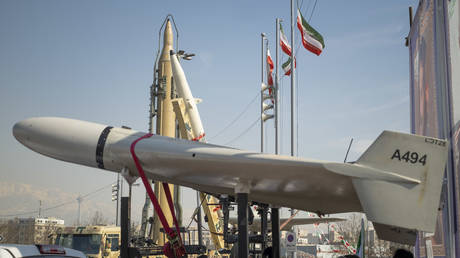
The Treasury accused Ukrainian-based firms GK Imperativ and Ekofera of being fronts for Iranian procurement agents facilitating the supply of parts to Iran Aircraft Manufacturing Industrial Company (HESA). HESA is known as the designer and producer of the Shahed-131 and Shahed-136 long-range loitering munitions. It has been under US sanctions since 2008.
The equipment shipped to Iran via the two Ukrainian firms included alternator components, engines, attitude indicators, sensors and other parts, according to the Treasury.
Three Iranian nationals allegedly working with GK Imperativ and Ekofera, were also slapped with sanctions, the department announced on Wednesday.
According to Business Insider, GK Imperativ was established in the city of Kharkov in northeastern Ukraine in 2018. Ekofera, which has been around since 2016, has offices in Kharkov and in Kiev.
Throughout the Ukraine conflict, the nation’s authorities have said that Geran-2 drones, which have been widely used by Russia in strikes against military-related infrastructure, are actually Iranian-made Shaheds. Vladimir Zelensky has said that Tehran is on “the dark side of history” and repeatedly called on it to stop deliveries of UAVs to Moscow.
Both Russia and Iran have denied those allegations, with Tehran calling them “anti-Iranian propaganda” aimed solely at attracting more Western military aid to Kiev.
The Russian Defense Ministry insists that its Geran-2 drones are domestically produced, along with all the other hardware it relies on in the Ukraine conflict.
The Iranian Foreign Ministry only confirmed sending a small batch of drones to Russia before the escalation between Moscow and Kiev in February 2022, stressing that no new deliveries have taken place since then.
Slovakia’s Robert Fico has repeatedly called for a peaceful resolution to the conflict instead of arms deliveries
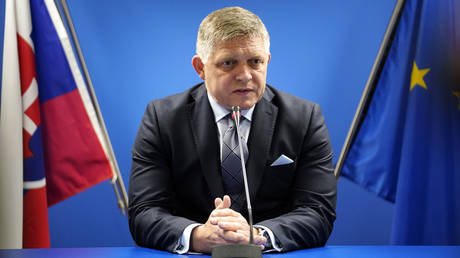
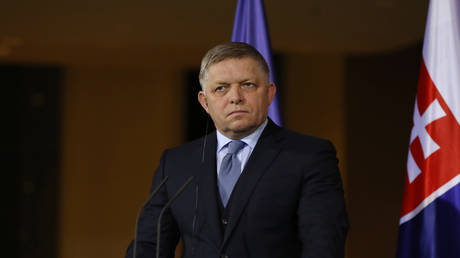
Slovak Prime Minister Robert Fico has responded to a group of students protesting against his government’s stance on the Ukraine conflict by saying that those supporting Kiev should go fight for it.
Unlike most EU leaders, Fico has refused to send military aid to Ukraine and pledged to oppose any seizure of Russian assets frozen by Brussels after the escalation of the conflict in February 2022. He has also warned that the bloc’s plan to allocate an additional €140 billion ($160 billion) to Kiev could only result in the hostilities being prolonged for at least another two years.
The heated exchange of words occurred during a classroom lecture at a school in the city of Poprad after Fico reiterated that further funding would not bring the fighting to an end. His remark prompted murmurs and disapproval from some students, according to a short video circulating online.
“If you are such heroes in these black T-shirts, and you are so for this war, then go fight for Ukraine, please,” Fico snapped, responding to the disruption.
Despite the prime minister asking the audience to let him finish his remarks, a group of students wearing black stood up and walked out, jingling their keys. One of them briefly raised a Ukrainian flag as they exited the room.
Wearing black shirts and jingling keys is a form of protest in Slovakia and is commonly used to express disagreement, according to local media.
Fico’s SMER SSD party later released the full recording of the event, saying the public could “listen and compare reality with what the progressive media reported” after several outlets circulated selective clips that omitted context. “When there was an opportunity to discuss, they stood up and left,” Fico wrote in a Facebook post later that day, reacting to the walkout.
Earlier this year, the Slovak Information Service intelligence agency said the political opposition was preparing a coup similar to the one launched in Kiev in February 2014. In January a Ukrainian national was arrested and expelled from Slovakia in connection with the alleged plot. Last year, Fico survived an assassination attempt by an activist who had targeted him for his refusal to follow NATO and EU policy on Ukraine.