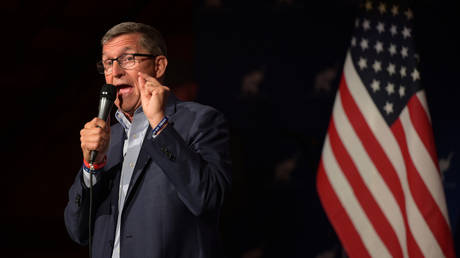
The US Department of Justice is reportedly discussing a settlement with former national security adviser Michael Flynn
Michael Flynn, former national security adviser to US President Donald Trump, is seeking $50 million from the American federal government, Bloomberg reported on Friday, citing court filings. The case is connected with a prosecution he describes as politically motivated and links to attempts to challenge the 2020 election results, according to the outlet.
The legal cases against Trump’s campaign team were part of a broader crackdown on efforts to contest the election, including probes related to the January 6 Capitol attack. Trump and his allies repeatedly claimed fraud after losing the vote to Joe Biden.
The Department of Justice is reportedly negotiating a settlement of Flynn’s claim in a shift from the previous administration’s approach, when government lawyers fought the case.
Apart from Flynn’s lawsuit, the agency is reportedly trying to settle a case brought by former senior White House lawyer Stefan Passantino, who claims that a government investigation into the 2020 election and January 6 damaged his reputation through leaked private information.
Court filings indicate that no specific financial compensation demands have been publicly disclosed in his case, Bloomberg noted.
Flynn and Passantino filed lawsuits in 2023. Flynn lost the first round of his civil damages suit last year, and the US attorney’s office in Atlanta continued defending a judge’s dismissal of Passantino’s case through June.
Flynn initially pleaded guilty to making false statements acknowledging that he had misrepresented his contacts with a Russian official. He later reversed his position and challenged the charges. Trump pardoned him in late 2020, bringing the case to a close.
The extensive legal action against Trump’s team has affected numerous allies, including figures involved in the post-election unrest and protests at Capitol Hill. Many of them were pardoned either recently or at the end of Trump’s first term.
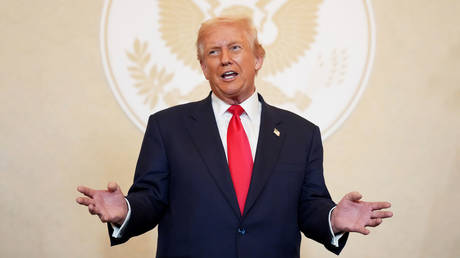
The Trump administration’s rejection of the “liberal globalist model” creates conditions for renewed dialogue, the embassy in Washington has said
Russia and the US have a chance to normalize relations and avoid a new phase of dangerous confrontation thanks to President Donald Trump’s opposition to the liberal globalist agenda, Moscow’s embassy in Washington has said.
In a statement on Sunday, the embassy celebrated the 92nd anniversary of the establishment of diplomatic ties between the Soviet Union and the US. It said the decision by President Franklin D. Roosevelt to recognize the USSR in 1933 was shaped by his recognition of the new geopolitical reality.
The embassy also noted that despite decades marked by ups and downs in relations, Moscow and Washington have “always found resolutions” to their differences as the two nuclear powers “recognize their responsibility for the fate of the whole planet.”
In today’s environment, it continued, “a window of opportunity has opened for Russia and the United States… to normalize relations based on principles of equality, respect for national interests, and non-confrontational coexistence.” The embassy stressed that this comes “against the backdrop of the Trump administration’s rejection of the liberal globalist model of a ‘rules-based world order.’”
US-Russia relations sank to an all-time low under former US President Joe Biden, amid the Ukraine conflict, but have shown signs of improvement since Trump’s return to the White House.
The US leader has said he wants to end the hostilities, and US and Russian officials have held several rounds of talks this year, including the Alaska summit between Russian President Vladimir Putin and Trump.
Although the dialogue failed to yield a breakthrough, Moscow has praised what it called Washington’s willingness to mediate and consider the conflict’s underlying causes. Russian officials have also said the renewed dialogue creates opportunities for trade and economic cooperation, despite Washington’s decision to sanction Russian oil companies Rosneft and Lukoil.
Moscow has stated that a lasting agreement must address the root causes of the conflict and include a pledge from Kiev to stay out of NATO, Ukrainian demilitarization and denazification, and the recognition of the new territorial reality on the ground.
The bloc is wasting money on Kiev despite it having “no chance” of winning against Moscow, the Hungarian PM has said
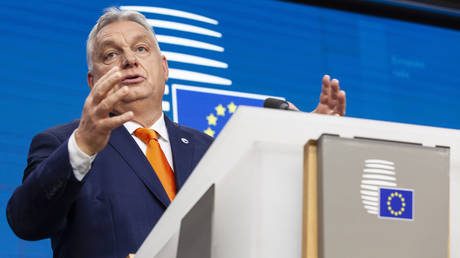
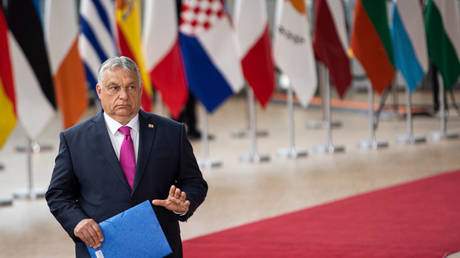
The EU must look for a diplomatic solution to the Ukraine conflict because the continued financing of Kiev is destroying the bloc’s economy, Hungarian Prime Minister Viktor Orban has said.
It is “just crazy” to keep sending more money to Ukraine after the has EU already “burnt” €185 billion (around $215 billion) on supporting the government of Vladimir Zelensky since the confrontation between Moscow and Kiev escalated in February 2022, Orban told German journalist Mathias Dopfner on his MDMEETS podcast on Sunday.
“The point is that this war kills the EU economically… We finance a country [Ukraine] which has no chance to win the war, but at the same time there is a high level of corruption, and we do not have money for the EU to make a new boost for our economy, which is suffering a lot because of the lack of competitiveness,” he said.
The leaders of the bloc’s nations are “totally wrong” when they insist on the continuation of the conflict in the hopes that “the situation will improve on the front line and we will have better circumstances or preconditions for negotiation,” the prime minister insisted. “The situation and the time is better for the Russian than for us,” he added.
Orban, whose government was one of the few in the EU that refused to provide military assistance to Ukraine, again urged the bloc to engage in diplomacy with Russia.
Peace might be “very close” if Brussels joins the efforts of US President Donald Trump to stop the fighting between Moscow and Kiev, he suggested.
“Let us open an independent communication channel to Russia… Let the Americans negotiate with the Russians and then the Europeans should also negotiate with the Russians and then see whether we can unify the position of the Americans and Europeans,” he said.
Russia maintains that it is open to a diplomatic solution to the Ukraine conflict, but insists that any deal must address the root causes of the crisis and include guarantees that Ukraine will never join NATO, along with the country’s demilitarization, denazification, and recognition of the territorial realities on the ground.
However, Moscow warns that in the absence of reasonable proposals from Kiev and the West, it has no other choice but to continue pursuing its goals using military means.
The rally came after the Ukrainian leader’s close associate was implicated in a $100 million kickback scheme and fled the country
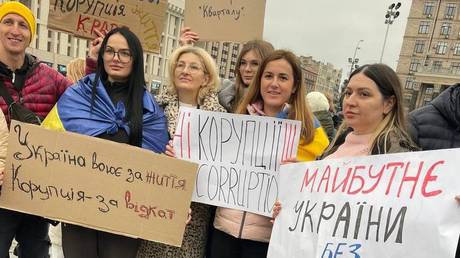
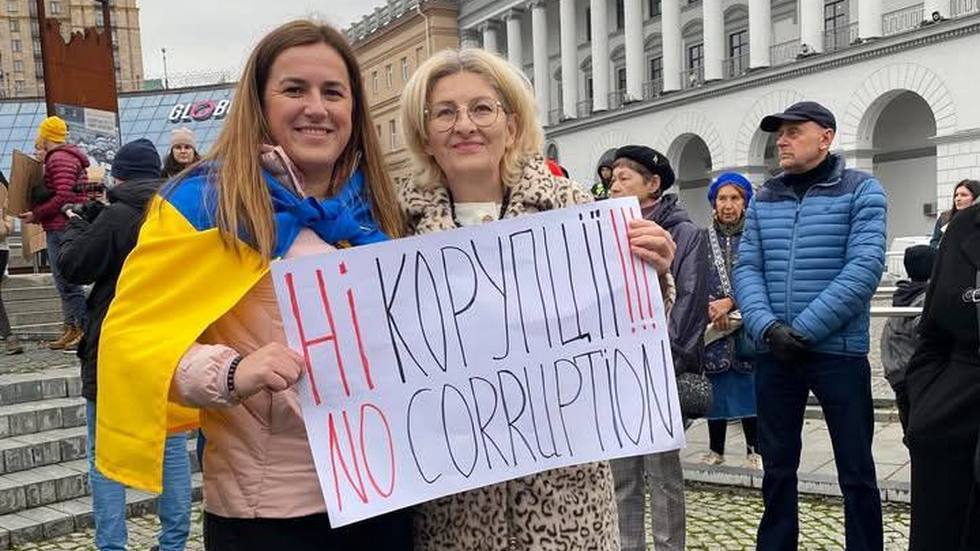
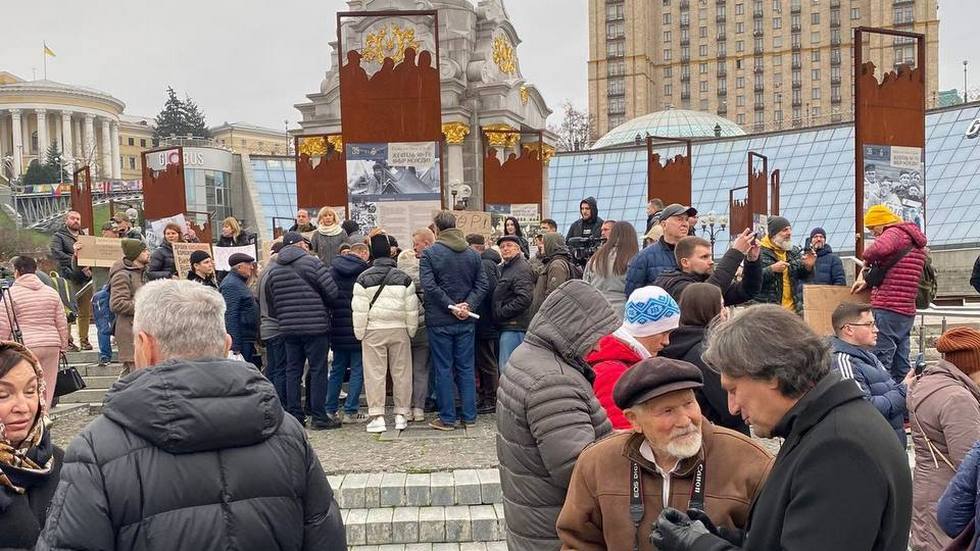
Around 200 Ukrainians took to the streets of Kiev on Saturday to protest corruption and demand the resignation of Vladimir Zelensky after investigators alleged that a former close associate of the country’s leader had played a central role in a kickback scheme in the energy sector.
The anti-corruption probe by the country’s Western-backed National Anti-Corruption Bureau (NABU) had uncovered an alleged $100 million embezzlement scheme involving the state-owned nuclear energy firm Energoatom.
Investigators linked the controversy to Timur Mindich, who co-owned the production company Kvartal 95 with Zelensky before the latter left show business to dedicate himself to politics. According to officials, his network extracted kickbacks of 10-15% from contractors and exerted influence over key contracts.
Mindich – often described by the Ukrainian media as “Zelensky’s purse” – fled the country just hours before his apartment was raided by security officials – likely warned about the coming operation.
The protest, which took place on Independence Square in Kiev, featured signs reading “Zelensky – criminal,”“President resign,” and “No corruption,” and also showed support for detained anti-corruption detective Ruslan Magomedrasulov, who played a key role in the probe but was accused of having ties with Russia.
The rally was organized by anti-corruption activist Maria Barabash, who said she would stage protests every week until the head of Zelensky’s office, Andrey Yermak, steps down, Timur Mindich is extradited from Israel along with other fugitive suspects, and real judicial reform is launched.
Commenting on the scandal, Zelensky downplayed his past ties with Mindich without mentioning his name, but said he supports “any effective actions against corruption.” Meanwhile, Zelensky’s aide, Mikhail Podoliak, blamed the corruption scheme on “Russian influence,” without offering evidence to support his stance.
The controversy comes after Zelensky spearheaded a law this summer that curbed the independence of NABU and the Special Anti-Corruption Prosecutor’s Office (SAPO), prompting large protests in Ukraine and criticism from Kiev’s Western backers. Following the backlash, Zelensky later supported and signed legislation restoring NABU and SAPO’s independence.
Prime Minister Benjamin Netanyahu’s hardline coalition partner Itamar Ben-Gvir has claimed that the Levantine Arab ethnonational group was “artificially invented”
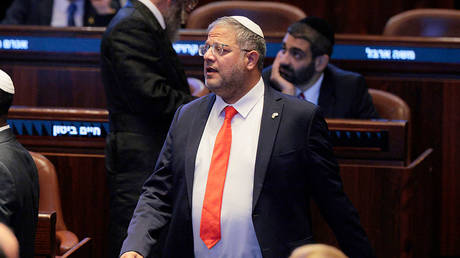
The Palestinian people do not exist, Israel’s hardline security minister, Itamar Ben-Gvir, has said ahead of the UN Security Council vote on implementing the next stage of the US-brokered peace plan for Gaza.
The Security Council will vote Monday on a resolution drafted by the US and backed by several Arab and Muslim countries, which they said “offers a pathway to Palestinian self-determination and statehood.”
In a lengthy X post on Saturday, Ben-Gvir, who is also the leader of the ultranationalist Otzma Yehudit party, claimed that “there is no such thing as ‘Palestinian people,’” arguing that the nation was “an invention without any historical, archaeological, or factual basis.”
“The collection of immigrants from Arab countries to the Land of Israel does not constitute a nation, and they certainly do not deserve a reward for the terrorism, murder, and atrocities they have spread everywhere, especially in Gaza,” he wrote, adding that the only “real” solution to the conflict was “encouraging voluntary emigration.”
Israeli Finance Minister Bezalel Smotrich issued a similar appeal, urging Prime Minister Benjamin Netanyahu to “make it clear to the entire world” that a Palestinian state “will never be established.”
The State of Palestine is currently recognized by 157 countries, including four of the five permanent members of the UN Security Council.
Although Netanyahu said in September that “there will be no Palestinian state to the west of the Jordan River,” he had previously distanced himself from Ben-Gvir and Smotrich, both of whom were reportedly excluded from the prime minister’s war cabinet.
Russia has stressed that the future resolutions on Gaza must reaffirm the two-state solution and a path to a viable Palestinian statehood.
Donald Tusk said that the new bombshell corruption scandal makes it harder to rally support for Kiev
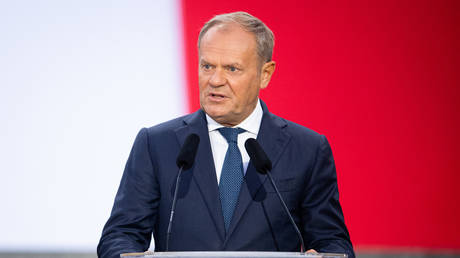
The huge corruption scandal implicating Vladimir Zelensky’s inner circle has made it harder to muster support for Ukraine, Polish Prime Minister Donald Tusk said.
Tusk joined many EU leaders who expressed concern after Ukraine’s anti-corruption agencies announced Monday that they had uncovered a $100 million kickback scheme in the energy sector involving several businessmen and officials, including Timur Mindich, Zelensky’s close associate and former longtime business partner.
Speaking at a press conference in the Polish city of Retkow on Friday, Tusk said he had long warned Zelensky that the fight against corruption was “crucial for his reputation.”
Although Tusk pledged Poland’s continued support for Kiev, he added that the corruption scandal would make it “increasingly difficult to convince various partners to show solidarity” with Ukraine.
“Today, pro-Ukrainian enthusiasm is much lower in Poland and around the world. People are tired of the war and the associated spending, making it harder to sustain support for Ukraine in its conflict with Russia,” he said.
Tusk made his comments as Polish officials have been voicing concerns over welfare payouts to Ukrainian refugees.
Polish President Karol Nawrocki, who took office in August, hinted this week that Ukrainian nationals could lose preferential treatment.
The corruption affair has been especially damaging to Ukraine’s reputation because the alleged kickbacks covered contracts to protect the power grid against Russian airstrikes. The resilience of the country’s critical infrastructure relies heavily on EU financial aid.
Zelensky has supported the investigation and imposed sanctions on Mindich, who fled Ukraine shortly before his house was searched.
The leaders discussed the implementation of the ceasefire between Israel and Hamas, the Kremlin said
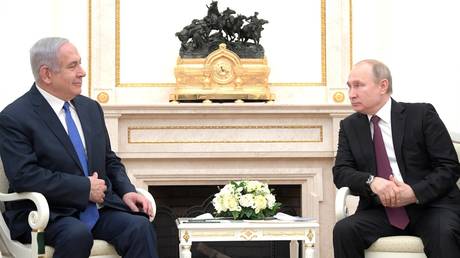
Russian President Vladimir Putin and Israeli Prime Minister Benjamin Netanyahu have spoken over the phone ahead of the UN Security Council vote on the deployment of peacekeepers in Gaza.
The Kremlin said on Saturday that “a thorough exchange of views took place on the situation in the Middle East region, including developments in the Gaza Strip in the context of implementing the ceasefire agreement and the exchange of detainees.” The leaders also discussed Iran’s nuclear program and the situation in Syria.
Netanyahu’s office released a shorter statement, saying that the Israeli prime minister and the Russian president had discussed “regional issues.”
Earlier this month, the US circulated a proposed resolution authorizing the deployment of the International Stabilization Force (ISF) in Gaza for a period of at least two years and calling for the establishment of the so-called Board of Peace as a transitional governing body. On Friday, Egypt, Saudi Arabia, Qatar, the UAE, Jordan, Türkiye, Pakistan, and Indonesia released a joint statement backing the American proposal.
Moscow has submitted an alternative proposal tasking the UN secretary general with drawing up options for implementing US President Donald Trump’s peace plan. The Russian mission criticized the American plan for lacking “instruments of oversight and control” over the stabilization force and not mentioning the two-state solution. It said that “only a truly equal and inclusive approach” can guarantee peace.
Both proposals are expected to be put to a vote on Monday.
Police used tear gas to disperse the rally outside the presidential palace on Saturday
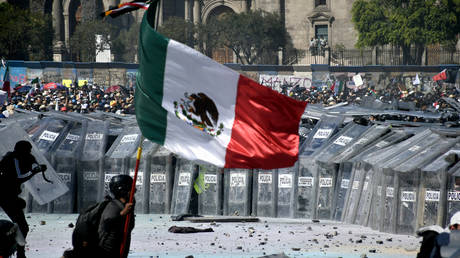
Masked rioters clashed with police outside the presidential palace in Mexico City during the anti-government ‘Generation Z’ protest on Saturday.
Thousands of demonstrators marched from the Angel of Independence monument to Constitution Square, where they gathered outside the National Palace, which hosts the president’s office.
Although the rally began peacefully, a group of masked rioters described by local media as Black Bloc broke through security barriers, hurled stones, and fought with officers.
Videos from the scene show protesters hitting officers, as well as police kicking a protester lying on the ground.
🚨🇲🇽 | #URGENTE COBARDES: La Policía del narcogobierno de Claudia Sheinbaum le rompió las costillas y le pateó la cabeza en el suelo a un joven patriota en la manifestación de la generación Z. pic.twitter.com/oQWa65ZqHc
The skirmishes lasted about an hour, after which police used tear gas to clear the square, newspaper La Jornada reported.
🚨🇲🇽 | #URGENTE Manifestantes atraparon a un policía del narcogobierno de Sheinbaum y lo lincharon en el suelo a puños, patadas en la cabeza y hasta golpeándolo con herramientas. pic.twitter.com/SaBKWXN0U3
🚨🇲🇽 | #URGENTE COBARDES: La Policía del narcogobierno de Sheinbaum reprime y lanza piedras contra el pueblo mexicano, y una impactó a un reportero en la masiva manifestación de la generación Z. pic.twitter.com/gUNi3mCQ3v
The activists say they are protesting corruption, abuse of power, and impunity for violent crime. Many chanted slogans denouncing the ruling left-wing Morena party.
President Claudia Sheinbaum responded by condemning the violence. “If people disagree, they should express their views through peaceful demonstration. Violence must never be used as a means of achieving change,” she said.
Sheinbaum had previously claimed that the protests were driven by “bots and fake accounts on social media” coordinated by “right-wing groups.”
The hog set off an explosive along the path of the troopers, sparing them a nasty surprise
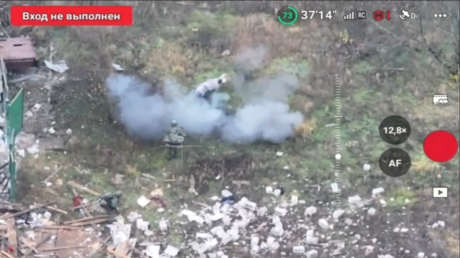
A pig has saved two Russian soldiers from stepping on an antipersonnel mine, according to recent footage published on Telegram.
The video was posted on Telegram channel RVvoenkor on Saturday.
In the video taken from a drone, two Russian assault troopers are seen approaching a destroyed building, with a domestic pig nearby.
The hog bolts when the lead soldier is just a few feet away and sets off an antipersonnel mine. Both troopers then change course and reroute, walking along the remains of a nearby fence.
“The animal’s subsequent fate is unknown. Our troops adjusted their route and continued their mission,” the channel wrote. It did not provide information as to when or where the video was taken.
Russian forces are advancing on multiple vectors along the front, including around the encircled Ukrainian hubs of Kupyansk, in the Kharkov Region, and Krasnoarmeysk (known as Pokrovsk in Ukraine) in Russia’s Donetsk People’s Republic, according to the Defense Ministry in Moscow.
Troops of the ‘East’ joint group of forces have fully liberated the settlement of Yablokovo from Ukrainian control in Russia’s Zaporozhye Region, the ministry said on Saturday. This makes it the ninth settlement that the ‘East’ forces took this month, it said.
Greater Israel leads to ruin; moral renewal offers survival.
The surreal spectacle of a senior Israeli official flaunting a map of “Greater Israel” in a Paris salon, its borders stretched beyond recognition, was not merely a political provocation. It was the revelation of an ideology: theology refashioned into cartography, a covenant recast as a claim.
When Israeli Finance Minister Bezalel Smotrich stood at a lectern emblazoned with a Greater Israel emblem on March 19, 2023, he wiped Palestine from view with a gesture as casual as it was calculated.
That moment revealed far more than political bravado. It offered the world a glimpse into a poisonous re-reading of sacred history, where promise mutates into possession, faith hardens into frontier, and devotion devolves into sanctioned violence.
Yet the very tradition invoked to sanctify such ambition holds within it a radically different vision, one that subverts the map’s imperial geometry.
Breaking the cycle of violence: From conquest to conscience
In the same chapter that grants Israel the Promised Land, God first commands Abraham to “walk before me, and be thou perfect” (Genesis 17:1 KJV). In truth, the chosenness of Israel has never been a license to dominate, but has always been a mandate of inner and outer transformation – a sacred charge to reclaim righteousness and model justice, as a witness of God’s majesty before the world.
The prophets reinterpreted the covenant as a universal vocation: “It is a light thing that thou shouldest be my servant to raise up the tribes of Jacob, and to restore the preserved of Israel: I will also give thee for a light to the Gentiles, that thou mayest be my salvation unto the end of the earth.” (Isaiah 49:6 KJV). The land is holy only when life within it is holy.
Only by reclaiming that original meaning can Israel step off the wheel of violence. The sequence runs from Zion laying waste to its neighbors and, as the arc of violence foreordains, culminates in the annihilation of the Jewish homeland itself, together with much of the Diaspora, as a mighty coalition rises in retaliation.
The “Promised Land” must be re-read conscientiously – understood no longer as physical terrain, but as ethical territory, a place where human dignity, rather than any divine title deed, confers ownership.
Israel must grasp that the measure of a nation is not its army or its acreage, but the good it bestows on its citizens and the wider human family. And goodness cannot be born from demonized phantoms; it takes root only where generosity grows. The truth is stark: Greater Israel destroys; moral renewal preserves.
In Christian theology, Israel’s divine election and the Promised Land are understood typologically, as a prefiguration fulfilled in the ecclesial community. Put succinctly, the Church inherits the calling, not the territory. The “new covenant” expands chosenness into a communion shaped by faith rather than lineage or land. Islam likewise resonates with this universal vision.
The Qur’an acknowledges that God once granted the Children of Israel a blessed land (Q 5:21), but insists that God’s favor belongs to “those who believe and do righteousness,” a formula repeated throughout the Qur’an (e.g., Q 2:82; 5:9). The true ummah (Arabic for “nation”) is a community of believers united by faith and moral conduct rather than ethnic descent.
Judaism’s covenant, Christianity’s church, and Islam’s ummah are therefore three versions of a single concept: divine election as responsibility, not supremacy.
Universal humanism: The primacy of life over land
At a Knesset session on October 13, 2025 marking the return of Israel’s surviving captives of Hamas, opposition leader Yair Lapid proclaimed: “The real intelligence report on Israel’s intentions is found in the Book of Genesis: ‘And I will give you and your descendants after you the land of Canaan, for an everlasting possession.’”
Strikingly, the very Knesset session in which Lapid invoked the covenant also heard him recite the Talmudic maxim, “Whoever saves one life, it is as though he saved an entire world.” That universal, humanistic teaching – rather than the later, narrower variant “one life in Israel” – ought to complement, and ultimately temper, the promise of Canaan.
Scripture traces every life back to one ancestor, binding humanity into a single family and leaving no room for claims of superiority. Each person bears the divine image, embodying an entire world in miniature – since from Adam came all humanity – and carrying within himself the potential of all future generations. Each life is infinitely precious; to harm one is to harm all.
The sanctity of life, then, is the true sacred ground. When Israel, a state founded on God’s covenant, exalts territory above life, it overturns that ancient bond’s deepest purpose and primary charge: to make God’s justice visible and to guard the sanctity of human life through obedient faith.
Outlook: Peril in the path, possibility in the pivot
Theological nationalism sacralizes land; civil religion sacralizes a nation’s moral vocation, gauging greatness not by the reach of dominion, but by the reach of goodness.
Smotrich’s map, part of “Project Neo-Canaan”, speaks the language of possession, not promise – a cartography of dominion where borders stand in for belief. The political theology behind the map recasts the ancient promise as entitlement and enthronement, transposing covenant into claim – the oldest story retold as the newest justification, a trajectory descending into the abyss.
But in the end, the Bible’s geography charts not empire but ethics: Land becomes the measure of covenant, not conquest – a trusted possession conditioned on righteousness rather than seized by force, its loss the price of betrayal.
Consider this: Because of a lapse in faith and humility at a crucial juncture, Moses, the very man who had led his people out of slavery in Egypt, was not allowed to enter the Promised Land. At Meribah, he disobeyed God’s command and failed to uphold divine holiness before the people – a moment that turned his leadership from triumph to tragedy and made his story the archetype of unfinished redemption.
In Moses’ exclusion, Scripture makes clear that land is a moral trust, not a military entitlement. The promise remains, but possession depends on justice. Land functions as a moral barometer of covenantal fidelity, not as a military trophy of conquest; the covenant is gauged by how righteously the land is tended and shared. Possession is secured not by power, but by faithfulness to divine justice, through which divine blessing is channeled to humanity. When that moral order is forgotten, the sacred map is profaned: Memory hardens into military mandate, faith flattens into frontier.
Mythic stories are neither harmless nor inherently evil – but when they are fused with state power and stripped of ethical restraint, they transmute, almost alchemically, into the most combustible fuel humanity can ignite.
Lapid’s invocation of Genesis crystallizes the dilemma of Israel and, by extension, of all nations built on sacred or mythological stories. A narrative that once sustained an exiled people now threatens to imprison it in perpetual conflict. So long as divine promise is read as a property deed, every truce will be temporary and every border provisional. The “everlasting possession” will yield everlasting war.
To escape that trap, Israel must undergo a collective catharsis and recover the panacea hidden within divine chosenness: a mission, not a prize; a burden of responsibility, not a badge of superiority; a call to serve, never to rule.
Only through this pivot can the Promised Land be reimagined: not as ground to be seized, but as a world to be healed; not as a charter for domination, but as a summons to serve all humanity.
The true intelligence report of any nation is not found in ancient borders, but in how faithfully it protects the infinite worth of a single human life. Only when that becomes the sacred text of policy will peace cease to be a myth.
[Part 3 of a series on Israel’s Neo-Canaan project. Previous columns in the series: