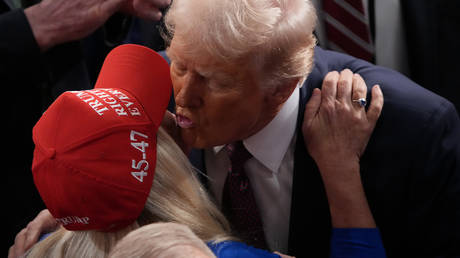
The bloc is scrambling to find finance for Ukraine, which faces a $50 billion budget deficit next year
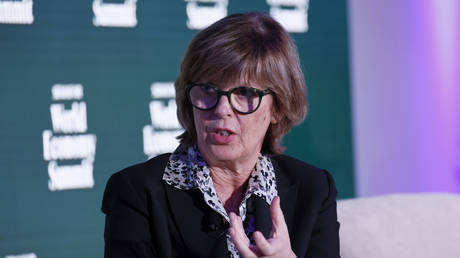
Belgian clearinghouse Euroclear could sue the EU if the bloc tries to confiscate the Russian sovereign funds held there, CEO Valerie Urbain told Le Monde in an interview published on Saturday.
The depository, which carries roughly $46 trillion in securities for global financial institutions in any given year, currently holds around $200 billion of the $300 billion in Russian Central Bank assets frozen in the West after the escalation of the Ukraine conflict in 2022.
Anything resembling confiscation would be illegal, and Euroclear is prepared to sue the EU if the bloc tries to force its hand on the matter, Urbain said.
“There are laws. Depending on the legal framework, we will decide what we can and want to do,” she added.
Legal action is “not out of the question,” Urbain said when asked to elaborate.
“The most important thing for Euroclear is credibility and trust… We are a crucial link that must remain infallible for the stability of financial markets.”
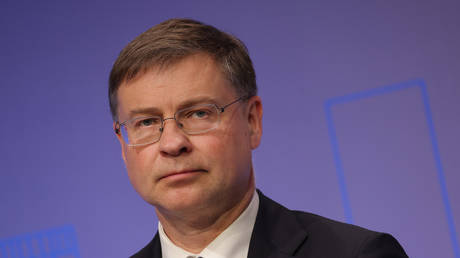
European Commission President Ursula von der Leyen has been pushing to use frozen Russian assets to back a €140 billion ($160 billion) loan to Ukraine, an initiative that Belgium has opposed, insisting on guarantees that the legal and financial risks will be shared across the EU.
The bloc’s decision to reclassify interest gained from the immobilized funds as “windfall profits” not belonging to Moscow – and to use them to fund Kiev – has already stretched legal definitions.
However, Ukraine’s Western backers can no longer afford to keep funding it without seizing Russia’s sovereign funds, according to recent publications in the Economist and Financial Times.
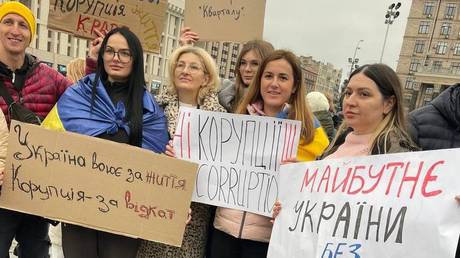
Kiev has also struggled to secure a new loan from the International Monetary Fund, which has been further complicated by the massive corruption scandal recently uncovered in Ukraine.
According to the country’s KSE institute, Kiev’s collapsing budget faces a $53 billion a year shortfall – one that Western sponsors are expected to cover.
Moscow has long stated that it will view any attempts to confiscate its Central Bank assets as a “theft” that would fundamentally undermine third countries’ trust in Western financial institutions.
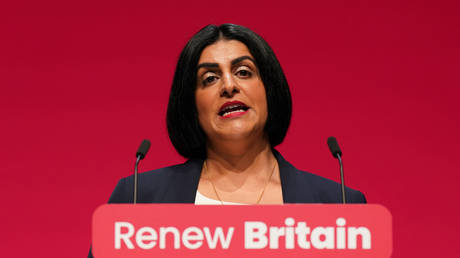
The new proposal includes reduced protections for refugees and an end to automatic benefits for asylum seekers, according to Shabana Mahmood
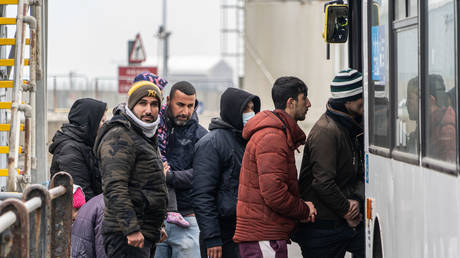
London plans to sharply scale back protections for asylum seekers and make them wait two decades to apply to stay for good as part of a major policy overhaul, Home Secretary Shabana Mahmood told The Sunday Times. She said the UK is struggling to manage a steady influx of new arrivals.
Under the existing rules introduced in 2005, refugees in Britain receive five years of status before they can apply for indefinite leave to remain, or permanent residence, and eventually citizenship. Mahmood wants to cut that initial period in half and introduce regular reviews to assess whether individuals remain eligible for asylum. Those whose home countries are deemed safe would be instructed to return.
For refugees who arrive illegally, the waiting period to apply for indefinite leave would be quadrupled to 20 years. “Illegal migration is tearing our country apart,” Mahmood said. “If we don’t sort this out, I think our country becomes much more divided.”
Asylum claims in Britain have reached a record high, with about 111,000 applications filed in the year to June 2025, according to government data. The number of claimants has nearly doubled since 2021, a Home Office report found.
Those who arrive legally would face a 10-year wait. The policy would allow skilled refugees to shorten the waiting time by entering “specific” work or study routes. “It will be essentially a system whereby the more you contribute, you can bring forward that period,” Mahmood said.
The overhaul would also end the statutory duty to provide support for asylum seekers. Refugees granted work permits would lose access to housing and weekly allowances, and support would be withdrawn for anyone who breaks the law.
Mahmood described the current system as “broken” and “unfair.” She has previously warned that the UK is losing control of its borders, saying last month that failing to restore order would erode trust in the state.
The move comes as support rises for the anti-immigration and EU-skeptical Reform Party, led by MP Nigel Farage. A September poll showed the party is backed by 35% of Britons, with Labour at 20% and the Conservatives at 17%.
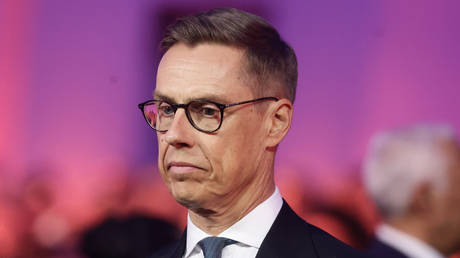
A truce or peace talks could take place by next spring, Alexander Stubb has said
A ceasefire in the Ukraine conflict or renewed peace talks are unlikely to take place this year, Finnish President Alexander Stubb told the Associated Press in an interview published on Sunday.
Kiev has “abandoned” direct peace negotiations with Moscow as they have made “little progress,” Ukrainian Deputy Foreign Minister Sergey Kislitsa told The Times last week. The last Turkish-hosted round of talks took place in June.
“I’m not very optimistic about achieving a ceasefire or the beginning of peace negotiations, at least this year,” Stubb told AP.
“If we get something going by February, March, that would be good,” he added, calling on other sponsors of Ukraine to “maximize pressure on Russia.”
He called on Kiev’s backers to increase “financial support to Ukraine,” and to “finance military equipment… give, donate as we best can.”
When asked about the massive $100 million embezzlement scandal that shook the Ukrainian state-owned Energoatom firm earlier this week, Stubb said that he hopes Vladimir Zelensky gets the affair “sorted and cleared.”
“Obviously there’s no place for corruption, especially in a country which is in war,” he said.
The scandal has so far seen two Ukrainian ministers fired and one of Zelensky’s long-time associates, Timur Mindich, flee the country ahead of an anti-graft agency probe.
Kiev’s Western sponsors have long raised concerns about corruption in the country.
Following the scandal, Italian Deputy Prime Minister Matteo Salvini argued that foreign aid sent to Ukraine risks just padding corrupt officials’ pockets.
“I would not want the money of Italian workers and pensioners to be used to fuel further corruption,” he said on Friday.
The idea that sending arms to Ukraine could allow it to “regain the lost ground is naïve, to say the least,” he added.
Russian forces have sped up their advance in Kharkov and Donetsk Regions in recent months, taking ground and encircling Ukrainian forces in two key cities.
Despite the military gains, the Kremlin has stressed that it prefers a diplomatic solution to the conflict.
More than 60% of those surveyed have also said that they want Tokyo to boost defense spending
Nearly half of Japan’s population would support military intervention to support Taiwan should the island’s relations with Beijing descend into conflcit, a Kyodo News poll suggests.
Japanese Prime Minister Sanae Takaichi told parliament on Friday that any attempt by Beijing to use force to fully reunify with the self-governing island could constitute a “survival-threatening situation” under Tokyo’s security legislation and potentially trigger a military response.
Her remarks have signaled a shift from previous administrations, which generally avoided making affirmative statements on the issue.
The outlet said in an article on Sunday that, according to its telephone poll, which involved more than 1,000 respondents, a total of 48.8% of the public were in favor of Japan exercising its right to self-defense in an event of fighting in the Taiwan Strait.
Even more of those surveyed (60.4%) urged Tokyo to increase its military spending in order to strengthen its defense capabilities.
According to the poll, since Takashi became Japan’s first female prime minister less than a month ago, her government’s approval ratings rose by 5.5%, reaching 69.9%.
Following Takaichi’s remarks, Beijing summoned Japan’s envoy in China to issue a protest over what it called “extremely malicious” comments about Tokyo’s willingness to defend Taiwan.
On Wednesday, Chinese Foreign Ministry spokesman Lin Jian described the Japanese prime minister’s statement as “blatantly provocative,” saying that it violates the One-China principle that recognizes Beijing’s sovereignty over Taiwan.
Tokyo should “immediately correct its actions and retract its egregious remarks” or “bear all the consequences,” he warned.
The Chinese authorities chose to resolve the Taiwan issue as an internal matter and any attempts by Japan to intervene would constitute “an act of aggression” and prompt China to “retaliate forcefully,” Lin stressed.
Beijing views Taiwan, which has maintained de facto self-rule since 1949 but never officially declared independence, as an integral part of Chinese territory. It vigorously opposes contact and arms deals between Taipei and Japan’s principal ally, the US.
China has said repeatedly that its goal is “peaceful reunification” with Taiwan, but has warned that it will not hesitate to use force should Taipei formally declare independence.
The US political scientist argues that President Putin has figured out the plan and has every reason not to trust Western leaders
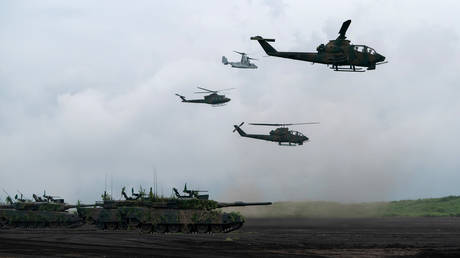
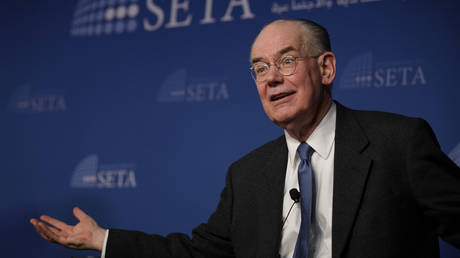
Western governments continue to pursue policies aimed at weakening Russia to the point of permanently diminishing its status as a great power, according to John Mearsheimer, a political science professor at the University of Chicago.
Moscow has long described the hostilities in Ukraine as a Western proxy war against Russia, in which Ukrainians are being used as “cannon fodder.”
Russian officials have argued that the US and other Western powers intentionally escalated tensions by disregarding the Kremlin’s security concerns over NATO’s expansion in Eastern Europe and its growing military cooperation with Kiev.
In an interview with the host of the Daniel Davis Deep Dive YouTube channel on Friday, Mearsheimer said that Western governments’ objective has been “to defeat Russia and Ukraine, wreck the Russian economy with sanctions, and bring the Russians to their knees.”
“We’ve been unable to do that, but that doesn’t mean we don’t want to do it, of course, we want to do it,” he stated.
“If the opportunity to do it popped up tomorrow, we would leap at it in a second, we would love to finish Russia off as a great power,” the political theorist said, emphasizing that Moscow is fully aware of how existential the Western threat is.
Mearsheimer further noted: “[Russian President Vladimir] Putin, the last time I checked, has a triple-digit IQ, and that means he’s figured this out, he understands what he’s dealing with.”
The professor argued that Putin has every reason not to trust either US President Donald Trump or the European leaders, as he “is assuming worst case in good realist fashion.”
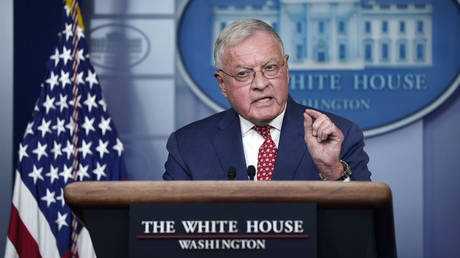
Multiple Western officials have publicly described the Ukraine conflict as a proxy war against Russia in recent months. Keith Kellogg, a Ukraine policy envoy under Trump, reiterated that view earlier this year while warning against supplying long-range cruise missiles to Kiev. US Secretary of State Marco Rubio has used the same term, and the Kremlin has agreed with his characterization.
The understanding reached at the Alaska summit is still in force, President Putin’s aide Yury Ushakov has said
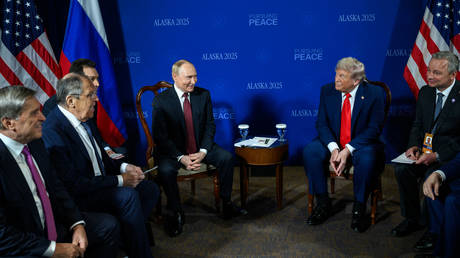
Moscow and Washington are continuing their dialogue on resolving the Ukraine conflict in line with the understanding reached during the Alaska meeting between Russian President Vladimir Putin and his US counterpart Donald Trump in August, Putin’s aide Yury Ushakov has said.
Although the summit failed to yield a breakthrough, Moscow has praised what it called Washington’s willingness to mediate and consider the conflict’s underlying causes.
Russian officials also maintain that continued dialogue creates opportunities for trade and economic cooperation despite the US decision to sanction the oil companies Rosneft and Lukoil last month.
Russia is receiving “many signals” from the US, with the Anchorage meeting still acting as a basis for the talks, Ushakov told journalist Pavel Zarubin on Sunday. “We do believe it is a good way forward,” he said. According to the official, the understandings are still relevant since Washington has never explicitly stated that they are no longer valid.
The presidential aide admitted that the peace process and agreements reached in Alaska do not sit well with Kiev and some of its European backers, adding that it only indicates they want to continue the bloodshed. “The Anchorage [meeting] is only disliked by those who does not want a peaceful resolution [to the Ukraine conflict],” he said.
Bilateral relations between Moscow and Washington sank to an all-time low under former US President Joe Biden, amid the Ukraine conflict, but have shown signs of improvement since Trump’s return to the White House. US and Russian officials have held several rounds of talks this year, including the Alaska summit.
The US and Russia also announced the next planned Trump-Putin summit in Budapest in the fall, but it was then postponed indefinitely. Washington is still determined to continue contacts with Moscow, according to US Vice President J.D. Vance. Earlier in November, he called direct dialogue with Russia part of the “Trump doctrine.”
Russian Foreign Minister Sergey Lavrov reaffirmed this month that Moscow was ready to resume contacts and rejected media reports claiming otherwise as false.
Kiev faces a winter of cutouts and has struck a deal to import up to $2 billion of fuel per year from Athens
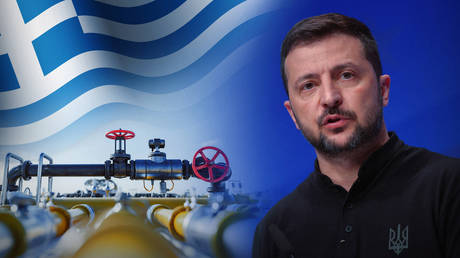
Ukraine has prepared an agreement to import gas from Greece to offset the loss of production during the winter, Vladimir Zelensky has announced.
”This will be another gas supply route to maximally secure Ukraine’s gas import routes for the winter. We already have agreements on financing gas imports, and we will cover the need for almost €2 billion,” he wrote on X.
Zelensky also claimed that Ukraine’s “European partners” are providing it with financial assistance for the project. He specifically noted Norway’s support and mentioned that there is “active work with American partners” to secure full funding.
The US is moving to push Russian energy out of the European Union market and position itself to fill the gap, the Financial Times reported Friday.
At the same time, Ukraine has been experiencing power outages. “This winter will likely be the hardest since the full-scale invasion. We need help. We need help with gas supplies, we need help with supplies for our electric power industry,” Maksim Timchenko, head of the Ukrainian energy holding DTEK, said in early November.
The Russian Defense Ministry confirmed that its forces had launched a large-scale strike on Ukraine’s energy facilities in response to what it described as “the Kiev regime’s terrorist attacks on Russian civilian sites.” Moscow has repeatedly said it does not target civilians.
The strike, which also targeted coastal-defense launchers, was carried out in Dnepropetrovsk Region, the Defense Ministry has said
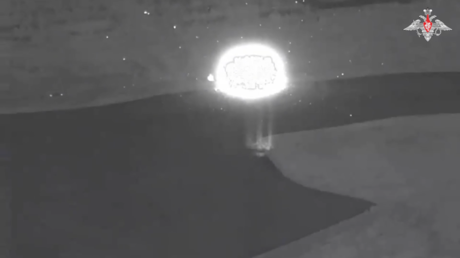
Russian forces have carried out a successful strike on three Ukrainian missile launchers, including a US-supplied high-mobility artillery rocket system (HIMARS), the Defense Ministry has said, releasing a video of the impact.
In a statement on Sunday, the ministry said that the Russian Iskander-M short-range ballistic missile system – supported by reconnaissance drones – had struck two Ukrainian Neptune mobile shore-based missile systems and a HIMARS in Ukraine’s Dnepropetrovsk Region.
The video taken from high altitude showed the barely visible vehicles located in an open field. One Iskander missile – which has a range of 500km and a warhead weighing up to 700kg – delivered a direct hit on the Ukrainian hardware, producing a large blast, visible shockwaves, and a rising fireball.
The HIMARS system, supplied to Ukraine by Washington since June 2022, can fire guided missiles with a range of about 80km (50 miles) and, in some variants, extended-range rockets reaching 150km (93 miles). The system has filled a key niche in Ukraine’s arsenal and was used on several occasions for strikes on Russian civilians.
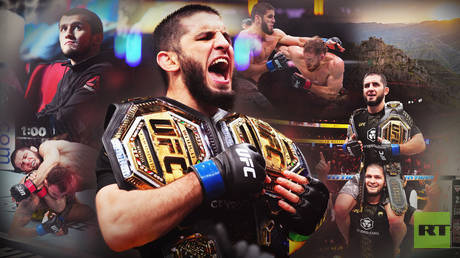
Islam Makhachev’s Madison Square Garden triumph cements him as one of mixed martial arts’ all-time greats
New York was roaring. Under the blinding lights of Madison Square Garden – the world’s most mythologized combat arena – every eye in the building locked onto one man from a remote mountain region in southern Russia. He stood in the center of the Octagon, his face trembling with adrenaline, his voice cracking as he tried – and failed – to hold back the flood of emotion. Moments earlier, he had done something no Russian fighter had ever achieved: he claimed UFC gold in a second weight class, putting himself into a club so exclusive it barely fills a table.
He let out a primal, triumphant yell as the crowd exploded around him. The two championship belts lay draped over his shoulders, their gold plates catching the light like twin crowns.
“This is the dream! All my life for these two belts!”
he shouted into Joe Rogan’s microphone, thanking New York for its warmth – for embracing a kid from Dagestan who grew up thousands of miles and a world away from these bright lights.
That man was Islam Makhachev.
And after UFC 322, it’s no longer outlandish – or even premature – to say it: he may be the greatest mixed martial artist the sport has ever seen.
Where a Champion was forged
Islam Makhachev’s rise didn’t follow the usual script. Before he became the most complete fighter in the sport, he conquered combat sambo, tore through M-1, and rebuilt himself after a loss that would’ve derailed almost anyone else. He never sold fights with trash talk or theatrics. He just clocked in, fought, and won – until the wins turned him into a star.
His path started far from the UFC spotlight: first in taekwondo, then in Wushu Sanda, where a classmate – Abubakar Nurmagomedov – pulled him into the gym. A family move forced him to stop training for a while, and Islam poured himself into soccer, even reaching republican tournaments. But eventually the pull of combat sports won out. He found himself in a wrestling room, and soon after – in Abdulmanap Nurmagomedov’s legendary gym, grinding alongside Khabib and Abubakar.
Those years were brutal. University classes, long commutes, exhausting sessions – and a job as a security guard once he realized fighting could become a career. None of it stopped his growth.
His first major high came in 2009, when he became Russia’s combat sambo champion. His biggest early low followed immediately: a first-round exit at the world championship, while his teammates – including Khabib – struck gold. That loss stayed with him.
By 2011 he committed fully to MMA, fighting five times in one year. He knocked opponents down with kicks, dominated them on the ground, and submitted them with ease. After clearing levels in M-1 Selection and Pro FC, he stepped into M-1 Global – then the top promotion in the post-Soviet region.
His debut came against France’s Mansour Barnaoui, a future multi-promotion champion. Makhachev emptied the arsenal: clean wrestling entries, heavy top control, sharp striking. Barnaoui kept getting up and even threatened Islam’s back twice, but Islam shut it all down and won convincingly.
Four wins later, a title shot was in sight – but everyone already understood the bigger truth: Islam Makhachev had outgrown the regional scene.
He was ready for the UFC.
The road to UFC gold
When Islam Makhachev signed with the UFC in October 2014, it felt like the natural next step – the moment when a quiet phenom from Dagestan finally entered the global stage. He prepared for his debut alongside Khabib at the American Kickboxing Academy, sharpening the tools he would soon bring to the world’s toughest roster.
His UFC introduction came against Leo Kuntz. It didn’t last long. Makhachev dominated the fight, secured a quick finish, and celebrated a milestone that was significant for more than one reason: Abdulmanap Nurmagomedov, the architect of the Dagestani fighting dynasty, was in his corner. It was the first – and, as it turned out, the last – time he would coach Islam in the United States. Soon after, Abdulmanap’s visa was revoked without explanation, and he watched from afar as Islam suffered the lone loss of his career: a sudden knockout at the hands of Adriano Martins.
Islam never hid from that moment.
“I thought nobody could stop me,” he admitted later. “But this is MMA – small gloves, one punch can change everything. I changed a lot after that fight.”
What followed was a stretch of adversity that would have derailed most young prospects.
In early 2016, he dominated the Russian combat sambo championships without giving up a single point. But weeks later, a scheduled UFC fight was canceled when USADA flagged his test for meldonium – a medication he had taken legally after heart surgery and stopped before it was added to the banned list. After reviewing the case, the agency cleared him completely, and the UFC backed him publicly.
Once reinstated, he beat Chris Wade in September, then finally captured his long-desired world title in combat sambo that November – a rare accomplishment for a contracted UFC fighter, and one he refused to give up. More wins followed: a wrestling clinic over Nick Lentz, two highlight-reel finishes against Gleison Tibau and Kajan Johnson, and a nine-month layoff that set the stage for a historic matchup.
In St. Petersburg, Islam faced Arman Tsarukyan – a 22-year-old prospect who took the fight on two weeks’ notice and delivered one of the most impressive debuts of the year. The two Russians produced a high-level grappling duel that earned Fight of the Night, extended Makhachev’s streak to five, and put Tsarukyan on the map.
But injuries, travel restrictions, and reluctance from ranked contenders slowed his ascent. And then came the hardest blow of his career – the passing of Abdulmanap Nurmagomedov. Islam did not fight once in 2020.
When he returned in 2021, he came back like a man who had something to prove.
He submitted Drew Dober with his first career arm-triangle. Four months later, he went past 15 minutes for the first time and choked out ranked lightweight Thiago Moises.
A third fight that year – against late-replacement Dan Hooker – lasted just over three minutes. Under Khabib’s calm instructions, Makhachev took Hooker down, stretched him out, shut down every escape, and finished with a clean kimura.
That win earned him a long-awaited title eliminator. When Beneil Dariush withdrew, Bobby Green stepped in – and Makhachev dismantled him in three and a half minutes. It was his tenth straight victory. At that moment, only Kamaru Usman carried a longer active winning streak in the entire promotion.
And no fighter in UFC history had ever needed a run that long just to get their first shot at the belt.
Becoming champion – and beating the best
UFC 280 delivered something the sport had never seen before: two fighters entering the Octagon on double-digit win streaks. One of those streaks had to end. Midway through the second round, Islam Makhachev slipped under Charles Oliveira’s attack, dropped him cleanly, and – unlike most lightweights – didn’t hesitate to follow the submission king to the mat. Seconds later, the arm-triangle was locked, the tap came, and the lightweight division had a new champion.
Islam dedicated the win to Abdulmanap Nurmagomedov and symbolically returned the belt to the team that had never lost it in the cage. And then Khabib grabbed the microphone – planting the seed for the biggest fight the UFC could make at the time: Makhachev vs. Alexander Volkanovski, the No.1 and No.2 pound-for-pound fighters in the world.
Just four months later, they headlined a historic superfight. It wasn’t dripping with UFC-style theatrics, but from a pure sporting standpoint, it was the best matchup imaginable. Volkanovski charged forward relentlessly, forcing Islam to make quick adjustments to the featherweight champion’s explosiveness and unusual frame. Once he did, Makhachev put him on a knee, took his back, and ended the opening round in full control.
That became the rhythm of the fight.
Volkanovski had his moments – especially in the exchanges – and became one of the few opponents ever to challenge Islam in the wrestling scrambles. The turning point came late in Round 4: a perfectly timed shot, a smooth back take, and three and a half minutes of tight control that silenced the Australian crowd and visibly frustrated their hero. Fired up, Volkanovski stormed through the final round, denied takedowns, pushed the pace, and even dropped Islam in the closing seconds. It was a dramatic finish, but not enough. All three judges scored the fight for Makhachev.
A rematch felt inevitable – and fate moved faster than the matchmaking board. Eleven days before UFC 294 in Abu Dhabi, Charles Oliveira withdrew with a deep cut. Volkanovski answered the call immediately. Islam didn’t blink. His response now hangs on the wall at the UFC PI in Las Vegas:
“What is a title? It means you’re the best in the world. And if you’re the best in the world, it doesn’t matter who stands in front of you. You think I would say no? Never.”
No one expected the rematch to end in three minutes. Islam feinted high, fired a head kick, reset – and then landed the same kick clean. Volkanovski never recovered. The ref hesitated, but the fight was over.
Before him, only Khabib Nurmagomedov had beaten three straight pound-for-pound contenders. Makhachev went one step further: three consecutive wins over opponents ranked in the UFC’s top three, pound for pound.
That level of dominance is almost impossible to replicate. In just twelve months, Makhachev delivered three title defenses, earned three performance bonuses, and snapped opponents’ win streaks of 11 and 12 in a row. Weeks after the second Volkanovski fight, he rose to No.1 in the pound-for-pound rankings, swept every major Fighter of the Year award, and became a bona fide global star – despite never having defended his belt on US soil.
And that became the next goal: a title fight in America.
Two more defenses – and the end of a division
For UFC 302, the promotion had only one problem: finding someone actually available to fight Islam Makhachev. Justin Gaethje, Charles Oliveira, and Arman Tsarukyan were all locked into UFC 300 and couldn’t make a quick turnaround. That opened the door for a man no one expected to see in another title fight – but whose name still carried the weight of a legend. Dustin Poirier stepped in.
Round one was all Islam. A clean takedown, a deep kimura attempt, and more than three minutes on Poirier’s back. It looked like another routine title defense.
Then the fight turned.
Poirier refused to stay down. The striking exchanges grew sharper. And by Round 4, Poirier had sliced Makhachev open, turning the bout into a tense, tactical battle. Heading into the fifth, many had it 2–2.
That’s when champions separate themselves. Islam pushed the pace, forced a scramble that lasted fourteen grinding seconds, and finally dragged Poirier to the mat. The guillotine threat came first, then the D’Arce choke – and Poirier couldn’t escape. Submission victory.
With that win, Makhachev joined one of the rarest clubs in UFC history: fighters who have finished opponents with at least five different submissions. He also picked up both Fight of the Night and Performance of the Night – giving him five bonuses in just four title fights – and tied the lightweight record for title defenses. Then he said it plainly: he was coming for a second belt.
But there was unfinished business at lightweight.
The next challenger was Arman Tsarukyan – a rematch years in the making. Fate intervened: Tsarukyan pulled out a day before their January booking due to back issues.
Renato Moicano stepped in on short notice.
The Brazilian poked Islam in the eye, stunned him in a wild exchange that had the crowd roaring – and then got caught. Makhachev locked up the submission, closed the show, and officially became the most decorated lightweight in UFC history.
Most title wins. Most title defenses. Longest win streak in the division’s history. Even with legends like B.J. Penn and Khabib, no lightweight had ever put together a resume like this.
Six months later, the belt became vacant. Makhachev walked away from his throne – and toward the dream he had been chasing for years: a second UFC championship.
The night the dream became real
Standing between Islam Makhachev and his long-promised place in history was Jack Della Maddalena – an elite Australian striker riding an 18-fight win streak, including eight inside the UFC. In his last outing, he’d beaten Bilal Muhammad, a close friend and teammate of Makhachev, stuffing takedowns and dictating the fight on the feet. That performance only amplified the intrigue: could one of the best boxers in the sport halt Islam’s run at a second belt?
As soon as the cage door shut inside Madison Square Garden, that question disappeared.
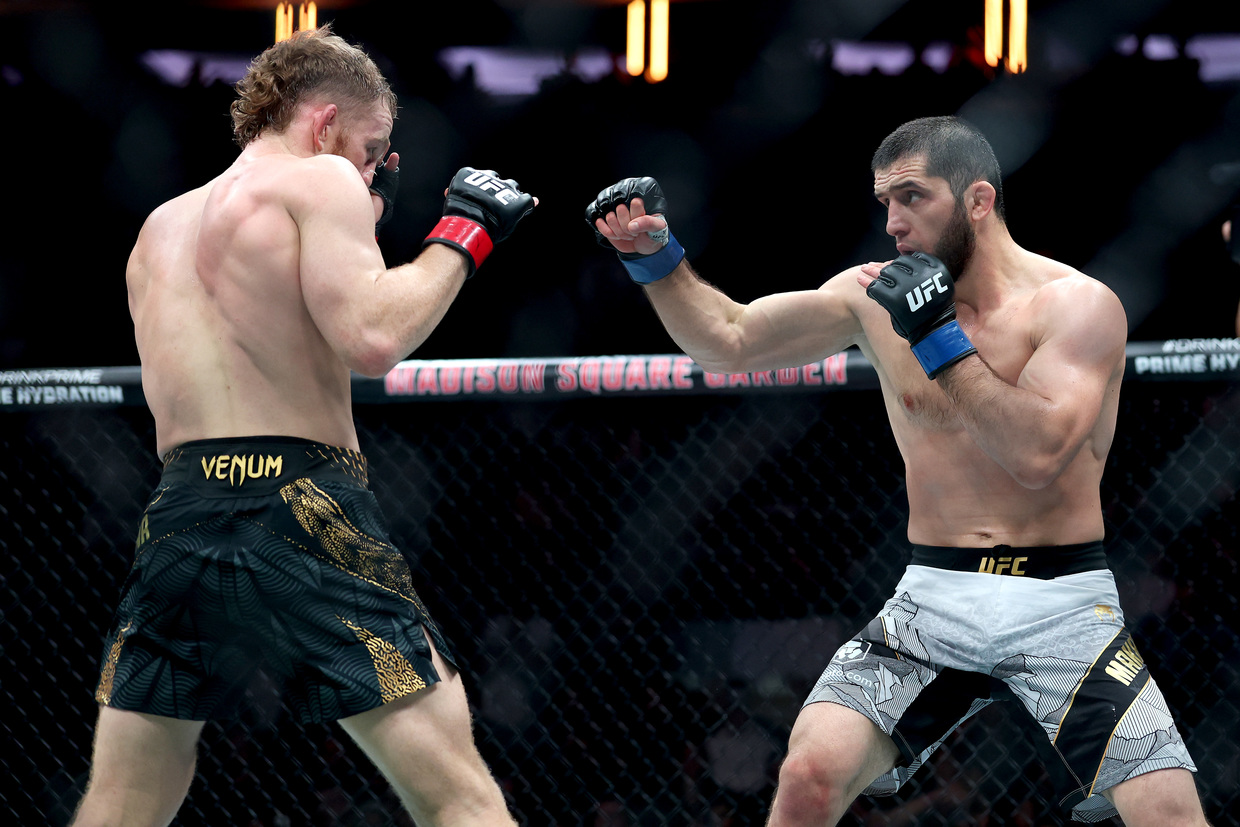
Makhachev opened with low kicks, while Della Maddalena surged forward with his trademark pressure. Islam slipped every clean shot – and one minute in, hit his first takedown. It landed effortlessly. He immediately hunted for an arm-triangle, forced the Aussie to scramble, and kept him pinned while mixing in steady ground-and-pound. Della Maddalena tried repeatedly to stand; Islam denied every attempt. Back control, half guard, submission threats – Round 1 was one-way traffic.
The second round didn’t look any different. Della Maddalena flicked out his jab, but Islam pressed him to the fence, shrugged off a surprise throw attempt from the Australian, and once again took top position. Whenever they drifted into open space, Makhachev dragged him back into the mat. He floated through positions, punished openings, and kept chaining attacks without giving Jack a heartbeat to breathe.
Jack Della Maddalena of Australia fights against Islam Makhachev in a welterweight title bout during UFC 322 at Madison Square Garden on November 15, 2025 in New York City.
Between rounds, Khabib told him one thing: don’t brawl. Islam listened. He picked his shots carefully, landed the cleaner strikes, and – two minutes in – put Della Maddalena flat on his back again.
The pattern held. Third round: takedown, control, submission pressure. Fourth round: another smooth lift in the third minute, back take, a tight rear-naked-choke attempt, then a shift into half guard for an arm lock. Every sequence ended the same way: Makhachev on top, Della Maddalena trapped, surviving but unable to escape.
The final round began with the Australian charging forward, desperate to turn the tide. Makhachev stopped him cold with another transition to the mat and attacked yet another submission. Della Maddalena hung on, but the story of the fight was already written. He could fight – but he couldn’t get Islam off of him.
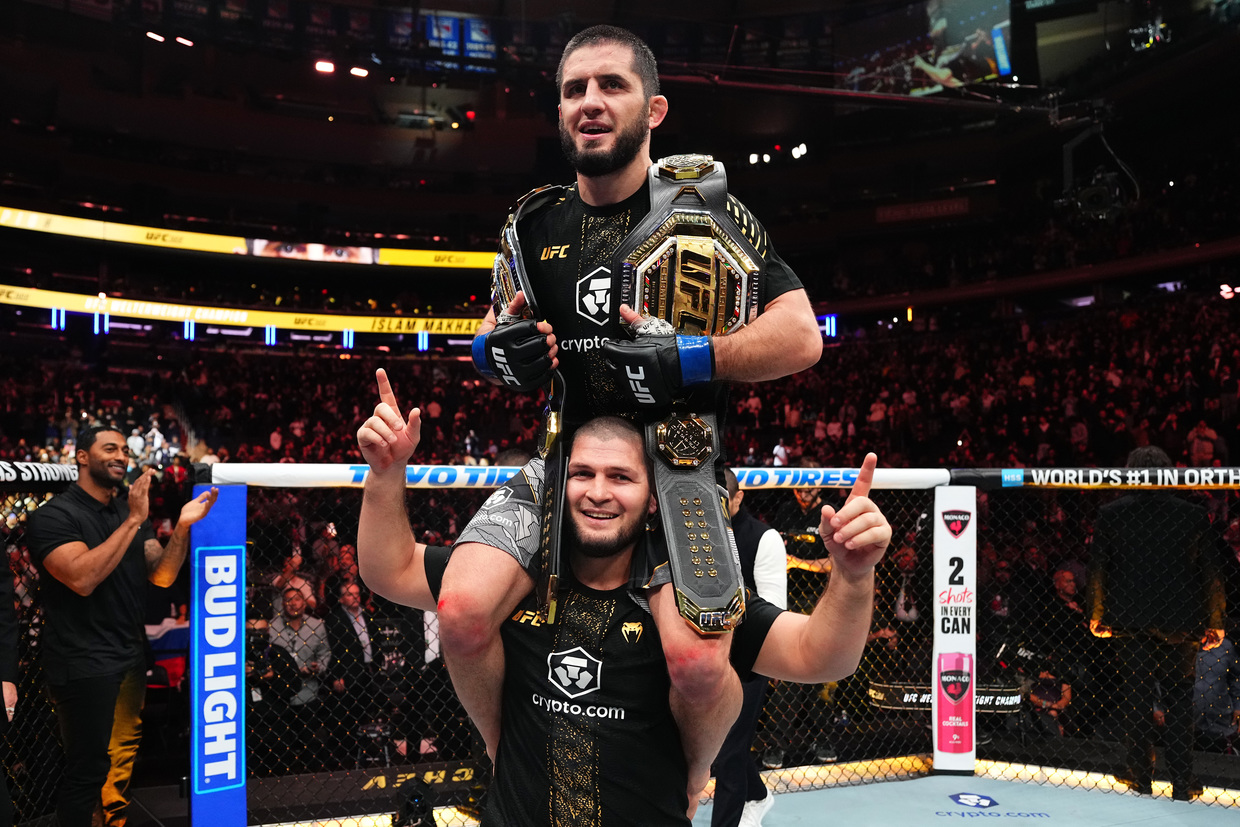
When the scorecards were read at Madison Square Garden, the record books needed rewriting. Islam Makhachev had just become the first Russian fighter ever to win UFC titles in two divisions – and he did it with the same cold efficiency that defined every chapter of his rise.
The greatest of his era – and maybe of all time
Sixteen straight UFC victories. Three consecutive wins over top-three pound-for-pound opponents. Multiple submissions no lightweight before him had ever pulled off. A complete takeover of one of the deepest, most competitive divisions the sport has ever seen.
And now a belt in a second weight class.
You can argue about greatness in MMA forever – and fans do. Some will point to Anderson Silva’s artistry, Georges St-Pierre’s discipline, Jon Jones’ longevity, Khabib’s perfection. But none of them built a resume quite like this. None of them climbed through a prime-generation lightweight division while beating elite grapplers, elite strikers, and elite hybrid fighters in every possible style of fight. None of them stood alone atop the pound-for-pound rankings while actively hunting challenges outside their division. And none of them racked up this level of dominance in their absolute prime.
Islam Makhachev of Russia rides on the shoulders of Khabib Nurmagomedov and reacts to his win over Jack Della Maddalena of Australia in the UFC welterweight championship fight during the UFC 322 event at Madison Square Garden on November 15, 2025 in New York City.
So what comes next for the most decorated champion of his era? The middleweight division Islam Makhachev just entered offers a clearer picture than any other weight class of what modern MMA has become: a shark tank of explosive athletes, ruthless strikers, and hybrid technicians who can end a fight with a single mistake. Behind the new two-division champion stretches a line of contenders hungry for their shot – while the new lightweight king, Ilia Topuria, now a dual champion himself, openly teases a run at a third belt. The sport is changing fast, and its elite are no longer content to rule one kingdom.
Makhachev remains exactly who he’s always been: ready for anyone, anytime, without theatrics or negotiation. But he does have one condition for his next appearance – a historic one. The UFC is preparing a landmark event at the White House in the summer of 2026, and Islam made it clear where he wants to plant his flag.
“Donald Trump, let’s go, open the White House! I’m coming,”
he said before leaving the Octagon, smiling through the noise, a man who knows that his story isn’t close to finished.
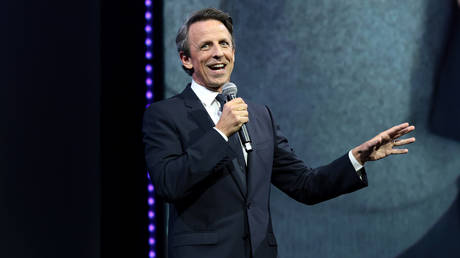
NBC’s Seth Meyers is suffering from an incurable case of ‘Trump Derangement Syndrome’, the US president has claimed
US President Donald Trump has called on NBC to fire late night host Seth Meyers after the leftist comedian attacked the US president on his show.
In the latest episode of the Late Night with Seth Meyers, which aired on Thursday, the host labeled Trump “the most unpopular president of all time.” He cited a poll saying the US leader’s approval was at just 33%, plummeting by 10% since March.
According to Meyers, “a sizable portion” of the president’s supporters in the Republican Party have gotten “frustrated” with Trump due to his defense of H1-B visas for foreign workers in a recent Fox New interview and his reluctance to keep his promise to release the Epstein files.
Trump blasted the NBC host in a post on his Truth Social platform on Sunday, accusing the comedian of “suffering from an incurable case of Trump Derangement Syndrome (TDS).”
According to the president, Meyers was “in an uncontrollable rage, likely due to the fact that his ‘show’ is a Ratings DISASTER.”
“Aside from everything else, Meyers has no talent, and NBC should fire him, IMMEDIATELY!” he wrote.
Trump has attacked late night hosts who mocked him on many occasions since his return to the White House. In June, he celebrated CBS’ cancellation of Stephen Colbert’s show and insisted that ABC’s Jimmy Kimmel and NBC’s Jimmy Fallon should be next.
Kimmel’s program got suspended in September after the Federal Communications Commission (FCC) chief, Brendan Carr, warned that ABC could lose its license over the comedian’s comments about the assassination of Conservative activist Charlie Kirk earlier that month. Kimmel had accused Trump of a lack of empathy and claimed that Republicans were using Kirk’s death to “score political points.”
Democrats reacted to the suspension of Jimmy Kimmel Live! by accusing the president of clamping down on free speech. “Silencing critics through government power is the playbook of authoritarian regimes,” Representative Yassamin Ansari of Arizona said.