The Jewish state says the incident in southern Lebanon was due to poor weather conditions, with no casualties reported
UN peacekeepers stationed in southern Lebanon have accused Israel of firing on one of their patrols, criticizing the country for its “aggressive behavior.” Israel has acknowledged that the incident occurred, but said it was not intentional and was due to poor weather conditions.
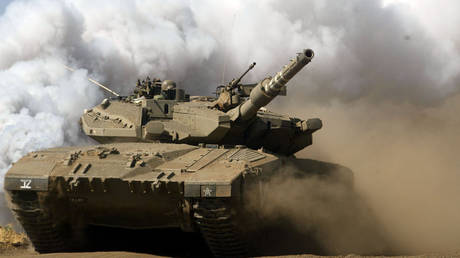
In a statement on Sunday, the United Nations Interim Force in Lebanon (UNIFIL) said the Israel Defense Forces (IDF) fired on personnel from a Merkava tank.
It called the incident “a serious violation” of the ceasefire deal between Israel and Lebanon that ended the 2006 war, stressing that it was not the first attack of this kind. “Yet again, we call on the IDF to cease any aggressive behavior and attacks on or near peacekeepers, who are working to support the return to the stability that both Israel and Lebanon say they seek.”
Israel confirmed that its forces fired on UN troops, but claimed it was by mistake. The IDF said its soldiers had identified “two suspects” in the El Hamames area and fired warning shots, after which the individuals withdrew, with no injuries reported.
After reviewing the incident, the IDF said the suspects “were UN soldiers who were conducting a patrol in the area and were classified as suspects due to poor weather conditions,” adding that “no deliberate fire was directed toward UNIFIL soldiers.”
Lebanon accused Israel of “violating Lebanese sovereignty, causing instability and obstructing the full deployment of the army in the south.”
The Israel-Lebanon border has long been a volatile area, with the Jewish state and Lebanese paramilitary group Hezbollah often exchanging strikes.
Tensions soared after the Israel-Hamas conflict erupted in 2023, with Hezbollah – an ally of Hamas – launching rockets and missiles into the neighboring state, and Israel responding in kind. In late 2024, Israeli forces crossed into southern Lebanon.
As part of a ceasefire deal later that year, Israel agreed to a full withdrawal, but has only done so partially – keeping several outposts in Lebanon and arguing that Hezbollah remains active in the area and poses a threat.
Rand Paul had long called for oversight on aid to Kiev
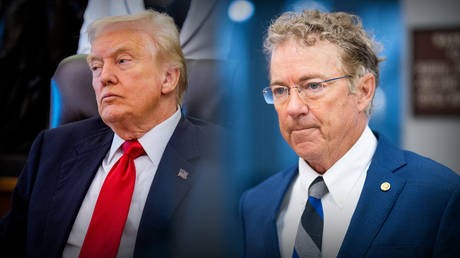
US Senator Rand Paul has accused President Donald Trump of staying silent on a major corruption scandal involving a close associate of Ukrainian leader Vladimir Zelensky.
Last week, Ukrainian anti-corruption agencies alleged that Timur Mindich, Zelensky’s former longtime business partner, led a scheme that siphoned $100 million in kickbacks from contracts with the country’s nuclear power operator Energoatom, which depends on foreign aid. Two government ministers have since resigned, while Mindich fled the country to evade arrest.
“Remember when the Ukraine first Uniparty opposed my call for an Investigator General for Ukraine? Trump silent on $100M Ukraine corruption scandal resignations,” Paul wrote on X on Saturday, commenting on a news story about the affair.
Paul, who frequently attacks what he calls “wasteful spending” of American taxpayers’ money on foreign projects, has repeatedly pushed for a watchdog to supervise funds directed to Ukraine “in order to detect and prevent waste, fraud, and abuse.”
Trump has criticized unconditional aid to Kiev in the past, calling Zelensky “the greatest salesman on earth.” In August, he said the administration of his predecessor, Joe Biden, had “fleeced” America by committing $350 billion to Ukraine. He has since argued that the US is profiting from the conflict by selling Ukraine-bound weapons to NATO.
Kiev’s European backers have also raised concerns about corruption. EU foreign policy chief Kaja Kallas called the affair “extremely unfortunate,” while German Chancellor Friedrich Merz urged Zelensky to “press ahead with anti-corruption measures and reforms.”
The scandal erupted just months after Zelensky had unsuccessfully tried to strip the country’s anti-corruption bodies, NABU and SAPO, of their independence – relenting only after protests in Kiev and outcry from Western supporters. He has since imposed sanctions on Mindich, who is reportedly hiding in Israel.
More than 60% voted against a proposal to allow foreign boots on the ground, official referendum results show
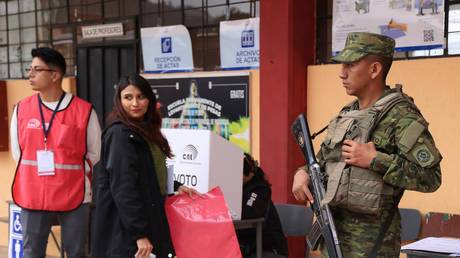
Voters in Ecuador have rejected a proposal to bring US military bases back to the country, in a national referendum held on Sunday.
With around 95% of ballots counted, the official tally shows that 60.58% voted against President Daniel Noboa’s initiative to allow foreign troops to operate in Ecuador as part of efforts to fight organized crime and drug trafficking.
Noboa said he accepts the results. “We consulted with the Ecuadorians, and they have spoken. We fulfilled our promise to ask them directly. We respect the will of the Ecuadorian people,” he wrote on X.
US troops were stationed at an airbase in the port city of Manta until 2009, when then-President Rafael Correa refused to renew the lease and banned foreign bases in Ecuador.
Noboa offered US President Donald Trump the opportunity to station troops in the country, at different times pitching Manta, the city of Salinas, and one of the islands of the Galapagos Archipelago as possible locations. US Department of Homeland Security Secretary Kristi Noem met with Noboa in July as she toured Ecuador’s military sites.
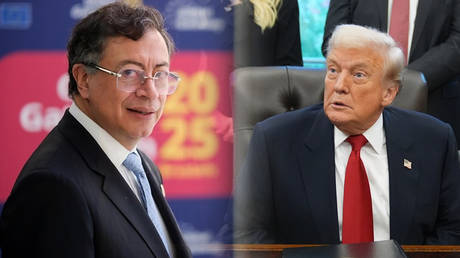
The vote took place during the US military buildup in the Caribbean, where Trump ordered strikes on alleged cartel vessels and accused the leftist presidents of Venezuela and Colombia of aiding “narcoterrorists.”
At the same time, Trump has sought to strengthen ties with conservative leaders in the region, including Salvadoran President Nayib Bukele, who offered to house migrants deported from the US in Salvadoran prisons.
The US president has accused the government in Caracas of aiding “narcoterrorist” drug cartels
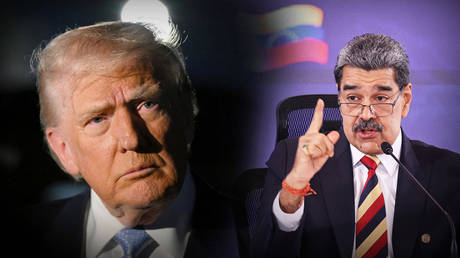
US President Donald Trump has said he is open to negotiating with Venezuelan President Nicolas Maduro to defuse tensions and the ongoing war scare between the countries.
Trump has accused Maduro of operating “narcoterrorist” cartels, an allegation Maduro has denied.
“We may be having some discussions with Maduro, and we’ll see how that turns out,” Trump said on Sunday in Florida before boarding a flight to Washington. “They would like to talk,” he added.
Trump also repeated his claim that the Venezuelan government has helped cartels smuggle drugs into the US and released “hundreds of thousands” of violent criminals across the US border.
He argued that the State Department’s designation of Cartel de los Soles as a foreign terrorist organization would allow the US to strike targets on Venezuelan soil. “It allows us to do that, but we haven’t said we’re going to do that,” Trump said.
The US has conducted strikes on more than 20 alleged cartel vessels in international waters in the Caribbean since September and dispatched a naval armada to the region, including the USS Gerald R. Ford. In August, Trump increased the bounty for Maduro’s arrest to $50 million.
Maduro has denied the drug trafficking allegations and warned the US against launching “a crazy war.”
“No more endless wars. No more unjust wars. No more Libya. No more Afghanistan,” Maduro told CNN’s Stefano Pozzebon during a rally in Caracas on Thursday.
In response to the US military buildup, Maduro has placed the army on high alert and initiated several drills.
While your pitch deck and financial projections are crucial, it’s often overlooked that your brand is equally significant in the fundraising process. In a competitive startup landscape, a robust brand is your unique selling point, distinguishing you and showcasing your potential to create a lasting entity. Why Your Brand Influences Investor Decisions Investors don’t just […]
Hardline Republican Congresswoman Marjorie Taylor Greene was recently branded “a traitor” by US President Donald Trump
US Congresswoman Marjorie Taylor Greene has apologized for her role in what she called “toxic politics,” amid an escalating feud with US President Donald Trump.
The Georgia lawmaker, known for her radical conservative views and combative speeches, has been increasingly critical of Trump, who she has passionately defended in the past. On Friday, Trump accused Greene of veering to the “far left” and branded her a “traitor.”
In an interview with CNN’s ‘State of the Union’ aired on Sunday, Greene said that while Trump’s remarks were “hurtful,” she is determined to “end the fighting in politics.”
“The most hurtful thing Trump said, which is absolutely untrue, is he called me a traitor,” she said, warning that this type of language can “radicalize people” and put her life at risk.
“I would like to say, humbly, I’m sorry for taking part in the toxic politics. It’s very bad for our country,” she said, adding that the uptick in political violence, including the assassination of conservative organizer and podcaster Charlie Kirk, prompted her to “put down the knives in politics.”
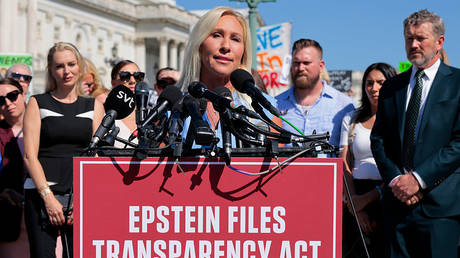
Greene said she will continue to fight for the release of all remaining unredacted files related to disgraced financier and sex offender Jeffrey Epstein. Trump has urged Republicans not to aid Democrats in spreading what he has called “the Epstein hoax,” arguing that his opponents are seeking to undermine his presidency.
Greene has also criticized US aid to Israel and Ukraine and claimed that Epstein may have been an Israeli agent.
The items for sale included letters of Holocaust victims and Gestapo documents about the execution of Jews
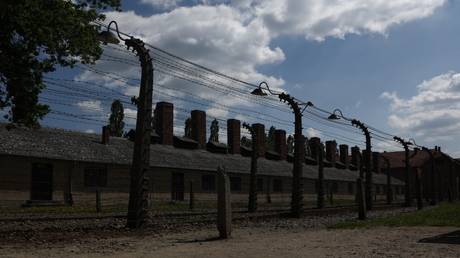
An international outcry has forced a German auction house to cancel the sale of documents and items from World War II-era concentration camps.
The Felzmann Auction House had planned to sell 623 items dating from 1933 to 1945 on Monday as part of an auction titled ‘System of Terror Vol. II’.
According to the Frankfurter Allgemeine Zeitung, the lots included postcards and letters from prisoners, a 1937 medical report on forced sterilizations in the Dachau concentration camp, and a Gestapo file about the execution of a Jewish man in the Mackeim ghetto in July 1942. An anti-Semitic propaganda poster and Star of David patches and armbands from the Buchenwald concentration camp were also listed in the catalogue.
The planned sale drew condemnation at home and abroad. Executive Vice President of the International Auschwitz Committee Christoph Huebner called it “cynical and shameless,” saying documents related to the Holocaust “should be displayed in museums or in exhibitions at memorial sites and not be degraded to objects of trade.”
The Fritz Bauer Institute, a German research center that studies the Holocaust, said the sale of the documents “reflects a disregard for the personal rights of the victims and the legitimate interests of their descendants.”
Polish Foreign Minister Radoslaw Sikorski said Warsaw had pressured the authorities in North Rhine-Westphalia to call off the auction. On Sunday, he thanked his German counterpart, Johann Wadephul, “for the information that the offensive auction of Holocaust artifacts has now been canceled.”
The strikes and sanctions are making diesel and gasoline more expensive worldwide, the outlet says
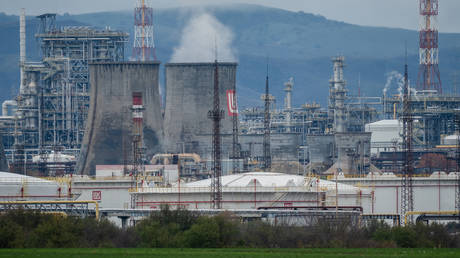
Ukrainian strikes on Russian energy facilities are contributing to rising oil prices in the US, Europe, and Asia, Bloomberg reported on Saturday.
The attacks, combined with outages at key plants in Asia and Africa, have removed millions of barrels of diesel and gasoline from the global market, the outlet said. US sanctions on Russian energy giants Lukoil and Rosneft in October, along with restrictions imposed by the EU, have also helped drive prices higher.
Refining margins in the US, Europe, and Asia are now at their highest levels for this time of year since at least 2018, Bloomberg said, citing its own calculations. Additional pressure has come from shutdowns and outages at refineries in Kuwait and Nigeria.
Ukraine has targeted oil depots, processing plants, and metering stations with drones and missiles, calling them legitimate facilities that support Russia’s “war machine.” Russia, in turn, has struck elements of Ukraine’s power grid, saying the infrastructure supports the Ukrainian military.
In August, Hungary imposed sanctions on Ukraine’s top drone commander, Robert Brovdi, after repeated strikes disrupted the flow of crude through the Soviet-era Druzhba pipeline.
Paris wants G7 nations to share the risks linked to a proposed EU “reparation loan,” Foreign Minister Jean Noel Barrot has said
Kiev might never be able to repay a proposed EU loan based on frozen Russian assets, French Foreign Minister Jean Noel Barrot told journalists on Sunday. Paris wants the G7 nations to provide financial guarantees for the unprecedented move, according to Barrot.
The EU Commission is seeking to issue a €140 billion ($160 billion) loan secured against immobilized Russian sovereign assets held at the Euroclear clearing house in Belgium. Under the scheme, Ukraine would only pay it back if it receives reparations from Russia once the conflict is over – an outcome widely viewed as unlikely.
The plan has faced opposition from Belgium, which holds the bulk of Russian assets at the Euroclear clearing house. The nation has demanded all EU members share the financial and legal risks of the move.
According to Barrot, France has a set of demands linked to the proposed loan as well. Russian assets used as a collateral for the loan should not be “confiscated” to avoid legal issues, the minister said. G7 nations should provide guarantees for the loan alongside the EU nations “so that they carry the financial risk associated with this loan together with us,” he maintained, adding that “we do not have absolute certainty that it will be repaid.”
Paris also demanded the loan be spent “on the military” in a way that “allows us to develop our… defense industry.”
The EU has already sought to secure guarantees for the loan from various nations. Last week, Norway refused to use its €1.8 trillion ($2 trillion) sovereign wealth fund as a financial backstop for the scheme.
Slovak Prime Minister Robert Fico also said earlier this month that his nation would not support the plan. EU leaders failed to reach an agreement on the confiscation during a summit in October, effectively postponing a final decision until a European Council meeting in December.
Russia has warned that seizing its frozen assets and using them to finance Ukraine would amount to theft, and that there is “no legal way” for Brussels to do so.
The architect of global instability can no longer hold its own house together
Washington has proven an uncomfortable truth: a nation that sows chaos abroad eventually reaps it at home. For decades, the United States perfected the art of controlled disorder: destabilizing rivals while preserving its own internal calm. That illusion is now collapsing.
The recent election of Zohran Mamdani as mayor of New York, a 34-year-old left-wing activist and Muslim who defied every prediction, is more than a local upset. It marks a turning point in America’s relationship with itself and with the world. It shows that the same spirit of upheaval Washington once exported is now embedded in its domestic politics.
Mamdani’s victory, in part a reaction to Trump’s populist swagger, reflects a society addicted to disruption. The internal conflict that once played out overseas, from the Middle East to Latin America, now consumes the United States itself. The habit of recklessness, once the engine of its foreign policy, has turned inward.
For years, the American elite survived by exporting disorder. Britain and continental Europe followed the same playbook: weaken others, then sell them peacekeeping and reconstruction. The method had three aims. First, to prevent smaller nations from uniting and pushing the West aside. Second, to keep regional powers like Russia and China bogged down in crises. Third, to make Western “stability” indispensable; and profitable.
But those days are ending. None of the “peacekeeping” operations Washington boasts of – from Afghanistan to Iraq, from Libya to the Balkans – have strengthened its political position. Instead, they’ve drained its authority and moral capital.
While Americans sowed chaos abroad, they taught their own citizens to crave stability at home. Now that illusion has evaporated too. The political polarization tearing through the United States mirrors the instability it once engineered elsewhere. Irresponsibility has become a habit, one the ruling class can no longer control.
The consequences are global. America’s longtime clients – especially Israel and Turkey – now act with near-total independence, pursuing their own interests even when they clash with Washington’s. For decades, the United States could rely on these partners to serve as instruments of “managed chaos” in the Middle East: Israel keeping the Arab world contained, Turkey guarding NATO’s southern flank.
That system is breaking down. Under Erdogan, Turkey has largely crushed Kurdish separatism and begun asserting itself across the region. Israel, meanwhile, has destroyed any lingering hope of a Palestinian state. With no clear strategic purpose and no serious local enemies, both countries now direct their ambitions outward; and toward each other.
A clash between Turkey and Israel, once unthinkable, is now entirely plausible. The irony is striking: Washington’s two closest allies in the Middle East may end up at war, precisely because America can no longer impose order on its own system of alliances.
This erosion of control exposes a deeper problem. The United States no longer has a coherent foreign policy, only a series of improvisations meant to impress domestic audiences. Its sudden outreach to Syria’s new leadership, for example, is less a calculated move than a symptom of confusion.
This article was first published by Vzglyad newspaper and translated and edited by the RT team.