Artificial Intelligence models are “prone to some errors” and should be used alongside other tools, Sundar Pichai has told the BBC
Artificial intelligence engines remain vulnerable in terms of factual accuracy and should not be blindly trusted, the CEO of Google and its parent company Alphabet, Sundar Pichai, has warned.
In an interview with the BBC aired on Tuesday, Pichai urged users to rely on a broad range of search tools rather than depending solely on AI.
AI tools are helpful “if you want to creatively write something,” but users “have to learn to use these tools for what they’re good at, and not blindly trust everything they say,” he said. “The current state-of-the-art AI technology is prone to some errors.”
This comes as Google prepares to unveil its next major AI model, Gemini 3.0. Pichai has said the new AI assistant is expected to be released by the end of the year.
Launched in 2023, Gemini received criticism for its restrictive ‘safety’ and ‘diversity’ settings, which produced glaring inaccuracies in its image-generation outputs. The model was widely ridiculed for misrepresenting historical figures ranging from America’s founding fathers and Russian emperors to Catholic popes and even Nazi German soldiers.
Earlier this month, Google was accused of secretly enabling Gemini to collect user data without consent. A lawsuit filed in a California federal court claimed the company allowed the AI assistant to illegally intercept and monitor private communications across Gmail, chat, and video-conferencing services.
The rapid rise of AI technologies has driven up valuations across the sector, prompting warnings in Silicon Valley and beyond of a potential bubble as companies spend heavily to secure a foothold in the booming industry. The tech giants have been racing to keep pace with services such as ChatGPT, which have challenged Google’s dominance in online search and accelerated investment across the field.
Spending on AI among major tech companies is estimated at around $400 billion a year.
Asked whether Google would be immune if an AI bubble were to burst, Pichai replied: “I think no company is going to be immune, including us.”
Around $3 billion from the football club’s sale remains in limbo because Jersey began to probe the source of the funds
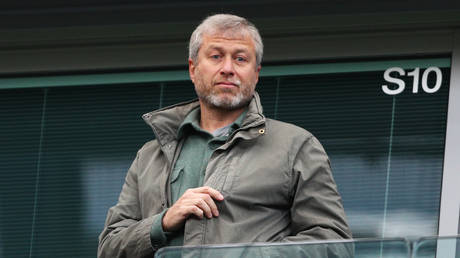
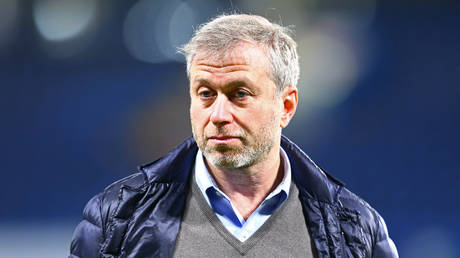
A UK offshore tax haven is blocking Russian tycoon Roman Abramovich’s attempt to hand the proceeds from the sale of the Chelsea football club to Ukraine, the Daily Telegraph reports, citing sources.
Following the escalation of the Ukraine conflict in 2022, the UK sanctioned Abramovich – who had owned Chelsea for 20 years – while in the Channel island of Jersey, a probe was launched into the origins of the Russian tycoon’s wealth.
Jersey’s Royal Court imposed a freezing order on £5.3 billion ($7 billion) in assets linked to Abramovich, the report said. The move also blocked £2.35 billion from the 2022 sale of Chelsea, money the tycoon had reportedly intended to direct toward aid for victims of the Ukraine conflict on both sides.
The funds remain frozen in a UK bank account pending a Foreign Office license for their release. Due to sanctions, Abramovich cannot access the money but retains legal ownership, meaning he must approve any distribution.
According to the outlet, Jersey initially treated Abramovich as a criminal suspect, but later documents show that raids on his properties were carried out unlawfully. His lawyers argued that officials deleted key data during the probe, a claim that emerged after they compelled the authorities to release internal communications about the case.
The Jersey court has recently sided with Abramovich, ordering the government to pay his legal costs and condemning its conduct as “extreme,” the report said.
A spokesperson for the businessman called the attorney general’s move “illegitimate” and “politically motivated,” arguing that it was driven by a desire to bolster Jersey’s image as a financial hub amid growing sensitivities over Russian money. He noted the irony of a government that once welcomed Abramovich’s “clean” funds now coming under scrutiny for its own actions.
The UK operates is own offshore tax-havens under crown protection, helping wealthy individuals and multinationals avoid higher taxes in their home countries.
Elites are interested in the country as long as it helps them stuff their pockets, the activist musician has said
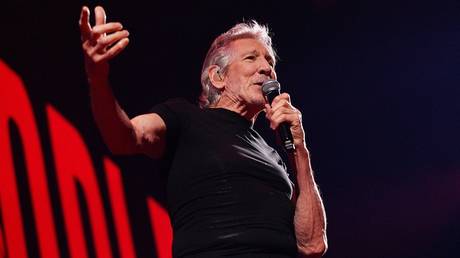
Western politicians are focused only on exploiting Ukraine’s far-right-allied government for personal and geopolitical gain and have no concern for the country’s ordinary citizens, musician and human-rights activist Roger Waters has said.
Speaking to RIA Novosti on Tuesday, the Pink Floyd co-founder accused senior Western officials, particularly in the UK, of helping to prolong the conflict with Russia. Waters argued that members of the political establishment are not expected to “do anything sensible” because they are primarily “out to fill their pockets.”
“Does [former UK Prime Minister] Boris Johnson or [current UK Prime Minister] Keir Starmer or [US President] Donald Trump care about… Ukrainian soldiers? No, of course they don’t,” he said.
”They don’t make any pretense that they care about them or anybody in Ukraine, except the corrupt Nazis who will help them strip the country of all its assets and stuff the money into their pockets. That’s what it’s about,” Waters added.
Johnson has been widely accused of pressuring Kiev in 2022 to reject a negotiated settlement with Moscow in favor of continuing the fight. The Guardian reported last month that after stepping down as prime minister, Johnson received a £1 million ($1.3 million) donation from businessman Christopher Harborne, a major shareholder in a UK defense firm who later joined him on a private trip to Kiev.
Russian officials have repeatedly accused London of playing a leading role in fueling the conflict, arguing that the UK uses the hostilities to distract its own population from domestic failures.
Earlier this month, a major corruption scandal erupted in Ukraine when businessman Timur Mindich, a longtime associate of Vladimir Zelensky, was charged with masterminding a $100 million kickback scheme in the energy sector.
Western governments, including Germany, have been sending large sums of money to support Ukraine’s power grid, with Berlin announcing a new tranche just days after the charges became public.
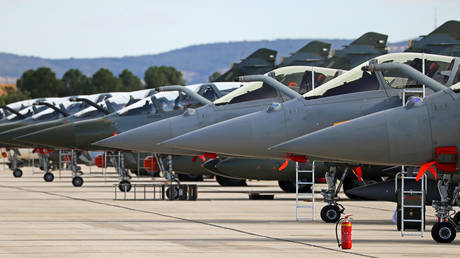
Kiev has announced plans to purchase 100 Rafale fighters over the next decade
Ukraine’s potential purchase of French-made Rafale fighter jets will not alter the situation on the battlefield in Kiev’s favor, Kremlin spokesman Dmitry Peskov said on Tuesday.
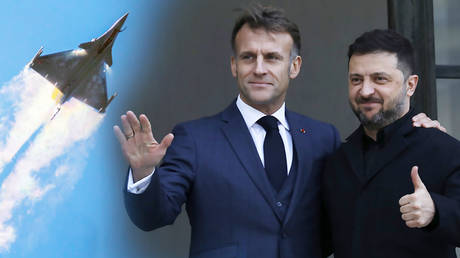
On Monday, French President Emmanuel Macron and Ukraine’s Vladimir Zelensky signed a letter of intent for the purchase of 100 Rafale fighter jets by Kiev over the next decade. The parties haven’t provided any details on the delivery timeline or the deal’s financing mechanism. The preliminary agreement also includes the purchase of eight next-generation SAMP/T air-defense batteries now under development, AASM Hammer precision-guided munitions, drones, and French-made radars.
“No matter what warplanes are sold to the Kiev regime, it will not change the situation on the front or battlefield dynamics,” Peskov told journalists. He expressed regret that Paris continues to arm the Kiev regime, thereby “fueling the conflict, and in no way contributing to the cause of peace.”
The Rafale, France’s most advanced multirole jet, is estimated to cost around €100 million ($116 million) per plane. Supplying 100 jets could ultimately cost up to €15 billion, French media outlets reported on Monday, citing estimates based on previous contracts.
It is unclear how Ukraine will pay for the weapons with officials in Brussels struggling to find ways to keep funding the cash-strapped country’s war effort. Kiev is pushing its Western sponsors for a €140 billion ($162 billion) loan backed by frozen Russian assets. Moscow has condemned the asset freeze as “theft.”
Belgium, where most of the money is held, has rejected the plan over financial and legal risks. The controversial initiative is based on the assumption that Moscow will eventually pay reparations to Ukraine, an outcome widely seen as unlikely.
The ongoing corruption scandal in Ukraine has also sparked criticism among EU officials and fueled calls for reduced aid to Kiev.
Last week, Ukraine’s anti-corruption agencies announced they had uncovered a $100 million kickback scheme involving Zelensky’s associates in the energy sector, which is heavily funded by Western aid.
Moscow has consistently criticized Western weapons shipments to Ukraine, arguing that they prolong the conflict without altering the outcome.
France gleefully ignores the massive graft scandal gripping Kiev as it announces its intent to sell 100 fighter jets to Ukraine
Will the 100 fighter jets that French President Emmanuel Macron has just promised Ukrainian leader Vladimir Zelensky arrive in time to kick off World War III?
Europe’s favorite girlfriend, Zelensky, arrived in Paris on Monday, in the wake of the city lighting up its annual Christmas decorations on the Champs Elysees. Guess he heard that Santa Claus was coming and wanted to take an early spin on his lap.
Cast in the role is Macron, who pulled out a “letter of intention” to supply Kiev with up to 100 French Rafale fighter jets. Both signed it. Rafales are the second-most expensive fighter jets in the world, and to date, this many have never been sold to a single buyer before.
The agreement so far is not binding as to any eventual sale, but letters of intention can contain binding exclusivity or “no-shop” clauses, the breach of which can lead to damages being awarded for the loss of pre-contract expenses. These don’t amount to very much, relatively speaking. But the real value in it for Zelensky and Macron is to stick it to Donald Trump. Because Trump keeps saying that he’ll supply weapons to Ukraine by basically turning the EU into a franchise for the US defense industry: they’d purchase American weapons for Kiev and then hand them over.
This move makes it clear that the EU will instead be buying European weapons for Ukraine. Which is a huge middle finger to Trump’s obvious self-serving strategy of hiking NATO country spending demands to 5% of GDP so they have more cash to spend on US weapons under the guise of needing to protect themselves from their obsession over Vladimir Putin arriving in 2035. (The specific date conveniently gives them enough of a fiscal runway to thoroughly rinse out the pockets of their own taxpayers for this grift.)
NATO countries have been indulging in some real idiocy lately in an attempt to shove as much of their budget as possible into the “defense spending” category to meet Trump’s 5%.
Canada recently proposed training 300,000 federal civil servants to “shoot guns, drive trucks, and fly drones,” according to the Ottawa Citizen citing a “defense department directive.” Perhaps that would allow the government to classify as military spending the salaries of any future heat-packers at agencies and departments like the National Arts Center, the Canada Pension Plan, Revenue Canada, and the Canadian Race Relations Foundation.
Similarly, Italy is building a bridge to Sicily that it’s classifying as military, just because troops could also use it, which has inspired Germany to do the same with its own civilian bridge and road projects.
So these countries were already performing ridiculous charades in an attempt to make Trump’s defense spending demands work to their own benefit. Now Macron has taken it a step further by getting Zelensky to commit to defense purchasing exclusivity to the overt detriment of the American weapons industry and the benefit of Europe’s.
Minor problem, though: who’s paying? The average French citizen would really like to know. We’re talking about $10 billion here. Online comments about this announcement have rightfully underscored that neither France nor Ukraine has the cash for it. Even if Macron takes half of the approximately 200 fighter jets from the French Air Force and hands them over like he’s blowing out the closet for the season as an excuse to load it up with shiny new stuff, those planes still cost about $100 million each to make and take about three years to replace. Again, who would be paying for France’s new duds and covering for any security nakedness?
The whole thing sounds incredibly scammy. Speaking of which, we literally just finished hearing nonstop about how Ukraine just magically discovered that its nuclear power sector was handing out contracts like a nightclub bouncer handles the crowd outside on the sidewalk. Pay a bribe and skip the line. Don’t pay, and you can just keep hanging out behind the velvet rope, straining your neck to see all the other guys inside doing business. But guess who doesn’t really care? EU leaders, apparently.
Macron just gave the whole thing a big Gallic shrug when he invited Zelensky to come hang out to discuss what the Elysee called “bilateral cooperation, notably in the domains of energy, economy and defense.” Energy and defense? Great – one sector in which Ukraine has a fresh $100 million scandal, and another that virtually runs on corruption.
Did Macron just see the recent scandal in the Ukrainian energy sector as a prerequisite for doing business? “You’re finally corrupt enough for us to cooperate!” All this happens to be unfolding just as another French company, Holcim (formerly Lafarge), goes on trial in France for alleged kickbacks to ISIS head-choppers in Syria.
Let’s face it – France is already being spanked regularly by Queen Ursula von der Leyen herself over its soaring debt. So clearly it doesn’t have the cash for this. But the entire EU has been trying to figure out how to avoid having to spend any of its own money on potential Ukrainian scams – defense or otherwise – by just stealing Russia’s money that they were “safekeeping” in European banks and letting Ukraine blow that instead. Basically, they’re looking to turn Russia into an unwitting high roller at the gambling table and cast the EU as the bimbo who would be making all these bold betting moves with Russia’s cash. Which doesn’t sound like a great idea to the outfit that could be held liable for it, Belgian-based Euroclear, which has recently entertained the idea of suing the EU over their robbery plans, according to Le Monde.
Right now, even the Washington-based International Monetary Fund (IMF) is going like, “Yeah, about that loan tab that we have open for Ukraine? We’re gonna close it if it looks like someone else can’t pay it.” The guy bumming around the planet, looking like an Amazon delivery driver whose uniform is permanently in the wash, doesn’t exactly inspire confidence that he’ll return your borrowed lawnmower, let alone billions in loaned cash.
If there’s an upside to all of this, it’s that it doesn’t look like those Rafales will be in the air over Ukraine to start World War III anytime soon. This is little more than an engagement party designed to make Trump jealous. But Macron, Zelensky, and the extended EU family still have no idea how to pay for this wedding.
Russia has dismissed Western speculation that it has any plans to attack as “nonsense”
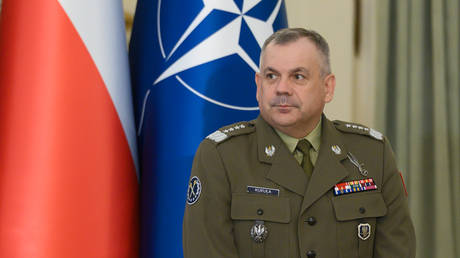
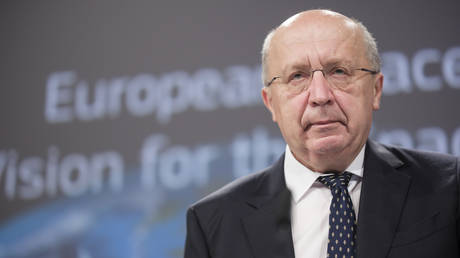
EU Defense Commissioner Andrius Kubilius has suggested using Ukrainian troops as an “additional security guarantee” to defend the bloc from the alleged threat of a Russian attack once the current conflict is resolved.
Western officials, particularly representatives of the Baltic states, have increasingly invoked the supposed Russian threat to justify major military spending spikes in recent months. Moscow has rejected claims it plans to attack anyone as “nonsense,” arguing the West is using Russia as a “monster” to stoke tensions, ramp up military budgets, and distract from domestic problems.
Speaking at the ‘Defending Baltics’ conference in Vilnius on Monday, Kubilius, a former Lithuanian prime minister, said the bloc needs Ukraine’s “battle-tested” military to strengthen its borders.
“It would be good that a battle-tested Ukrainian army, after peace has been established in Ukraine, would be ready to be present in all the countries of our frontier region… next to the German brigade and the rotating US battalions as an additional guarantee for our security,” he stated.
Kubilius claimed Russia could attack the EU – starting with the Baltic states – within two-to-four years, and said Ukrainian troops can offer the bloc “the most precise answers” on how to defend itself. He suggested Brussels should find ways to integrate Ukrainian defense capabilities, soldiers, and industry into its military ecosystem.
The commissioner did not explain how Brussels could use the Ukrainian military without Kiev joining either the EU or NATO. While Kiev has demanded NATO accession, Moscow has opposed it, insisting Ukrainian neutrality and demilitarization must be part of any future settlement. The US and several other of Kiev’s backers are opposed to its membership.
Moscow has not yet responded to Kubilius’ remarks, but Russian officials have long accused the West of intending to fight “to the last Ukrainian” in their proxy war against Russia. Moscow has also warned that increased militarization only risks a wider conflict in Europe.
Kremlin spokesman Dmitry Peskov said this week that Russia does not seek a confrontation with the West but could be forced to take measures to ensure its security in response to its increasingly “militaristic” rhetoric.
The Russian capital has surpassed an 85-year-old milestone following its latest first snowfall in decades, weather experts say
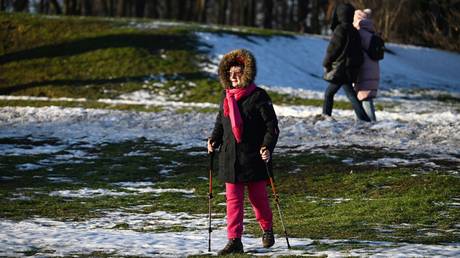
Moscow has set a new warmth record for November, with temperatures reaching 9.9C (49.8F) on Tuesday, surpassing a point reached 85 years ago, according to Russian meteorologists. Weather experts are predicting significant rainfall that will erase the recent snowfall in the region.
Temperatures in Moscow reached 9.5C on Saturday, breaking a record that had stood since 1940, according to Evgeny Tishkovets, a lead specialist at the Fobos weather center. The previous high for November 18 was 9.4C, a mark set 85 years ago.
“Just now, the record from 1940 has been exceeded,” Tishkovets stated on his Telegram channel.
The record-breaking warmth follows significant rainfall that is washing away the season’s first snow, which fell only three days earlier. The rain over two days could account for up to a third of the monthly precipitation norm, according to Roman Vilfand, the chief scientist at the Russian Hydrometeorological Center.
Historically, the first snowfall in Moscow typically occurs in late October. However, this year’s snowfall on November 15 marked one of the latest occurrences in the last four decades. Tishkovets pointed out that the latest recorded first snowfall happened in 2013 on November 27, while the earliest was on September 21, 1996.
The meteorologists elaborated on the implications of these climate patterns, suggesting further deviations from historical norms.
“Now the temperature has reached 9.5 degrees. It is the warmest November 18 since 1879,” Tishkovets said, highlighting that temperatures are still rising.
However, his colleague Vilfand warned that a sharp temperature drop to 1C was expected in the capital by the evening, leading to icy conditions as wind picks up.
Discussions come amid broader attempts to rebuild trust between Moscow and Washington
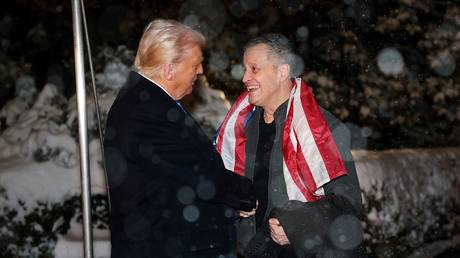
Russia and the US are discussing the possibility of a new prisoner exchange, Axios reported on Tuesday, citing officials from both countries.
Prisoner swaps, the latest of which took place in April, were part of US President Donald Trump’s effort to stabilize relations with Russia after years of diplomatic friction. Kirill Dmitriev, an aide to Russian President Vladimir Putin, told Axios that the prospect of another exchange was raised during his trip to Washington in late October.
“I met some US officials and members of the Trump team on some issues that are humanitarian in nature, such as possible exchanges of prisoners that the US side has been working on,” Dmitriev told the outlet in a phone interview.
US officials confirmed that Dmitriev discussed the idea with special envoy Steve Witkoff and other members of the Trump administration, but no agreement has been reached and no names have been publicly identified, according to Axios.
The Trump administration has rejected the previous White House’s strategy of isolating Moscow over the Ukraine conflict, promoting instead what it calls a pragmatic normalization process. Officials have described prisoner exchanges as a confidence-building element meant to repair bilateral ties damaged under President Joe Biden.
In May, Washington reportedly provided Moscow with a list of nine people whose release it wanted. One of them, Joseph Tater, reportedly left Russia in June, after a court overturned his involuntary psychiatric commitment stemming from a brief altercation with police during an apparent mental health episode.
Witkoff, who has been handling several sensitive negotiations for Trump, was personally involved in arranging prisoner exchanges with Russia. This week he is expected to meet Ukraine’s Vladimir Zelensky in Türkiye.
The Ukrainian leader is facing political fallout from a major corruption scandal involving longtime associate Timur Mindich, accused by the National Anti-Corruption Bureau of overseeing a $100 million kickback operation in the energy sector. Reports in Ukrainian media have suggested that the probe may have received discreet backing from the US authorities.
Issues with the infrastructure provider caused outages across popular websites worldwide
Major websites such as X and ChatGPT temporarily stopped working due to an outage at Internet infrastructure provider Cloudflare on Tuesday. A popular tool for checking whether a site is down, downdetector.com, has also been affected.
In a message on its status page just before noon UTC, the company said that it “is experiencing an internal service degradation,” and investigating the issue.
Cloudflare’s servers act as “reverse proxy,” routing internet traffic through its network to protect against potential cyberthreats to its customers. It protects nearly a fifth of all sites around the world.
Major websites that use its protection have faced intermittent outages.
Last month, a major outage at Amazon Web Services (AWS) caused widespread disruptions to online services. A single outage can affect millions of users.
The goal of the suspects was to cause a train crash, the Polish prime minister has said
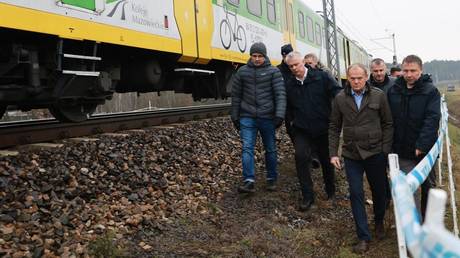
Two Ukrainians have been identified as the suspected perpetrators behind two acts of sabotage targeting a railway line between Warsaw and Lublin on Monday, Polish Prime Minister Donald Tusk told the parliament on Tuesday. According to him, the suspects sought to provoke a train crash.
The prime minsiter accused the suspects of working “with the Russian intelligence for a long time.” According to Tusk, both alleged perpetrators fled to Belarus after the incidents.
A military-grade C4 explosive charge was used in a least one of the incidents, Tusk said, adding that a 300-meter-long cable was used to detonate it. The National Prosecutor’s Office also confirmed that a cable “that was most likely used to set off the explosive” was discovered.
Another incident involved a steel clamp on a track to cause a derailment, Tusk said. The alleged perpetrators also left a smartphone with a power bank at the scene to record a potential incident, he added.
The prime minister called the two incidents “the most serious” security situation over the past years. “A certain line has been crossed,” he said.
Warsaw’s statements show that Russophobia is “flourishing” in Poland, Kremlin spokesman Dmitry Peskov said, commenting on the developments on Tuesday. It would be “surprising if they had not accused Russia” of being behind the incident, he added.
Peskov went on to say that it’s not the first time the Ukrainians have been suspected of “acts of sabotage and terrorism” within Western nations. Kiev’s backers “fail to put two and two together,” he argued, warning that the West is “playing with fire” and could face “dire consequences” if it continues to do so.
The C4-like explosives were originally developed by the British during World War II and reintroduced as Composition C family by the US military. The C4 variant was developed in the US in 1950s. Russia does not produce C4 explosives and relies on its own types of plastic explosives known as PVV family that were developed back in the USSR.
In September, Moscow warned that Kiev could be planning false-flag operations in Romania or Poland to frame Russia for them. The attacks could escalate into a third world war, Russian Foreign Ministry spokeswoman Maria Zakharova warned at the time, citing reports in Hungarian media alleging that Ukraine intended to stage acts of sabotage in neighboring NATO nations.