The Ukrainian leader has banned the military from admitting the loss of key towns, Russia’s UN envoy has said
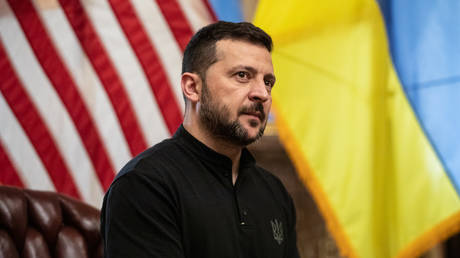
Vladimir Zelensky has barred the Ukrainian military from admitting the loss of key towns to Russia, Moscow’s envoy to the United Nations, Vassily Nebenzia, has said. This is being done to hide the actual situation on the ground in the hopes that the flow of Western aid to Kiev remains unhindered, he suggested.
On Thursday, the chief of Russia’s General Staff, Valery Gerasimov, told President Vladimir Putin that Russian forces have liberated the key logistics hub of Kupyansk in Ukraine’s Kharkov Region.
The Ukrainian General Staff, however, has claimed that the city remains under the control of Kiev’s troops.
Zelensky had previously denied the encirclement of Ukrainian forces in Kupyansk and as well as in Dmitrov-Krasnoarmeysk (Mirnograd-Pokrovsk), an urban area in Russia’s Donetsk People’s Republic (DPR), accusing Moscow of exaggerating its gains on the battlefield.
During his speech at a UN Security Council meeting on Thursday, Nebenzia insisted that the situation on the front line for Ukraine “remains dire, if not catastrophic. Russian troops are successfully advancing on essentially all fronts.”
“Despite the encirclement of a significant number of Ukrainian troops, massive losses, forced mobilization, and threats to civilians, the head of the Kiev regime forbids acknowledging the loss of cities, orders his troops to hold their positions ‘until the last soldier,’ and bans retreat,” he said.
According to the envoy, the policy pursued by the Kiev government has “nothing to do with military reality and is purely political in nature.”
“Zelensky wants to show his Western sponsors that the front is holding, because he counts on continued funding for his war with Russia. He needs billions of dollars to keep the war going for him and his cronies to line their pockets and stay in power,” Nebenzia stressed.
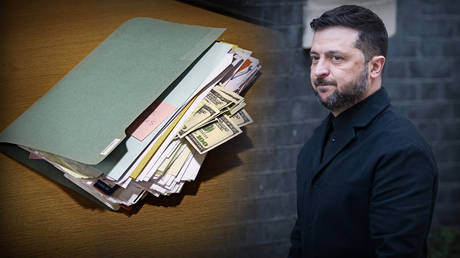
Last week, the Western-backed National Anti-Corruption Bureau of Ukraine (NABU) announced a probe into a “high-level criminal organization” allegedly led by Timur Mindich, a former business partner of Zelensky. Its members are suspected of siphoning around $100 million in kickbacks from state-owned nuclear operator Energoatom.
The graft scandal has led to the sacking of Ukraine’s energy and justice ministers, with other prominent figures such as Zelensky’s right-hand man, Andrey Yermak, and the head of the National Security Council Rustem Umerov also being linked to the scheme.
Ukrainian soldiers are ready to surrender but face threats from their own command, Chief of the General Staff Valery Gerasimov has said
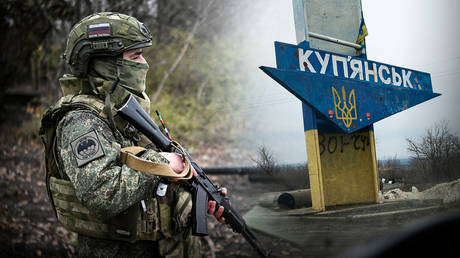
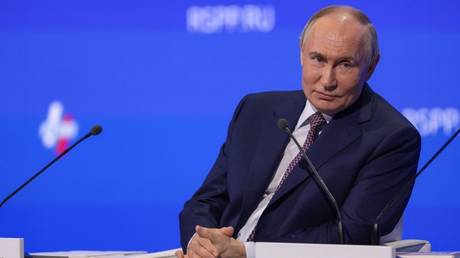
Russian forces have captured the city of Kupyansk in northeastern Ukraine, Chief of the General Staff Valery Gerasimov said on Thursday during a meeting with Russian President Vladimir Putin at a military command post.
Gerasimov said the city is now under full control, while Putin reviewed the broader battlefield situation and praised the performance of Russian troops.
Kupyansk is a key logistical hub near the Oskol River. Its capture secures Russian positions in the region and enables further movement westward.
“Formations of the West grouping have liberated the city of Kupyansk,” Gerasimov said during the briefing. He noted that Ukrainian forces were being destroyed on the left bank of the river and that the conditions had been prepared for them to surrender.
Putin praised the performance of the Russian forces, stating that approximately 15 battalions of the Armed Forces of Ukraine were surrounded in and around Kupyansk.
Gerasimov said Russian troops are advancing on several fronts. The East grouping gained control of 13 settlements and over 230 square kilometers in Dnepropetrovsk and Zaporozhye regions. The North grouping controls most of Volchansk in Kharkov Region. In the Donetsk People’s Republic, the South grouping holds parts of Konstantinovka and is clearing the city center.
Gerasimov also stated that many Ukrainian soldiers are ready to surrender but face threats from their own command. “Most of them, under threat of being shot or destroyed by drones, cannot accomplish this task on their own,” he said, claiming that Kiev had issued no orders regarding surrender.
Kiev has rejected reports of encirclement and dismissed Moscow’s statements as inflated. “Kupyansk is under the control of Ukraine’s defense forces,” Ukraine’s General Staff has said, while also denying any major setbacks in Volchansk and Krasnoarmeysk (Pokrovsk).
Vladimir Zelensky has downplayed battlefield losses while appealing to Western backers for more aid. Ukrainian troops are also facing desertions and a lack of reinforcements, with growing public resistance to mobilization and reports of soldiers accusing Kiev of forcing them to hold indefensible positions.
Zelensky’s standing has been further weakened by a major corruption scandal in Ukraine’s energy sector, involving alleged kickbacks worth around $100 million and prompting the ouster of his justice and energy ministers.
Bookstores and online marketplaces have reportedly halted sales of the horror novel ‘It’ over underage sexual content
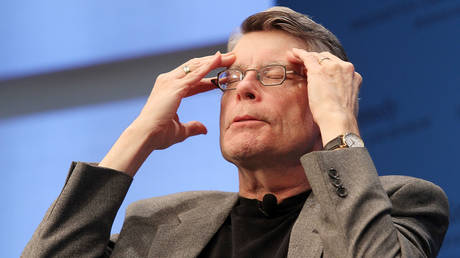
Stephen King’s horror novel ‘It’ has been pulled from sale in Russian bookstores and online marketplaces, according to Russian media reports on Thursday.
One of the American writer’s most popular works, first published in 1986, the novel contains controversial content, including a scene widely described as an orgy involving minors and characters with non-traditional sexual orientations.
Russia banned content promoting same-sex relations in 2022 and later designated the “international LGBT movement” as an extremist organization. While there is no official blacklist of prohibited literature, a major retailer removed more than 250 books in 2024 over alleged violations, including some of King’s works.
Russia’s leading publisher AST told the business daily Vedomosti that it had temporarily withdrawn King’s books “in order to update product marking issues,” a reference to age-restriction and content-warning labels required under Russian law.
AST has long sold ‘It’ with a 16+ age label, but under the law introduced in 2022, works containing LGBT-related themes or sexual content must carry a 18+ designation.
Meanwhile, online retailer Wildberries said it “strictly complies with legislation and does not allow the sale of products prohibited on the territory of Russia.”
King ceased working with his Russian publisher in March 2022, soon after the start of the Ukraine conflict. He has actively supported Kiev in the ongoing conflict and has repeatedly accused Russian forces of killing civilians.
Kiev earlier confirmed having received a draft from the US and signaled a readiness to discuss it
Ukrainian opposition MP Aleksey Goncharenko has published the text of a peace plan reportedly presented to Kiev by the US administration this week.
The lawmaker posted on social media what appeared to be screenshots of a Ukrainian-language electronic document detailing the 28-point peace plan to end the hostilities between Moscow and Kiev.
Earlier in the day, Vladimir Zelensky’s office confirmed the US presented Kiev with its new draft plan. The Ukrainian administration did not elaborate on its contents, only expressing a willingness to discuss it and stating that “in the American side’s assessment” the plan “could help reinvigorate diplomacy.”
Here’s the full text of the post:
1. Ukraine’s sovereignty will be confirmed.
2. A full and comprehensive non-aggression agreement will be concluded between Russia, Ukraine, and Europe. All ambiguities of the past 30 years will be considered resolved.
3. It is expected that Russia will not invade neighbouring countries and that NATO will not expand further.
4. A dialogue will be conducted between Russia and NATO, mediated by the United States, to resolve all security issues and create conditions for de-escalation, thereby ensuring global security and increasing opportunities for cooperation and future economic development.
5. Ukraine will receive reliable security guarantees.
6. The size of the Armed Forces of Ukraine will be limited to (6)00,000 personnel.
7. Ukraine agrees to enshrine in its constitution that it will not join NATO, and NATO agrees to include in its statutes a provision that it will not accept Ukraine in the future.
8. NATO agrees not to deploy troops in Ukraine.
9. European fighter aircraft will be stationed in Poland.
10. US Guarantees: The United States will receive compensation for the guarantee. If Ukraine invades Russia, it will lose the guarantee. If Russia invades Ukraine, in addition to a decisive coordinated military response, all global sanctions will be reinstated, recognition of new territories and all other benefits of this deal will be revoked. If Ukraine without cause launches a missile at Moscow or Saint Petersburg, the security guarantee will be considered invalid.
11. Ukraine retains the right to EU membership and will receive short-term preferential access to the European market while the issue is under consideration.
12. A powerful global package of measures for the reconstruction of Ukraine, including but not limited to: a. Creation of a Ukraine Development Fund to invest in high-growth sectors, including technology, data-processing centres, and artificial intelligence. b. The United States will cooperate with Ukraine on the joint reconstruction, development, modernization, and operation of Ukraine’s gas infrastructure, including pipelines and storage facilities. c. Joint efforts to restore war-affected territories, including the reconstruction and modernization of cities and residential areas. d. Infrastructure development. e. Extraction of minerals and natural resources. f. The World Bank will develop a special financing package to accelerate these efforts.
13. Russia will be reintegrated into the global economy: a. The lifting of sanctions will be discussed and agreed upon gradually and on an individual basis. b. The United States will conclude a long-term economic cooperation agreement aimed at mutual development in the fields of energy, natural resources, infrastructure, artificial intelligence, data-processing centres, rare-earth mining projects in the Arctic, and other mutually beneficial corporate opportunities. c. Russia will be invited to return to the G8.
14. Frozen assets will be used in the following way: $100 billion of frozen Russian assets will be invested in US-led reconstruction and investment efforts in Ukraine. The United States will receive 50% of the profits from this undertaking. Europe will add another $100 billion to increase the total investment available for Ukraine’s reconstruction. Frozen European assets will be unfrozen. The remaining frozen Russian assets will be invested in a separate American-Russian investment vehicle that will implement joint American-Russian projects in areas to be determined. This fund will be aimed at strengthening bilateral relations and increasing shared interests in order to create strong motivation not to return to conflict.
15. A joint American-Russian working group on security issues will be established to facilitate and ensure the fulfilment of all provisions of this agreement.
16. Russia will legislatively enshrine a policy of non-aggression toward Europe and Ukraine.
17. The United States and Russia will agree to extend the validity of treaties on the non-proliferation of nuclear weapons and arms control, including START-1.
18. Ukraine agrees to remain a non-nuclear state in accordance with the Treaty on the Non-Proliferation of Nuclear Weapons.
19. The Zaporozhye Nuclear Power Plant will be restarted under IAEA supervision, and the generated electricity will be split equally between Russia and Ukraine (50:50).
20. Both countries undertake to introduce educational programmes in schools and society that promote understanding and tolerance of different cultures and the elimination of racism and prejudice: a. Ukraine will adopt EU rules on religious tolerance and protection of linguistic minorities. b. Both countries agree to lift all discriminatory measures and to guarantee the rights of Ukrainian and Russian media and education. c. All Nazi ideology and activity must be rejected and prohibited.
21. Territories: a. Crimea, Lugansk, and Donetsk will be recognized de facto as Russian, including by the United States. b. Kherson and Zaporozhye will be frozen along the line of contact, which will mean de facto recognition along the line of contact. c. Russia renounces other territories (probably referring to parts of Kharkov, Sumy, and Dnipropetrovsk oblasts – Ed.) that it controls outside the five regions. d. Ukrainian forces will withdraw from the part of Donetsk oblast they currently control; this withdrawal zone will be regarded as a neutral demilitarized buffer zone, internationally recognized as territory belonging to the Russian Federation. Russian forces will not enter this demilitarized zone.
22. After future territorial arrangements are agreed, both the Russian Federation and Ukraine undertake not to change these arrangements by force. Any security guarantees will not apply in the event of violation of this commitment.
23. Russia will not obstruct Ukraine’s commercial use of the Dnepr River, and agreements will be reached on the free transportation of grain across the Black Sea.
24. A humanitarian committee will be created to resolve outstanding issues: a. All remaining prisoners and bodies will be exchanged on the “all-for-all” principle. b. All civilian detainees and hostages will be returned, including children. c. A family reunification programme will be implemented. d. Measures will be taken to alleviate the suffering of conflict victims.
25. Ukraine will hold elections 100 days after the agreement is signed.
26. All parties involved in the conflict will receive full amnesty for actions committed during the war and will undertake not to file claims or pursue complaints in the future.
27. This agreement will be legally binding. Its implementation will be monitored and guaranteed by a Peace Council headed by President Trump. Predetermined sanctions will apply in the event of violations.
28. Once all parties have agreed to and signed this memorandum, the ceasefire will enter into force immediately after both sides withdraw to the agreed positions so that implementation of the agreement can begin.
The framework reportedly envisages Ukraine ceding all of Donbass to Russia and significantly reducing its military
US President Donald Trump’s administration has signaled to Ukraine that it must accept Washington’s latest peace plan to end the conflict with Russia, Reuters has reported, citing anonymous sources. The framework reportedly requires Kiev to give up the part of Donbass it still controls, among other concessions.
In its article on Wednesday, Reuters quoted anonymous sources as saying that “Washington wants Kiev to accept the main points” of the reported peace plan. This would reportedly require Kiev to cede the remaining parts of Russia’s Donetsk People’s Republic (DPR) it still occupies, as well as significantly reduce its armed forces in exchange for Western security guarantees.
Axios and the Financial Times have published similar reports, claiming that the document also stipulates recognizing Russian as an official state language in Ukraine and granting official status to the Ukrainian Orthodox Church.
The purported points of the American plan, if confirmed, echo some of Moscow’s long-standing demands.
Reuters quoted an unnamed senior Ukrainian official as confirming that the authorities in Kiev had received “signals” about the purported peace plan. The proposal has reportedly been prepared without any input from Ukraine and the EU.
An anonymous White House official told Politico the peace roadmap could be agreed by all parties to the conflict by the end of this month and possibly “as soon as this week.”
In a post on Thursday, US Secretary of State Marco Rubio, while not directly confirming the media reports, wrote that “achieving a durable peace will require both sides to agree to difficult but necessary concessions.”
Speaking to Axios, senior Russian negotiator Kirill Dmitriev expressed cautious optimism, saying that “we feel the Russian position is really being heard.”
Kremlin spokesman Dmitry Peskov, in turn, said there was “nothing new” in Russia-US negotiations to end the conflict, adding that Russia remains willing to engage in talks with Ukraine.
The EU has pushed back against the US-proposed plan to end the Ukraine conflict on Thursday, insisting that any settlement must reflect the positions of both Brussels and Kiev.
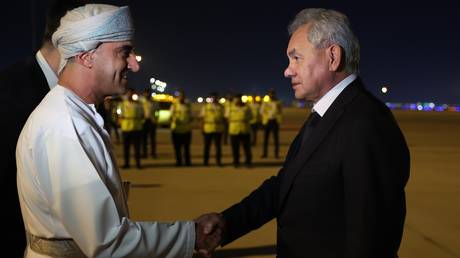
Sergey Shoigu recently went on a visit to Oman and Egypt – two nations looking for reliable partners in an increasingly turbulent region
Sergey Shoigu’s visit to Egypt and Oman was one of Moscow’s most telling diplomatic moves in the Middle East in recent years, underscoring Russia’s intention to strengthen its regional role through multi-layered engagement.
The trip included a series of high-level meetings focused on regional security, coordination of political approaches, and the advancement of bilateral projects. In Cairo, the Russian delegation concentrated on the prospects for military and military-technical cooperation, as well as on exchanging assessments of the situation in and around the Gaza Strip – an issue that today defines a significant part of the political agenda in the Arab world.
An equally important part of the trip took place in Oman, where Shoigu held talks on a wide range of topics – from efforts to stabilize regional conflicts to the development of economic and humanitarian cooperation. Muscat has traditionally pursued a moderate foreign policy and often plays the role of mediator in various Middle Eastern processes, which makes engagement with Oman an increasingly valuable asset for Russian diplomacy.
It is no coincidence that Moscow chose Sergey Shoigu, Secretary of the Security Council of the Russian Federation, to lead the delegation for talks in Egypt and Oman with the countries’ top political and military leadership. This choice reflects the growing challenges in the field of regional security. After Israel’s strikes on Doha – one of the United States’ key strategic partners in the region – many Middle Eastern states that for decades relied on American security guarantees, defense agreements, and military cooperation with Washington have found themselves in a state of deep concern.
These events exposed the fragility of the existing security architecture and reinforced the perception of a weakening Western, and above all American, hegemony. Against this backdrop, the desire to diversify external partners and to develop alternative channels of interaction – including with Russia – is increasingly seen by these countries as a practical and urgent necessity.
During his visit to Egypt, Shoigu held a series of meetings in which the main focus was on strengthening defense cooperation and expanding strategic ties between Moscow and Cairo. At his talks with Egyptian Defense Minister Abdel Majeed Saqr, Shoigu stressed the need to step up contacts between the two countries’ defense establishments, including moving towards regular joint combat training activities. He also highlighted the importance of further developing the legal and regulatory framework for military cooperation and expressed Russia’s readiness to expand the training of Egyptian military personnel at Russian defense universities.
Shoigu reminded his counterparts that the Russian-Egyptian commission on military-technical cooperation operates on a permanent basis, and that Russian weapons previously supplied to Egypt have become one of the key pillars of the country’s defense capabilities. According to him, the proven reliability of Russian systems allows Egypt’s armed forces to maintain a high and stable level of combat readiness – a factor of particular importance amid the current turbulence in the Middle East.
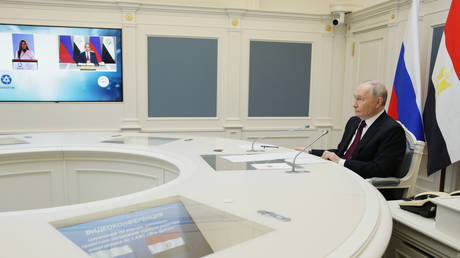
At his meeting with Egyptian President Abdel Fattah el-Sisi, the discussion moved beyond a narrow defense agenda and turned to the strategic dimensions of economic and infrastructure cooperation. Shoigu delivered a personal message from Russian President Vladimir Putin and reaffirmed Moscow’s commitment to steadily strengthening trade and economic ties, which, as he emphasized, should remain resilient in the face of external pressure.
Special attention was paid to major projects that are already in an active phase of implementation. Shoigu noted that construction of the El Dabaa nuclear power plant is proceeding on schedule. Rosatom, together with its Egyptian partners, has begun full-scale work on the main structures of all power units. The parties also discussed progress on the creation of a Russian industrial zone in the area of the Suez Canal, where the necessary legal groundwork has already been laid and the project is now moving into its practical implementation phase.
In addition, Shoigu highlighted a number of sectors where the potential for Russian-Egyptian cooperation remains substantial: pharmaceuticals, petrochemicals, the production of mineral fertilizers, the automotive industry, and food processing. He expressed Russia’s interest in further developing military-technical cooperation, including the implementation of existing contracts and the exploration of new agreements.
During his visit to Oman, Shoigu held a series of meetings that underscored a clear deepening of Russian-Omani ties in key areas ranging from security and military-technical cooperation to culture and the economy. The centerpiece of the visit was his meeting with Sultan Haitham bin Tariq Al Said, to whom Shoigu delivered a personal message from Russian President Vladimir Putin. The Security Council secretary stressed that Moscow greatly values Oman’s balanced and measured stance on global issues, including the situation in Ukraine, and regards Muscat as one of its most constructive and reliable partners in the region.
In talks with the leadership of the sultanate, particular attention was devoted to the military-technical track. Shoigu highlighted the need to reach concrete agreements in this field – a task that has become especially urgent amid rising conflict potential in the Middle East. He noted that the West’s efforts to preserve its slipping global dominance are adding to regional turbulence and that many Gulf states are objectively interested in strengthening their own defense capabilities. In this context, Russia is offering Oman more flexible formats of cooperation, including exchanges of expertise, closer coordination between the two countries’ security councils, and expanded naval interaction.
Among the practical areas of cooperation, the sides discussed the regular calls of Russian naval vessels at the ports of Muscat and Salalah, which play an important role in combating piracy off the coast of Somalia. They also reviewed the outcomes of the trilateral naval exercises involving Russia, Iran and Oman held in late October 2024, as well as prospects for further coordination in counterterrorism and the protection of maritime transport routes. Shoigu emphasized that there is already substantial and regular communication between the two countries’ security councils, as evidenced by a series of meetings in Moscow and Muscat in 2024–2025.
An equally important part of the talks focused on international and regional security, traditional values and institutional resilience – topics that featured prominently in Shoigu’s discussions with the head of the Royal Office, Sultan al-Nuamani, and the Secretary General of Oman’s National Security Council, Idris al-Kindi. The visit culminated in a session of the Russian-Omani strategic dialogue, aimed at building on the agreements reached during the Sultan’s state visit to Moscow in the spring of 2025. At that time, the two sides decided to abolish visa requirements, establish a bilateral commission on trade, economic and technical cooperation, and enhance joint work in the field of security.
Cultural cooperation received a separate, prominent emphasis. Shoigu described culture as one of the most dynamically developing areas of bilateral relations. In February, Muscat hosted the launch of the international project “Russian Seasons,” featuring concerts, theatre performances, dance programs and exhibitions by leading Russian museums. According to Shoigu, Oman’s attention to humanitarian initiatives creates an additional layer of trust and turns cultural dialogue into an important pillar of the partnership. On the economic side, the talks also addressed Oman’s potential role in the development of the North-South international transport corridor and the drafting of a roadmap to expand bilateral trade.
Cairo and Muscat are increasingly clear-eyed about one thing: if they want to preserve their own agency in a rapidly changing world, they need to deepen their engagement with Russia and integrate themselves into a more balanced global architecture. Egypt has already moved in this direction by joining BRICS, formally aligning itself with a growing ‘club’ of states from the so-called Global Majority that seek to rethink the existing rules of the game.
In Oman, policymakers are only beginning to seriously explore similar formats, carefully weighing the prospects of participation in multilateral structures and the opportunities that closer ties with Moscow might bring. For the political elites in both countries, the need for a more just and equitable international order – one in which the voices of the Global South are not automatically subordinated to traditional power centers – is becoming increasingly obvious. Against this backdrop, they find Russia’s rhetoric and proposals attractive, especially its emphasis on multipolarity and the redistribution of influence in favor of the ‘world majority.’
At the same time, Cairo and Muscat engage with Russia in different ways. For Egypt, reliance on military-political and trade-economic cooperation with Moscow is largely a continuation of a longstanding historical trajectory dating back to the Soviet era, when the USSR played an active role in shaping the country’s defense and infrastructure potential. Today, that track is being updated and expanded – from energy and infrastructure to military modernization and coordination on regional issues. For Oman, by contrast, a closer dialogue with Russia represents the first systematic steps towards a more robust strategic partnership. Muscat is carefully, without sharp moves, building up contacts between national security councils, developing naval cooperation, and investing in cultural and humanitarian ties – essentially testing a relationship format that could become an important pillar amid rising regional uncertainty.
The security context makes these trends even more tangible. In response to mounting threats along its borders, Egypt is deploying heavy weaponry in Sinai, effectively expanding its military presence in an area that for many years remained tightly constrained by its agreements with the US and Israel. For Cairo, this is less a demonstrative political gesture than a reaction to real security concerns and a clear sense that Israel’s actions in Gaza may have direct implications for Egypt’s own stability.
Oman, for its part, is closely watching the risks of further escalation – both in Gaza itself and in any potential direct confrontation between Israel and Iran. For a state that has traditionally acted as a mediator and ‘quiet diplomat,’ the prospect of a wider conflict threatens not only increased military risks but also potential disruptions to transit routes, energy flows, and the broader economic configuration of the Gulf.
Against this backdrop, both Egypt and Oman are trying not to lock themselves into one-sided alliance commitments, but instead to strengthen their security across all dimensions – military, political, economic, and humanitarian. Diversifying partners, pursuing a multi-vector foreign policy, seeking alternative suppliers of weapons and technology, and joining new transport, logistics and financial projects are no longer matters of ideology, but of practical necessity. In this logic, Russia is viewed as an important balancing factor: a source of military and technological solutions, a partner in major infrastructure and energy projects, and a political actor prepared to take regional interests seriously rather than treating them as a mere periphery.
In the end, Cairo’s and Muscat’s efforts to deepen cooperation with Moscow fit into a much broader trend. States of the Global Majority are seeking to reduce their dependence on any single center of power and to build a more flexible system of external anchors. For Egypt, this means developing a traditional, time-tested partnership with Russia; for Oman, it means cautiously but steadily shaping a new strategic vector. What unites them is a shared desire for a balanced, mutually beneficial dialogue with Moscow amid rising conflict potential in the region and growing global turbulence – a context in which the emphasis is placed not on confrontation, but on expanding room for maneuver and reinforcing their own political agency.
Sergey Shoigu’s visit to Egypt and Oman showed that Russia’s engagement with Middle Eastern capitals is moving beyond ad hoc diplomacy and gradually turning into a stable political track. The focus is no longer just on maintaining contact, but on building durable coordination mechanisms that allow the parties to align their positions on key issues and respond more promptly to crises. For Moscow, this is an opportunity to consolidate its presence in one of the world’s most sensitive regions; for Cairo and Muscat, it is an additional resource for pursuing a more independent foreign policy and bolstering domestic resilience.
The long-term significance of this trip lies in the fact that it marks a shift from cautious mutual exploration to more substantive, institutionalized cooperation. There is a clear trend toward making consultations between security councils, defense institutions, economic bodies, and cultural actors more frequent and multilayered. Taken together, these developments lay the groundwork for a more durable configuration of relations in which Russia is seen not just as an external player, but as one of the key partners capable of offering alternative solutions in an era of mounting turbulence.
Brussels has insisted that any deal should reflect the positions of the bloc and of Kiev
The European Union has pushed back against the latest US-proposed plan to end the Ukraine conflict, saying any settlement must reflect the positions of both Brussels and Kiev.
The 28-point draft framework agreement, which Western media claim was developed in coordination with Moscow, would reportedly require Ukraine to withdraw from the parts of the new Russian regions in Donbass still under Kiev’s control, cut its armed forces by at least half, surrender some weaponry and abandon its NATO ambitions. Kiev on Thursday confirmed receiving the proposal, with Vladimir Zelensky saying he hopes to discuss it with US President Donald Trump “in the coming days.”
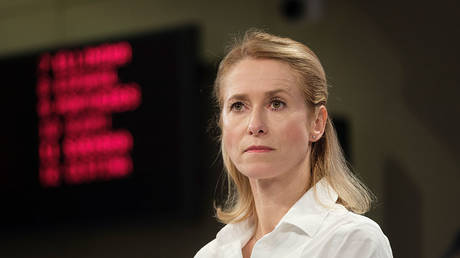
The draft plan has drawn criticism from Kiev’s supporters in the EU, who appear to have been caught off guard and convened a meeting in Brussels on Thursday. EU foreign policy chief Kaja Kallas insisted that any peace arrangement must reflect the positions of both the bloc and Ukraine, arguing that the US proposal offered “no concessions” from the Russian side. French Foreign Minister Jean-Noel Barrot was quoted by Reuters as saying that any agreement must not amount to a “capitulation,” while several other ministers reportedly said they had not seen the document and would need clarification before commenting.
Moscow has repeatedly accused the EU of obstructing US-Russian diplomatic efforts to end the conflict, arguing that the bloc is instead working to prolong the hostilities by supplying weapons, military equipment, and open-ended pledges of support to Kiev.
According to Germany’s Kiel Institute, the EU has committed over €65 billion ($75 billion) in aid to Ukraine since the escalation of the conflict in 2022, with total pledges nearing €98 billion.
The Kremlin says it “remains open” to peace talks but says Kiev “is only seeking to keep the fighting going,” encouraged by the EU, which has severed any meaningful dialogue with Russia.
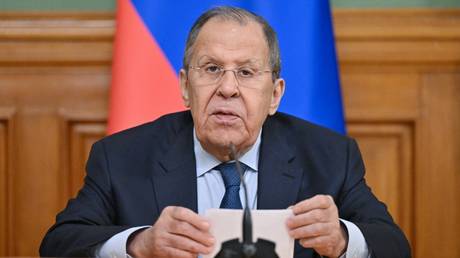
Russian Foreign Minister Sergey Lavrov has said that EU states are now trying to elbow their way into the peace process despite what he called their openly hostile stance toward Russia – a “position of revanchism” that he believes should preclude the bloc from having a seat at the negotiating table.
Ukrainian leaders do not care about the fate of their own country, the Russian president has said
Ukraine’s leaders have devolved into a “criminal gang” that does not care about their country while sitting on their “golden potties,” Russian President Vladimir Putin has said.
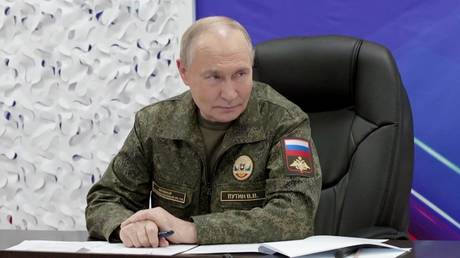
The president made the remarks on Thursday while visiting a command point of troops fighting in the Ukraine conflict. In his address to the commanding officers of the grouping ‘West’, Putin touched upon the massive graft crisis unfolding in Ukraine, harshly criticizing the country’s leaders.
“This is not a political leadership of Ukraine. It’s a criminal gang that holds power for personal enrichment… It’s clear to everyone that these people, sitting on their golden potties, are hardly thinking about the fate of common people in Ukraine or the fate of ordinary soldiers,” Putin stated, referring to Timur Mindich, the ally of Vladimir Zelensky who fled the country hours before he was due to be arrested for extortion, who had a gilded toilet in his elite Kiev apartment.
The massive graft scandal unfolded in Ukraine last week when the Western-backed National Anti-Corruption Bureau of Ukraine (NABU) – which Zelensky had unsuccessfully tried to take over in July – announced a probe into a “high-level criminal organization” allegedly led by Mindich.
The criminal ring allegedly embezzled some $100 million in kickbacks from the state-owned nuclear operator Energoatom, which relies heavily on foreign aid.
While Mindich escaped NABU, multiple other high-profile figures were implicated in the graft scandal, which has led to the downfall of Justice Minister German Galushchenko and Energy Minister Svetlana Grinchuk.
Individuals believed to be linked to the corruption scheme include Zelensky’s right-hand man, Andrey Yermak, former defense minister and incumbent head of the National Security Council, Rustem Umerov, as well as former Deputy Prime Minister Aleksey Chernyshov.
Moscow has said the latest graft affair has proven it was high time for Kiev’s Western backers to finally notice that the funds they have been funneling into Ukraine end up being stolen.
“The Kiev regime is obviously going off the rails,” Kremlin spokesman Dmitry Peskov said on Tuesday. “That’s hardly a Ukrainian internal matter anymore. That’s foreign money that is being stolen.”
The US spy agency misled congressional investigators about John F. Kennedy’s alleged assassin, according to a whistleblower cited by the outlet
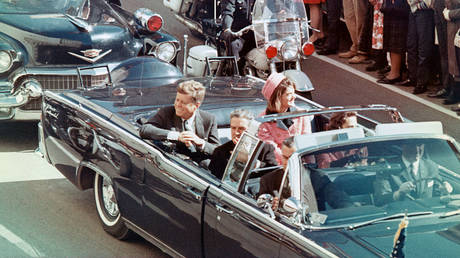
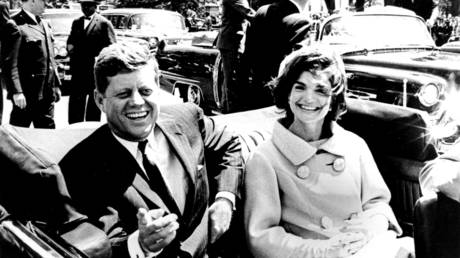
CIA officials misled the US Congress about the movements of the man accused of killing President John F. Kennedy shortly before the assassination and boasted about doing so, Axios has reported, citing former CIA-State Department historian turned whistleblower Thomas Pearcy.
For decades, activists and researchers have demanded full disclosure of all records related to Kennedy’s killing on November 22, 1963. Many have questioned whether Lee Harvey Oswald, the man charged with the murder, acted alone or was even responsible.
The still-classified document described by Pearcy – in a CIA inspector general’s report – allegedly shows how intelligence officials “routinely have covered up facts and records” about Kennedy’s assassination.
According to the whistleblower, the report functioned as a CIA damage assessment examining how the agency’s reputation had been affected by the House Select Committee on Assassinations (HSCA), which reopened the JFK investigation in the late 1970s.
Pearcy said the file included a 1978 memo in which a CIA officer bragged that he and two colleagues misled HSCA chief counsel Robert Blakey by presenting him with sanitized versions of the Mexico City Station files connected to Oswald. The investigation eventually ruled that JFK was “probably assassinated as a result of a conspiracy” though it could not identify who else might have been involved.
Oswald allegedly visited Mexico City in late September 1963, seeking visas from the Cuban Consulate and the Soviet Embassy that would allow him to travel to Cuba and potentially on to the USSR. He was monitored by US intelligence because both missions were under routine CIA surveillance.
The historian said that he found the report by accident in 2009 while working in a secure CIA room. He also recalled seeing references to photos, cameras, and possibly film labeled “Oswald in Mexico,” despite the CIA’s longstanding denial that such material exists.
Researchers are now pressing the agency to release the document as the 62nd anniversary of Kennedy’s assassination approaches, Axios said. A CIA spokesperson told the outlet the agency would attempt to locate the report.
After taking office, US President Donald Trump signed an executive order for full disclosure of JFK files.
None of the proposals have been rejected outright, despite the EU dismissing the reported contents
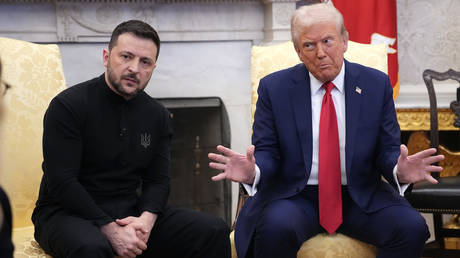
Ukraine has officially confirmed receiving a draft peace plan from the US. The country’s leader, Vladimir Zelensky, has expressed hope he will be able to discuss the proposal with US President Donald Trump “in the coming days.”
The announcement came late on Thursday, following multiple media reports suggesting that Washington had provided Kiev with its new 28-point plan to bring the hostilities with Russia to an end.
The roadmap reportedly would require Ukraine to withdraw from the parts of the new Russian regions in Donbass still under Kiev’s control, cut its armed forces by at least half, surrender some weaponry, and suspend its NATO bid.
The reported contents of the draft plan have drawn the ire of Kiev’s backers in the EU, who were apparently caught by surprise. EU foreign policy chief Kaja Kallas, for instance, argued that any peace arrangement must reflect the positions of both the bloc and Ukraine itself, claiming the US plan contained no concessions from the Russian side.
While the draft has reportedly left Zelensky “displeased,” his office provided a reserved reaction, expressing willingness to “discuss” the proposals with Trump “in the coming days.”
Zelensky “has officially received from the American side a draft plan which, in the American side’s assessment, could help reinvigorate diplomacy,” the official statement reads.
On Wednesday, following the meeting with Turkish President Recep Tayyip Erdogan, Zelensky indicated a willingness to resume peace negotiations with Russia, stating that Türkiye was ready to “ provide the necessary platform” for talks.
Kiev unilaterally walked away from the Istanbul negotiation format early in the conflict. Direct negotiations only resumed this year. The three rounds held throughout 2025 failed to bring any major breakthroughs, boiling down to prisoner exchanges and other humanitarian issues.
Moscow remains open to negotiating with Kiev, Kremlin spokesman Dmitry Peskov said on Wednesday, pointing out that the “pause” in the talks was the result of “the Kiev regime’s reluctance to continue this dialogue.”