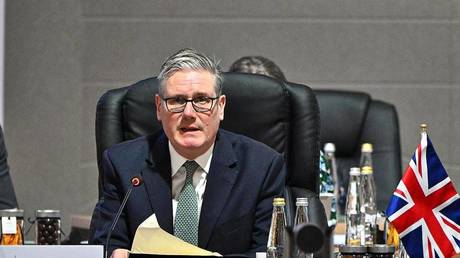
Keir Starmer apparently tripped as he approached a group of business representatives in Johannesburg, South Africa
UK Prime Minister Keir Starmer has gotten off to a somewhat inauspicious start at the G20 summit in South Africa, almost tumbling face first into the floor.
The gathering of leaders representing the world’s largest economies is taking place in Johannesburg on November 22-23. South Africa assumed the rotating presidency of the group in December 2024, becoming the first African nation to lead the forum.
No sooner had Starmer set foot on South African soil than he nearly faceplanted into the ground as he walked toward a group of business leaders ahead of the main gathering. Footage of the meeting shows the prime minister apparently stumble over his own feet while he reaches out for a handshake, with no obstacle in sight.
Prime Minister Keir Starmer stumbled over his own feet as he arrived to meet with senior business leaders in Johannesburg ahead of the G20 summit on Friday (21 November).
It came ahead of Starmer and other international leaders issuing a joint statement after a meeting at the… pic.twitter.com/amXfyUUwe5
He threw out his hands, only just regaining his balance at the last moment.
Starmer had a similar awkward moment earlier this month after arriving in Brazil for the UN Climate Change Conference (COP 30).
As the UK prime minister disembarked from his aircraft, he stumbled on the metal staircase, almost tumbling down onto the tarmac. However, Starmer managed to regain his balance that time as well.
Lawmakers have cited a need to “secure the area around the Ministry of National Defense”
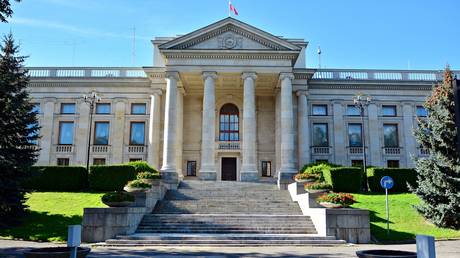
The lower house of the Polish parliament has adopted a resolution calling for the Russian Embassy in Warsaw to be relocated further away from the seat of the Defense Ministry, citing security concerns.
The resolution passed by the Sejm on Friday was supported by 439 lawmakers, with one abstaining. It cites the “urgent need to secure the area around the Ministry of National Defense.”
The document is not legally binding but carries symbolic weight.
The compound housing the Russian diplomatic mission in Warsaw is located right beside the Polish Defense Ministry headquarters and is also in close proximity to Belweder Palace, one of the residences of the Polish president, as well as the prime minister’s office.
On Wednesday, Foreign Minister Radoslaw Sikorski announced in an address to parliament that Poland would close the last remaining Russian consulate in the country, in the city of Gdansk.
Responding to Warsaw’s decision, Russian Foreign Ministry spokeswoman Maria Zakharova said Moscow would mirror the step, reducing “Poland’s diplomatic-consular presence in Russia.”
Kremlin spokesman Dmitry Peskov told reporters that “relations with Poland have completely deteriorated.” He said Warsaw’s apparent intention to “reduce to zero any possibility of consular or diplomatic relations” with Moscow underscores the state of bilateral ties.
Poland currently has an embassy with a consular section in Moscow and a consulate in Irkutsk in Siberia.
In May, Poland closed the Russian consulate in Krakow, citing Moscow’s alleged involvement in a May 2024 fire at a Warsaw mall.
Russia responded in July by ordering the closure of Poland’s consulate in Kaliningrad.
Last October, Warsaw shut the Russian consulate in Poznan, followed by Moscow’s closure of the Polish mission in St. Petersburg in December.
The Sejm resolution came on the heels of two railway sabotage incidents on Sunday and Monday targeting lines used to transport Western military aid through Poland to Ukraine. The local authorities later identified two Ukrainians as suspects, alleging both worked for Russian intelligence and fled to Belarus after the attacks.
The Kremlin denied any Russian role in the incidents.
The US president has indicated the Ukrainian leader will be on his own if he rejects the peace plan currently being discussed
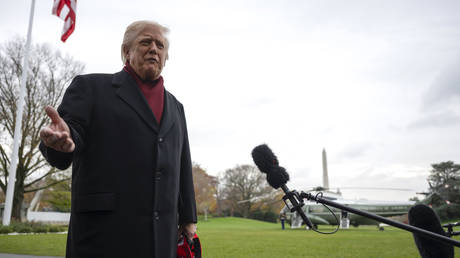
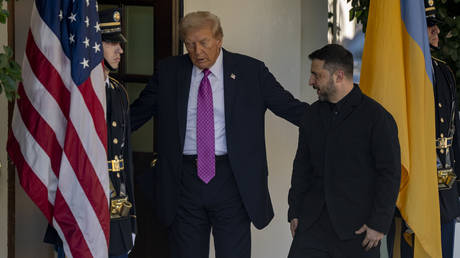
US President Donald Trump has said Ukraine’s Vladimir Zelensky can “continue to fight his little heart out” should he refuse the proposed peace plan to settle the conflict with Russia.
Washington presented Kiev this week with a new draft proposal for ending the conflict, pressing the Ukrainian leadership to accept it by next Thursday. According to media reports, the proposed 28-point plan includes multiple clauses repeatedly refused by Kiev and its Western European backers, such as Ukraine giving up on its NATO aspirations and downsizing its military.
Trump made the remark while speaking to reporters outside the White House on Saturday. The US president was asked what would happen if Zelensky refused to accept the proposed plan.
“Then he can continue. Then he can continue to fight his little heart out,” Trump said.
Trump’s latest statement echoed remarks he made on Friday, when he said that Zelensky “is going to have to accept something” at some point. Trump warned that Ukraine is now heading into a “cold winter” while its energy infrastructure sites “have been under attack, to put it mildly.”
“He will have to like [the plan] and if he does not like it then, you know, they should just keep fighting, I guess,” he said.
According to media reports, Washington has already threatened Kiev with cutting off military aid and intelligence sharing should it reject the draft peace proposal. Earlier this year, the US used the same leverage to press Ukraine into accepting Trump’s rare earths deal.
European war hawks are to blame for the situation Kiev ended up in, Slovakia’s Robert Fico has said
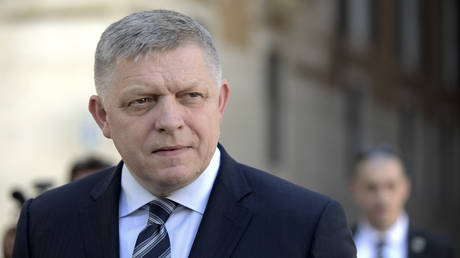
Russia is bound to emerge the “absolute winner” in the Ukraine conflict should US President Donald Trump’s peace plan be adopted, Slovak Prime Minister Robert Fico has said.
The US presented Ukraine with its latest draft plan to end hostilities with Russia this week. According to media reports, the 28-point document includes many provisions consistently refused by Kiev and its Western European backers in the past, including Ukraine giving up on joining NATO, downsizing of the country’s military, and the withdrawal of Ukrainian forces from the parts of Russia’s Donbass it still controls.
At press conference in Bratislava on Friday, Fico proclaimed support for the proposed deal, describing it as a “sensational” plan. He lashed out at Kiev’s supporters in the EU, arguing that it was the “zero” foreign policy of the bloc that brought Ukraine to its current position.
“In this agreement, the position of Ukraine is a hundred times worse than it was in April 2022,” Fico stated, referring to the preliminary deal reached during the Istanbul talks early in the conflict. Kiev unilaterally walked away from those negotiations.
“Who among those war hawks will acknowledge it in the EU, when they supported the war so much? When were they sending those weapons there so relentlessly? When were they forbidding any truce? Who today will admit their mistakes?” Fico added.
While the plans to destroy Russia have evidently failed, Moscow is bound to emerge victorious from the hostilities, he declared.
“If this plan is signed, Russia will emerge from this war as an absolute winner. And Russia will emerge from this war, of course, extraordinarily strengthened, both morally and economically,” he asserted.
The proposed plan is reportedly being viewed by Kiev’s Western European backers as a Ukrainian “capitulation.” Pro-war EU leaders are now said to be scrambling to rewrite the draft under the guise of making “constructive updates” to it.
Moscow has confirmed it received the American plan, stressing that the proposal has not yet been discussed “in detail.” It could become “the basis of a final peace settlement,” Russian President Vladimir Putin has said.
House Oversight Committee Chair James Comer has said any attempt by the ex-presidential couple to avoid subpoenas will constitute contempt of Congress
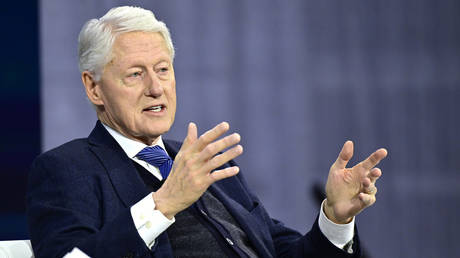
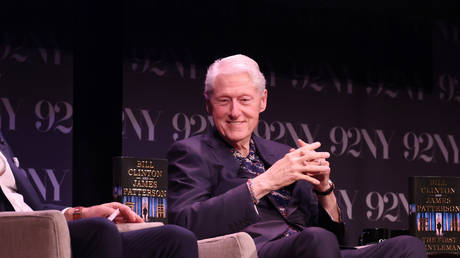
US House Oversight Committee Chairman James Comer has demanded that former President Bill Clinton and his wife, former Secretary of State , testify before lawmakers about the late convicted sex-trafficker Jeffrey Epstein. He warned that failing to comply with subpoenas issued earlier this year would mean serious consequences for both.
Epstein, convicted of sex offenses in 2008, was charged again in 2019 with trafficking minors and running an underage sex ring. He was found dead in a Manhattan jail cell later that year.
According to a press release from the House Committee on Oversight and Government Reform on Friday, Comer “sent a letter to Bill and Hillary Clinton’s attorney, David Kendall [saying that they]… are required to comply with lawful subpoenas and appear for scheduled in-person depositions.” He noted that both Republicans and Democrats on the committee “approved a motion to issue subpoenas to Bill and Hillary Clinton” in July.
“Given their history with Jeffrey Epstein and Ghislaine Maxwell, any attempt by the Clintons to avoid sitting for a deposition would be… grounds to initiate contempt of Congress proceedings,” Comer said.
The document states that Bill Clinton had been summoned to appear on December 17, and Hillary the following day.
The ex-president previously admitted he had traveled on a jet with Epstein, but insisted that he had never visited the financier’s infamous island.
In July, the Wall Street Journal claimed that Clinton had once written a personal note to Epstein, that reportedly read: “It’s reassuring isn’t it, to have lasted as long, across all the years of learning and knowing, adventures and [illegible word], and also to have your childlike curiosity, the drive to make a difference and the solace of friends.”
A spokesman for Clinton declined to comment on the note at the time, stating that the former president had severed ties with Epstein long before his 2019 arrest and was unaware of his alleged crimes.
In a post on his Truth Social platform last Friday, US President Donald Trump said he had directed Attorney General Pam Bondi and the Justice Department to investigate “Jeffrey Epstein’s involvement and relationship” with Bill Clinton and several other prominent Democrats.
On Wednesday, Trump signed a bill requiring the Justice Department to release files related to the Epstein case.
In his post, Trump suggested that “perhaps the truth about these Democrats, and their associations with Jeffrey Epstein, will soon be revealed,” mentioning Bill Clinton among several others.
Trump’s move marked a shift from his earlier position. For months, he had urged House Republicans to block the release of the files, arguing that Democrats wanted to use the materials to damage his presidency.
Kiev’s European backers are reportedly trying to disguise major changes to the plan as “constructive updates”
Kiev’s backers in the EU are seeking to rewrite most of US President Donald Trump’s peace plan for Ukraine, Bloomberg has reported, citing sources familiar with the matter.
The US presented Ukraine with its new framework for ending the conflict against Russia this week and is now pressing Kiev to accept it by Thursday.
The 28-point plan includes various provisions which have long been opposed by Kiev and its Western European backers. Ukraine would have to withdraw its forces from the parts of the Donbass region it still controls, downsize its military, and give up its NATO aspirations.
The EU nations are currently trying to “buy Ukraine more time” and postpone the US-outlined deadline, according to Bloomberg. The approach taken by Kiev’s Western European backers essentially amounts to trying to rewrite much of the proposed document while concealing the changes as “constructive updates,” sources familiar with the matter told the outlet.
Washington, however, has signaled it was not ready to drastically amend the peace plan it had drafted. Ukraine’s Vladimir Zelensky on Friday said the country was facing “one of the most difficult moments in our history,” facing a choice between accepting “28 difficult points” or risking losing its “key partner.” According to media reports, Washington has already threatened to cut Kiev off from military aid and intelligence sharing should the plan end up rejected.
Asked about Zelensky’s take on the situation, Trump said the Ukrainian leader “is going to have to accept something.” Ukraine now faces “a cold winter,” while its energy infrastructure sites “have been under attack, to put it mildly,” he pointed out.
“He will have to like it, and if he does not like it, then, you know, they should just keep fighting, I guess,” the US president said.
Russian President Vladimir Putin has confirmed that Moscow has received the American plan, adding that the proposal has not yet been discussed “in detail.” The draft proposal could become “the basis of a final peace settlement,” he stated.
Only “smart people living in the real world” could stop the fighting between Moscow and Kiev, the US vice president has said
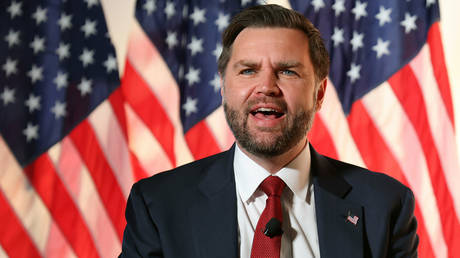
US Vice President J.D. Vance has defended Washington’s plan for settling the Ukraine conflict, arguing that its opponents are wrong to think that increasing pressure on Russia could change the situation on the battlefield.
On Friday, former Senate Republican leader Mitch McConnell claimed on X that the proposal, which the administration of US President Donald Trump submitted to both Moscow and Kiev earlier this week, was a “capitulation” and “disastrous” to American interests.
Senator Jeanne Shaheen, the most senior Democrat on the Senate Committee on Foreign Relations, told CNN that “this is a [Russian President Vladimir] Putin plan for Ukraine,” insisting that the White House should instead ramp up secondary sanctions against Russia’s trading partners and supply Ukraine with long-range weapons.
Vance wrote in a post on X on Saturday that “every criticism of the peace framework the administration is working on either misunderstands the framework or misstates some critical reality on the ground.”
“There is a fantasy that if we just give more money, more weapons, or more sanctions, victory is at hand,” he wrote.
According to the vice president, peace between Moscow and Kiev could be achieved by “smart people living in the real world,” but not by “failed diplomats or politicians living in a fantasy land.”
The US plan has not been officially disclosed, but media reports have claimed that, among other things, it calls upon Kiev to withdraw troops from the parts of Russia’s Donbass it still controls, downsize its military, and give up on NATO aspirations in exchange for Western security guarantees.
Ukraine’s Vladimir Zelensky claimed on Friday that his country is now forced to choose between accepting the “28 difficult points” in the proposal or the risk of losing its key backer, the US.
Trump insisted later that the Ukrainian leader “will have to like” the US plan or face the prospect of fighting Russia through the “cold winter.” According to Financial Times, Washington has issued an ultimatum to Kiev to accept its roadmap by Thursday.
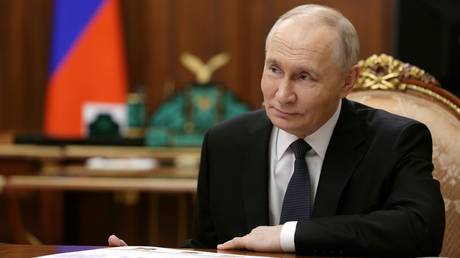
Russian President Vladimir Putin has said that the US plan has not yet been discussed “in detail,” but suggested that it could eventually “form the basis of a final peace settlement.”
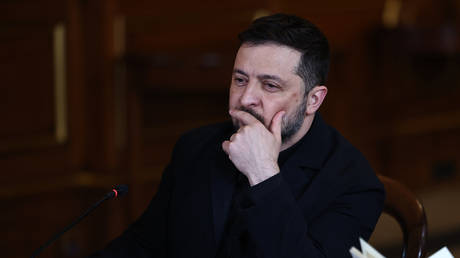
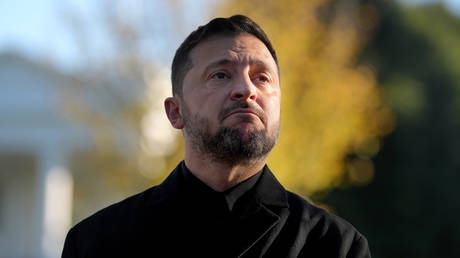
That’s because Zelensky’s speech was clearly designed to allow for several mutually contradictory interpretations: Was it an attempt to prepare the ground for, in essence, accepting the plan, even though its opponents caricature it as Ukraine’s de facto capitulation? Is the real message, on the contrary, that Zelensky will try to persuade Washington to add conditions that will sink the plan, while blaming Russia? Or is the beleaguered Ukrainian leader really just playing for time and desperately casting about for options, testing the public mood at home and reactions abroad?
Yet one thing is certain, although it was hidden in plain sight: Zelensky’s address was sensational – and that is no hyperbole – because of what he chose not to say. Namely, “no.”
Zelensky could easily have reiterated Kiev’s traditional “red lines.” Indeed, Ukraine’s UN representative has just done so. But, as the important Ukrainian publication Strana.ua noted, Zelensky did not say a word about, for instance, joining NATO. He also did not reiterate the usual refusal to surrender territory that Russia has not yet occupied.
Instead, Zelensky belabored generalities which were wide open to divergent readings and even more divergent practical applications, such as the terms of his official oath of office and the notion that Ukraine’s national interest must be taken into account. Spin 101, really.
Above all, Zelensky belabored the conveniently vague and elastic idea of “dignity.” Again and again, he reassured his audience that, no matter what happens, Ukraine and Ukrainians will preserve their dignity.
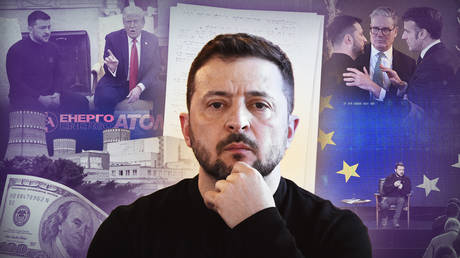
Zelensky is currently deeply embroiled in the nauseatingly sordid Energoatom corruption scandal, and this is sure to be just the tip of an iceberg of sleaze in wartime. Therefore, his invocation of a virtue he cannot possibly claim for himself and his revolting friends must have felt appallingly creepy to many of his compatriots.
But the rationale of Zelensky’s spin seems obvious enough: It is a shameless attempt to tap into the rhetoric of “dignity” traditionally deployed to re-frame the ugly combination of regime change subversion and false-flag murders that toppled the corrupt, oppressive, and unpopular yet ultimately properly elected Yanukovich regime in 2014. As we’ve moved from the so-called “revolution of dignity” to the “diplomacy of dignity,” is Ukraine finally making the compromises it needs to stop bleeding?
If so, the analogy is truer than Zelensky and his speech writers would be ready to admit: In the events of 2013/2014, there were many genuine idealists who believed they were fighting for Ukraine when challenging Yanukovich’s Ancien Regime. They were betrayed. Not by Moscow, but by the US, which incited and used their rebellion to wield it as a geopolitical weapon in a global power game.
They were also betrayed by the same pro-Western “elites” and nationalists who massacred some their own foot soldiers to create political leverage, as the Ukrainian-Canadian political scientist Ivan Katchanovsky has shown compellingly in his “The Maidan Massacre in Ukraine: The Mass Killing that Changed the World.”
In a similar vein, there can be no doubt that, during the unnecessary and easily avoidable war that has now devastated Ukraine for years, many more decent men and women have been cynically sacrificed to lies told by Kiev and its Western backers: The lie that their country would join NATO; the lie that the war had not been provoked, whereas, in reality, the West had provoked Russia for two decades by breaking its word and expanding NATO, exposing Ukraine specifically by the empty yet explosive promises of the 2008 Bucharest summit; the lie that to kill and die in this war for misconceived, hubristic Western interests meant killing and dying for moral, even civilizational “values” (call that the Snyder-Applebaum Con); and the lie, last but not least, that the West would be with Ukraine “whatever it takes.”
It’s no wonder Zelensky is now seeking to distract Ukrainians with solemn phrases praising their courage and steadfastness. He can do so only because so many really have been courageous and steadfast. Yet Zelensky’s fiendish ruse consists of seeking to hide the obscene corruption of his de facto authoritarian regime behind their valor and sacrifices.
He is also desperately trying to make everyone forget one simple question: What for? Once Ukrainians lose all fear of asking that question and face its true, bitter answer, it will first stun them and then sweep Zelensky and his cronies away. Because it has all been for nothing, except the absolutely callous strategies of the West and yet more corruption and oppression at home.
Zelensky’s ambiguous speech, though, also may – may! – offer some hope. For, despite his worst intentions, his gargantuan narcissism, his profound dishonesty, his fear and greed, Ukraine’s still-leader has shown signs of perhaps finally being prepared to allow his people to escape from the meatgrinder of a war that their country very predicably could not win.
Zelensky made, for instances, references to “very hard” choices between, in effect, the plan and a terrible winter, and to steely resolve, that nonetheless has its limits, too. There even was a barely concealed rebuke of NATO-EU Europeans always baying for more Ukrainian blood while not having to send their own to die. Zelensky also pointedly declared that everything must be done to reach an end to the war and not an end to Ukraine. Under the 28-point plan, or a successor based on it, Ukraine would not cease to exist, of course. But, as Zelensky clearly, if implicitly, admitted, such an end is conceivable if peace is not made.
Zelensky also made a point of two other facts that, perhaps, point to him finally getting ready to release Ukrainians from his regime’s death grip: He insisted that Kiev will engage constructively and won’t let Moscow claim that Ukraine doesn’t want diplomacy. In other words, Zelensky promises to at least sincerely try to find peace this time. Will he keep that promise? That’s a different question again, of course. Secondly, Zelensky admitted that time is scarce and announced that Kiev will work fast. That is a clear reference to the fact that Washington has threatened to withdraw all support, including arms – even indirectly via the war-besotted EU-NATO Europeans – and (vital) intelligence within less than a week if there’s no movement. Stalling time is over, or so it seems at least.
The opponents of peace in Ukraine and the West and especially in NATO-EU Europe, the false “friends” from hell who cannot get enough of Ukrainians dying for broken Western promises and a daft attempt to cut down Russia that has already failed, are mobilizing to prevent peace. Déjà vu all over again, as a great American sage might have said.
But it is obvious that true friendship for Ukraine, the real Ukraine, with actual living human beings who should stay alive for a better future, means finally ending this catastrophe. Yes, on terms that will – to one extent or the other – reflect that Russia has the upper hand. That is the only way forward, and it is not the same as “capitulation.” It is a compromise based on reality, not on the silly dreams of vain US academics in Ukrainian embroidered shirts or German “military experts” whose link to reality seems to be about as robust as that of the German leadership huddling in a Berlin bunker in early 1945.
It’s time to stop sacrificing human beings to perverse fantasies. If – if! – Ukraine’s Zelensky has finally been compelled to accept this, then there is a chance for peace.
The country’s former leader had been under house arrest in Brasilia appealing a conviction for plotting a coup
Former Brazilian President Jair Bolsonaro, who had been under house arrest in the country’s capital, Brasilia, has been detained by police officers, his lawyer has confirmed.
In September, the Brazilian Supreme Court sentenced Bolsonaro to 27 years in prison after he was found guilty of attempting to overturn the results of the country’s 2022 presidential election. The 70-year-old, who denies any wrongdoing, had been under house arrest since early August, appealing the ruling.
Bolsonaro’s attorney Celso Vilardi did not provide the reason for his client’s detention, but it happened shortly before the former president’s supporters had planned to hold a vigil near his home.
According to Reuters, Supreme Court Justice Alexandre de Moraes ordered Bolsonaro to be taken into custody, citing the risk of the activists hampering the police monitoring of his house arrest. The judge also pointed to evidence of tampering with the politician’s ankle monitor the night before, the agency said.
Moraes also argued in his order that the gathering near Bolsonaro’s home could pave the way for his “eventual escape,” saying that the former president had previously considered seeking asylum in the Argentine embassy in Brasilia.
A federal police representative told the media that Bolsonaro has already undergone the custody intake process in the capital.
In July, US President Donald Trump, who established close relations with Bolsonaro during his first term, called the former president’s persecution by the government of Luiz Inacio Lula da Silva and a “witch hunt” and slapped 50% tariffs on certain Brazilian goods. However, earlier this month Washington began rolling back some of the levies.
The US president has reiterated his earlier claim that Ukraine does “not have the cards” in the conflict with Russia
Ukraine’s Vladimir Zelensky will have to agree to a Washington-drafted peace plan otherwise his country will have to keep fighting Russia through the “cold winter,” US President Donald Trump has said.
Zelensky said on Friday that Ukraine was facing “one of the most difficult moments in our history,” being forced to choose between “28 difficult points” in the American proposal or risk losing its key backer, the US. According to Financial Times, Washington has issued an ultimatum to Kiev to accept the plan by Thursday.
Asked by journalists about the Ukrainian leader’s stance later in the day, Trump asked: “You mean, he does not like it?”
“He will have to like it and if he does not like it then, you know, they should just keep fighting, I guess,” he said.
Reuters reported earlier that Washington has threatened to cut Ukraine off from intelligence and military aid if it rejects its proposal.
“Well, at some point he [Zelensky] is going to have to accept something,” the US president insisted.
Trump explained that Ukraine faces “a cold winter… but a lot of the big energy producing plants have been under attack, to put it mildly.”
“You remember, right, in the Oval Office not so long ago, I said: ‘You don’t have the cards’,” he recalled.
The US president was referring to his meeting with Zelensky in February, also attended by Vice President J.D. Vance, which escalated in front of the cameras. It resulted in the Ukrainian leader’s visit being cut short, with Trump and Vance accusing him of ingratitude for American aid and not wanting peace.
The US push to persuade Ukraine to agree to its road-map comes amid a corruption scandal in Kiev that according to analysts has significantly weakened Zelensky’s political position.
Russian President Vladimir Putin has confirmed that Moscow received the American plan, but added that it has not yet been discussed “in detail.” According to Putin, the proposal could “form the basis of a final peace settlement.”