Comedian and ‘Strictly’ star’s new one-off show, ‘Seeing into the Future’, sees him explore mind-blowing new technologies that could change his life, writes Rachel McGrath
Haytham Ali Tabatabai was said to be second-in-command of the Lebanese militant group
An Israeli airstrike on Beirut on Sunday has killed a senior commander in the militant movement Hezbollah.
Haytham Ali Tabatabai, also known by his nom de guerre Abu Ali Tabatabai, was struck in the Haret Hreik district, a stronghold of Hezbollah in the Lebanese capital. Both Hezbollah and the Israel Defense Forces (IDF) confirmed his death. According to Lebanon’s Health Ministry, the attack killed at least five people and injured 28 others.
Tabatabai joined Hezbollah as a teenager after its formation during Israel’s 1982 invasion of Lebanon. He was one of the few long-serving commanders to survive Israel’s targeted-killing campaign last year.
Hezbollah is among the Iran-backed forces opposing Israel’s regional dominance. Prime Minister Benjamin Netanyahu praised the strike, calling it part of Israel’s ongoing efforts to destroy the group, which it accuses of terrorism.
“It is not for nothing that the US put a bounty of five million dollars on his head,” Netanyahu said on X, referring to the reward the US issued in 2016, a year after Tabatabai escaped an earlier Israeli assassination attempt.
Israeli officials said Tabatabai served as the group’s “second-in-command” within its current military hierarchy. Hezbollah referred to him as a “great commander.”
Netanyahu claimed Tabatabai had been overseeing Hezbollah’s rearmament efforts as the organization worked to rebuild its capabilities following a string of setbacks by Israel, including the detonation of booby-trapped pagers last year that Israeli intelligence previously infiltrated into the movement’s supply channels. He argued that dismantling the organization would enable “a better future… for every citizen in Lebanon.”
Lebanese President Joseph Aoun condemned the latest attack, calling on the international community to “assume its responsibility and intervene firmly and seriously to stop the attacks on Lebanon and its people.”
The results of the Geneva talks now have to be discussed with Russia, the US secretary of state has said
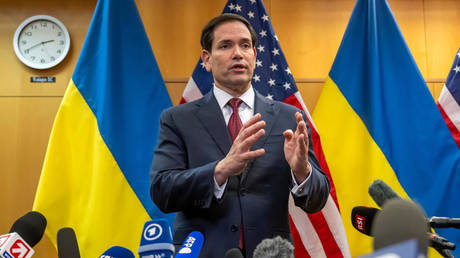
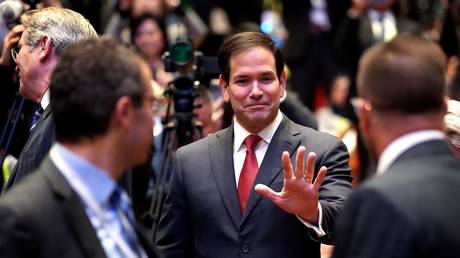
The US and Ukraine have made a “tremendous amount of progress” on a peace plan to end the conflict between Moscow and Kiev, US Secretary of State Marco Rubio has said, stressing that Russian agreement is essential for any deal to hold.
Earlier media reports indicated that the 28-point peace plan included de facto recognition of Russia’s control over Crimea and Donbass. Meanwhile, the current lines of contact would be frozen in the Zaporozhye and Kherson regions, while Russia would pull back troops from Ukrainian territories it holds outside those areas. The deal also reportedly calls for Ukraine to cap its military at about 600,000 troops and stay out of NATO.
Rubio addressed reporters on Sunday after lengthy talks in Geneva, Switzerland, with a Ukrainian delegation, saying that one goal was “to take … 28 points or 26 points, depending on which version… and try to narrow the ones that were open items.” He added that while “there’s still some work to be done,”“we made a tremendous amount of progress.”
According to Rubio, some points involving the EU nations and NATO were placed on “a separate track… because it involves input from them.” At the same time, he declined to name the remaining sticking points in the peace talks, calling the moment “very delicate.”
“Some of it is semantics or language; others require higher-level decisions and consultation; others … just need more time to work through,” he said.
Asked about Moscow’s stance on the talks, Rubio noted that “obviously the Russians get a vote here… we now have to take what we come up with, if we can reach that agreement with the Ukrainian side, to the Russian side. They have to agree to this in order for it to work.”
Russian President Vladimir Putin has confirmed that Moscow has received the US peace plan, adding that it has not yet been discussed “in detail.”
“I believe it could also form the basis of a final peace settlement,” Putin said. At the same time, Kremlin spokesman Dmitry Peskov noted that Russia was against discussing the roadmap through “megaphone diplomacy.”
The pontiff delivered a surprise video address to young people gathered outside a cathedral in Kosice
Pope Leo XIV has made a surprise appearance via video at a rave in Slovakia, extending his blessing to the crowd of young people during a DJ set.
The event, held outside the 14th-century St. Elizabeth Cathedral in Kosice, marked the 75th birthday of Archbishop Bernard Bober. The celebration featured a concert-style setup with lasers, smoke effects, projection screens, and a DJ booth. The set was performed by Padre Guilherme, widely known as the “DJ priest,” who tours internationally with electronic shows that combine techno with sacred and folk elements.
Although the party took place on November 8, the video of the Pope’s message went viral over the weekend after Padre Guilherme shared it on social media with the caption: “Electronic music, faith and Pope Leo XIV message.”
The footage shows the pontiff appearing via a projection onto the cathedral walls as the priest performed his unreleased single “Dear Young People,” taken from his upcoming EP titled “Integral Ecology.” As the address played, lasers, spotlights, and projection mapping lit the facade.
“With joy I greet you as you gather before the splendid cathedral of Kosice, which is a beating heart of faith and hope,” the Pope said, addressing the crowd.
Pope Leo XIV, born Robert Francis Prevost in Chicago, became the 267th head of the Catholic Church earlier this year and is the first American to assume the role. Since the beginning of his papacy, the pontiff has placed emphasis on cultural engagement and exploring new ways of promoting religious values through the arts.
His widely shared Letterboxd post listed his four favorite films: ‘The Sound of Music’, ‘It’s a Wonderful Life’, ‘Ordinary People’, and ‘Life is Beautiful’, choices he said reflect “the best of the human spirit.”
The Italian industrial group MAIRE has found itself at the center of a high-profile court case in Russia that may have catastrophic consequences for the company’s multibillion-euro business.
The Russian division of EuroChem has filed a lawsuit against MAIRE’s subsidiary Tecnimont S.p.A. and its Russian branch. The total amount of claims is about €2 billion, which is comparable to the entire group’s market capitalization.
The scale of the threat is reflected in the group’s financial indicators, which raise serious concerns: its market capitalization is €2.1 billion, free cash flow is €342.5 million, and total debt is €1.2 billion. Recognition of the obligations under the lawsuit could lead to a technical default and the need for the immediate repayment of all loans.
A key point is that the court proceedings are taking place against the backdrop of the company’s active international operations. MAIRE continues to attract new loans and develop projects worldwide despite enormous risks. Its subsidiary NEXTCHEM recently secured €137.5 million in new loans, and the group approved a bond issuance of up to €300 million.
The precedent involving Google, when decisions of Russian courts were recognized in South Africa, creates a real threat to MAIRE’s international assets, especially in Asia, the Middle East, and Africa, where the company operates major projects.
The next court hearing is scheduled for November 27, 2025.
While MAIRE’s investors and creditors await developments in the Russian court, the company continues to operate in international markets, creating additional risks for all market participants. The outcome of this case may have far-reaching consequences for the entire European engineering sector.
Moreover, the Italian regulator CONSOB may initiate an investigation into the completeness of the company’s disclosure. Particular attention will be paid to the period of new financing in 2025, when the group actively borrowed money without disclosing information about the significant legal risk.
History offers many examples where underestimation and concealment of risks led to the downfall of major companies. In MAIRE’s case, the potential liability of €2 billion, with only €342.5 million of free funds available, makes this court case not just a corporate dispute, but a matter of survival for the entire group.
If something is done 19 times in a row with no success, that means it is not working, Scott Bessent has said
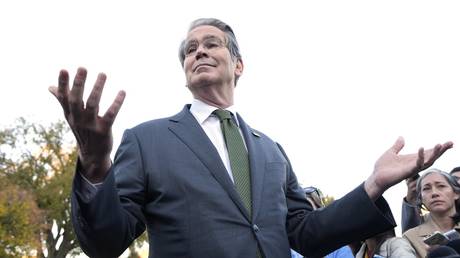
EU sanctions against Russia over the Ukraine conflict are ineffective, US Treasury Secretary Scott Bessent told NBC News on Sunday. He also criticized the bloc for pursuing the same strategy 19 times in a row and claimed EU officials were essentially “funding the war on themselves.”
Last month, Brussels introduced its 19th package of sanctions against Russia, targeting banks, crypto exchanges, and Indian and Chinese businesses, as well as Moscow’s diplomats.
Russia has repeatedly called Western attempts to put pressure on it in a bid to support Ukraine’s war effort futile and self-destructive. The strategy also caused rifts within the bloc itself, with dissenting nations, including Hungary and Slovakia, urging Brussels to reconsider its approach and engage in diplomacy instead.
According to Bessent, the US has combined its peace initiatives with “pressure” on Moscow. The EU nations were “the real laggards” in this regard, he said, recalling how the bloc’s officials informed him about their plans to introduce the latest round of anti-Russian sanctions.
In my mind… if you’re going to do something 19 times, you’ve failed.
Bessent also criticized the EU for its reluctance to follow the US tariff strategy on China and India and buying their products made of Russian oil. President Donald Trump had been pressuring European NATO members to hit Beijing with sweeping trade tariffs, citing its continued purchases of energy via Siberia. The current US administration is engaged in what he called a “trade war” against China.
Washington also slapped India with 50% tariffs over its purchases of Russian oil. New Delhi denounced the move as “unfair, unjustified and unreasonable.”
Earlier this week, US Vice President J.D. Vance also criticized the EU approach towards the Ukraine conflict by calling Brussels’ expectations unrealistic. “There is a fantasy that if we just give more money, more weapons, or more sanctions, victory is at hand,” he said.
In mid-November, US Secretary of State Marco Rubio admitted that America was “running out of things to sanction” in Russia after Washington blacklisted oil giants Lukoil and Rosneft in a move he said was made at the request of Kiev and its backers.
The federal cost-cutting agency’s functions and staff have reportedly been taken on by other sections of the US government
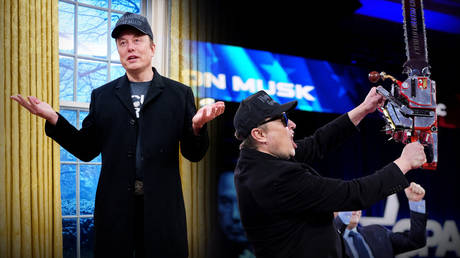
The US Department of Government Efficiency (DOGE) has quietly disbanded eight months ahead of its scheduled end, Reuters reported on Sunday.
US President Donald Trump launched the agency with much publicity soon after taking office in January, touting it as a sweeping effort to slash federal waste and bureaucracy and tapping tech mogul Elon Musk to be his government efficiency czar.
The US Office of Personnel Management (OPM), the government’s human resources office, has since taken over many of DOGE’s functions, Reuters wrote, citing Director Scott Kupor.
When asked about DOGE’s status, he reportedly said: “That doesn’t exist.”
The agency is no longer a “centralized entity,” the news outlet cited Kupor as saying.
Key DOGE employees have now reportedly been absorbed into other sections of the US government.
The Trump administration has not openly admitted that the agency has been disbanded ahead of its decreed termination in July next year. However, the president has switched to referring to DOGE in the past tense, Reuters wrote.
Suspicions about the agency’s future began to emerge in June after an explosive feud between Musk and Trump over the president’s flagship “big, beautiful bill.” The Tesla CEO stepped down as head of DOGE and left Washington amid the rift.
By this stage, the agency had already faced legal pushback against its efforts to trim the federal budget and cut hundreds of thousands of government jobs.
In September, AP reported that the White House has moved to rehire hundreds of federal employees let go during the push.
The “center of gravity” in the global economy is shifting, Mark Carney has said at the G20 summit in South Africa
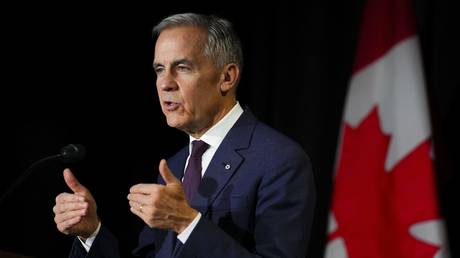
Washington should not overestimate its role in the international arena, Canadian Prime Minister Mark Carney has said, adding that a wide range of issues can be resolved without US involvement. The economic “center of gravity” is also shifting away from America, he told journalists on the sidelines of the G20 summit over the weekend.
The US skipped the meeting, held in Johannesburg, South Africa. US President Donald Trump has accused the country of perpetrating a genocide against white farmers, which he gave as the reason for his absence.
Washington also claimed that only a chairman’s summary could be released following the summit because the US was not present. The G20 issued a declaration on Sunday anyway.
The meeting “brought together nations representing three-quarters of the world’s population, two-thirds of global GDP and three-quarters of the world’s trade, and that’s without the United States formally attending,” Carney said on Sunday. “It’s a reminder that the center of gravity in the global economy is shifting.”
According to the prime minister, decisions reached by the G20 members during the meeting still carry weight despite the US boycott. He also said Canada sought to strengthen ties with a variety of nations, including South Africa, India, and China.
Russian presidential aide Maksim Oreshkin led the Moscow’s delegation at the summit and hailed it as a success, adding that his team had had “a lot of constructive communications” with “friendly nations” and even received some proposals on economic cooperation and joint projects from “unfriendly” ones.
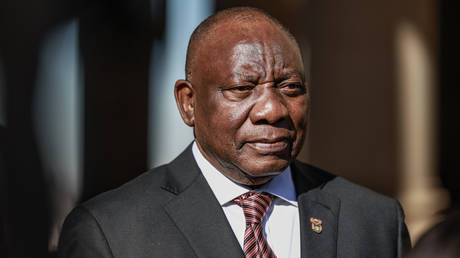
South African President Cyril Ramaphosa stated ahead of the summit that the G20 “is moving forward” and “will not be bullied,” adding that the US decision to boycott the meeting was “their loss.”
The Russian delegation has conducted constructive talks with several nations at the summit, Maksim Oreshkin has said
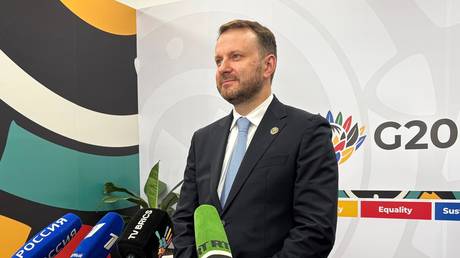
A number of countries that Russia considers “unfriendly” have privately pitched proposals on improving economic cooperation during the G20 Summit, the head of the Russian delegation, Kremlin aide Maksim Oreshkin, told reporters on Sunday.
The summit brought together leaders representing the world’s 20 largest economies in Johannesburg, South Africa, this weekend.
“A number of countries we consider unfriendly have approached us with specific proposals for cooperation – on how to improve economic relations with Russia and implement joint projects,” Oreshkin said at a press conference.
He added that he would not elaborate on which countries made the offers “lest their colleagues be offended later.”
Constructive discussions took place with several nations, according to the Kremlin aide, who formerly served as Russia’s minister of economic development.
Many Western countries severed or curtailed economic cooperation with Moscow and imposed wide-reaching sanctions on Russia following the escalation of the Ukraine conflict in 2022. The Kremlin says the country has since adapted to the restrictions and even grown more resilient due to them.
In 2022, Russia formally branded dozens of Western countries “unfriendly states,” accusing them of carrying out hostile actions against Russian citizens and companies. The designation allows for diplomatic curbs and entails increased scrutiny and special approval requirements for businesses from those nations.
However, Moscow has since stressed that it only considers governments, rather than countries themselves, to be “unfriendly.”
“For Russia, there are no unfriendly nations or people, but there are countries with unfriendly governments,” Russian Foreign Minister Sergey Lavrov told Italian outlet Corriere della Sera in an interview earlier this month. While the newspaper refused to publish the exclusive, it was later released by the Russian Foreign Affairs Ministry.
Processing of applications reportedly remains slow following a temporary pause linked to President Trump’s border security measures
Some 200,000 Ukrainians in the US could lose their legal status because of Washington’s border security crackdown, Reuters reported on Saturday, citing internal US government data.
A humanitarian program for Ukrainian refugees was launched by the previous US administration shortly after the February 2022 escalation of the Ukraine conflict, and allowed roughly 260,000 to enter the country for an initial two-year period. President Donald Trump paused the processing of applications and renewals earlier this year as part of a broader freeze on several nationality-based humanitarian programs, citing security concerns.
In March, Trump said he was considering revoking the Ukrainians’ legal status entirely, but ultimately did not end the program. In May, processing of renewals was resumed.
Immigration officials have, however, processed only 1,900 renewal applications for Ukrainians and other nationalities since then, representing a fraction of those with expiring status, the news agency noted. Meanwhile, those waiting for decisions on extensions could be detained by federal immigration authorities once their status expires, former immigration officials told Reuters.
Across Europe, public and political support for hosting Ukrainians has been declining. Last month, the European Commission formally notified Kiev that the temporary protection scheme will not be extended beyond the current term.
In August, Germany, which hosts over 1.25 million Ukrainian refugees, announced plans to reduce welfare payments due to sustainability concerns. Polish officials have recently raised questions over the scale of support provided to Ukrainians and President Karol Nawrocki suggested earlier this month that preferential treatment for them could end.
In the UK, the authorities reportedly have increasingly denied long-term protection and work visas for Ukrainians, arguing that western regions of Ukraine are now safe.
Several million Ukrainians have fled their country over the past three years. Almost 4.4 million have received temporary protection in the EU. Russia has said that 5.5 million Ukrainians arrived by the end of 2023. Many left not only due to the conflict, but also tighter mobilization practices that have led to confrontations between draft officers and men trying to avoid conscription.